
 Română
 Русский
Voting process abroad / Republican Constitutional Referendum of September 5, 2010

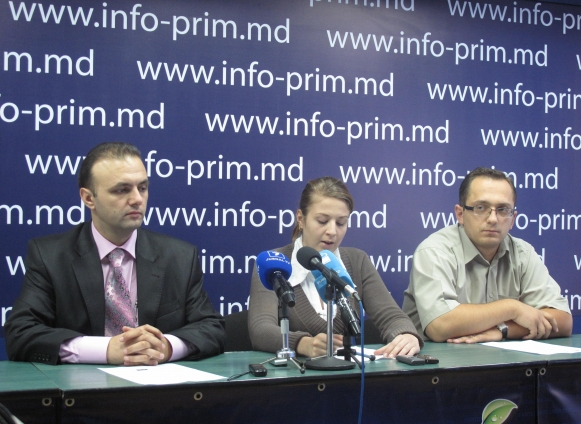 6 September 2010. The “Promo-LEX” Association in partnership with “Moştenitorii” Association monitored the voting process in the constitutional referendum at 40 polling stations located out of the Republic of Moldova*.
According to preliminary results, 11,517 people cast their votes in 34 out of the 40 monitored polling stations. Of the total number of valid votes, 98% were in favor of the proposal put forth in the referendum, 1.9% were against, and less than 0.1% of the ballots were declared invalid.
In the great majority of cases, the election authorities demonstrated a cooperative and proactive attitude and didn’t create obstacles to the voting process or its monitoring by the observers. Even if the members of the electoral bureaus were not always well-informed about their duties in organizing the voting process, they didn’t hesitate to consult the opinion of the observers, the provisions of the Election Code and other electoral rules.
However, inadequate knowledge of the voting procedures led to cases where voters were allowed to the voting booth upon producing other documents than a passport or a seaman’s book. For example, in the Italian city of Padua, 2 persons voted with their identity cards (buletin de identitate). At one of the polling places in Milan, Italy, unauthorized persons were observed staying inside the station throughout the day and the members of the electoral bureau justified their presence by saying that those persons were “hosts who won’t cause any trouble”. Several cases were observed at the same polling stations in which two voters entered the same voting booth at a time. In contrast, at the polling station in Lisbon, Portugal, the election officials barred accompanying children from entering the voting booth together with their parents.
The observers noticed an unsatisfactory degree of information and education efforts destined for voters abroad. Some 300 voters in over 20 locations were not allowed to vote because they didn’t have the required identity documents (passport or seaman’s book) with them. Furthermore, many people expressed their indignation at the poor, and often inexistent, information campaign concerning the vote. Such situations were observed in a great part of the voting stations located in Italy, the Czech Republic, France (Paris), and Greece (Athens, Heraklion). In Portugal (Faro) and in Italy (Padua) there were observed billboards instructing voters to vote with their identification cards.
Many polling stations abroad were opened with delays ranging from 10 minutes to 1 hour and 20 minutes, in breach of procedures. This happened in Germany (Hamburg, Munich), Italy (Mestre – 2 stations, Milan – 2 stations), Portugal (Portimao), Spain (Madrid), and Ukraine (Odessa). In most of the monitored polling stations, some of the members of the electoral bureaus were not present at the opening hours. This was observed at all the polling stations in France and Greece, in the Czech Republic, at three stations in Italy and Russia, and in the French city of Toulouse.
The presence of local law-enforcement officers near the polling places at distances smaller than 100 meters in Germany (Berlin), Greece (Athens), Italy (Mestre and Turin), Portugal (Lisbon), Russia (Moscow) didn’t cause any events that could be perceived as evident intimidation, such as demanding of ID papers or any of the sort. However, it is likely that some of the Moldovan citizens who stay illegally in the respective countries were afraid to turn out for the vote, a fact confirmed by accounts of voters in the towns where there were no law-enforcement officers near the voting stations. In many cases, it was the election officials who requested the presence of the law-enforcement officers, citing the need to ensure order and voters’ safety, and in Madrid citing concerns of potential terrorist attacks.
Over 98% of the people who voted, a total of 11,323, were listed in supplementary electoral rolls. In some polling stations there were no primary voter rolls at all. Such situations were observed in Greece (Heraklion), Italy (Mestre and Bologna), and Spain (Santander). At the same time, in Hamburg (Germany) a number of voters were unsuccessful in finding their names in the primary electoral rolls despite submitting on-line requests to that effect on the Central Election Commission’s website. Also in Hamburg, the primary electoral list was obtained by e-mail only at around 8:00 in the morning on election day.
In Russia, the packs of ballots destined for the polling station in Domodedovo were sent to the station in Mojaisk and vice-versa. Another faux pas happened with the electoral supplies destined for the polling stations in Bucharest and Lisbon.
In Italy, not any of the polling stations received voting boxes, with two of them using cardboard boxes in stead.
Instances of campaigning activity inside or near the voting station on election day were sporadic and didn’t amount to a trend. One person was observed campaigning in favor of a political party outside the polling station in Mestre, Italy, and a number of newspapers of another political party were observed near the same station.
Rather concerning, however, are cases of intimidation of voters before the day of the referendum reported in a number of towns – Italy (Mestre, Milan and Padua), Russia (Mojaisk and Moscow). Even in the absence of direct proofs, the repeating of the same stories of intimidation in different places is a concern.
* A number of 79 national observers monitored the voting process in the constitutional referendum at polling stations in Belgium (Brussels), the Czech Republic (Prague), Greece (Athens, Heraklion, Thessaloniki), France (Paris, Toulouse), Germany (Berlin, Munich, Hamburg), Spain (Madrid, Santander), Portugal (Lisbon, Faro, Portimao), Romania (Bucharest – 2, Galaţi, Timişoara, Cluj, Iaşi), the Russian Federation (Moscow, Domdedovo, Mojaisk, St. Petersburg), Ukraine (Odessa), Italy (Rome – 2, Mestre – 2, Milan – 2, Padua – 2, Bologna -2, Parma, Turin, Verona, Naples).
This project is funded by the “Democracy Support Programme”, a joint initiative between the European Union and the Council of Europe.
Contact Person: Olga Gordila, Tel +3737 22 449626