
 Română
 Русский
In Geneva, the 2016 Preliminary Assessment of the Universal Periodic Review Came to Its End

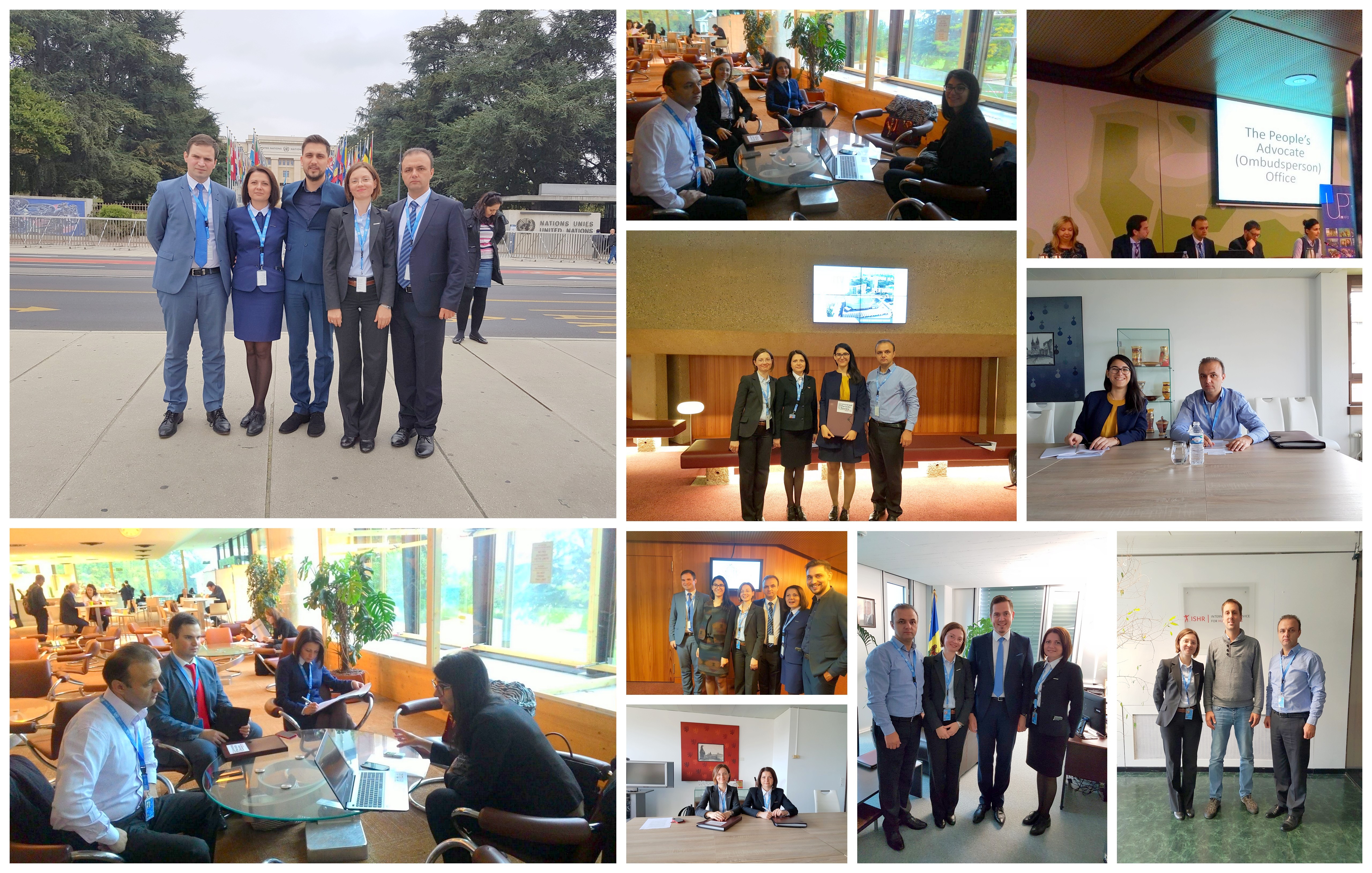 The 2016 UPR Preliminary Assessment (Universal Periodic Review of the UN Human Rights Council) took place during 4-7 October in Geneva. Promo-LEX Association had the opportunity to discuss about the human rights situation in the Republic of Moldova, reflected in the 7 Reports submitted for UPR.
During the three-day bilateral meetings with the Permanent Missions in Geneva of the following countries: Finland, USA, Czech Republic, Netherlands, Georgia, Uruguay, France, Ireland, Germany, Chile and Canada, but also with the Permanent Delegation of the European Union to the UN, Promo-LEX presented the main findings of the reports submitted for UPR and promoted the recommendations made in these reports.
The torture, ill-treatment, domestic violence, the right to elect and to be elected were several issues of concern presented during the public hearings.
As regards the torture and ill-treatment, the Executive Director, Ion Manole, noted that: ‘The Moldovan legislation does not comply with the UN standards in the field of torture prevention, and does not regulate in detail the conditions and limits of the application of physical force and special means. The Government fails to make sure the observance of Article 15 of UNCAT. Also, the health care services in the penitentiary system are underfunded and are still under the control of the penitentiary administration. The underfunded health care system affects in particular women’.
‘The constitutional authorities must not ignore the cases of torture and ill-treatment in the Transnistrian region’, added Ion Manole. In this context, the population from the left bank of the Nistru river also face problems such as: lack of legal and effective remedies, and also of human rights monitoring mechanisms in the Transnistrian region (including for cases of torture and ill-treatment), overcrowded prisons, lack of facilities for disabled detainees, inhuman conditions of detention, lack of health care services.
Although the final reading has recently adopted the package of amendments to domestic violence laws, some issues remain unresolved. An insufficient number of shelters and safe services for domestic violence victims is one of the issues. The protection order in cases of psychological violence is another one. At the same time, the courts fail to accept, as direct evidence to issue a protection order, the reports developed by the psychologists providing direct services to victims.
As regards the right to elect and to be elected, Promo-Lex highlighted the issue of independent candidates in the Republic of Moldova, who cannot enter the Parliament due to a high electoral threshold of 2%. There are also discriminatory provisions with regard to the registration of independent candidates. It is incumbent on the State to ensure equal regulations for parties and independent candidates in terms of access to vote. Last but not least, there are substantial discrepancies in establishing the financial ceilings for independent candidates and for political parties’ candidates in general local elections.
At the question and answer session, Ion Manole emphasized the need to finance the rehabilitation services for the victims of torture from the state budget. The Promo-LEX Director also touched upon the cases of human rights violations in the Transnistrian region of the Republic of Moldova, the situation of the human rights defenders, and the freedom of expression.
Promo-LEX, in partnership with national and international civil society organizations, prepared seven Reports for UPR, which were submitted to the Office of the High Commissioner for Human Rights (OHCHR).
The Reports are available below in English:
- Restrictions of the right to elect and to be elected and of the political rights of citizens;
- Situation of human rights in the Transnistrian region of the Republic of Moldova;
- Development of civil society environment in the Transnistrian region;
- Torture and ill-treatment in Moldova: The duties of the State and rights of survivors;
- Promotion of gender equality in Moldova;
- Domestic violence and violence against women;
- The rights of the persons with mental disabilities from the Republic of Moldova.
The Universal Periodic Review is a mechanism of the United Nations Human Rights Council, which helps to assess the extent to which UN Member States fulfilled the duties and commitments in the area of human rights.