
 Română
 Русский
The current system of local taxes in the Republic of Moldova can no longer fulfill the function of consolidating financial autonomy, study

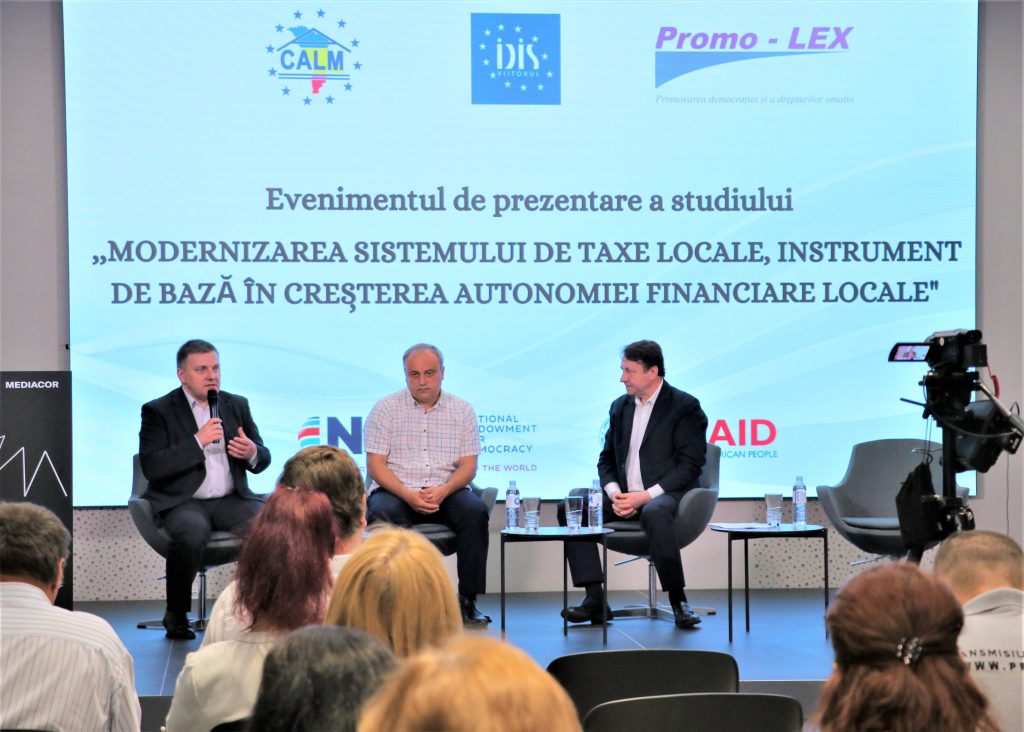
A recent study, which analyzes the revenues collected from local taxes, claims that the current tax system can no longer fulfil the function of consolidating financial autonomy. The study, carried out by the IDIS expert, Veaceslav Ioniță, and presented within the “Assessment of the State of Local Democracy in Moldova” project, supported by NED, is part of the action strategy of the Coalition for Decentralization, established by CALM (Congress of Local Authorities from Moldova), IDIS (Institute for Development and Social Initiatives) and the Promo-LEX Association.
The author of the study demonstrates that the revenues collected from local taxes have steadily stagnated in the last decade. Thus, they increased only by 11.8% (from 476 million lei in 2014 to 532 million lei in 2020), while the revenues of the national public budget increased by 50% in the same period of time. Local taxes are not indexed annually, and the main payers of local taxes are economic agents. Only in the municipality of Chisinau, local taxes have increased by 1.4% in the last 8 years, but this increase does not even cover the official rate of inflation. Paradoxically, the local population, the main beneficiary of the services provided by the local authorities, contributes almost nothing to the formation of the budget.
The author of the study concludes that the current system of local taxes is morally outdated, it no longer meets the expectations of local public authorities and stands in marked contrast with the obligations undertaken by the Republic of Moldova in relation to the Council of Europe. Thus, the study demonstrates that all local taxes cover only 2.8% of the total amount of local budget expenditures, and their share decreases annually, maintaining a dramatic dependence of local public administration on the Ministry of Finance. Local taxes are extremely poorly applied – a single tax provides more than 50% of the total revenue collected, and the rest are formal. The municipality of Chisinau collects over 50% of the amount of all local taxes (350 out of 670 million lei), showing a lack of reliability of the current system of local taxes.
At the same time, the author analyzes several local taxes, claiming they would have a considerable potential, if local authorities enjoyed more functional autonomy and were not shackled by centralist regulations. These are parking tax, sanitation tax, development tax, public lighting tax. The author of the study proposes a series of measures to improve the fiscal base of local authorities in the Republic of Moldova.
The study opens a series of actions launched by IDIS Viitorul! and its partners within the Coalition for Decentralization in the Republic of Moldova. Operating as a national platform established to ensure communication and consultation on the options of this reform, the Coalition aims to reach consensus on the priorities of the reform, bringing together all local and national actors, offering their expertise, visions and experience in this complex process.
An important vehicle of the Coalition for decentralization is the Parity Commission, which the current government intends to re-activate as soon as possible. Accelerating decentralization and ensuring effective local autonomy is at least as important a priority in the EU accession process as justice reform, fighting corruption and economic reforms.
For more information, please contact the author of the study:
Veaceslav Ioniță, Doctor of Economic Sciences,
GSM: 069134567, [email protected]