VENICE COMMISSION -REPUBLIC OF MOLDOVA JOINT OPINION ON THE DRAFT LAWS ON AMENDING AND COMPLETING CERTAIN LEGISLATIVE ACTS
 Today, 23 May 2017, the International Conference `Options and Considerations for Reforming the Electoral System of the Republic of Moldova. Comparisons from International Experience’, organized by Promo-LEX Association, with the participation of experts from the United Kingdom, Lithuania, Georgia, Ukraine, Belarus, Armenia, Norway and Romania, took place at Chisinau. The event aimed to contribute to debate the opportunity to change the Moldovan electoral system by comparing the impact of different electoral systems applied in different social, political, cultural, other contexts.
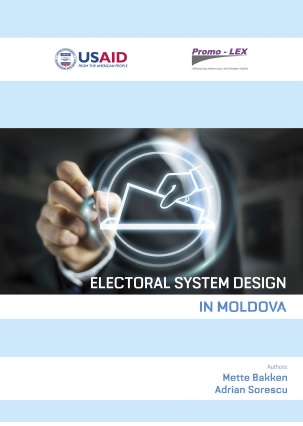
The ‘Electoral System Design in Moldova’ study, developed by the international experts Mette Bakken, Norway, and Adrian Sorescu, Romania, (see the presentation here) was presented during the conference. The authors of the study tried to answer the main question that dominates the public life at Chisinau over the past three months: ‘To what extent the electoral system change might be a solution to the people’s dissatisfaction or it could bring any improvements in political class and, if it could, what electoral system would bring the most advantages and the least disadvantages?’
In this context, the study analysed the pros and cons of each electoral system: the majority system in one round and the mixed-parallel system (drafts under discussion in the Parliament), and also the system of proportional representation in regional constituencies and the mixed member proportional system (with compensation). For more details about these electoral systems, including the simulation of 2014 parliamentary election results on the basis of these systems, please see pages 56-66 of the Study.
Experts Mette Bakken and Adrian Sorescu concluded in this study that despite that the electoral system in place has proven to carry both advantages and disadvantages, major changes to its design may have profound impact on political life and democratic consolidation. In Moldova, it is not clear what would be the result from passing from an electoral system to another one. To this end, the experts formulated the following recommendations:
The whole ‘Electoral System Design in Moldova’ study, developed by the international experts Mette Bakken, Norway, and Adrian Sorescu, Romania, can be downloaded at promolex.md.
To see all the presentations of the international experts and the discussions from the International Conference ‘Options and Considerations for Reforming the Electoral System of the Republic of Moldova. Comparisons from International Experience’, follow the event record on privesc.eu platform: http://bit.ly/2q7oXQ1.
Date: 2 February 2017
Addressed to: the President of the Parliament of the Republic of Moldova; the Presidents of the Parliamentary Factions; the deputies of the Parliament of the Republic of Moldova
Subject: the need to establish a Working Group responsible for developing proposals for changing the Electoral Code and the related legislation
Contact person: Pavel Postica, Program Director, the Promo-LEX Association, telephone: 069165154, E-mail:[email protected]
Mr. Andrian Candu
President of the Parliament of the Republic of Moldova
Mrs. Zinaida Greceanii
President of the Faction of the Socialist Party of the Republic of Moldova
Mr. Marian Lupu
President of the Faction of the Democratic Party of Moldova
Mr. Mihai Ghimpu
President of the Faction of the Liberal Party
Mr. Tudor Deliu
President of the Faction of the Liberal Democratic Party of Moldova
Mrs. Inna Supac
President of the Faction of the Communist Party of Moldova
The Deputies of the Parliament of the Republic of Moldova
The Presidential Election in the Republic of Moldova demonstrated—through events that occurred both during the electoral period and on the day of the election—the need to revise the legal framework to make the electoral process more efficient and democratic, a conclusion reached by both the Promo-LEX Association’s Election Observation Mission and by the International Observation Mission.
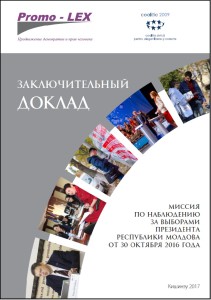
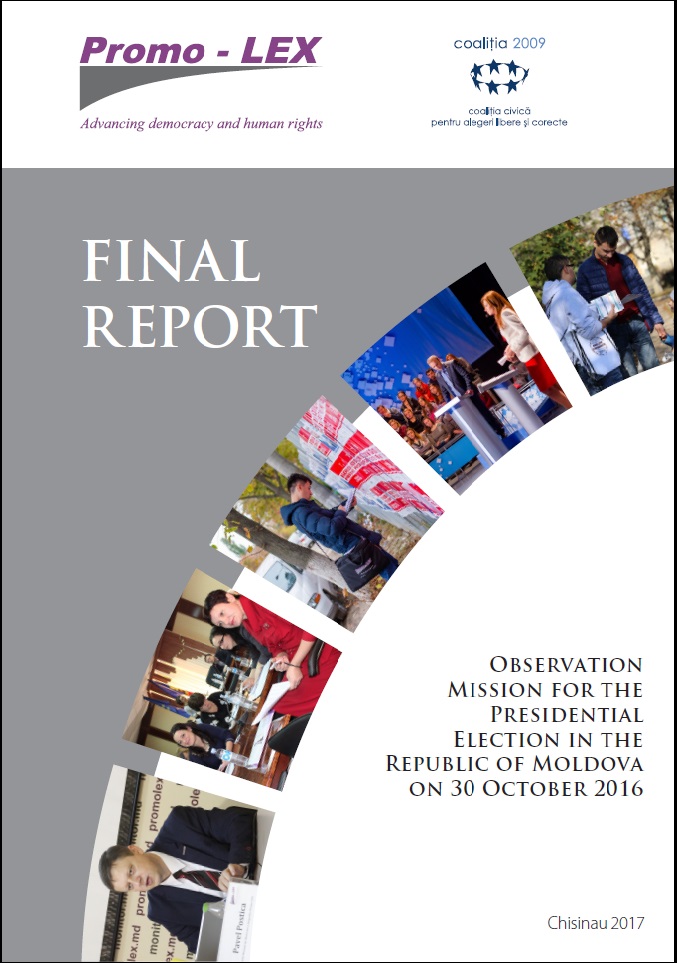
The Promo-LEX Association, during its Election Observation Missions (EOMs) for the presidential election in 2016, the local elections in 2015 and the parliamentary election in 2014, has monitored electoral processes and presented interim reports, which contained observations on: the legal framework, the activity of electoral bodies, the involvement of public administrations, the behavior of electoral candidates, the use of administrative resources and situations that could be qualified as vote buying, the organized transport of voters, problems with voter lists and the exercise of the right to vote abroad, flaws in the financing of electoral campaigns and political parties, violent and denigrating discourse and the involvement of religious organizations in the election campaign, etc. The principle findings and recommendations were summarized and explained in the Final Report of the Promo-LEX EOM, publicly presented on 26 January 2017 at the Round Table “X-Ray and Assessment of the Direct Presidential Election in the Republic of Moldova on 30 October 2016. Post-Election Conclusions.” The Promo-LEX EOM provided a total of 40 recommendations addressed to the Parliament of the Republic of Moldova on modifying the Electoral Code and related legislation. Another 43 suggestions were addressed to other actors involved in the electoral process (the Central Election Commission, electoral candidates, law enforcement bodies, etc.)
In the same vein, the Independent Journalism Center (CJI) and the Independent Press Association (API) monitored the behavior of the press during the election and also found irregularities in the legal provisions on reporting about election campaigns and inefficiencies in the regulation of broadcasters’ activity by the Audiovisual Coordinating Council (ACC).
At the same time, the International Election Observation Mission, in particular OSCE/ODIHR and the European Network of Election Monitoring Organizations (ENEMO), highlighted significant flaws in the electoral process in their published reports, including ambiguous provisions on the registration of electoral candidates, the low credibility of the Audiovisual Coordinating Council, problems in the monitoring of election campaign financing, the lack of pluralism in the mass media and diversity of opinions, flaws in the administration of the electoral process, concerns about the settlement of electoral disputes, the underrepresentation of women in candidate lists, unjustified provisions differentiating independent candidates, the unjustified denial of the electoral rights of people with disabilities, elderly people, and conscripted soldiers.
In addition, we refer to Constitutional Court Decision No 34 from 13 December 2016 confirming the election results and validating the mandate of the President of the Republic of Moldova. The Constitutional Court pointed out certain shortcomings of the election and issued, for the first time, 6 written recommendations to the Parliament. The Constitutional Court drew attention to certain problems in the legislation related to:
We note that, in accordance with Article 281 of the Law on the Constitutional Court, any observations (findings) of the Constitutional Court, stipulated in writing, about gaps (omissions) in the law because of the failure to fulfill constitutional obligations must be examined by the relevant authority, which must then notify the Constitutional Court of the results within 3 months. The deadline for notifying the Constitutional Court is 13 March 2017.
We note that, according to Articles 15 and 16 of the Law on Legislative Acts, Parliament has the right to establish Working Groups consisting of experts and specialists in relevant fields in order to develop drafts of legislative acts. In addition, art. 6 of the Regulation of the Parliament of the Republic of Moldova states that parliamentary factions have the right to make proposals on forming working groups and groups of experts in various fields of activity.
In this context, the signatory organizations consider it imperative that Parliament establish a Working Group responsible for developing proposals on modifying the Electoral Code and related legislation, according to the Recommendations of the Constitutional Court, in addition to the recommendations of local and international EOMs, with the balanced representation of the deputies of the Parliament of the Republic of Moldova, representatives of the Central Electoral Commission, political parties not currently in parliament, and civil society organizations.
On this basis, the signatory organizations request that the Parliament of the Republic of Moldova:
Signatory organizations: