NGOs slams police for not reacting in altercations in front of Prosecutor’s Office
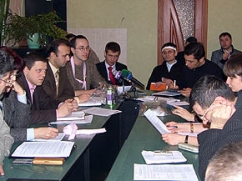
_article_1233829928Five human rights dealing NGOs slammed the lack of reaction of the police in the altercations in front of the General Prosecutor’s Office (GPO) on Tuesday, February 3. In Info-Prim Neo’s office, leaders and representatives of Amnesty International (AI) Moldova, the Center of Resources for Human Rights (CReDO), Hyde Park, the Human Rights Institute and Promo-Lex called journalists, on Wednesday, to a public sitting during which they analyzed the conduct of the police during the meeting, when then they were attacked by at least 9 individuals.

The human rights activists were at a protest meeting in front of the GPO to support the freedom to assembly, where they were aggressed by masked people who sprayed paint at them. According to the organizers, the police did not get involved to separate the protesters from counter-protesters, they they say they called the 902 service repeatedly. The organizers say there were at least two police cars nearby. Moreover, neither the police officer guarding the entrance into the GPO’s quarters intervened and even blocked the access to several journalists willing to enter to protect themselves from aggressors.

“The police have failed the exam again. Large men, well-fed and well-equipped,” said Igor Grosu, the president of the council of AI Moldova. He had his head bandaged because of the hits he had got from attackers. “I watched the news and there was a dissonance between the reports on the altercations at the meeting and the report on the US Government donating equipment to the Moldovan police,” Igor Grosu added.

Promo-Lex president Ion Manole has said he has requested for information from the GPO and the police as to Tuesday’s events, and Igor Grosu from Amnesty International says he prepares evidence to go to court. Pavel Postica, a lawyer with Promo-Lex, has said he had called the police commissariat Tuesday to come and certify the incident, but got the answer “the police does not gather garbage.”

The protesters shows photos with the faces of several attackers, and the incident was filmed by them and the Chisinau media. They brought a mask and several spray of the attackers to the sitting to use them as evidence in case the law-enforcing bodies decide to probe the case.

The sitting was attended by an ombudsman from the Human Rights Center, Oleg Efrim, who considers “inadmissible the behavior of the authorities called to ensure the freedom of assemblies, they breeched all the obligations that the state has in realizing the freedom of assembly provided by the Constitution and the European Convention of Human Rights.” The ombudsman added the Human Rights Center will ask for explanations from the law-enforcing bodies on the case.

When asked by Info-Prim Neo, Tudor Capatana, senior specialist with the PR Bureau of the Police General Commissariat, has said that “the problem is bigger, since, after the law on assemblies entered force (April 2008 – e.n.), the Chisinau City Hall permanently does not inform the police on planned meetings, in due time.” “After being notified, the City Hall should inform the police in order to ensure the protection of meeting participants, and yesterday’s case showed protection is necessary under certain circumstances.” According to the PR assistant, the City Hall did not inform the police about that meeting. “The Police Commissariat is in the situation when it has to inform itself about the rallies planned to take place in Chisinau,” said Tudor Capatana. “We learnt of the fight only after it was over,” he said.

When asked why the 902 team did not intervene, the officer has said nobody called for that service, “the recordings have been checked up.” Tudor Capatana has confirmed the police is probing the case, following complaints from meeting participants.

The press center of the Interior Ministry announces the ministry is leading its investigation and will announce the results in due time. The GPO’s press service does not have any comments yet.

http://www.info-prim.md/?x=24&y=21133

DOC – AI_press_release_4.02.09_1233831304ro_-1


Excessive police intervention is the most problematic aspect in ensuring freedom of assembly

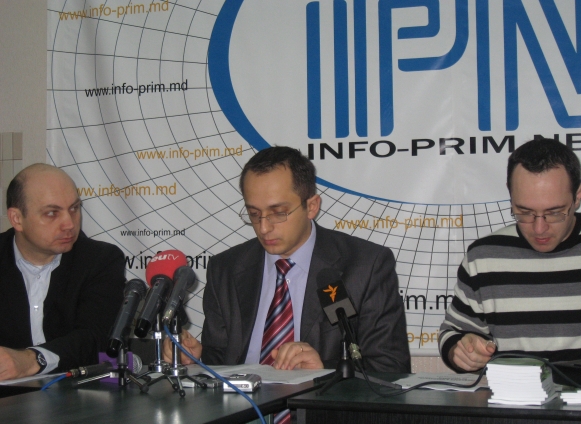
_article_1233219904The excessive intervention on the part of the police is the most problematic aspect in ensuring the freedom of assembly. Such a conclusion is contained in a comparative study of the observance of the freedom of assembly in Moldova during 2007-2008, presented at Info-Prim Neo news agency on January 27.

The study carried out by Promo-LEX Association, the Resource Center for Human Rights (CreDO) and Acces-Info Center is a comparative analysis of the new law on assemblies and of the abrogated law. It also describes cases when the freedom of assembly is violated.

After nine months of the coming into force of the new law on assemblies, the civil society ascertains that the local public authorities and courts observe the law in the main. The police commit most of the violations. “No cases of massive violation of the freedom of assembly were reported in 2008 following the actions taken by the mayors’ offices, but there were identified irregularities. The courts also observe the law in general, except several groundless decisions made not according to the law or on the basis of erroneous interpretations,” said Alexandru Postica, the executive director of Promo-LEX Association.

According to Postica, most of the problems concern the place where the assembly is to take place, the limitation of the freedom of expression during assemblies, non-ensurance of pubic order and the assembly participants’ security, prohibition of using technical equipment and of taking pictures. The social costs resulting from the legal cases instituted over the acts taken by the police are another negative factor.

CreDO director Sergiu Ostaf said that the right to free assembly is no more a priority of the European Commission as regards the provision of technical assistance to Moldova from the EU. “This shows that Moldova made certain progress in this direction. At the same time, the European Commission says that the improvements are not steady enough. So, the situation can destabilize any time,” Sergiu Ostaf stressed.

The director of CreDO says that in order to strengthen the results achieved in enforcing the law, it is important that the civil society takes attitude over every violation of the law. Cooperation with the public authorities is another important aspect. By a decision, the Supreme Court of Justice could provide explanations how the law should be interpreted when the situation is unclear.

An advantage of the study is the fact that it can be used by the Prosecutor’s Office to monitor the cases when the police break the law. “It contains sufficient arguments for initiating investigations into cases when the police do not observe the law and the international practice. The study offers well-substantiated support to the Ministry of Internal Affairs in probing its personnel’s acts when ensuring the freedom of assembly,” Ostaf said.

Evghenii Goloshcheapov, the executive director of Amnesty International Moldova, considers that for the freedom of assembly to be strengthened in Moldova, the public authorities and the police should have political will, the police officers that committ violations should be held accountable and there should be organized specialized courses for the policemen that will work in the area.

The study was conducted as part of a project financed by Soros-Moldova Foundation. Over 100 judges and prosecutors as well as representatives of the local public administration have been trained as part of the same project.

http://www.info-prim.md/?a=100


DOC – Studiu_Libertatea_Intrunirilor


Training course “NGO Management”

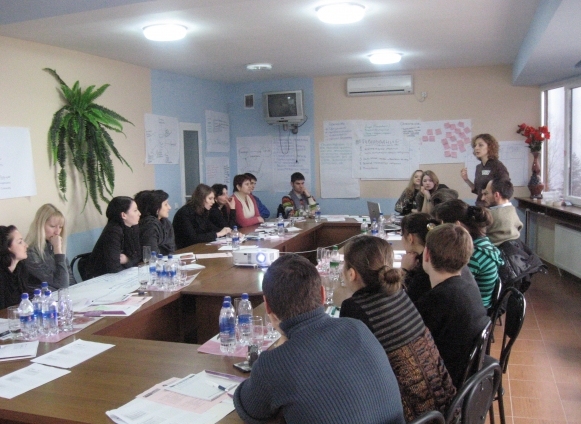
_article_1233229674Within the period January, 24th -25th 2009 as a component part of the project “Resource and Development Center from Transnistria”, implemented by the Promo-LEX Association, the NGO Department organized a training course on “NGO Management”.
This course is the first out of the three planned training programs to be conducted by the NGO Department and is aimed at supporting the third sector in the east region of the country.

All three courses are designed to train representatives of nongovernmental organizations in the areas of: NGO Management, Project Management and Financial Management.
This course was attended by 23 NGO representatives and initiative groups from: Camenca, Ribnita, Dubasari, Grigoriopol and from the cities Tiraspol and Tighina.

During the two days of the seminar a kind and friendly atmosphere was created. The participants were involved in a series of discussions and various practical activities that focused on key components such as judicial aspects of the NGO registration process, the NGO life cycle, organizational structure, strategic planning and human resources management . Also on the day a workshop entitled “Using internet resources for a successful organizational development” was held.

As a result of completion of the course, participants gained information concerning the legal framework of NGO activity and necessary documents to register as a non-governmental organization. They learned the stages through which an organization develops and how to define the organizational structure.

Also, participants were trained through interactive exercises as to how they can determine the mission, vision and values of the organization and what they need in order to develop a viable action plan of the organization they are involved in.

Another issue of major importance was human resources management. During this session, the participants learned what is the purpose of human resource management, what types of management and leadership styles exist, the responsibilities of a manager of human resources, organizational culture and methods to motivate employees.
During the workshop “Using internet resources for a successful organizational development”, the participants learned how to find the information they need through search engines, how to translate this information through online dictionaries and how to find different partners and potential donor resources through the Internet.

Also, the participants confirmed the need of such courses for freshly institutionalized NGOs and initiative group members because many of them have a lack of knowledge base, which deters the realization of their projects and initiatives. Participants appreciated that this course will provide more experience for their work and will strengthen the third sector in the region.

The training program of this project was implemented with support Financial National Endowment for Democracy.


Learning human right through games

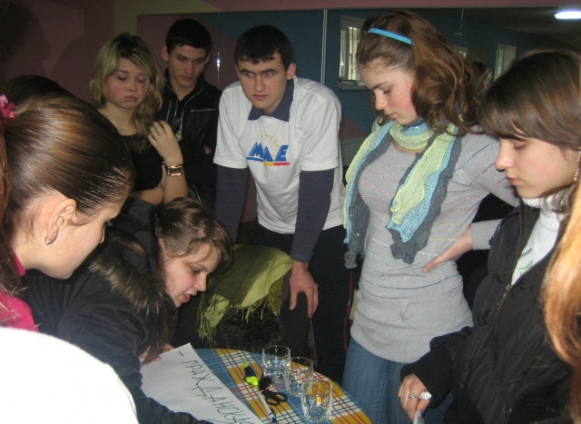
_article_1233230949“Being a step ahead and learning, we can develop new youth leaders and develop a society in which our rights will be respected and our voices heard and taken into account”, this is the main conclusion reached by participants at the training „Youth and student’s rights”, held on the 24-25 January by the Association “Promo-LEX”. The event was held at Leisure Center „La popas”Cocieri village, district Dubasari.

The training was attended by 20 young people: students of law faculties, volunteers within NGO or initiative groups and members of the Youth Local Councils in several localities from Transnistrian region: Dubasari, Cosnita, Doroţcaia, Corjova, Harmaţca and city Tighina.

The goal of the training was to develop skills of critical understanding of human rights, and also main responsibilities, and facilitate development of skills, civic behavior and abilities of young people to implement / use / promote their rights in daily life.

The training combined both theoretical lectures as well as role plays and discussion / debate based on video materials that participants watched. It was explinated to the participants the basic ways to defend their fundamental rights.

Meanwhile, participants were encouraged to organize in their initiative groups, schools Youth Councils or NGO where they volunteer, educational activities in order to promote rights of young people. So participants were informed about the interactive methods of organizing activities by using role plays.

The young people remained impressed about the methodology of the training – learning by playing. Participants discussed issues that concern them and had to argue about their personal attitude toward subject of discussion. Also, practical exercises generated ideas / questions and unknown attitudes that stimulated interest in involvement and awareness of new knowledge.

This activity was an important step in the development of leadership skills for young people from the Transnistrian region and started to consolidate them into a network of young leaders with civic attitude. They do affirm the need of their involvement and approaching a personal attitude in order to develop themselves as a leader and resource person.

Training „Youth and student’s rights” was organized within the project” Strengthening youth initiative groups from Transnistrian region”, implemented with financial support of the Royal Netherlands Embassy in Kiev, through Program MatraKAP.


Promo-LEX considers that Parliament should ratify Roma Statute

Promo-LEX Association considers that the Parliament should ratify Roma Statute when adopting National Security Strategy. The National Security Strategy of Moldova should refer to the need to ratify the Roma Statute by the Parliament. Promo-LEX considers that document would prevent the crimes against the people in the Transnistrian area.

Another aspect that needs not to be ignored within the National Security Strategy is the need to apply the national legislation to defend the constitutional rights of the dwellers and citizens from that area.

Promo-LEX considers that it is important to evluate and improve the efficiency of the Joint Control Commission (JCC) in order to defend the human rights within the Security Zone and in entire Transnistrian area.

Moldovan National Security Strategy was set up for public debate early in January and is to be voted in the Parliament.


Promo-LEX condemns the illegal actions of the separatist authorities

Promo-LEX Association condemns the separatist authorities for the unilateral and illegal decision to levy taxes for the movement of persons via Moldova’s transnistrian region.

Contrary to the fact that the Tiraspol administration promised recently to cancel the taxes for staying in Transnistria, the movement of the people through Transnistria remains restricted from January 1, 2009. Moreover, the „migration fee” was raised from about 10 lei to 22.28 lei. Therefore, the situation has worsened.

The year 2008 was marked by a relative liberalization of the movement of the people (especially of the Moldovan citizens living in other regions of the country), the tax for crossing the region being abolished. Even under such circumstances, Promo-LEX has earlier described the levying of taxes for crossing the “imagined border on the Nistru” as a serious problem in exercising the constitutional rights as the right to free movement and, respectively, the right to private property are gravely violated.

Thus, article 5, paragraph 1 of the Agreement on the Principles for Peacefully Settling the Conflict in Moldova’s transnistrian region, signed by Moldova and Russia on July 21, 1992, are ignored and disregarded. The actions taken also run counter to the “local transnistrian legislation”, including the intention statements formulated recently by the regional administration.

Promo-LEX notes that the tax is levied in the absence of a clear and predictable “local law”. Furthermore, such a “law” has never been published or made known to the residents of the region or of the country. Last year, there were granted time “concessions” for certain categories of people that visited or crossed the region, but now the situation is uncertain. The fact that some of the controls posts do not levy these taxes is dubious. This shows that there are no clear regulations in the field and this can lead to numerous abuses on the part of the persons that “have the right” to collect such fees.

This unilateral acts by the illegal transnistrian regime contribute to a larger number of persons whose rights in this zone are violated, but also to increased dissatisfaction on the part of the people. Consequently, the region will be further self-isolated, the talks over the settlement of the transnistrian conflict will be negatively affected and the sufferings of the local population will deepen.

Promo-Lex welcomes the Moldovan Reintegration Ministry’s reaction to the created situation and the effort made to establish its causes. In this connection, the Association calls upon the Moldovan authorities and the participants in the talks in the 5+2 format (OSCE, the EU, the U.S., Ukraine and Russia) to step up efforts to identify solutions that would enforce the Moldovan-Russian Agreement of July 21, 1992 and guarantee the right to free movement. Promo-LEX considers that the Joint Control Commission should come together for an extraordinary meeting, with the compulsory participation of delegations of observers on behalf of the OSCE, the EU, the U.S. and Ukraine, to examine the given issue.

Promo-LEX Association has been already informed about such abusive acts and continues to offer free legal assistance to the persons whose rights have been violated in the transnistrian region or in the Security Zone.


Guide Organization and Conduct of meetings / Legislative Aspects

_article_1232980628On December 22nd 2008, within the press conference on topic “The situation of freedom of assembly in Moldova after eight months of the entry into force of the new law on freedom of assembly”, Promo-LEX Association launched the Guide Organization and Conduct of Meetings / Legislative Aspects.

The Guide contains information on how the organize and conduct a meeting, a comprehensive analysis of the law on meetings, which are the documents needed to submit applications, useful practices and judicial precedents, other states experience.
This guide is intended mainly for the people who directly participate in the conduct of meetings, namely: participants, organizers and authorities. We hope that the format of the Guide and its approach to the issues (questions and answers) will facilitate the understanding of the matter.
The Guide edition is 500 copies (400 in Romanian language and 100 in Russian language). The Guide is distributed for free and can be requested from the Promo-LEX Association. As well, the Guide is available in electronic format on the website of the Promo-LEX Association – in Romanian and Russian languages.

The Guide was drafted by Alexandu Postica, Executive Director Promo-LEX Association, Vasile Spinei, Executive Director Center Access-Info “, Sergiu Ostaf, Executive Director CReDO.
The guide was developed within the project “Freedom of assembly as a means of exercising the right to freedom of opinion and expression” implemented by the Promo-LEX Association with the support of the Swedish Agency for International Development Cooperation (SIDA) and the Soros Foundation-Moldova (FSM ).


Regional Forum of Transnistrian NGOs

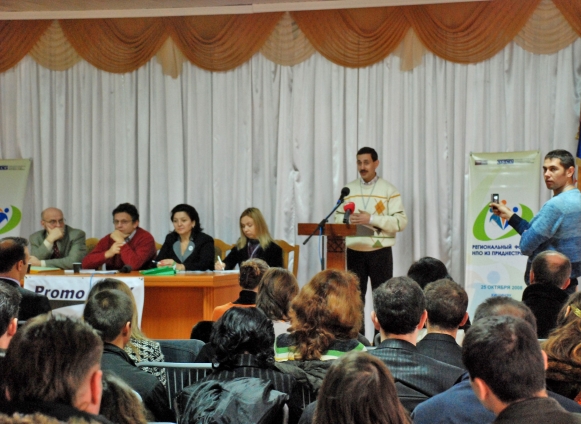
_article_1232981210For the first time in Moldova, Promo-Lex Association organized the Forum of Transnistrian NGOs.
The event was held in 2 stages ( on October 25, in Chisinau and on November 15, in Cosnita village, Dubasari district).
Greetings were addressed to participants of the Forum by the EU Special Representative for Republic of Moldova – Mr. Kalman Miszei, Vice-Minister of Reintegration from Republic of Moldova Mr. Ion Stavila, Senior Human Rights Adviser Programme Manager, Human Rights and Democratization Programme, OSCE Mission to Moldova – Ms Dace Lukumiete, Director of the Center for Human Rights in Moldova, the Ombudsman – Anatol Munteanu and vice president of the Dubasari district Ms Maria Jimbei.

Nearly 100 participants: representatives of non-governmental organizations and initiative groups from transnistrian region, donor community representatives and state officials evaluated the state and the situation of the NGO sector from transnistrian region.
The participants expressed their opinion towards the problems, obstacles and positive results in such fields as: youth, human rights, ecology and social. Participants were divided in 4 working groups. Each group was moderated by an expert in the field. After the event, Experts drafted 4 analysis referring to the state of the NGOs active in the aforementioned fields.

During the discussions regarding human rights field were addressed various issues and formulated various conclusions and recommendations. As a result, it was concluded that the NGOs active in human rights area are at the incipient stage of development comparing to other NGOs active in other fields. Human Rights NGOs from transnistrian region are focusing on classical rights and make abstraction of the civil or political ones.
Regarding social and youth fields, the experts concluded that the incipient stage of development is partly overcome by most NGOs, but there are still evident shortcomings in ensuring the continuity of the launched projects or initiatives and there is a significant lack of qualified human resources working for NGOs.
Due to the geographical location of the region, the river Nistru is a subject of various activities promoted by most of the NGOs active in environmental field. However, the expert identified that the NGOs in the region still need to strengthen their capacities and develop an appropriate strategy in order to properly address the existing problems.

These and many other conclusions and recommendations were presented by the experts at the final stage of the Regional Forum of transnistrian NGOs to approximatively 100 participants, representatives of NGOs, donor organizations, diplomatic missions, international organizations, media and governmental institutions .

While drawing the final conclusion concerning the level of NGO development and general situation of non-governmental sector in the region, the experts mentioned that the regional organizations are still at the incipient level of development. The causes of this phenomenon are the numerous general problems faced by the transnistrian region inhabitants. The regional NGOs consider necessary to develop and to strengthen civil society, thus they request assistance and support in this regard.
As well, the representatives of the civil society in the transnistrian region are eager to engage in public life, to provide quality services to various categories of citizens and to participate in the decision making processes in the region.

The Forum was organized by “Promo-LEX” Association with the financial support of the OSCE Mission to Moldova.


Transnistrian Region NGO Forum

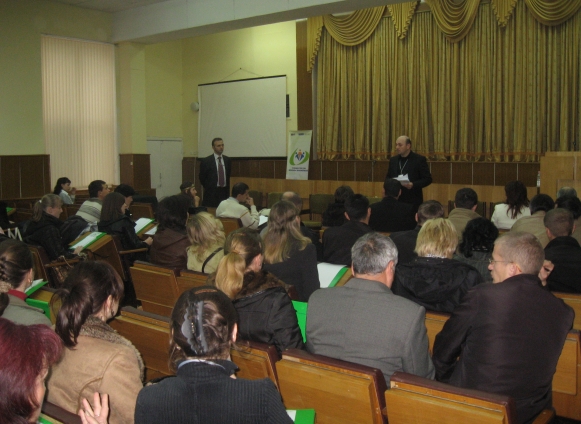
_article_1232981656On October 25th, 2008, at the Labour Institute in Chisinau was held the first stage of the transnistrian Region NGO Forum.
The Forum is designed to identify the problems which impede the development and consolidation of the third sector in the transnistrian region; provide an assessment of the state of civil society in the transnistrian region; foster direct contact between transnistrian region NGOs and Donor Organizations; raise public awareness of the situation of the NGOs from the transnistrian region; promote cooperation between NGOs from both banks of the Nistru river.

In the first stage of the Forum, participants were divided into 4 groups, according to their field of activity (Ecology, Youth, Social and Human Rights) and discussed the problems, obstacles and prospects of development of the third sector in the Transnistrian region. The discussions were organized under the theme 4 Round Tables (MRT) which were held simultaneously in and were moderated by experts 4.

The event was attended by approximately 100 participants, 74 representatives of the transnistrian region NGOs and initiative groups, representatives of the donor organizations and mass-media. Round tables participants shared their opinion concerning the problems faced while unfolding their activities and made suggestions for improving the situation.
The basic issues addressed by the participants were:
Problems and obstacles (related to the registration process and activity) faced by the transnistrian region NGOs and initiative groups;
Strategic planning capacities; development opportunities and financial sustainability of NGOs / initiative groups from the transnistrian region;
Monitoring and evaluation as a mean for improving the programs and services of the regional NGOs;
Lobbying and advocacy capacities of the transnistrian region NGOs and initiative groups;
Recruiting and training of the staff and management of volunteers;
Financial management capacities and fund-raising strategies;
Partnership perspectives with other NGOs / initiative groups and other relevant actors;

The second stage of the project – “Transnistrian region NGO Forum” will be held on November, 15th 2008, at the “Prietenia” Centre in Cosnita village, Dubasari district.

At the event will be invited Transnistrian region NGOs and initiative groups representatives and donor organizations representatives. The participants will have the opportunity to communicate directly, to exchange their views and experience and to make a presentation of their organizations. Also, the experts will present the reports, which will include a comprehensive analysis of the transnistrian region non-governmental sector and recommendations for improving the situation.

The Forum is organized by “Promo-LEX” Association with the financial support of the OSCE Mission to Moldova.