Moldova’s democratization can play a decisive role in Transnistrian settlement, Promo-LEX
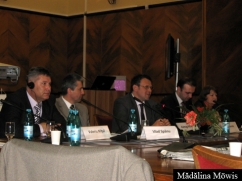
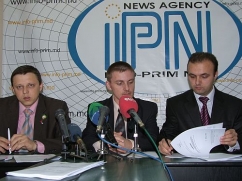
_article_1243245669The democratization of Moldova, especially of its eastern districts, can play a decisive role in the process of solving the Transnistrian dispute. Such a statement was made by the president of the Association for Human Rights “Promo-LEX” Ion Manole at a conference themed “The Baltic – Black Sea Region after the Georgian War and in the Middle of Global Economic Recession” held in Iasi, Romania, Info-Prim Neo reports.

In his speech, Ion Manole stressed the role of the civil society in democratizing the Transnistrian region. “The democratization of the region and the observance of human rights are indispensable notions. The situation of human rights and fundamental freedoms in this zone has been alarming since 1992 until present. The Tiraspol regime and its supporters from outside the country aimed to divert the attention of the constitutional authorities and the international community away from such problems. Perfect conditions for strengthening the separatist regime were created behind a fake negotiation process, fully ignoring the problems and conditions needed to ensure respect for the elementary rights of the persons living in a territory controlled by an illegal regime,” the president of “Promo-LEX” said.

“It is inexplicable why the constitutional authorities and the international community did not tackle the given problem, at least because the Tiraspol administration, which took over the region by military violence, was and continues to include persons internationally wanted for committing crimes and they represent the interests of the population that remained hostage,” Ion Manole said.

According to him, the events that happened during 1990-1992 are not investigated, except the ECHR decision in the case of Ilascu versus Moldova and Russia. “The constitutional authorities and the international human rights organizations do not pay attention to the numerous studies, including those conducted by “Promo-LEX” and especially those of the New York State Bar Association. Therefore, the Tiraspol regime continues to periodically admit violations of human rights, being aware that the sanctions will include only short and ineffective protests by the constitutional authorities, civil society and international community,” Manole said.

He stressed that the civil society can and should play an important role in the democratization of the region. For the purpose, the donor community should work out a joint strategy and coordinate it with the constitutional authorities and the NGOs working in the region. The region’s democratization is impossible without a real democratization of the territory controlled by the constitutional authorities. But, it is hard to democratize Moldova without the cooperation and involvement of the neighboring countries, Ukraine and Romania.

The mayor of Corjova village of Dubasari district Valeriu Mitul spoke about the situation in this settlement and the problems faced by its residents, enumerating then the consequences of this state, which aroused heated discussions on this subject.

The regional conference was organized by the Moldova Foundation (the U.S.) and the Institute of International Relations and Political Sciences in cooperation with the Faculty of Sociology and Social Assistance of the University of Bucharest, Romania). According to the president of the Moldova Foundation Vlad Spanu, the aim of the conference was to initiate a dialog on regional cooperation within the Baltic Black Sea Initiative. The initiative aims to highlight the necessity of cooperation on energy efficiency, economic, trade and tourism cooperation, development of a new elite, involvement of the youth in promoting the supremacy of the law, the human rights, transparency, responsibility.

http://www.info-prim.md/?x=&y=22382


Informing activity “Right to vote and to be elected. The importance of the elections”

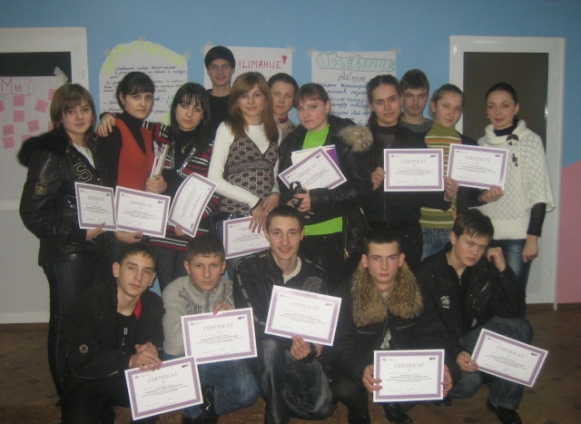
_article_1239190181Members of the Youth Leader’s Network from the Transnistrian region organized on 28 March 2009, in the High School “Alexandru cel Bun”, city Bender, an informing activity on electoral education – “The Right to vote and be elected. The importance of elections”. The seminar was attended by 20 young people, students of XI and XII forms, who are citizens of the Republic of Moldova and have the right to vote..

The activity was carried out in order to inform young people about the organization of the parliamentary elections on April 5, 2009, when they will exercise their right to vote for the first time. Young people were trained regarding the correct procedures for exercising this right, they learned about the importance of this experience and rules to be considered in the polling stations for their locality.

Theoretical elements of the activity – the legal exposures from the electoral, current legislation contributed to the understanding of the substance of the right to vote. Participants enjoyed the opportunity to see through graphs, how a polling station looks and what is the procedure to be followed for the proper exercise of their right to vote.

The activity’s developed structure allowed young people to maintain discussions and debates on different topics, ideas and opinions regarding the importance of exercising the right to vote and fairness of conducting elections in Transnistrian region. Also, they mentioned the phenomenon of misinformation of the population, youth’s indifference and lack of interest, low level of civic culture of citizenship, fact that influences the attitude of the voters towards the importance and the need to exercise their right to vote. Based on information that they gained during the informing activity, pupils tried to answer from their own point of view the question “why is it important to vote?”, answers led to contradictory attitudes, but the main point found is that young people are convinced to go to vote. Participants were impressed by the discussions from which they learned useful things about what is necessary for a citizen with the right to elect and to be elected.

Activity was carried out by members of the Network of Young Leaders from Transnistrian region.
Cazac Ala, Tatiana Breahni.

The Network of Young Leaders from Transnistrian region was established by Promo-LEX Association within the project “Strengthening youth initiative groups from Transnistrian region, project financially supported by the Royal Netherlands Embassy in Kiev through the MatraKAP Program.


Voters from Transnistrian region are discriminated in exerting their right to vote, Promo-LEX

_article_1237902670The Moldovan citizens from the Transnistrian area are discriminated in exerting their right to vote in comparison with the citizens from other districts of the country, reads the first Report on monitoring the electoral process in the Transnistrian region in the 2009 parliamentary elections, Info-Prim Neo reports.

The report, presented on Tuesday, March 24, is worked out by the Promo-LEX Association, a member of the Civic Coalition for Free and Fair Elections – Coalition 2009. Monitoring the electoral process on the Nistru’s left bank from February 10 to March 18, 2009 is done for the first time in the history of elections in Moldova.

Pavel Postica, a lawyer with Promo-LEX, the coordinator of the project, has said that, since the first parliamentary elections in 1994, a slow but continuous growth of the number of people willing to exert their right to vote can be noticed.

On March 3, 2009, the CEC stated that 500 polling stations would open in the region. Then, because of the discord between the Tiraspol regime and the constitutional authorities of Moldova, the CEC adopted a decision on March 10, through which the voters from the region would be able to vote in 10 polling stations to open on the right bank of the Nistru.

The observers signaled the impossibility to make out the electoral lists, because the local public administration in the region is not under the jurisdiction of the constitutional authorities.

The experts also find that the authorities did not take into account the situations of changing residence within the region. “Because of the lack of electoral lists for the Transnistrian citizens, the voters from this territory will not get the certificate enabling them to vote in other polling stations, but in one of those 10 stations near their residences certified by ID cards,” said Ion Manole, the president of the Promo Lex Association.

According to the data Promo-LEX learnt from the Informational Development Ministry, 223,580 Moldovan citizens with the right to vote are registered in the Transnistrian area. Respectively, over 22 thousand voters should come to a single polling station. At the same time, the electoral legislation provides that the number of voters at a polling station should not exceed 3 thousand persons. In addition, the same 10 polling stations where the Transnistrian inhabitants can vote will be available for the inhabitants of the localities close to the region, as Dorotcaia and Cocieri. The most serious problem, according to the report, is linked to those two polling stations in Varnita village. The voters from Bender and Tiraspol, and from many rural localities from Slobozia district will be able to vote at these polling stations, both having the headquarters in the culture house, and the number of voters in these localities is over 100 thousand. The Promo-Lex experts ask whether those two stations will be able to insure the fulfillment of the citizens’ right to vote.

The report shows that the Transnistrian media covered, indirectly, the 2009 parliamentary elections, mostly in a negative context, expressing stances against going to the poll.

“There are practically no electoral activities there. The most active political parties seem to be the Centrist Union, the Liberal Democratic Party and the European Action Movement. Most parties staged no rallies in this area,” Manole added. Promo-LEX recommends the electoral contestants to take non-discriminating stances as to the voters from the localities controlled by the Tiraspol regime. The NGO makes similar recommendations for the international observers and the Central Election Commission.

The project is funded by the Eurasia Foundation, from money offered by the Swedish International Development Agency and USAID.

http://www.info-prim.md/?x=22&y=22205

http://www.publictv.md/ro/Conferinta_de_presa_Procesului_electoral_in_regiunea_transnistreana-25.03.2009


DOC – Report No.1


Strengthening youth initiative groups from the Transnistrian region

During the first quarter of 2009, Promo-LEX Association implemented the project “Strengthening youth initiative groups from the Transnistrian region”.

During implementation process was proposed to achieve the proposed 2 major objectives, to improve abilities and skills of civic participation for development of youth initiatives within their communities and straightening the network of youth leaders created within the project and developing abilities of communication and civic involvement in decision-making processes at level of their communities.

Within project have been organized four trainings. The first three trainings were dedicated to topics „Youth and student’s rights”; “Volunteering within my community” and “Communication and conflict resolution”.
Within the project 64 young people from the left bank of the Nistru river and in particular from localities town Dubasari, town Grigoriopol, village Malaiesti Grigoriopol district, city Ribnita, village Cosnita, village Slobozia, city Tiraspol, city Bender, village Sloboda – Rascov Camenca district, village Dorotcaia, village Corjova, village Harmatca, and city Grigoriopol were direct beneficiaries of the activities organized in order to develop and enhance skills of the involvement and participation in their town.

Final activity within the project held in period 21-22 March 2009, at The Leisure Center “La Popas”, gathered 15 of the most active participants from training activities organized earlier within the project. For this training was specific that the program focused primarily on role-plays, simulation game and practical activities that have allowed the direct involvement of participants and contribute at develop of skills of critical mind.

Within role-plays, the participants illustrate the the interaction between the 4 actors of a democratic society: NGOs, mass-media, government and citizens. They listed the functions that have each actor in a democratic society and the requirements of each other in order to achieve its role. Young people have demonstrated good understanding of the concept of interaction of key segments in a democratic society and presented ideas in accordance to reality. The general topic addressed to human rights issue in democratic society, was treated through practical exercises of viewing short social videos that have been commented and discussed so that each participant expressed their opinion regrading right presented in movie.

Simulation game organized within the training focused on presenting discrimination phenomenon in society has generated controversy attitudes and behaviors between young people so that they played the role of discriminated people and those who discriminate.

As well, within the training the participants developed an action plan of the Network for a period of up to 20 May 2009. In this context, they assumed the responsibility to organize in their locality youth activities oriented on information on the voting procedure, training activities in the field of development youth initiatives focused on their current problems: communication and relation with community, youth’s rights, etc. Most young people mention the necessity of development of friendly spaces to youth in their communities as this spaces will be an effective way to support activities initiated by them.

The activity was organized within the project ” Strengthening youth initiative groups from the Transnistrian region”, implemented with financial support of the Royal Netherlands Embassy in Kiev, through Program MatraKAP.

Olga Gordila,
Project Coordinator
Promo-LEX Association


Training Financial Management for NGOs

_article_1238495139The success of an organization largely depends on it’s ability to properly manage financial resources and to find an adequate approach to financial management.

Many NGOs, especially those who are newly established, meet difficulties relating to financial management of the organization, especially concerning budget planning, fundraising, accounting systems and reporting procedures to state institutions and donor organizations.

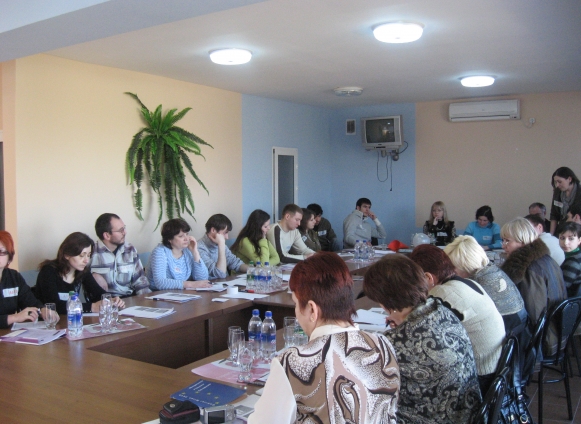
In this context, in the period March, 21st -22nd , Promo LEX Association organized the training course “Financial Management for NGOs”. The training was aimed at NGO representatives from the Transnistrian region, who are responsible for financial management, accounting and fundraising within their organization. The training gathered 23rd participants from: Tiraspol, Bender, Dubasari, Ribnita, and other localities from Slobozia and Camenca rayons.
The goal of the training was to develop the knowledge and skills of NGO representatives from the Transnistrian region in the financial management of projects and organisation. It is important to mention that the topic of the seminar was establish at the requirement of the RCDT (Resource and Development Centre for Transnistria), who indicated in evaluation forms at each period, the need for training in the financial management of NGOs.

During the theoretical sessions of the training such topics were addressed as: concepts and basic principles of financial management, tools and methods of financial management, organisational budget planning of projects, organisation and fund-raising for the NGO, financial reporting for donor organisations and to the competent state authorities as well.

During practical sessions the participants had to elaborate the budget for one year for this organisation according to the mission and strategic plan of four virtual NGOs.

Participants addressed a large number of questions, which were directly related to the financial reporting rules to donor organizations and competent state organs. Since most regional organisations do not hire a professional accountant, and the persons responsible for financial reporting usually do not possess the necessary knowledge in this field, this training as a whole was considered an extremely useful one for all participants.

This training was conducted within the NGO Department training program which is oriented to support the civil society in the transnistrian region. The project was implemented by Promo-LEX association with the financial support provided by the National Endowment for Democracy.

Natalia Gligor
NGO Department, RDTC
Promo-LEX Association


The abusive and illicit actions of customs bodies’ representatives and illegal administration from Tiraspol have resulted in the sequestration of ballot boxes destined for the polling station of Corjova

_article_1237549310Promo-LEX Association disapproves of the abusive and illicit actions of customs bodies’ representatives and the illegal administration from Tiraspol with regard to the restraint of the freedom of movement and the sequestration of ballot boxes destined for the electoral district of Corjova village, Dubasari district.

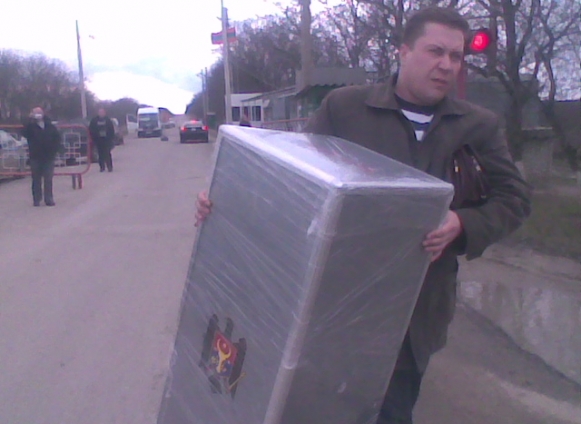
On March 19, 2009, at 11 A.M. at the “customs” point neighboring Pohrebea village, Dubasari district, the vehicle transporting the ballot boxes destined for the electoral district No. 5 of Corjova (administrative electoral district No.15 from Dubasari) was stopped. The Mayor of Corjova and the vehicle driver Oleg Cernatu were deprived of their liberty onsite for about four hours at the so-called “customs” point.

Having detected ballot boxes amongst the transported goods destined for the oncoming parliamentary elections, the representatives of this “customs service” demanded that the Mayor pay the value of the transported goods. Upon his refusal to pay these certain sums illegally solicited by illicit institutions, the persons (can be identified) declared that the goods will be sequestrated and a report will be initiated on the driver. The Mayor has insisted upon the return of the vehicle and the ballot boxes in order to avoid this unpleasant situation and also upon the fact that the driver has nothing to do with the ballots, but his words were ignored. As a result the ballot boxes have been sequestrated and a report of alleged “customs” misbehavior was initiated with regards to the driver.

Repeatedly, Promo-LEX Association are presented with various situations proving the abuse on behalf of the illegal bodies’ representatives from the region. The situation in question demonstrates once again the non-constructive and repressive characteristics of the regime. We regret to state that the purpose of the illegalities and the intimidations that took place on March 19, 2009 is the aggravation of the region’s situation before the elections of April 5, 2009. The constitutional electoral bodies announced the establishment of the polling station No.5 in Cojova village and the sequestration of the ballot boxes is the first action taken to intimidate the citizens who would like to exert their constitutional right to vote. We point out that local elections of 3rd and 17th June, 2007 were aborted due to organized violence by numerous persons, representatives of region militia and the occupation of the polling station of Corjova.

Corjova Mayor and the vehicle driver Oleg Cernatu were arrested and held at the territory check point for a long period of time, while the ballot boxes were displayed in the public eye with the purpose of intimidation and warning for all the people crossing the area. Therefore, this was a clear display offered to the region population by the separatist Tiraspol regime that they would not accept civilized conduction of the elections in the security area and the whole region.
On March 17, 2009, Promo-LEX appealed to the representatives of the constitutional authorities and to the Russian Federation to place on the agenda of Moscow discussions, topics regarding the issues and the situation of human rights in the region.
Promo-LEX called upon the signers of the Moldo-Russian Agreement of 1992 to comply with their international commitments and positive responsibilities with regard to the rights of territory people, stating the right of suffrage as major priority for the present moment. We regret to state that the topic has been ignored or at least has had a null result.
In this context, we reiterate insistently the content of the 17th March, 2009 appeal, and in the event of a new meeting between Voronin and Smirnov on March 25, we demand the discussion of the topic with regard to the necessity of the unconditioned respect for the rights of region people, especially the right of suffrage.

At the same time, we ask the constitutional authorities to undertake all the peaceful legal actions to the return the sequestered ballot boxes as soon as possible and to demand from that the Tiraspol regime refrain from any actions restraining the freedom of movement, the right to property and the right of suffrage during the electoral period.
Actions and procedures provided for in the national legislation should be undertaken for the unbiased examination of the case circumstances and the eventual administrative and penal punishment of the persons responsible for the abuse in question.

In the meantime we appeal to all national and international competent bodies to adopt a clear position of condemning the regime for any intimidation or repressive action.

Promo-LEX Association is a member of Civic Coalition for free and fair elections -2009 and monitors the Parliamentary elections in the Transnistrian region of the Republic of Moldova.

Legal Department
Promo-LEX Association


Right to vote and right to be elected

On March 11th, in “Evrika” lyceum from Ribnita, Promo-LEX Association organized an informative seminar “The right to vote and to be elected”. The seminar was attended by 23 students from elder classes. The aim of the seminar was to inform young people from the Transnistrian region about their right to vote and right to be elected.
Elections are one of the most important tools which citizens can utilise in order to influence decision making processes. Unfortunately, many young people in Moldova, including those from the Transnistrian region do not realize the benefits of these opportunities. The causes are diverse: there are ill informed, not motivated to vote or they just don’t believe in the power of their vote.

Thus, during the seminar the youth was informed about the history and evolution of the right to vote, about the procedure of voting and the provisions of the electoral code of Moldova.
During the discussions, the young people tried to identify the reasons which generate the apathy and indifference towards the political and electoral process for the young generation. In this regard, it was mentioned that young people simply lost hope in a prosperous life. They do not believe in promises, nor believe in their own power to change something within the society. Most young people do not believe in the value of their vote, a fact which is proved by an insignificant youth participation during the elections. Besides many other reasons which generate the young peoples’ indifference, it was also noted the lack of democratic traditions and youth participation in decision-making processes and political life.

Thus, the fact that young people are ill informed, the fact that voting sections are not open in Ribnita, the lack of confidence in the electoral candidates, the indifference towards the political processes and lack of confidence in their voting power have been identified as the basic causes that hinder youth participation in elections.

Within the seminar the participants also discussed the possibilities and potential solutions for solving these problems. The young people concluded that continuous and adequate youth information would be the best solution. They want to be informed about the political life of the country and also get involved in various projects, seminars, conferences where would be discussed the current problems of the Republic of Moldova, and in particular the Transnistrian region problems.

Another solution mentioned by the participants was the civic and patriotic education both in school and other extracurricular activities.
In the end, most of the young people said they would go to vote together with their friends or parents and also will try to convince other young people from their community to do the same. For young people from Ribnita this means to go to the special voting section in Rezina, which will be opened for the Transistrian region inhabitants.
This activity was an apolitical one. The aim of the seminar was to promote the right to vote, informing and motivating young people from the transnistrian region to participate in the elections from April, 5th 2009. Their voice must be heard.

This activity was conducted within the Resources and Development Center for Transnistria with financial support of National Endowment for Democracy.

Natalia Gligor
NGO Department, RDTC
Promo-LEX Association


Communication and conflict resolution

_article_1235571221In specialty literature, communication is defined as the first instrument of the human being in its socialization.
A group of young people from Transnistria approached in a completely innovative way, the notion of communication and conflict resolution. This was possible within the training “Communication and conflict resolution”, organized by the Promo-Lex Association.

The training took place in the period 21-22 February 2009, vilage Cocieri, district Dubasari. The training was attended by 29 young people from Transnistria. Most of the participants were pupils from Transitrian region schools and high schools from Dubosari city, Grigoriopol city, Malaiesti village, Ribnita city, Slobozia city, Tiraspol city, Bender city, Sloboda Rascov village, Camenca district.

The aim of the training was to develop participants’ communication skills, argumentative skills and public speaking abilities. As well, the training focused on the effective conflict management and promotion of tolerance in the process of communication between young people.
The training was based on applicative and interactive methods – working within small groups, role-plays and debates on ideas as launched by the trainers and participants. The young people were able to demonstrate their position through well-structured arguments, which facilitated critical thinking and peer to peer education.

Participants had the opportunity to present a speech in front of their colleagues. Subsequently, the participants watched the videos of their presentations and highlighted the positive moments as well as the issues that needed improvement. Thus, the participants received their first lesson on public speaking by learning the basic rules and also how to avoid common mistakes.
Nonverbal communication was another issue of high interest for the training participants. Of this matter, several games were organized within the training. The games proved to the participants that it is not only important what we say, but also, how we say it. Also, participants learned that particularly nonverbal communication represents the key moment for the avoidance of or, on the contrary, the challenge of an interpersonal conflict.

As for conflict resolution, young people were involved in debates focused on the positive and negative effects of the conflict. Most participants acknowledged openly that, in most situations, they turn to confrontation or avoidance as a mode of behavior in conflict situations as it is simply the easiest. It is more difficult to reach a compromise or collaboration – this requires considerable and conscious effort from all the parties involved in the conflict.

At the end, participants made an assessment of the training and stated that for the most of them, this training was their first experience of non-formal education. Also, the participants realized the importance of effective communication and tolerance at all levels.
Training “Communication and conflict resolution” was organized within the project “Strengthening youth initiative groups from the Transnistrian region”, implemented with financial support from the Royal Netherlands Embassy in Kiev, through Program MatraKAP.

Olga Gordila,
Project Coordinator
Promo-LEX Association


Volunteering within my community

_article_1234427601“The highest reward for a person’s work is not what he receives for it, but whom he becomes due to it” said John Ruskin. Under this topic 15 young people, inhabitants of the Transnistrian region attended the training “Volunteering within my community”, organized by the “Promo-Lex” Association in the period February 7-8, 2009.
The event was held at the leisure center “La popas“ Cocieri village, district Dubasari. Participants at the training were pupils from local schools of the Transnistrian region holding a civic attitude, opting for change in their community.

Young people already involved as volunteers in the Local Youth Councils, initiative groups or NGOs, received a clear and accessible approach of the concept of volunteering.
Participants were from the following local towns; Dubasari, Ribnita and Grigoriopol and the village Dorotcaia.

The training aimed to stimulate young people’s involvement in community life through volunteering, and promoting such activities in their community. Moreover, thankfully to the cognitive – practice method used in organization of the training, the youth had developed communication skills, creative thought in implementing new ideas and concrete activities.

Participants understood not only general ideas on volunteering (principles, issues, rights and obligations of the volunteer), but learned during practical exercises what are the benefits of voluntary activity. Working in groups, discussion / debate of the topics that presented interest for them was an important step for the development of such skills as the arguing and presentation of their ideas to a new audience.

The young people realized the need of their involvement in volunteer activities, and most importantly is that they decided to initiate campaigns and actions on improving the situation within their own communities (E.g. campaigns for the libraries in their town or renovation of some classes within their educational institutions).

Participants had the opportunity to meet foreign volunteer and share with them their volunteer experiences, questions and active participation in discussions in the “improvised” talk show with guests of the show – international volunteers Oonagh O’Connor, ( “Promo – LEX” Association volunteer through EVS) and Bernd Fink (ARTEVELDE Hogeschool Gent, Belgium).
Through this training young participants developed leadership qualities and started to consolidate them into a network of young leaders with civil attitude. In this context, their motivation to volunteer is strongly determined by their desire to bring change in their community, so that they will start a constructive dialogue with all relevant actors (teachers, local government representatives, parents).

Training “Volunteering in my community” was organized within the project “Strengthening youth initiative groups from the Transnistrian region”, implemented with financial support from the Royal Netherlands Embassy in Kiev, through Program MatraKAP.

Olga Gordila,
Project Coordinator, Promo-LEX Association


Training course “Project Management”

_article_1234341363During the period of February, 7th – 8th 2009, Promo-LEX Association organized the training course entitled “Project Management”.
The event took place at the Resort Center “La Popas” situated in the Cocieri village (Dubasari region) and was attended by 20 representatives of NGOs and initiative groups from; Ribnita, Dubasari, Slobozia, Tiraspol and Bender.

The participants were actively involved in discussion and engaged in practical activities concerning the following topics; project management principles, project proposal writing, stages and processes of project management. Thus, by the end of the training, the participants had enriched their theoretical knowledge and consolidated their practical skills in developing project proposals, and also in the planning and implementation of a project. The participants learned how to identify and minimize the risks that can arise during the project implementation process and what are the project monitoring and projects evaluation mechanisms. The topics of greatest interest proved to be elaboration of the budget and the financial management of a project.

According to the final evaluation forms, the topic of the training seminar was appreciated as a very current and useful one for NGOs representatives from the Transnistrian region. Most of the participants recognized that as they were participating for the first time in a training course in such a topic, as in recent times, seminars of this kind are rarely organized in the region. At the same time, training participants emphasized the fact that its necessary to continue the training in this field, especially for the initiative groups and freshly institutionalized NGOs.

This activity is organized within the NGO Department of the Resource and Development Center for Transnistria training program. A project implemented by Promo-Lex Association with financial support of National Endowment for Democracy.

Natalia Gligor,
Coordinator of NGO Department,
RDTC