Declaration on the principles of election of the President of Moldova

Depolarization of the President institution constitutes the European standard and is a constant European practice. European practice dictates the choice of the person that enjoys large support within the society and symbolizes the consolidation of the state.

Constitutions of the European countries with the parliamentary constitutional regime (with direct or indirect election of the president) provide for the firm restrictions for the president to cumulate its function with any other function. In Germany, the country with indirect election of the president, Presidents elected are personalities that enjoy large acceptance in the society. Indirect election of the president also insures absence of the popular legitimacy and impedes attempts of the elected president to subdue other state institutions (for instance functions of the Parliament or of the prime-minister).

European tradition provides that the President-elect enjoys high moral authority. As a rule, the country’s president, throughout the period of the execution of his mandate, does not hold any membership of the political party. In Estonia, the president –elect suspends its political affiliation, and is in practice recommended that the suspension starts from the moment of nomination. In Italy, the President symbolizes the national unity rather then a concrete political movement. In Czech Republic, the president- elect encompasses the common consolidated idea of the nation.

Constitution of the Republic of Moldova subscribes generally to these traditions of the European parliamentary family. Yet, the constitutional and legislative provisions regarding the President, its functions and election, requires improvement, the existing norms become simply declarative and formal unless consistently applied in accordance to the European practice.

It is recommended that the Parliament and political actors adopt the following principles in the process of the election of the President of Moldova:
– suspension by the president of his/her membership in any political party from the moment of candidacy and during the whole mandate;
– president elect has to be a personality that enjoys an authority and legitimacy in the society and has necessary competences to communicate and negotiate with all actors of the society,;
– president elect symbolizes the country unity and not divide, can cultivate the confidence in all actors of the society;
– inadmissibility of cumulating of other functions, inclusive during the candidacy, thus putting in practice the principle of separation of powers;
– introduction in the constitutional and legal norms these principles;
– political actors engage in the consultations and discussions to apply into practices all these principles.

Signatories:
Sergiu Ostaf, Resource Center for Human Rights / www.CReDO.md,
Vanu Jereghi, Institute for Human Rights / www.IDOM.md,
Liubov Nemcinova, International Society for Human Rights – office in Moldova / www.ISHR.md,
Ion Manole, Promo-LEX Association / www.promolex.md.


In Transnistria continues the “hunting” of young people who have military service documents issued by the constitutional authorities of Moldova

Promo-LEX is deeply concerned by the situation where young people who have military service documents issued by the constitutional bodies may be subjected to persecution by the self-proclaimed Transnistrian authorities. Young people who receive the military document issued by Moldovas’ relevant authorities also receive the stamp “have not performed military service”, despite the fact that they had made an oath of allegiance to Moldova. The Tiraspol administration believes that these stamp entitles them to enlist people in their own army. Promo-LEX received alarming signals from people that have faced such problems. Also, that their military documents are sequestered and young people receive subpoenas and are forced to meet the “military service” in the illegal paramilitary formations.

On the other hand students who turn 18 receive summons to appear at the May/June 2009 period at the centers of secessionist military enlistment and not coincidentally this coincides with the support for baccalaureate exams. Young people are threatened with criminal records if they refuse to undergo this procedure. Some of them say that they were forced to sign documents that they will continue to study in Tiraspol.

“I had to run to another region of Moldova, I do not know what to do to escape the army, more than that ?I have sworn the oath of allegiance to Moldova”, a young boy from Dubăsari reported to the Promo-LEX team who wanted to remain anonymous.

“The Military Service Obligations of the Inhabitants from the Transnistrian region of Moldova ” study launched by Promo-LEX in 2008, shows that the fundamental rights of young people in the region are violated. Moreover the association believes that the lack of information and support to young people this year worsened the situation of their rights.

“It is particularly important for young people to be informed of the possibility of arrest on the left bank of the Nistru. We notified and requested constitutional authorities to intervene as to prevent abuses and resolve this issue for thousands of people in the region. We count on the receptivity of the Ministry of Defense and the Ministry of Reintegration, which manifested openness to solve the problems of these people”, stated Ion Manole, President of Promo-LEX .

Promo-LEX urges people who were confronted with such cases of abuse and unlawful restraint, or know of such cases, call the phone numbers: 022 450024 or 069070800.

On March 3rd 2009, the media in the region released a series of interviews with the deputy “military prosecutor” from MRT, Valentin Popov. He said that “military prosecutors “ in the region have made verification of persons who have been released from satisfaction of “military service” and found that only in the “enlistment campaign” in 2008 443 have been “illegally” released from the satisfaction of military service and for the past three years this figure has risen to over 800 people.

Note for the editor
The Study “The military people of Transnistrian region of Moldova” may be found here:
http://www.promolex.md/index.php?module=publications

The Transnistrian media interview can be found as follows
http://www.nr2.ru/pmr/222783.html
http://www.regnum.ru/news/1132688.html
http://www.tiras.ru/kriminalnoe-chtivo/7264-voennojj-prokuraturojj-pmr-vyjavleny.html
http://www.prokuror-pmr.org/index.php?option=com_content&task=view&id=666&Itemid=3496

For further information please contact: Pavel Postica, Jurist Asociaţia Promo-LEX , tel. (+373 22) 45 00 24, e-mail: [email protected].


The right to liberty and security of person in the regions of conflict

_article_1241682349The Promo-LEX Association organized the conference entitled “The right to liberty and security of person in the regions of conflict” on the 4th and 5th May, the event was hosted in the Hotel Codru in Chisinau. The conference was attended in total by 60 people; representatives of the Ministry of Reintegration, the Ministry of Defense and Justice, representatives from the German, Czech Republic, and Romanian Embassies, the EU Special Representatives to Moldova, Ombudsman, judges and prosecutors from the district courts of Bender, Căuşeni, Dubăsari, Rezina, Floreşti, Grigoriopol, Slobozia and Rîbiniţa. The conference was also attended by representatives of civil society from both sides of the Nistru and that of international organizations concerned with the issue of human rights in the Transnistrian region of Moldova.

The conference not only focused upon the issues of the Transnistrian region of Moldova but also that of zones of “frozen” conflict in Georgia and the North Caucasus region, Russian Federation. On this occasion experts from Georgia and Britain were invited to participate at the conference.

The conference was opened with a word of greeting from Mr Alexandru Postica, the executive director of Promo-LEX, and from Mr Ion Stăvilă, the Vice-Minister of Reintegration. “We will together, with the experts attempt to detect positive examples from these regions to implement into national law, and also the negative of which is to be avoided” Mr Alexandru Postica said.
During the first day of the conference a number of problems relating to the human rights issue in the Transnistrian region were addressed. Mr Dumitru Mânzărari, an expert from the Institute for Development and Social Initiatives “Viitorul”, talked about the regional security issues, mentioning as well the situation of the fragile state of the Republic Moldova. In his speech Mr Mânzărari explained the nature and causes of the conflict and the prospects for solving it.

Within Mr Stăvilă’s presentation, he reported efforts by the Republic of Moldova (herein after R.M.) in resolving conflict and protecting human rights in the Transnistrian region. He stated finally that the ministry’s intention is to contribute to solving any problems that occur on the Transnistrian territory that is within the jurisdiction of this institution.

Popovschii Stepan, a lawyer from the Transnistrian region explained that the courts operating in the Transnistrian region are unable to provide an equitable and fair examination of the cases. He particularly noted the non-transparent and imperfect manner in which the cases are examined in these so called courts. And that it would be necessary to create structures that would be able to consider disputes under the protection of international structures.
The President of the Association of Lawyers for Human Rights, Mr Vladislav Gribincea talked about the issues of jurisdiction in connection with the examination of the complex cases in the region. In light of the case Ilaşcu and others vs Moldova and the Russian Federation, Mr Gribincea concluded that mostly the situation has not changed since the decision was ruled in 2004.

Also on the first day of the conference, Mr Ion Manole made a presentation regarding the freedom and security of persons in Moldova. Within his presentation Mr Manole stated that the addressed issue is itself very complex, as demonstrated when interpreted within the national and European legal systems, as it requires a special approach when examined under a system illegally present in areas devoid of legitimacy and international recognition. Mr Manole also stated that the regime in Tiraspol, being limited in its actions on the territory of the left bank and deprivation of of legitimacy, has no right to deprive people of freedom. In different periods, the constitutional efforts to release political prisoners (Ilascu, Ivanţoc, Petrov-Popa and Leşco) were considerable and appreciated both by national public opinion and the European court. In this context, it is logical to ask whether the Republic should not have to do the same in all cases of arrest or detention brought to their knowledge. However, there were not registered some efforts made in similar cases. Conversely, the vast majority of approaches examining complaints got a single answer – one based on the fact that “due to the political situation created after 1992, law enforcement lack the ability to intervene to defend the rights and legal interests of the Transnistrian region’s inhabitants” or that the Republic of Moldova does not have effective control over this territory, not missing an opportunity to notify the victim or their representatives that ”with the ratification of the ECHR and the Protocols, Moldova declared that will not be able to ensure compliance with the Convention with respect to acts and omissions committed by the self-proclaimed Moldovan Transnistrian Republic on the territory controlled by separatist authorities till the conflict resolution”. But, that it does not possess the de facto constitutional control over the Transnistrian region does not release the (State) Government from the responsibility on the situation of the area.
Mr Manole said that similarly a simple analysis of the past 20 years in the post-soviet and Balkans countries justify the views on the inefficiency of international structures both in terms of prevention of conflicts (former Yugoslavia, Chechnya) and involvement in managing post conflict situations (Georgia, Moldova). Lack of joint efforts and visible results are continuing to affect the lives of millions of people. In my opinion, an increased attention to issues related to human rights could make the situation change.

The second day of the conference was devoted to the situation in the North Caucasus region, Russian Federation and Georgia. Doina Ioana Străisteanu, an expert on human rights reported in this respect on European Court of Human Rights Judgments against Russia regarding Cases from Chechnya. Currently the court has given some 100 decisions on these cases and there are a lot of cases which have not been examined yet. The example of Chechnya was presented as a negative scenario, which is to be avoided in the case of Moldova.

As regards to the freedom and security of person in the conflict in Georgia, Nikoloz Legashvili, Chairman of the Board of the union ”Article 42 of the Constitution” reported on the essence and trends of the conflict in Georgia. Although the case law regarding the causes of human rights violations for Georgia to the European Court is smaller, however the experience related by Nikoloz Legashvili was necessary to understand the importance of negotiations in frozen conflicts.

Also, on the second day of the conference Veaceslav Balan, an expert on human rights, spoke about the International Criminal Court. It was mentioned in this context that, Moldova should firstly ratify the Roma statute, and that secondly this must be done without excluding the Transnistrian region. The importance of this mechanism is shown with regards to illegal actions of individuals against humanity. A clear example of the Rome Statute was the President of Sudan who was recently arrested for crimes against humanity.

Based on the experts’ presentations and participants’ comments it is possible to conclude the following recommendations:

  • RM authorities must undertake all the measures that are within the constitutional power to cover information gaps that have persisted in the region for over 17 years;
  • To increase the level of confidence of the inhabitants of the left side of Nistru in the Constitutional authorities;
  • To equip the legal institutions such as Courts, prosecutors offices and the police departments, specifically created for the districts outside the constitutional authorities jurisdiction and increase the number of the employees of these institutions;
  • To take attitudes towards the acts and documents issued by local administration;
  • Thorough investigation of each case of violation of the right to liberty and security and it’s proper documentation.

The Conference was organized by Promo-LEX Association in the framework of the project “The right to liberty and security of person in the regions of conflict”, project financially supported by Balkan Trust for Democracy and Black Sea Trust for Regional Cooperation /A Project of the German Marshall Fund.
The basic aim of the project is to identify appropriate and viable solutions for promoting and defending the right to liberty and security of persons from the Left side of the Nistru (Transnistria). Positive practices are taken from regions of conflict and post conflict in Georgia, former Yugoslavia, and Northern Caucasus, through the exchange of experiences at a regional level.
Also in this project a study on the freedom and security of person will be developed in the conflict of Moldova, Georgia, Russian Federation and the former Yugoslavia. The study will be published and presented to the public in September 2009.


DOC – Agenda


Roadmap for national reconciliation and european integration in Moldova

Background:

The political crisis after the general elections in Moldova has seriously shaken the foundations of the rule of law in the Republic of Moldova. Accusations of electoral fraud and large use of administrative resources by the incumbent government have not been prevented, generating street riots and major political tensions. Instead of responding to these frustrations, the authorities accused the protestors and the opposition of a ‘coup d’état attempt’, resorting to mass arrests and physical mistreatment of peaceful protestors. Recognition by the Constitutional Court of the final results of elections will not end the stalemate; moreover, mistreatments on the police side are added to the allegations of electoral frauds. Thus, a national reconciliation can be ensured only through the implementation of a Roadmap, which is to be accepted by all actors, political parties and the civil society involved, focused on the restoration of the rule of law, legitimated elections and European integration of the Republic of Moldova. The current document is an initiative of Moldovan civil society, which is extremely concerned of the necessity to establish a crisis management mechanism. The purpose of the document is to suggest the first steps out of the stalemate, with the following objectives:

• re-establish and ensure the functioning of the democratic institutions;
• restoring the fundamental human rights and freedoms,
• strengthening the social and European cohesion during crisis.

Assessing the current state of affairs

According to the observation monitoring reports, parliamentary elections of April 2009 were “partially free and unfair” (Coalition 2009) or “free and partially correct” (OSCE/ODIHR Monitoring Mission).

Numerous irregularities registered during the campaign by national and international observers (undue use of administrative state resources to the benefit of the ruling party, inappropriate management of the voter’s lists, political persecution of opposition, and censorship over public mass media) have ultimately compromised the electoral process in Moldova. The overspread feeling of rigged elections, combined with hasty statements on behalf of the ruling party, generated street protests held immediately after the preliminary results were announced by the Central Election Commission. The exasperation expressed by a significant part of the electorate on April 6 grew up into large peaceful street gatherings. Street protests continued on April 7, and in the afternoon developed into clashes with law-enforcement bodies. Afterwards, some of the aggressive groups vandalized two state institutions, unprotected by the law enforcement bodies.

As a result of the protest actions, questioning the legitimacy of elections, the law enforcement bodies (police, prosecution, and the Intelligence and Information Service), invoking only the need for response to the vandalizing actions perpetrated by the aggressive groups, have embarked upon an indiscriminate persecution campaign against all protesters. The public security forces set on actions of intimidation against media outlets. There were numerous cases of detainments and arrests on the basis of summary proceedings, by police and unidentified persons in civil clothing, which led to the brutal use of force and mistreatments. The fact that the presumption of innocence was ignored in respect to those arrested, political persecution was launched against peaceful protestors, opposition and civil society after the elections, led to deterioration of trust in public institutions and nurtured a deep sense of fear. Moldovan watchdogs documented hundreds of testimonies of degrading and inhuman treatment against persons detained at police offices. The ‘appeal for amnesty’, voiced by President Voronin, for the acts of torture breaches upon the international principles of non-impunity, while the investigations of mistreatment are timid and, so far, only declarative.

The above actions were further followed by a campaign of intimidation of the civil society, of independent media and opposition parties, generating deep cleavages inside society, and compromising the well functioning of the democratic institutions. The political actors involved in this crisis come with mutual accusations, deeply hostile, thus having no adequate framework for political dialogue. The public and private media is heavily polarized; state media institutions being fully subordinate to the ruling party, while private media institutions actively promoting the image of confrontation and polarization of the society. On the background of degrading political climate, the EU reactions remain unaccented, while the US reactions are delayed. Although certain institutions of the Council of Europe launched some evaluation and fact-finding actions, the political crisis is far from being resolved. The lack of firm actions can be perceived by the incumbent Communist Party as an invitation to practice impunity, at the expense of civil rights and liberties, the rule of law state, thus deepening the absence of political legitimacy within society. Only more robust and firm engagement of the EU, US and other international actors would return the country to the normal democratic governance, and stable functioning of democratic institutions.

The current crisis requires implementation of the following actions:

• restoring the rule of law, institutional checks and balances and effective separation of the state powers
• bringing to justice those guilty of torture and abuses against protesters arrested during 6-20 April, as well as those involved in vandalism acts
• creating the necessary conditions for the initiation and consolidation of the political dialogue, in a pluralist environment.

The current document presents a consolidated position of the experts from the Moldovan civil society regarding optimal measures for short and mid-term perspective with the aim to find a solution to the ongoing political crisis in a peaceful way and employing exclusively legal means.

I. ENSURING THE FUNCTIONING OF DEMOCRATIC INSTITUTIONS

The European specialized agencies (CoE, OSCE/ODIHR and EU) assess that the functioning of the democratic institutions in Moldova needs progress and reforms. The Judicial system is extremely vulnerable to the political pressures, the reform of the General Prosecution Office have not been implemented in its scope and essence, the degree of independence and impartiality of these institutions is very low. The ‘vertical of executive power’ remains an exclusive prerogative of a single dominant party, which prevents the exercise of political pluralism and makes almost impossible the accountability of the decision-makers for their actions or inactions to the Parliament,. The Presidential office has de facto monopolized all the decisions within the state, thus ensuring total impunity and concentrating almost unrestricted powers within the state. The obvious malfunctions of the rule of law state in Moldova, and of the democratic institutions, have been confirmed after the 5th April elections by reprisals, initiated by the authorities. The return to the functioning of the democratic institutions and to the European integration course is impossible without the ensuring of certain basic conditions through the following actions:

Short – term priorities

1.1. Halting the intimidation and oppressive actions against the civil society, through fiscal control and interventions of the Ministry of Justice; halting the intimidation and oppressive actions against holders of opinions that differ from the official ones, particularly on political issues.
1.2. Investigating all actions of violence and mistreatment done between 6-15 of April by the law enforcement and security bodies, by an International Investigation Mission followed by prosecution of these abuses.
1.3. Deployment of an EU Rule of Law Mission to Moldova that would assist it in reforming the law enforcement bodies, such as: judiciary, prosecution, police, intelligence and security service, and other “force” structures.
1.4. Establishing a mechanism for permanent consultations between the Central Electoral Committee and political parties, media and civil society, with assistance of UE, OSCE; adjusting the electoral laws in line with the UE and Venice Commission recommendations on the organization of free elections in Moldova.

Mid – term priorities

1.5. Renouncing to the direct and indirect political control over judiciary, consolidating the role of the Supreme Council of Magistrates regarding the conduct and independence of the judges,
1.6. Strengthening the independence and functional responsibility of the of the General Prosecutor’s Office.
1.7. Depoliticizing the position of the President of the Republic of Moldova, by determining its compulsory non-affiliation to any political party
1.8. Strengthening legal mechanisms that provide for the separation of powers within the state by consolidating the role of the Parliament in monitoring and oversight of the Executive, in its quality of the supreme representative authority of the state.
1.9. Ensuring future effective transformation of the Public Broadcast, strengthening of the public control and of true independence of its coordinating bodies (Coordinating Council of Audiovisual, Board of Observers of “Teleradio-Moldova” Independent Public Company).

II. JUSTICE, FUNDAMENTAL RIGHTS AND FREEDOMS

The situation regarding human rights has constantly degraded during the last years, compared with the positive changes at regional level and visible signs of political reforms stagnation in Moldova. The most obvious setbacks of the human rights dimension were registered in the following areas: independence of judiciary, right to a fair trial, freedom of expression, and the right of citizens to information, local autonomy and the state of the political opposition. The Censorship installed in the state mass media isolated the civil society and the opposition from the governance, tensioning their relations and suppressing political pluralism. Serious violations of the human rights after 5th of April show the degradation of the political system, and equally, its extreme vulnerability during crisis, particularly because of the lack of independent judiciary system, political tutelage over Prosecution Office, and continued major deficiencies of police functioning. The biased coverage, banning the access to the holders of different opinions from the civil society or opposition political parties, by the state/public media controlled by the ruling party confirms the censorship and inclination to hate speech. A series of monitoring reports focusing on pre-electoral, electoral and post-electoral periods provided additional evidence that the public mass media is being used as propaganda instrument.

Short – term priorities

2.1. Guaranteeing the respect of the right to security and personal freedoms. Respecting the presumption of innocence and the irrevocable right of any citizen to access to equitable and fair justice. Providing an unimpeded access to justice and to the lawyer’s services for all suspects, as well as medical assistance to the detained persons.
2.2. Immediate and effective investigation of all cases of mistreatments, prosecution of all persons who committed, encouraged or tolerated torture in police offices.
2.3. Providing for the freedom of assembly and right to peaceful protests.
2.4. Carrying out an international inquiry regarding the violence provoked on April 7, with the aim of evaluating the actions of the law enforcement bodies and other actors, with participation of national and international actors, provided that final results will be made available to the public.
2.5. The visit of the OSCE High Representative for the Freedom of the Media, who would further delegate his special envoy to Moldova, with the aim of ensuring the necessary conditions for the freedom of the media, banning hate speech, xenophobic and anti-democratic propaganda in the media controlled by the ruling party, ensuring implementation of the mass media legislation and deontological code of conduct.
2.6. The EU Rule of Law Mission will cooperate with the OSCE Strategic Police Matters Unit for to coordinate and implement of the police reform in Moldova.
2.7. Reevaluation of the adherence to the commitments taken by the Republic of Moldova in the field of justice and human rights, pertaining to the relationship with the EU and the CoE, and determination of exact criteria and measurable indicators for the performance by Moldova of the above priorities.

Mid – term priorities

2.8. Elimination of political censorship, enforcing the respect by mass media of legal norms and standards, as well as banning the anti-democratic hate speech in printed and electronic media.
2.9. Providing to the civil society and political parties free access to the public TV and Radio, on equality and non- discrimination basis,.
2.10. Dismissal of the current and the election of the new leadership of the Public Broadcast, uncompromised by the introduction of censorship, toleration of the partisan hate speech during the pre-electoral and electoral campaign.
2.11. Guaranteeing transparency and free access to the information regarding mass media ownership, i.e. on the circulation of printed outlets, and the structure of mass media holdings registered in Moldova.

III. POLITICAL DIALOGUE

Due to the lack of a democratic and institutionalized dialog the political crisis in Moldova is getting deeper. The Civil society from Moldova greatly hopes for EU engagement and mediation. Political trust shall be restored by institutionalized dialogue and mediation by notorious and credible personalities, delegated by the European Commission. Political dialogue can encourage the functioning of democratic institutions. It should incorporate full and effective participation of the civil society and political parties. A viable framework for political dialogue between the opposition and authorities must use adequate tools to build consensus, and have a mechanism to monitor the implementation of agreed decisions. The result of such a dialogue will bring profound impact on the future political agreement between the Republic of Moldova and European Union, either promoting a deeper cooperation or restraining it.

Short – term priorities

3.1. Setting up a Permanent Political Conference (PPC) in Moldova, aiming at facilitating the political dialogue between the opposition and the authorities (the incumbent Government).
3.2. Delegating a high-level EU official as a Mediator of the current political crisis, having a permanent secretariat and consequent duties to coordinate and monitor the actions necessary for the restoration of constitutional institutions and of the democratic public space in Moldova.
3.3. Creating Task Force Groups under the Permanent Political Conference, supported by political parties and civil society, with the following aims:
• Investigating the violence, arrests and tortures committed by the police on April 7 onwards.
• Investigating the instigators of the virulent discourse in mass media, and the ways to efficiently implement the journalist deontological standards in mass media.
• Creating mechanisms and tools to establish the efficient democratic control over the “force” state institutions in Moldova.
• Investigating the accusations on electoral fraud and falsifications, checking the existing evidence provided by the political opposition and monitoring the measures for crisis management (voters registration, the role of authorities, public trust).
3.4. Imposing a moratorium on any decision that would aggravate the political contradictions in Moldova; avoiding actions and statements that would restrain or suppress the freedom of media.
3.5. Stopping the actions of the Moldovan Government menacing or intimidating local authorities by reducing their funding from the central budget based on criteria of political loyalty to the ruling party.
3.6. Moldovan authorities will unconditionally follow its obligations according to the legal international documents signed with the European Union, and in that regard it will cancel its unilateral decision to impose a visa regime with Romania and sanctions against that country, which is an EU-member.

Mid – term priorities

3.7. EU will only accept the negotiation of more generous policies on visas and other political facilities depending on the return of the Republic of Moldova to normality both domestically and internationally, through ad-hoc institutionalized mechanisms (i.e. Conference on Moldova under EU auspices and the strict respect of the Agreement on the visa facilitation between EU and Moldova).
3.8. Conditioning the signing of the future EU-Moldova Agreement on the democratic settlement of the political crisis in Moldova, reinstalling of the rule of law and fundamental freedoms.
3.9. Support provided by the EU to a robust democracy and pluralist institutions building program in the Republic of Moldova, based on evaluations of facts and specific vulnerabilities of the political system and post election crisis.

4. ECONOMIC CRISIS

Moldova is already affected by the economic crisis. Starting with June-July 2009 the Government will not be able to honor its obligations on pensions and employees. Over 450,000 Moldovan citizens are currently abroad as migrant workers, compared to 350,000 that are employed in the real sector of Moldovan economy. That massive migration brought an increase in foreign remittances, which in 2008 reached a figure equal with 1/3 of the country’s GDP. The consumer goods sector was the one that provided for the increase of the state budget, over 90% of which is consumer-driven. As the public budget does not grow on the real sector of the economy, that factor has determined the degradation of free market mechanisms and deterioration of the economic climate. World economic crises resulted in a drop of foreign remittances (during the 1st trimester of 2009 there was a two-fold decrease compared with last 2 trimesters of 2008), and a poor economic climate, which has triggered a chain reaction. Foreign currency reserves of the National Bank of Moldova dropped by 40%, the monetary mass decreased by 25%, which made it difficult for the businesses to borrow directly from banks. In conditions of serious economic crisis both at the national and global level, we consider the necessity to examine the following urgent priorities:

Short – term priorities

4.1. Ensuring transparent public funds spending for the reconstruction of the Parliament and Presidency buildings and excluding frauds in appropriation of the public funds.
4.2. Setting up a National Anti-Crisis Council (NACC), consisting of representative members of political parties, civil society and business associations. The NACC will be involved in negotiating the conditions for foreign economic assistance, with international financial authorities, executing consultative functions in regard to the central public authorities. NACC will monitor actions and policies of the state aimed at combating the economic crisis and its social consequences.
4.3. Establishing Partners for Development Conference in Moldova that would undertake more efforts to provide for a democratic and coordinated foreign assistance to Moldova, ensuring the necessary instruments to overcome the economic and financial crisis effects.
4.4. Review of the adopted public budget for 2009 for the optimization of the public spending; launch a set of National Public Projects on infrastructure, energy conservation, schools, kindergarten and hospitals maintenance, , jobs in respective important fields, as economic crisis advances.

Mid – term priorities

4.5. For the purpose of an efficient, transparent and responsible administration of foreign aid, the EU should establish a National Fund for Development (NFDRM), separated from the Moldovan state budget, which will address the development needs of the country and the projects agreed together with the partners for development and local stakeholders (including business and civil society)
4.6. Ensuring social protection mechanisms for all socially-vulnerable groups and public servants, at the same time reducing capital investments and undue public spending; diminishing the effects of economic crisis through more flexible economic policies of monetary and foreign currency relaxation.
4.7. Accelerate reforms of the Moldovan public sector, particularly Central Government reform, EU providing assistance in the key-field reforms through:
• Secondment of European consultants to the key-ministries and executive agencies of Moldovan Government;
• Coordination and monitoring of policies and decisions taken by the Moldovan Government in a consultative, credible and representative format.

Chişinău, May 1, 2009

Document supported by:

Cornelia Cozonac, Director, Center for Journalistic Investigations
Ion Manole, President, Promo-Lex Association
Igor Munteanu, Executive Director, IDIS Viitorul
Mihai Roşcovan, Director, Business Consulting Institute (BCI)
Vlad Lupan, Political Analyst, Ex-diplomat
Vasile Spinei, President, Access-Info Association
Nadine Gogu, Program Director, Independent Journalism Center (IJC)
Sergiu Ostaf, Director, CREDO Centre
Vlad Spanu, Director of Moldova Foundation, USA
Eugen Carpov, International Manager, Ex-diplomat
Sergiu Panainte, Political Analyst, Political and Security Statewatch
Dumitru Minzarari, Free Lance Journalist, Political analyst
Angela Soltan, Director, AQA Logistic – Consulting
Cornel Ciurea, University Professor, European Movement Association
Petru Macovei, Executive Director, Independent Press Association (API)
Oazu Nantoi, Program Director, Institute for Public Policies
Octavian Ţâcu, Chair of the International Relations Department, International Free University of Moldova
Ştefan Gorda, Council of Directors member, Association for Foreign Policy of Moldova (APE)
Veaceslav Ionita, Program Director, IDIS Viitorul
Nicolae Negru, Journalist, Independent Journalism Center (IJC)
Vanu Jereghi, Director, Moldovan Institute of Human Rights
Victoria Tataru, Executive Director, Information, Instruction and Social Analysis Centre “CAPTES”
Valeriu Saharneanu, President, Union of Journalists in Moldova
Gheorghe Ierizanu, Director, CARTIER
Ludmila Popovici, Executive Director, Rehabilitation Centre for Torture Victims “Memoria”
Tatiana Busuncian, Director, Pro Marshall Centre from Republica Moldova
Corneliu Cirimpei, President, Youth Development Centre
Lilia Caraşciuc, Executive Director, Transparency International Moldova

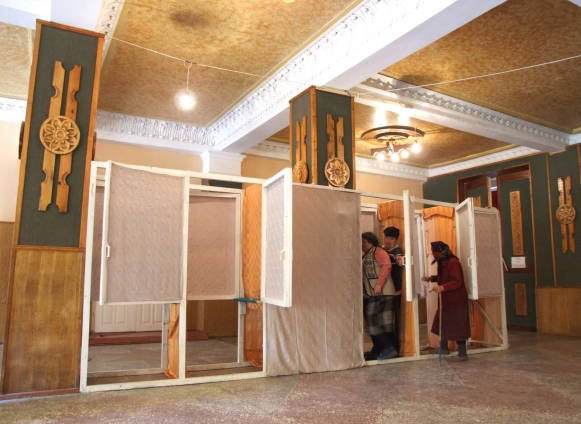
Promo-LEX: Results of the third monitoring report of the Parliamentary Elections in the Transnistrian region of Moldova. Monitoring period April 3rd – 22nd, 2009

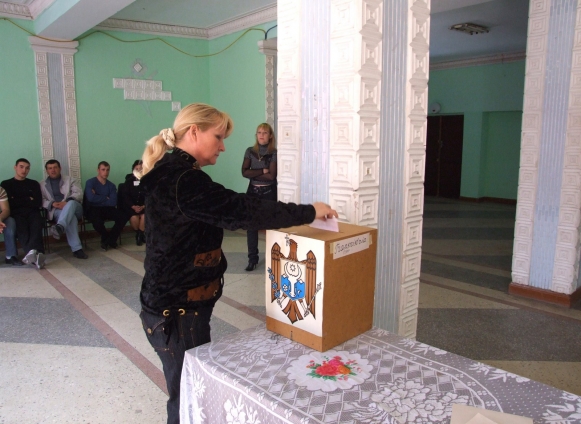
_article_1241085210Promo-LEX Association, member of the Civic “Coalition 2009” for Free and Fair Elections issued the third monitoring report of the Parliamentary Elections in the Transnistrian region of Moldova for the period April 3rd – 22nd, 2009

The project “Monitoring of the electoral process in the Transnistrian region of Moldova” is financially supported by the Eurasia Foundation with funds provided by the Swedish International Development Cooperation Agency (Sida/Asdi) and the United States Agency for International Development (USAID).

Summary

The authorities have not ensured minimal conditions for suffrage right exert by people from the Transnistrian region of the Republic of Moldova. There was registered a lack of information as regards the electoral competitors and their programs as well as the place, date and the documents necessary for exerting the suffrage right.

On the Election Day the roads to the localities where the polling stations have been established were strongly patrolled by numerous teams of road militia, being recorded cases of withdrawal of driving license and vehicle number plates form persons transporting voters to polling stations (Grigoriopol district). Some of the access ways to the localities in which the polling stations have been established were blocked.

The CEC Decisions have not been uniformly respected, in compliance with which the elections’ result should have been registered in a special separate form.
This very fact increased the number of voters enlisted on additional rolls. There has been registered a deficit of 674 voting ballots for the electoral district 15 Dubăsari.

Promo-LEX has obtained CEC consent for the verification of the voter rolls for the 10 polling stations at which Transnistrian region people participated, but the access to rolls was ensured only to six polling stations.
We were not able to get access to voter rolls from the electoral districts No.18 Floreşti, No.26 Rezina and No.3 Anenii Noi.

No cases of dismissal on the grounds of participation at the elections on April 5, 2009 were reported, despite the threats to some people or representatives of various region structures and institutions.

There have been ascertained various encroachments of the electoral legislation, as a result of monitoring polling stations set up for Transnistrian region voters: the impossibility of establishing Corjova polling station No. 5/15, the lack of indicator plates of the polling stations, the presence of police men in civilian clothes nearby the polling stations, the electoral campaign on the election day, inappropriate appliance of the provisions as regards the application of the seal „Elections 5.02.2009”, acceptance of voters on the basis of other documents than those provided for by the legislation, the inadequate training of electoral officials, inappropriate appliance of legal provisions as regards the concomitant disposal of “domicile” and “residence”, the impossibility of movement of a mobile ballot box on the territory effectively controlled by the secessionist authorities, etc.

As a result of the siege of Corjova polling station No. 5/15, only 91 voters, out of 1350 enlisted on initial rolls, came to the two polling stations where the voting for locality voters was allowed. The peace keeping mechanism could not ensure minimal conditions for suffrage right exert in the region.

Therefore, 4042 voters from the Transnistrian region participated in the 5th April a Parliamentary elections, which is about 50% of the number of voters who participated at the previous elections, and 1, 8% of the total number of Transnistrian voters. The decrease of voters’ number can be explained by unprecedented actions of intimidation, prosecution and control exerted over the region voters. In the same time the constitutional authorities have not ensured a necessary minimum of electoral information to voters for their participation in the elections.

Generally, the mass media means of information from the region presented the parliamentary elections from April 5, 2009 on the Election Day. During the post-electoral period, the mass media depicted strongly the events from the center of the capital. As compared to the pre-electoral period, the post-electoral information was impartially presented.

Recommendations:

  • Strengthening efforts as regards the electoral system amendment, in order to ensure rights and non discriminatory conditions for Transnistrian;
  • Strengthening diplomatic efforts as regards raising national and international public opinion awareness and persuading Tiraspol administration to ensure minimal condition for the exert of suffrage right;
  • Notification of Transnistrian voters about all electoral procedures;
  • Continuous professional training of electoral officers;
  • Ensuring strict evidence of printing and distributing voting ballots for the purpose of insufficiency non admission or exaggerated excess;
  • Reviewing the system of voter roll preparation;
  • Investigation all the cases which created barriers for electoral rights exert in the Transnistrian region and sanctioning all the culpable persons in compliance with the current legislation.


Guilty policemen must be punished: human rights NGOs

_article_1239954156“The prosecutor’s office has a sacred mission to perform: it should bring to justice all the felonious policemen, because torture is a felony,” said the executive of Amnesty International în Moldova, Evgheni Golosceapov, on Thursday.

The NGO leader has made this statement at a reunion in Chisinau held by NGOs defending human rights, who have also invited representatives of the law-enforcement bodies and ombudsmen, Info-Prim Neo reports.

NGO activists have tried to assess the turmoil of April 7 in Chisinau. After reconstituting the events, they have reached the conclusion that the police had not intervened to prevent the devastation of the headquarters of the Parliament and Presidency during the daytime. Instead as the darkness fell, policemen, especially without uniforms, arrested people being close to those two buildings. Moreover, the human rights activists found cases when the police later arrested and tortured people who had not been in Chisinau on April 7.

The attendees of the joint sitting stood up in compassion for the people who had died or had been subjected to inhumane treatment they had been subjected to in police departments. The gesture has not been supported by Petru Corduneanu, the head of the Public Order Division of the Interior Ministry, who has been the only to stay sit.

“When one speaks about so many people upon which torture was applied, for instance, we can’t help objectively appreciate those about 200 police who had to suffer because of the illegal actions. The Interior Ministry doesn’t defend at all,” said the police officer.

The organizing NGOs: the Penal Reforms Institute, Amnesty International Moldova, Transparency International Moldova, the Center of Resources for Human Rights (CReDO), the Soros Foundation-Moldova, Promo-Lex association, “Lawyers for Human Rights” etc. have decided to set up an Alliance Against Torture (ACT) in Moldova. This is a non-institutionalized organization pursuing to prevent torture.

Independent barristers and lawyers from the above-mentioned NGOs state they are ready to further provide assistance to the people ill-treated by the police. Amnesty International Moldova announces a phone number to get such complaints: 835808.

http://www.info-prim.md/?x=24&y=22737


STATEMENT of Moldovan Human Rights Organizations on the detaininment methods and conditions of persons suspected to have participated in violent actions on April, 6th and 7th 2009, in Chisinau, Republic of Moldova

Chisinau, April 9th, 2009 — STATEMENT of Moldovan Human Rights Organizations

The signed organizations express their concern about the methods and conditions of detainment of persons suspected to have participated in violent actions that took place on April, 6th – 7th 2009.

We reiterate that:

Any liable action with regards to criminal liability shall be fully and objectively investigated with respect to all procedural safeguards;
No one shall be subjected to torture, punishment, inhuman or degrading treatment, regardless of the circumstances (Article 3 European Convention);
In such situations, any person has the right to liberty and security and can only be detained according with appearance in the front of the relevant judicial authority (Art.5 European Convention);
We ascertain that:

In the morning of April 8, 2009, the Ministry of Internal Affairs announced the restraining of approximately 200 persons;
The detention of persons “in the act” and ill-treatment by unidentified persons (in civilian clothing) in public places under the view of indifferent police officers;
Detention occured outside “the place of the crime” (home, place of study etc…) with the violation of proper legal proceedings;
The detention of persons who have not participated in the violent action
Detention forces utilised vehicles with suspicious registration numbers (Transnistrian region registration car plates);
Aggression and mistreatment of journalists with the destruction of video cameras, as well as their content and pictures taken.
Misinformation has been given to relatives about the detention of persons and / or refusal (prohibition) to communicate the place of detention.
All of these facts create an anxious atmosphere with regards to the situation and status of persons in the custody of law enforcement authorities, raising obvious question marks about the respect and guarantee of democratic principles by authorities. These facts may confuse the effort of law enforcement institutions to establish the circumstances of the investigated facts, and raise doubts as to the use of forceful means for intimidation.
In this context, the signatory organizations require:

Strict observance of the provisions of Article 3 and 5 ECHR;
The detention of people guilty of violence at the place of the event occurence only, and with the action of police officers in uniform, in order to avoid unfounded accusations or insinuations;
Respect of all procedural guarantees and rights, increased attention of the right to defense;
Refrain from the practice of detaining people without sufficient concrete evidence as to their involvement in the violent actions;
Inspection and monitoring by Moldovan ombudsmen, members of the National Council for the Prevention of Torture in all places of preventive detention under the Ministry of Internal Affairs, Center for Combating Economic Crimes and Corruption, Informational and Security Service and the Ministry of Justice, both in the capital and in the rest of the country;
Concerned specialized authorities shall monitor the created situation.
“Promo-LEX” Association
Amnesty International Moldova
CReDO
RCTV “Memoria”
Institute for Human Rights in Moldova
Association “Lawyers for Human Rights”

9 April 2009


Human rights organizations condemn April 7 acts of violence

_article_1239196440A number of human rights organizations Wednesday issued a joint statement condemning the acts of violence and vandalism committed near and inside the buildings of the Presidential Office and Parliament of Moldova on April 7, Info-Prim Neo reports.

The organizations say that democracy in Moldova should be promoted and strengthened by peaceful public meetings and protests. “The power of the word and peaceful will cannot be vanquished while building real democracy. The real democracy is designed to change society, but not through force and violence. Violence induces fear, leads to the violation of the human rights and compromises the free development of the society,” the statement says.

The NGOs call on the public authorities to ensure the security of the people that want to publicly express their opinions. “We urge the public authorities to show firmness towards the acts of certain irresponsible, criminal players that lead to violence,” Sergiu Ostaf, executive director of the Resource Center for Human Rights (CreDO), told a news conference held at Info-Prim Neo.

According to him, CReDO has video proofs that certain persons made the peaceful protests to degenerate into a riot. “A large part of the protesters did not have violent intentions, but certain persons incited the excited crowd to acts of vandalism. But this is not an excuse for what happened,” Ostaf said.

Ion Manole, chairman of Promo-Lex Association, reiterated that the authorities bear overall responsibility for the happenings. “The authorities did not want or could not cope with the events. Many questions arise in such a situation. The fact that the vandalizing of the state institutions was permitted shows that the authorities knew about such acts, but did nothing to prevent them,” Manole said.

Antonita Fonari, secretary general of the National Council of NGOs of Moldova, criticized the authorities for exposing the youngest police officers and leaving them alone with the furious crowd. She also criticized the Opposition parties that supported the protesters, but could not convince them to protest peacefully.

The head of the National Youth Center of Moldova Vera Turcanu appealed to all the young persons to refrain from taking part in provocative events.

Sergiu Neicovcen, director of Contact Center, called on other organizations to subscribe to the appeal of the NGOs that issued the statement.

Also, the NGOs call on the leaders of political parties to take a responsible attitude and not make statements that could incite the people, but urge the society to hold dialogues. The mass media is urged to correctly and responsibly inform about the events and ensure the diversity of opinions.

The statement was signed by 11 nongovernmental organizations that form part of the National Council of NGOs of Moldova.

www.info-prim.md


Coalition 2009: Unfair and partially free elections. Electoral process tainted before elections

_article_1239188073The Civic Coalition for Free and Fair Elections – Coalition 2009 considers that the April 5 parliamentary elections were not fair and only partially free given the situation of the Transnistrian voters. Such a position was expressed by the over 70 nongovernmental organizations that form part of the Coalition, Info-Prim Neo reports.

According to Coalition 2009, the election campaign was marked by multiple violations of the electoral legislation: use of public resources (at least 41 cases proved) and pressure and influence on the election runners (at least 21 cases proved) and voters (minimum 33 cases proved).

The public stations with national coverage Moldova 1 and Radio Moldova favored the ruling party in the news programs that were transformed into instruments for manipulation and propaganda in favor of the PCRM and against the Opposition parties. Similar violations were committed by the private stations NIT, N4, EU TV and Antena C. Therefore, the electoral contenders had limited possibilities of presenting their platforms and expressing their viewpoints on different problems. “So, we can say that there was no political pluralism during the election campaign,” Coalition 2009 says in its final report.

Coalition 2009 also said that the election campaign was not stopped when it should. On April 4, 2009, EUTV, N4, NIT, PRO TV, and TV 7 rebroadcast programs biasing in favor or against election runners. Also, the state news agency Moldpres favored the PCRM on the election day, broadcasting news about how the top three candidates on the PCRM list Vladimir Voronin, Marian Lupu and Zinaida Greceanai voted, but reported nothing about the vote of other election contenders.

According to the Border Guard Service, 627,959 Moldovans are constantly abroad. Given that these citizens make up at least 20% of the total voters, Coalition 2009 considers that the 33 polling stations opened abroad could not provide optimum voting condition for them. The Coalition said that in the final report on the monitoring of the 2005 legislative elections, the nongovernmental organizations recommended the authorities to take the necessary measures to ensure the right to vote of the Moldovans that are abroad in the future electrons.

The irregularities in Moldova’s Transnistrian region were much more serious. The authorities did not create minimum voting conditions for about 10% of the Moldovan voters living in the region. There were carried out no electoral activities such as debates and meetings with the voters. The Moldovan authorities did not inform the voters in the region about the voting procedure and where they should vote. Also, the number of polling places set up for Transnistrian voters was much lower than necessary.

Coalition 2009 draws attention to the fact that the irregularities committed in the April 5 elections are similar to those mentioned in the 2005 reports of the Civic Coalition for Free and Fair Elections, but during the four years the authorities did not take steps to improve the situation.

Coalition 2009 is a voluntary union of Moldovan NGOs that aim to contribute to free, fair, transparent and democratic elections for the Parliament. It continues the activities promoting free and fair elections initiated by Coalition 2005 and Coalition 2007 and has over 70 NGO members.

www.info-prim.md


Over 200,000 Moldovans in Transnistrian region will not be able to vote, Promo-LEX

_article_1239008205The Moldovan citizens living in the Transnistrian region are discriminated in exercising their right to vote, including by the electoral authorities of Moldova. This is the conclusion of the second report on the monitoring of the electoral process in Moldova’s Transnistrian region for the 2009 parliamentary elections presented on April 3, Info-Prim Neo reports.

The Central Election Commission (CEC) distributed only 14,500 ballots to the 10 polling places set up in the region, while the data of the Ministry of Information Development show that 223,580 Moldovans are eligible to vote in Transnistria. So, about 209,000 persons will not be able to vote there, said Pavel Postica, jurist at Promo-LEX.

The CEC made such a decision basing on the data of the 2005 parliamentary elections, when about 8,000 persons voted in the 10 polling places. “But this is not the real situation,” said Pavel Postica. “There are much more persons in the region that want to take part in elections but cannot because they are intimidated by the Transnistrian authorities, while the Moldovan authorities did not create the necessary conditions for them. The people were not informed about the place, date and method of voting. A large part of the residents do not even know where they could vote,” Postica said.

According to Ion Manole, president of the Promo-LEX Association, the most difficult situation is in Corjova village of Dubasari district. “It is two days before the elections, but the polling station No. 5 in Corjova does not have the necessary supplies. The ballot boxes remain sequestrated at the customs post near Pohrebea village of Dubasari district. The village is patrolled by militiamen in uniform. The inhabitants are threatened that if they go to the polls, the clashes will be more serious than in June 2007,” Ion Manole said. “After sequestrating the boxes on March 19, the y started to exert pressure on the priest, mayor, members of the electoral office and ordinary people. All those that work at companies in Dubasari have been threatened with dismissal.”

The report authors ascertained that the electoral campaign in the region had a sporadic character because the Transnistrian customs officers confiscated many of the electoral materials and because the electoral contenders had a lackadaisical attitude. Yet, the monitors of Promo-LEX noticed that election posters of the PCRM appeared in Tiraspol and Bender on March 25, when President Vladimir Voronin and the Transnistrian leader Igor Smirnov were to have a meeting. “The posters were placed high on posts, including near militia posts and peacekeepers posts. This makes us think that the action was coordinated with the Transnistrian authorities,” Ion Manole said. No other posters were observed in the two towns were there are concentrated the largest part of the voters in the region – about 88,000. At the same time, the MAE, UCM, PL, and PLDM campaigned in such settlements as Camenca, Rabnita, Grigoriopol, Slobozia.

The monitors also established that the local mass media covered the legislative elections in Moldova from a negative angle, urging the people not to take part in elections and report when they see somebody transporting electoral materials.

The report was prepared by Promo-LEX Association as part of the Civic Coalition for Free and Fair Elections “Coalition 2009”. It covered the period between March 10 and April 2, 2009. Seven observers collected the data.

The monitoring of the electoral process in the Transnistrian region is a novelty in Moldova’s election history. The project was financially supported by Eurasia Foundation from the resources of the Swedish International Development Cooperation Agency and the United States Agency for International Development.

For the full text of the Report click here

source: http://www.info-prim.md