A group of people held in the Pre-trial Detention Center of the Tiraspol ‘ Militia’ have declared a hunger strike and are threatened with the use of force

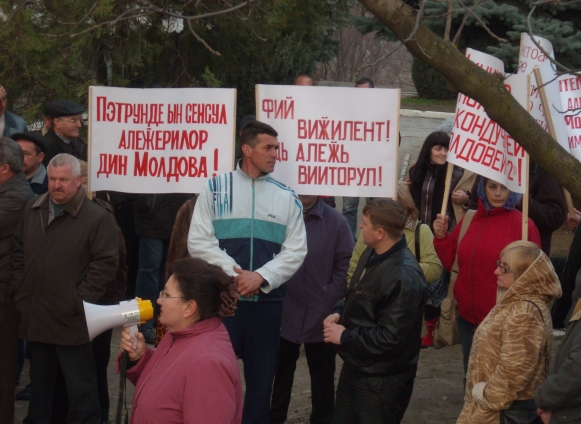
Chisinau, 14 October 2009 – The people (it is estimated that they number around 90) held in the basement of the Pre-trial Detention Center of the Tiraspol ‘ Militia’ have already been on hunger strike for 4 days. According to relatives, the detainees complain that they are held in inhumane conditions, tortured, not given access to a doctor, and do not even receive food parcels sent to them. At the same time, the administration of the isolation unit has threatened the detainees with the intervention of the special-purpose task force
“Speţnaz”, if they do not cease their hunger strike.

According to sources, detainees are subject to diverse forms of torture such as being beaten with hard objects across the fingers, having their legs and arms stretched, and being kicked and beaten with various objects on different parts of the body, particularly the back of the neck . Relatives (mothers and sisters) of the detainees, who were witnesses to instances of maltreatment, were threatened with rape if they talked about them or went to the authorities.

These relatives have also said that the protesters have been held in the absence of any genuine or legal proof for a long period of time (from 2 to 6 months), suspected of crimes that they have not committed. Among the detainees is the leader of the Tiraspol youth organisation ‘World Youth’, Bezrodnii Alexandr. The mother of the detainee has explained that her son is continuously maltreated by employees of the regional militia, with the aim of obtaining from him a confession to having committed robberies. The relatives suspect that the arrest of the ‘World Youth’ leader is connected with his professional activities. According to relatives, the detainee is not granted medical assistance (although a doctor has requested access on several occasions), and the lawyer involved is not allowed access to the case materials.

Individual freedom and security of person are inviolable and imply guarantees for those deprived of liberty. Security of person involves the right of the individual to juridical protection provided by state bodies, the right to the protection of one’s reputation and dignity, the right to liberty and security, guarantees against arbitrary arrest, the right to defense through courts , as well as the right to the inviolability of one’s domicile.

Thus, Promo-LEX reminds the authorities of The Republic of Moldova and The Russian Federation about the positive obligations which the governments of these two states have with regard to the victims of the Tiraspol regime.

Promo-LEX asks, as a matter of URGENCY, that the Russian and Moldovan authorities, with the involvement of representatives from the Ukraine, the OSCE, the EU and the United States (actors involved in Transnistrian conflict settlement process ), investigate the case and ensure respect for the rights of those detained in the Pre-trial Detention Center of the Tiraspol ‘ Militia’ (str. Lenin, Tiraspol).

The Promo-LEX Legal Department, 14 October 2009

http://jurnaltv.md/ro/news/22518/

http://jurnaltv.md/ro/news/24242/


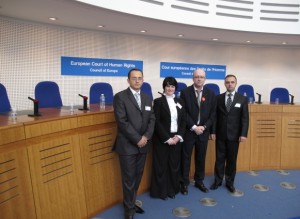
The European Court of Human Rights delivered a judgment on case Petru Rosca v. Moldova

On 6 October 2009, The European Court of Human Rights delivered a judgment on case Petru Rosca v. Moldova ((Application no. 2638/05))

The case originated in an application (no. 2638/05) against the Republic of Moldova lodged with the Court under Article 34 of the Convention for the Protection of Human Rights and Fundamental Freedoms (“the Convention”) by a Moldovan national, Mr Petru Roşca (“the applicant”), on 29 November 2004.
1. The applicant was represented by Mr A. Postica from Promo-LEX, a non-governmental organisation based in Chişinău. The Moldovan Government (“the Government”) were represented by their Agent, Mr V. Grosu.
2. The applicant alleged, in particular, that the police had made excessive use of force during his arrest and detention, and that he had been convicted of an administrative offence without having had sufficient time and facilities to prepare his defence or to use the assistance of a lawyer.

FOR THESE REASONS, THE COURT UNANIMOUSLY
1. Declares admissible the complaints under Article 3 of the Convention (except for the complaint concerning the conditions of detention) and Article 6 § 1 taken in conjunction with Article 6 § 3 (c) and (d) of the Convention, and the remainder of the application inadmissible;
2. Holds that there has been a violation of Article3 of the Convention;
3. Holds that there has been a violation of Article 6 § 1 taken in conjunction with Article 6 § 3 (c) and (d) of the Convention;
4. Holds
(a) that the respondent State is to pay the applicant, within three months from the date on which the judgment becomes final in accordance with Article 44 § 2 of the Convention, EUR 2,500 (two thousand five hundred euros) in respect of non-pecuniary damage and EUR 1,000 (one thousand euros) in respect of costs and expenses.

Source: http://www.lhr.md/news/154.html


Summer School on the prevention of the corruption phenomenon

_article_1252597460“Corruption: the virus of the democratic society is the problem of each of us”.

“Power corrupts; absolute power corrupts absolutely”. This thought of the Lord Acton, the English historian of the XIX century run all through all events of the Summer School “Corruption is the virus of the democratic society” and promoted that each participant understood that this was the problem of each of us, helped to reach the high level of knowledge and skills in the opposition to the corruption spread in the society.

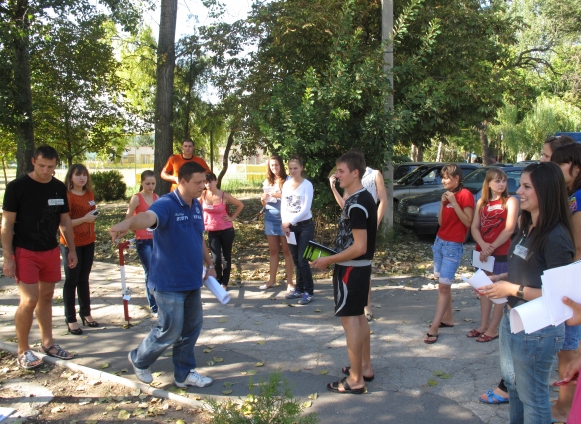
The activity has taken place in the period from August 17 till August 22, 2009 at the recreation center “La popas”. The aim of the summer school was the training of 20 young leaders of NGOs, initiative groups, young journalists and the students from Transnistrain region to the democratic society grounds and the promotion of the anti-corrupting actions, to the consequences of the corruption and methods of its prevention through the population informing bout it phenomenon.

The Summer School program was oriented on the training of the group of participants in the struggle against corruption, the methods of reduction of the corruption level in different fields (education, heath law-enforcement authorities) and the promotion of the democratic values among young people by means of the preparation of the active group of leaders, who form the public opinion.
During the activity the Summer School participants had the possibility to show themselves and to be the audience, to ask the questions, which worry them, in the frames of the improvised talk-show on the theme “Anti-corrupting policy in the Republic of Moldova – progress and failures”. These events were carried out with the participation of the coordinator of the Campaign for the struggle against the corruption “Corruption influences your freedom” from the Group “Youth’s Voice” at the World Bank and the President of the Association “Promo-Lex”, stating this position from the point of view of human rights and the influence of this phenomenon on it.

Also the work in the groups was realized with the purpose to elaborate own plans on the monitoring and the creation of the public servant’s Ethic Code that favored to deeper understanding of the theoretical definitions of the monitoring and the ethics in the state institutions.
The facultative actions were carried out for the broader perception of the corruption in the society as the problem, such as the team game “What? Where? When?” on the theme of corruption; the movie about the corrupted society was shown. During the Summer School the participants developed not only the team spirit but also the communication skills, the public speech and the critical thinking. In the majority’s opinion this event revealed in them the responsibility and the desire in future to develop the ideas for the public opinion forming in the struggle against the corruption.

The Summer School was carried out in the frames of the project “Corruption influence all us” at the financial support of the Fund Eurasia at the expense of means of SIDA and USAID.

Olga Gordila
Project Director
Association Promo-LEX


Summer School “Human Rights”

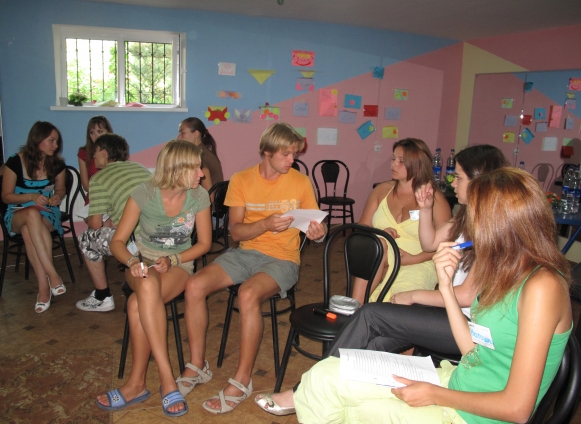
_article_1252598021During August 17 August 22, 2009 the Association Promo-LEX organized the summer school “Human Rights”.  The aim of the summer school was Transnistrain region youth preparation in the field of the human rights. In the frames of the summer school 23 people from Transnistrain region took part: Grigoriopol, Dubasari, Ribnita, Camenca districts, Tiraspol and Bender cities.

The program of the summer school was divided into 2 modules. The first module was theoretical, the following themes were presented: “Human rights – main conceptions. Why are the human rights needed?”, “Retrospective of the situation regarding the observance of the human rights in Moldova”, “What rights are guaranteed by the national legislation and the Constitution?”, “The international agreements to which the Republic of Moldova jointed”, “European Convention on Human Rights – main conceptions, brief history”, “Right to life”, “Right to assembly”, “Right to freedom of opinion and expression”, “Right to not be tortured”, “Means and mechanisms of the human rights protection: Internal means of the legal assistance given by the degrees of jurisdiction. European Court of Human Rights and its role in the human rights protection”. The participants have got acknowledged with the numerous examples from the national and international practice during the theoretical presentations.

Also, in the frames of the first module the talk show “The NGOs role in the promotion and the protection of human rights” was organized, the special guest was Ms.Doina Iona Straisteanu, the human rights lawyer, possessing the great experience both on the national and on the international levels. The talk-show was designed by one of the summer school participants. During the talk-show the participants had the possibility to ask many questions, mainly referring to the specifics of activity of a human rights lawyer, to the interesting cases from the juridical practice, situation of the human rights in Moldova.
Also in the frames of the first module the participants drafted a work plan on the promotion and the protection of the human rights on the local level.

The second module of the summer school program included 4 simulation games referring to the right to assembly, the right to not be tortured, the right to freedom of opinion and expression, and the right to freedom of movement.
By means of the simulation games the participants had the possibility to apply on practice the new knowledge, acquired at the summer school. The participants imitated the peaceful meeting and violent protest action, the examination of the case about the tortures use before the European Court of Human Rights; they crossed the customs station and played the role of journalists, conducting the probe, took as the basis – the right to freedom of the opinion expression.

This summer school is the third in succession, which was organized by Promo-LEX, and each time we become convinced that the education concerning the human rights is vital and actual for Moldova, in particular, for Transnistrian region. The majority of the population does not know that they have the rights; they are not informed about their rights and conduct very passively and with indifference when their rights are violated. At the beginning of the summer school none of the participants could explain what the term “human dignity” means. The regret causes the fact that the citizens of the Republic of Moldova judges about any powerless action from the part of the authorities as the necessity and moreover the reasonability not in the favor of the State obligation to secure and to observe the fundamental human rights.

We hope that young people, who took part in this summer school, will never forget what means “human dignity” and why it is so important to know, to protect and to promote the human rights.
The Summer School was organized in the frames of the Educational Program in the field of Human Rights and Civil Education of the Association Promo-LEX. The project was financially supported by the US Embassy in Moldova.

Olga Manole,
Project Director,
Association Promo-LEX


The electoral rights of the voters in Transnistria continue to be ignore, notes Promo-LEX

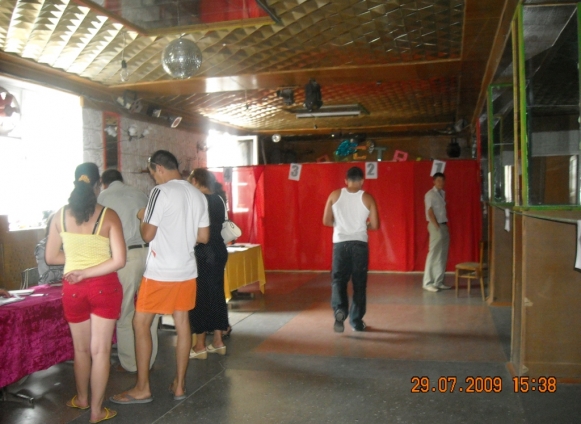
_article_1249034741July 30th 2009. Moldovan citizens residing in the Transnistrian region showed an increased interest for the election, notes Promo-LEX.

Although the separatist administration posed numerous obstacles, and the Moldovan constitutional authorities made insufficient efforts to provide proper information to the electorate of the region, approximately 1,500 more people voted in the early 29 July 2009 election compared to the previous time.

Representatives of the secessionist authorities blocked the roads and thoroughly checked the units of transport at every control post, limiting the free movement of the people. “The constitutional authorities failed to ensure the right to vote of the inhabitants of Corjova village of Dubasari district, on the territory of the poling station opened there,” Igor Guzun said.

Promo-LEX Association is concerned about the attempts to intimidate independent observers, thus intervening in the process of monitoring the elections. Observers were threatened and in some cases even even sworn at. Representatives of local authorities and police were seen repeatedly in 100 meters range from the polling stations.

Voter lists have not been compiled in a qualitative manner. There were many cases noted of presence in the lists of deceased persons, or of non-inclusion in the list of the ID card information. Also, a part of the electoral registers disappeared, while some of the voting certificates were issued on the basis of invalid or inexistent identification papers.

“During the voting process, voting with dubious F-9 form documents was noted: the forms either had the photo attached with scotch tape, the photo was not stamped or the form lacked a proper identification number, declared Ion Manole, president of the Promo-LEX. At the same time, issuance of voter certificates on the basis of invalid or inexistent ID documents was also noted.
Observers noted a differentiated approach at different EBPSs toward accepting or rejecting requests to vote at home. There were registered cases of negligence and irresponsibility of behalf of election bodies with regard to their attributions.

The full versions of the report attached

Contact person:
Ion Manole, president of Promo-LEX Association,
GSM: 69 07 08 00
e-mail: [email protected].

Inna Guleac, PR manager, Promo-LEX,
GSM: 69 33 78 41
e-mail: [email protected].


Promo-LEX Association launched the third report on the monitoring of the campaign for the July 29, 2009

_article_1248690867Chisinau, 27 July 2009. Promo-LEX Association launched the third report on the monitoring of the campaign for the July 29, 2009. The monitoring was done in 7 electoral constituencies, namely Floresti, Rezina, Dubasari, Anenii Noi, Causeni, and Stefan Voda and the Transnistrian region of Moldova. The monitoring report covers the period between July 19-26, 2009.

“The Promo-LEX monitoring effort notes that the electoral process continues with violations of the electoral legislation by the actors involved”, said Ion Manole, President of Promo-LEX.

In the monitored regions, the legal provisions on compiling and publicizing voter lists were largely ignored or only partially respected; errors were identified in these lists, including the inclusion of persons that are passed away.

A pattern of undue influence and intimidation of voters is also noted, including by obliging citizens to participate at electoral meetings. Occurrences of intimidation of representatives of electoral contestants by the public administration have been reported.

Voters from the Transnistrian region were not informed by the electoral authorities on the voting procedure (place and date of elections). Because no voter lists have been prepared for these voters, they were unable to possibly obtain absentee voter certificates.

The monitoring of the July 29th early parliamentary elections in 7 electoral constituencies is a project implemented by Promo-LEX Association within the Civic Coalition for Free and Fair Elections “Coalition 2009”. Nearly 270 election observers were deployed to monitor the elections in Floresti, Rezina, Dubasari, Anenii Noi, Causeni, and Stefan Voda and the Transnistrian region of Moldova.

The project is being implemented with financial support provided by the National Endowment for Democracy (NED).


DOC – Report No 3


Promo-LEX issued the first monitoring report on early parliamentary elections in 7 regions of Moldova

_article_1247571399Chisinau, 14 July 2009. Promo-LEX Association launched the first report on the monitoring of the campaign for the July 29, 2009. The monitoring was done in 7 electoral constituencies, namely Floresti, Rezina, Dubasari, Anenii Noi, Causeni, and Stefan Voda and the Transnistrian region of Moldova. The first monitoring report covers the period between June 16 and July 11 2009.

“Through this monitoring, we want to ensure free and fair elections throughout the country. Given the monitoring experience of the election process in the Transnistrian region, this time we decided to do more. We will observe the electoral process in a number of districts located on the right bank of the Nistru, where polling places are traditionally set up for Transnistrian voters” stated Ion Manole, President of Promo-LEX Association.
The first monitoring report concludes that the electoral campaign is characterized by a series of patterns that can limit the voting opportunities of certain groups of voters and delays the execution of the calendar plan set by the Central Election Commission.

“As the elections will take place on a workday, the Moldovan voters abroad and the Transnistrians will not be able to make their choice. Thus, their right to vote is infringed. The obligation to vote at the temporary place of residence and the lack of additional regulations make the participation of students that are in some other places difficult,” said Ion Guzun, jurist at Promo-LEX.

The observers reported occurrences of undue influence on voters, excessive involvement of law enforcement agencies into the electoral process, undue involvement of underage citizens into campaign activities, and preferential treatment of some electoral contenders by the local public administration.

By the the end of the monitored period, district electoral councils have not yet made public the information on the boundaries of polling stations, address and contact information of polling stations, despite a deadline date set for July 3. Also, the Central Election Commission has failed to collect from the local public administrations, in pre-established terms, the electoral lists. Some of the submitted lists are incomplete.

Promo-LEX Observers have noted that the recommendations made by national monitoring groups in 2005 and 2009 have been implemented in a reduced and selective manner. For the upcoming early elections, the election authorities did not announced the opening of additional polling stations to ensure the voting rights of citizens lfrom the Transnistrian region. Authorities have not investigated the cases of violation of electoral legislation reported by monitoring groups. The electoral lists continue to be a major concern. It remains unclear who holds the final responsibility for drawing up electoral lists. Electoral administration has ordered application of a special stamp on the accompanying sheets of voters ID, without taking any other measures to prevent multiple voting.

Promo-LEX will continue to monitor the election process and will publish other monitoring reports to election day. The project is being implemented with financial support provided by the National Endowment for Democracy (NED).

For more information please contact Association President Promo-LEX, Ion Manole, tel. 49.26.84, e-mail: [email protected]


DOC – Report No 1


Public audiovisual in danger due to censorship and political control

Being aware of the continuous decline undergone by freedom of expression and the media, in its vast majority.
Being concerned about the increasingly powerful actions aimed to use the most important broadcast and print media for xenophobic and antidemocratic propaganda purposes.
Establishing a lack of real and generally recognized progress in view of transforming the Teleradio-Moldova Company into an independent, professional and viable institution that would serve the public interest and the society as a whole,

We express our deep concern about the role played by the public audiovisual at this moment of political crisis in the Republic of Moldova, situating itself fully in the service of the only ruling party.

We thus find that, although a Broadcast Code has been adopted which was adapted to most European standards in the area, the National Public Broadcaster “Teleradio-Moldova” further produces daily news and programs which are subject to censorship, in accordance with the political preferences of the governance.

During the past years, the monitoring of the program content of this Company, especially of its news programs, conducted both by internal and external experts, has shown that it continues an old practice of covering public, social-economic and political life exclusively from the viewpoint of the governance, avoiding the most serious problems faced by the public and by the entire society.

By contrast, opposition parties not only did not have equal access to the programs broadcast by Teleradio-Moldova, but they also were the target of intensive campaigns aimed at discrediting, denying and prejudicing their image. The monitoring conducted by our organizations in the post-electoral period (April 2009) confirms once again that the necessary changes, expected by the public, have not taken place at Teleradio-Moldova. Public stations do not provide services that would ensure the correct, impartial and fair information of the public, do not take into consideration the political convictions of various categories of the population, and do not ensure the political-social balance and pluralism nor the freedom of expression, as provided by the Broadcast Code.

Although there is no official censorship committee, Teleradio-Moldova continues to use marked practices of hidden censorship, expressed through the restricted access of undesired individuals to the public stations, screening and excluding critical topics about the authorities as well as through the self-censorship used by this public company’s staff in covering public interest subjects. Such forms of censorship discredit the concept and public character of these TV and radio stations, being detrimental to the Moldovan society.

The situation becomes even more serious if we take into account the following:

A concentration of both print and broadcast media has been felt in Moldova in the last years, which clearly promote only one ideology – that of the ruling party, contrary to the constitutional provisions;
In the past years, the Broadcast Coordinating Board (BCB) has distributed frequencies during public contests to certain broadcasters (TV NIT, EuTV, Radio Antena C) and rejected the applications of other broadcasters (Radio “Vocea Basarabiei”, ProTV), without transparently argued and reasoned decisions;
Instead of representing the civil society (the taxpayers), the Observers Board of the National Public Broadcaster “Teleradio-Moldova” joined forces with the Company’s management, becoming its attorney;
There still is an impressive number of media outlets in Moldova at present that are directly or indirectly supported by the state, which creates conditions of disloyal competition for the private media;
The media outlets which attempt to practice a democratic journalism, provided for by the national and international legislation, are subject to discrimination (difficulties with the accreditation, limited access to public interest information etc.), harassment, intimidation, legal, physical and psychological coercion;
The extensive control of the media offers administrative and propagandistic resources to the ruling party which are comparable only to those of the soviet period.

Being aware of the present situation in this area, of the importance of the public broadcasters and of the media for the information and democratic education of citizens, we believe it is our duty to inform the public opinion about the following priorities:

– We call on the Moldovan authorities to publicly quit the current practices of interference in and control of the work of mass media, such interferences contravening both the national and the European legislation;

– We invite the BCB to supervise more rigorously and with more professionalism the activity of public and private broadcasters in accordance with the legislation in force and to ensure their observance of the Broadcaster Code;

– We draw the attention of the Observers Board of “Teleradio-Moldova” that it is time to undertake responsibility for the current situation in its area of competence, including towards the existence of biased and partisan editorial policies of the National Public Company’s management to the ruling party;

– We call on the management of “Teleradio-Moldova” to ensure in full the observance of opinion pluralism principles, eliminating the existing impediments in the journalists’ activity, so that they are able to manifest freely their critical spirit in relation to the authorities;

– We invite the management of “Teleradio-Moldova” to ensure the observance of the provisions of the Broadcast Code, of the Broadcaster’s Conduct Code as well as of the national and international standards of professional deontology.

The signatories to the Declaration are firmly convinced that only in such situation a truly public radio and TV service can be established in Moldova and only in such situation the media can be adjudged public utility and social legitimacy.

In view of achieving these desiderata, the signatories to the declaration believe it is timely to hold broad public debates with the involvement of the said factors, which would identify the work procedures of a true public radio and TV service, able to contribute to the development of democracy in Moldova.

Broadcast Media Association of Moldova
Independent Journalism Center
Association of Independent Press
Institute for Development and Social Initiatives IDIS “Viitorul”
Investigative Journalism Center
Acces-Info Center
League for Defence of Human Rights of Moldova
The Civic Coalition for Free and Fair Elections – Coalition 2009
Union of Journalists of Moldova
Promo-LEX Association
Business Consulting Institute


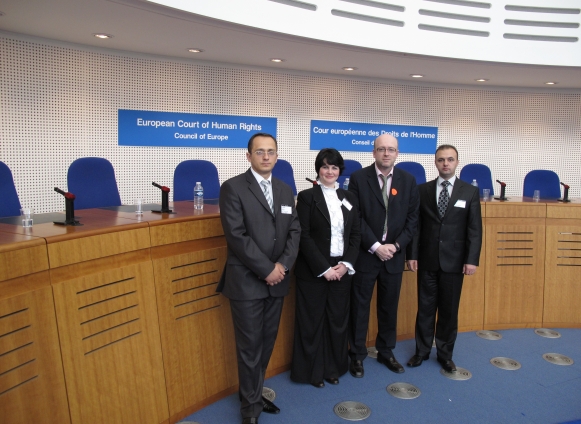
Hearing at the European Court of Human Rights held for three cases against Moldova and Russia

_article_1245662629On June 9th 2009, the hearings were held before the Fourth Chamber of the European Court of Human Rights on the admissibility and merits in the cases of Catan and v 27 Others v. Moldova and Russia (no. 43370/04), Elena Căldare and 42 Others v. Moldova and Russia (no. 8252/05), Eleonora Cercavschi and 98 Others v. Moldova and Russia (no. 18454/06).

The applicants, all Moldovan nationals, live in the Transnistrian region. Each application concerns a separate Moldovan-language school and is brought by a group of parents, children and teachers.
The applicants complain that they have been subjected to harassment because of their desire for the schools to continue providing an education in the Moldovan language, using the Latin script, and in accordance with the Moldovan curriculum. They rely on Article 3 (prohibition of inhuman or degrading treatment), Article 8 (right to respect for private and family life) and Article 14 (prohibition of discrimination) of the European Convention on Human Rights, and on Article 2 of Protocol No. 1 (right to education) to the Convention.

The applicants filed a number of petitions and complaints with the authorities of the Russian Federation, since most of the Transnistrian region leaders are Russian citizens, some of them having even received Russian State decorations, and the Russian Federation continues to have troops stationed in Transnistria and is the mediator in the conflict between Moldova and the secessionist regime in Tiraspol. The Ministry of Foreign Affairs of the Russian Federation replied by making public general statements about the escalation of the conflict around the Moldovan-speaking schools in Transnistria. Stating that the underlying problem was the ongoing conflict between Moldova and the Transnistrian region, the Russian Ministry of Foreign Affairs drew the attention of Moldova and Tiraspol administration to the fact that the use of force to solve the conflict could endanger security in the region and urged them to use various types of negotiations in order to solve the conflict.
The applicants also complained about their situation to the Moldovan authorities, who, despite promises to solve the problem of schools in the Transnistrian regio using the Latin script, have not succeeded in doing so.

The applicants point out that there are 92,000 pupils in the Transnistrian region. While in 1989 Moldovans represented 40% of the total population, Ukrainians 26 % and Russians 26%, this proportion is far from being respected in the schools in the “MRT”: in 82 % of these schools, the curriculum is devised in Russian, in 13.5 % the curriculum is in Moldovan/Romanian with the Cyrillic script, in 3.8 % the curriculum is in Moldovan/Romanian with the Latin script and in 0.7 % in Ukrainian.

Representatives of the parties:
Moldovan Government: Vladimir Grosu, Agent and Ina Rusu, Adviser.
Russian Government: Georgy Matyushkin, Agent; Oxana Sirotkina, Oxana Yurchenko, Irina Koganova, Nikolay Fomin, Tatiana Kleymenova, Alexander Makhnev Advisers;
Applicants:Alexandru Postică, Ion Manole, Counsel; Doina Ioana Străisteanu and Iain Byrne from INTERIGHTS, Advisers.
One of the applicants, Andrei Tihovschi, also attended the hearing.

The circumstances of the case CATAN and 27 Others against Moldova and Russia
Evrica High School in Rîbniţa is one of the six schools using the Moldovan/Romanian language with the Latin script in the so-called “Moldavian Republicof Transnistria” (“MRT”). The applicants are pupils or parents of pupils at Evrica School, which has about 600 pupils.

On 18 August 1994 the “MRT” regime forbade the use of the Latin script in the school.
Since 1997, Evrica School has been using premises situated on Gagarin Street built with Moldovan public funds. The school was registered with the Moldovan Ministry of Education and was therefore using a Latin script curriculum approved by the Ministry of Education.

By a decision of 21 May 1999, the “MRT” regime ordered that all schools belonging to foreign States and functioning on the territory of the “MRT” had to register with the “MRT” authorities, failing which they would not be recognized and would be deprived of their rights.
Evrika School refused to register, since registration involved using the Cyrillic script curriculum devised by the “MRT” regime and deprived the schools thus registered of the right to be sponsored by the Moldovan Ministry of Education. On 26 February 2004 the building used by the school was transferred by the Transnistrians to the administration of the Rîbniţa Department of Education. They reiterated their request for registration with the “MRT” education system.

On 14 July 2004 the Transnistrians closed down all schools using the Latin script.
Having regard to incidents in which the other schools in Transnistria teaching in Romanian had been involved following the decision to close them down, students, parents and teachers from Evrika School took it upon themselves to guard the school day and night.

On 29 July 2004 Transnistrian police stormed the school and evicted the women and children who were inside it. Five men who were inside the school were arrested and subsequently sentenced to three or seven days’ administrative imprisonment. The same day the husband of the school’s director was arrested in the street and sentenced to seven days’ administrative imprisonment for public-order disturbances.
Over the following days local police and civil servants from the Rîbniţa Department of Education visited the parents of children registered with the school, asking them to withdraw their children from the school and to put them in a school registered with the “MRT” regime. The parents were told that if they did not do so, they would be fired from their jobs and would even be deprived of their parental rights. As a result of this pressure, many parents withdrew their children and transferred them to another school.

On 29 September 2004, and following the intervention of the OSCE Mission to Moldova, the school was able to register with the Tiraspol Chamber of Registration as a foreign institution of private education, but could not resume its activity for lack of premises.
It was only on 2 October 2004 that the “MRT” regime allowed the school to reopen in another unfinished and inappropriate building, which used to be a kindergarten. Since its reopening, the school has been obliged to use a Cyrillic alphabet curriculum devised by the “MRT” regime and has been deprived of a telephone.

The circumstances of the case Elena CĂLDARE and 42 Others v. Moldova and Russia
Alexandru cel Bun High School in Tighina (Bender) is one of the six schools in the so-called “Moldavia Republic of Transnistria” (“MRT”) using Moldovan/Romanian language in the Latin script. The applicants are pupils or parents of pupils at Alexandru cel Bun High School, which had before the events described below about 1600 pupils.

The school has been using premises situated on Kosmodemianskaia Street built with Moldovan public funds and rented to them by the Moldovan authorities. The school was registered with the Moldovan Ministry of Education. During 2004, the “MRT” warned the school to register with the competent “MRT” bodies, failing which the school would be closed down and disciplinary measures would be taken against the Head of the school.

On 14 July 2004 the Transnistrians closed down all the schools using the Latin alphabet.
On 18 July 2004 the school was disconnected from electricity and water supplies and on 19 July 2004 the school administration was notified that it could no longer use the premises on Kosmodemianskaia Street. However, teachers, pupils and parents occupied the building refusing to leave. Transnistrian police tried unsuccessfully to reoccupy the premises, and eventually surrendered the building. They withdrew on 28 July 2004.

Following these incidents, about 200 pupils left the school, which currently has 1400 pupils.
On 20 September 2004, and following various negotiations with international observers, including from the Council of Europe, the school was reconnected to water and electricity.
The “MRT” regime allowed the school to resume its activity in September 2004. Since its reopening the school has been obliged to use a Cyrillic alphabet curriculum devised by the “MRT” regime.

The circumstances of the case Eleonora CERCAVSCHI and Others v. Moldova and Russia

School in Grigoriopol used to be a school in the so-called “Moldavian Republic of Transnistria” (“MRT”) using the Cyrillic alphabet curriculum devised by the “MRT”. The applicants are teachers, pupils and parents of pupils at that school, which functions today in Dorotcaia (under Moldovan control).
The school, which had before the events complained of about 520 pupils, today has 200 pupils.

In 1996, at the request of the parents and their children, the school filed a number of petitions with the “MRT” regime, requesting to be allowed to use the Latin script. AS a result, between 1996 and 2002, the “MRT” regime took various measures in order to discourage their claims, such as use of hostile press campaign, constant intimidation and threats by security forces.
These measures reached a climax on 22 August 2002 when Transnistrian police stormed the school and evicted the teachers, the pupils and their parents who were inside it. On 28 August 2002 the President of the Pupils committee was arrested and subsequently sentenced to fifteen days’ administrative imprisonment.

Faced with the occupation of the building by the “MRT” regime, which refused the use of the curriculum with the Latin script, the Moldovan Ministry of Education decided that the school should be transferred temporarily to a building in Doroţcaia, a village about 20 kilometers from Grigoriopol and which is under Moldovan control. Each day, pupils and teachers who were crossing to Doroţcaia in four buses, were subjected to controls, annoyance and acts of humiliation such as spitting and swearing by the local police and civil servants. Following these incidents, 300 pupils left the school.
In April 2002 the parents and the teachers reiterated their request for registration with the Moldovan Ministry of Education and for the use of the Latin script curriculum. Their request was rejected by “MRT” authorities. Therefore, the school filled a number of petitions and complained about this situation to the OSCE, the United Nations Organization, as well as to the Russian and Moldovan authorities. The Russian authorities replied by using both Moldova and “MRT” to use various types of negotiations in order to solve the conflict. The Moldovan authorities declared to the applicants that they could not help.

Complaints
The applicants complained that they were unable to continue using the building on Gagarin Street. They also alleged that they were harassed by the “MRT” regime because they chose to use the Latin alphabet.
They claimed that the children were obliged to study in an artificial language created by the Soviet authorities, that is, Moldovan/Romanian with the Cyrillic script. Moreover, they were obliged to follow a
Transnistrian curriculum, which was inspired by the theory and methods of denationalization of the local population initiated in the Transnistrian region in 1924. This curriculum, they alleged, cultivated hostility towards the legitimate Moldovan authorities, the Moldovan/Romanian language, and also towards the history, culture and values pertaining to the territory on the west bank of the Nistru river (under Moldovan control). Disciplines such as history and the mother-tongue language were not presented in an objective and critical way; instead, they were used as instruments of propaganda and indoctrination. In sum, the education received by the children in Evrika School was not based on the values of a democratic society and did not correspond to the parents’ philosophical convictions. This constituted an infringement of their right to education and teaching in conformity with their philosophical convictions guaranteed by Article 2 of Protocol No. 1 to the Convention, as interpreted by the Court in many cases, inter alia, in the case of Kjeldsen, Busk Madsen and Pedersen v. Denmark (judgment of 7 December 1976, Series A no. 23).

They further complained of discrimination on ethnic grounds, which denoted a lack of respect on the part of the “MRT” for their cultural and ethnic background. The shock and stress which they felt as a result of this discrimination, particularly between July and October 2004, but also today, amounted to treatment contrary to Article 3 of the Convention. They relied in this respect on the case of Abdulaziz Cabales and Balkandali v. United Kingdom (judgment of 28 May 1985, Series A no. 94).

They also alleged that, having regard to the threats, persecution and mockery to which they and their families were regularly subjected, they feared for their physical security, and invoked in this respect Articles 3 and 8 of the Convention and the Court’s judgment in the Belgian Linguistics case (judgment of 23 July 1968, Series A no. 6).
They also invoked Articles 13 and 14 of the Convention taken together with Articles 3 and 8 of the Convention and Article 2 of Protocol No. 1.

The applicants considered that the Moldovan authorities were responsible because Transdniestria was a part of Moldova and the Moldovan authorities therefore had positive obligations to secure the applicants’ rights. They further considered that the Russian authorities were responsible for the foregoing violations since the Transdniestrian territory was under Russia’s de facto control.

Questions to the parties

As to the admissibility
1.Do the applicants come within the jurisdiction of Moldova and/or Russia within the meaning of Article 1 of the Convention as interpreted by the Court, inter alia, in the case of Ilaşcu and Others v. Moldova and Russia [GC], (No. 48787/99, ECHR 2004-VII) on account of the circumstances of the present cases ?
In particular, in the light of the case of Ilaşcu and Others, could the responsibility of the respondent Governments under the Convention be engaged on account of their positive obligations to secure the applicants’ rights under the Convention?
Have there been any developments following the Ilaşcu and Others case which might affect the responsibility of either Contracting Party?
2.If the responsibility of one or both respondent Governments was engaged, were there any effective domestic remedies which the applicants were required to exhaust pursuant to Article 35 of the Convention before filing the current applications?

As to the merits
3.Do the measures taken against the applicants constitute a violation of their rights provided for in Article 8 taken alone or in conjunction with Article 14 of the Convention?
4. Do the measures taken against the applicants constitute a violation of their rights provided for in Article 2 of Protocol No. 1 to the Convention taken alone or in conjunction with Article 14 of the Convention?

The videoof the Hearing is available here: http://www.echr.coe.int/ECHR/EN/Header/Press/Multimedia/Webcasts+of+public+hearings/webcastEN_media?&p_url=20090609-1/lang/

For more details please contact Promo-LEX Association, Ion Manole,  tel. (+373 22) 45 00 24
e-mail: [email protected].


Parliamentary elections have neither been free nor fair for the Transnistrian region residents, Promo-LEX

_article_1244448654Elections on April 5th 2009, conducted within the Transnistrain region, were characterized by obstacles created by the authorities in Tiraspol on one hand and negligence of the ensurance of the constitutional right to vote of citizens within this territory by the constitutional authorities on the other. This conclusion was reached by the experts at Promo-LEX , who have launched the final report on the electoral monitoring process in the Transnistrian region of Moldova during the 2009 parliamentary elections.

Promo-LEX holds the opinion that participation of citizens from the Transnistrian region is merely a formality, limited to the procedure for applying the “voted” stamp in the ballots and placing them in the ballot box. There were only ten polling stations open for the citizens of the Transnistrian region, located on the areas bordering land under the control of the constitutional authoritative bodies. This flagrantly violates the electoral code, which dictates that there must be more than 30 polling stations, with numbers of voters per station not exceeding 3,000. Moreover, the CEC (Central Electoral Commission) has published only 14,500 ballots for a total of approx. 223,580 potential voters, thus excluding from the beginning the possibility to vote of 209,080 voters from this territory, which is more than 8% of the total numbers of voters in Moldova. In this context, only 4042 persons from the Transnistrian region voted, which represents approximately 50% of the participants that had participated in the previous parliamentary elections.

“The conduct of democratic elections is not possible without respect for human rights, particularly the freedom of expression and press, freedom of movement within the country, freedom of assembly and freedom of association for political purposes. Parliamentary elections were carried out with multiple violations for the Transnistrian region inhabitants. There have been numerous reported cases of intimidation and persecution of the population from the Transnistrian region in order to determine their non-participation in the electoral voting. Thus, we can safely say that the voting was neither free nor fair,” states Pavel Postica, lawyer, Promo-LEX .

The Tiraspol administration stated categorically on behalf of the people against the participation in the vote, thus attempting to influence both the attitude of the people and the atmosphere in society. Thus, voters in the region have claimed three major obstacles to their participation in elections: the stamping of the sheet accompanying the ID document, rigorous control and registration at the check posts and their eventual registration by the regional secret services present at polling stations.

Promo-LEX declares that voters have not had the full opportunity to be informed about voting on April 5th, about the electoral candidates, and their electoral platforms. On one hand, the electoral candidates have not been forthcoming, being reported just few cases of electoral agitation and information of the population. On the other hand the media has not addressed issues related to the equidistant information of the population regarding the electoral process in Moldova. As a result, the influence of mass media sources from the region prevailed and led to an massive absence of inhabitants at the polling stations.

The post-election period, particularly after the protest in Chisinau, was marked by intensification of control at the check posts. Although there had been several threats made, there had not been registered cases of dismissal for those who had participated in the elections.

Promo-LEX experts recommend the implementation of specific actions in order to improve the voting process in Transnistria. These actions include: the modification of a series of provisions of the Electoral Code, including separate electoral offices for the Transnistrian region and the creation of optimal conditions to encourage citizens to participate more actively, allocating the funds necessary for the facilities, the opening of 500 polling stations within the Transnistrian region, ensuring the security for all polling stations, the provision of qualified legal assistance free from state and/or electoral candidates for those detained or persecuted by the representatives of the force structures in the Transnistrian region, investigation of all cases which have created obstacles to the exercise of electoral rights in the Transnistrian region and the punishment under the law for all those guilty.

Association “Promo-LEX ” is a member of the Civic Coalition for Free and Fair Elections “Coalition 2009”. The project is supported financially by the Eurasia Foundation from resources provided by the Swedish International Development Cooperation Agency (Sida/Asdi) and U.S. Agency for International Development (USAID).

The complete version of this report in English can be accessed here.

For further information please contact: Promo-LEX Association, Lawyer, Pavel Postica, tel (+373 22) 45 00 24,
email: [email protected]