A Reply to Mihai Ghimpu, interim President of the Republic of Moldova and President of the Moldovan Parliament: Professionalism is not directly proportional to one’s sex or physical appearance

At the annual Conference “Cooperation between Parliament and Civil Society”, Mihai Ghimpu made public his vision concerning equal opportunities between men and women in the functioning of political parties and in fulfilling public functions in state institutions. Mr. Ghimpu stated that for a female party member to be included on the list of candidates for a public function, she should give evidence of initiative, not just of an attractive appearance – giving us to understand that men are presumably placed on the lists for the simple fact that they are men, their outward aspect not being an object of public discussion.

Mr. Ghimpu’s reference to women’s beauty as being insufficient for fulfilling public functions is irrelevant and offensive. The affirmation reflects social prejudices according to which women are seen, first, as being beautiful, and only then, if they “give evidence of intiative”, as being professionals. Such an attitude undermines the aspirations of women to occupy positions of leadership, and deprives them of the opportunity to exercise their right to contribute to the political development of the state. Women who are competent and expert in their field should have the same opportunities to participate in political life that men enjoy. Any reference to their physical appearance can be seen as an attempt to diminish the importance and professionialism of women, and constitutes a form of indirect discrimination.

Such an affirmation on the part of the interim President of Moldova cannot be ignored, since it encourages discriminatory attitudes towards women in society, who frequently encounter unjustified obstacles in many spheres of activity, including the political sphere. Although women make up 51.9% of Moldova’s population, they continue to be under-represented in political parties and in the decision-making process, where men predominate.

We find the interim president’s affirmation regrettable, and we call upon Mr. Ghimpu to review his position on his reference to women’s beauty whenever discussing women’s participation in political life, and to ensure a 50/50 balance of male and female candidates for public functions based on their professionalism, not on their physical appearance or sex. Furthermore, when there are two equally competent candidates for a position, a woman and a man, the preference should be given to the woman to ensure the equal participation of men and women in the decision-making process in the public and political spheres. This constitutes affirmative action in correspondence with Recommendation 3 (2003) of the Committee of Ministers of the European Council of 12 March 2003, with Article 7(2) of the Law on Assuring Equal Opportunities between men and women, and with Article 14 of the European Convention on Human Rights.

Doina Ioana Străisteanu, Expert in Human Rights


D E C L A R A T I O N: activities of the “Alexandru cel Bun” from Bender risk being suspended again

On 31 March 2010, the hygiene and epidemiology centre in Tighina, subordinate to the unconstitutional Tiraspol authorities, put forward a recommendation in which it notified that the activities of the “Alexandru cel Bun” school in Bender -which falls under the jurisdiction of the constitutional authorities and teaches in the Latin script- could be suspended after the 15 April 2010, on the pretext of alleged health-regulation violations. The recommendation was signed by medical chief D.G.Chirsta, who has threatened the school administration that he will prohibit the use of its premises. Alongside the health regulations, the self-proclaimed authorities have also cited the fact that the school’s curriculum does not correspond to the curriculum followed on the left bank of the Nistru.

Beginning on 4 April 2010, the hygiene and epidemiology centre in Bender, working jointly with the border services subordinate to the regional administration, have prohibited the delivery of food supplies to the school, along with other items and daily supplies required by the students. Food supplies at the school will soon run out, and the situation could become critical, in particular around the exam period. We cannot rule out the possibility that the regional administration could escalate the situation, repeating events of 2004, when institutions in the Transnistrian region under the jurisdiction of the constitutional authorities were evacuated, or their activities illegally suspended.

We must also point out that this pressure is coming at a time when students are registering for year I. We believe that these actions are deliberate and intended to provoke, aimed principally at reducing the number of students enrolled in these institutions. These actions can thus be seen as nothing other than a form of intimidation, repression and discrimination, and as a continuation of serious violations of the fundamental rights and freedoms of at least these groups of people (teachers, parents, students). Precisely because of the continuous harassment on the part of the illegal administration in the region, the number of students in class I in this institution alone fell from 250 in 1999, to 50 in 2009.

We are concerned by the alarming situation created artificially in the region, and in this context we are calling upon the Unified Control Commission (the single mechanism that can, and should, intervene in cases of human rights violations). We request that this issue be examined as a priority, even in today’s hearing (April 15) and that the administrations in Tiraspol and Bender stop, immediately and unconditionally, their persecution and harassment of the school administration, and the discrimination against inhabitants of the Transnistrian region through eliminating their possibility to choose freely for themselves the institution of study, language, and education programme for their children. We also seek the active involvement of the other actors with an interest in resolving the Transnistrian problem in preventing an escalation of the conflict surrounding the institutions teaching in the Latin script on the left bank of the Nistru.

The “Promo-LEX” Association recalls that on 9 June 2009, public hearings took place at the European Court of Human Rights against the Republic of Moldova and the Russian Federation following applications from groups of students, parents and teachers from 3 schools from the Transnistrian region that teach in the Latin script (the “Evrica” school in Rîbniţa, the “Ștefan cel Mare și Sfânt” school from Grigoriopol which at present is based in the village of Doroţcaia, Dubăsari, and the “Alexandru cel Bun” school in Bender). Until now the ECHR has not ruled on these applications, while the problems encountered by these institutions have neither been resolved nor treated seriously by the defendant governments. The original administrative building has not been returned to the “Evrica” school, while students and teachers at the “Ștefan cel Mare si Sfânt” school in Grigoriopol continue to commute daily to Dorotcaia in the Dubasari raion so as to be able to study in their chosen language and according to the educational programme chosen by their parents. We request that discussions on all these issues be put on the agenda of the Unified Control Commission and of the Republic of Moldova and Russian Federation, the latter two being both responsible for the human rights situation in the Transnistrian region of Moldova.

For more information contact Alexandru Postica at the Promo-LEX legal department, on tel. 243578.


Supplementary Declaration

Superior Council of Magistrates
Ministry of Justice
Ciocana Sector Court
Rîșcani Sector Court
‘Ziarul de Gardă’ newspaper

SUPPLEMENTARY DECLARATION

As a result of certain appeals and letters received by our organisation from various magistrates who disagreed with our mention of several judges as being suspected of having examined cases concerning the protest actions of April 7 2009 on the premises of Police Commissariats, we are making this declaration to qualify the complaints submitted on March 31 and April 2, 2010.

In the complaints addressed to the Ministry of Justice and the Superior Council of Magistrates, the human rights organisations Promo-LEX and IDOM stated that nine other judges had committed violations while examining cases involving individuals arrested in connection with the protest actions of 7 April 2009, namely: 1) that rulings on the application of preventive measures and administrative sanctions were made based only on reports and notes prepared by police; 2) that the respective rulings were reached in the absence of a lawyer (state-appointed); 3) that the rulings and decisions were made in conditions of mass terror, a state of affairs present in the Police Commissariats in Chisinau between 7-10 April 2009 owing to the illegal use of physical force by police against those arrested and held there; 4) that the examination of cases took place without a clear elucidation of the circumstances in which people were arrested, maltreated and held.

We have been contacted by Mr. Mardari, president of the Ciocana court, who maintains that judges Igor Mînăscurtă and Ion Bulhac did not examine cases on the premises of Police Commissariats. Similarly, Judge Oleg Melniciuc, vice president of the Rîșcani sector court, sent us an official letter declaring that he did not examine any cases in Police Commissariats. All of them insist that we publish a retraction of the claim that the three judges in question – Oleg Melniciuc, Igor Mînăscurtă and Ion Bulhac – had examined cases on the premises of Police Commissariats.

Following these responses, we must reiterate that the information contained in the complaints made were based upon materials to be found in administrative and criminal files, as well as upon personal statements made by individuals detained by the police during the period in question, which raise reasonable suspicions concerning the impartiality of the judges and the rulings they made. The violations listed are to be found in both the rulings made on court premises and those made on the premises of Police Commissariats. Unfortunately, the case records do not indicate clearly where the cases were examined, whether in the courts or the Commissariats.

Therefore, we cannot say that some judges did not examine cases in court at this time, as is the case with judges Oleg Meliniciuc, Igor Mînăscurtă și Ion Bulhac. But there exists definite proof showing that there exist rulings that refer to the examination of cases on the premises of Police Commissariats, at least according to rulings made by the President of the Rîşcani court and victims’ declarations. Clarifying the matter regarding the location where cases were examined, and regarding the illegalities committed by the judges, is the duty of the Superior Council of Magistrates, which has direct access to all the case materials, unlike the signatory organisations.

It is incumbent upon human rights organisations such as Promo-LEX and IDOM to alert the Superior Council of Magistrates to the existence of certain reasonable doubts, bearing in mind the serious human rights violations that were committed in the period in question. We remind that the prohibition upon torture and any other forms of maltreatment is absolute, and there is no justification for the fact that some judges overlooked the signs of maltreatment that were visible on some of the young people being held. The place where the cases were examined is only one of many elements involved in the complaints referred to the Superior Council of Magistrates, which should investigate all the elements and make a final decision.

For more information, contact Doina Ioana Străisteanu on 24 35 78, or Ion Guzun on 83 84 08.


D E C L A R A T I O N The Republic of Moldova and The Russian Federation – defendants once again at the European Court of Human Rights regarding torture and illegal deprivation of liberty in the Transnistrian region

On 1 April 2010, the European Court of Human Rights (ECHR) decided to examine as a priority the case of Boris Mozer v Moldova and Russia nr.11138/10, submitted to the Court on 24 February 2010 by Alexandru Postica, Doina Ioana Straisteanu and Pavel Postica, lawyers at the Promo-LEX Association.

The respective governments were given until May 27, 2010, to explain the legality of the arrest and detention of Boris Mozer as part of a criminal case instigated at the request of SC Interdnestrcom, where he was employed. The governments should in particular provide answers to two important questions – 1. if the arrest and detention of the applicant (Moser) by the Transnistrian region administration was made by a competent and empowered court (bearing in mind that the ‘courts’ of the TMR do not form part of the judicial system of the Republic of Moldova), and; 2. if the liability for the maltreatment of the applicant at the hands of the ‘MGB’ falls upon the defendant Governments. A violation of the right to family life was also invoked, given the fact that the applicants’ relatives were not granted access to see him, and a meeting with a counselor was refused.

The case of Boris Mozer is the second application to the ECHR this year after the Matcenco case, being similar to the case Ilaşcu and others vs. Moldova and Russia (decided upon on 24 June 2004), and similarly highlighting serious human rights violations in the Transnistrian region of Moldova. Promo-LEX has criticised the governments of Moldova and Russia on numerous occasions for the negligence with which the complaints of people living on the left bank of the Nistru are treated – even in cases of murder, rape, torture, and illegal condemnation and deprivation of liberty.

Alexandru Postica, lawyer and Executive Director of the Promo-LEX Association, states, “The fact that within the space of 15 days two cases from the Transnistrian region have been made a priority demonstrates that the human rights situation in the region is particularly critical and that the authorities are obliged to intervene. If the Moldovan authorities and those of Russia are not willing to seek ways to ensure respect for human rights in this region, we will continue to do everything possible to change this state of affairs through the mechanism of the European Court”.

Doina Ioana Straisteanu, a Promo-LEX lawyer and expert in human rights, affirms that, “In the Mozer case we have also invoked a violation of Article 17 of the [European] Convention for the fact that the administration in the region has been allowed to establish for itself a ‘system of force and justice bodies’ which it uses to intimidate inhabitants of the region through the use of torture and the deprivation of liberty in unofficial places of detention in inhuman and unsanitary conditions, deliberately violating all human rights and liberties, which are guaranteed by the legislation of both defendant States and by the provisions of the Convention”.

The Promo-LEX Association notes that, on 15 March 2010, the defendant governments were contacted regarding another case that has been given priority status, presented by lawyers at Promo-LEX, which in principle raises the same problems of human rights violations.

Note: For further information contact Alexandru Postica at the Promo-LEX Legal Department on 243578 or 069104851. e-mail: [email protected]


Human rights organizations seek dismissal of 8 investigative judges over last April violations

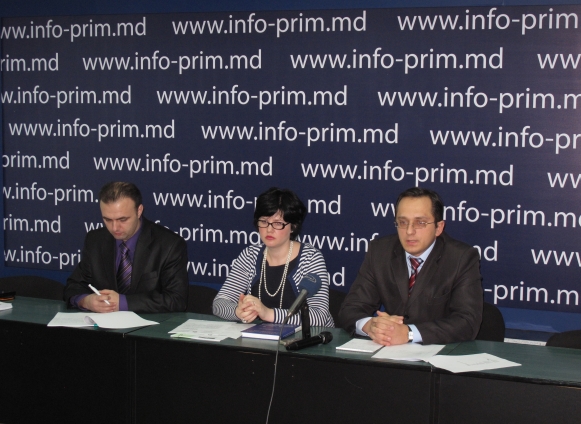
The Institute for Human Rights (IDOM) and the organization Promo-LEX filed a complaint with the Supreme Magistracy Council (CSM) requesting the dismissal of eight investigative judges in Chisinau who conducted criminal and administrative cases in the aftermath of last April’s events, Info-Prim Neo reports.

The complaint concerns judges Oleg Meliniciuc, Mihail Diaconu, Igor Vornicescu, Gheorghe Morozan, Igor Minascurta, Ion Bulhac, Ala Malii and Ludmila Cernei.

“These eight judges ordered administrative arrests for people with visible signs of physical violence, for minors”, Doina Ioana Straisteanu, a human rights expert with Promo-Lex, told a news conference on Thursday.

The complaint reminds CSM that the one-year time limit for sanctioning those judges expires on April 8, urging it to fast-track the procedure.

“If CSM fails to examine this complaint, it will be regrettable to see that the persons who were arrested illegally in that period are denied a remedy”, said Doina Ioana Straisteanu.

Ion Guzun, IDOM project coordinator, says civil society representatives had access to a limited number of such cases, nevertheless they found numerous faults committed by judges. “We found that some judges left the courts before the chairmen of the courts issued any conclusion. Another fault is that the biggest majority of sanctions were ordered based solely on police reports that justified the circumstances of the arrests, but we doubt the truthfulness of those reports”, said Ion Guzun. He added that many arrestees were denied the elementary right to object to the police reports.

Earlier in March, CSM dismissed Dorin Popovici, an investigative judge that conducted proceedings in police stations against last April’s protesters.

Source: Info-Prim Neo


DECLARATION: The Republic of Moldova and the Russian Federation are to be taken to the European Court of Human Rights in connection with torture and illegal deprivation of liberty in the Transnistrian region

On 15 March 2010, the European Court of Human Rights (ECHR) decided to examine, as a priority, the case of Iurie Matcenco vs. Moldova and Russia (case nr. 10094/10), submitted to the Court on the 19th of the previous month by Promo-LEX in collaboration with lawyers Alexandru Postică and Doina Ioana Străisteanu.

The governments of the defendant countries were given until 12 May 2010 to explain how it was possible that Iurie Matcenco was subjected to torture, illegal deprivation of liberty, and even a ‘mock execution’, acted out by MGB agents. The plaintiff Matcenco was also denied medical assistance during a hunger strike which he maintained for 44 days.

The Matcenco case is the first to be brought to the ECHR since the case of Ilaşcu and others vs. Moldova and Russia (ruled upon on 24 June 2004) to highlight severe human rights violations in the Transnistrian region of Moldova. Promo-LEX has on numerous occasions criticised the governments of the Republic of Moldova and Russian Federation for ignoring the complaints of the population on the left bank of the Nistru, even in cases of murder, rape, torture, and illegal condemnation and deprivation of liberty.

Doina Ioana Străisteanu, an international expert in human rights, stated that, “Transnistria has become a black hole on the ‘map’ of the European Council. Serious human rights violations are being committed in private (unofficial) places of detention, where those tortured are held without medical assistance and food. Human rights know no borders and the difficulty of resolving the conflict in the region does not excuse the impunity with which the separatist regime has turned Transnistria into a gulag”.

Lawyer and Executive Director of Promo-LEX, Alexandru Postică, declared, “If the Moldovan and Russian authorities will not willingly seek a way of ensuring respect for human rights in the Transnistrian region, then we will oblige them to do so through the mechanism of the European Court. Those living on the left bank of the Nistru have the right to effective protection on the part of the defendant states. It is the obligation of both states to act in the defence of fundamental rights and liberties in this region, and to help ensure respect for the European Convention.

Ion Manole, President of Promo-LEX, said that, “Many people have been, and many still are, in the same situation as Iurie Matcenco. Yet they no longer seek help from the constitutional authorities, owing to the latter’s lack of credibility. For around 18 years the organs of law in Moldova have ignored the constitutional rights of people located in the territory controlled by the Tiraspol administration, and have denied any responsibility for the state of affairs in this region. Russian and Moldova, as parties directly involved in the 1992 war, are not demonstrating a genuine willingness to identify and create an efficient mechanism for protecting human rights in Transnistria. The mechanism created in 1992 remains merely formal for the authorities, and ineffective for the inhabitants’ rights. The current peacekeeping format needs to be changed by replacing soldiers with civilian observers from countries not involved in the 1992 war”.

The Promo-LEX Association added that this is among the first cases to be accepted for priority examination by the Court that have been submitted on behalf of plaintiffs living in the Transnistrian region, under the de facto control of unrecognised authorities.

For more information contact the Promo-LEX Legal Department on 24 35 78, or e-mail: [email protected]


Inhuman treatment in Transnistrian penitentiaries

Promo-LEX Association reported a new case of inhuman treatment in a Tiraspol prison. A 34-year-old detainee had been on hunger strike for 45 days and is now in a serious condition. The administration of penitentiary No. 3 in Tiraspol does not pay attention to the requests of the relatives and the civil society, while the young man has already said goodbye to his close persons.

Alexandru Zubko, the jurist of Promo-LEX Association, has told Info-Prim Neo that this is the second hunger strike in protest against the inhuman detention conditions and torture to which the prisoners are subjected.

The jurist said the Transnistrian authorities did not answer the Association’s request to put the young man in a separate room and administer treatment to him as he suffers from giddiness and often loses his balance.

“The relatives told us that that the young man is in a very serious condition and he said goodbye to them as he cannot withstand anymore,” Zubko said.

According to the jurist, the man is native of Tighina and has been in prison for a year. He was arrested by employees of the Transnistrian security ministry on suspicion of swindle. When the man was arrested, he was taken to the bank of the river Nistru and threatened with a gun. An officer put the gun to his temple and shot, but there were no bullets in it.

Alexandru Zubko also said that the victim was constrained to accept blame, but he refused and his relatives started to be threatened.

The European Court of Human Rights was informed about this case last month. Promo-LEX asked the Court to oblige the Government of Moldova to provide medical assistance to the victim. “We are waiting for an answer,” the jurist said.

Last weekend, Promo-LEX informed that two prisoners of penitentiary No. 3 in Tiraspol went on hunger strike and were also in a critical condition. One of them cut his veins open in protest against inhuman treatment on March 12. Neither his relatives, nor the Association know in what state he is.

www.info-prim.md


Study on the right to property in the Transnistrian region

_article_1266575863On February 19 2010, at a press conference in Chisinau, the ‘Promo-LEX’ Association launched the study “The right to property in the Transnistrian region of the Republic of Moldova”. The study examines the situation concerning the legal status of property in the Transnistrian region, and discusses matters connected with the appearance of the right to property, its exercise, and how it is defended in the region. The study furthermore identifies the causes of various problems connected with the right to property in the region. The study offers a new vision on the right to property through the classification of property and the elucidation of the status applied to property, with reference to reports made by well-known researchers and specialists in the field of law.

Besides familiar infringements of the right to property -concerning, for instance, the passage of goods through internal customs posts; restrictions placed upon vehicles with Moldovan registration in the Transnistrian region (and the reverse, of those with TMR registration); the non-payment of pensions to the elderly and disabled; and the indexation of savings- the study discusses four further problems connected with the exercise of the right to property: Firstly, it talks about the right to property over land, which in the region is considered to belong completely to the ‘state’, despite the fact that, to a large degree, the land has passed into the hands of various shadowy individuals connected to the regional elite. The second problem concerns the privatization of businesses carried out contrary to the national legislation, in conditions of non-transparency. The third problem concerns violations of the rights of former deportees, who cannot benefit from the rights now offered to them by national legislation. The final problem examined has to do with the indexation of savings. In concluding, the study shows that these areas could, in the future, be focal points for various disputes and instances of litigation that could massively affect the interests of private persons, as well as of the state in general.

A further chapter explores the functioning of the mechanisms for protecting the right to property, which in principle do not exist in the region. The study points to systematic problems connected to the non-functioning of national courts, and likewise brings into view the functioning of the so-called courts and prosecutors in the Transnistrian region.

The study was realised with financial support from the Civil Rights Defenders. The study is available in Romanian, Russian and English, and can be accessed in electronic PDF format on the Promo-LEX website under the heading Publications.


The Prosecutor General is merely simulating respect for the rulings of the European Court of Human Rights concerning inhabitants of the Transnistrian region

The Prosecutor General is ignoring a decision of the European Court of Human Rights (ECHR), made in the case of ‘Ilaşcu and others against the Republic of Moldova and the Russian Federation’, in which the reservation that Moldova made upon ratifying the European Convention of Human Rights was declared void by the High Court.

In its decision, the Court said specifically that “the reservation is limited in space and time, the effect of which would be to exclude from the Convention’s protection, completely and for an indefinite period of time, the people who live on this “territory”; … for this reason, the Court considers that the declaration made by the Republic of Moldova cannot be accepted as a reservation to the Convention, and, therefore, should be considered invalid”.

Defying the provisions of the European Convention and of the High Court’s decisions, the Prosecutor General of the Republic of Moldova continues to neglect its core functions concerning the investigation of cases of torture, and refuses to defend inhabitants of the Transnistrian region when their rights are violated, covering itself formally with the reservation to the Convention, which is in fact considered invalid.

On February 18, 2010, the relatives of Iurii Matcenco, who was illegally deprived of liberty and is being held in the No.3 prison in Tiraspol, submitted a complaint to the ECHR alleging violations of articles 1, 3, 5, 8 and 13 of the European Convention of Human Rights. The plaintiff (Iurii Matcenco) claims that MGB agents role-played an execution in order to scare him, and that he was beaten by agents in the MGB offices, and later by members of the separatist militia. As a result of the maltreatment he felt compelled to declare a hunger strike, this being the only way to draw attention to the maltreatment to which he was being subjected, and to receive medical attention.

This case highlights the important problem of jurisdiction and responsibility vis-à-vis the situation of detainees’ rights in places of detention in the Transnistrian region of the Republic of Moldova.

Legal assistance was offered to the plaintiff by lawyers of the Public Association ‘Promo-LEX’. For additional information you can contact us by telephone on: 24-35-78


DECLARATION

The Promo-LEX association, which investigated and followed developments in the cases of the 4 young men from Oxentea, Dubăsari raion, and of the 3 young men from Răscăuţi, Ştefan Vodă raion, who were kidnapped by employees of the “security structures” and “border service” of the Transnistrian region on 27.01.2010 and 09.02.2010 respectively, welcomes the active involvement of the constitutional authorities in securing their release. These cases demonstrate that situations involving violations of citizens’ rights on the left bank of the Nistru can be resolved in a positive way, provided there exists the political will on the part of the authorities.

We note, nevertheless, that the massive armed presence in the security zone, the kidnapping of citizens, the blackmailing of victims’ relatives, the extortion of money, and the restrictions on freedom of movement, etc., show that freedom of movement, and the right to freedom and security of person are neither respected nor guaranteed within the security zone and the rest of the Transnistrian region of Moldova.

The Moldovan-Russian agreement of 21 July, 1992 thus remains a purely formal act, incapable of protecting people from numerous cases and situations in which fundamental human rights are violated. Likewise, Promo-LEX believes that the current peacekeeping format is ineffective and does not fulfil its stated duties.

Promo-LEX considers it necessary to change the current peacekeeping format by replacing troops currently deployed with civilian observers from third-party states not involved in the 1992 war. Only in such a situation will it be possible to guarantee respect for human rights and the rule of law in the security zone.

Legal Department, Promo-LEX