Training – Maltreatment resulting from discrimination

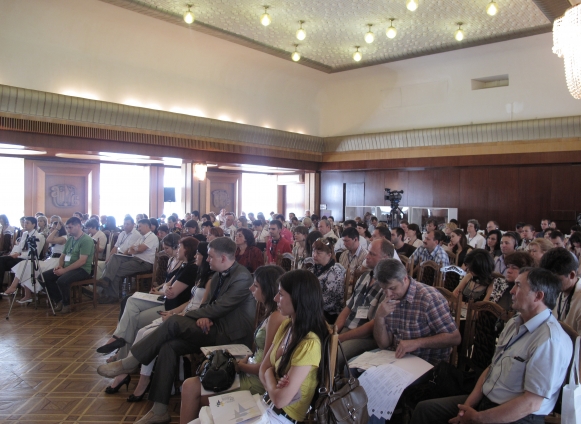
Between 3-4 August 2010, The Promo-LEX Association, in partnership with the Equal Rights Trust, organised a training with the title “Maltreatment Resulting from Discrimination”. The aim of the training was to help form and consolidate the participants’ capacities to monitor the situation regarding the application of torture, and regarding all forms of maltreatment resulting from discrimination. The training was moderated by Dimitrina Petrova, Executive Director of the ‘Equal Rights Trust’, and Krassimir Kanev, President of the Bulgarian Helsinki Committee.

23 people participated in the training. The participants were, variously, either lawyers in the field of human rights, human rights defenders, or members of NGOs that promote and defend the rights of women, people with disabilities, or ethnic and sexual minorities.

The agenda of the training featured subjects such as the following: Torture, and cruel, inhuman or degrading treatment; maltreatment resulting from discrimination based on gender, ethnicity, disability, sexual orientation or gender identity; the correlation between the right not to be tortured and the right to non-discrimination; and monitoring the situation regarding maltreatment resulting from discrimination. Trainers used numerous case studies and examples in these respective areas taken from international practice, including from the case history of the ECHR.

It should be mentioned that this field is a relatively new one for the Republic of Moldova, in so much as human rights lawyers and defenders in Moldova do not yet have enough expertise and experience in this area. The participants at the training were thus greatly appreciative of the chance to benefit from the instruction offered.

The event was held as part of the project “Consolidating Legal Protection and Raising the Level of Knowledge Regarding Maltreatment Resulting from Discrimination in Moldova, including the Transnistrian Region”, a project implemented by the Promo-LEX Association in partnership with the Equal Rights Trust, with financial support from the European Union and the United Nations Development Programme, Moldova.
The ECtHR made public a decision of admissibility with respect to the following applications: Căldare and 42 others v. Moldova and Russia, Catan and 27 others v. Moldova and Russia and Cervaschi and 98 others v. Moldova and Russia

_article_1278337056At a meeting on the 15th of June 2010, the fourth section of the European Court of Human Rights unanimously passed a decision of admissibility in the cases of: Căldare and 42 others v. Moldova and Russia (application nr. 8252/05); Catan and 27 others v. Moldova and Russia (application nr. 43370/04); and Cervaschi and 98 others v. Moldova and Russia (application nr. 18454/06). The respective decision was conveyed to respresentatives for the claimants on July 2, 2010.

The claimants in these three cases are 170 citizens of the Republic of Moldova who live in the ‘Moldovan Republic of Transnistria’ (MRT). Each application concerns a different school teaching in Romanian in the Latin script in the separatist region, and was submitted by a group of parents, children and teachers.
The claimants told the The European Court that they continue to be intimidated by the MRT authorities for their desire that the schools continue giving lessons in Romanian using the Latin script, and according to the curriculum approved by the Education Ministry of the Republic of Moldova.

In particular, the claimants cited to the court the violation of the right to non-discrimination, based on Art. 14 of the European Convention on Human Rights -and, taken separately and together with this, the right to respect for private and family life, in conformity with Art. 8 of the Convention- for the ban imposed by the MRT on Moldovans in the region from studying, speaking and from transmitting their inherited Moldovan culture (language, writing and traditions). Claimants also cited Art. 2 of Protocol nr. 1 to the Convention, in connection with the denial of the right to instruction in Latin script.

Analysing the matter of the exhaustion of internal routes for redress, the Court decided that the claimants cannot apply to the competent bodies of the Russian Federation, on the grounds that these do not recognise jurisdiction over this territory. The Court considers it irrelevant to address the competent bodies of the Republic of Moldova, since, even if there existed a decision made by these courts, it is unlikely that it would be executed on the territory of the Transnistrian region. On the question of addressing the bodies set up and existing in the Transnistrian region, the Court considers that there is no evidence that approaching these courts would be effective, seeing as the measures concerning the claimants were taken by MRT authorities with a view to ensuring respect for MTR ‘legislation’.

The Court, examining the subjects of the violation of Art. 8 of the Convention and Art. 2 of the additional Protocol, and of both these articles in conjunction with art. 14 of the Convention, consider that the complaint under these articles raises serious problems of fact and of law, and that their decision will be reached once the case has been examined in depth.

Taking into account the findings, the Court decided unanimously upon the admissibility of Article 8 of the Convention and Article 2 of the Additional Protocol, and of both these articles in conjunction with Article 14 of the Convention, reserving an examination of the merits of the case for a later date.

The Court gave the claimants until September 20, 2010, to prepare any additional observations, and to present information in connection with just satisfaction.

The claimants were represented at the court, as well as at public hearings, by Ion Manole, Alexandru Postica and Doina Ioana Străisteanu, lawyers at the ‘Promo-LEX’ Association.

Note: for more information contact Alexandru Postica of the Promo-LEX Legal Department, tel. 211622.


Exactly three months after the ECtHR communicated to the governments of Moldova and the Russian Federation about the case of Boris Mozer, a victim of detention and illegal detention by the Tiraspol regime, the claimant was released

On July 1, 2010, Boris Mozer, one of the victims of the Tiraspol regime, was conditionally released from his illegal detention. On July 1, the so-called Tiraspol court examined “the criminal case” brought against Boris Mozer, and found him “guilty” of committing an instance of fraud.

Boris Mozer was condemned to 7 years’ deprivation of liberty, with the execution of the sentence suspended for a period of 5 years. He was subsequently released from the “courtroom”.
Boris Mozer needs medical care, which he will receive at specialised medical institutions. He will not be able to benefit from medical care in Chisinau, since the “law authorities” in the region have declared that he cannot leave the area.

We note that on April 1, 2010, the European Court of Human Rights (ECHR) decided upon the priority examination of the case of Boris Mozer v. Moldova and Russia, nr. 11138/10, submitted to the court on February 24, 2010, by the Promo-LEX lawyers Alexandru Postica, Doina Ioana Străisteanu and Pavel Postica.

The defendant governments were given until 27 May 2010 to justify the legality of the arrest and detention of Boris Mozer as part of a criminal case started at the request of the ‘SC Interdnestrcom’ company, where he was employed. The governments had to respond in particular to two important questions – 1. If the arrest and detention of the claimant by the administration of the Trasnistrian region was made by a competent and empowered court (bearing in mind that the MRT “courts” are not part of the judicial system of the Republic of Moldova); and 2. If the responsibility for the maltreatment of the claimant at the hands of ‘MGB’ agents falls upon the governments in question. At the same time, a violation of the right to family life was invoked as a result of the refusal to grant access to relatives, and the refusal of a meeting with the claimant’s counselor.

The case of Boris Mozer is the second case submitted this year (2010), after the Matcenco case, which is similar to the case of Ilascu and others v. Moldova and Russia (decided upon on 24 June 2004), and which points to serious human rights violations in the Transnistrian region of Moldova.

Note: for more information contact Alexandru Postica of the Promo-LEX Legal Department, tel. 211622.


The European Partnership Fair for Civil Society Organization in Moldova took place in Chisinau

_article_1277284835The European Partnership Fair for Civil Society Organizations in Moldova took placefor the first time in Chisinau, on June 15-16 2010. . The event was organized by European Partnership for Democracy (EPD), East Europe Foundation (EEF) and „Promo-LEX” Association.

The main goal of the event was to help strengthening the Moldovan Civil Society (including the one from Transnistria) by sharing experience, establishing partnership relations with NGOs from European Union and CIS countries, as well as trying to provide some funding for joint initiatives launched by the Fair participants.

According to Victor Bodiu, Minister of State, the Government of Moldova has contributed to the involvement of the Civil Society in the process of policy building and policy implementation and monitoring ensuring in such a way transparency in the decision making process. Mr. Bodiu also stressed that the involvement of the Civil Society and especially its cooperation with the government is essential for the proper development of Moldova. Eugen Caras, Deputy Head of the European Integration Department of the Ministry of Foreign Affairs and European Integration, mentioned that the Partnership Fair is part of Moldova’s European aspirations. Mr. Caras stated that in a future project – which could be called the EU-Moldova Forum, the Civil Society could be involved in terms of discussions with businessmen from Moldova regarding the prospects for establishing a zone for free exchange with EU, as well as in other dimensions that would promote Moldova in Europe.

Executive Director of European Partnership for Democracy, Carlos Hernandez Ferreiro gave a positive assessment of the progress of civil society in Moldova, by emphasizing the need of developing the Transnistrian NGO sector.
In the same context, President of “Promo-LEX” Association, Mr. Ion Manole, mentioned that the interest, attention and international support given to Transnistria has increased substantially in recent years, especially with the perspective of European integration of Moldova.
Mr. Sorin Mereacre, President of East Europe Foundation, specified that the Fair is designed to initiate a dialogue between NGOs from Moldova and the organizations from EU member countries in order to promote the interests of the country within the European institutions, which will contribute to a faster accession of Moldova to the EU.

The event was attended by approximately 150 NGOs and donor representatives from Moldova (88 organizations, including 30 from the Transnistrian region) Europe and the CIS countries. During the event, participants had the opportunity to discuss within 3 thematic workshops: Challenges in Promoting Human Rights, Media and fundamental freedoms; Social Action, Mobilized Youth and cleaner Environment for a better Europe; European Integration through Eastern Partnership: opportunities for NGO cooperation.
At the end of the Fair a Basket Fund aiming to support partnership projects between different organizations was launched. The participants of the Fair also agreed on a Resolution concerning the situation of Ilie Cazac and Ernest Vardanean.

The conclusions of the European Partnership Fair and details regarding the Basket Fund can be found on the website: www.partnershipfair.eu


Bender investigator holding woman hostage is Moldovan national

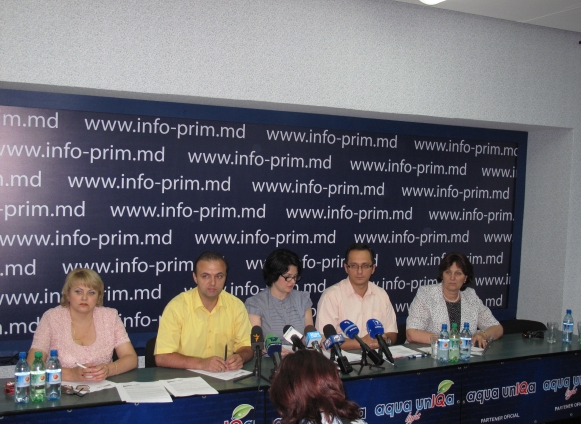
_article_1277107706The investigator in the case of Elena Dobrovitskaya, the young woman kidnapped by the Bender militsyia a couple of days ago, is a citizen of Moldova with residence in the village of Varnitsa. Given these circumstances, the mother of the hostage, Zinaida Ciuhnenko, and the human rights organization Promo-LEX request the General Prosecutor’s Office to take action against the illegalities committed by the investigator, and petition other relevant Moldovan authorities for intervention to release the illegally detained woman, who is moreover believed to be pregnant.

The 20-year-old woman was detained by the Transnistrian militsyia two days ago and is held hostage in a remand unit because her mother, Zinaida Ciuhnenko, had failed to appear before investigators when summoned.

Zinaida Ciuhnenko told today a news conference at Info-Prim Neo that she couldn’t make it to the militsyia station in Bender because she was receiving treatment at a health center in Chisinau.

“I filed complaints with all the institutions in Transnistria, complaints with the militsyia, and now I’ve brought these complaints to Chisinau”, said Zinaida Ciuhnenko. She said she would have gone to Bender yesterday, the very minute she found about her daughter, hadn’t she had a nervous breakdown that required urgent hospitalization.

Promo-LEX chairman Ion Manole described the case as ‘blackjacking’ on the part of the Transnistrian militsyia and opined that Zinaida Ciuhnenko should not go home because she would be immediately detained alongside her daughter.

Video footage was presented at the conference where Elena’s mother was shown speaking on the phone with investigator Vladislav Romanovski. He is heard telling the woman in an aggressive tone that her daughter wouldn’t have been detained had she complied with the summons.

Doina Straisteanu, a lawyer with Promo-LEX, said the Moldovan Prosecutor General is obliged to react to the case, especially since the investigator is a Moldovan national. “The Prosecutor’s Office should investigate on what grounds the investigator allowed himself to take hostages to ensure the continuation of the investigation”.

The mother of the hostage recounted that in March 2009 she felt sick while driving and accidentally struck a car of the Bender militsyia. Since then she was thrice remanded in Bender for 72-hour periods, during which she lost consciousness several times because of the inhuman detention conditions.

Source: www.info-prim.md


RESOLUTION of the European Partnership Fair for Civil Society Organizations in Moldova, concerning the situation of Ilie Cazac and Ernest Vardanean

Bearing in mind the fact that on the 19th of March 2010, in the city of Bender, (which, according to the Moldovan-Russian accord of 21 July 1992, is a high level Security Zone) Ilie Cazac was arrested, and that, on the 7th of April 2010, in the city of Tiraspol, the journalist Ernest Vardanean was arrested by the structures of the Tiraspol regime;

Noting the fact that Ilie Cazac has not been visited by relatives, and that, from the moment of his detention, no information has been available about his state;

Taking into account the fact that on the 12th of June 2010 the relatives of Ilie Cazac began a hunger strike outside the Russian Embassy in Moldova;

Starting from the principle that human rights represent indispensable values for every human being, on the one hand, and an unconditional obligation for all authorities, on the other;

Observing the fact that in the Transnistrian region of the Republic of Moldova there does not exist a legal, efficient and viable constitutional mechanism to ensure minimal guarantees of fundamental rights;

Being concerned by the situations of Ilie Cazac, Ernest Vardanean, and also of other people detained by the Tiraspol administration, and;

Reminding the authorities of the Republic of Moldova and of the Russian Federation that they are the only ones responsible for the situation and development of human rights in the Transnistrian region;

We, the participants at the European Partnership Fair for Civil Society Organizations in Moldova, gathered in Chisinau on the 15th and 16th of June 2010, REQUEST THAT the Republic of Moldova and the Russian Federation,

  • undertake, as a matter of urgency, all the necessary measures available to them to ensure that the rights of people held in detention in the Transnistrian region are guaranteed and respected, and that they are not subjected to acts of torture and inhumane treatment;
  • condition financial, economic and social support upon respect for the rights of all inhabitants of the Transnistrian region, and;
  • contribute to the immediate and unconditional release of Ilie Cazac and Ernest Vardanean.

We also REQUEST THAT representatives of the Tiraspol administration

  • not use torture, and not allow the inhumane and degrading treatment of people arrested or detained in prisons, militsia headquarters, or in other places of detention;
  • respect the procedural rights (rights to a lawyer, visitation rights, rights to medical assistance, etc.) of all those held in detention;
  • allow, immediately and unconditionally, a meeting between Ilie Cazac and his relatives currently on hunger strike, and;
  • allow, immediately and unconditionally, a committee of experts to examine the state of health of Ilie Cazac and Ernest Vardanean, and the conditions of their detention.


A young woman of 20 has been abducted and is being held hostage by the Transnistrian militsia in Bender because her mother did not present herself to an investigator

As of the 16th of June 2010, a young woman from the city of Bender is being held hostage by the Transnistrian militsia in Bender, on the grounds that her mother failed to meet an investigator.

While undergoing treatment in the cardiology department of a medical center in Chisinau, the girl’s mother, Mrs Zinaida Ciuhnenco, was informed by an investigator from the station of the militsia in Bender that her daughter would remain in ‘detention’ so long as the mother did not come back to Transnistria to face criminal punishment. The investigator also added that her daughter was ‘arrested’ for some days by personal decision, a period during which she – Mrs Zinaida Ciuhnenco- should ‘present’ herself at the militsia station.

The daughter is ‘detained’ in inhumane conditions in the basement cell of the militsia station in Bender. Before going to the militsia station, having been invited, the daughter, Elena Dobroviţcaia, told her mother by phone that she felt very ill, and had a temperature, but that she would nevertheless go to the militsia to avoid any problems later. After that, her daughter having been gone for longer than expected, the mother telephoned the ‘investigator’ to ask about her. The investigator conditioned the release of Elena Dobroviţcaia upon the mother’s freely presenting herself at the militsia station. What is more, the husband of Elena Dobroviţcaia has disappeared, and nobody knows his present whereabouts. Today, the 17th of June 2010, Elena Dobroviţcaia should have taken her final graduation exam at a school in Tiraspol.

Mrs Ciuhnenco is desperate, and is revolted by the actions of the force structures of the Transnistrian region, which, through methods of blackmail, abduction, torture and intimidation, are threatening to condemn her, even by involving her children.

The Promo-LEX Association, in the interests of the young woman Elena Dobroviţcaia (born 1990), requests the urgent involvement of the constitutional authorities, the Russian Federation, the European Union, Ukraine, the United States of America, and the OSCE (as actors in the 5+2 format), and also of other competent international bodies. We REQUEST;

prompt and concrete actions in defence of the fundamental rights and liberties of Zinaidei Ciuhnenco and Elenei Dobroviţcaia, and;
the unconditional release of the young girl from her private detention in the militsia station in the Transnistrian region.

To the constitutional law bodies we REQUEST that a criminal case urgently be opened, under art. 280 of the Penal Code (taking of hostages), and art. 166 of the Penal Code (illegal deprivation of liberty).

Legal Department,
“Promo-LEX”
17 June 2010


Lawyers for Human Rights and Promo-LEX advise Ion Muruianu to resign

_article_1275640694The public associations Jurists for Human Rights and Promo-LEX urge the president of the Supreme Court of Justice Ion Muruianu to quit his post voluntarily, Info-Prim Neo reports.

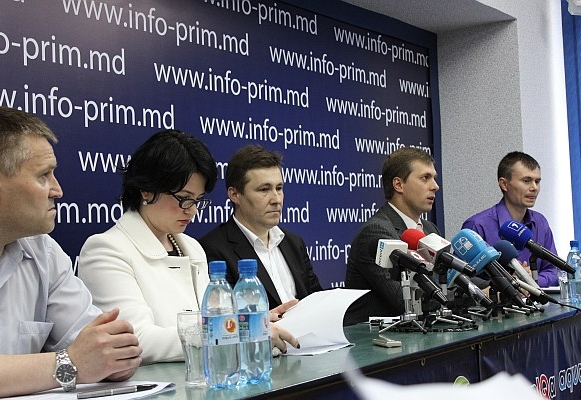
In a news conference on Thursday, the head of the Jurists for Human Rights Vlad Gribincea said the Supreme Court of Justice’s decision to annul the disciplinary punishment imposed on Ion Muruianu astounded the Moldovan jurists. By its decision, the court practically accused the lawyers of appealing to the ECHR to do the people justice and the journalists of covering the ECHH’s work.

The jurists are also dissatisfied with the composition of the panel of judges who examined the case of Muruianu. “The information about the aleatory selection of the judges who tried the case wasn’t made public. The initial case was to be examined by a panel that included Nina Cernat. The Supreme Council of Magistrates banned judge Cernat from taking part in the examination and it is not clear if the procedure was observed,” Vlad Gribincea said.

The case was examined by a panel set up the same day. Two of the judges represented the Economic Board and the Penal Board, though the case was to be examined by the Civil Board.

Attending the conference, jurist Vitalie Nagacevschi said this case shows how a trial shouldn’t be. Under the court’s decision, the negative image of the judiciary is made by the lawyers and jurists who write about the cases tried by the ECHR, not by the judges who discredit the judiciary by their behavior. “If he is a honest man, Muruianu should resign from the post of president of the Supreme Court of Justice,” Nagacevschi said.

The members of the two associations, including jurists Doina Ioana Straisteanu, Veaceslav Turcan and Roman Zadoinov, said the persons to blame can be punished only if the Supreme Council of Magistrates identifies irregularities in distributing the case and selecting the judges in an aleatory way.

www.info-prim.md


CALL: To the President of the Russian Federation, Mr Medvedev, and the President of Ukraine, Mr Yanukovych

Taking into account the fact that an official meeting has been announced for the 17th and 18th of May between the president of the Ukraine, Viktor Yanukovych, and the president of the Russian Federation, Dmitry Medvedev;

Bearing in mind the fact that both Ukraine and the Russian Federation have the status of guarantor states in the process of resolving the Transnistrian issue, by virtue of which they play an important role in the negotiations format and mechanism, and in maintaining peace;

Recalling that both states, on the one hand, recognise the independence, sovereignty and integrity of the Republic of Moldova, and condemn separatism in all its forms, on the other;

Noting the intention of both presidents to address the Transnistrian issue in direct and official talks;

Being concerned about the HUMAN RIGHTS situation in the Transnistrian region of the Republic of Moldova, and the lack of an effective legal MECHANISM to defend and protect people in the region (approximately 400,000 citizens of the Republic of Moldova, of whom around 150,000 are also citizens of Russia, and 100,000 are also citizens of Ukraine);

Recalling that the 5+2 negotiations format is the only internationally recognised format in which decisions regarding the solution of the conflict may be taken,

The ‘Promo-LEX’ Association urges the authorities of the Russian Federation and Ukraine:

  • to contribute, together with the constitutional authorities of the Republic of Moldova, to resolving each and every case involving violations of fundamental human rights and liberties on the territory controlled by the Tiraspol administration;
  • to respect the principles and norms of international law, coordinating with the constitutional authorities of the Republic of Moldova all actions connected with the relations between the Russian Federation and/or Ukraine with the Tiraspol administration;
  • to offer and provide humanitarian or financial assistance to the population of the region in conformity with the legal provisions in force in the states which offer and receive such assistance;
  • to condition financial support offered to the Tiraspol administration on the necessity of respecting fundamental human rights and liberties on the territory outside the control of the constitutional authorities;
  • to contribute, together with the constitutional authorities of the Republic of Moldova, to identifying and creating a legal mechanism that will ensure and guarantee respect for fundamental human rights and liberties in the Transnistrian region of the Republic of Moldova.


Promo-LEX recommends that the government of the Republic of Moldova address The Hague Court

The Moldovan constitutional authorities should approach the International Court of Justice in the Hague if the rights of it inhabitants (citizens of various states) cannot be defended and protected effectively and within a reasonable time-frame, Ion Manole, President of the Promo-LEX Association, has stated to Info-Prim Neo.

According to Mr Manole, “The Promo-LEX Association is concerned by the situation of human rights in the Transnistrian region of the Republic of Moldova, and regrets that all the efforts of the constitutional authorities and of various international actors to contribute to the establishment of rule of law on the territory, and the constant efforts of the last 18 years, have not made the self-proclaimed authorities in Tiraspol respect fundamental human rights and liberties in this region”.

Ion Manole states that the Moldovan government could bring -and could have brought even before now- an inter-state application to the International Court of Justice in The Hague. This court is the principal legal body of the United Nations, sometimes referred to as the World Court. Basing its decisions on international public law, the Court decides upon disputes of a legal nature between states and gives opinions on legal matters at the request of the United Nations or of other specialised agents authorised to make such a request.

The Association President says that Promo-LEX can put experts in international public law at the disposal of the government to look into the possibility of addressing the Hague Court, and into the preparation of the legal documents necessary for the court to rule upon the positive responsibilities and obligations of Moldova and Russia regarding the Transnistrian region.

Ion Manole said that the inhabitants of the left bank of the Nistru await effective and urgent efforts on the part of the government. “They deserve to enjoy rights and the liberties in equal measure with other citizens and inhabitants of the country. For this reason, we are expressing our readiness to support the Moldovan government in this initiative in light of the unique experience that Promo-LEX experts have in the domain of international public law and in international courts”.

Note (Info-Prim Neo): The main functions of the International Court of Justice are to settle legal disputes presented by member states and to give advisory opinions at the request of duly authorised international bodies, agencies, and the UN General Assembly.

© All Rights Reserved. The total or partial reproduction of this material requires written permission from IPN.