The initial findings of the observers from Promo-LEX
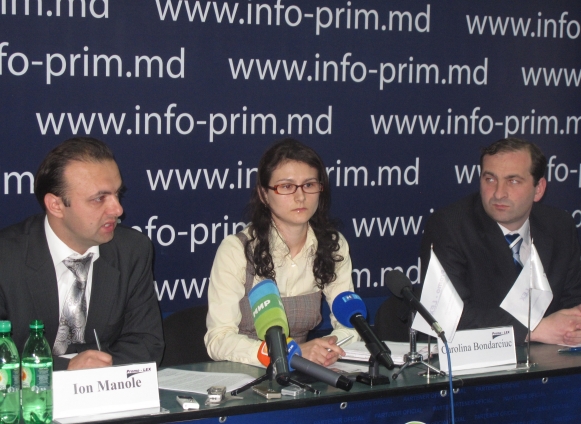
_article_1304669046Promo-LEX Association launches its first election monitoring report of the summer 2011 election campaign. The report covers the period April 18 to May 5 and describes the pre-election context, the main developments in the campaign, presents findings about the performance of the local government, election authorities, electoral competitors and the local media and makes a number of recommendations.

According to observers from Promo-LEX the pre-election period was marked by uncertainty about the date of the general local elections. Electoral Code changes were made outside the period prescribed for that purpose by the Venice Commission. The election date was within the limits set by the Electoral Code, without affecting the continuity of local government activity.

Promo-LEX Observers have noted that local authorities tend to comply with the deadlines set by the electoral law and take measures to create equal conditions for all candidates. Local authorities, with some exceptions, provide sufficient logistical support to the electoral authorities.

The election bodies were set up, with some exceptions, within the deadlines established by law and were fair towards electoral competitors. Shortcomings were found in the establishment of polling stations, displaying of information on the premises of polling stations. Until May 3, 2011, systematic information of the official website of the Central Election Commission had not been placed on the premises of polling stations and neither were their contact details.

Observers were informed on at least two cases of an inability to exercise the right to be elected as a local representative in the local administrative-territorial region of Bender and the Transnistrian region, for the lack of electoral authorities.

In most municipalities the standardized approach does not work on the preparation, administration, updating and verification of voter lists. After verifying voter lists were accessible to observers, it was found that there were not any hinderances.

Observers reported isolated cases of extensive interpretation of election law. This led to campaigning before the official registration by candidates before the electoral authorities, including the provision of electoral gifts. Of particular concern was the application of physical and mental violence against opponents of opinion / policy and use of administrative resources.

According to I. Manole, head of the monitoring effort “these violent incidents show the low level of political culture and lack of democratic traditions in Moldovan society, recommending the initiation of awareness raising and civic education campaigns to promote a spirit of tolerance and civilized behavior, so that violence should be avoided.”

Observers have noticed the active involvement of national, local and regional media in election coverage and in particular covering the performance and behavior of the election authorities and competitors. At the moment, some legal shortcomings were noticed, relating in particular to identify the authors of election advertising in accordance with legal norms.

Recommendations of Promo-LEX observers are made in good faith and to improve the electoral process. These are based on findings and indicate in particular the direction of intervention required, without dictating solutions.

The project “Monitoring the local elections of 5 June 2011” received technical and financial assistance from the National Democratic Institute for International Affairs (NDI).The opinions expressed herein are those of the authors and do not necessarily reflect the views of donors.

For more details, contact: Carolina Bondarciuc, Public Relations Officer
Tel: (22) 450024, GSM: 069637849, e-mail: [email protected]


Promo-LEX Association will monitor Local Elections of June 2011

_article_1303304310Promo-LEX Association launches the monitoring effort of the general local elections of June 5th 2011, within the Civic Coalition for Free and Fair Elections, Coalition 2009. The monitoring effort aims to increase public trust in the electoral processes, provide impartial and non-partisan information about the electoral campaign and elections’ administration and contribute to more free and fair elections that will increase the democratic change in Moldova.

“It is highly important to determine and compare trends of this election campaign with the trends of the previous campaigns in order to see the evolution or the involution of the election legislation, to assess the behavior of different election competitors and the accuracy of this election campaign”, stated Corneliu Cirimpei, Network Coordinator within the monitoring effort.

On the national level, Promo-LEX monitoring effort will include 40 long-term observers in all electoral constituencies and about 700 short-term observers that would monitor election process on the E-day.
The activity of all observers is coordinated by a core team that is responsible for their training in election procedures and independent and non-partisan character of the monitoring effort. Core team will also carry out the analysis of the observer’s findings throughout the monitoring effort.

The observers will report their findings in a standardized form, based on direct observations, meetings with interlocutors and consulting official documents. In some constituencies, Promo-LEX will conduct special operations, such as: Parallel Vote Tabulation (PVT), statistically based observation focused on election procedure’s quality (Quick Count) and E-day observation through mobile observation teams.

Promo-LEX monitoring effort is a non-partisan program that aims to increase voters’ trust in election process, regardless of who wins the elections. Based on the observer’s findings, Promo-LEX monitoring effort will highlight the trends of the election process and, where relevant, will raise concerns. The latter will serve to develop a set of recommendations designed to improve the electoral process and increase public confidence in elections.

Publications of the previous Promo-LEX’ monitoring efforts are available here.

The Promo-LEX Association is a non-governmental organization focused on promoting democratic values and on implementing internationally recognized standards in the Republic of Moldova, including the Transnistrian region. Promo-LEX monitoring effort is implemented with technical and financial assistance from the National Democratic Institute for International Affairs (NDI).

For more details please contact: Carolina Bondarciuc, Communication Officer
Tel: (+373 22) 450024, GSM: (+373)69637849, e-mail: [email protected]


How are respected human rights in Transnistria (video)

How are respected human rights in Transnistria – is the third video report released by Promo-Lex on human rights in the region.

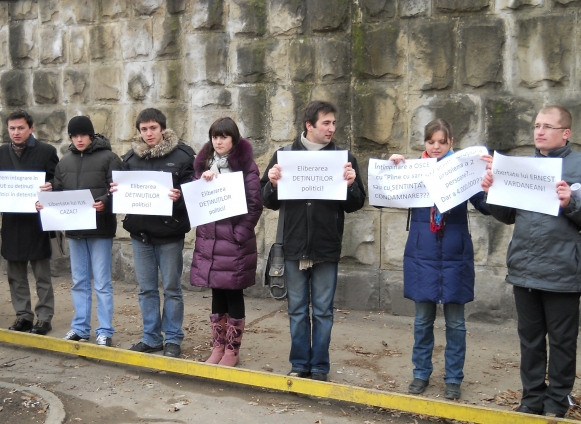
Ensuring the promotion, respect, protection and rehabilitation rights of the people of the Transnistrian region are words that sound good but actions that have not been undertaken and in all probability will never be undertaken in the region. This is a report about the violation of elementary rights to freedom of expression, freedom of association, freedom of religion and the right to a fair trial and representation in cases such as Ilie Cazac and Ernest Vardanean.


The report was made within a Promo-LEX project “Resource and Development Center for Transnistria”, with financial support from the National Endowment for Democracy.

The opinions expressed in this report do not necessarily reflect those of the donors.

For more details, contact: Ion Manole, President of Promo-Lex: Tel: (22) 450024, GSM: 069070800, e-mail: [email protected]


NGOs in Transnistria have plenty of work. (video)

Promo-LEX launches the second video report on human rights in the Transnistrian region – non-governmental organizations in Transnistria have plenty of work, a story about the work and problems faced by human rights organizations on the left sight of the Dniester.

NGOs protecting and promoting human rights enjoy a greater degree of trust among the public than other socio-political organisations in Transnistria. For ordinary citizens NGOs represent virtually the last resort they can call in an attempt to defend their rights, but for the illegal Tiraspol authorities NGOs are a danger, a danger so great that non-governmental organizations are labeled simply as “beggars” for funds.

The report was made within a Promo-LEX project, with financial support from the National Endowment for Democracy.
The opinions expressed in this report do not necessarily reflect those of the donors.

For more details, contact: Ion Manole, President of Promo-Lex: Tel: (22) 450024, GSM: 069070800, e-mail: [email protected]


“Spy scandals and human rights – What lies behind cases Ilie Cazac and Ernest Vardanyan?” (Video)

Within the project “Resource and Development Center for Transnistria” Promo-Lex launches a series of video reports on human rights on the Transnistrian region.

“Spy scandals and human rights – What lies behind the cases Ernest Vardanean and Ilie Cazac?” a story about the fate of the two political prisoners in the continuing fight between the Tiraspol regime and their percieved enemys.

Illegal detentions, serious and absurd accusations of spying and treason against a state that doesn’t exist, hidden processes and delivery of raw sentences. In two different situations the same scenario was applied demonstratively in defiance of the constitutional authorities in Chisinau. Elijah Ernest, Vardanean Cossack and their families remain hostages of the situation.

The report was made within a Promo-LEX project, with financial support from the National Endowment for Democracy.
The opinions expressed in this report do not necessarily reflect those of the donors.

For more details, contact: Ion Manole, President of Promo-Lex: Tel: (22) 450024, GSM: 069070800,
e-mail: [email protected]


Public Lecture “Hate crimes based on sexual orientation in Moldova”

_article_1300445958On March 15 The Promo-LEX Association and The Equal Rights Trust (ERT) held a Public Lecture entitled “Hate crimes based on sexual orientation in Moldova.” The event was organized as part of the project “Strengthening Legal Protection from and Raising Awareness of Discriminatory Ill-Treatment in Republic of Moldova, including Transnistria”, a project funded by the European Union through the European Instrument for Democracy & Human Rights (EIDHR). The project is co-funded by UNDP Moldova within “A joint UNCT for Human Rights Protection and Promotion in the Republic of Moldova” Project.

The event commenced with the launch of the fifth edition of „The Equal Rights Review” (ERR 5). The presentation was made by Libby Clarke, the Legal Officer at ERT. In the context of discussions currently taking place in Moldova on the Draft Law on Preventing and Combating Discrimination, Libby Clarke mentioned two articles that could be of most interest to readers in Moldova: “The new Equality Act 2010 in Britain” and “Islam and Homosexuality.” The first article describes the development of UK legislation on equality and non-discrimination. The second article deals with homosexuality in the context of Islam, thus giving an insight into the correlation between religion and homosexuality, which is currently a controversial issue for Moldova. The publication includes articles focused on other themes in the field of equality and combating discrimination. This publication has been translated into the Romanian language and was distributed to participants of the public lecture. A PDF version is available in Romanian on the website of The Promo-LEX Association here. A PDF version in English is available on the website of The Equal Rights Trust here.

The second part of the event was devoted to discussions on hate crimes relating to sexual orientation in Moldova.
Angela Frolov, Lobby and Advocacy Program Coordinator at GENDERDOC-M presented several examples of hate crimes and verbal abuse based on sexual orientation which have recently been registered in Moldova. Angela Frolov stressed that such cases show the authorities to have an ignorant and aggressive attitude. Most of the time, instead of investigating these cases, law enforcement officials blackmail, assault and persecute gay people. Such an attitude leads most gay people to live a double life, fearing to confess even to those close to them about their sexual orientation. The GENDERDOC-M organization has consistently recorded cases of violence, including sexual, in which the victims are homosexual persons. Angela also presented numerous cases of incitement to hatred and hate speech against homosexual persons. Even though the authorities are aware of these cases, they do not take any measures to punish or prevent them.
The cases of incitement to hatred and hate speech reported by GENDERDOC-M are interpreted by the authorities as being within the limits of the freedom of expression.

Later, Libby Clarke presented an international perspective on the issue. She noted that hate crimes based on sexual orientation are, unfortunately, a universal phenomenon. Libby Clarke defined the terms sexual orientation and homosexuality. In this context, Angela Frolov recalled that in 1990 the World Health Organization excluded homosexuality from the list of diseases, thus, homosexuality is considered one of the three normal human sexual orientations: heterosexual, homosexual and bisexual. Also, Libby Clarke spoke about the two basic elements that define “hate crime”, namely: the presence of a component of a crime and also a bias motive, which in these cases is sexual orientation. In several European countries such as Lithuania and Great Britain, hate crimes are punished more severely than “normal” crimes. In this way, the European countries are contributing to the prevention of such offences in the future.

Libby Clarke also summarised the international legal obligations of Moldova in relation to protecting individuals from discrimination on the ground of sexual orientation, with reference to the International Covenant on Civil and Political Rights and The Yogyarta Principles. She also made reference to decisions of the European Court of Human Rights which confirm that sexual orientation is to be included as a ground of discrimination for the purposes of the prohibition of discrimination set out in Article 14 of the European Convention on Human Rights. Finally, she demonstrated how recent decisions of the European Court of Human Rights, including Nachova v Bulgaria, have confirmed that States such as Moldova have an obligation to protect individuals from hate crimes.

“In Moldova, there is still no legislation in the field of non-discrimination. The Draft Law on Preventing and Combating Discrimination, once adopted, would complement the Criminal Code of Moldova and would introduce the concept of “hate crime”, which currently is not defined in the legislation of RM. Thus, any offense under the Criminal Code committed on the basis of discriminatory criteria should be treated as an aggravated offense, “said Doina Ioana Straisteanu, lawyer in the project.

At the same time, even in the absence of anti-discrimination laws, a lawyer skilled and interested in defending his client’s rights can use the existing legislation to his advantage.
In this regard, Article 77 Aggravating Circumstances under the Criminal Code, paragraph 1, letter (d) qualifies what is considered to be an aggravating circumstance: “the commission of a crime due to social, national, racial, or religious hatred;.” In this respect, hate crimes based on sexual orientation could be assigned to social hatred and judged accordingly.
Article 78 Effects of Mitigating and Aggravating Circumstances under the Criminal Code in paragraph 3 stipulates “In the case of aggravating circumstances, the maximum punishment set in the corresponding article of the Special Part of this Code may be applied”.
Article 145 Deliberate Murder, Article 151 Intentional Severe Bodily Injury or Damage to Health and Article 197 Deliberate Destruction or Damaging of Goods under the Criminal Code state that when the offenses are committed out of social, national, racial, or religious hatred, they shall be punished in accordance with the relevant provisions of the Criminal Code, including imprisonment.

In this respect it is relevant to define the term social as: 1) what is relevant and common to society; 2) what belongs to a certain class or a particular group in society; and 3) what is specific to a group of people.

Also, help for human rights defenders and lawyers can be found in Article 176. Violation of Citizens’ Equality of Rights under the Criminal Code which states: “The violation of citizens’ rights and freedoms guaranteed by the Constitution and other laws on the grounds of sex, race, color, language, religion, political, or any other opinions; national or social origin; association with a national minority; property; birth or any other situation: service for 150 to 240 hours or by imprisonment for up to 3 years, in all cases with (or without) the deprivation of the right to hold certain positions or to practice certain activities for 2 to 5 years.”

“Bringing such cases and their respective arguments to the courts would allow the development of jurisprudence that would condemn and punish hate crimes, including those based on sexual orientation in Moldova,” said Doina Ioana Straisteanu.
In this respect, the role of law enforcement authorities is also very important because they are responsible for collecting evidence and conducting prompt further examination of the causes and transmission of these data files for the court.

The ‘Red line’ of the event was that discrimination and hate crimes based on discrimination, including based on sexual orientation, are related to human rights issues and should be treated as such. International human rights practice is very explicit when it comes to fundamental human rights violations. Thus, freedom of expression and freedom of religion may be restricted under certain circumstances, while the right not to be subjected to ill treatment, including discriminatory mistreatment, falls under Art 3 of the European Convention on Human Rights, and is an absolute right.

Participants at the event, civil society representatives, lawyers, law students and students from the journalism faculty, stressed the usefulness of such events that help promote democratic norms and values and that enhance the legal culture of society.

Contact Person : Olga Manole, Project Coordonator, Promo-LEX Association
Tel (+373 22) 449626, [email protected]


The Declaration of Local Authorities Congress from Moldova

_article_1299157555In connection with the arrest of the Corjova mayor, Mr. Valeriu Mitul and local counsel Mr. Iurie Cotofan.

Colleagues, friends and citizens of the Republic of Moldova!
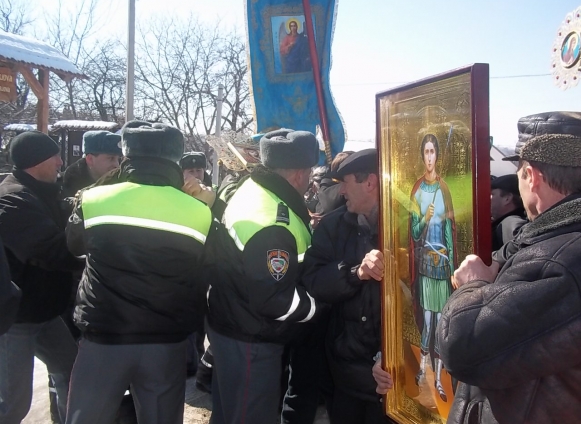
On March 2, 2010, during the party peace march to commemorate those who died during the tragic war from the river, recorded 19 years after the beginning of military actions in Transnistria in Corjova, Dubasari Mayor Valeriu Mitul and district councilor Mr. Iurie magpie were arrested , by a group of people, about 50 thugs dressed as unconstitutional militia officials.In the same evening, both elected officials have been convicted by the so-called court of the city Dubasari to 7 days of detention.

In connection with this incident, the CALM, says the following:

1.We express our deep indignation and condemnation of illegal and criminal actions of the so-called representatives of the Transnistrian authorities, following which was an illegal seizure of legally elected representatives of local government. In this way, it is clear that the actions of the last period as a result of which they were arrested and convicted by Moldovan citizens, some challenges are better managed and organized against the citizens by the constitutional authorities of Moldova;

2.Mr. Valeriu Mitul is a well known personality and popular among his colleagues in local government and people Corjova for his achievements in the interest of his native community, especially the devotion and patriotism to the country and the character and dignity in which he faces the conditions under which we operate. He personally, and other true patriots of our nation, are hunted fiercely by separatist structures.Therefore, we express our deep concern for life and health of Mr. Valeriu myth, which certainly is at great risk, knowing the ways and means the sadistic KGB ISTE and the so-called separatist law enforcement operate;

3.Unfortunately we find that such actions occur in security and tacit acceptance of the so-called peacekeepers, which do not fulfill their duties and accept such acts of provocation and flagrant violations of basic human rights;

4.We believe that a considerable part of the blame for these acts and the unconstitutional authorities’ growing courage is on the shoulders of the Moldovan central government that for years have behaved tacitly and not presented an adequate response to its citizens being systematically humiliated and discriminated against without prosecuting perpetrators against such acts and not punishing them under existing laws. In many cases it is necessary for our government to wake up and show his new nationality that they themselves have dignity, respect and that in Moldova there is justice and law enforcement agencies that have the ability to protect its citizens? Vardanian, Cazacu, Mîțu … … Who is next? a minister? A Member? What’s left?

5.We can not accept and understand the passivity of law enforcement agencies of Moldova, which instead should take action and take all necessary action required by law to identify and prosicute so-called policemen, prosecutors, judges working without any remorse or conscience.Moreover, many of them are citizens of RM and / or living on the right bank, with all services provided to citizens of Moldova. Why does the law enforcement prosecution, police, security of the Republic of Moldova, who are obliged to protect its citizens wherever they are not react? For the new Moldovan citizens pay taxes and maintain such organs? In order to be systematically humiliated, beaten and kidnapped by criminals who now openly and without any obstacles, seize, accuse and condemn some of the most worthy and respected representatives of our people such as Mr. Valeriu Mîțu? Criminals who walk to freedom through all the towns and villages in Moldova and abroad with passports issued by authorities in Moldova! Why are those “citizens” not identified and processed?

6.We regret that our local governments and citizens loyal to the constitutional authorities of the Transnistrian communities usually left without any support from central governments, are left to this fate or even humiliated by the representatives of the Moldovan central authorities.Local authorities not just in this part of Moldova but actually as the whole country are turned into beggars and walk the streets in search of resources and justice.This besides the fact that the authorities in the Transnistrian region are operating under permanent threat to their health and life and also their relatives. At the same time the whole system of local government faces serious problems with disabilities, lack of finances, dependence on central authorities, etc.. And if the mayor from Corjova is telling by his attempts, usually unsuccessful, to reach the central authorities to address the problems of his community, separatists are taking advantage of this situation, offering different types of benefits to villagers to earn loyalty freedom from intimidation and promoting their social, economic and political rights.

7.We note with great regret that no member of parliament or the government participated in commemorative measures in areas of the left bank organized by local authorities in Dubasari on 2 March 2011.

Therefore, based on the above:

1.We demand the unconditional and immediate release of Dubasari local elected officials: Mayor Corjova Mr. Valeriu Mitul and district councilor, Mr. Iurie Cotofan;

2.We ask the central authorities of Moldova to immediately take all necessary actions to release Mr. Valeriu Mitul and Iurie Cotofan;

3.We ask law enforcement to take all measures investigation under current legislation to identify and ascertain the liability of persons who participated in the seizure, prosecution and sentencing of the Mayor and the legal advisor;

4.We urge to the Government and the Parliament to pay more attention to issues of public administration and to develop urgently a concrete action plan, consulted with local authorities, to support administrative, economic, financial, material, etc.. communities under the jurisdiction of constitutional bodies, and ensuring adequate conditions for citizens and local government activity in the area of security through the provision of social security and personal security, given concrete conditions.

5.We call on the entire civil society, local authorities and central leaders, including the Transnistrian region of Moldova to release prisoners – local elected officials, as well as condemnation of the illegal actions of force in Transnistria which violates fundamental human rights.

6.We appeal to the diplomatic corps and international organizations in Moldova, with the request to take all action necessary to release local elected officials;

7.Appeal to all local authorities in Moldova and all citizens of goodwill to undersigned and support this declaration.

8.We inform public opinion to support the CALM determine all possible measures Transnistrian colleagues in need, including organizing a rally in the coming days of solidarity and protest, if our colleagues need lederating

For more information, please contact us at tel. 9:36 p.m. 32 or mob. 079588547

Promo-LEX Association subscribe DECLARATION OF LOCAL AUTHORITIES CONGRESS and condemns the events of March 2.


Conclusions from the Public Debate: “The elections of 28 November 2010 through the prism of improving the Moldovan electoral processes”

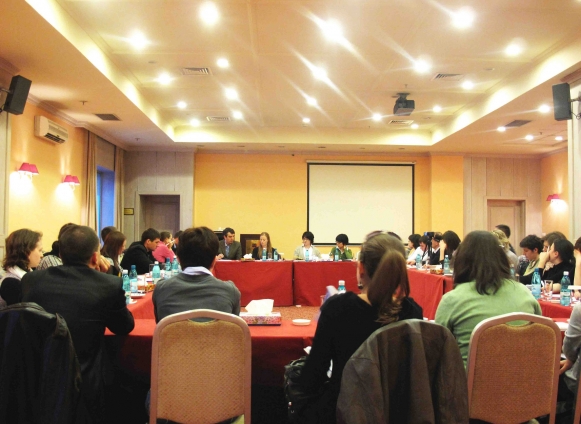
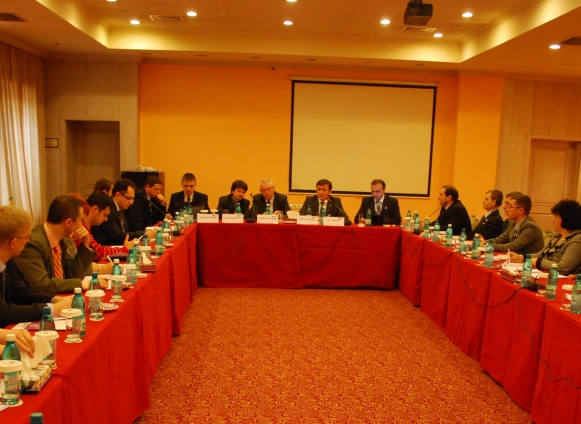
_article_1299158542Wednesday, March 2, 2011 Promo-LEX Association organized the public debate on topic “The elections of 28 November 2010 through the prism of improving the Moldovan electoral processes”.

Based on the findings of the Final Monitoring Report of the early parliamentary elections of 28 November 2010, this public debate focused on issues such as poor preparation of voter lists, lack of financial transparency from candidates in terms of reflecting expenditure and the use of administrative resources for electoral purposes.

At the opening event, Ion Manole of Promo-LEX said that “although the Central Election Commission was one of the most open and transparent government institutions in recent years and was successfully conducted within a fairly narrow period between two Parliamentary elections and a referendum, there is much more to do. This is demonstrated by the numerous findings, conclusions and recommendations contained in the reports of observers monitoring the elections from Promo-LEX”. In this context, Ion Manole stressed the necessity and importance of continuing the partnership between civil society and electoral bodies.

According to Iurie Ciocan, President of the Central Election Commission, one of the main remaining issues was that of voter rolls. During the debate the need for intervention in the procedure for compilation and verification of voter lists was emphasized. “We have a clear position on the proposals and despite gaps in the exchange of opinion we have established some regulatory pathways,” said Iurie Ciocan.

Irregularities in reporting of expenditures by electoral competitors have also been detected. Pavel Postica, lawyer at Promo-LEX and Deputy Chief of the monitoring effort stated that it may be the case that the Election Commission needs to review the rules, in order to require competitors to show very clear how money is managed. This is also relevant in the context of the upcoming local elections, where the control over financial transparency will lie on District Election Commissions, which will mean even less opportunity to verify the financial transparency of electoral competitors.”

In the discussions were drawn the main recommendations made by Promo-LEX, including the need to establish a single mechanism for checking the validity of its registration by voters in electoral lists, simplification of the procedures for checking the logical validity of the vote counting and to establish a clear mechanism to verify data for the detection of inconsistencies in the protocols.

Participants attended the event concluded that such debates are welcomed, and not only around local or parliamentary elections, and attempts to improve the electoral process must be continuous, contributing thus to the ultimate goal to have free and fair elections.

Nicolae Panfil, Secretary of the Coalition for Free and Fair Elections stated: “It is important that after the release of monitoring reports to have such discussions on the conclusions and recommendations so that we make them be heard, and thus improve the effective organization of elections. This event has started what we may consider an activity in view of the upcoming elections and both the Coalition and Promo-LEX will already be mobilized in this regard ”

The event was attended by representatives of the electoral authorities, central and local public authorities, political parties and of the civil society.

For more details, contact: Ion Manole, President, Promo-LEX Association
Tel: (22) 450024, GSM: 069070800, e-mail: [email protected]


PRESS RELEASE

Promo-LEX remains concerned by the situation of Ernest Vardanean, who is still a hostage of the unconstitutional regime in Tiraspol and at the continuing inaction of the constitutional authorities in response.

Relatives of Ernest Vardanean have recently received a response from the illegal administration of Tiraspol announcing that any further decision regarding the Ernest Vardanean case will only be issued after the examination of a new request for a “pardon”, which cannot be filed earlier than October 2017.

In these circumstances, Promo-LEX notes that the issue of the Ernest Vardanean cannot reach a satisfactory resolution without a clear vision from the constitutional authorities of Moldova and a strategy based upon the application and enforcement of the law adhering to the Constitution; that pursues action without exception against all those who participated in the kidnapping, “conviction” and continuing detention of Mr Vardanean.

We believe that all of the contributory actions in Mr Vardaneans case (ordering the hostage to publicly acknowledge their guilt and then ask the unconstitutional authorities for a “pardon”) were designed to keep people in a state of terror and fear in the region, demonstrating the fact that the regime and those who serve it operate with impunity. The fact that the illegal regime sought to obtain a public plea for a “pardon” was a clear act of propaganda in order to increase their perceived recognition and authority in the region and in an international context.

Promo-LEX is concerned about this situation in which the inhabitants of the region continue to serve as a currency in the hands of those who have unconstitutional control over this area of the Republic of Moldova.

WE CALL upon the constitutional authorities of Moldova:

  • As a matter of urgency to take effective and determined legal action towards the release of two hostages in Tiraspol, Ernest Vardanean and Ilie Cazac.
  • Applying the provisions of national law, particularly criminal action against all persons and citizens who participated in offenses specified under art.339 (usurping of state power), art.341 (violent overthrowing or changing of the constitutional order of RM), art.347 (desecration of state symbols), art.351 (Usurping of officials), 352 (Arbitrary proceedings) art.280 (hostage taking), Article 282 (formation of illegal paramilitary units, organizing or participating in them), 284 (creating or leading a criminal organization), art.309 (Torture).
  • We also ask for increased diplomatic efforts towards resolving these cases within related international structures, in the local region and the wider continent.

Chisinau
February 19, 2011

For more details, contact: Alexandru Postica, Attorney, Promo-LEX Association Executive Director, Tel: (22) 450024, GSM: 069104851, e-mail: [email protected]


Promo-LEX expresses concern at the increasingly dramatic situation of the two political prisoners – Ilie Cazac and Ernest Vardanean

_article_1297335195A P P E A L
To create credible mechanisms and legal instruments, which would guarantee fundamental rights and freedoms of residents of the region.

Promo-LEX Association continues to follow closely and with concern the human rights situation in the Transnistrian region of Moldova.

Promo-LEX again found serious abuses against local inhabitants, committed by the illegal government in Tiraspol, through incompetence, malpractice, a lack of effort towards satisfying their positive obligations and by ignoring the constitutional authorities of Moldova.

Promo-LEX expresses concern at the increasingly dramatic situation of the two political prisoners Ilie Cazac – “Condemned” on 9 February 2011 and Ernest Vardanean – “Condemned” on 16 December 2010, who were deprived of their liberty by the “Secessionist Authorities”. In these circumstances we talk about unique cases which would be impossible in other countries: Moldovan citizens on the territory of his country are “arrested”, “tried”, “judged” and “convicted” by fellow citizens for the crime of “spying for the Republic of Moldova”.

It is outrageous that for about a year the constitutional authorities have been powerless to assist in these humiliating processes directed at any citizen of the Republic of Moldova, and they have been limited to formal and banal statements about the success of “negotiations” and “dialogue.” It is irresponsible to gesture and demand action, efforts and results from the international community, while the structures of the state government and state authorities of Moldova are not proposing discussions towards adopting and implementing a strategy for a reintegration of the country; this is all the more pertinent while doing absolutely nothing towards the investigation and punishment of persons guilty of mass violations of human rights in the region.

Even more outrageous is the fact that on precisely the same day that the President of the OSCE visited the Transnistrian region and the so-called “authorities” in the region greeted him as a “traditional” regional diplomatic: They “condemned” the political prisoner Ilie Cazac, to 14 years imprisonment for espionage in the interests of the Republic of Moldova Republic of Moldova.

Promo-LEX calls the Republic of Moldova, the OSCE, Ukraine, Russia, European Union and the United States (participants of the 5+2) to initiate legal procedures and credible mechanisms for residents of the Transnistrian region as soon as possible. They would serve as practical tools for the region’s population to protect and defend their constitutional rights.

Promo-LEX believes that the overall settlement of the Transnistrian problem cannot occur without solving specific problems, namely the cases of political prisoners, Ernest Vardanean and Ilie Cazac.

Promo-LEX requires the immediate and unconditional release of Ilie Cazac, Ernest Vardanean and punishment of all persons involved in the abduction and kidnapping, according to Moldova’s penal code and provisions of national law.

Chisinau
February 9, 2011

For more details, contact: Ion Manole, President of Promo-LEX: Tel: (22) 450024, GSM: 069070800, e-mail: [email protected]


DOC –A P P E A L To create credible mechanisms and legal instruments, which would guarantee fundamental rights and freedoms of residents of the region