ECHR will examine in a priority basis a case versus Moldova and Russia

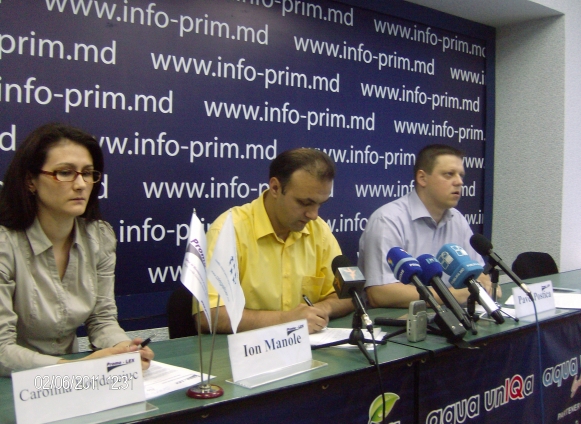
On 23 August 2011, the European Court of Human Rights (ECtHR) decided to apply the urgency procedure to the case of Eriomenco v. Moldova and the Russian Federation, application no.42224∕11 lodged with the Court on 1 July 2011 by lawyers of the human rights organization Promo-LEX.

Vitalie Eriomenco is a businessman from the town of Slobodzia in the Transnistrian region, who was arrested on 29 March 2011 by a law enforcement agency of the unrecognized republic. During his detention, the victim has been subjected to inhuman and degrading treatment in private detention facilities in the Transnistrian region. He has been kept for several months in a humid cell, without ventilation, adequate sunlight or access to sanitation, without drinking water, and infested with lice, bedbugs and cockroaches. Detention in such conditions has led to the worsening of his chronic illnesses, including high blood pressure, heart block and respiratory distress. Also, because of the poor conditions of detention, his prostatitis and duodenal ulcer has worsened so much that they give him unbearable pains. In three months, Mr. Eriomenco’s health has declined badly. He lost 5 kg in just 18 days, because the food there is unpalatable. He is also denied medical assistance. For his release, investigators requested $1 million from his family to serve as a compensation for damages allegedly caused to a person. Further, Vitalie Eriomenco was fraudulently dispossessed of shares in the companies he administrated. Moreover, the home he owned was seized and his family evicted.

The applicant complained to the ECtHR that the defendant States violated Arts. 2, 3, 5, 8, 13, 17, 34 and Art.1 of Protocol 1 to the European Convention.

For further details, please contact Alexandru Postica, Promo-LEX Association’s Legal Department: Phone: (22) 21 16 22, GSM: 0691 04 851, e-mail: [email protected]


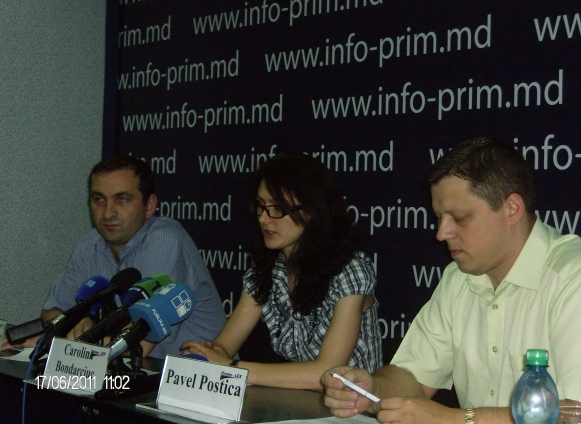
Conclusions and recommendations of Promo-LEX observers on local elections 2011

_article_1314690499Chisinau, 30 August 2011 – Promo-LEX launches final monitoring report of the local elections of 05 June 2011. The report described pre-election context, presents the main findings of Promo-Lex observers and outlined several recommendations to enhance the quality of the electoral process.

The local general elections in 2011 in the Republic of Moldova, which were held on June 5 (Round I) and June 19 (Round II), were marked by a high level of voter participation, a fierce competition demonstrated by candidates and an adequate level of preparing the elections by the electoral organs. At the same time, multiple deficiencies have been recorded in the electoral process, mainly due to the actions undertaken by the majority of the involved actors. These deficiencies did not have a significant influence on the results of the scrutiny.

The pre-electoral period was marked by uncertainty regarding the date of organizing local general elections. The Parliament has set and announced the date for the local general elections as a result of the proposal which was not initially included in the official agenda and which was only three days prior to the expiry of the deadline specified by the legal norms. Amendments to the Electoral Code have been operated outside the term recommended for these purposes by the Venice Commission. Moreover, the amendments were admitted after the announcing of the date of the local general elections.

The Promo-LEX observers have reported that local public administration authorities have mostly respected the provisions of the electoral legislation, demonstrated the tendency to respect the deadlines set by the electoral legislation and undertook the necessary measures in order to create equal conditions for all the electoral competitors. Except for a few cases, local public administration authorities have generally offered sufficient logistical support to the electoral organs. At the same time though, the observation effort has reported a significant number of cases of use of public function for campaigning purposes. The latter also include the isolated cases of abuse of public office for electoral campaign purposes by some central and local public administration officials.

The Promo-LEX elections monitoring effort reports that, with some exceptions, the electoral organs have been constituted generally on time within the deadlines prescribed by the CEC electoral calendar and have demonstrated a correct and impartial behavior towards all the electoral competitors. The Promo-LEX elections monitoring effort salutes the neutral behavior of the electoral organs members and a conscious fulfilling of the functional tasks, as well as the timely replacing of those members of the electoral organs whose incompatibility were found.

Nevertheless, observers reported minor deficiencies at constituting the voting stations, publicly displaying the information regarding the headquarters of the voting stations and the public contact information. Moreover, the monitoring effort found isolated cases of involvement of electoral organs members into electoral campaigning activities. Observers have reported cases of uneven interpretations and insufficient knowledge of the legal norms regarding the registration of electoral competitors, the filing of financial reports by the competitors, the access to electoral rolls and the procedures regarding the modification of their content. The monitoring effort continues to be alarmed by the situation regarding the state of the technical and logistic assistance to electoral organs, the frequent changes in the composition of election bodies which makes it impossible to ensure adequate training to new members and causes delays in the plan of activities.

Observers have noted a dynamic election campaign, marked in particular by the organized launch of the political parties and independent candidates to elective office. More, observers noted that candidates used diverse methods of campaigning, as well as the obvious decrease in the number of electoral posters placed in unauthorized places.

On the other hand, the Promo-LEX observers remain very concerned over the isolated cases of violence and intimidation (at least 22 reported cases), black PR methods, use of provocative and hate speech aimed at counter candidates (at least 13 reported cases), as well as the considerable number of cases of using the administrative resources (at least 42 reported cases) and gifts in the electoral context (at least 99 reported cases).

The Promo-LEX monitoring effort continues to be worried by the candidates’ opacity in declaring electoral funds and other material support used in campaign, but also by the lack of appropriate legal mechanisms for resolving electoral dissensions. Thus, observers highlight the tendency of more electoral disputes being solved by courts rather than amicably at the electoral organs. This phenomenon carries the risk of harming the credibility in the electoral process as a whole, emphases being transferred from the guaranteeing of the citizens’ right to vote to the interpretations of electoral norms by courts.
The Promo-LEX monitoring effort notes the continued and active involvement of local and regional mass-media in covering campaign. In particular, the role of mass-media can be noted in the public presentation of the election administration activity, in the presentation of information on candidates and in conducting the electoral debates. Nevertheless, some legal shortcomings have been noted related to the authentication of the electoral advertising authors in accordance with legal provisions.
Observers have reported two cases of impossibility to exercise the right to be elected as local elected officials in the administrative-territorial units Bender and UTA Transnistrian Region, because of the impossibility to constitute there appropriate election organs.

The Promo-LEX elections observation mission has formulated a number of recommendations which are aimed at improving the electoral process. The recommendations of the Promo-LEX observation mission are made in good faith in order to improve the election process. They are based on findings and indicate the direction for necessary intervention, without requiring specific solutions.

The full copy of the report in English language is available here.

For more details, contact: Carolina Bondarciuc, Public Relations Officer, Tel: (22) 450024, GSM: 069637849, e-mail: [email protected]


The ill-treatment of persons with disabilities is prevalent across the globe, and is also found in Moldova

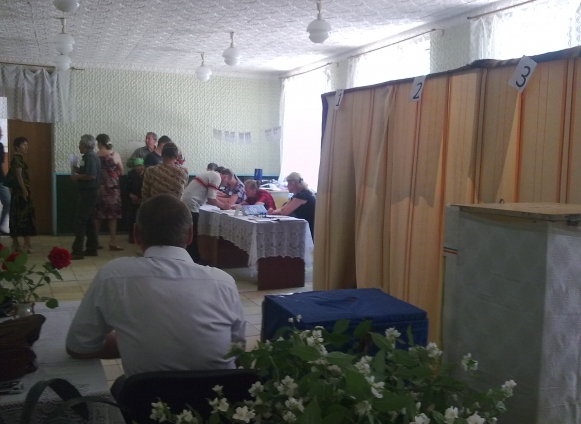
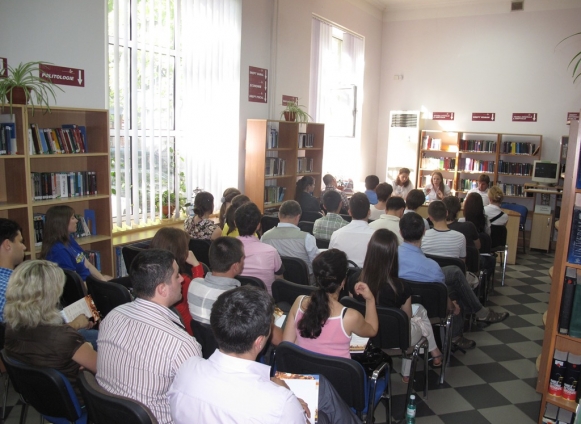
A review of international human rights reports will demonstrate that the ill-treatment of persons with disabilities is prevalent across the globe, and there are very strong arguments in favour of adopting a response which recognises the human rights, and specifically discrimination, issues relating to this problem, stated Libby Clarke, Legal Officer at The Equal Rights Trust. The statement was made within the Public Lecture “Disability-based discriminatory ill-treatment in Moldova” organized on July 7th 2011 by The Promo-LEX Association in partnership with The Equal Rights Trust (ERT).

The event started with a short presentation of the sixth edition of The Equal Rights Review (ERR 6). To this end, ERR 6 includes an article by Promo-LEX on the discriminatory ill-treatment of women in Moldova – the first article which ERT have published on Moldova. Jarlath Clifford’s article provides a very useful analysis of the implications of the ratification of the UN Convention on the Rights of Persons with Disabilities by the European Union. This volume also includes other articles which are relevant to the topic of disability discrimination and health equality.

In her presentation, Libby Clarke highlighted the complex nature of the topic of this public lecture and the broad range of behaviours which fall within the category of disability-based discriminatory ill-treatment. This is any treatment which:
a) is carried out against a person with disability;
b) meets the threshold of “torture and inhuman and degrading treatment and punishment”, as defined in international and regional human rights law instruments and case law; and
c) can accurately be described as discriminatory on the grounds of the victim’s disability. This means that if the individual was not disabled, either the behaviour would not have occurred, or it would not have had such a severe effect.

“Whilst human rights law is principally concerned with the treatment of individuals by the State, we are also interested in patterns of torture and ill-treatment of persons with disabilities perpetrated by private persons or entities because the Committee against Torture has confirmed that States should be held liable for private torture and ill-treatment if they fail to respond adequately to them, or fail to take reasonable measures to prevent them. This would include, for example, ill-treatment which takes place at the hands of family members in the domestic setting or at the hands of staff in a privately-run care home, where the State has not taken adequate steps to prevent or investigate such ill-treatment”, stated Libby Clarke.

To this end, examples of the forms of behaviour we are dealing with include: Torture in conventional detention settings; Use of unnecessary or disproportional force (short of torture); Sexual violence; Domestic violence; Hate crime based on disability; Corporal punishment; Medical experiments and medical negligence in places of detention, including the failure to provide adequate healthcare; Forced medical treatment, including forced sterilisation, abortion and interventions aiming to correct or alleviate a disability such as electro shock treatments; Prolonged solitary confinement; Poor material conditions in places of detention; Extreme destitution; Inadequate medical or psychiatric care in detention; and Lack of accommodation of disability in detention.

Discriminatory ill-treatment based on disability can also take place in a very broad range of contexts, which adds to its complexity, especially in terms of carrying out comprehensive research and collecting accurate data for human rights reports. This ill-treatment can take place in: places of detention, such as police cells and prisons; hospitals and mental health institutions; care homes; schools; within the community; and in the private family home.

Among the International Treaties that regulate this area were mentioned the following: International Covenant on Civil and Political Rights; the International Covenant on Economic, Social and Cultural Rights; Convention on the Rights of Persons with Disabilities; European Convention on Human Rights; and UN Convention against Torture.

According to these International Treaties, to which Moldova is a party, disability is a protected ground for the purposes of protections from discrimination and, to this end, Republic of Moldova has an obligation to prevent and punish the instances of ill-treatment of persons with disabilities. The State also bears the responsibility to monitor the situation in this area and to inform the population about this phenomenon and the existing protection measures and mechanisms.

Forced medication, constant beatings, the use of leg cuffs, sexual violence, forced abortion and forced „detention” of persons with disabilities are just some of the violations found by Institute for Human Rights Moldova (IDOM) as a result of the monitoring conducted in 3 Psychiatric Hospitals and 6 Psychoneurological Homes in Moldova, stated Vanu Jereghi, Executive Director at IDOM.
Ergotherapy applied in these institutions, can also be mentioned in this context, since it is basically a forced labour and could even be qualified as a form of slavery.
Thus, the ill-treatment of persons with disability represents a sad reality for Moldova and the authorities fail to undertake adequate measures to combat this phenomenon and to investigate allegations of ill-treatment of persons with disabilities, concluded Vanu Jeregi.

The failure to provide adequate healthcare and the prevalence of medical negligence within the places of detention and specialized medical institutions also represents a serious issue for Moldova. Promo-LEX Association represents a case that refers to the death of a person suffering from schizophrenia at one of those 6 Psychoneurological Homes in Moldova. In this case, the lawyer attached to the project seeks to argue for the responsibility of state institutions for the physical and mental integrity of the mentally ill people in their care. What remains clear is that patients hospitalized in psycho neurological care facilities are under the control of the doctors and, due to their mental illnesses, remain dependent upon the quality of the medical care given them. The vulnerability of these patients should be an evaluation criterion for the medical assistance offered.

The lecture also raised other relevant issues related to this topic. It was emphasized that this area still lacks adequate attention from both State and civil society representatives. Those who suffer are people – people that have rights, just like everybody else.

The event gathered 30 participants: lawyers, law and journalism students, members of human rights NGOs and activists.

Promo-LEX Association thanks the Public Law Library for hosting this event.

The event was organized within the framework of the project “Strengthening Legal Protection from and Raising Awareness of Discriminatory Ill-Treatment in the Republic of Moldova, including Transnistria”, a project funded by the European Union through the European Instrument for Democracy & Human Rights (EIDHR). The project is co-funded by UNDP Moldova within “A joint UNCT for Human Rights Protection and Promotion in the Republic of Moldova” Project.

Contact Person : Olga Manole, Project Coordonator, Promo-LEX Association, [email protected]


The ill-treatment of persons with disabilities is prevalent across the globe, and is also found in Moldova

_article_1310478745A review of international human rights reports will demonstrate that the ill-treatment of persons with disabilities is prevalent across the globe, and there are very strong arguments in favour of adopting a response which recognises the human rights, and specifically discrimination, issues relating to this problem, stated Libby Clarke, Legal Officer at The Equal Rights Trust. The statement was made within the Public Lecture “Disability-based discriminatory ill-treatment in Moldova” organized on July 7th 2011 by The Promo-LEX Association in partnership with The Equal Rights Trust (ERT).

The event started with a short presentation of the sixth edition of The Equal Rights Review (ERR 6). To this end, ERR 6 includes an article by Promo-LEX on the discriminatory ill-treatment of women in Moldova – the first article which ERT have published on Moldova. Jarlath Clifford’s article provides a very useful analysis of the implications of the ratification of the UN Convention on the Rights of Persons with Disabilities by the European Union. This volume also includes other articles which are relevant to the topic of disability discrimination and health equality.

In her presentation, Libby Clarke highlighted the complex nature of the topic of this public lecture and the broad range of behaviours which fall within the category of disability-based discriminatory ill-treatment. This is any treatment which:
a) is carried out against a person with disability;
b) meets the threshold of “torture and inhuman and degrading treatment and punishment”, as defined in international and regional human rights law instruments and case law; and
c) can accurately be described as discriminatory on the grounds of the victim’s disability. This means that if the individual was not disabled, either the behaviour would not have occurred, or it would not have had such a severe effect.

“Whilst human rights law is principally concerned with the treatment of individuals by the State, we are also interested in patterns of torture and ill-treatment of persons with disabilities perpetrated by private persons or entities because the Committee against Torture has confirmed that States should be held liable for private torture and ill-treatment if they fail to respond adequately to them, or fail to take reasonable measures to prevent them. This would include, for example, ill-treatment which takes place at the hands of family members in the domestic setting or at the hands of staff in a privately-run care home, where the State has not taken adequate steps to prevent or investigate such ill-treatment”, stated Libby Clarke.

To this end, examples of the forms of behaviour we are dealing with include: Torture in conventional detention settings; Use of unnecessary or disproportional force (short of torture); Sexual violence; Domestic violence; Hate crime based on disability; Corporal punishment; Medical experiments and medical negligence in places of detention, including the failure to provide adequate healthcare; Forced medical treatment, including forced sterilisation, abortion and interventions aiming to correct or alleviate a disability such as electro shock treatments; Prolonged solitary confinement; Poor material conditions in places of detention; Extreme destitution; Inadequate medical or psychiatric care in detention; and Lack of accommodation of disability in detention.

Discriminatory ill-treatment based on disability can also take place in a very broad range of contexts, which adds to its complexity, especially in terms of carrying out comprehensive research and collecting accurate data for human rights reports. This ill-treatment can take place in: places of detention, such as police cells and prisons; hospitals and mental health institutions; care homes; schools; within the community; and in the private family home.

Among the International Treaties that regulate this area were mentioned the following: International Covenant on Civil and Political Rights; the International Covenant on Economic, Social and Cultural Rights; Convention on the Rights of Persons with Disabilities; European Convention on Human Rights; and UN Convention against Torture.

According to these International Treaties, to which Moldova is a party, disability is a protected ground for the purposes of protections from discrimination and, to this end, Republic of Moldova has an obligation to prevent and punish the instances of ill-treatment of persons with disabilities. The State also bears the responsibility to monitor the situation in this area and to inform the population about this phenomenon and the existing protection measures and mechanisms.

Forced medication, constant beatings, the use of leg cuffs, sexual violence, forced abortion and forced „detention” of persons with disabilities are just some of the violations found by Institute for Human Rights Moldova (IDOM) as a result of the monitoring conducted in 3 Psychiatric Hospitals and 6 Psychoneurological Homes in Moldova, stated Vanu Jereghi, Executive Director at IDOM.
Ergotherapy applied in these institutions, can also be mentioned in this context, since it is basically a forced labour and could even be qualified as a form of slavery.
Thus, the ill-treatment of persons with disability represents a sad reality for Moldova and the authorities fail to undertake adequate measures to combat this phenomenon and to investigate allegations of ill-treatment of persons with disabilities, concluded Vanu Jeregi.

The failure to provide adequate healthcare and the prevalence of medical negligence within the places of detention and specialized medical institutions also represents a serious issue for Moldova. Promo-LEX Association represents a case that refers to the death of a person suffering from schizophrenia at one of those 6 Psychoneurological Homes in Moldova. In this case, the lawyer attached to the project seeks to argue for the responsibility of state institutions for the physical and mental integrity of the mentally ill people in their care. What remains clear is that patients hospitalized in psycho neurological care facilities are under the control of the doctors and, due to their mental illnesses, remain dependent upon the quality of the medical care given them. The vulnerability of these patients should be an evaluation criterion for the medical assistance offered.

The lecture also raised other relevant issues related to this topic. It was emphasized that this area still lacks adequate attention from both State and civil society representatives. Those who suffer are people – people that have rights, just like everybody else.

The event gathered 30 participants: lawyers, law and journalism students, members of human rights NGOs and activists.

Promo-LEX Association thanks the Public Law Library for hosting this event.

The event was organized within the framework of the project “Strengthening Legal Protection from and Raising Awareness of Discriminatory Ill-Treatment in the Republic of Moldova, including Transnistria”, a project funded by the European Union through the European Instrument for Democracy & Human Rights (EIDHR). The project is co-funded by UNDP Moldova within “A joint UNCT for Human Rights Protection and Promotion in the Republic of Moldova” Project.

Contact Person : Olga Manole, Project Coordonator, Promo-LEX Association, [email protected]


ECtHR communicated a new case to the Government of Moldova

A new case was communicated to the Government, this time Republic of Moldova could be liable for violation of the freedom of movement and the right to a fair trial.

On June 6, 2011 European Court of Human Rights (ECtHR) communicated the case of Bîgea v. Moldova (No 21876/09) lodged on 27 April 2009. The applicant Mr. Ionel Bîgea is Romanian citizen and lives in Bârlad. He is a priest within the Metropolitan Church of Bessarabia and has been assigned to the church of the Vadul lui Isac village, in the south of Moldova, for the last sixteen years.

In 2007 the then President of Moldova Vladimir Voronin declared that he did not recognise the Metropolitan Church of Bessarabia. After that, the authorities made an unsuccessful attempt to expulse the applicant from Moldova and created numerous obstacles in his activity as a priest. Following judicial proceedings, in 2008 the applicant obtained a residence permit and a work permit valid until August 2009.

On 9 April 2009 the Moldovan authorities introduced a visa regime with Romania. On 11 April 2009 the applicant made an attempt to travel from Romania to Moldova with his residence permit but was refused entry on Moldovan territory on the ground that he did not have a visa.

The applicant challenged the refusal before the Chişinău Court of Appeal and, on 24 April 2009, obtained a final judgment ruling the refusal unlawful and obliging the border police to allow the applicant to enter the Moldovan territory on the basis of his residence permit.

On the same date the applicant made an unsuccessful attempt to enter Moldova on the basis of his residence permit and of the court judgment. The border police refused to comply with the judgment and insisted that the applicant needed a visa. The applicant repeated his attempt on 25 April 2009 but was again unsuccessful.

Because of the refusal of the authorities to let the applicant enter Moldova, he was unable to be with his congregation for Easter, a very important religious event in Moldova.

The applicant complains that the refusal of the authorities to comply with the Court of Appeal’s judgment of 24 April 2009 constituted a breach of his rights guaranteed by Articles 6, 8, 9 and 2 of Protocol No. 4 to the Convention.

For further details contact: Alexandru Postica, Lawyer, Promo-LEX Association, Phone: (22) 21 16 22,  GSM: 069104851, e-mail: [email protected].


Torture and impunity: no end in sight

_article_1308664548Ahead of the UN International Day in Support of Victims of Torture on 26 June, human rights defenders called on the authorities to put an end on torture on both banks of the Dniester river, and to bring the torturers to real accountability.

Amnesty International Moldova, Rehabilitation Centre for Torture Victims „Memoria” and „Promo-LEX” concluded that inhuman treatment in detention remains chronically widespread, aggravated by that the state does not hold torturers accountable – even if it starts investigations, it often applies symbolic penalties or halts prosecution altogether.

“Accountability is the basis of any equitable society. In such a society physical integrity of everyone is protected not only by signatures under international treaties, but by concrete actions the state undertakes for prevention of inhuman treatment in detention,” said Cristina Pereteatcu, Executive Director at Amnesty International. “Taxes are collected precisely for this, among other things. It seems that in Moldova we, the citizens of this state, contribute to be tortured.”

Ludmila Popovici, Executive Director RCTV „Memoria”, underscored the importance of aligning the methods of investigation of torture cases with international standards; implementation of the recommendations of the Istanbul Protocol could serve well that goal: “This Protocol is a basic instrument for efficient investigation, as well as a guide for documenting torture and inhuman and/or degrading treatment for reporting the outcomes to relevant authorities and ensuring minimal standards so that the State respects and guarantees efficient documentation of torture. Implementation of the Istanbul Protocol in Moldova could become an important contribution for ending the impunity of torturers, delivering justice, and offering compensation for victims and their families.”

Another perpetuating problem is the impasse in the region of Transnistria, which does not subordinate itself to constitutional authorities, and where torture is used on large scale. Alexandru Postică from Promo-LEX stated:”In this region, there is no credible, legal and efficient instrument for monitoring the situation in places of detention, whereas the situation slips away from control due to impunity of persons from this Moldovan territory. Even though the constitutional authorities de facto do not exercise control over the region, that is not a plausible excuse for Moldova because no one has cancelled the State’s positive obligation towards people on its territory.”

Background

The UN International Day in Support of Victims of Torture has been marked on 26 June since 1997, in remembrance of the United Nations Convention against Torture and Other Cruel, Inhuman or Degrading Treatment or Punishment, which came into force in 1987. Moldova joined the Convention in 1995; in 2006 the Parliament ratified the Optional Protocol to the treaty. UN Committee against Torture monitors respect of stipulations of the Convention. Committee’s Representatives visited Moldova in 2010; their report stressed the importance of eradication of torture. Also, the problem of torture was signalled out by Amnesty International in its 2007 and 2009 country reports, as well as in numerous Annual Reports, including the current one.

For more information please contact:

Amnesty International Moldova: Tel. +373 22 83 58 08, Email: [email protected]
RCTV Memoria: Tel. +373 22 27 32 22, Email: [email protected]
Promo-LEX: Tel. + 373 22 45 00 24, Email: [email protected]


Promo-LEX: Last week of campaign marked by intimidation and electoral hooliganism

_article_1308305194Chisinau. June 17, 2011. The Promo-LEX Association issued the third pre-electoral monitoring report on general local elections of June 5, 2011. The report covers the period of June 6 – 16, 2011.

According to Promo-LEX, after the first round of elections, the campaign continued with the same level of intensity, election activities being reported immediately after the announcement of the official results. The electoral administration operates with minor deviations and the media actively reflects the campaign, including the regional and local outlets. Nevertheless, isolated cases of violence, intimidation, use of administrative resources and electoral gifts continue to raise concern.

As far as the election administration’s performance, the monitoring effort has found that the provisions of the electoral legislation on elections validation generally have been met, even though observers reported exceptions related to technical errors in at least at two polling stations. Local public administration mostly manifested balanced behavior and tended to create equal conditions for all candidates. At the same time though, monitoring effort observed an small number of cases of use of public office for campaign purposes.

Observers noted and welcome the neutrality of electoral officials and a conscious performance of their functional tasks, as well as the replacement of those members whose incompatibility was found on Election Day. All the same, the Promo-LEX observers have reported isolated cases of refusal to issue protocols to observers. Observers have also reported cases of irregular interpretations and limited understanding of the legal norms concerning the transmitting of election documents, organization of the electoral bodies during the second round and preparation of electoral rolls for the second round of elections. The monitoring effort is also concerned about the change of composition of election bodies, especially in regards to the quality of the new members’ training. A large number of electoral officials are disappointed by the small honoraria received for their services.

Observers have noted a dynamic election campaign. Even so, Promo-LEX is concerned about the isolated cases of violence and intimidation (at least 4 such cases have been reported), as well as about the cases of use of the administrative resources (at least 4 such cases have been reported), but also the cases of electoral gifts (at least 9 cases were reported).

In context, Promo-LEX calls on candidates to be more active in submitting complaints regarding any violation of the electoral rules and provide them with adequate evidence. To this end, of the 56 complaints filed by candidates and monitored by observers at least 24 have been rejected.
The Promo-LEX monitoring effort notes the continued and active involvement of local and regional mass-media in reflecting election campaign. In particular, the role of mass-media can be noted in regards to the presentation of information on electoral administration’ activity, the second round mayor candidates and electoral education for the second round of elections.

The Promo-LEX monitoring effort reminds that it is not an investigative body and it does not intend to provide evidence for the observed findings. The more than 400 standardized reports of the observers served as the only source for drafting this report. Reports are based on direct observations, meetings with interlocutors and consulting official documents.

The full copy of the report in English language is available here.

For more details, please contact: Carolina Bondarciuc, Public Relations Officer
Tel: (22) 450024, GSM: 069637849, e-mail: [email protected]


The Republic of Moldova was again defendanted for breach ECHR rights to free assembly

On May 27, 2011 the European Court of Human Rights (ECHR) communicated the case of Promo-LEX and Others v. Moldova, no. 42757/09 lodged with the Court on 03 August 2009 by Promo-LEX, CReDO and I. Grosu.

The first two applicants, Promo-LEX and CReDO are non-governmental associations and the third applicant is Mr. I. Grosu.

So, on February 3, 2009 Promo-LEX and CReDO organized a protest in front of the Prosecutor General and at the event parrticipated the citizen I. Grosu. The protest was directed against the inaction of the General Prosecutor against police abuse. A few minutes after the start of the manifestation the protesters were attacked by seven men wearing balaclavas, were severely beaten, and gas was being against them.Following the attack I. Grosu suffered numerous injuries to the head and hands.Protesters managed to immobilize two of the attackers, one of them said that he was paid with 1,000 lei by an unknown person to participate in this attack. The assembly was followed, right from the start by four uniformed police officers and six civilian officers and some of them filming the event.However they did not intervien to stop the clash between protesters and attackers. Protesters have called the police for help but in vain.A police car arrived on the scene only after half past one and arrested the two attackers that had been restrained.

Organizers of the manifestation filed a criminal complaint with the Prosecutor-General but no action has been taken. Moreover the Prosecutor General’s Office issued a statement that the rally organizers were accused of provoking the incident. The two attackers which were detained by the plaintiffs were accused of disturbing public order, and the results of the criminal prosecution against them are not known until now.

The applicants complained of infringement on free assembly, but also the lack of effective means of redress against police failure to provide protection during the attack.

For more details, please contact: Alexandru Postica, the advocate of Promo-LEX: Tel: (22) 211622, GSM: 069104851, e-mail: [email protected]


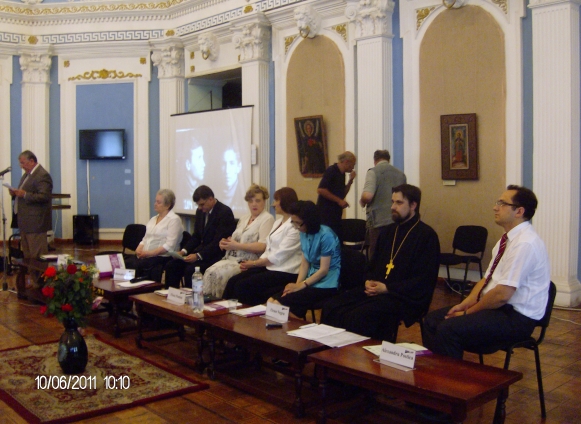
National Conference entitled “70 years after the first wave of mass deportations from Republic of Moldova on 13 June 1941”

_article_1308664750On Friday, June 10 the Museum of Archaeology and History hosted the National Conference with the theme “70 years after the first wave of mass deportations in Moldova from June 13, 1941 .” Through the Conference which had a scientific character was brought to public attention, perhaps a lesser known history of the deportations and forced resettlement in the summer of 1941. Scientific papers on the topic were presented by many historians: Postică Elena, Negru Elena, Țăranu Anatol ,Tașcă M. , D. Dumitru Grama,Dumitru D. Grama,Corlateanu-Granciuc Silvia.

Valentina Sturza,the president of the Association of Former Political Prisoners and Deportees appealed to all Moldovan citizens that these tragic events are not forgotten, qualifying them as the most bloody and painful from the history of the country, also stressing the need for rehabilitation of former deportees.
The director of State and Law Institute of History of the Academy of Sciences from the Republic of Moldova , George Cojocaru, said that the three waves of deportations from Moldova was almost three times beheaded, and the Moldovan people took decades to shift the history and reach far scientific conferences to commemorate the victims of those tragic events.

The dramatic events of the Soviet era took place in violation of fundamental rights of people from this area.During this period the right to life, security, personal integrity, property rights or the right to a fair trial were missing completely at the discretion of some groups of people. Victims of these crimes although they have been rehabilitated, continue to be wronged so far, said A. Postica,the Promo-Lex lawyer.
Among the nearly one hundred participants at the conference included former deportees, academics, historians, scientists, representatives of civil society of the Metropolitan area of Moldova Lands Exarchate and ordinary citizens.

The Government of the Republic of Moldova was represented at the event by a Principal Adviser of the Prime Minister Leonid Bujor on education issues.

The event was organized by the Institute of History, State and Law of the Academy of Sciences of Moldova,National Museum of Archaeology and History of Moldova Association of Former Political Prisoners and Deportees in Moldova the Association “Promo-Lex” and Metropolitan Church of Bessarabia and Lands Exarchate , National Archive of Moldova and the Association of Historians from Moldova. The conference falls in the series of events commemorating the 70th anniversary of the first wave of deportations and is part of the Government’s action plan.

For more details, please contact: Carolina Bondarciuc, Public Relations Officer
Tel: (22) 450024, GSM: 069637849, e-mail


Promo-LEX: Dynamic electoral campaign, but with deviations

_article_1307101330Promo-LEX Association launches its second election monitoring report which covers the period April 18 to May 5.

During the reported period, the monitoring effort found that the local public administration has generally complied with the election legislation provisions on campaign display, even though observers have reported some exceptions in this sense. In this regards, the isolated cases of position abuse by central public administration officials in campaign activities can be included.

Observers noted and welcome the neutrality of election bodies’ members and a conscious performance of their functional tasks. Observers have reported cases of irregular interpretations and shallow knowledge of the legal norms concerning candidates’ registration, presenting by candidates of the financial reports, certification of voting, inclusion or exclusion of voters from electoral rolls, access to electoral rolls and changing their content. The technical and logistical assistance of PEBs, the frequent changes in the composition of election bodies and respecting the activity schedule remain alarming.

Observers have noted a dynamic election campaign, marked in particular by the organized launch of the political parties and independent candidates to elective office. Moreover, observers noted that candidates used diverse methods of campaigning, as well as the obvious decrease in the number of electoral posters placed in unauthorized places. On the other hand, Promo-LEX observers, remain very concerned of the isolated cases of violence and intimidation (at least 8 cases reported), black PR methods (at least 7 cases reported), and the considerable number of cases when using the administrative resources (at least 37 cases reported) and gifts in the electoral context (at least 86 cases reported from all districts). The Promo-LEX monitoring effort remains worried over candidates opacity in declaring electoral funds and other material support used in campaign.

In context, Promo-LEX calls on candidates to reflect in financial reports the obvious expenses related to electoral concerts (at least 91 cases reported), transport and editing campaign material (reports of at least 15 competitors in at least 18 districts not complying with the requirements). At the same time, observers mention the extremely small number of complaints submitted by candidates and voters, compared to the deficiencies noted by the observers, result of notifications received from these.

The Promo-LEX monitoring effort notes the continued and active involvement of local and regional mass-media in the presentation of information on candidates and in conducting the electoral debates. Nevertheless, some legal shortcomings have been noted related to the authentication of the electoral advertising authors in accordance with legal provisions.

Promo-LEX monitoring effort reminds that it is not an investigative body and is not intended to prove the observed findings. The more than 2,000 standardized reports of the observers served as the only source for drafting the public reports of the monitoring effort.

The full copy of the report is available here.

For more details, contact: Carolina Bondarciuc, Public Relations Officer
Tel: (22) 450024, GSM: 069637849, e-mail: [email protected]