Promo-LEX: Electoral stakeholders discuss role of independent observers in election campaigns
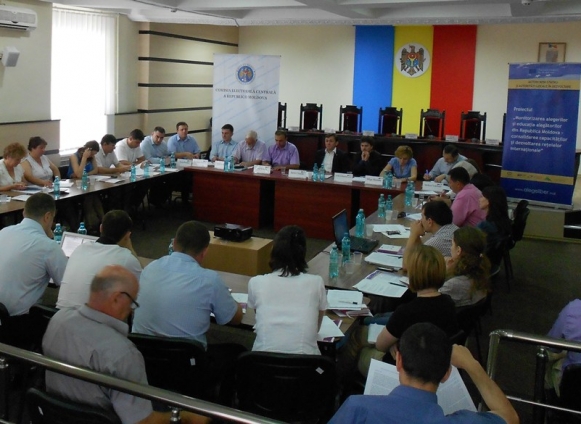
_article_1339775330On 15 June 2012 a roundtable was held to discuss “The Role of Observers in the Electoral Process. The Importance of Codes of Conduct”. The event was organized by Promo-LEX Association in partnership with European Exchange (Germany), under the aegis of the Coalition for Free and Fair Elections and in cooperation with the Central Election Commission.

The main issues discussed at the event included the status and role of independent observers in electoral processes, difficulties related to observer accreditation procedures and the importance of codes of conduct. The roundtable was also an occasion to present and debate key findings and recommendations made by national observers following elections held in the period 2009-2011.

Attending the event, Ion Manole, the executive director of Promo-LEX Association, and Dr. Iurie Ciocan, the Chairman of the Central Election Commission, highlighted the importance of continuous communication between electoral authorities and civil society not just during election campaigns, but also in between. Dr. Iurie Ciocan stated in particular: “We attach great importance to the cooperation between the Central Election Commission and non-governmental organizations and in particular I would like to remark the role of Promo-LEX in this respect. They started to cooperate with the CEC as an NGO with a couple of observers, mainly from the eastern side of the Nistru, to eventually achieve the performance of having thousands of observers throughout the country”.

Speaking about the role of independent observers Pavel Postica, director of Promo-LEX’s Monitoring Democratic Processes Program, noted: “The main role [of independent observers] is to prevent the occurrence of electoral violations, to minimize the negative effect of the discovered transgressions and make efforts to change those legal provisions which impede the conducting of fair elections. These efforts add credibility to the entire process”.

Nicolae Panfil, the secretary of the Coalition for Free and Fair Elections, presented the most frequent recommendations found in the reports prepared by independent observers following the last five sets of elections. They concerned the following: electoral education and information of voters and efforts to ensure a civilized conduct during campaigns; training for members of first and second level electoral bodies; improvement of electoral registers; introduction of minimum standards for technical, operational and logistical conditions for electoral bodies; funding of campaigns, of political parties and candidates; revision of the status of national observers.

Further, at the roundtable Promo-LEX presented the Declaration and the Independent Observers’ Code of Conduct of the Global Network of Domestic Election Monitors (GNDEM), which comprise ten fundamental conditions that must be followed by those engaged in an independent election observation. The participants were encouraged to sign the GNDEM Declaration and apply the provisions of the Code of Conduct in practice. Promo-LEX has been a member of the GNDEM Network since 2010.

The event was attended by representatives of electoral authorities, civil society, political parties, international organizations and diplomatic missions.

The event was organized within the framework of the project “Domestic Election Monitoring and Voter Education in Moldova – Strengthening of Capacities and International Networking”, funded by the European Union Delegation to Moldova through “Non-State Actors and Local Authorities in Development” Program.

For further details contact: Carolina Bondarciuc, Public Relations Officer: Tel: (22) 450024, GSM: 069637849, e-mail: [email protected]


Promo-LEX invests in continuous training of long-term observers

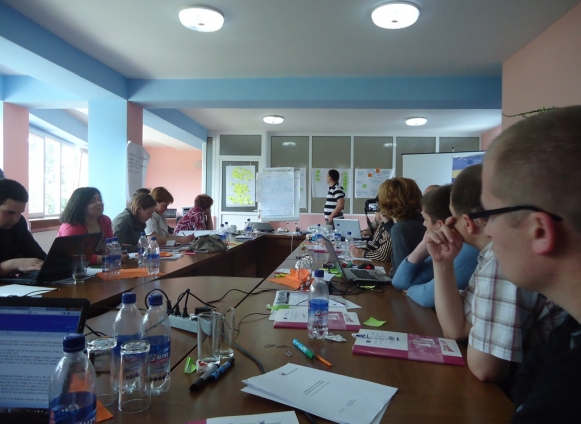
_article_1337862801Promo-LEX Association, in partnership with European Exchange (Germany), under the aegis of The Civic Coalition for Free and Fair Elections, launched a series of five trainings for long-term observers on topic „Basic concepts of long-term and short-term election monitoring”. Activities are performed within the project “Domestic Election Monitoring and Voter Education in Moldova – Strengthening of Capacities and International Networking”, funded by the European Union Delegation in the Republic of Moldova within the program „Non-state actors and local authorities in development”.

Trainings are aimed to enrich the knowledge of the long-term observers and to improve their election monitoring skills. Trainings were preceded by a training of trainers (ToT) in election monitoring held on May 18-19, 2012. TOT was conducted by Septimius Pârvu and Constantin Mârza, experts from “Pro Democratia Association” (APD), Romania. Thus, Romanian experts trained a group of national trainers that will further train their colleagues from the Promo-LEX observers’ network.

Trainings for long-term observers will be held during May 25 – June 23, 2012. Trainings will focus on the following subjects: general principles of national and international election monitoring; international standards, codes of conduct; human rights observance as a necessary precondition for free and fair elections; main stages of the electoral process; monitoring of specific areas: legislative monitoring, monitoring of public resources, financing of political parties and electoral campaigns, issues of minority representation / monitoring racism and xenophobia; Election day monitoring; developing an election monitoring plan.

The project “Domestic Election Monitoring and Voter Education in Moldova – Strengthening of Capacities and International Networking” aims to strengthen voter participation in the democratic electoral processes, and future, through the development of professional network of NGOs, to contribute to the voter education campaigns and voter mobilization, to monitor elections and to initiate post-election dialogues between the authorities and NOGs on electoral reforms.

For more detailed information please contact:
Mr. Nicolae PANFIL, local project manager, the Secretary of The Civic Coalition for Free and Fair Elections, [email protected]
Mr. Pavel POSTICA, local project coordinator, Director of the Monitoring Democratic Processes Program, Promo-LEX Association: [email protected]


Promo-LEX invests in continuous training of long-term observers

Promo-LEX Association, in partnership with European Exchange (Germany), under the aegis of The Civic Coalition for Free and Fair Elections, launched a series of five trainings for long-term observers on topic „Basic concepts of long-term and short-term election monitoring”. Activities are performed within the project “Domestic Election Monitoring and Voter Education in Moldova – Strengthening of Capacities and International Networking”, funded by the European Union Delegation in the Republic of Moldova within the program „Non-state actors and local authorities in development”.

Trainings are aimed to enrich the knowledge of the long-term observers and to improve their election monitoring skills. Trainings were preceded by a training of trainers (ToT) in election monitoring held on May 18-19, 2012. TOT was conducted by Septimius Pârvu and Constantin Mârza, experts from “Pro Democratia Association” (APD), Romania. Thus, Romanian experts trained a group of national trainers that will further train their colleagues from the Promo-LEX observers’ network.

Trainings for long-term observers will be held during May 25 – June 23, 2012. Trainings will focus on the following subjects: general principles of national and international election monitoring; international standards, codes of conduct; human rights observance as a necessary precondition for free and fair elections; main stages of the electoral process; monitoring of specific areas: legislative monitoring, monitoring of public resources, financing of political parties and electoral campaigns, issues of minority representation / monitoring racism and xenophobia; Election day monitoring; developing an election monitoring plan.

The project “Domestic Election Monitoring and Voter Education in Moldova – Strengthening of Capacities and International Networking” aims to strengthen voter participation in the democratic electoral processes, and future, through the development of professional network of NGOs, to contribute to the voter education campaigns and voter mobilization, to monitor elections and to initiate post-election dialogues between the authorities and NOGs on electoral reforms.

For more detailed information please contact:
Mr. Nicolae PANFIL, local project manager, the Secretary of The Civic Coalition for Free and Fair Elections, [email protected]
Mr. Pavel POSTICA, local project coordinator, Director of the Monitoring Democratic Processes Program, Promo-LEX Association: [email protected]


Ineffective justice in Moldova responsible for another case lost at the ECHR

On 15 May 2012 the European Court of Human Rights has pronounced its judgment in the case of I.G. v. Moldova (application no.53519/07).

The applicant, I.G., is a young woman who at the time of the events was 14 years old. In August 2004, during a party at a club she was forced to drink alcohol by her 23-year old companion, who then raped her on their way home. Immediately after learning about what happened, the victim’s mother lodged a complaint with the police, with criminal proceedings under statutory rape charges being initiated two days later.

The investigation process saw a host of delays and obstacles: after a series of medical examinations that confirmed the victim’s account and an entire range of investigative measures, including witness and face-to-face interviews, in December 2004 the prosecutor supervising the case cleared the suspect of all charges.

Proceedings were re-initiated a month later and subsequently the perpetrator was sentenced to 3 years’ probation. The sentence was unsuccessfully challenged by the plaintiff and the prosecution. The Balti Court of Appeals rejected the appeal and terminated the criminal proceedings against the accused. The Prosecutor General’s Office failed to react despite a request submitted by the victim’s lawyer to appeal the decision to the Supreme Court of Justice..

Exhausting all judicial remedies before the domestic courts, the victim’s lawyer lodged an application with the European Court of Human Rights, complaining in particular that the national authorities had failed to effectively investigate the alleged rape, which violated the State’s positive obligations to protect one’s physical integrity and private life and provide effective remedies in this respect.

In its judgment, the Court unanimously held that there had been a violation of Article 3 (prohibition of inhuman or degrading treatment) of the European Convention on Human Rights, and awarded the applicant €10,000 in respect of non-pecuniary damages and €2,000 for costs and expenses. The Court decided that it was not necessary to examine separately the violation of Arts. 8, 13 and 14 of the Convention.

The applicant was represented before the European Court of Human Rights by Alexandu Postica and Doina Ioana Străisteanu, lawyers practicing in Chisinau.

For more detailed information please contact: Alexandru Postica, Lawyer of the Association Promo-LEX: Tel: (22) 31 09 45, GSM: 069104851, e-mail: [email protected]


Hunting for Conscripts Starts in the Transnistrian Region

On 1 April 2012, Moldova’s Transnistrian region will start the “conscription” of young men aged 18 to 27 into its paramilitary forces. Until 10 August 2012, the young men residing in the eastern districts of the country, citizens of Moldova and of other countries, will be “called up” and “enrolled” into the so-called “Transnistrian Army”. In violation of the Moldovan Constitution and international treaties, they will be forced to “swear allegiance” to an illegitimate regime.

According to Moldova’s State Population Register, as of 1 August 2011, there were 267,312 Moldovan nationals living in the Transnistrian region. This means that the young men residing there and who have an obligation for military service before Moldova are forced to serve an illegal “military service”.

The young men who avoid “conscription” into these paramilitary forces face prosecution and eventually are sentenced to pay fines of up to $600 or serve up to 2 years in prison. In a similar situation are those young men who object to military service for religious, pacifistic, humanitarian, ethic, moral or any other similar reasons. Once “enrolled” into the so-called army, the young men face inhuman and degrading treatment, torture and forced labor. There were also registered cases of death, ill-treatment, abuse and swindling among conscripts.

The Promo-LEX Association believes that the so-called “conscription” into the paramilitary forces is illegal and amounts to unlawful deprivation of freedom, manifested in prolonged detention in the “military units”.

Considering the above, the Promo-LEX Association urges the Moldovan legitimate authorities:

– to ensure protection and guarantee the rights of all the young men liable to military service living in Moldova’s Transnistrian region;
– to investigate how the young men are recruited and “enrolled” into these illegal forces and bring those responsible to justice;
– to organize information campaigns for young men on their military rights and obligations;
– to stop the discriminatory treatment of the young men living in the Transnistrian region as required by the Constitution and national laws; and
– to address the issue of the illegal “conscription” within political negotiations.

For more detailed information please contact: Alexandru Postica, Lawyer, Promo-LEX Association,
Phone: (22) 31 09 45, GSM: 069104851, e-mail: [email protected]


Promo-LEX Association released the Report „Discriminatory ill-treatment in Moldova”

DSCN4945At a roundtable on March 19, the Promo-LEX Association and The Equal Rights Trust released the Report „Discriminatory ill-treatment in Moldova”. The Report examines the specific phenomenon of discriminatory ill-treatment against women, persons with disabilities, LGBT, ethnic and religious minorities in Moldova

“The purpose of this report is to inform Moldovan authorities and general public on the issues at hand and make the authorities aware of the need to address effectively any allegations of discriminatory ill-treatment that come to their knowledge”, stated Mrs. Olga Manole, Promo-LEX Association.

“Despite many international agreements which contain commitments to the right to non-discrimination and the right to equality in some sense the right to equality was being poorly served. The Equal Rights Trust works to develop the capacity of civil society to advocate to improve legal protection from discrimination” said Mr. James Fitzgerald, The Equal Rights Trust.

Present at the event the representative of the EU Delegation to the Republic of Moldova, Mr. Hubert Duhot, emphasized the EU Delegation support for civil initiatives in Moldova, noting the importance and necessity of such publications and the relevance of the issue discussed at the event.

According to the conclusions of the Report, Moldova lacks a comprehensive non-discrimination legislation that would provide definitions of direct and indirect discrimination, prohibit all forms of discrimination on particular grounds and in particular areas of life, as well as provisions on adequate sanctions, compensation and on shared burden of proof.

The failure of the public authorities to effectively address discriminatory ill-treatment lies in their lack of capacity to identify a case as being motivated by the individual’s characteristic. However, the cases included in this report demonstrate that the legal framework is not being adequately enforced. In many cases, relevant enforcement bodies are unwilling to comply with the legislative procedures or are unaware of them.

The Report identified a clear need for the Moldova to harmonise and strengthen its legal system so it combats and provides real protection from discriminatory ill-treatment, in particular, for the vulnerable groups that are most at risk.

The Report includes a series of recommendations addressed to authorities aiming to enable Moldova to comply with its obligations to prevent and combat discriminatory ill-treatment, such as: adoption of the comprehensive anti-discrimination legislation in line with international and European standards with no further delay; effective implementation of the domestic legal framework and procedures aiming to prevent, combat and sanction discrimination and discriminatory ill-treatment; and enforcement of the effective sanctions against state actors found to have engaged in dis¬criminatory ill-treatment. Moreover, the law enforcement bodies should strengthen mechanisms to detect and investigate cases of discriminatory ill-treatment and the prosecutors and judges should increase application of the international human rights principles of prohibition of ill-treatment and non-discrimination in domestic litigation.

Some recommendations target civil society actors. Thus, NGOs working with vulnerable groups should develop and strengthen legal aid programs within their organizations and to improve their advocacy skills needed for efficient advocacy campaigning on prevention and prohibition of discriminatory ill-treatment.

The event is organized within the framework of the project “Strengthening Legal Protection from and Raising Awareness of Discriminatory Ill-Treatment in the Republic of Moldova, including Transnistria”, a project funded by the European Union through the European Instrument for Democracy & Human Rights (EIDHR). The project is co-funded by UNDP Moldova within “A joint UNCT for Human Rights Protection and Promotion in the Republic of Moldova” Project.
The project was implemented in partnership with „The Equal Rights Trust”.

The Report is available in Romanian and English languages here.

For further details please contact: Carolina Bondarciuc, Public Relations Officer
Tel: (22) 45 00 24, GSM: 069637849, e-mail: [email protected]


APPEAL regarding the official meeting in “5+2” format to be held in Dublin

Considering and welcoming the fact that a formal “5+2” meeting has been scheduled to take place on 28-29 February in Dublin, Ireland;

Bearing in mind the results of the formal meeting held in Vilnius on 30 November-1 December 2011 and recalling the APPEAL launched on 28 November 2011 to actors and parties involved;

Relying on the democratic principles and values, based on respect for human dignity, promoted by and enshrined in key international documents like the Universal Declaration of Human Rights and the European Convention for the Protection of Human Rights and Fundamental Freedoms;

Remaining continuously concerned by the human rights situation in the Transnistrian region and by the absence of a legal and effective mechanism to protect persons;

Recalling that the “5+2” format is the only internationally recognized format for making decisions concerning the settlement of the Transnistrian issue, and the agenda of discussions is established by the parties to negotiations;

Acknowledging and trusting that all the actors involved in the “5+2” negotiation format, apart from the primary goal of settling the Transnistrian issue, are also paying attention to individual cases of human rights violations;

Believing that the settlement of the Transnistrian problem cannot take place without solving existing problems, in particular of persons in the „custody” of the Tiraspol administration;

Reminding to all the stakeholders that there are still illegally detained people, in particular the cases of Vitalie Eriomenco, Alexandru Ursu, Eduard Eliţov, Oleg Filin, Ostap Popovschii, Iurie Matcenco, Alexandru Baluţa, Eugen Antonov, Mihail Rotari and others.

WE REQUEST:

– That besides the issues to be discussed at the formal “5+2” meeting in Dublin, the agenda also includes specific issues concerning the situation and the immediate and unconditional release of illegally detained persons, in particular of Vitalie Eriomenco, Alexandru Ursu, Eduard Eliţov, Oleg Filin, Ostap Popovschii, Iurie Matcenco, Alexandru Baluţa, Eugen Antonov, Mihail Rotari;

– That the stakeholders discuss and urgently undertake all the measures available to them to ensure that the rights of prisoners are respected and that these persons are not subjected to torture or inhuman treatment;

– That efforts are intensified to start the procedures to create legal and credible mechanisms for people living in the Transnistrian region, that would serve as useful instruments to guarantee their rights and freedoms.

In addition to the repeated Appeal, the Association launched a Special Edition of the Promo-LEX Newsletter, which includes a description of 12 cases of severe violation of human rights of detainees in the custody Tiraspol administration.

For further details contact: Alexandru Postica, Lawyer, Promo-LEX Association, Phone: (22) 31 09 45,
GSM: 069104851, e-mail: [email protected].