#101. Does the Parliament Work for You? Parliament’s Activity in 2022 Autumn Session in the Light of Civic Monitoring
The autumn session of the Parliament started on September 15 and ended on December 29 , 2022. Nineteen plenary sessions, including 17 ordinary and 2 solemn and diplomatic ones took place in this period [1].  The Promo-LEX Association monitored every plenary meeting of the Parliament’s 2022 autumn session and provides an overview of the legislature’s activity in this period.

Initially, 193 issues were included on the agenda of the plenary meetings, later, however, changes being accepted in the proportion of 53%. In the opinion of Promo-LEX, such a share of changes of subjects on the agenda affects the transparency and the predictability of the decision-making process. The largest number of requests for changes in the agenda came from the Permanent Bureau (57) and the parliamentary commissions (35). The greater share of changes in the agenda was recorded in the meetings of 06.10.2022; 20.10.22 and 17.11.2022.

Transparency of the drafts examined by the Parliament in the 2022 autumn session was affected in the proportion of 69%. Transparency of the parliamentary meetings held in December was mostly affected.  At the same time, Promo-LEX appreciates the fact that mainly in this session the legislature began to publish the information with regard to the priority or emergency mode for the examination of normative acts.

In the 2022 autumn session, the Parliament voted on 111 draft laws in the first reading, of which two – were rejected; 98 in the second reading (1 was rejected); and 5 draft laws were voted on in final reading, in addition to 22 decisions and 2 motions (1-simple and 1- of censure). It should be mentioned that 29 draft laws were voted in the same meeting in 2 readings. Most of the draft laws subjected to voting concerned such domains as economic, financial, fiscal, social protection, labor and healthcare.

Draft laws that were most frequently subjected to vote were registered by the Government (43%) and those by the parliamentary majority (41%). Only 3% of draft laws subjected to vote were developed by MPs from the BCS fraction. In this regard, we highlight the fact that according to the Parliament Regulations, in addition to the draft laws submitted by the Government and the President, every 6th meeting from the beginning of plenary session, priority is given to draft laws submitted by the parliamentarian opposition. However, few draft laws were submitted by the opposition in this parliamentarian session. At the same time, we always positively appreciate each time the projects that had as authors both deputies from the parliamentary majority and those from the opposition, they usually meet a consensus vote of the majority and the opposition (3%).

Regarding the length of the plenary meetings in relation to the number of draft laws examined, it was not possible to trace a correlation between these values. For example, in the meeting of 12.12.2022, only 5 draft laws were examined, however the session lasted more than 7.5 hours. This can be explained by the complexity of the draft laws debated and voted on, in particular, certain budgeting laws. Conversely, in the meeting of 29.12.2022, 21 draft laws were examined and approved, the meeting lasting about 6.5 hours [2].

Another finding revealed by the monitoring is that the number of MPs registered as present at the plenary meetings is different from the number of MPs participating in the voting process. In none of the monitored meetings, the maximum number of MPs who voted for a draft normative act was equal to that of the number of MPs registered as present. This tendency was noticed by Promo -LEX monitors starting with the first monitoring exercises. Thus, the number of MPs participating in voting ranged between 62% and 96% of the 85 MPs registered as present at the beginning of the session.

MPs absenteeism has become a trend in this autumn plenary sessions, in particular, when it came to the fraction of the SOR Political Party (PPȘ). All MPs of this fractions missed all the plenary meetings, declaring a general boycott to all of the sessions and less having objections to the drafts of the normative acts examined. Similarly, MPs of the Bloc of the Communists and Socialists (BCS) did not participate in five plenary sessions, as a sign of protest (29%).

The Promo-LEX Association does not deny MPs’ right to manifest their disagreement with the drafts of normative acts voted on, by non-participation in plenary meetings. However, we consider that participation in the debate of the draft normative acts, in particular, of MPs from the opposition, increases the transparency  of the decision-making process through genuine debates and may contribute to the quality of laws.

In 2023, Promo – LEX will continue monitoring the plenary sessions and will inform society about the activity of the legislature. At the same time, it will observe the cooperation of the Parliament with the civil society and the implementation of the recommendations formulated in The Report on Monitoring of the 1st Year of Activity of 11th Legislature.

In the period of 2021–2025, the activity of the Parliament of the Republic of Moldova is subject to an exhaustive monitoring within the Promo -LEX Program “Democracy, Transparency and Responsibility” carried out with the financial support of the United States Agency for International Development (USAID). The purpose of monitoring is to increase the transparency of the institution, to contribute to the improvement of legislative procedures and to consolidate the interaction between MPs and citizens.

[1] The two sessions were not taken into the consideration in the cumulative analysis of statistical data.
[2] In this case, the parliamentary opposition boycotted the meeting (both the PPȘ and BCS), the draft laws being examined and voted on quickly.



In Search for Solidarity

“In Search for Solidarity” is a project implemented by three NGOs from Eastern Partnership countries: Human Rights Vector (Ukraine), World of Tolerance (Georgia) and Promo-LEX (Moldova), implemented with support from Human Rights House Foundation and funded by European Union. The first project cycle, In Search for Human Rights, has been implemented in 2021 and was oriented on non-formal educational activities about the history of human rights in target countries, interconnections in this regard and the footprints of human rights in historic heritage.
The project “In Search for Solidarity” decided to focus on the importance of international solidarity and cooperation in light of the full-scale Russian invasion to Ukraine, to draw parallels between the histories of occupation and refugees in Ukraine, Georgia and Moldova and to motivate young activists, educators, historians and media representatives to find out the history of solidarity in their own settlements. Within the project span, the consortium conducted 10 webinars on the topics of international solidarity movements, local history of human rights and solidarity, history and modern state of occupied territories, and the situation with rights of refugees.
Later on, the project team conducted an interactive contest in all three countries where participants were asked to find the footprints of solidarity in their cities and villages and to submit a creative work in free form.
This publication was produced with the financial support of the European Union. Its contents are the sole responsibility of NGO Human Rights Vector, NGO World of Tolerance and NGO Promo-LEX and do not necessarily reflect the views of the European Union.


Access the report


Promo-LEX findings: most of the decision-making processes in the Parliament’s activity are not transparent

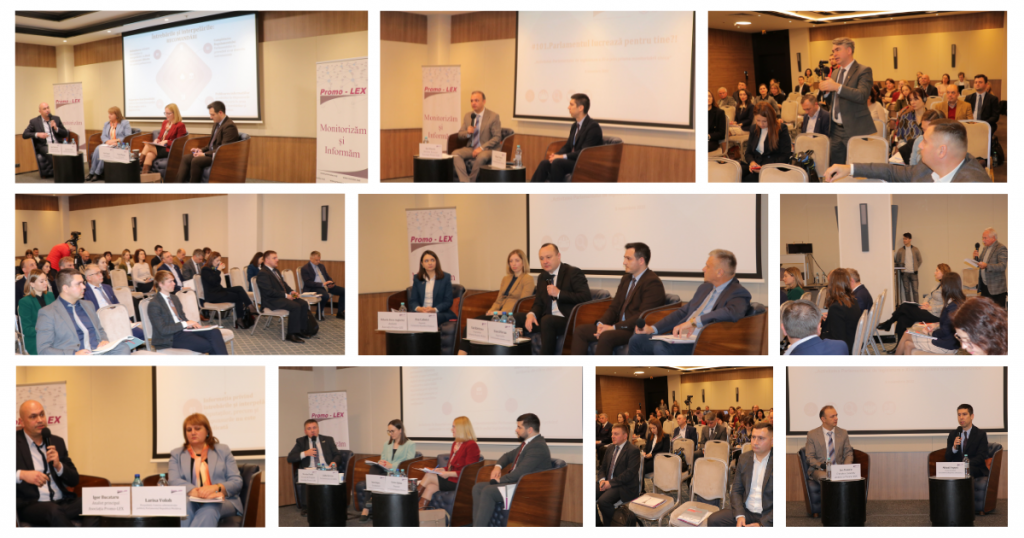
During the first year of activity of the 11th legislature, the Promo-LEX Association has monitored Parliament’s compliance with the legislative procedure, the activity of standing committees, the exercise of the parliamentary monitoring function, communication with citizens and parties concerned, as well as budgetary and administrative management. Analysts’ findings and recommendations, as well as MPs’ opinions on them, have been addressed, today, in the public discussion “The Activity of the 11th Legislature through the Prism of Civic Monitoring”.

The event was attended by MPs, analysts, representatives of public authorities, donors and civil society.

The executive director of Promo -LEX, Ion Manole, mentioned that in 2021, the Association set the goal to expand its efforts in monitoring the activity of the Parliament, thus helping it to become more open and closer to citizens. “At the same time, as exponents of civil society, we want to consolidate the decision-making processes, to determine MPs and the legislature to ensure proactive transparency in their activity, to use and publish data in an open format, to communicate as efficiently as possible with citizens, as well as to inform the society about their and the institution’s activity”, mentioned Ion Manole.

Based on the first year of monitoring, Promo-LEX has developed an annual report, providing a series of findings on the Parliament’s activity, as well as recommendations addressed to both the legislative institution and MPs.

Thus, the conclusions on the degree of compliance with the legislation on decision-making transparency have been formulated based on the analysis of 621 draft normative acts introduced in the legislative procedure. The analysts found that the decision-making transparency was largely disrespected, and at certain stages, it was even seriously affected by legislature’s failure to publish certain documents, by a low rate of public consultations on draft laws, by a high degree of ignoring certain recommendations or even by the lack of certain documents.

As for the activity of the three parliamentary commissions subject to monitoring, the Association found a low level of citizens’ information about their activity, in particular, in organizing hearings and reacting to petitions.

 Questions and interpellations, as instruments of parliamentary control, seem to be frequently confused by MPs. This mechanism of parliamentary control is most often used by the opposition, which asked 37 out of 38 registered questions. At the same time, we emphasize the fact that the Parliament’s website does not provide information to the general public about the use of these tools.

Parliament’s communication with citizens and the parties concerned is another monitored area. The findings relate to hearings and meetings with citizens, petitions and requests for access to information, quality of the official web page, as well as presence on social networks.

The monitors found that there are no clearly established mechanisms for informing citizens about the scheduled audiences and MPs’ visits to the territories; there is no record of the audiences and visits made. As for request for access to information, Promo-LEX has described its own experience, when out of 19 requests, about half of the responses came exceeding the legal deadline, and 20% were too general or incomplete.

In the opinion of Promo-LEX, the official webpage of the Parliament has a complicated and obsolete architecture, which does not cover information of public interest, it is not intuitive and friendly for users with disabilities, it does not contain open data sets. Many headings are empty or the information there is outdated. At the same time, the parliamentary institution is active on social networks, although the information is not updated on all accounts. In their turn, MPs do not sufficiently capitalize on the opportunities offered by social media platforms to inform citizens of the actions carried out.

Another area subject to monitoring is budgetary and administrative management. The monitors analyzed information of public interest related to the approval and execution of the Parliament’s budget, as well as other important aspects such as remuneration of MPs, expenses for business trips, transparency of public procurement. We found a reduced degree of transparency and information of citizens with regard to monthly financial remuneration of each MP. In this context, Promo-LEX expressed its disagreement with the legislature’s refusal to present the information claiming personal data protection.

In conclusion, the document presents 68 recommendations on improving the legislative processes and procedures for all monitored areas. The recommendations are addressed to the Parliament, the Standing Committee, the Permanent Parliamentary Commissions, the Secretariat of the Parliament and the MPs.

In the period of 2021–2025, the activity of the Parliament of the Republic of Moldova is subject to an exhaustive monitoring within the Promo -LEX Program “Democracy, Transparency and Responsibility” carried out with the financial support of the United States Agency for International Development (USAID). The purpose of monitoring is to increase the transparency of the institution, to contribute to the improvement of legislative procedures and to consolidate the interaction between MPs and citizens.

For additional information:
Elena Căpățînă, communications officer, Promo -LEX Association
GSM: 079454344; [email protected]


PUBLIC APEAL: The Promo -LEX Association requests the Parliament to adjust the draft of the new Election Code in compliance with the recommendations of the Venice Commission and OSCE/ODIHR

Given the examination of the draft of the new Election Code that is to be voted in the second reading, the Promo -LEX Association urges the Parliament of the Republic of Moldova to consider the recommendations outlined in the joint Opinion of the Venice Commission and OSCE/ODIHR.

It should be noted that many of the recommendations previously submitted to the authorities by the Promo-LEX Association are also found in the Opinion of the Venice Commission and the OSCE/ODIHR.

Thus, we reiterate some important aspects of the Opinion, which should consolidate the Parliament’s efforts to improve the draft of the new Election Code. Therefore, the new Election Code should:

  • explain the term “objective reasons” that can determine the organization of elections in two days;
  • improve the mechanism that regulates the establishment of the CEC, ensuring the institution’s impartiality and political neutrality;
  • revise the conditions for selection and appointment, as well as dismissal of CEC members, expressly mentioning these conditions in the law;
  • provide details on the procedures for the selection and appointment of CECE II presidents, as well as the period of their office, which will guarantee an activity that is free from any political influence;
  • expressly regulate the electoral processes in ATU Gagauzia;
  • ensure equal opportunities to participate in elections, by making mandatory the collection of supporters’ signatures by both independent candidates and political parties, taking into account their representativeness;
  • revise the eligibility conditions of candidates for the position of the president of the country and mayor, so that they comply with international standards;
  • revise the provision regarding the obligation of the president of the country and the mayors to compensate the expenses of organizing the elections in case of their resignation at the beginning of the mandate;
  • identify a mechanism to verify compliance with the donation ceilings in relation to the donors’ annual revenues, especially in the case of donors from abroad;
  • review the exclusive responsibility of the appellants (voters and electoral competitors) to substantiate their claims;
  • maintain the authority of the courts to confirm/deny the legality of local elections, etc.

In addition to the aspects mentioned above, we request the Parliament to examine other recommendations previously presented by the Promo-LEX Association in public consultations.

Finally, in solidarity with the Opinion expressed by the Venice Commission and OSCE/ODIHR, we recommend that all political forces represented in the Parliament come to a consensus and display constructive commitment in the adoption of the new Election Code.


Tiraspol regime condemned the first person for open criticism of the war in Ukraine

On 26th September 2022, the so-called “Tiraspol city court” sentenced Victor Plescanov to three years and two months’ imprisonment for “incitement to extremism”. This is a 58-year-old civic activist from the Transnistrian region, who in recent years has always had a speech and a critical position against the abuses committed in the Transnistrian region[1]. Once with Russia’s invasion of Ukraine on 24th February 2022, he criticized the abuses committed by the Russian army, including the illegality of its deployment in the Transnistrian region.

On 10th June 2022, he was deprived of liberty for 5 days for “hooliganism”. The ground for the “conviction” was that, while in a fabric store in the city of Tiraspol, he said that he was going to hang the flag of Ukraine on the balcony and insulted the so-called Ministry of State Security in Tiraspol. During the deprivation of liberty, his home was searched by the local security structures, and several goods, including his personal computer, were illegally seized. His wife being verbally informed that a “criminal case” has been opened against Victor for “incitement to extremism through the Internet and mass media”.[2]

On 15th June 2022, Victor was still not released from detention. His wife later found out that another measure was applied to him – “pre-trial detention”, which was later extended.

On 26th September 2022, in a closed session, the “Tiraspol city court” “sentenced” Victor Pleșcanov to 3 years and 2 months of imprisonment for “inciting extremism”. The sentence to be served in a colony – prison with an open sentence execution regime. Until now, Victor is detained in the so-called pre-trial detention facility no. 3 from the city of Tiraspol.

Despite the efforts made, almost 4 months since the deprivation of liberty, his wife does not have access to the materials of the case, including from the so-called delegated lawyer, the documents of the case being considered secret. At the same time, the activist’s wife had only one meeting with Victor, and she does not know what her husband’s health is at the time. Even if she filed an appeal against the “sentence of conviction”, the wife does not believe that it will have any effect on the punishment imposed.

This June, the constitutional authorities in Chisinau asked Tiraspol[3] to stop the “persecution and intimidation” of Victor Plescanov. Apparently, this reaction was not enough. Unfortunately, we note that the cases of “conviction” of the inhabitants of the left side of the Dniester for acts of “incitement to extremism” or other similar acts are happening more and more often, and the victims of this phenomenon have no possibility to defend their rights. We recall the cases of Mihail Ermurachi, Ghenadie Ciorba, Alexandr Samonii, Pavel Dogari, Larisa Kalik, Boris Babaian and others. The persecutions that were “legalized” by Vadim Krasnoselskii with the approval in March 2020 of the so-called “Strategy to combat extremism in the Transnistrian region”.

In this context, the Promo-LEX Association reiterates previous calls and REPEATEDLY REQUESTS the full involvement of the authorities of the Republic of Moldova, but also of international organizations and diplomatic missions to carefully monitor the situation of freedom of expression in the Transnistrian region. We also request prompt efforts for the unconditional release of Victor Plescanov and the application of protective measures regarding his family.

________________________________________________________________________________________________


[1] https://zonadesecuritate.md/un-batran-din-tiraspol-lupta-pentru-libertate-a-atentat-la-ce-i-mai-sfant-pentru-regim-trupele-ruse-presedintele-si-pseudo-tara/

[2] https://newsmaker.md/rus/novosti/mgb-mozhet-obostsya-vpridnestrove-zaveli-delo-obekstremizme-posle-intsidenta-sflagom-ukrainy-vmagazine-tkanej/

[3] https://newsmaker.md/rus/novosti/kishinev-prizval-tiraspol-otkazatsya-ot-presledovaniya-i-zapugivaniya-arestovannogo-za-oskorblenie-mgb/


Promo-LEX Association: Efforts to improve the draft of the new Electoral Code must be continued in the second reading

The plenary session of the Parliament has debated and voted today on the draft of the new Electoral Code in the first reading. The Promo-LEX Association welcomes the commitment of authorities to improve the electoral and related legislative framework in accordance with international good practices, but it states that there is still room for improvement of the new Electoral Code.

In this regard, Promo-LEX sent for the examination of the Legislature about 70 recommendations. The first round of public hearings was organized on July 26 by the Legal Committee for Appointments and Immunities.

Promo-LEX drew the Legislature’s attention to such aspects as:

  • the need to clarify situations, in which elections could be organized in two days;
  • the regulation by the Electoral Code of elections held for the authorities of the ATU of Gagauzia;
  • revising the right to confirm or deny the legality of local elections granted to constituency electoral councils;
  • improving the mechanism for appointing members of the Central Election Commission (CEC) so as to ensure independence of the institution from political factor; the need to consolidate the role of observers;
  • detailing the provisions on oversight and control of political parties’ finances and financing of electoral campaigns;
  • setting up polling stations for voters from the Transnistrian region and for those from abroad, etc.

Additionally, Promo-LEX made specific recommendations on improvement of judicial procedures, organization of referendums and parliamentary elections by reducing the electoral threshold, on improvement of local elections by organizing elections on a predetermined day.

It should be noted that, during 2021-2022, the Promo-LEX Association supported the activity of the CEC in drafting the new Electoral Code. 419 recommendations were collected and analyzed during the stage of public consultations organized on the CEC’s platform, of which 278 (66%) were presented by Promo-LEX, and about 55% of them were partially or fully accepted. The recommendations have been developed based on the experience gained in 23 national election observation missions organized in the more than 13 years of activity in the field.

The Promo-LEX Association is open to further contribution to the improvement of electoral legislation and advocates its adoption in a transparent and inclusive manner. At the same time, it emphasizes the importance of reaching a broad consensus in the Parliament and society with regard to the fundamental changes in the new Electoral Code.

The activity of the Promo-LEX Association, aimed at improving the Electoral Code and related legislation, takes place as part of the “Advocacy for a new Electoral Code in Moldova” project, implemented with the financial support of the European Union and the International Organization of La Francophonie, as well as the “Democracy, Transparency and Accountability” Program funded by the United States Agency for International Development (USAID).

_______________________________________________________________________________________________________________

For further information, please contact:

Elena Capatina, press officer, Promo-LEX Association
Tel: 079454344; [email protected]


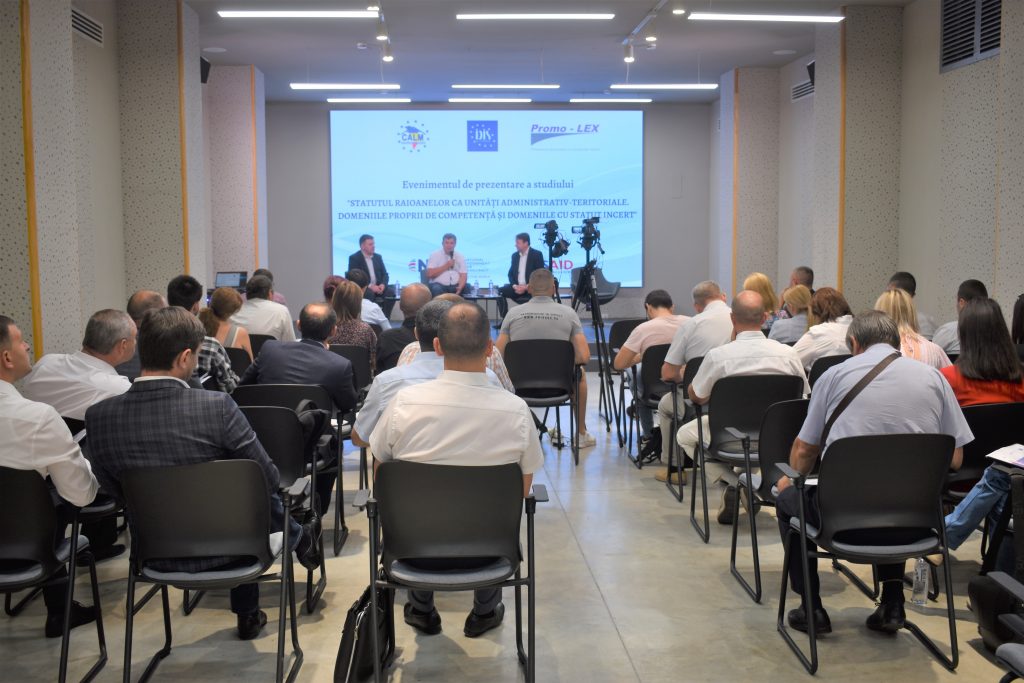
Competence areas continue to be an obstacle in fulfilling the duties by local public authorities, study

A study that analyzes the status of districts as administrative-territorial units claims that competence areas continue to be an obstacle in the fulfilment of their duties by local public authorities and present a serious reason for tensions and arguments between different levels of public administration in terms of the exercise of legal powers, the manner and sources of their financing.

The study is carried out by the legal expert of IDIS Viitorul, Viorel Pîrvan, and was presented today, July 20, within the Coalition for Decentralization, supported by CALM (Congress of Local Authorities from Moldova), IDIS (Institute for Development and Social Initiatives) and the Promo-LEX Association.

It should be noted that this study, like the study presented on Monday, July 18, on the development of local tax system in the Republic of Moldova, appears within the project financed by NED (National Endowment for Democracy), entitled “Assessment of the State of Local Democracy in Moldova”.

The study on the assessment of local competences of level I and II claims that the level of fulfillment of all the commitments undertaken by the Republic of Moldova in relation to the standards of local autonomy and decentralization is stagnant, and the attempts to finalize the reform of the public administration system at the local level have failed. Although some progress has been made, the process has been blocked by the political interests of some governments that intended to control local powers from above, turning them into mere appendages of its centralizing and clientelist interests.

The author of the study claims that laws adopted in the field of decentralization and local public self-administration are not properly applied, and certain ambiguities are treated against local autonomies. Normative acts, strategies and national programs often remain mere decorative and unimplemented pieces, accumulating serious arrears in delimiting competences, consolidating the financial basis to ensure decentralized local services and respect for local autonomy.

Many of the powers assigned by law to district and local public authorities are purely formal, not being strictly delimited, or being duplicated which leads to voluntarism and conflicts of authorities. The author of the study proposes to the authorities of the Republic of Moldova to adopt an action plan for strict delimitation of deconcentrated, delegated or decentralized powers, with an approximate indication of stages and deadlines. The reform of domains and competences, which will be carried out on the basis of principle of subsidiarity, should allow LPAs of level I to hold most areas of local and regional importance, which directly relate to the citizens of those local communities. To be successful, it is extremely important to continue the process of administrative decentralization, to recover all arrears in the given field and to effectively implement all policy documents in organizational, financial, patrimonial, sectoral decentralization.

“Territorial-administrative reform must be a top priority of the Government”, claims the author of the study, because only in this way, we can accelerate the optimization of the local self-government system and remove existing obstacles to the accession of the Republic of Moldova to the EU. Internal stability, political pluralism and good governance are guarantees for the European governance model; without decentralization and subsidiarity, the Republic of Moldova will artificially slow down local development and bringing welfare closer to its citizens,” the study states.

The leaders of the Coalition for Decentralization consider that 2022 is a crucial year to encourage the Government to act towards accelerating decentralization and consolidating local powers. Accelerating decentralization and ensuring effective local autonomy is at least as important a priority in the EU accession process as justice reform, fighting corruption and economic reforms. By presenting the 2nd study this week on the competences of the two levels of local public administration, the Coalition for Decentralization announces to its dialogue partners at the central level that it is ready to resume work within the Parity Commission in support of the objectives expected by local powers.

In its capacity of national platform dedicated to the reform of local and regional powers, the Coalition aims at delivering quality proposals and expertise to the central authorities, reaching consensus on the priorities of the reform, bringing together all local and national actors in this complex process.

For more information, please contact the author of the study:
Viorel Pîrvan, GSM: 069173834, [email protected]


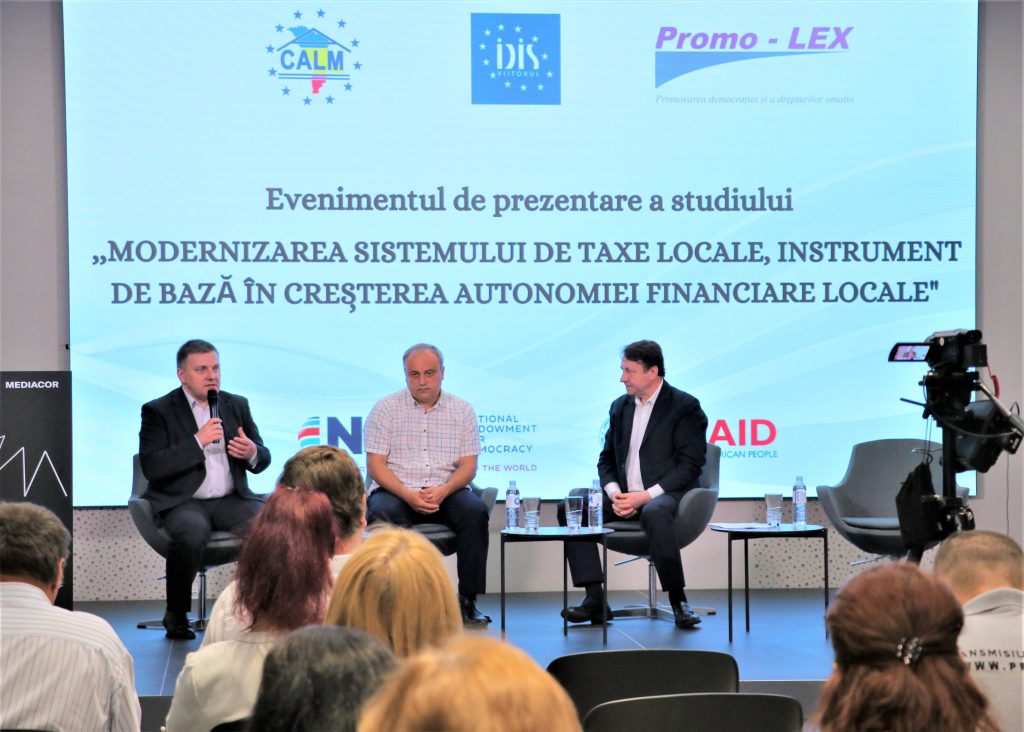
The current system of local taxes in the Republic of Moldova can no longer fulfill the function of consolidating financial autonomy, study

A recent study, which analyzes the revenues collected from local taxes, claims that the current tax system can no longer fulfil the function of consolidating financial autonomy. The study, carried out by the IDIS expert, Veaceslav Ioniță, and presented within the “Assessment of the State of Local Democracy in Moldova” project, supported by NED, is part of the action strategy of the Coalition for Decentralization, established by CALM (Congress of Local Authorities from Moldova), IDIS (Institute for Development and Social Initiatives) and the Promo-LEX Association.

The author of the study demonstrates that the revenues collected from local taxes have steadily stagnated in the last decade. Thus, they increased only by 11.8% (from 476 million lei in 2014 to 532 million lei in 2020), while the revenues of the national public budget increased by 50% in the same period of time. Local taxes are not indexed annually, and the main payers of local taxes are economic agents. Only in the municipality of Chisinau, local taxes have increased by 1.4% in the last 8 years, but this increase does not even cover the official rate of inflation. Paradoxically, the local population, the main beneficiary of the services provided by the local authorities, contributes almost nothing to the formation of the budget.

The author of the study concludes that the current system of local taxes is morally outdated, it no longer meets the expectations of local public authorities and stands in marked contrast with the obligations undertaken by the Republic of Moldova in relation to the Council of Europe. Thus, the study demonstrates that all local taxes cover only 2.8% of the total amount of local budget expenditures, and their share decreases annually, maintaining a dramatic dependence of local public administration on the Ministry of Finance. Local taxes are extremely poorly applied – a single tax provides more than 50% of the total revenue collected, and the rest are formal. The municipality of Chisinau collects over 50% of the amount of all local taxes (350 out of 670 million lei), showing a lack of reliability of the current system of local taxes.

At the same time, the author analyzes several local taxes, claiming they would have a considerable potential, if local authorities enjoyed more functional autonomy and were not shackled by centralist regulations. These are parking tax, sanitation tax, development tax, public lighting tax. The author of the study proposes a series of measures to improve the fiscal base of local authorities in the Republic of Moldova.

The study opens a series of actions launched by IDIS Viitorul! and its partners within the Coalition for Decentralization in the Republic of Moldova. Operating as a national platform established to ensure communication and consultation on the options of this reform, the Coalition aims to reach consensus on the priorities of the reform, bringing together all local and national actors, offering their expertise, visions and experience in this complex process.

An important vehicle of the Coalition for decentralization is the Parity Commission, which the current government intends to re-activate as soon as possible. Accelerating decentralization and ensuring effective local autonomy is at least as important a priority in the EU accession process as justice reform, fighting corruption and economic reforms.

For more information, please contact the author of the study:
Veaceslav Ioniță, Doctor of Economic Sciences,
GSM: 069134567, [email protected]


Final Findings of the Promo-LEX OM for the New Local Elections of May 29 (June 12) 2022

The Promo-LEX Association presented its final REPORT on monitoring the new local elections of May 29 (June 12) 2022. In these elections, eight settlements elected their mayors and another two elected their local councilors. After 2020, these were the first elections held, without pandemic restrictions.

The report highlights the existing deficiencies in the national legislation with regard to the organization of new local elections, repeatedly identified in these elections. They refer to the uncertainty regarding the length of electoral period and setting the date of the new local elections, as well as the organization of elections during the state of emergency, by applying a rule derogating from a decision of the Parliament, which derogates from a rule established by the organic law. Additionally, the Legislature amended the electoral legislation during the electoral period, when the constituency councils had already been set up and the period for appointing candidates had begun.

According to the findings of the Observation Mission, the Central Electoral Commission effectively organized the new local elections. At the same time, it should be mentioned that the composition of the lower electoral bodies is unbalanced from a gender perspective (CECE – 85% women and PEB – 88%); about 50% of CECE headquarters were inaccessible to people with locomotor disabilities.

Out of 56 parties with the right to nominate candidates, 10 political parties participated in the elections. Parties nominated 23 candidates for the position of mayors: the PAS (6); BECS (5); PLDM and the PPS 3 each; the PPPDA (2); and the PPN, PDM, PL and PPPO – one each. Another seven (23%) candidates competed independently. Only 20% of the total registered candidates were women.

The election campaign was also marked by the use of electoral advertising contrary to legal provisions: at least 2 cases of distribution of materials without printing information (name of the competitor, date of printing, circulation, etc.) and at least 2 cases of unauthorized placement of advertisements (on pillars). At the same time, the campaign messages of the competitors focused on the problems existing in the settlements and the solutions proposed to deal with them.

Following the civic monitoring, the Promo-LEX OM estimated an amount of at least 51,551 lei as being undeclared by 9 competitors. The highest amounts estimated as undeclared fall for the PPS (58%); PAS (27%) and the BECS (6%). According to the estimates of Promo-LEX, the PPS incurred campaign expenses that seem to have exceeded the limit ceiling set by the CEC by 10,369 lei.

According to Promo-LEX observers, during the election period, voters, electoral competitors and other subjects filed a total of 9 appeals against the actions or inactions of electoral competitors.

On election day, polling stations opened and closed regularly. Voting, in general, was organized efficiently and went smoothly. Observers reported 6 incidents, all in the first round. The counting of votes was fast and calm.  At the same time, cases were reported when PEB members ignored the rule that stipulates that the ballot papers should be counted only by one member of the PEB.

The results of the parallel counting, performed by Promo-LEX confirmed the results presented by the electoral bodies. In the first round (May 29, 2022), mayors were elected in five settlements, respectively, three mayors were elected in the second round (June 12, 2022). The legality of the elections and the validation of the mayors’ and councilors’ mandates took place within 1-5 days of election day.

The Promo-LEX monitoring report contains several recommendations to the Parliament on the amendment and improvement of electoral legislation, including providing for legal conditions for consolidating the capacity of the CEC in establishing an effective mechanism to ensure control and verification / estimation of electoral expenses. The Central Electoral Commission and lower electoral bodies are recommended to define the legal status of notifications during the electoral period, as well as the way of solving them. Local public administrations are recommended to set up access ramps in polling stations, and electoral competitors to actively involve their trustees in the election campaign.

Since 2009, this is the 23rd Mission organized by the Promo-LEX Association, with the involvement of over 16,400 national observers. The Observation Mission for the new local elections of May 29 took place with the financial support of the United States Agency for International Development (USAID).                                                             


For further information, please contact:
Elena Capatina, communications officer, Promo-LEX Association
Tel: 079454344; [email protected]


Promo-LEX conclusions on CEC’s and CICDE’s strategic activities for 2021

Promo-LEX has assessed the level of implementation and the impact of activities carried out by the Central Election Commission (CEC) and the Center for Continuous Electoral Training (CICDE) outlined in the strategic and annual plans. The findings, conclusions and recommendations have been included in the REPORT on the “Implementation of the strategic plans of the CEC and CICDE. 2021 Retrospective” recently launched by the Association.

Quantitatively, compared to the previous monitoring period, Promo-LEX found a pronounced regress in the activity of CEC in 2021. Thus, out of the 22 strategic activities (which included 51 sub-actions), the CEC managed to fully carry out 16 sub-actions (31%), 25 (49%) were partially fulfilled, 9 (18%) remained unfulfilled, and one sub-action was considered obsolete.

It was difficult to qualitatively assess the CEC’s activities due to the small number of fully executed activities, as well as due to the lack of measurable indicators intended to capture qualitative changes. However, it should be noted that impactful activities relate to the CEC’s active involvement in the activities carried out by regional and international electoral associations (ACEEEO, A-WEB), as well as the expansion of partnerships with civil society.

Major arrears of the reference period are lack of a proactive collaboration with the Parliament, lack of a partnership with the Audiovisual Council, lack of a consolidated and permanent dialogue with political parties, overlaps of competences of the CEC’s and CICDE’s subdivisions and lack of actions to prevent and manage image crises of the institution.

At the same time, in 2021, the CICDE managed to fulfill 43 activities (92%), 3 (6%) tasks were partially fulfilled, and 1 (2%) – unfulfilled (out of 40 strategic activities, which included 47 tasks). Moreover, about half of the CICDE’s activities have had a major impact. In the opinion of the Association, major arrears of the CICDE include lack of progress on the accreditation of training courses for potential election officials and other categories of beneficiaries.

The significant achievements of the CICDE include an increased number of beneficiaries trained through the www.elearning.cicde.md platform, adaptation of the services rendered to the needs of different target groups (children, young people, voters, teachers, librarians, electoral officials, judges, representatives of political parties, etc.), an increased number of visitors to the CICDE’s website and transforming the website into an electoral education tool, etc.

Promo-LEX recommends that the institutions concerned consider the reasons of failing to carry out all the planned activities on time, to put in place the non-executed or partially executed activities, and to eliminate the overlap of competences between the subdivisions of the CEC and CICDE. Additionally, they should set measurable indicators, which would allow to assess the impact of fully executed activities. More findings and recommendations can be found in the report mentioned above.

The Promo-LEX Association has been monitoring the process of implementing the strategic plans of the CEC and CICDE since 2017.

The Report on the Implementation of the strategic plans of the CEC and CICDE. 2021 Retrospective was developed under the Democracy, Transparency and Accountability Program, funded by the United States Agency for International Development (USAID). Opinions expressed in the monitoring report belong to the authors and do not necessarily reflect the point of view of the funders.

For further information, please contact:
Elena Capatina, Promo-LEX communications officer;
GSM: (+373) 79454344, [email protected]