Promo-LEX’s Appeal on International Women’s Day – In support of victims of gender-based violence

March 8, 2013 marked the 102nd anniversary of the International Women’s Day. This day represents a victory in the struggle for emancipation, against gender-based discrimination, for better working conditions, and, not least, for women’s voting rights across the globe.

Domestic violence is the most serious problem facing Moldovan women. About 90% of victims of this phenomenon are women, and the day of March 8 provides an opportunity to remind the Moldovan society and authorities that concerted and effective efforts are needed to stop violence against women – one of the gravest issues affecting the human rights situation in our country.

On the occasion of International Women’s Day, Promo-LEX:

1. calls on the central and local authorities to streamline the application and implementation of legislative provisions on preventing and combating domestic violence;

2. recalls the obligation of the Republic of Moldova to provide all victims of domestic violence, including those from the Transnistrian region, services of social, psychological, medical, and legal rehabilitation, and of other types, as needed;

3. declares to the society that domestic violence is not a strictly private matter – is is a social issue that affects us all;

4. reminds that, as part of its the Human Rights Program work, the lawyers from the Association provide qualified legal assistance to victims of domestic violence in Moldova, including the Transnistrian region, which have undergone acts of domestic violence in the past or continue to suffer such acts or their consequences today.

Promo-LEX demands real action and a positive response to this appeal from the Moldovan authorities. At the same time, we encourage international organizations that hold democratic values ​​and human rights as a priority to continue their efforts to stop and prevent acts of domestic violence.


Promo-LEX launched the Monitoring Report of the Campaign “Eyes on the Police”

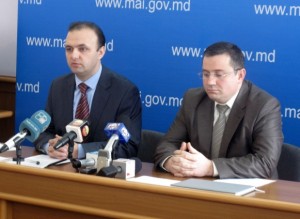
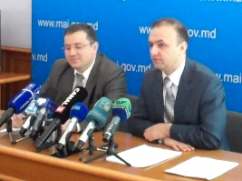
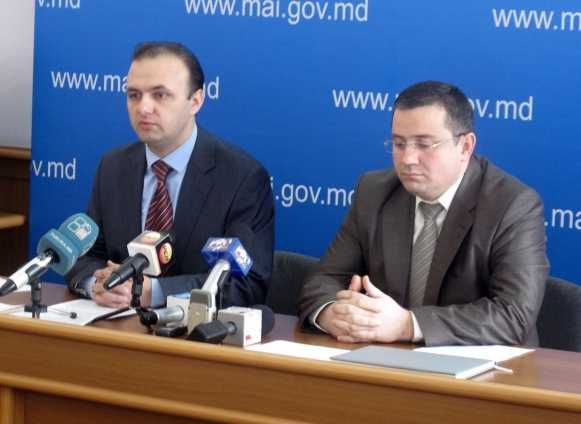
_article_1362399464At a press conference on the results of the monitoring campaign “Eyes on the Police”, Promo-LEX presented a Monitoring Report on the police. The campaign was conducted in partnership with the Moldovan Ministry of Internal Affairs from 12 to 26 February 2013, throughout Moldova, and was aimed at monitoring the work of public order police in order to improve the quality of their services.

“A team of 45 Promo-LEX monitors visited all the police commissariats in the country and filled in a questionnaire consisting of 42 questions structured around the second and third pillars of the campaign. In addition to police commissariats, Promo-LEX monitors visited 108 random police stations, sectors and/or posts throughout the country,” said Ion Manole, Promo-LEX executive director.

Monitoring results show that the police respect the minimum requirements of professional etiquette and have a conduct that is in line with the status of the police. Monitors reported that the overall behavior of police officers from the public order patrols meet the requirements set in the Code of Police Ethics and Deontology.

“However, the report notes a number of shortcomings in the presentation of information on police commissariats, sections, stations, and posts on the Interior Ministry’s website. The monitors found that both police commissariats and police sections and stations in the field are fairly difficult to find as there are virtually no signs or boards to guide people to the police station premises. The monitors also found that most police officers do not carry visible identification elements and do not have first aid kits,” Ion Manole noted.

“We appreciate that Promo-LEX is one of the most active organizations working with the Ministry, they support us, and when they criticize, they do so with good and constructive intentions. Internal investigations and appropriate action will be taken regarding policemen who were caught in acttions of questionable legality. Many of the recommendations included in the Promo-LEX Monitoring Report anticipate what we intended to do as part of the police reform,” said Ion Bodrug, Deputy Minister of Internal Affairs.

“Ensuring an efficient patrol of localities, increasing public order police staff to patrol rural communities; urgent repairs in police stations in poor condition, and a continuous training of police officers in terms of professional ethics, are among the recommendations of the report,” concluded Ion Manole.

The analysis team of the Promo-LEX Program of monitoring democratic processes developed the Report. Data presented in the Report were collected through direct observation, and the conclusions and recommendations of the Report were made in good faith and were aimed at helping to improve the quality of police services.

The police monitoring campaign was conducted as part of a project implemented by UMDPL, Kiev, Ukraine, and funded by the British Embassy in Kiev, Ukraine. The campaign was conducted in six countries: Moldova, Ukraine, Belarus, Armenia, Russia and Tajikistan. The conclusions and findings reflected or opinions expressed during the monitoring campaign or in the Report represent the exclusive opinion and position of theauthors and do not necessarily reflect the opinion of the British Embassy in Kiev.

For more details, please contact: Iulia Munteanu, Press Officer
Tel: (22) 450024, GSM: 069072579, email: [email protected]


The Right of Assembly, severely violated by the Transnistrian militsia in Corjova

On March 2, 2013, a group of residents of the Corjova village of the raion of Dubasari, a locality managed by Moldovan constitutional authorities, held a solemn gathering to commemorate the victims killed in the 1992 armed conflict on the Nistru river. The peaceful meeting was disrupted by the local militsia from the town of Dubasari and representatives of local security structures (KGB). They blocked the roads leading into the village, restricting access to the village of vehicles with Moldovan legal license plates. They also surrounded the meeting place where participants were to lay flowers and make public speeches. They also threatened the organizers with sanctions if those were to fly the Moldovan flag or sing the national anthem.

Although two peacekeepers from the Russian Federation were present at the gathering, they did not intervene, and limited to “monitoring” the situation. The incident was settled by the constitutional police, who were maintaining public order during the meeting.

The village of Corjova was one of the most affected localities during the 1992 war on the Nistru river. Locals have always sought to keep the village under the control of Moldovan constitutional authorities. The village is situated on the left bank or the river, which remains largely under the control of illegal structures. For this locality, as some locals put it, the war has not ended. Thus, Corjova is at the epicenter of serious and continuous violations of fundamental human rights. The Transnistrian militia always cause impediments in holding elections in the village and intervene to block public events.

Another gathering was held, on the same date and time, in the town of Dubasari, to commemorate those fallen in Moldovan-Russian war of 1992. But there the meeting went on without incidents. The local militsia did not intervene or create any obstacles.

Promo-LEX Position

European standards require authorities (in this case, the de facto administration) to apply the law in a nondiscriminatory manner. Thus, we see that, in the case of the peaceful assembly in the village of Corjova, participants were discriminated compared with those who attended the meeting of Dubăsari.

The actions of the militsia resulted in preventing the Corjova meeting participants from exercising their right to assembly and free expression. Both constitutional and international norms prohibit any undue intrusion and abuse of the authorities in the exercise of fundamental freedoms of citizens, especially the freedom of expression and assembly.

Recently, the supreme soviet (local legislature) in Tiraspol rejected a draft law on the organization of public meetings, which would have provided more freedoms and opportunities to organize peaceful rallies and protests than there are now. The bill was rejected on the grounds that “the current law is relatively good”.

Considering all these aspects, Promo-LEX found that local administration of the Transnistrian region continues to maintain mechanisms of restraining and hindering the right of assembly in the region. At the same time, we believe that, through a direct and aggressive intimidation of participants at peaceful assemblies in Corjova, Dubasari, the separatist regime aims to send a clear message of threat to all the inhabitants of the region.

Human Rights Program
Promo-LEX Association


ECtHR communicates a new cause of ill-treatment in Transnistrian

Andrew Rezanov, a resident of the city of Bender, was arrested on 11 April 2009 by representatives of the Bender “militsia”, on accusations “illegal sale of narcotics” to a person and of “illegal possession of cartridges and a firearm”. The applicant was locked up in a preventive detention facility in Bender for a period of 42 days.

According to the applicant, the cell where he was kept in preventive custody was a basement room with no light or ventilation, no basic water supply or sewage, without fresh air and with a persistant pungent odor. The room was very humid and ws equipped with a makeshift cell toilet, in absence of any form of disinfection. The cell floor was made of concrete and lacked other coverage, and there were no conditions for maintaining hygiene.

On 22 May 2009, the applicant was transferred to the preventive detention facility no.3 in Tiraspol, and on 12 May 2010, to prison no.1 in Hlinaia, where detention conditions were as unbearable.

On 12 May 2010, “the court of justice of the city of Bender” sentenced the applicant to 15 years in prison with the confiscation of property. On 6 July 2010, the “supreme court of the MRT” in Tiraspol dismissed the appeal filed by the applicant and his lawyer. According to the “judgment”, Rezanov is to be detained in such miserable conditions until 2025.

On 30 May 2011, the applicant’s mother submitted complaints to the Russian and Moldovan Prosecutor General Offices demanding that persons who deprived her son of liberty be criminally prosecuted. The Prosecutor General office forwarded the complaint to the Prosecution of Bender, arguing that they do not have the competence to examine it. On 27 June 2011, the latter ordered criminal proceedings, but suspended them on 16 September 2011 on grounds that the person charged could not be identified.

On 8 December 2011, the investigating judge found that the criminal prosecution failed to take all the operative measures of investigation. The judge admitted the complaint and overruled the order of suspension from 16 September 2011, forcing the prosecution to continue the investigation. From 8 December 2011, no measures of criminal prosecution were taken.

In the applicant took the case to the ECtHR, alleging a violation of Article 3 of the European Convention, ill treatment on behalf of police, detention in inhuman and degrading conditions, lack of medical care while in detention, and failure to effectively investigate the ill treatment complaints. The applicant also claims he did not have an effective remedy before a national authority to invoke violation of Article 3 of the Convention and further alleges a violation of Article 13 of the European Convention.

A case was filed with the European Court of Human Rights against Moldova and the Russian Federation and is represented by Promo-LEX lawyers and legal counsels.

For more information contact: Alexandru Postica, Lawyer of the Association Promo-LEX
Tel: (22) 31 09 45, GSM: 069104851, e-mail: [email protected]


Training of Monitors from the Civic Monitoring Mission for the Implementation of the Justice Sector Reform in Moldova

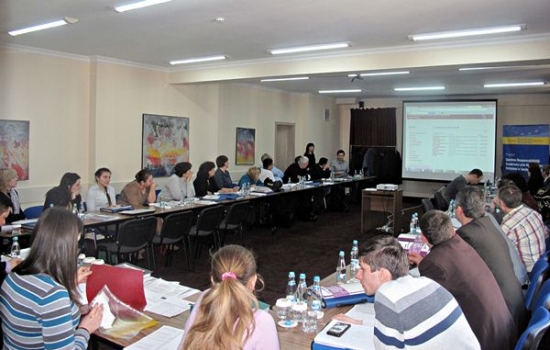
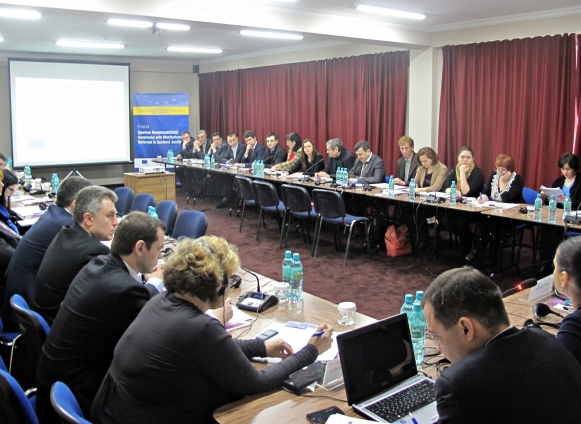
_article_1363945381Between 9 to 10 February 2013 a first training session was conducted for the monitors from the Civic Monitoring Mission for the implementation of the Justice Sector Reform in Moldova. The event was carried out within the project “Increasing Government Accountability by Monitoring the Justice Sector Reform”, implemented by the Promo-LEX Association and the Association for Efficient and Responsible Governance, and funded by the European Union.

The training program included topics designed to acquaint the network of monitors with the content of the Justice Sector Reform Strategy and the Action Plan for the implementation of the Strategy. The monitors were also taught the methodology and monitoring tools to be used by the Civic Monitoring Mission.

The monitoring effort will focus on the observation of two main components: assessing the implementation of activities included in the Justice Sector Reform Strategy Action Plan, and trial monitoring. The Civic Monitoring Mission will be carried out over 18 months, between 1 February 2013 and 31 July 2014.

During the training session, monitors were also instructed on the rules of conduct in courts and on how to communicate within the network. All monitors signed a Code of Conduct specifically designed for the Civic Monitoring Mission for the implementation of Justice Sector Reform. The Code of Conduct is based on principles of objectivity, impartiality, transparency, and accountability.

This was the first in a series of trainings for monitors and was primarily aimed at developing the capacity of the civil society to monitor the Justice Sector Reform and raising the public awareness of this reform.

For more details, please contact: Iulia Munteanu, Press Officer
Tel: (22) 450024, GSM: 069072579, email: [email protected]


Campaign “Eyes on the police”

_article_1361878323In January and February 2013, in Armenia, Belarus, Russian Federation, Tajikistan, Ukraine and Moldova, a civic monitoring is underway of the operation of police bodies that come in direct contact with citizens. In Moldova, Promo-LEX conducts a campaign under the slogan “Eyes on the police”, in partnership with the Ministry of Internal Affairs, between February 12 and 26 of this year.

The need for such monitoring emerged from an analysis of national laws and international standards, conducted by experts from the six countries in December 2012. A set of minimum requirements were developed to be met by law enforcement agents in each of these countries. Based on these requirements, a unique algorithm was developed to monitor police stations and police patrols. Thus, for the first time, civic activists developed and applied a unique tool with which to evaluate and compare the observance of human rights by the police in different countries. The exercise is implemented by UMDPL in Ukraine in collaboration with Promo-LEX, and is funded by the British Embassy in Ukraine.

Deputy Minister of Internal Affairs, Ion Bodrug, said: “We are happy to see the civil society get involved in independent and impartial monitoring of the police. This allows us to make decisions that improve police services. The reform of the police is citizen-oriented. We look forward to the final report of this exercise, and I hope it will help us to better understand the expectations of citizens and to respect them.”

“The behavior of the police in the society is often one of the most visible and relevant representations of a country or community of people. Moreover, the image of those in charge of law and order can substantially influence societal behavior. Citizens have high expectations and show special interest in law enforcement activities, so, in the next two weeks, we intend to take the pulse of the current situation and welcome the openness of the Ministry of Interior to this civic initiative. We will monitor public order police via a network of observers throughout the country, but we will also promote in the media a continued citizen oversight of the police. We will certainly communicate all the positive actions of the police to the society, but we will not overlook any negative actions either. In effect, we propose to assess, understand and present to the public the reality as it is found by the Promo-LEX observers”, said Ion Manole, Promo-LEX Executive Director.

Promo-LEX developed a Code of Conduct for its monitors, and suggest all citizens that will get involved in the campaign to adhere to its provisions. Audio, photo, and video materials provided by the observers but also by citizens both on the positive actions of the police as well as on those showing the ugly side of the police, will be published on Promo-LEX’s Facebook page as part of the campaign. The authors of those positive and less positive materials, who followed the Code of Conduct, could be identified, and gathered most likes on Facebook for their work, will be awarded prizes at the end of the campaign. In this way, the organizers of the campaign want to raise public awareness about police work, and inform the MOI leadership of any deviation admitted by the police, which will allow the Ministry to clarify the circumstances of those acts, and, where applicable, take appropriate measures to eliminate the cited shortcomings.

In conclusion, citizens throughout the country will have the chance to monitor the POLICE in the period of 12-26 February 2013, and namely: police clothing/uniforms, equipment and special means, as well as behavior, attitude or openness of the respective institutions.

Citizens are invited to share their experiences or cases involving employees and institutions of the Ministry of Interior. At the end, Promo-LEX and the MOI leadership will reward the most relevant, funny and interesting pictures or photos sent to [email protected] or [email protected].

For more details, please contact: Iulia Munteanu, Press Officer
Tel: (22) 450024, GSM: 069072579, email: [email protected]


Launch of the project “Increasing Government Accountability by Monitoring the Justice Sector Reform”

_article_1360576127On 8 February 2013, The Promo-LEX Association, in partnership with the Association for Efficient and Responsible Governance (AGER), held a roundtable to launch the project “Increasing Government Accountability by Monitoring the Justice Sector Reform”, implemented with the financial support of the European Union through the European Instrument for Democracy and Human Rights.

The project is aimed at strengthening the capacity of the civil society to monitor the reform implementation process in Moldova.

“Monitoring the implementation of public policies and reforms is one of the basic functions of the civil society. Thus, Promo-LEX aims to monitor the implementation of the justice sector reform, in order not only to observe the events but also to contribute substantially to the reform itself,” said Promo-LEX director Ion Manole.

Ambassador Dirk Schuebel, Head of the EU Delegation in Moldova, reiterated the importance of the subject for advancing the EU-Moldova political dialogue as well as for the general development of the Moldovan society. H.E. Mr. Schuebel wished the project partners success in achieving their objectives and encouraged them to make full use of the opportunities to influence and contribute to improving the justice sector reform.

The event included a presentation of the project context and objectives, planned activities and expected results. The roundtable was also presented the Monitoring Methodology of the civil society in assessing the implementation of the justice sector reform in Moldova.

“The Civic Monitoring Mission will be conducted over 18 months between 1 February 2013 and 31 July 2014. The monitoring will focus on the observation of two main components: the assessment of activities included in the Justice Sector Reform Strategy Action Plan, and trial monitoring. The Civic Monitoring Mission includes 38 national monitors of the Promo-LEX Association. The network of monitors will follow the conduct of first instance trials in district courts, Courts of Appeal, the Supreme Court of Justice as well as specialized courts. They will provide the team with analysis and monitoring reports based on the methodology developed for this purpose,” said Olesea Stamate, director of the AGER.

Following up on these activities, the project will produce, over the next 18 months, three detailed monitoring reports, three progress notes, and will organize six public discussions/debates on the subject.

“Monitoring court hearings will allow trained monitors to assess both quantitative and qualitative aspects of the administration of justice by Moldovan courts of ordinary jurisdiction. Another purpose of the trial monitoring will be to enhance the compliance of the Moldovan law and practice with the standards of good administration of justice established by the ECHR “said expert Dovydas Vitkauskas, one of the authors of the methodology.

Project partners are looking forward to the cooperation and openness of law enforcement bodies in the justice reform monitoring process, in order to contribute to making the changes irreversible. They also hope to be able to not only provide an impartial outlook on the achievements and failures encountered along the reform process, but also assist responsible institutions on various segments of the reform.

For more details, please contact: Iulia Munteanu, Press Officer
Tel: (22) 450024, GSM: 069072579, email: [email protected]


693 days of illegal detention

_article_1360589662On 11 February 2013, members of Vitalie Eriomenco’s family called a press conference with the topic „693 days in illegal detention”. Having reached a point of despair, the family seeks help from the authorities in Chisinau.

Vitalie Eriomenco (age 43) is a businessman from the Transnistrian region, founder of three production companies in Slobozia. He was detained by the so-called authorities of the left bank of the Nistru river in March 2011 on accusations of prejudicing the three companies he had founded. Eriomenco’s troubles began after Petriman complained to the so-called anti-organized crime division in Tiraspol, headed by Andrei Mejinschi, who is also the brother of Valentin Mejinschi, former head of the Anti-Corruption Center in Chisinau and former Moldovan Minister of Interior.

“On 29 March 2011, Vitalie Eriomenco was kidnapped from his office in the town of Slobozia by representatives of Tiraspol militsia. For 10 hours, Eriomenco was mistreated, threatened with death and blackmailed by the „officers of the Transnistrian anti-crime division” to make statements that they wanted and to pass a share of stocks in the companies he owns to a Mr. V. Petriman for a supposed „incurred prejudice”,” Alexandru Zubco, lawyer from the Promo-LEX Association, noted.

Vera Eriomenco, the detainee’s mother, says that her son was mistreated, refused a lawyer, and not provided with food, water or medical assistance during the arrest. Furthermore her son’s health condition worsened in the dire detention conditions.

The man’s father, Tudor Eriomenco, said that their family sent hundreds of complaints to the unrecognized authorites of Transnistria as well as to Moldovan institutions, but to no avail, and they have come to a state of complete despair.

„The Moldovan Ministry of Interior is intended for defending its own citizens, and not for submitting their citizens and their personal data to separatists, in flagrant violation of the Moldovan Constitution,” Tudor Eriomenco added.

„An application on Eriomenco’s case was submitted to the European Court of Human Rights on 1 July 2011. The application cites the violation of Articles 2, 3, , 8, 34 and 13 of the European Convention. On 23 August 2011, ECtHR decided to examine the case in a priority regime and communicated the case to the Russian and Moldovan Governments,” lawyer Alexandru Zubco added.

The Eriomenco family called the Moldovan government to get involved in freeing their son and asked for a meeting with Prime Minister Vlad Filat on 12 February, at 10.00. If not, the family threatened to start a hunger strike.

Recently, the Eriomenco case came to the attention of the World Organization Against Torture, which demanded the left bank authorities to grant the detainee adequate medical assistance and to ensure him the right to a fair trial. The Eriomenco case cannot be singled out, as there are many cases when businessmen in the region were unlawfully detained by the local militsia.

For more details, please contact: Iulia Munteanu, Press Officer
Tel: (22) 450024, GSM: 069072579, email: [email protected]


Detention in Private Prisons in the Transnistrian Region, Again in ECtHR Attention. Two Cases Communicated to the Governments of the Russian Federation and Moldova

On 22 May 2008, Stefan Berzan, at that time employed by the Moldovan Ministry of Interior, was kidnapped by the so-called Transnistrian militsia with support from Dorotcaia village police. The applicant was invited to the police station in the Dorotcaia village and later escorted and handed over by the police to the illegal militsia department in the town of Grigoriopol. In the Transnistrian region, the applicant was “charged with the offense” of circulating fake money, and was warned that he would be released only if he made self-incriminating statements.

On 11 august 2008, he was “sentenced” to five years of suspended prison, and was released from custody. The applicant was therefore unlawfully detained for 82 days.

After release from illegal detention, the applicant was dismissed from MOI, because the employer interpreted the “conviction” pronounced by the regional illegal “court” as a criminal antecedent, and, respectively, as a reason to terminate employment.

More details on the statement of facts are available here.

On 5 February 2008, Viorel Panteleiciuc was kidnapped on the outskirts of Varnita village (under the jurisdiction and control of the Moldovan constitutional authorities) by “customs” collaborators from the separatist region, and taken to the militsia “section” in the city of Bender. The alleged “court” of Bender accused the applicant of the administrative offense of resisting police, and sentenced him to three days of administrative arrest. On 8 February 2008, when the administrative arrest expired, the applicant was released from detention.

On February 6, 2008, the defendant’s brother filed a complaint with the General Prosecutor Office and other authorities in Moldova seeking the initiation of criminal proceedings and punishment of all those involved in the illegal arrest of his brother by Transnistrian officers. On 28 February 2008, the Bender police department began a criminal investigation on the fact of the applicant’s abduction by Transnistrian officers.

More details on the statement of facts are available here.

Both applicants filed complaints to the ECtHR claiming a violation of Article 5 of the European Convention of Human Rights in connection with the violation of their rights to individual liberty. The applicants also claim that they did not have the right to an effective remedy before a national authority to invoke the violation of the right to liberty and security.

Applicants are represented at the European Court of Human Rights by Promo-LEX lawyers.


RCTV “Memoria” and Promo-LEX: ECHR Continues to Communicate New Cases of Torture in Police Commisariats

Alexei Tretiacov and Andrei Mernii, both citizens of Moldova and residents of Chisinau, are new reported victims of torture and inhuman and degrading treatment by the police.

After a series of trials in national courts, where they tried unsuccessfully to find justice, on 30 April 2010, they submitted an application to the European Court. On 25 January 2012, the ECtHR communicated the Government about the case Tretiacov and others v. Moldova.

On 4 April 2008, the applicants were detained by police officers from the Police Commissariat of the Center district of Chisinau, and were charged with administrative offenses of insulting and resisting police. According to the applicants, both of them were subjected to ill-treatment by the police of the Center district Police Commissariat in order to obtain self-incriminating statements that they had attacked police officers inside a cafe. The torture and inhuman and degrading treatment included hitting with various objects, including a rubber baton, over different parts of the body, as well as other actions by the police. The consequences include a fractured hand finger viciously enhanced in absence of medical care, a closed head trauma, chronic viral hepatitis C, and other health problems. The applicants filed a complaint to the Center for Human Rights, where they reported the circumstances and conditions in which they were beaten by the police. With reference from the Ombudsman, the applicants were visited by doctors of RCTV “Memoria”, and later received rehabilitation assistance from the Center.

The applicants filed a complaint with the ECtHR, alleging a violation of Article 3 of the European Convention, police ill-treatment, detention in inhuman and degrading conditions, lack of medical care while in detention, and failure to effectively investigate their complaint of ill-treatment. The applicants also claim that they did not have an effective remedy before a national authority to invoke violation of Article 3 of the European Convention, and allege a violation of Article 13 of the Convention.

The applicants are represented at the European Court for Human Rights by lawyer Alexandru Postica, Director of the Human Rights Program at Promo-LEX.