The Ministry of Interior To Pay Moral Damages for Illegal Provision of Personal Data to the Separatist Administration

On 23 April 2013, the district Court Centru in Chisinau pronounced a judgment on the case filed by Vitalie Eriomenco and members of his family against the Ministry of Internal Affairs, the National Center for Personal Data Protection of the Republic of Moldova, and police Colonel Gheorghe Tretiacov, on the violation of the Law on the protection of personal data.

The court stated an infringement of Article 8 of the European Convention on Human Rights and Fundamental Freedoms and of the Law on the protection of personal data by an unlawful disclosure of personal data of the Eriomenco family to the illegal administration in Tiraspol.

The court ordered the Ministry of Internal Affairs to pay to applicant Vitalie Eriomenco and members of his family moral damages in the amount of 32 000 lei for each person for the infringement of Art. 8 of the European Convention on Human Rights and Fundamental Freedoms.

Recall that, by order of police Colonel Gheorghe Tretiacov, personal data of six persons, including Vitalie Eriomenco, who was illegally deprived of freedom by the Tiraspol regime, were made available to certain  institutions of the separatist administration. See more details on the case.

For more details, please contact: Alexandru Postica, Program Director, Promo-LEX Association, Lawyer. tel: (22) 450024, GSM: 069104851, e-mail: [email protected]


The position of Non-Governmental Organizations on the tense situation in the Security Zone

We, the representatives of civil society of the Republic of Moldova, note that the acceleration of European Union – Republic of Moldova dialogue, under the perspective of the latter’s accession to the European economic space, the liberalization of the visa regime and the modernization of the state of Republic of Moldova were followed by the premeditated aggravation of the situation in the Eastern districts of the Republic of Moldova.

The naming of a “special representative for Transdniestria” by Russian President Putin, the abusive militarization of the region under the guise of “peacekeeping” operations, the killing of the Moldovan citizen Vadim Pisari by the Russian peacekeeper, the subsequent refusal of Russian authorities to efficiently investigate this murder and the continuation of support for this xenophobic and authoritarian regime by Russia are just some of the elements of the destructive policies at play in direct regard to the Republic of Moldova, as well as against the fundamental rights and freedoms of its citizens.

We regard recent events in the Security Zone, and especially in Bender, as part of a destabilizing scenario. The purpose of these tensions and of the destabilizing situation aren’t very clear, yet are interpretable. They could represent the wishes of internal and external forces to eliminate the legitimate presence of some constitutional structures from Bender, and can range to the occupation of certain localities in the East of the country, which are still under the control and jurisdiction of the constitutional central government of Chisinau. We believe that, especially in view of the EU Summit of Vilnius, certain provocations could be started, with the participation of separatist and paramilitary troops, as well as the Russian military forces also present in the Security Zone, which would subdue and bound other localities of the Dubasari district. Therefore, a “Cypriot scenario” could be imposed, even a worse one in the case of the Republic of Moldova.

We are shocked and disappointed to observe how the political representatives of the Republic of Moldova, with the exception of a few directly involved institutions, are totally irresponsible in regards to the territorial integrity of the Republic of Moldova and, more so, to the massive, systematic and brutal violations of human rights, including those against their own citizens. The regime to the left of the Dniester River and those who stand behind them are profiting fully by the lack or responsibility, incompetence and, often times, the corruption of the political elite from the Republic of Moldova.

We alert the representatives of the diplomatic corps accredited in the Republic of Moldova and those of the OSCE mission of the rising risk of these violent provocations with extremely grave consequences. We request mass-media representatives from the Republic of Moldova to manifest maturity and professionalism in the adequate reporting of the conflict in the Eastern districts, for the purpose of objectively informing the citizens of the Republic of Moldova and, in this context, to put pressure on the political representatives.

The undersigned will not permit the frail progress already made by the Republic of Moldova, largely caused by the support of Western partners, to be sacrificed because of a lack of internal capacity to face provocations and crimes against fundamental human rights in the Security Zone.

Contacts:
Oazu Nantoi, Institutul de Politici Publice, [email protected],  tel: (+373 22) 27 67 85
Radu Vrabie, Asociația pentru Politca Externă, [email protected],  tel: (+373 22) 22 44 30
Liubomir Chiriac, IDIS Viitorul, [email protected],  tel: (+ 373 22) 21 09 32
Sergiu Ostaf, CreDO, [email protected],  tel: (+373 22) 21 28 16
Ion Manole, Promo-LEX Association, [email protected],  tel: (+ 373 22) 49 26 84


DOC – The position of Non-Governmental Organizations on the tense situation in the Security Zone


Promo-LEX Association and Civic Coalition for Free and Fair Elections addresses the Moldovan Parliament to suspend the examination in the second (final) reading of the draft law on changing the electoral system and to organize public debates on this issue

April 19, 2013 (9:30 AM)

Promo-LEX Association and the Civic Coalition for Free and Fair Elections express their concern regarding the urgent and non-transparent adoption in the first reading of the draft law no. 163 from 16.04.2013 on changing the electoral system from the Republic of Moldova. The lack of transparency in the adoption process and also the quality of the above-mentioned document determines us to request the Parliament of the Republic of Moldova to suspend the examination in the second (final) reading of this draft law and to organize public debates, consistent public hearings that will lead to the improvement of this document.

Promo-LEX Association and the Civic Coalition for Free and Fair Elections understand the arguments of the law’s authors regarding the necessity for adopting a mix electoral system in order to strengthen the relation between the voters and the politicians / parliamentarians. Ideally, such a system should implicitly lead to the regeneration, democratization of the political class, objectives which are welcomed by the Coalition.

Nevertheless, Promo-LEX Association and the Coalition for Free and Fair Elections consider that the draft law nr.163 adopted on April 18 in the first reading contains a number of deficiencies regarding the observance of due procedures and content of the law. First of all, Promo-LEX Association and Civic Coalition for Free and fair Elections are concerned about the urgent adoption of this draft law, without a wide consultation with the civil society and some international institutions, such as Venice Commission, Council of Europe etc.; unfortunately, the lack of approvals from the Government / ministries and other parliamentary commissions and the lack of the advisory approval from the Central Electoral Commission, amplifies the concerns of the society that this draft law is nothing else but a political deal in the context of negotiations to overcome the political crisis in Moldova.

Promo-LEX Association and the Civic Coalition for Free and Fair Elections considers that the content of the draft law adopted in the first reading contains a lot of gaps that, practically, reduce to zero the objectives and positive intentions of the authors. In this regard, Promo-LEX Association and the Coalition are worried that the draft law is restricting the electoral rights of the citizens of the Republic of Moldova from the Transnistrian region, that is more than 230000 voters, but also of those that residing abroad, over 500000 voters, providing to these citizens the possibility to vote only on the basis of party lists. We consider that such discriminatory provisions must be excluded from the draft law. In the Transnistrian region, which is 2nd level territorial administrative unit, uninominal constituencies should be created according to the general algorithm. For the Moldovan living abroad, similar solutions should be identified based on the estimation of the number of citizens residing in respective countries.

Another major concern of the Coalition is that, in the present socio-political situation, with perpetual accusations of corruption but also of oligarchy in the political life, it will be very difficult to predict the consequences of implementing such an electoral system. The experience of the neighboring countries shows us that the benefits of a mix electoral system did not reflect positive changes in the quality of the political class, did not bring the politicians closer to the citizens; and only stimulated electoral and post-electoral corruption, the use of administrative resources in the electoral campaigns and other negative phenomena. In this context, the Coalition considers that the expert review of this draft law is indispensable from the perspective of corruptibility before its adoption in the final reading.

Promo-LEX Association and the Civic Coalition for Free and Fair Elections are convinced that such a draft law which shall radically reform the electoral system in the country should be adopted only through consensus and in a climate of mutual trust and common responsibility. Taking into consideration that such modifications to the electoral legislation are very serious, it is necessary to respect the term of minimum one year before the next parliamentary elections to ensure that the law is adopted without prejudice to the electoral process; in this context it is clear that this draft law cannot be adopted and it cannot have legal effects in case early parliamentary elections will be organized.

Promo-LEX Association and the Coalition urge the deputies to carefully consider before modifying the electoral system, especially considering the socio-political context, political culture and level of democratic development in the Republic of Moldova. Promo-LEX Association and the Coalition also reminds about its request to continue the examination of this draft law in the second (final) reading only after consulting all the stakeholders concerned, respecting all the stages and requirements related to the adoption of a draft law which will have a profound effect on the electoral system and political life of the Republic of Moldova. Promo-LEX Association and the Civic Coalition for Free and Fair Elections express their availability to participate / to contribute to the public debates / parliamentary hearings in order to improve this draft law.

Note! In the evening of April 19, 2013 the Moldovan Parliament passed the draft of the law through the second (final) reading and unfortunately the lawmakers didn’t consider the call of Promo-LEX Association and Coalition to suspend the examination in the second reading of the draft law and to organize public debates on this issue. We will keep you informed on the development on this issue during next period.


Learning to Teach Human Rights Through Intellectual Games

_article_1366009033Between 12 and 14 April, a Training of Trainers course was conducted for the topic “Learning to teach Human Rights through Intellectual Games”. The course was organized by the Promo-LEX Association in partnership with the Moldovan Club of Intellectual Games and was funded by the US Embassy in Chisinau.

The basic goal of the course was to raise awareness of intellectual games as a means of learning and promotion of human rights among young people from the Transnistrian region of Moldova. The course brought together 22 young persons (students of 10-12th grades) from different regions of Transnistria: Ribnita, Dubasari, Tiraspol, Grigoriopol and Tighina.

The program of the course included two basic modules: the first one focused on the field of human rights, and the second – on that of intellectual games. During the first day of the course, participants learned some of the basic human rights concepts. A brief introduction to the history of the subject taught the participants more details about the appearance of the field and the basic reference documents in the field of human rights, such as: the Cylinder of Cyrus, Magna Carta Libertatum, the US Declaration of Independence, the Universal Declaration of Human Rights, but also about the evolution of the law in the Romanian space. Other subjects on the agenda of the first day of the training referred to the basic principles and classification of human rights. The trainers taught the participants about the national and international tools and mechanisms for protecting human rights.

The second and third days of the course were dedicated to intellectual games. The participants learned about the concept of intellectual games, what were some of the most popular games, what were the game rules and how the games are organized. The participants were trained to play such games as „The Hat”, “The Pyramid”, „Trivia Quiz”, „Match”, „Brain Ring” and „What Where When”.

Later, the participants were divided into teams and played the games they learned about. The questions asked during the games required both general knowledge and specific human rights related issues. In order to give correct answers, the participants had to apply the knowledge they had gained during the first day of the training.

The participants gave high appreciation both to the content of the course and to the idea behind it. Most of them noted that the course exceeded their expectations and that they had learned many new things both about human rights and intellectual games. The course organizers believe that the course as well as the project in general is a very good initiative, because it manages to combine in a fun and entertaining way the process of learning with the promotion of human rights and intellectual games. In a country with countless accounts of human rights violations and a frozen conflict, learning, defending and promoting human rights is imperative.

Note that the course was the first activity within the project. In order to become true multipliers and promoters of human rights and intellectual games, the course participants will have to organize training seminars in the field of human rights as well as two sessions of intellectual games, in their schools, among their colleagues.

We remind that the course was organized as part of the project „Human rights start with education” with the financial support of the US Embassy in Chisinau.


Ensuring the Respect of Human Rights during Public Meetings

The Promo-LEX Association, in partnership with the National Institute of Justice and the Ministry of Internal Affairs, organized, on 10 April 2013, a seminar on the topic of ensuring the respect of human rights during public meetings.

Judges and prosecutors were the beneficiaries of the seminar. The trainer from the Chisinau Municipality, Vasile Pascari, mentioned the role of local public authorities in organizing and conducting public meetings, and the method of interaction with the specialized agency within the Municipality. Marina Anton, a judge from the Chisinau Court of Appeal, tackled practical aspects of examining cases of changing conditions for holding or prohibiting public meetings.

Promo-LEX Association trainers – Alexandru Postica and Vadim Vieru – talked about certain aspects regarding the qualification and examination of infractions provided in Arts 184 and 285 of the Criminal Code.

The subject of ensuring public order during meetings and the involvement of the police was moderated by Marin Maxian from the Public Security Division of the General Police Commissariat. The representative of the General Directorate of Policy Analysis, Monitoring and Evaluation of the Ministry of Internal Affairs, Alexandru Vieru, discussed about the opportunities of changing the legal and normative framework that regulates the provision and enforcement of public order during public meetings and events.

In the last part of the seminar, the participants were divided into three groups, where they examined recent case studies and adopted joint decisions.


A Unified Procedure for Prosecuting Cases of Human Rights Violations in the Transnistrian Region

_article_1366195561On 9 April 2013, the Promo-LEX Association, in partnership with the National Justice Institute, organized a seminar dedicated to cases of human rights violations in the Transnistrian region.

The seminar was organized within the project “Strengthening the Civil Society in the Transnistrian Region of Moldova”, implemented with the financial support of the National Endowment for Democracy (NED).

The training seminar was attended by prosecutors and judges. The trainers from the Promo-LEX Association – Ion Manole, Pavel Postica and Alexandru Postica – presented general aspects of jurisdiction in the Transnistrian region, and the concepts of positive and negative obligations of the State in prosecuting cases of human rights violations. The trainers also discussed the judicial practice in the cases of stating the nullity of decisions produced by the so-called courts from the Transnistrian region.

The Government Agent of the Republic of Moldova at the European Court of Human Rights, Lilian Apostol, mentioned the obligations of the national authorities with regard to human rights violations in conflict regions.

Gheorghe Malic, the head of the Criminal Investigation Department of the Ministry of Internal Affairs, discussed criminal investigation and prosecution measures that have be taken by the Ministry of Internal Affairs and the Prosecutor’s office to ensure a single approach procedure in prosecuting cases of human rights violations in the Transnistrian region. Invited experts – Viorel Berliba, PhD of Law, Science Academy of Moldova, and Valeriu Cuşnir, Doctor of Law from the Academy, made presentations on the action of criminal law in this area, the particularities of qualifying the actions of representatives of law enforcement bodies of the secessionist regime as well as the legal instruments for ensuring human rights and freedoms in the Eastern region on the country.


Advisory Note of the Promo-LEX Association to the draft Child and Family Protection Strategy for the years 2013-2020

On 2 April 2013, Promo-LEX sent an advisory note to the Ministry of Labor, Social Protection and Family with regard to the draft of the Child and Family Protection Strategy for the years  2013-2020.

In its respective note, the Association welcomed the efforts of the Ministry of Labor, Social Protection and Family to adopt mechanisms of defense of children’s rights in Moldova and encouraged the actions undertaken in that regard by the Ministry and other specialized authorities.

At the same time, Promo-LEX remains concerned with the fact that the issue of respecting the rights of children from the Eastern region of Moldova or measures to prevent violations of their rights are not found amongst the priorities of the mentioned draft Strategy. Thus the strong points for preventing violations of children’s rights cannot extend to the Eastern part of the country.

We believe that the Child and Family Protection Strategy cannot be founded on principles of discrimination or neglect of children who live on the territory of Moldova. Is is precisely  neglect that may be observed when a national strategy is developed without taking into consideration the situation of the residents of the Transnistrian region. While approximately 4000 children from the region need complete and permanent care from the Moldovan state, the Moldovan authorities show their inability to implement and enforce children’s rights in the Transnistrian region.

Henceforth, we suggest that the following general objective be included in the above mentioned Strategy: Extension of the system of respecting and protection of children’s rights to the Transnistrian region, along with the following specific goals:

1. Establishing a custodial authority for the Transnistrian region second level administrative-territorial unit (for administrative-territorial units on the left bank of the Nistru river see Law no. 764 of 27.12.2001) which will be in charge of organizing and performing custody, carrying out the evidence of children, regulating the adoption procedure, etc.

2. Launching and continuing the process of documentation of children born in the Transnistrian region, including those who have not been registered. Facilitating the procedure of issuing birth certificates to children whose birth had not been properly registered.

3. A nondiscriminatory social insurance of children from the Transnistrian region and setting up a process of providing social aid to vulnerable families from the Transnistrian region.

4. Conducting a census of children in the region. Establishing a database of children who are in need, abused, have special needs or disabilities, are aggressed, trafficked, etc.

5. Adopting an efficient system and mechanism of response and defense of basic human rights and freedoms of children residents of the Transnistrian region.


Russia opposes inspection russian military units in the Transnistrian region of Moldova by a multinational OSCE

A multinational team of inspectors visited Thursday, March 21, military units and objectives located on the territory of the Republic of Moldova, in the Transnistrian Security Zone. Hpwever, the Russian and the Transnistrian region delegations to the JCC (Joint Control Commission of the Security Zone) expressed disagreement that the Russian military units and groups deployed in the Transnistrian region of Moldova be inspected multinational group of experts.

According to the Moldovan Ministry of Defence, “inspections are performed in accordance with the provisions of the 2011 Vienna Document, which is one of the main existing tools of the political-military dimension of international cooperation. “Representatives of the Russian Federation in the JCC know the commitments to which their country agreed by adopting the 2011 Vienna Document, and acknowledge the obligations of the Russian side when multinational inspecting group requires to inspect all OSCE member countries’ military forces, deployed in a specified area.”

The Vienna Document provides the appropriate framework for taking adequate measures in the fields of arms control, disarmament and non-proliferation by conducting periodic inspections to verify member states’ compliance with their OSCE commitments. Military units, formations and objectives of both the Host State and any other OSCE member state deployed in the Host State are inspected. In this case, this refers to Russian military units and formations deployed in the Transnistrian region of Moldova.

Ion Manole: The Current Peacekeeping Format led to the Strengthening of the Separatist Regime in Tiraspol

Question: The chairman of the Molovan delegation to the Joint Control Commission (JCC), Ion Solonenco, announced that the Russian side of JCC opposes the inspection of its military units in Transnistria by a multinational group of OSCE inspectors. How would you assess this?

Ion Manole: As a “peacemaker” in the process, the Russian delegation should not have any objections to visits various international or even civic monitoring missions of the area to inspect its peacekeeping objects, units and troops. The role of a peacemaker requires objectivity, competence, responsibility, neutrality, fairness and impartiality.

Question: How can the stance of the Russian military be explained?

Ion Manole: This dissonance is further proof that Russia’s role is not to maintain peace and stability in Moldova, but rather to maintain control over the Transnistrian region. By such actions the Russian Federation demonstrates that it, in fact, stands against the settlement of the conflict.

Question: How effective is the peacekeeping format in the security zone, installed back in 1992, immediately after the end of armed conflict?

Ion Manole: Promo-LEX lawyers have communicated many cases and serious events that lead to the violation of human rights and fundamental freedoms in the so-called security zone on the Nistru river. After numerous studies and research, Promo-LEX experts found and demonstrated that the current so-called peacekeeping format does not meet international standards. And that is because it is composed exclusively of the belligerent parties (Russia, Moldova and illegal paramilitary structures of Transnistria). There are no disinterested institutions, states or organizations in the peacekeeping format.

Moreover, the so-called peacekeepers do not provide any guarantees to the local residents, because the mission has no effective legal tools to stop the abuses and violations of basic human rights.

The current peacekeeping format is not transparent as it does not ensure an effective communication of Joint Control Commission representatives with the media or with the people on both banks of the river.

Furthermore, the peacekeeping mission is not neutral, because the Russian Federation, which controls the peacekeeping format, maintains a military presence on Moldovan territory unlawfully and contrary to international commitments. At the same time, Russia continues to provide economic, social, political, financial support [to the Transnistrian regime] unilaterally, in breach of international law and bilateral agreements with Moldova.

One of the most serious deficiencies of this situation is that there is no clear timeline for the finalization of the alleged peacekeeping mission. It was established in the ceasefire Agreement signed by Moldova and the Russia in 1992, which did not provide a specific term for the termination of the peacekeeping operation.

Question: What are, in your view, the solutions to overcome this impasse?

Ion Manole: The current [peacekeeping] format is extremely politicized and inefficient, and it clearly cannot contribute to resolving the Transnistrian problem. This mechanism only contributed to strengthening a separatist regime on Moldovan territory by delaying, maintaining the status quo or blocking any settlement solutions. For over two decades, the situation has become more difficult to resolve, in constant violation and disregard to the international law and Moldovan-Russian agreements and documents. After about 22 years of functioning of an alleged peacekeeping mission on the Nistru river, we find that the region saw a consolidation of the llegal regime in Tiraspol, without setting the basis for effective mechanisms to guarantee, protect and promote fundamental human rights.

The only viable solution that could end the deadlock and improve the situation is the demilitarization of the Transnistrian peacekeeping operation, and the replacement of the current format with a truly international one, which will employ a civilian contingent of peacekeepers from OSCE and EU member states.


Promo-LEX and AGER continue the Training of Monitors within the Civic Monitoring Mission for the Implementation of the Justice Sector Reform in Moldova

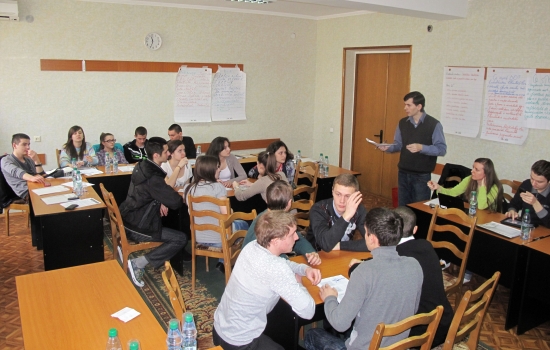
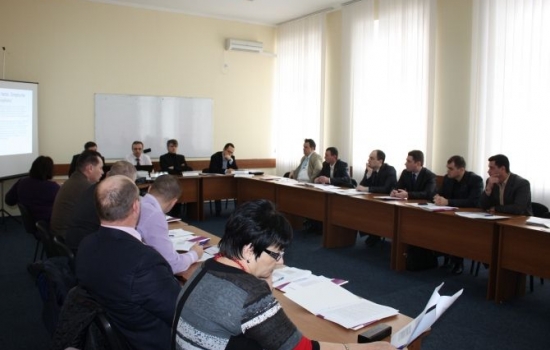
_article_1363945381On 16-17 March 2013, a second Monitoring Training was conducted within Civic Monitoring Mission for the implementation of the Justice Sector Reform in Moldova. The event took place within the project “Increasing Government Accountability by Monitoring the Justice Sector Reform”, implemented by the Promo-LEX Association in partnership with the Association for Effective and Responsible Governance, and funded by the European Union. The purpose of the training was to build the capacity of the civil society to monitor the justice sector reform and increase public interest for this reform.

The first part of the training was dedicated to assessing the first months of the Civic Monitoring Mission work, and, respectively, monitors’ impressions from the observed court hearings and of the quality of reporting forms. Recall that one of the components of the monitoring effort focuses on monitoring court hearings at a national level. Monitors discussed the difficulties faced in the process of trial monitoring. In this respect, monitors noted the reluctance of some trial participants to the attendance of uninterested third parties, obstacles encountered in certain courts of law, as well as immediate changes in the behavior of certain parties in the monitored trials. During the training, some adjustments were made to the reporting forms so as to clarify some of their aspects and to facilitate their processing by the core team of the Monitoring Mission.

The second part of the training focused primarily on Monitoring the implementation of specific activities comprised in the Justice Sector Reform Strategy. In particular, the participants discussed and analyzed the actions of the Action Plan, which were due to expire in the fourth quarter of 2012 and in the first quarter of 2013, and  which, in accordance with the monitoring methodology, were to be checked both at the central and local levels (on the ground). Also analyzed was a model reporting form proposed by the team of experts for use by monitors in the field.

At the end of training, the monitors were instructed on the technical methods of processing information applied by the core team, and on the new reporting mechanisms established within the network.

Thus, overall, during the training, the monitors were trained on monitoring tools, their application in the field, as well as on reporting and internal network communication.

For more details, please contact: Iulia Munteanu, Press Officer
Tel: (22) 450024, GSM: 069072579, email: [email protected]


New Persecutions of Human Rights Defenders in the Transnistrian region

One of the most active defenders of human rights in the Transnistrian region of Moldova, lawyer Stepan Popovschi, has been targeted for intimidation by the security structures of the Transnistrian region. On 7 March 2013, local KGB workers stormed the lawyer’s house and started a search that began shortly before a press conference, where Stepan Popovschi was to present abuses of the local Tiraspol administration against farmland owners in the region, was scheduled to start. Stepan Popovschi, his wife and their child were shut in one of the rooms of the apartment and not allowed to get out throughout the raid.

The press conference had been announced a few days earlier. Soon after the the announcement was made public, Stepan Popovschi was warned to drop his stand. The invitation [to the press conference], addressed to representatives of foreign embassies in Moldova, was published and commented as “treason” on a local online portal, and on the region’s Social Forum. The reason was Popovschi’s use the term „Transnistrian region of Moldova”.

Stepan Popovschi, who is leading a social movement called “Farmers’ Union”, is the first lawyer from the region to represent cases of human rights violations in Transnistria to the European Court of Human Rights. The lawyer said that he has been repeatedly threatened by the regional administration of Transnistria. Two international organizations have recently asked separatist leaders to stop the intimidation against him.

Before the raid, in an interview for Radio Free Europe, the lawyer explained why his work might displease the authorities in Tiraspol: “The Transnistrian authorities most likely think we are a threat to them. I had the impression that the regime of Igor Smirnov was wrong, but I no longer have this opinion. I was never subjected to persecution and intimidation during that time. I was able to talk to the people about their rights wherever we wanted, even outdoors. Not until recently did I learn what threats and persecutions are.”

Promo-LEX Reaction

Promo-LEX lawyer, Pavel Postică, believes that the event is an act of intimidation of the Popovschi family and of all those who dared to take a stand against the abuses of the Tiraspol leader, Evgheni Sevciuk. “The timing of the KGB intervention was not coincidental. A press conference was scheduled for 11.00 on that day, where the abuses of the Transnistrian leader were to be publicized. Obviously, Mr. Sevciuk did not like it. We hope that the situation of Stepan Popovschi and his family will improve.”

Promo-LEX director, Ion Manole, says that the Chisinau authorities also bear responsibility for human rights violations in Transnistria, as they address the matter insufficiently in the 5+2 negotiations. The situation of the Transnistrian residents remains difficult.

International Reactions

Civil Rights Defenders

On the same day, shortly after the raid in his home Stepan Popovschi’s home, Civil Rights Defenders, a human rights organization from Stockholm, issued an appeal to separatist leader Evgheni Sevciuk, in which it expresses concern with the repeated persecutions to which Popovschi, a defender of human rights, was subjected in recent months.

The international organization called Evgheni Sevciuk to ensure that the charges against Stepan Popovschi will be investigated impartially and to do everything in his power to prevent the lawyer’s harrassment in the future. Civil Rights Defenders also called on Mr Sevciuk to ensure that all human rights defenders in Transnistria can carry out their work freely without being subjected to repression and restrictions, including judicial harassment.

Front Line Defenders

Front Line Defenders, an International Foundation for the Protection of Human Rights Defenders, also issued a statement on the incident on 7 March, emphasizing that, at the press conference, which was compromised by Transnistrian militia actions, Stepan Popovschi was to read out a statement by 5678 farmland owners demanding Tiraspol leader Evgheni Sevciuk to withdraw the new farmland law that infringes the rights of small landowners. A second statement was signed by 35 defenders of property rights over land in different villages in Transnistria requesting a meeting with Sevciuk to discuss the continuous violations of land property rights in the region.

Front Line Defenders notes that Stepan Popovschi had been persecuted by the Tiraspol administration in the past for organizing public meetings, and expresses concern that the raid at his home and the judicial persecution against him were brought as a result of the peaceful and legal defense of farmers rights to land in Transnistria.