Training: “Promoting Human Rights in Hostile Environments”
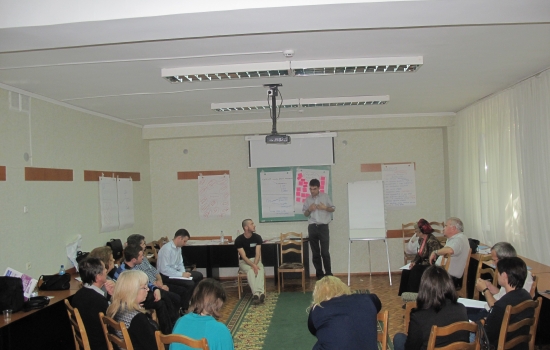
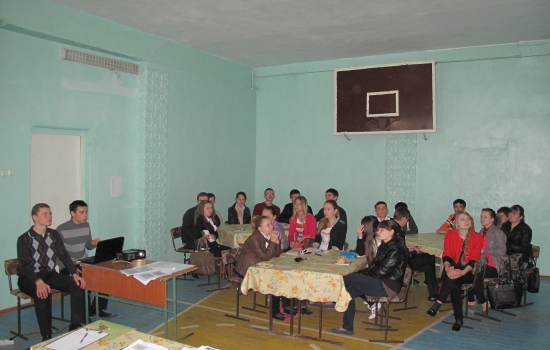
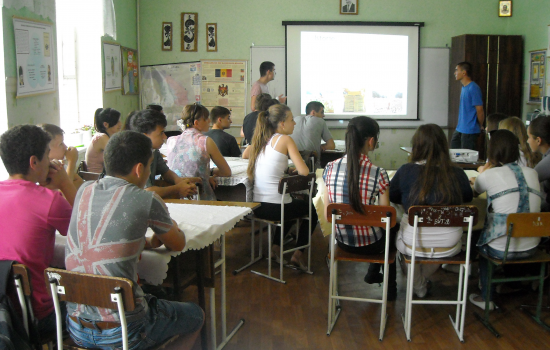
_article_1372163963A training on the topic: ““Promoting Human Rights in Hostile Environments”, and attended by 14 representatives of the civil society from the Transnistrian region was organized on 8-9 June in Chisinau.

The event focused specifically on the approach of the verticality of human rights in the context of developing local initiatives in relation to state institutions, identifying mechanisms to protect human rights, and their positioning in relation to the social realities in the region.

The event was opened by Ion Manole, Executive Director of the Promo-LEX Association, who emphasized the importance and need to organize such activities, especially in conflict areas. “The involvement of the civil society in promoting human rights is not only a value in the development of a democratic society, but also the duty of every citizen” Mr. Manole added.

The trainers of the seminar: Dmitry Makarov (Russian Federation) and Vladimir Senko (Ukraine), human rights experts from the Youth Human Rights Movement (YHRM), focused on the use of practical methods regarding procedures and mechanisms of defending human rights at a local, national and international level. Examining the legal framework for the promotion of citizens’ rights allowed to identify certain risks faced by the community, and to develop recommendations for advancing civil society institutions in the region.

The organized group activities, where participants talked about social issues in the region, had a special role in the structure of the seminar. “Organizing joint civic actions could significantly impact the institutional development of civic associations and help increase their credibility among the local communities,” the participants noted.

For their part, the experts stressed that those in power must serve the people, and when human rights are violated, international legal mechanisms and procedures should be used to ensure their observance. “The concept of human rights must be learned, developed and applied in the Transnistrian region in a context of emerging hostile conditions,” concluded the experts.

The participants at the seminar hailed the organization of such activities, especially in the Transnistrian region, where this is a topic of current interest for legal advisers, NGOs, defense lawyers and activists. Inviting experts who effectively combined theoretical material with practical activities, while sharing their personal experience in different situations, was also deemed appropriate for identifying ways to promote human rights at the local level.

For some participants, however, the idea of placing human rights in the formula of the vertical state-person relation, without affecting individual relationships between members of society, remains poorly understood.

For this reason, some participants noted, a reiteration of the concept of human rights would not only benefit lawyers, who probably understand this idea, but also other members of the society; teaching human rights in schools by properly qualified staff remains a subject of great current interest as the future belongs to the young generation.

The training was organized as part of the project “Promoting Human Rights and Strengthening Civil Society in the Transnistrian Region of Moldova”, carried out with the financial support of the National Endowment for Democracy.

For more information, please contact:
Victoria Căpătici,Project Coordinator,
Tel: (022) 44-96-26, Fax: 45-00-24


Monitoring Electoral Contestants’ Financing – A Compulsory Element of the Effort to Promote Transparency of the Electoral Process

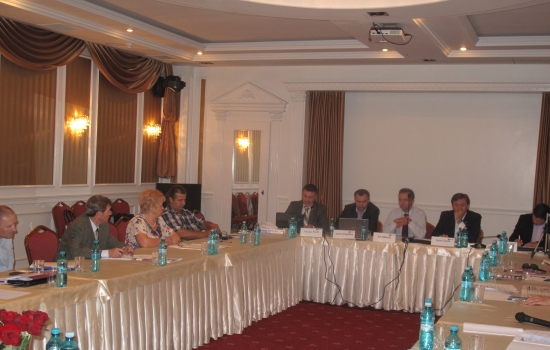
_article_1370508548On June 5, 2013, the Promo-LEX Association organized a roundtable to present a methodology of civic monitoring of election campaigns’ and candidates’ financing. At the event, Pavel Postica, Program Director of the Promo-LEX Association, noted the need to monitor the financial aspect of electoral campaigns, and made a detailed presentation of the methodology and tools that will be used by Promo-LEX election observers. Representatives of civil society, electoral bodies and political parties present at the event welcomed the efforts of Promo-LEX in monitoring candidates’ finances, and assessed the presented methodology as a good and comprehensive tool, which can be continuously improved and adapted to the electoral legislation.

At the roundtable, Promo-LEX also presented the preliminary monitoring results of the use of tools developed within the methodology of monitoring electoral contestants’ finances. The inadequate performance of electoral bodies with regard to collecting information on campaign financing and the faulty way in which electoral contestants declared their electoral funds were stressed in particular.

Roundtable participants actively discussed several aspects of reporting and monitoring electoral finances. The debates focused largely on determining who has the obligation for financial reporting – a mayoral candidate or the political party who put them forth to this position. Representatives of political parties argued that political parties are national electoral contestants and are therefore required to submit financial reports to the CEC, and not to lower-level electoral bodies. On the other hand, arguments were presented in favor of the idea that, in fact, candidates in local elections register with District Electoral Councils and, according to Article 38 of the Electoral Code, they are required to submit financial reports to the body where they registered. Moreover, namely that body has the power to file complaints in court for sanctioning candidates for serious violations of campaign funding procedures.

Promo-LEX notes, in this context, that it remains open to participate in the discussion of proposals to improve the practices of monitoring electoral finances as well as the legal framework that would clarify the electoral contestants’ obligations to submit financial reports.

The roundtable was organised by Promo-LEX within the project “Strengthening Civic Monitoring of Political Parties’ and Candidates’ Finances”, implemented with the support of the East-European Foundation with funds provided by the Government of Sweden through the Swedish International Development and Cooperation Agency (Sida) and the Ministry of Foreign Affairs of Denmark/DANIDA. At the same time, the financing monitoring of the campaign for the 19 May 2013 elections was conducted within the project “Monitoring of New Local Elections of 19 May 2013”, which received financial assistance from the National Democratic Institute for International Affairs (NDI).

For more information, please contact: Nicholae Panfil, Project Coordinator
Tel: (022) 45-00-24, GSM: 079-38-18-42, email: [email protected]


Promo-LEX has become a member of the International Federation for Human Rights

On 25 May 2013, the Promo-LEX Association obtained associate membership of the International Federation for Human Rights (FIDH). This makes Promo-LEX the only representative of the Republic of Moldova in this prestigious international structure.

A Forum entitled “Political Transitions from a Human Rights Perspective: Experiences and Challenges” was organized in Istanbul, Turkey, as part of the 38th International Congress of the FIDH. The event took place on 23-27 May 2013 and brought together more than 120 human rights activists, representatives of FIDH member organizations and other partners around the world.

Present at the Congress, Sang-Hyun Song, President of the International Criminal Court, appreciated the contribution of the FIDH and its member organizations to promoting the ratification of the Rome Statute, adding that: “85 years ago, FIDH called for a Universal Declaration of Human Rights and to create an International Criminal Court. Today we have both, but the process is not completed, and the struggle for human rights and their universality continues.” According to the President of the International Criminal Court, “states’ international commitments lead in effect to peace and prosperity, citing Turkey as a positive example in this regard.”

FIDH President Souhayr Belhassen said that this Congress, held in Istanbul, is an unprecedented event, organized under the slogan “Freedom, Justice, Dignity, Equality”.

Stavros Lambrinidis, EU Special Representative for Human Rights, told the history of his family, which suffered during the dictatorship in Greece, adding that civil society has a special role in maintaining a balance in the community. “The role of NGOs is not to be tolerated by their governments. In turn, governments are not obliged to agree, but they have an obligation to ensure that these groups and NGOs have the freedom and opportunity to pursue their work freely.”  He added that, in fact, “Human rights is the universal language of the powerless against those who hold power”.

The Forum promoted an exchange of experiences and expertise between human rights defenders and organizations from over one hundred countries. Participants debated topics such as: strengthening justice, institutional and NGO support, the place of religion, the role of women as drivers of transition, minority rights, the promotion of economic and social rights and the role of private companies and international financial institutions in times of transition. This event was an opportunity to strengthen alliances and action strategies identified for these key challenges.

FIDH chose to organize this event in Turkey, and dedicated it to the problem of visualizing the political transition from a human rights perspective. Turkey is currently at a crossroads, with peace negotiations underway after years of bloody conflict. Turkey is also closely observed by governments in the Middle East and North Africa that recently acquired power and are currently undergoing political transition.

FIDH is an international organization that defends all civil, political, economic, social and cultural rights listed in the Universal Declaration of Human Rights. FIDH works in the political and legal field to create and strengthen international instruments for the respect and protection of human rights worldwide.

FIDH believes that the transformation of society is primarily the responsibility of local actors. FIDH activities tend to contribute to capacity building of local stakeholders and increase their influence in solving local problems. FIDH acts at a national, regional and local level to support members and partner organizations involved in the protection and promotion of human rights and strengthening democracy.

Associate membership in the FIDH is an important step for the Promo-LEX Association towards achieving the mission of the organization, both at a national and international level.

For more details please contact: Ion Manole, Executive Director, Promo-LEX Association, Tel: (+373 22) 492684, [email protected]


Promo-LEX: ECHR Continues to Communicate New Cases of the Victims of April 7, 2009

Ion Nedelcu is another victim of police officers who was detained and ill-treated during the events of April 2009. After a series of lawsuits in national courts, where he tried and failed to find justice, on 14 June 2010, he submitted an application to the European Court of Human Rights.

Recently, the high Court informed the Moldovan Government about the case Nedelcu v. Moldova, file no. 35149/10.

On 7 April 2009, at 19.00, Ion Nedelcu, along with a group of about 17 people from Cahul, took a minibus to Chisinau to participate in peaceful protests against the fraudulent election results. The van was stopped by the police in virtually every district center on its way to the capital city. Upon arrival, the group decided to go to the center of the capital city, where the protesters were already dispersing. There, they heard sudden gunshots and the applicant, together with a colleague, decided to return back to the van, but was directly ordered to stop by people wearing police uniforms and head masks. The applicant complied with the order and stopped, while his colleague managed to flee. The applicant was brutally placed in a police car that was already filled with other young people, and was transported to the headquarters of the General Police Commissariat of Chisinau (CGP). At the CGP, the applicant was ill-treated by police officers and others in civilian clothes, including forced to pass through the “corridor of death” and take off all his clothes, was detained in 12 sqm cell with other 16 people, and so on.

The protocol of Ion Nedelcu’s detention was prepared only the next day, and the whole procedure took no more than 10 minutes and without presenting any evidence. The applicant was de facto detained on 8 April 2009, at about 00.40 hours. The arrest protocol was prepared only at 19.00 hours, on 8 April 2009. Therefore, the applicant was held in arbitrary detention for more than 18 hours, during which time he was ill-treated.

On 9 April 2009, a criminal case was opened in Ion Nedelcu’s name, and he was charged with the offense of mass disorder. At the request of the prosecutor, the applicant was placed in preventive detention for 30 days. On 17 April 2009, he was released from detention. On 6 October 2009, the criminal charges against the applicant were dropped.

From the moment of his arrest and during the entire period of detention, Ion Nedelcu was ill-treated by the police – a fact that was communicated to the Military Prosecution, which refused to start a criminal investigation.

The applicant complained to the ECtHR on the violation of Article 3 of the European Convention on Human Rights, which amounts to ill-treatment by the police, inhuman and degrading prison conditions, lack of medical care while in detention, and the inability to effectively investigate his complaints of ill-treatment. The applicant also alleges a violation of Article 13 of the Convention, in that he had an effective remedy against the ill-treatment to which he was subjected. The applicant also filed for the violation of Art.5.1 on the grounds that he was illegally detained for more than 18 hours, and Art.5.5 on the impossibility of claiming damage.

The applicant is represented before the high Court by Promo-LEX attorneys and lawyers.

More details on the statement of facts are available here.

For further information contact:
Pavel Postica, lawyer, Promo-LEX Program Director:
Tel: (022) 45-00-24, mob: 069-165-154, email: [email protected]


ECHR Establishes Moldova’s Complicity to Family Violence

On 28 May 28 2013, Moldova was condemned by the European Court of Human Rights (ECtHR) in the case Eremia and Others v. Moldova, in connection with violation of Art.3 (prohibition of torture and inhuman treatment), Art.8 (private and family life) and Art.14 (prohibition of discrimination) of the European Convention of Human Rights (ECHR).

The ECtHR found that Art.3 was violated in respect of the first applicant in that the authorities did not provide her effective protection against violent actions of her husband and did not carry out an effective investigation of physical and verbal abuse perpetrated by the husband to the applicant.

Also, the ECtHR found a violation of Art.8 with reference to the second and third applicants, in the fact that the authorities failed to effectively investigate the physical and verbal abuses against the first applicant, which were committed in the presence of a second and third applicants.

The ECtHR also stated a violation of Art.14 in conjunction with Art.3 in the fact that the authorities failed to implement legislation providing protection in cases of domestic violence, based on prejudices about the role of women in the family.

The Court awarded the applicants a compensation of moral damages and legal costs amounting to 17,150 Euros.

This case is the first to show that domestic violence is a phenomenon based on the gender of the victim and constitutes discrimination based on gender.

Note that three other similar cases will be examined by the ECtHR in the near future.

Mrs. Eremia was systematically abused by her former husband. After filing for divorce in July 2010, he became more aggressive and continued to hit and insult her, often in the presence of their minor daughters. The victim’s husband was a cop, and the numerous complaints to the police, prosecutors and the Ministry of Internal Affairs did not provide Mrs. Eremia and her minor daughters protection against domestic violence. The order of protection forcing the abusive spouse to leave the house and stop the violence was not executed. The abuser violated the order several times, including by applying physical violence against the applicants.

On 21 March 2011, the European Court of Human Rights informed the Moldovan Government of the case Eremia and Others v. Moldova (No. 3564/11 filed on 16 January 2011), in which the applicants, the mother and minor daughters, all victims of domestic violence, claimed complicity of the state in their mistreatment and gender-based discrimination with regard to their protection by the law.

The applicants complained to the Court, under Art.3 of the Convention, that the authorities have been inactive to protect them against domestic violence and hold the perpetrator accountable. They also complained, under Art.14 combined with Art.8 and Art.3 of the Convention, that the authorities failed to respect the law designed to protect victims of domestic violence due to misconceptions about the role of women in the family. Finally, they complained, under Article 17 of the Convention, that, by failing to apply national legislation to fully protect the applicants against domestic violence, the authorities deliberately destroyed the rights provided in the Convention.

The applicants were represented before the ECtHR by lawyer Doina Ioana Straisteanu, delegated by the Promo-LEX under the project “Strengthening the Legal Protection and Raising Awareness about the Ill-Treatment on grounds of Discrimination in Moldova, including the Transnistrian Region”, project funded by the European Union through the European Instrument for Democracy and Human Rights (EIDHR) and co-funded by UNDP under the “Joint Project of UN Agencies in Moldova for the Promotion and Protection of Human Rights”.

For more information contact:
Olga Manole, Promo-LEX Project Coordinator:
Tel: (022) 44-96-26, email: [email protected]


High School Students from the Transnistrian Region Promote Human Rights through Intellectual Games

_article_1369661124A series of activities designed to familiarise Transnistrian youth with human rights through intellectual games were held, between 30 April to 24 May 2013, in Romanian-language schools in Grigoriopol, Ribnita, Tighina and Tiraspol.

On 30 April, a group of high school students from the „Evrika” Lyceum in Ribnita organized a seminar for their peers in 9th-12th grades with the topic: „Human Rights: Basic Concepts and Notions”. Seminar participants were able to apply the gained knowledge in two rounds of intellectual games, held on 21 and 24 May, where they played „Brain Ring” and „What? Where? When?”. These activities represent a new method of learning, teaching and promoting human rights.

Similar activities were organised on 22 May in high schools in Tighina, Tiraspol and Grigoriopol. High Schools „Alexandru cel Bun” in Tighina and „Lucian Blaga” of Tiraspol hosted seminars on human rights, organised by and for their students. The organisers and moderators of the seminars – who had previously attended a Training of Trainers course: „Learning to Teach Human Rights through Intellectual Games” – used the most creative teaching methods: they presented topical films, invited their colleagues to join subsequent discussions and debates, suggested creative ways to memorise the classification of human rights, etc.

Later, rounds of intellectual games were organised in Tighina and Tiraspol, where students learned more about the rules of the game as well as the rules of teamwork. The participating students also had the opportunity to test their general erudition, and their knowledge of human rights.

„The seminar and intellectual games represent a new approach to learning and are very useful, especially now, at the end of the school year. Such activities are very welcome, as they help students to learn more easily about human rights, but also about the rules of teamwork, so that later they can make a valuable contribution to their communities,” Svetlana Jitariuc, teacher at „Stefan cel Mare” Lyceum in Grigoriopol, established in v. Dorotcaia, said.

The seminars and games are part of the project: „Human Rights Start with Education”, implemented with the financial support of the U.S. Embassy in Chisinau.


Promo-LEX and AGER Launched Quarterly Report No.1 on the Monitoring of the Implementation of the Justice Sector Reform Strategy

_article_1370182631On 23 May 2013, the Promo-LEX Association and the Association for an Efficient and Responsible Governance (AGER) launched in a news conference the Quarterly Report No.1 on the Monitoring of the Implementation of the Justice Sector Reform Strategy.

The monitoring focused on two main components: assessment of the implementation of the activities contained in the Action Plan for the implementation of the Justice Sector Reform Strategy, and trial monitoring. The Report analyzed two categories of actions/activities, and namely: actions dues for completion in the 1st quarter of 2013, and actions overdue since 2012.

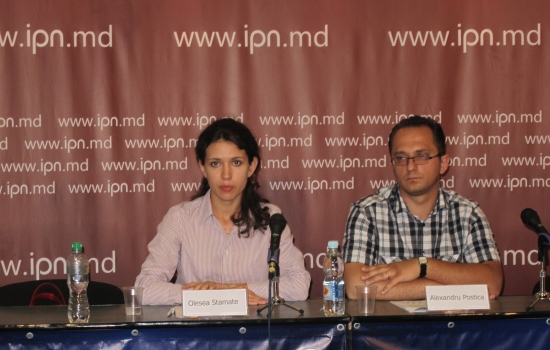
“Overall, the activities of the seven working groups established to monitor the implementation of the Action Plan were assessed as productive. Although the number of sessions varied from one WG to another, during the first quarter of 2013, most meetings were deliberative in the sense that they were attended by representatives of most of the institutions entitled to vote. However, Working Group 5 registered a case in which the hearing was postponed due to a lack of quorum,” Olesea Stamate, director of the Association for an Efficient and Responsible Governance, explained.

“The documents produced in the Justice Sector Reform Strategy (JSRS) are indisputably important. At the same time, we found that only a small part of the developed studies were posted on the website of the Ministry of Justice, in the Justice Sector Reform compartment. In this sense, we suggest that all documents developed as part of the implementation of the Strategy be posted to the reform sub-page of the website of the Ministry of Justice,” added Olesea Stamate.

The Report’s findings point to the fact that some actions had been formulated unclearly, which caused various interpretations by the parties involved in their implementation and, as a result, they remained partially completed or deemed unfulfilled. Moreover, some experts suggest dismissing some actions as inappropriate; these include developing a Regulation on the execution of ECtHR judgments or the need for various studies when the respective institution already conducted analyses and made relevant proposals pending only the amendment of certain legal provisions.

“Probably the best cooperation was observed in strategic direction “Improving the System of State Guaranteed Legal Aid”. Moreover, this area has received substantial and continuous support from donors, and the planned actions were executed in time or with deviations that did not essentially affect the activity plan,” concluded Alexandru Postica, lawyer for the Promo-LEX.

A general recommendation is that the page devoted to Justice Sector Reform be updated so as to include all publications developed in the context of implementing the Action Plan. Otherwise, unless (s)he participates in the relevant working group meetings, an interested person has no way of knowing who prepared a certain study and where one can find it.

This report was prepared within the project “Monitoring Justice Sector Reform for Increased Government’s Accountability”, implemented by the Promo-LEX Association and the Association for an Efficient and Responsible Governance (AGER), with the financial support of the European Union.

The Report is available here.

For more details, please contact: Olga Manole, Project Coordonator
Tel: (22) 449626, e-mail: [email protected]


A P P E A L regarding the revision of certain acts adopted by the Parliament of the Republic of Moldova on 3 May 2013, which compromise the efforts to reform the justice sector

Chisinau, 7 May 2013

In the attention of:
Mr. Nicolae Timofti, President of the Republic of Moldov
Members of Parliamentary Factions and unaffiliated Members of Parliament

The undersigned organizations express their concern and strongly condemn the unjustified speed and lack of transparency, in absence of consultations with the society, with which the Parliament passed decisions and laws that have a negative impact on the rule of law and undermine the Justice Sector Reform effort launched by the Strategy approved by Parliament by Law no. 231 of 25 November 2011.

Lately, civil society organizations responded with numerous calls and statements of concern to some negative trends that risk undermining democratic institutions and reforms in the justice sector. Unfortunately, civil society concerns were ignored and the signatory organizations were not consulted before the adoption of the package of legislative documents of 3 May 2013, which was passed in disregard of basic principles of transparency in the process of adopting legislation. The above-mentioned actions do not comply and directly contradict the commitments in the 2011-2014 Government Program.

The signatories of the present Appeal call attention to the fact that the Statute of the National Anti-Corruption Center (CNA) has been revised in compliance with pt. 2.1.2, “Revision of the Statute of the Centre for Combating Economic Crimes and Corruption” of the Strategy, following a lengthy process, which was accompanied by numerous public debates, resulted from a series of comprehensive studies and analyzes conducted during the years 2010-12, and was concluded with the adoption of a CNA consolidation strategy, amendments of the CNA Law and CNA capacity building activities. Contrary to these efforts, legislative amendments operated on 3 May 2013 provide major changes to the CNA Statute that diminish the independence of the Center.

At the same time, we note that, according to strategic direction 2.2, “Enhancing the professionalism and independence of the Prosecutor’s Office” of the Strategy, a series of actions were planned to depoliticize, promote institutional autonomy and independence, and enhance the efficiency and transparency in the work of the Prosecutor’s Office. We find that holding a public competition for a candidate for Prosecutor General, the subsequent selection of a candidate who was not presented to Parliament, the nomination and appointment of another candidate, and, finally, the “revision” of the vote and repeal of the decision to appoint the Prosecutor General when the person had already been sworn in and officially assumed office is a clear indication of the dependence of the institution of the Prosecutor on Parliament and its implicit dependence on the existent political situation in the state.

In the same context, according to strategic direction 6.1, “Strengthening the role of the Constitutional Court”, a comprehensive reform of the Constitutional Court was planned for the years 2013-2016. At the end of the period, changes were to be made in the Constitution and national legislation to strengthen the role of this institution. Hence we believe that passing amendments by which the mandate of a Constitutional Court judge may be revoked by Parliament without a rational justification is openly unconstitutional. Moreover, this severely affects the principle of separation of powers, to which the Constitutional Court acts as a guarantor.

In light of the above, the undersigned appeal to the President to:

  • Not promulgate the legislative acts passed by Parliament on 3 May 2013, in particular the amendments pertaining to the National Anti-Corruption Center;
  • Urgently convene a special meeting of the National Council for Law Enforcement Bodies Reform to submit for public debate the functioning of the CNA, the Prosecutor General Office and the Constitutional Court, and to develop suggestions aimed at improving the amendments voted on 3 May 2013 with respect to the mentioned law enforcement institutions.

At the same time, the signatories call on all the Members of the Moldovan Parliament to:

  • Publish (on the Parliament’s website) the text of bills voted on 3 May 2013 in order to get acquainted with these projects. We find it unacceptable to be able to access the text of the respective norms only after they are published in the Official Gazette, as they must be made available in advance on Parliament’s website;
  • Reject, in the second reading, all legislation aimed at reforming bodies of law, in this case the Constitutional Court;
  • Operate amendments to normative acts in strict compliance with the principle of transparency in decision making (public discussion of all important bills, especially those related to the justice sector reform);
  • Operate amendments to laws related to the justice sector reform only after respective amendments are made to Law no. 231 of 25 November 2011 on the adoption of the Justice Sector Reform Strategy.

Signatories:

  1. Pavel Postica,Promo-LEX
  2. Olesea Stamate,AGER
  3. Valeriu Prohniţchi,Expert-Grup
  4. Ludmila Popovici,RCTV Memoria
  5. Nadia Hriptievschi,Center for Legal Resources
  6. Eduard Mihalaş,CNTM
  7. Serghei Ostaf,CReDO
  8. Veaceslav Ţurcan,
  9. Lela Metreveli,Human Rights Embassy
  10. Vitalie Zamă,Lawyers for Human Rights
  11. Igor Botan,Association for Participatory Democracy
  12. Leonid Litra,Independent expert
  13. Roman Ceban,Ius Moldova

The Appeal is open for signing by other organizations.
For more details, please contact Iulia Munteanu: (022) 450024


Civic Coalition for Free and Fair Elections urges MPs not to use the electoral system as a trade-off within political negotiations

Civic Coalition for Free and Fair Elections is deeply concerned about political situation in the country and demands the members of parliament not to use recent amendments to the electoral system as a trade-off within political negotiations. The recent change of electoral system, undertaken in a record short timeframe and without consultations with stakeholders concerned, is followed by a new initiative in the electoral field. The authors of the law, a group of communist MPs, submitted to the Permanent Bureau of the Parliament a draft law which seeks to abrogate the legislation on the mixed electoral system and to change the electoral threshold – from 4% as it is now to 7% for political parties; from 7% to 9% for the electoral blocks consisting of two political parties, and from 9% to 11% for the electoral blocks consisting of three and more political parties.

The subsequent adoption of the bill will severely limit the rights of voters and of electoral contestants. Thus, the change of the electoral threshold may eventually lead to the exclusion from the political life of many political parties for which citizens cast their votes. In this regard, the Venice Commission recommended in 2008 to lower threshold for political parties from 6% to 4% in order to not lose the votes in the redistribution process.

The Civic Coalition for Free and Fair Elections, notes with regret that the situation of instability in the Moldovan Parliament and the incapacity to form a stable majority, as well as promotion of narrow party interests of certain political actors, jeopardizes the national interests of the Republic of Moldova, destabilizes the socio – political life and diminishes the European integration perspectives. For these reasons, Civic Coalition demands political parties to identify constructive and sustainable solutions in order to settle the emerged political conflicts and to abstain from undermining institutions and democratic processes of the Republic of Moldova.

In this context, Civic Coalition for Free and Fair Elections repeatedly recommends to the Parliament to concentrate efforts in a constructive manner on the adoption of legislation on financing of political parties and of electoral campaigns as a measure for eradicating multiple problems which persist within electoral processes and in the general life of political parties. Alleviating these problems, by establishing a system transparency of political party finance, will enlarge the constituency base of parties and will contribute to the promotion of those parties which will be committed exclusively to the general interests of the citizens and of the country.

The Council of Civic Coalition for Free and Fair Elections

The Coalition’s call has been also undersigned by:

  1. Arcadie Barbăroșie, Institute for Public Policy
  2. Sorin Mereacre, East-Europe Foundation
  3. Sergiu Ostaf, CReDO
  4. Valeriu Prohnitchi, Expert-Group
  5. Ana Ungurean, Institute for the Protection of Human Rights and Fundamental Freedoms


Young People in Dubasari Promote Human Rights Through Intellectual Games

_article_1367332946On 23-26 April 2013, the Mihai Eminescu Lyceum in the village of Corjova, raion Dubasari (Transnistrian region), organized a series of activities to promote human rights.

On 23 April, a training workshop was organized on the topic: “Human Rights – Basic Concepts”. During the workshop, 22 young people from senior classes were trained on the basic concepts and principles of human rights as well as on the classification of human rights. The young participants also learned more about the rights provided in the Universal Declaration of Human Rights and the European Convention on Human Rights.

On the next two days, on 25 and 26 April, young people from Corjova were involved in less usual activities to learn and promote human rights, and namely in intellectual games. Divided into three teams, the participants played the games of “Brain Ring” and “Match”. It should be noted that the moderators used both general knowledge questions and thematic questions of human rights during the games, thus facilitating a better learning of the concepts of human rights.

Most importantly, all activities were organized and moderated by a group of young people from Corjova that had previously gone through a Training of Trainers course “Learning to Teach Human Rights through Intellectual Games”, which was organized by Promo-LEX Association in partnership with the Moldovan Intellectual Games Club and with financial support from the U.S. Embassy in Chisinau. The young people who attended the Training of Trainers course thus become multipliers in the field of human rights and intellectual games.

In May, such activities organized and moderated by young people from Transnistria are expected to be held in other schools in Tiraspol, Grigoriopol, Tighina and Rîbnița.

Note that the Course and the multiplying activities are part of the project “Human Rights Begin with Education” implemented with financial support by the U.S. Embassy in Chisinau.

For additional information, please contact:
Olga Manole, Project Director, Promo-LEX Association
Tel: (+373 22) 44 96 26; Fax: (+373 22) 45 00 24
[email protected]