Promo-LEX and AGER: the Justice Reform Process, Very Slow
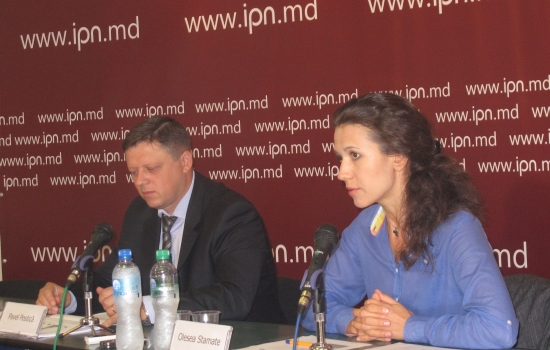
_article_1378890364During a press conference on 11 September 2013, Promo-LEX and the Association for Efficient and Responsible Governance launched the Second Quarterly Monitoring Report on the implementation of the Justice Sector Reform Strategy (monitoring period 1 April – 30 June 2013).

The monitoring effort focused on the observation of 2 basic components: assessing the implementation of actions included in the Justice Sector Reform Strategy Action Plan, and monitoring court trials. The Report analyzed 2 categories of actions, as follows: actions due for implementation by the end of Quarter 2 of 2013, and actions overdue since 2012 and Quarter 1 of 2013.

The Report found a number of outstanding actions in the Justice Sector Reform Strategy Action Plan. “Only 44 of 101 actions overdue since 2012 and Quarter 1 of 2013, or 43%, were implemented. Thus, we can state that the JSRS Action Plan implementation rate is very slow. The situation is worse with regard to actions due by the end of Quarter 2, 2013. Of the 31 actions scheduled for completion by that date, only 6 were implemented, which represents a 19% implementation rate,” Olesea Stamate, director of the Association for Efficient and Responsible Governance, explained.

According to Pavel Postica, program director with the Promo-LEX Association, the component of monitoring trials and the quality of the judicial act had a positive dynamics. “We noted a positive trend in the trial monitoring component between the first and second Quarterly Reports. In the first Quarter, only 77 of all the monitored trials were held in courtrooms, while in Quarter 2, this number is almost three times larger. We also noted an approximately 12% increase in the number of audio-recorded hearings. If, in Quarter 1, only 145, or just under 50% of monitored hearings, were recorded, in Quarter 2, this number rose to 179 of the total 300 hearings monitored,” Pavel Postica added.

The main recommendations included in the Report mention the need to enhance the functioning of the institution of the Working Group; to include, in the Regulation on the functioning of Working Groups, a provision obliging the WG Secretariat to publish, in a timely manner, on the website of the Ministry of Justice, WG meetings’ minutes, agendas and other products of their work; and, last but not least, to amend the JSRS Action Plan by updating and revisiting the deadlines for action implementation, the relevance and topicality of certain actions, and, where applicable, the responsible institutions.

The electronic version of the Report is available under Publications on www.promolex.md and www.monitor.md.

This Report was implemented as part of the project “Monitoring the Justice Sector Reform Strategy to Increase Government’ Accountability”, implemented by Promo-LEX and the Association for Efficient and Responsible Governance with the financial support of the European Union.

For more details, please contact: Carolina Bondarciuc, Press Officer, GSM: 069-637-849, Tel/Fax (+373 22) 450-024, Email [email protected]


Juvenile Justice: the Situation in the Transnistrian Region of Moldova

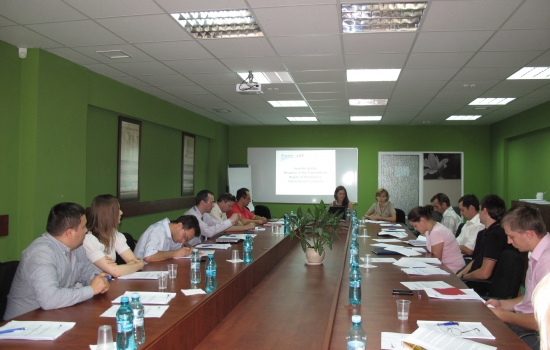
_article_1375253974A report on the topic: “Juvenile Justice: the Situation in the Transnistrian region of Moldova in Relation to International Standards” was released on 30 July 2013, during a roundtable discussion. The report was prepared by Ms. Miranda Merkviladze (LLM in International Human Rights Law). A combined methodology was used for the report to include desk research, requests of information and interviews with various stakeholders and actors, and field visits.

The purpose of this report was to present the results of the study on the state of juvenile justice in the Transnistrian region of Moldova. The report aims to compare the de facto laws, policies and practice of the Transnistrian juvenile justice with the relevant international standards and to identify possible weaknesses or gaps. The research tried to learn in particular if there were strategies for preventing juvenile delinquency and juvenile rehabilitation programs, and what procedural safeguards are provided in legislation and practice of the de facto prosecution and judicial proceedings, if the de facto legislation provides for alternative non-custodial measures and if they are used in practice, if juvenile detainees have access to vocational training/educational courses, etc.

In her presentation, the author of the report referred to the obligation to protect and promote human rights in the context of juvenile justice, obligations of both the constitutional authorities of Moldova and Russia and the de facto administration of the region under customary international law. The report describes the de facto legal and institutional framework of juvenile justice in place in the region, as well as certain policies and practices present at the regional level. In this regard, the report highlights several problematic issues.

According to the author of the report, a very serious problem is the approach of the de facto regional administration to juvenile justice, which is quite punitive and less based on the rights of children. Another set of problems is related to the abusive and unjustified application of detention, including prolonged detention, as a measure of punishment in most cases, even when the de facto law provides for non-custodial measures. In this respect, the author mentions that the range of alternative measures available for juveniles is limited. The de facto legal framework does not specify the exact duration of detention, thus leaving room for abuse. No limit is specified to the number and duration of juvenile interrogations; there is no clarity with regard to interrogation methods; the de facto practice limits, in an improper and unreasonable manner, the communication between detained juvenile offenders and their families.

The author also mentioned other issues, such as: the superficiality and formal character of the legal aid offered to juveniles in court proceedings; the lack of mediation in restorative justice practices; the absence of effective prevention and rehabilitation programs at the regional level; the lack of psychological assistance services to juveniles in detention; their lack of access to education.

The report also included a number of recommendations aimed at improving the situation of juvenile justice in the region, for both the constitutional authorities and de facto regional administration. Ms. Merkviladze also formulated some recommendations for the civil society. In this respect, the author noted that in the Transnistrian region, there are no nongovernmental organizations that would deal namely with the issue of juvenile justice. On the other hand, human rights organizations from the right bank do not get involved in this field either.

The participants at the roundtable noted the importance of this report, citing in that regard the lack of any official and comprehensive reports, studies and statistics. The present report is only a first step in tackling the problem of juvenile justice in the Transnistrian region.

The report was prepared as part of a under the 2013 Internship Program for an Open Society, conducted by the author in Moldova, with the Promo-LEX Association. The Internship Program is part of the collaboration between the Human Rights and Governance Grants Program (HRGGP) of and Scholarship Program (SP) of the Open Society Foundations.

The electronic versions of the report in Romanian and English will soon become available on the Promo-LEX website.

For details please contact: Olga Manole, Project Coordinator, Promo-LEX Association
Tel: (+373 22) 449626 | Fax: (+373 22) 450024  | Email: [email protected]


Summer School “Steps through History”

_article_1374497154Between 8 and 15 July 2013, in partnership with the Ro-manian Association PRO-HISTORIA XXI, Promo-LEX organized a summer school as part of the project: “Steps through History”. Fifteen young people from the Transnistrian region of Moldova and 15 youngsters from Focsani, Romania, ac-companied by their group leaders, participated in activities to promote active citizenship in general and European citizenship in particular, which were aimed at promoting tol-erance among the youth, cultivate mutual understanding and advancing Eu-ropean cooperation in the field of youth.

The main theme of the school was raising the awareness of Moldova’s fu-ture in a European Union tending to expand to the East. This is a topic of interest for young people living in difficult economic, social, and cultural environments; for them, this project was an extraordinary opportunity for non-formal education and cultural development.

The activities used both formal (debates, surveys, roundtables, etc.) and in-formal methods of work and education (knowledge games, the Living Li-brary, Photovoice, Transcend, etc.)

The young participants were informed in advance about the theme of the school, and were given the opportunity to actively intervene at every stage of the project. “The debates about tolerance and diversity, the “Origins and Mentalities” roundtable, and the workshops on “Democracy and the EU” and “Conflict and Violence” all have contributed to gaining knowledge and skills which fostered the kids’ creativity, active participation, initiative and ability to formulate an argument and express an opinion, brevity and clarity of expression, tolerance towards adverse opinions, persuasion, active listen-ing, presentation style for public appearances, and the ability to work in a team,” said Victoria Capatici, the group leader of the students from the Transnistrian region.

The summer school also had a cultural itinerary, which included visits to museums, libraries, places of worship of different religions, theaters, memorial houses in Vrancea county, as well as businesses fi-nanced and developed with the support of European funds, etc.

“A summer school is an amazing way to spend your time. I spent time with young people my age, I im-proved my teamwork abilities, I met new people, and, more importantly – I made friends. At the same time, I realized the importance of informal education and of volunteering. Thanks to this project, I want to get more involved in as many projects as I can. After meeting my new friends from the Transnistrian region, I learned about a new reality, and I changed my concept of liberty,” said Catalin Aurica, a student of the Unirea National College in Focsani.

“These were unforgettable days, in which I grew spiritually a great deal, I gained an enormous experience, I met new people, new ideas, new types of thinking; I felt what European values and a European lifestyle means. The skills I obtained will surely help me to establish connec-tions with different people and in different ways in the future. I would gladly participate in more such projects, because I was impressed with what I learned and was thrilled with the mo-ments spent with some great people,” Daniel Turcan, a student from the “Alexandru cel Bun” Lyceum in Bender, said.

Andrei Seitan, an expert and trainer in the pro-ject, noted: “We were privileged to offer great opportunities for personal development to youth from the Transnistrian region and from Focsani. We must continue to collaborate in order to strengthen the knowledge gained by these stu-dents and turn them into multipliers. The week spent with them was full of lessons, experiences and feelings. I challenged participants to partici-pate in various discussions aimed at making them realize how important they were and what valuable resource they represent. I put together their individual knowledge and experiences together to help them grow and rediscover them-selves.”

This project is funded by the program: “Youth in Action – Action 3.1 A: Cooperation with EU neighboring countries.”

For details, please contact:
Victoria Capatici,
Civil Society Program Coordinator,
Tel: 022-31-09-45


ECtHR condemns the Republic of Moldova for the second time in the case of domestic violence

Today, on July 16 2013, the European Court of Human Rights (ECtHR) has pronounced the decision on the case of Mudric and others vs. Moldova. Thus the ECtHR found the violation of the art. 3 invoking that authorities had tolerated ill-treatment the victim had been subject to in her house, and failed to execute the court judgment aimed at ensuring the victims protection. The ECtHR stated as well the violation of the art.14 together with the art. 3 and 8 of the Convention for reason of gender discrimination from the part of authorities which neglected her rights to live without any form of violence. The ECtHR has also stated the violation of the art. 17 of the Convention, as authorities refused to sanction her former husband and permitted him to continue his illegal actions which resulted in violation of the applicant’s rights.

The Court awarded to the applicant the sum in the amount of EUR 15,000 as compensation of moral damage and EUR 2,150 for compensation of costs and expenses.

This is the second case demonstrating the fact that domestic violence is a phenomenon based on victim’s gender and represents gender discrimination. We can also recall the other 2 similar cases that the ECtHR shall examine in the nearest future.

Lidia Mudric, a woman of 72 years old, after divorcing her husband has continued to live in the house belonging to her and to her husband as well. According to the applicant, On December 31, 2009 her ex-husband has broken into her house and has beaten her. The same happened on February 19, 2010 and starting with this date he has permanently resided in the applicant’s house.

The applicant has obtained a medical report confirming bodily injuries caused to the latter. On March 18, 2010 she has addressed to the police and to the other authorities. In her applications she was complaining as well for the fact that the police knowing the situation undertook nothing to protect her. On March 27, 2010 the Applicant was beaten again by her ex-husband. On March 30, 2010 the applicant was informed by the authorities that the facts she complained of were confirmed just partially and due to the psychical disease of her ex-husband, he could not be sanctioned.

The authorities have promised to take measures, but on June 22, 2010 the court has ordered the eviction of the applicant’s ex-husband and obliged the latter to stay away from the applicant and her house. However, this court judgment was not executed. On July 17, 2010 the applicant was beaten again by her ex-husband. Responding at a new complaint of the applicant the court has issued a new judgment similar with that as of June 22, 2010. This judgment remained unexecuted as well.  On December 6, 2010 the applicant was again beaten by her husband. On December 16, 2010 the applicant has obtained the third court judgment similar with those two court judgments issued previously.

During the relevant period the applicant and her lawyer have filed a number of petitions with the police office, Prosecutor’s Office and other authorities demanding protection for the applicant and punishment for the ex-husband.

Lidia Mudric was represented at ECtHR by the lawyer Doina Ioana Straisteanu delegated by the Promo-LEX Association within the project “Strengthening Legal Protection from and Raising Awareness of Discriminatory Ill-treatment based in the Republic of Moldova, including Transnistria”, a project financed by the European Union by European Instrument for Democracy and Human Rights (EIDHR) and co-financed by the UNDP Moldova within the project „ A Joint UNCT for Human Rights Protection and Promotion”.

For more information please contact:
Doina Ioana Straisteanu, Lawyer and Expert in Human Rights
Tel. 0685 92 222, [email protected]

Olga Manole, Project Manager, Promo-LEX Association
Tel : 449626, e-mail: [email protected]


APPEAL of the civil society representatives from the Republic of Moldova to the High Representative of the European Union for Foreign Affairs and Security Policy, Mrs. Catherine Ashton, on the situation in Transnistria

Your Excellency,

The European integration is understood in the Republic of Moldova as a guarantee for sustainable development and, most important, for the reintegration of the country. Unfortunately, the intensification of the EU-Moldova dialogue on subjects like the political association, the economic integration and the liberalization of the visa regime for Moldovan citizens is endangered by a deliberate aggravation of the situation in the eastern part of the country aiming at obstructing Moldova’s European course.

We welcome the commitment of the European Union and Yours personal, including Your  Declaration regarding to the so-called legal act on Transnistria’s border regime,  to support the settlement of the Transnistrian conflict in the interest and for the benefit of the population on both banks of the Dniester river.

This is why the latest events in the eastern part of the country are an argument for us to require more increased efforts from the European Union in order for Moldova to successfully implement the stipulations in the Framework Agreement and in other vital documents that Moldova signed with the European Comission such as the Action Plan on Visa Liberalisation. We also ask for diplomatic assistance in order to properly prepare for the Eastern Partnership Summit in Vilnius.

We, the civil society representatives, ask:

  • To include in the “5+2” meeting agenda in Vienna, this July, the issues related to the situation in the Security Zone and to require the guarantors and mediators, including the Russian Federation, to make use of all legal means available to stabilize the situation.
  • To request the Russian Federation to stop enhancing it’s military contingent in the Joint Peacekeeping Forces and gradually withdraw troops and technique from the Operative Group of Russian troops in Transnistria.
  • To stimulate the consolidation of Moldovan political class and society in their efforts to calm the situation in the region.
  • To condition the assistance provided to the transnistrian region on Tiraspol’s administration  willingness to refrain from any unilateral actions that could destabilize the situation.
  • To temporarily extend the mandate of the EUBAM mission to support the establishment and functioning of the six checkpoints on the Dniester river and to complete the mission with civilian observers in order to monitor the situation in Tighina (Bender) and in neighboring villages, observers that should become the core of a new International Civil Mission in the Security Zone.
  • To stimulate the participation of the civil society in the negotiations and in the research of a new peaceful and lasting solution for  the settlement of the Transnistrian conflict.

                                                                                                                                                 July 9, 2013, Chișinău

Signed by:

Asociaţia pentru Politică Externă (APE), Chişinău
IDIS Viitorul, Chişinău
Asociaţia „Promo-LEX”, Chişinău
Asociația „Integritate”, Grigoriopol
Centrul de Resurse pentru Drepturile Omului (CReDO), Chişinău
Asociația „Mamele pentru Drepturile Omului”, Tiraspol
RCTV „Memoria”, Chişinău
Asociația Pedagogilor din Transnistria „LUMINA”, Grigoriopol
Centrul Analitic Independent „Expert-Grup”, Chişinău
Asociația „Promovarea Justiției Efective”, Tiraspol
Fundaţia Est-Europeană, Chişinău
Grupul de Inițiativă „Prosvet”, Dubăsari
Asociaţia Presei Independente (API), Chişinău
Centrul Parteneriat pentru Dezvoltare (CPD), Chişinău
Consiliul Naţional al Tineretului din Moldova (CNTM), Chişinău
Transparency-International Moldova, Chişinău
Alianța Centrelor Comunitare de Acces la Informație si Instruire din Moldova, Rezina
Asociaţia „Juriştii pentru Drepturile Omului”, Chişinău
Asociația „BIOS”, Chişinău
Institutul pentru Drepturile Omului (IDOM), Chișinău
Institutul pentru Politici Publice (IPP), Chișinău
Centrul de Resurse Juridice din Moldova (CRJM), Chișinău
Coaliția Nediscriminare, Chișinău
Centrul de Resurse “Tineri și Liberi”, Chișinău
APSCF “AVE COPIII”, Chișinău
Partnerships for Every Child , Chișinău
REC Moldova, Chișinău
NGO “Terra-1530”, Straseni
ECOTOX,Chișinău
AO Gender-Centru, Chișinău
Centru de Dezvoltare Economica,Chișinău
Clubul Politic al Femeilor 50/50,Chișinău
Small Business Asociation(SBA)


Promo-LEX: The Case of the Ribnita Investigator To Be Examined by ECHR Judges

Recently, the European Court of Human Rights informed the Governments of Moldova and Russia on the case Cebotar v. Moldova and the Russian Federation, file no. 46367/10.

The applicant, Anatol Cebotar, is a citizen of Moldova and is Ukrainian by ethnic origin. He was born in 1968 and lives in the village of Ternovca, which is controlled by the Tiraspol administration.

In 2008, the applicant worked as an investigation officer in Ribnita. On 15 May 2008, he was arrested on suspicion of fraud. Subsequently, a judge from Ribnita ruled to extend his preventive detention for an indefinite period of time. Under this mandate, the applicant was detained in the basements of preventive detention facilities of the eastern region for 17 months. In 2010, the supreme court in Tiraspol convicted and sentenced the applicant to imprisonment for 10 years with confiscation of property. The applicant was detained in prison no.1 in Hlinaia until 1 August 2012, when he was released by a decree of the Tiraspol leader.

The applicant claimed before the European Court that, while innocent, he has been sentenced to 10 years’ imprisonment with confiscation of property by a Transnistrian court, which lacks jurisdiction under in Article 6 of the Convention, and that he had been denied a fair trial, contrary to the same provision. The applicant also complained that, contrary to Article 5 of the Convention, he was detained by persons who did not have that jurisdiction, that his detention lacked a legal basis and was ruled by an unlawful court decision, and that the preventive measure was applied for an indefinite period of time.

Cited Governments are invited to respond to the alleged violations before 11 October 2013.

The applicant is represented in Court by lawyers from Promo-LEX.

More details on the statement of facts are available here.

For more details, please contact: Alexandru Zubco, lawyer at the Promo-LEX Association:
tel: (22) 31 09 45, GSM: 069 667 234, email: [email protected]


First Competition of Human Rights Intellectual Games was won by team “Holmes” from Tighina

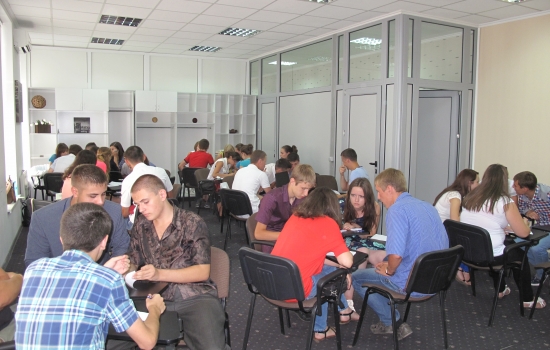
_article_1372409909On 27 June 2013, the Promo-LEX Association, in partnership with the Moldovan Intellectual Games Club, organized the first competition of intellectual games in the field of human Rights. The event brought together 37 high school students from the Transnistrian region studying in Latin script high schools in Tiraspol, Ribnita, Grigoriopol, Dubasari and Tighina.

The contest focused on the theme of human rights and, in particular, the prohibition of torture. The event was organized in the context of the UN International Day in Support of Victims of Torture, which is marked on 26 June.

The students, divided in nine teams, played three games: “Match”, “Brain Ring” and “What? Where? When?”. The competition turned out to be an interesting and challenging event for all the participants because the questions asked during the games required both good general knowledge and specific knowledge of human rights.

Nevertheless, the participants did well and answered most questions correctly. The competition also had its winners; these were: team “Holmes” from Tighina, which won the first place, team “Tiragaş” from Tiraspol, which got the second place, and team “Evrika” from Ribnita, which occupied the third place in the contest.

At the end of the competition, the participants said that such events were highly appreciated because they employ a unique and exciting method of interactive learning, which is completely different from the methods used in the formal education system. “This intellectual game competition allowed every participant to show their erudition as well as to gain new knowledge. The opportunity to compete with intelligent young people was very uplifting for us,” said one of the participants.

The competition is part of the “Human Rights Starts with Education” project, implemented with the financial support of the U.S. Embassy in Chisinau. Twenty-two young people from the region attended a Training of Trainers course “Learning to Teach Human Rights Through Intellectual Games”, held on 12-14 April in Chisinau, and then organized 13 multiplying activities in five high schools from the Transnistrian region, which involved over 100 students.

The main objective of the project is to publicize intellectual games as a method of learning and promoting human rights among youth in the Transnistrian region of Moldova.

For more information, please contact:
Olga Manole, Project Director, Promo-LEX
Tel: (022) 449626 Fax: (0 22) 450024
[email protected]


Promo-LEX Monitors Get Continuous Training as Part of the Civic Monitoring Mission for the Implementation of the Justice Sector Reform in Moldova

_article_1372255697The third training for monitors was organized on 22-23 June 2013 as part of the Civic Monitoring Mission for the implementation of the Justice Sector Reform in Moldova.

The first session of the training was devoted to assessing the work of the monitors’ network in the recent months, performance review, assessing the difficulties faced by monitors and proposing solutions for improving the work of the Monitoring Mission.

The participants continued to deepen their knowledge in the field of trial monitoring through their gained experience. Note that one of the components of the monitoring effort focuses on trial monitoring at the national level. Monitors discussed the monitoring process and the questionnaires used as an important part of this process. Monitors were trained to be more persistent in having parties to the trials fill in their questionnaires in order to get a much broader sense of the perception of individuals about the process of justice.

The training also included discussions about monitoring the implementation of specific activities of the Justice Sector Reform Strategy. Monitors were trained to fill in questionnaires on the implementation of actions that are due for completion in the second quarter of 2013. A separate session was dedicated to the general progress of the Justice Sector Reform as well as the progress registered in certain regions. Experts used the monitoring methodology to develop a questionnaire that serves as a basis for the assessment of results achieved in the Justice Sector reform. At the end of the seminar, the monitors filled in the questionnaire, thus providing an assessment of the reform results by this particular group. The results of the questionnaire per categories of respondents will be presented in the next report of the Association.

Over the two days of the training, the monitors learned about monitoring instruments, their application in the field as well as reporting and communication within the network.

The event was conducted within the project “Monitoring Justice Sector Reform for Increased Government’s Accountability”, implemented by Promo-LEX and the Association for an Efficient and Responsible Governance, and funded by the European Union. The purpose of the training was to build the capacity of the civil society to monitor the justice sector reform and increase public interest for this reform.

For more details, contact Carolina Bondarciuc, Press Officer
Tel: (22) 45-00-24, GSM: 069637849, email: [email protected]


Campaign on informing citizens on protective orders for victims of domestic violence was completed

One of the widest national campaigns on informing citizens on protective orders for victims of domestic violence in the Republic of Moldova was completed on June 25, 2013.

Within 42 days 7000 flyers were distributed among the citizens, 1200 posters were placed inside any building of the Police Inspectorate/ Directorate/ Office/ Point and more than dozens of consultations were provided by telephone by the lawyers of the Association „Promo-LEX”.

Such actions have facilitated the process of informing citizens on protective measures prescribed by the law for victims of domestic violence, on procedure for obtaining of such and the term of issuance of the latter, on execution and supervision of protective orders as well as on measures taken in case of violation of the order.

To protect victims of domestic violence, within the first five months of the year 2013 the Police has supervised 188 protective orders issued by the courts, from which 123 orders on application of the protective measures in respect of victims of domestic violence were issued upon Police application, 18 – on Prosecutor’s application and 1 – under the application of the social worker and 43 orders – on the direct application of victims or their legal representatives.

The Promo-LEX Association states an increase in number of applications due to realization of the campaign “Protective Order” and the active informing of population.

The continuity of the campaign shall be ensured due to posters displayed within the Police inspectorates, relevant information placed on the site of the Association and due to the Campaign “Get to know your police officer” carried by GPI of MIA.

The Campaign “Protective Order” was launched on May 15, 2013 by the Association ”Promo-LEX” in partnership with the MIA General Police Inspectorate.

For further details please contact: Lilia Poting, lawyer of the Promo-LEX Association, [email protected], Tel: (22) 450024


Transnistrian “Prisons” Back of the European Court Agenda

Serghei Apcov is another victim of the separatist structures in Tiraspol whose situation was brought to the attention of the European Court for Human Rights (ECtHR). Recently, the High Court informed the Moldovan government of the case Serghei Apcov v. Moldova and the Russian Federation, file no.13463/07.

On 21 January 2005, the applicant was arrested by the representatives of Tiraspol’s “law enforcement” on charges of robbery. He was held in preventive detention until 8 July 2005, when he was released on bail. During his detention, he was held in very bad conditions, together with people infected with HIV, and was subjected to inhuman and degrading treatments by the isolator’s personnel. The applicant claims that a doctor who used the same syringe on all the inmates from the cell infected him with HIV.

The applicant also claims that his procedural rights were violated because the victim have recognized the applicant in a photo as part of the investigation only two and a half years after the robbery was allegedly committed. Moreover, the applicant had an alibi, namely that he was in Russia at the time of the robbery, as confirmed by the respective stamps in his passport. The representatives of the secessionist force bodies nevertheless dismissed his alibi without any scrutiny.

On 29 August 2006, the Tiraspol city “court” sentenced the applicant to 7 years in jail. He was sent to a prison with extremely deprecate conditions. He was put in an overcrowded cell, had no daily walks, the served food was very bad, and he shared the cell with inmates with various contagious diseases.

On 26 September 2006, the “supreme court” in Tiraspol dismissed the applicant’s appeal.

In his application to the ECtHR, the applicant alleges a violation of Article 3 of the European Convention, citing ill treatment by the “militsia”, detention in inhuman and degrading conditions, and inadequate medical care. The applicant also claims that his detention by the representatives of the “transnistrian moldovan republic” is in violation of Art. 5.1 of the European Convention of Human Rights. With reference to the alleged proceedings, the applicant claims that he did not have a fair trial, as provided under Art. 6.1 of the Convention.

The case was filed with the European Court of Human Rights against Moldova and the Russian Federation, and the applicant is represented by lawyers from the Promo-LEX Association.

The details and facts of the case can be found here.

For more information, please contact: Pavel Postica, Promo-LEX Program Director, tel: (22) 450024, GSM: 069165154, email: [email protected]