The problem of Romanian-language schools in the Transnistrian region on the agenda of the CoE Committee of Ministers

Between 4th – 6th of March 2014, The Committee of Ministers of the Council of Europe will examine the issue concerning the non-execution of the decision of ECtHR regarding the Latin-script schools in the Transnistrian region.

Let us recall, that a Decision in this case was delivered by The Grand Chamber of ECtHR on the 19th of October 2012. The European Court of Human Rights held, unanimously, that there had been a violation of Article 2 of Protocol No. 1 (right to education) in respect of the Russian Federation. The Court held that Russia is to pay one million and twenty thousand EUR in respect of non-pecuniary damage and fifty thousand EUR for costs and expenses. For more details.

The representative of the applicants, Lawyer Alexandru Postica, sent a communication to the Committee of Ministers, that warned about the non-execution of measures with individual character to pay the amount for moral damages and to exclude the intimidation of certain applicants.

At the same time, Promo-LEX Association, sent to the Committee of Ministers a communication where it warned that Russia does not execute measures of general order. Moreover, the illegal administration from Tiraspol continues to cause impediments for the good teaching process in the Latin-script schools from the region. Ion Manole said: “Although, we have a European Court decision, which clearly establishes the violation of the right to education in the Transnistrian region, the students and teachers of the Theoretical Lyceum “Stefan cel Mare” from Grigoriopol, continue to daily commute 30 km in order to study in their mother tongue. At the same time, another educational institutions are also subject to intimidation from the illegal administration of Tiraspol which have a systematic character.”

Previously, the Committee of Ministers of CoE has adopted a declaration in which it asks the Russian Federation authorities to provide relevant information in the form of a plan of actions or a report, concerning the execution of this case. However, this action led to the increase and highlighting of pressure on the Latin-script schools from the de facto administration of the region.

For more details, please contact: Alexandru Postica, Lawyer, Human Rights Program Director, Promo-LEX Association: Tel: (22) 450024, GSM: 069104851, e-mail: [email protected]


Local Militsia Continues to Violate the Right to Assembly

_article_1393844094Every year, on 2nd March, residents of the village Corjova, Dubasari, organize ceremonies to commemorate the victims of the armed conflict on the Nistru river of 1992. Although the village is controlled by Moldovan constitutional authorities, every year, [Transnistrian] militsia and so-called security service intimidate participants in this event.

According to the locals, the militsia tore apart the invitations to attend the ceremony posted by the organizers, and in the morning before the event, representatives of the Cossack troops were seen in the community threatening residents not to attend the event.

Intimidation of participants to the ceremony is possible including do to the large number of militsia men and special equipments. After the memorial service at the local church, the mourners went to the cemetery to lay flowers, where they held several public speeches. They were escorted and supervised by local militsia the whole time.

Threatened every year with various sanctions, the organizers were forced to give up hoisting state flag and singing the national anthem.

It is not only on 2nd March that Corjova village residents are intimidated and under pressure  – they face serious human rights violations almost every day, which is why the number of participants in the commemorations constantly declines. People are afraid to exercise their right to freedom of assembly, which is guaranteed by the Constitution of Moldova.

Note that, in previous years, on this day, fire trucks blocked the village roads, and access to the village by car registered in Moldova was prohibited. There have also been cases when rallies organized by civilians were met wth provocations. In 2011, the militsia has illegally arrested the mayor of Corjova, Valeriu Mitul, and local councilor Iurie Coţofan, who attended peace march to commemorate those killed in the tragic war on the Nistru river held that year.

For more details, contact: Alexandru Postica, Program Director with Promo-LEX, lawyer, tel: (22) 450024, GSM: 069104851, email: [email protected].


Implementation of Justice Sector Reform Slows down Two Years after the Launch of the Strategy

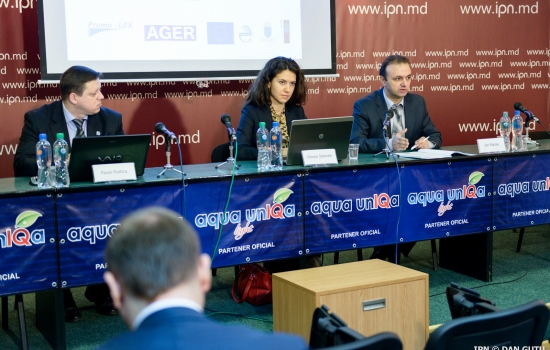
_article_1392812577On 19 February 2014, Promo-LEX and the Association for Efficient and Responsible Government (AGER) launched the Fourth Quarterly Report on the implementation of the Justice Sector Reform Strategy (monitoring period: 1 October – 31 December 2013).

The monitoring effort focused on two major components: assessment of implementation of actions included in the Justice Sector Reform Strategy Action Plan, and monitoring court hearings. The Report analyzed two types of actions: actions due for implementation before the end of Quarter 4 of 2013, and overdue actions, which were due before 30 September 2013.

The Report found that the implementation of the JSRS Action Plan slowed down, in Quarter 4, compared with Quarter 3 of 2013, Thus of total 257 actions due for implementation by the end of 2013, 144 were implemented, and 113 remain unfulfilled, which represents an implementation rate of 56% to 44%. More disconcerting is the fact that only 11 of 45 actions due for implementation in Quarter 4 of 2013, or only 24%, were completed, while 34 actions, or 76%, remain not implemented.

An evaluation assessment of institutions involved in the implementation of the JSRS for the first two years of the reform showed that the Ministry of Justice implemented little over 50% of actions under its responsibility. Thus, it completed 93 actions, while another 70 actions remained unfulfilled. Similar implementation rates were recorded at the NIJ, NLAC, and the Prosecutor General’s Office. The NAC and the CHRM registered higher implementation rates. NUCEO, which was responsible for one action that was not implemented, and the MOI, in charge of five actions, of which only one was implemented, registered the lowest implementation rates.

On court hearings, as shown by the questionnaires and monitors’ observations, the dynamic of satisfaction of court users with the way justice was administered in courtrooms remained constant. Data obtained in Quarter 4 of 2013 compared with the previous Quarters show a positive trend of maintaining a high percentage of respondents completely satisfied with the administration of justice.

The highest rates of dissatisfaction among respondents referred to courthouse facilities, indicators to and inside the courthouse, and the use of court websites. Thus, 14%, 22% and 8% of lawyers, respectively, said they were dissatisfied with the aspects listed above.

As regard the highest satisfaction rates, 71% of lawyers said they were completely satisfied with the availability of the case file and the time allotted between the summoning and the court hearing, and 73% said they were satisfied with the public character of the hearing.

In addition to the standardized questionnaire, distributed to participants in court hearings to assess the effectiveness of the act of justice, trial, another set of questions was developed as part of the monitoring effort to analyze the respondents’ perception of the positive changes, which occurred over the course of the last two years, during the implementation of the reform. Thus, 208 judges, prosecutors, lawyers, courts enforcement officers and court clerks filled in this additional questionnaire, sharing their opinions on the fairness and transparency of the procedure of selection, appointment and promotion of judges, funding of the judiciary system, independence of the prosecution and exercising their powers, and other subjects.

The electronic version of the Report is available on www.promolex.md and www.monitor.md.

This Report was developed as part of the project: “Monitoring the Justice Sector Reform Strategy to Increase Government Responsibility”, implemented by the Promo-LEX Association and the Association for Efficient and Responsible Governance, with the financial support of the European Union.The project is co-funded by the East European Foundation from financial resources offered by the Swedish Government through the Swedish International Development Cooperation Agency (Sida) and the Ministry of Foreign Affairs of Denmark/DANIDA.

For details, please contact: Carolina Bondarciuc, Promo-LEX Press Officer, at: GSM 069637849,
Tel/Fax (+373 22) 450024, and email: [email protected]


On the Global Elections Day, The Civic Coalition for Free and Fair Elections Recalls Pressing Electoral Issues

On the Global Elections Day, marked on the first Thursday of February of every year, the Civic Coalition for Free and Fair Elections calls on Moldovan citizens to show civic spirit and responsibility when exercising their voting rights. At the same time, in light of Moldova’s European aspirations, the electoral context of year 2014, and the recurrent gaps in holding campaigns and ensuring an inclusive and transparent legal framework for elections, the Coalition urges Parliament, Government, the Central Election Commission and other institutions with responsibilities in this area to maximize their efforts to guarantee all people their voting rights. (see the document here)

The Coalition pays special attention to the following issues:

  • Using the electoral system as a political bargaining chip is inadmissible. The Coalition calls on Parliament to ensure compliance with the Code of Good Practice in Electoral Matters of the Venice Commission, and refrain from changing the electoral system in 2014, an election year;
  • The Coalition urges Parliament not to delay passing the bill on financing political parties and election campaigns, which was produced by a working group coordinated by the CEC. Unlike the initiatives to amend the electoral system, this bill has been through multiple national public consultations, has been vouched by the Venice Commission, takes into account the recommendations of the Group of States against Corruption (GRECO) and provides concrete solutions to the existing issues in this area. Lack of political will to ensure transparency of financial resources in the next election campaign will affect the image of the political class and diminish the overall credibility of the electoral process;
  • The Coalition deems unjustified the delay in introducing legal mechanisms to ensure a balanced participation and presence of women and men in the political and decision-making process. A simple analysis of the lists of candidates in the last parliamentary elections reveals that the issue of low representation of women was not solved but rather worsened (the proportion of women candidates was 29% in the 2005 parliamentary election, and only 28.1% in the 2010 poll). Coalition members expect the Moldovan political class to show political will to take action, including via legislative means, to increase the chances of promotion and affirmation of women in politics;
  • The Coalition calls on all relevant institutions (Parliament, Government, the CEC) to take active measures to eliminate barriers to the participation of people with physical and intellectual disabilities in the political life, and recommends political parties to take into account the specific needs of these people when developing their platforms or plan their election activities. Although they represent about 5% of the population, these people are faced with many difficulties during elections, including being unable to read the ballots (people with visual disabilities), access polling stations (wheelchair users), read and understand the contents of ballots (people with mental disabilities), etc.
  • The Coalition demands that Parliament urgently pass the bill amending the Broadcasting Code to ensure transparency of broadcaster ownership and provide the Broadcasting Coordination Council with real powers to control the declared ownership of media and with responsibilities for limiting the concentration of ownership in this field. At the same time, the Coalition calls on media organizations, regardless of their type and ownership, to acknowledge the importance of their role in shaping public opinion and ensure a fair, balanced and impartial reflection of political and election events (during the campaign) in accordance with international best practices and standards of the profession.

The Civic Coalition for Free and Fair Elections calls on citizens to acknowledge the power of their votes and strive to make active use of their electoral rights. The Coalition reaffirms its readiness to participate in monitoring electoral processes in Moldova in the next parliamentary election, and is confident that the concerted efforts of the authorities, civil society, media and citizens will contribute significantly to building an authentic democracy in our country.

The Civic Coalition for Free and Fair Elections


The Government of Moldova will have to pay again for gender discrimination and failure to offer an effective protection against domestic violence

Today, on January 28, 2014 the ECHR has adopted a judgment in case no. 26608/11 T.M. and C.M. against Moldova, having stated the violation of provisions under Article 3 and under Article 14 of the European Convention. The High Court established Moldova’s responsibility, since the Prosecutor’s Office refused to initiate any criminal proceedings against the aggressor, considering that the body injuries didn’t constitute any conclusive evidence. Further, the Court noted that the protection order had been issued with a delay of 10 days and had subsequently been canceled by the same judge. Therefore, the police could not interfere to take the aggressor away from the family home, notwithstanding the severity of this case and the necessity of taking prompt actions.

Further, the Court judges challenged the stand of national authorities who, holding evidence based on the minor daughter’s statements with respect to the father’s verbal and physical aggression against the mother, had disregarded that fact and hadn’t found any act of domestic violence. Pursuant to the Court, all those factors and other data explicitly evidence the failure of authorities to protect the applicants against domestic violence, as well as incomprehensive appreciation by the authorities of severity and extent of this problem, thus, manifesting a discriminatory attitude to women as victims of domestic violence.

Thus, the Court ruled that the state should pay to the applicants non-pecuniary damages in the amount of 15.000 EUR, as well as costs and expenses in the amount of 2150 EUR.

The applicant T.M. was married to M.M. since 2001, and the spouses have a child born in 2002. M.M. became involved in gambling, having lost a large amount of money; he didn’t have a permanent job and accumulated many debts, behaving at the same time aggressively towards his wife and child. Thus, the family situation became stringent, especially upon several strangers forced the applicant under threats to sign a receipt, and at that moment she found out about her husband’s debts. As a result of all those events, T.M. filed a petition for divorce on February 25, 2010. Upon initiating divorce proceedings and lodging in the court an application for property division, her husband became even more aggressive.

On June 22, 2010 T.M. complained that she was being verbally abused by her husband, following which he was fined administratively. Later, he continued verbal and physical violation manifesting it not only against his wife, but also against his child. The injuries caused to those two victims were confirmed by medical reports. The same assault was repeated in March 2011, and a month later the applicant T.M. requested to issue a protection order.

The applicants were represented before the Court by lawyers of the Association Promo-LEX.

For more information please contact: Alexandru Postica, Lawyer of the Association Promo-LEX: Tel: (22) 31 09 45, GSM: 069104851, e-mail: [email protected]


Petition to the PARLIAMENT OF THE REPUBLIC OF MOLDOVA

                                                                                                                       Honorable Mr. Chairman of Parliament,
Esteemed Members of Parliament,

In recent years, Moldovan civil society worked closely with Parliament to improve the act of creating legislation, and was convinced that this cooperation would ensure a higher legitimacy of bills. Out of these reasons and beliefs, civil society representatives drafted bills and cooperated with the legislative body whenever necessary.

Usually MPs are or at least seem to be open to these proposals, participating in public debates and discussions on them. In words, they support civil society initiatives, but avoid assuming political responsibility once these bills are sent to the Parliament. The legislative proposals of the civil society seldom come to be recognized as legislative initiatives and be examined in the Parliament.

We note another problem connected with proposals that have been registered as legislative initiatives and received all needed advisory notes, but are not included in the Parliament agenda for debate and approval. Various reasons are cited: lack of a majority willing to vote for the project, other priority projects, and others.

According to data presented by the Parliament, 510 legislative initiatives were registered in 2012, and 542 – in 2013, and only around 60% were included on the agenda of the plenary sessions and examined, while the rest remain “in work”. Accumulation of “legislative arrears” is possible because there is no law that requires Parliament to consider all registered legislative initiatives.

Astfel sunt create premise pentru tergiversarea procesului legislativ în cazul inițiativelor legislative incomode unei/unor fracțiuni sau unui grup de deputați. Din acest motiv, un număr mare de proiecte înaintate în Parlament își pierd din actualitate, fiind incluse tardiv sau chiar deloc pe ordinea de zi. Ca rezultat, proiectele neexaminate în decursul legislaturii în care au fost înregistrate devin nule.

The Parliament Regulation does not contain an express stipulation of a limit in which the bill discussed in a Standing Committee shall be included on the agenda of Parliament sessions. This created prerequisites for delaying the legislative process in the case of initiatives that deemed inconvenient by a faction or various factions of deputies. This is why many bills submitted to Parliament lose their topicality as they end up included late or not at all on the agenda. Moreover, bills that are not examined during the term of the legislature in which they were registered become void.

We believe that the lack of a fixed period required to include bills in the agenda of Parliament can foster political trade and backstage games. The opportunity or lack thereof of legislative initiatives should be established in plenary debates. The voter has the right to know the position of each member of the party on the issues discussed.

However, in order for the civil society and the public to understand the legislative process and the basis for adopting or rejecting legislative initiatives, we believe that the approval or rejection of bills needs to be motivated. This will empower MPs and streamline communication between Parliament and the NGO sector.

Given the above, we REQUEST Parliament Members:

  1. To be more open to legislative drafts submitted by the civil society, discuss them in the standing committees, and take fair and transparent decisions of their approval or rejection;
  2. In order to strengthen the coherence and mutual trust, decisions regarding the acceptance or non-acceptance of civil society bills submitted to Parliament should to be substantiated, and a written notification should be sent to the sender.
  3. To remove the legal vacuum by setting a fixe term in the Parliament Regulation for inclusion on the agenda of the plenary sessions of legislative initiatives after their discussion in the standing committees.

Signed by:

Center for Independent Journalism
Association of Electronic Press
“Acces-info Center
Association of Independent TV Journalists
Center for Journalistic Investigations
Center of the Young Journalist
Committee for Press Freedom
Promo-LEX
Transparency International Moldova
National Youth Council of Moldova
Institute for Defense of Basic Human Rights and Freedoms
Human Rights Institute
Human Rights Embassy
Association of Women for Environment Protection and Sustainable Development
Keystone Moldova
Caritas Moldova
PAS center
PTH League of the Republic of Moldova
Alliance of Organizations for Persons with Disabilities
Center for Rehabilitation and Social Integration of Children with Mental Disabilities ”CULTUM”
Association „MOTIVAŢIE”
Association of Deaf Children of Moldova
Association for Rehabilitation and Social Integration of Children with DOWN Syndrome
Association for Support of Children with Special Needs
Association for Support of Children with Physical Handicap of Moldova
Association of persons with Hearing Deficiencies „Cantemir”
Association „Verbina”
Center for Legal Assistance for Persons with Disabilities
Center “Speranța”


Promo-LEX Association – A Retrospective of 2013

January 14, 2013 – Promo-LEX organized a press conference on the topic “Having become president, Evgheni Sevciuc takes revenge. Alexander Coliban – a new prisoner in Tiraspol for the next 2.6 years” with the participation of the young man’s relatives and Promo-LEX representative, Pavel Postica.

January 17, 2013 – Promo-LEX Association published a new edition of the Report “Freedom of assembly in the Transnistrian region of the Republic of Moldova”.

January 23, 2013 – The ECtHR communicated the case of Filin v. the Russian Federation and Moldova to the respondent governments. Promo-LEX lawyers represent the applicant at the Court.

February 6, 2013 – As announced by Promo-LEX and RCTV Memoria, the ECtHR communicated to the government of Moldova the case Tretiacov and others v. Moldova. Lawyer Alexandru Postica, director of the Human Rights Program at Promo-LEX, represents the applicants at the European Court.

February 6, 2013 – ECtHR communicated the case Sandu and others v. Moldova and the Russian Federation, dubbed “the farmers’ case”, to the respondent governments. The applicants are represented by Promo-LEX lawyers and legal counsels.

February 7, 2013 – The ECtHR communicated two cases, Berzan v. Moldova and Panteleiciuc v. Moldova and Russia, to the governments of the Russian Federation and Moldova. Applicants are represented at the European Court of Human Rights by Promo-LEX lawyers.

February 7, 2013 – Promo-LEX signed the Appeal of The Civic Coalition For Free and Fair Elections on the Global Elections Day, which draws attention to the need to strengthen ongoing efforts to ensure the principles of free and fair elections.

February 8, 2013 – The Promo-LEX Association, in partnership with the Association for Efficient and Responsible Governance (AGER), held a roundtable to launch the project “Increasing Government Accountability by Monitoring the Justice Sector Reform”.

February 9-10, 2013 – The first training session was organized for monitors from the Civic Monitoring Mission for the implementation of the Justice Sector Reform in Moldova.

February 11, 2013 – Members of Vitalie Eriomenco’s family and Promo-LEX called a press conference on the topic “693 days of illegal detention”.

February 12, 2013 – Promo-LEX and the General Police Inspectorate of Moldova launched the monitoring campaign “Eyes on the police”.

February 18, 2013 – The ECtHR communicated to the respondent governments the case of Stomatii v. Moldova and the Russian Federation. Promo-LEX lawyers and legal counsels represent the applicant at the Court.

February 19, 2013 – The ECtHR communicated the case of Rezanov v. Moldova and the Russian Federation to the respondent governments. The applicant is represented by Promo-LEX lawyers and legal counsels.

February 27, 2013 – Promo-LEX published an advisory note on the draft Government decision amending the Government Decision on the structure and limit of personnel of the General Police Inspectorate, and on amendments to the Criminal Procedure Code and the Law on the criminal investigation officer.

March 4, 2013 – Promo-LEX monitored and informed about serious violations of the right to assembly in Corjova village of Dubasari district.

March 4, 2013 – At a press conference, Promo-LEX presented the results of the monitoring campaign “Eyes on the Police”.

March 8, 2013 – On International Women’s Day, Promo-LEX launched an Appeal in support of victims of gender-based violence.

March 11, 2013 – Promo-LEX published its opinion on the illegal persecution by the authorities in Tiraspol of lawyer Stepan Popovschi, one of the most active human rights defenders in the Transnistrian region of Moldova.

March 16-17, 2013 – A second training was conducted for monitors from the Civic Monitoring Mission for the implementation of the Justice Sector Reform in Moldova.

March 21, 2013 – Promo-LEX issued a public statement reminding the Prosecutor General’s Office of its obligation to intervene in all cases of domestic violence.

March 29, 2013 – Promo-LEX informed young people from the Transnistrian region about the start of the drafting campaign of young men aged 18-27 years in the illegal paramilitary structures.

April 1, 2013 – Promo-LEX published an informative note on the draft amendments to the Methodical Instructions on the intervention of bodies of interior in preventing and fighting cases of domestic violence, passed by Order of the Minister of Interior no.275 of 14 August 2012.

April 3, 2013 – Promo-LEX published an informative note on draft Government Decision on the approval of the Program of activities for the reintegration of Moldova for 2013.

April 4, 2013 – Promo-LEX published an advisory note on the draft of the Child and Family Protection Strategy for the years 2013-2020.

April 6–27, 2013 – Promo-LEX trained its national network of election observers on monitoring  candidates’ finances.

April 9, 2013 – Promo-LEX, in partnership with the National Institute of Justice, organized a seminar dedicated to cases of human rights violations in the Transnistrian region.

April 10, 2013 –Promo-LEX, in partnership with the National Institute of Justice and the Ministry of Interior, organized a seminar on the topic of ensuring the respect of human rights during public meetings.

April 12–14, 2013 – A Training of Trainers course was organized on the topic: “Learning to teach Human Rights through Intellectual Games.”

April 19, 2013 – Promo-LEX and the Civic Coalition for Free and Fair Elections called the Moldovan Parliament to suspend the examination of the bill on amending the electoral system in the second (final) reading, and to organize public debates on this issue.

April 22, 2013 – Promo-LEX signs the joint position of nongovernmental organizations on the tense situation in the Security Zone.

April 23, 2013 – Promo-LEX won a court case against the Ministry of Interior, the Center for Protection of Personal Data and police colonel Gheorghe Tretiacov on stated violations of the Law on Personal Data.

April 23–26, 2013 – Various activities to promote human rights were organized at the “Mihai Eminescu” Lyceum in the village of Corjova, raion Dubasari.

April 29, 2013 – Promo-LEX presented its opinion on Law no.94 “on amendments and supplements to certain legislative acts” of April 19, 2013, which amended electoral system in Moldova and introduced a mixed electoral system, within debates organized by the special parliamentary Commission.

April 30, 2013 – Promo-LEX marks the International Day of Solidarity with civil society in Russia.

April 30 – May 24, 2013 – A series of activities were organized in Romanian language schools from Grigoriopol, Ribnita, Tighina and Tiraspol to familiarize youth from the Transnistrian region with human rights via intellectual games.

May 2, 2013 – As part of the Coalition for Free and Fair Elections “Coalition 2009″, Promo-LEX released its first monitoring report for new local elections held on 19 May 2013.

May 3, 2013 – Promo-LEX signed an Appeal of the Civic Coalition for Free and Fair Elections “Coalition 2009″ urging MPs not to use the changes to the electoral system as a trade-off in political negotiations.

May 7, 2013 – Promo-LEX signed an Appeal regarding the revision of certain acts adopted by the Parliament of the Republic of Moldova on 3 May 2013, which compromise the efforts to reform the justice sector.

May 15 – June 25, 2013 – Promo-LEX, in partnership with General Inspectorate of Police, conducted the National Campaign “The ordinance.”

May 18, 2013 – Within the framework of the Civic Coalition for Free and Fair Elections “Coalition 2009”, Promo-LEX released its second report on the monitoring of new local elections on May 19, 2013.

May 19, 2013 – Promo-LEX monitored the new local elections taking place on that day.

May 20, 2013 – Promo-LEX launched the Final Report on monitoring the Election Day during the new local elections on May 19, 2013.

May 23, 2013 – Promo-LEX and the Association for Efficient and Responsible Governance launched the First Quarterly Monitoring Report on the implementation of the Justice Sector Reform Strategy.

May 25, 2013 – The Promo-LEX Association obtained associate membership in the International Federation for Human Rights (FIDH). This makes Promo-LEX the only representative of the Republic of Moldova in this prestigious international organization.

May 28, 2013 – The European Court of Human Rights (ECtHR) condemned Moldova in the case Eremia and others v. Moldova. The applicants were represented before the ECtHR by lawyer Doina Ioana Straisteanu, delegated by the Promo-LEX.

May 29, 2013 – The ECtHR informed the Moldovan Government about the case Nedelcu v. Moldova. The applicant is represented before the high Court by Promo-LEX attorneys and lawyers.

May 31, 2013 – As part of the Civic Coalition for Free and Fair Elections, Promo-LEX launched the third monitoring Report on the new local elections on May 19, 2013 (second round).

June 3, 2013 – Promo-LEX monitored the second round of the new local elections on 19 May 2013.

June 5, 2013 – The Promo-LEX Association organized a roundtable to present a methodology of civic monitoring of election campaign and candidate finances.

June 7–8, 2013 – Promo-LEX organized a training on the topic: “Promoting Human Rights in Hostile Environments”, attended by 14 representatives of the civil society from the Transnistrian region.

June 17 2013 – The ECtHR communicated to the government of Moldova about the case Apcov and others v. Moldova. The applicants are represented at the European Court for Human Rights by lawyer Alexandru Postica, director of the Human Rights Program at Promo-LEX.

June 22–23, 2013 – A third monitoring training was conducted for members of the Civic Monitoring Mission for the implementation of the Justice Sector Reform in Moldova.

June 25, 2013 – A wide national citizen awareness campaign on to promote the protection order for victims of domestic violence, implemented by Promo-LEX, was finalized in Moldova.

June 26, 2013 – Promo-LEX and Rehabilitation Center for Torture Victims “Memoria” launched an Appeal for support victims of torture within the framework of the 26 June 2013 international campaign: “Torture Victims Have the Right to Rehabilitation – Let’s Make This Right a Reality.”

June 27, 2013 – Promo-LEX, in partnership with the Moldovan Intellectual Games Club, organized the first competition of intellectual games in the field of human rights.

June 28, 2013 –Moldovan bloggers met in a session to discuss domestic violence; one of the guests was Lilia Poting, lawyer at Promo-LEX.

July 1, 2013 – Promo-LEX signed the appeal of the Civic Coalition for Free and Fair Elections “Coalition 2009” for reforming the system of financing political parties and election campaigns.

July 2, 2013 –The European Court of Human Rights informed the Governments of Moldova and Russia on the case Cebotar v. Moldova and the Russian Federation. The applicant is represented at the Court by lawyers from Promo-LEX.

July 9, 2013 – Promo-LEX signed an appeal of the civil society representatives from the Republic of Moldova to the High Representative of the European Union for Foreign Affairs and Security Policy, Catherine Ashton, on the situation in Transnistria.

July 11, 2013 – Promo-LEX signed a Public Appeal addressed to ombudsman Aurelia Grigoriu, asking her to resign.

July 8–15, 2013 – Promo-LEX, in partnership with the Romanian Association Prohistoria XXI, organized a summer school as part of the project: “Steps through History”.

July 16, 2013 – The ECtHR condemned Moldova in the case Mudric and others v. Moldova; the applicant was represented at the Court by Promo-LEX lawyers.

July 31, 2013 – A report: “Juvenile Justice: the Situation in the Transnistrian region of Moldova in Relation to International Standards” was presented during a round table.

August 2–4, 2013 – Promo-LEX marked the International Day of Solidarity with the Civil Society from Belarus.

August 8, 2013 – The Promo-LEX Association and Association for Efficient and Responsible Governance (AGER) launched the website  monitor.md.

August 9, 2013 – Promo-0LEX organized an assessment workshop on the project: “Human Rights begin with education.” The event was held in Chisinau.

August 21, 2013 – Promo-LEX signed the appeal of the Civic Coalition for Free and Fair Elections “Coalition 2009” expressing concern with the legislative initiative (draft law amending Art. 39 of Law no.436-XVI of 28 December 2006 on the Local Public Administration) of a group of lawmakers that aims to transfer to the secretaries of local councils the responsibility for compiling, managing and updating voter lists.

September 9, 2013 – Promo-LEX observers monitored parliamentary elections in Norway.

September 11, 2013 – The Promo-LEX Association in partnership with Ministry of Defense of the Republic of Moldova launched the project “Fighting conscripts’ rights violations in Moldova by increasing their legal awareness.”

September 11, 2013 – Promo-LEX launched the Conscripts Guide: Prevention of torture and ill-treatment in military units.

September 11, 2013 – Promo-LEX and the Association for Efficient and Responsible Governance launched the Second Quarterly Monitoring Report on the implementation of the Justice Sector Reform Strategy.

September 13, 2013 – The Committee on the Elimination of All Forms of Discrimination against Women (CEDAW) communicated to the Government of Republic of Moldova the case of R.L. v. Moldova.

September 17, 2013 – Promo-LEX published a Statement regarding the effects of signing the protocol record of 16 September 2013.

September 20, 2013 – A session of intellectual games under the theme: “Learning about Human Rights via Intellectual Games” was organized at the “Alexandru cel Bun” Theoretical Lyceum in Tighina. The event took place with the support of Promo-LEX Association.

September 22, 2013 – Promo-LEX observers participated in monitoring presidential elections in Germany.

October 7, 2013 – Promo-LEX and the International Federation for Human Rights launched the Report: “Torture and ill-treatment in Moldova, including Transnistria: Shared problems, evaded responsibility.”

October 9, 2013 – Promo-LEX published an informative note on the Law on the way of ensuring and restoring public order during public events.

October 27, 2013 – Promo-LEX observers monitored the presidential elections in Georgia.

November 6, 2013 – Promo-LEX experts participated as trainers at a seminar on “Uniform procedures for prosecuting cases of human rights violations in Transnistrian region – reception and transmission of personal data”, organized by the National Institute of Justice.

November 14, 2013 – according to a Promo-LEX press release, the European Court of Human Rights would examine the case of 18 year-old Vadim Pisari, killed on 1 January 2013 by a Russian soldier from the peacekeeping mission, in an urgent manner.

November 15, 2013 – Promo-LEX and the Association for Efficient and Responsible Governance launched the Third Quarterly Monitoring Report on the implementation of the Justice Sector Reform Strategy.

November 25 – December 10, 2013 – Promo-LEX conducted the campaign: “16 Days of Activism Against Violence against Women.”

November 28, 2013 – Promo-LEX in partnership with the General Police Inspectorate launched a short film competition as part of the campaign: “16 Days of Activism Against Violence against Women.”

December 2 – 3, 2013 – Promo-LEX attended the Parallel OSCE Civil Society Conference in Kiev.

December 3, 2013 – A film viewing session as part of the campaign: “16 Days of Activism Against Violence against Women” was organized in Cahul, in the premises of the “B.P Hasdeu” University.

December 4, 2013 – A film viewing session as part of the campaign: “16 Days of Activism Against Violence against Women” was organized in Balti, in the premises of the “Alecu Russo” University.

December 7–8, 2013 – Promo-LEX conducted a 4th training session for monitors from the Civic Monitoring Mission on the implementation of the Justice Sector Reform in Moldova.

December 9, 2013 – Promo-LEX, in partnership with the GPI and the Multimedia chair of the Music, Theater and Arts Academy, organizes an award Gala for the winners of the short film competition as part of the campaign: “16 Days of Activism against Violence against Women”.

December 11, 2013 – Promo-LEX published a Statement regarding the situation of Latin-script schools in the Transnistrian region.

December 15, 2013 – Promo-LEX observers participated in monitoring of new partial parliamentary elections in Ukraine

December 17, 2013 – Promo-LEX signed the EPDE appeal expressing concern that the arrest of Anar Mammadli and the further investigation of activities of the EMDS organization, unfolded by the Prosecution of Azerbaijan on 31 October, were politically motivated and stemmed from the critical remarks made by EMDS after the recent presidential election in Azerbaijan.


STATEMENT regarding the situation of Latin-script schools in the Transnistrian region

The “Promo-LEX” Association expresses its concern with the growing pressure on the schools from the Transnistrian region that use the Latin script, and the absence of any sizeable and visible efforts from the constitutional authorities and other actors involved in the Transnistrian settlement to prevent this.

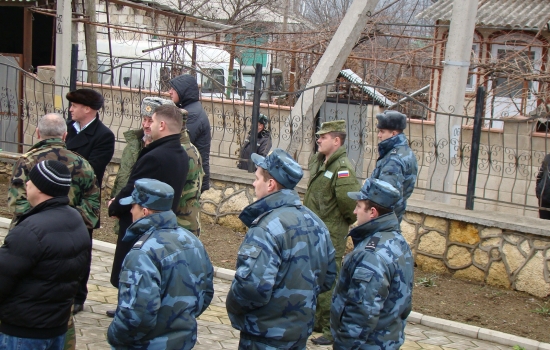
Representatives of the separatist administration in Tiraspol pressured and threatened the managers of the Latin-script schools, and forced them to provide their employees’ personal data. The students from one of these schools were intimidated by the local militia who stormed the school during classes and attacked and brutalized one of the teachers.

On 9 December, the manager of the “Lucian Blaga” Lyceum in Tiraspol was contacted and told he faced an administrative sanction in the form of a fine of up to 2600 Moldovan lei for failing to provide data on the school’s staff members and their salaries.

The same situation was registered at the “Evrika” Lyceum in Ribnita. On 9 December, the separatist administration forced the management of the Lyceum to share their statistical and accounting reports, which contained personal data of their employees. At the same time, the school managers were obliged to go to the de-facto administration of the city to obtain fiscal code certificates. Note that the schools did not ask for the certificates, which were imposed on them as a means of exercising some control over these schools.

These actions by the de facto administration took place in the aftermath of the statement made by the Committee of Ministers of the Council of Europe on the monitoring of the case Catan and other 170 v. Moldova and Russia. The CoE Committee of Ministers urged the Russian government to present relevant information, in the form of an action plan or a report, on the execution of the court decision in that case, as soon as possible. At the same time, the Committee of Ministers expressed its concern with the fact that the Russian authorities failed to provide any information on the taken measures.

Based on the above, the “Promo-LEX” Association urges the parties involved in the peaceful settlement of the Transnistrian issue to take into account the importance of ensuring free access to education in the region, and that the security of children and the staff members of the schools under the control of the constitutional authorities constitute a priority. We reiterate in this regard that any interference with the educational process is unacceptable, and attacks against the administration or teachers of these schools must be stopped, sanctioned and condemned.

For more detail, contact: Alexandru Postica, lawyer, Human Rights Program Director, Promo-LEX: tel: (22) 450024, mob: 069104851, email: [email protected]


A new session was organized as part of the Monitors’ Training Program for the Civic Monitoring Mission on the implementation of Justice Sector Reform

_article_1386936309The fourth training session for monitors from the Civic Monitoring Mission on the implementation of the Justice Sector Reform in Moldova was held on 7-8 December 2013.

The agenda included topics aimed to deepen and complement the knowledge gained during the previous training sessions and the gained experience.

The training session began with an assessment of the monitors’ network activity in recent months, a performance review and assessment of the difficulties faced by the monitors and proposing solutions for improving the functioning of the Monitoring Mission.

During the two days, the monitors discussed the most effective methods of interviewing respondents in the monitoring process, and improving the quality and quantity of reporting. Other topics referred to reporting and internal communication within the network.

A session was dedicated to information and discussions about the online platform Monitor.md as part of the monitoring project.

The Monitor.md portal is an online platform that reflects monitoring activities carried out by civil society organizations in Moldova. Monitoring activities may refer both to monitoring public institutions and implementation of public policies.

The monitoring areas covered by the Monitor.md portal are: the justice sector reform, human rights, electoral processes, governance, and the work of the Police.

The event was organized as part of the project “Enhancing Government Accountability by Monitoring the Justice Sector Reform”, which is implemented by the Promo-LEX Association and the Association for Efficient and Responsible Governance, and funded by the European Union. The purpose of the training was to build the capacities of civil society to monitor the justice sector reform and increase public interest in the reform.

For more details, contact: Carolina Bondarciuc, Press Officer, Tel: (022) 45-00-24, GSM: 069 637 849, email: [email protected].


Promo-LEX attended the Parallel OSCE Civil Society Conference in Kiev

On 2-4 December 2013 was held Parallel Civil Society Conference in Kiev, the event was convened by The Civic Solidarity Platform. Thus followed tradition of OSCE parallel civil society conferences in Astana in 2010, Vilnius in 2011, and Dublin in 2012. Civic Solidarity developed the attached policy document containing civil society analysis and recommendations on alarming human dimension issues across the OSCE region and on human dimensions issues in Ukraine, in light of the country’s OSCE Chairmanship.

According to statements by the OSCE Chairmanship, a top priority in 2013 was protecting human rights and fundamental freedoms in conflict and post-conflict zones and making progress in resolving protracted conflicts. Because the human dimension is an essential part of the OSCE concept of comprehensive security, making progress on human rights in protracted conflicts is crucial for the region’s security.

In 2013 a significant dialogue took place on resolving the Transnistrian conflict. Thanks to the involvement of the OSCE, the parties to the conflict continued to discuss a number of common issues, particularly socio-economic problems.

The processes occurring in the conflict regions that clearly lead to violations of the local populations’ rights and freedoms cannot be treated as “political issues.” The authorities involved in negotiations on the resolution of conflicts should not forget that human rights are non-negotiable and that all parties are responsible for observing human rights, including unrecognized regimes.

The use of torture and ill-treatment and the violation of liberty and security of person are the most severe human rights problems in these regions. These problems result from the fact that there are no effective remedies to contest the actions of the unrecognized administrations ruling these regions.

Lack of official investigation of allegations of human rights violations, inefficient prosecution and bringing perpetrators to justice as well as systematic violation of the right to a fair trial of the victims of human rights abuse are of particular concern in the conflict regions because access to justice plays a decisive role in the conflict situations. Inability of the authorities to establish facts and reasons for human rights violations and ensure justice leads to the preservation of the situation when the causes of conflicts continue to exist and may lead to new instances of violence and clashes.

In those OSCE participating States that are also members of the Council of Europe, the European Court of Human Rights is essentially the only institution that can establish the facts of human rights violations and provide some remedies. For example, in 2013 the Court continued to communicate to the Moldovan and Russian governments cases from Transnistria where the applicants complained about the use of torture and the lack of an effective remedy.

International obligations assumed in the framework of regional human rights institutions are binding on the signatory states. Failure to execute decisions of the European Court not only contravenes these obligations but also creates a state of impunity and leads to continuous human rights violations. Lack of execution by the Russian Federation of the decision in the case of Catan and others vs. Moldova and Russia, in which the Court established violations of the right to education in the Transnistrian region illustrates this problem.

Recommendations

In the light of the existence of similar problems in conflict regions, yet different real opportunities to address them, we recommend the parties involved in the conflicts and the OSCE bodies and institutions undertake the following actions:

1.    International human rights obligations and commitments should be respected by the de-facto administrations of the conflict territories and the third parties in the conflict regions on the basis of both the European Court judgments and OSCE recommendations.

2.    The OSCE participating States in the conflict and post-conflict regions should accelerate their efforts in investigating allegations of violations of human rights of the local residents while ensuring adherence to international standards of investigation. In this regard, the participating States should establish accountability for perpetrators, guarantee the right to a fair trial of the victims of human rights abuses and ensure adequate remedies and compensations to victims and their families.

3.    The OSCE participating States should take measures aimed at addressing the root problems of the conflicts to prevent such developments in the future.

4.    Persecution and harassment of civil society activists in conflict and post-conflict regions should be stopped, and the development of strong and independent civil society there should be supported by OSCE participating States and institutions.

5.    Exchanges between human rights activists in different conflict and post-conflict regions should be facilitated.

6.    Unconditional access for international human rights experts to conflict and post-conflict regions should be allowed, in particular to places of detention which are not under the control of the constitutional authorities.

7.    Continuous monitoring in all areas of human rights in conflict and post-conflict regions and the production of monitoring reports that should be discussed at OSCE meetings and supported.

Created in 2011 the “Civic Solidarity” Platform includes over 50 organizations from Europe and Asia and is based on values such as human rights and human dignity, non-violence and peace culture, human rights and freedoms rule against state interests.

For more detailed information please contact: Alexandru Postica, Lawyer, Human Rights Program Director, Promo-LEX Association: Tel: (22) 31 09 45, GSM: 069104851, e-mail: [email protected]