Relele tratamente: expertiza Centrului de Medicină Legală
Oleg Horjan was a victim of Tiraspol regime and one of the few public figures who had the courage to fight for the fundamental rights and freedoms. Following a public meeting held on 02.06.2018 and his public protest actions Oleg Horjan has been „retained” and subsequently „condemned” to four and a half years of prison, being accused of “violent actions against a representative of public authority”.
On 23rd June 2020 the Supreme Court of Justice of the Republic of Moldova has declared the sentence of the so called “Supreme Court of TMR” of 02nd November 2018 and the decision of the “Recourse College of the Supreme Court of TMR” of 28th December 2018 issued on his criminal case as affected by absolute nullity as decisions issued by non-constitutional bodies (see here).
On December 6, 2022, having served the entire sentence, Oleg Horjan has been released from illegal detention. On December 22, 2022, in an interview to Radio Europa Liberă Oleg Horjan addressed numerous problems faced by the Transnistria region: economic, social and political. He also spoke about the abuses he got subjected to while being in detention in the years 2018-2022.
Promo-LEX reminds that over the recent period of time Oleg Horjan has been positioned as a human rights defender both by political declarations and by the initiatives targeted at supporting certain groups of persons who were or currently are victims of the Tiraspol regime.
So, Promo-LEX mentions that pursuant to the UN Declaration on Human Rights Defenders, the guarantees and rights of activists, journalists, volunteers conducting human rights promotion and protection activities must be assures by the states where the said activists, journalists and volunteers conduct their activities.
It is not for the first time when the civil or political activists are prosecuted for expressing opinions or conducting actions against the repressive Tiraspol regime (see the case of Pleșcanov, currently detained in Tiraspol). However, the homicide must be condemned as such and must rapidly contribute to the fighting of the phenomenon of impunity in this territory of the Republic of Moldova.
The Promo-LEX association considers that the UEFA decision to transfer the match between Sheriff Tiraspol – Farul Constanța from Chisinau to Tiraspol is contrary to the obligations assumed by the FFM, UEFA and FIFA in the matters of promotion and respect for human rights. Well-known is the fact that the territory on the left bank of Dniester continues to be a close, isolated territory controlled by an illegal regime where the human rights can not be promoted, monitored, evaluated and protected. On July 18, 2023, in Tiraspol, in the first tournament of UEFA Champions League, will be played the football match between Sheriff Tiraspol – Farul Constanța. The match would be played in a territory beyond the control of constitutional authorities of the Republic of Moldova, in an occupied territory dominated by impunity for over 3 decades, where the human rights are ignored.
On June 24, 2022, for security reasons UEFA has issued a prohibition to organize football matches under the UEFA auspices in the Transnistria region. Here one should recall that in April 2022 and until the present time the de facto administration of Tiraspol has decided to introduce the red and then the yellow code of terrorist threat, which has not been subsequently modified or cancelled.[1]
On July 4 the UEFA Executive Committee adopted a groundless decision to allow the match in Tiraspol,[2] regardless of still applicable yellow code of terrorist threat, at least until July 18, 2023 (date of Sheriff-Farul match), in these circumstances the UEFA decision appears to be at least incoherent and based on erroneous or incomplete information.
In this context the Promo-LEX Association reiterates the importance of respect for human rights, especially in the territories controlled by illegal regimes, as the violation of fundamental human rights must at all times be followed by relevant legal consequences, while the international community, including the sports organizations – such as FFM and UEFA, must be more responsible and act so as to contribute to the promotion of peace and respect for the values and principles they are promoting.
The consent to play the match on the stadium of Tiraspol is a generous and gratuitous gift, as well as an image and financial gift for the illegal local administration. This type of unconditioned support is an efficient tool for the consolidation of illegal regime which continues to violate massively the human rights and to ignore the democratic principles and values. As an addition to the sports competition figures, one may look at the occurring phenomena and the overall reality in the Transnistria region of the Republic of Moldova:
One might recall that in a recent campaign the Promo-LEX Association has drawn the public attention to the football matches played by Sheriff in the Champions League and the involvement of Sheriff Holding responsible for the violation of human rights in Transnistria region. We regret that this situation is repeated, the relevant actors haven’t adopted a proactive attitude and haven’t tried to bring to liability the persons responsible for human rights violations, having tacitly and unconditionally accepted the playing of sports matches in a territory of impunity.
We encourage the authorities of the Republic of Moldova to adopt a more decisive and coherent attitude and to overcome the formalist or declarative offers and reactions. When international sports events are conducted on uncontrolled territories where human rights are severely violated, robust approach is necessary and the information on the real situation must be properly communicated, as sports, including football, can not exist isolated from the human rights.
________________________________________________________________________________________________
[1] https://www.uefa.com/insideuefa/news/0276-1577452f4791-2d066f6b6e1e-1000–no-uefa-competition-matches-shall-be-played-in-the-region-of-tr/
[2] https://www.uefa.com/returntoplay/news/0283-186994e297cb-b6d81725341f-1000–uefa-matches-again-allowed-in-transnistria/?fbclid=IwAR36BpwU7u9MVhfhb47obkgSSsru-_ur6CuLM7qMZsaPOo3Oi3fLTaXWySM
(implementing some considerations contained in the Constitutional Court Decision No 10/2023 on reviewing the
constitutionality of the Șor Party)
In principle, Promo-LEX Association appreciates the authors’ initiative to amend the legal framework to ensure the execution and implementation of the Constitutional Court Decision No 10/2023 on reviewing the constitutionality of the Șor Party. At the same time, we would like to point out the need for observing the proportionality principle when determining the categories of persons whose right to be elected would be restricted.
Even though the Constitutional Court did not find any legal gaps when examining the case of Șor party’s constitutionality and did not call it to the notice of relevant authorities, the Parliament pro-actively drafted a bill transposing the Court’s considerations.
We consider that the proposed amendments to the Law on Political Parties prohibiting the use of attributes of political parties declared unconstitutional and changing/clarifying the subsequent procedure for a political party’s liquidation following its declaration unconstitutional are judicious.
However, the proposal to amend the Electoral Code by adding one more justifying reason to the list of restrictions to the right to be elected requires extensive consultation with political parties and stakeholders, legal expertise, and consultation with the Venice Commission.
Based on the following circumstances:
It could be admitted, however, that a measure temporarily restricting the right to be elected could be justified, under certain conditions, in relation to members of the executive body of the political party declared unconstitutional, given the importance of decisions made by such members.
It should be recalled that the High Court referred to the fact that statements, speeches and positions of the party’s President, Vice-Presidents and party leaders, as well as actions/inactions of the party’s management to distance themselves from the actions or public statements of party leaders are imputable to the party (clauses 162-164 of the Constitutional Court Decision No 10/2023).
At the same time, such measure cannot be justified in relation to persons who held elective office or were listed as substitute candidates, unless the individual guilt of each person has been proved.
Our recommendation to the authors and Parliament’s Committee on Legal Affairs, Appointments and Immunities is to:
[1] The Code of Good Electoral Practice, clause 2 b) stipulates that fundamental elements of electoral law (…) can be amended not earlier than a year before the elections.
[2] Cumulative conditions for ineligibility to vote and to be elected are: ineligibility must be provided for by law; the proportionality principle must be observed; suspension of electoral rights must be based on the recognition of mental incapacity or a final prison sentence ordered by a the court for a serious crime; a person may be deprived of political rights or declared mentally incapable only by a special court judgment.
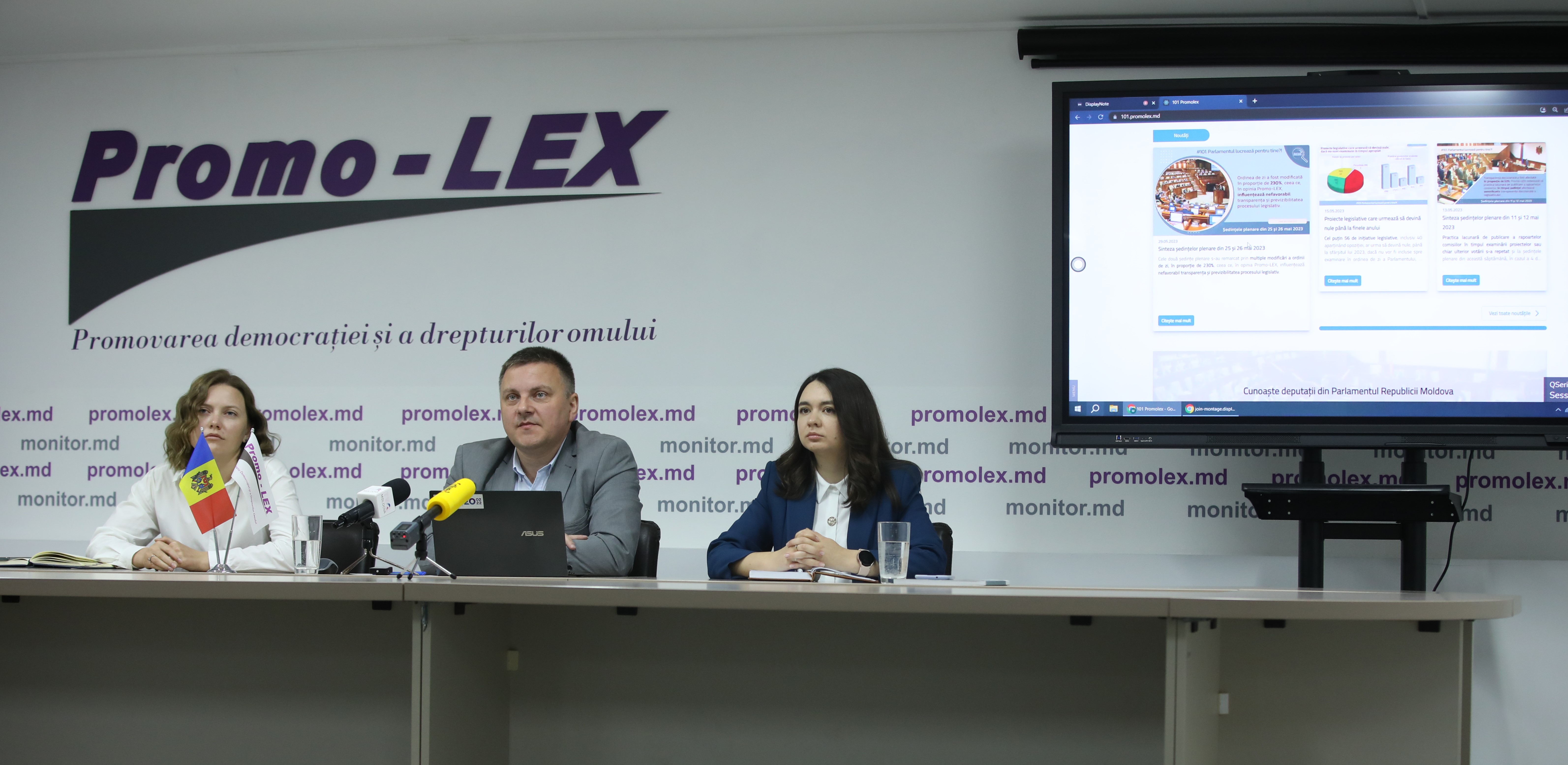
On Monday, June 5, the Promo-LEX Association launched the 101.promolex.md platform – an alternative source of information about the activity of the Parliament of the Republic of Moldova. The purpose of the platform is to increase the transparency and visibility of the supreme legislative authority, to improve its accountability and the accountability of its members, and to facilitate the interaction between them and society.
The platform has been created by Promo-LEX as part of its work of monitoring the Parliament, and it contains all available information about the activity of the current legislature and of each individual MP, which is synthesized, grouped, and presented in an interactive and accessible form. We believe that a democratic legislature should be transparent and should provide the general public with easy access to all information about its activity, interact with society, and involve citizens in legislative processes.
The platform 101.promolex.md offers several options to contact the Parliament, parliamentary committees, and MPs, including the possibility to directly ask them questions of public interest, the answer being the responsibility of the addressee.
Accessing the section “MPs”, you can find up-to-date data on each of the people’s representatives, including their CVs, contact details, and links to social media. It also shows the initiatives proposed by each MP, the way they vote, their attendance of plenary meetings, and all their statements of assets and personal interests submitted since the validation of their mandate. In order to ensure transparency and visibility, it is important to view the activity of each MP in part, because it is not based only on the activity of the faction to which they belong.
The section “Legislative activity” contains detailed information about the initiatives registered in the Parliament, including their authors, the areas to which they relate, and their status, i.e. at what stage of consideration they are. Any draft legislative act can be found easily and quickly by entering keywords into the search engine or by the date its registration. In “Legislative activity” you can also find information about standing committees, their composition, contact details, and details about the work of the committees monitored by Promo-LEX. You can also find out which are the instruments of parliamentary scrutiny and how they are used in the activity of the legislature.
On 101.promolex.md you can watch live plenary meetings or search, by date, the meeting that interests you. In “Publications” you can consult Parliament monitoring reports and other studies carried out by Promo-LEX, including policy documents on the activity of the legislature. In “News” you can find the summary of each plenary meeting that is analyzed by Promo-LEX experts from the perspective of transparency, legality, and efficiency of procedures.
By monitoring the activity of the Parliament, including its website, Promo-LEX has frequently found flaws. The Parliament’s website, which is its main channel of communication with society, publicly and proactively presents only a part of what would be needed for a truly transparent work, as information about the people’s elected officials is often incomplete or presented in a difficult-to-reach manner. For example, it does not contain the CVs and contact details of all MPs, their voting history and attendance of plenary meetings, questions and interpretations addressed to public institutions and answers to them, all statements of assets and personal interests of MPs, except for the last ones submitted.
In this context, we should recall that the Parliament approved, back in 2015, the concept of the e-Parliament Information System. It includes 3 components: electronic document circulation, e-voting, and the new Parliament website, which were to be implemented by mid-2019. Promo-LEX appreciates some progress that has been made, including the application of electronic voting, online scheduling of visits, and online submission of petitions, but considers it necessary to fully implement the e-Parliament concept, with all its components.
Please note that the official platforms of the Parliament, especially the website www.parlament.md, are primary sources, while 101.promolex.md is an alternative platform developed by Promo-LEX.
For the period 2021-2025, Promo-LEX aimed to monitor the activity of the Parliament of the Republic of Moldova, especially in terms of transparency, legality, and efficiency of procedures, as part of the program “Democracy, Transparency, and Accountability” financially supported by the United States Agency for International Development (USAID). The aim of monitoring is to improve the quality of decision-making processes, continually increasing the transparency of those processes and the accountability of the actors involved.
STATEMENT
OPINION OF THE CIVIC COALITION FOR FREE AND FAIR ELECTIONS
REGARDING THE ELECTIONS OF THE GOVERNOR OF GAGAUZIA IN 2023
The Civic Coalition for Free and Fair Elections (CCFFE) acting in solidarity in order to contribute to the development of democracy in the Republic of Moldova by means of promoting free and fair elections in compliance with the standards of the ODIHR (OSCE), the Council of Europe, and its affiliated specialized institutions, hereby expresses the concern regarding the degradation of the electoral process and ignoring the basic legal principles for ensuring free and fair elections while electing the governor (bascan) of the Autonomous Territorial Unit of Gagauzia.
Proceeding from the fundamental principles of free and fair elections, as well as the role of open and honest competition among electoral competitors in ensuring citizens’ conscious voting;
Emphasizing the need to ensure legality and legitimacy of political power in order to guarantee a governance based on voters’ will within a regularly scheduled electoral process;
Considering the hierarchy of the legal framework, such as the constitutional provisions, the Law on the Special Legal Status of Gagauzia (Gagauz-Yeri), the Electoral Code of the Republic of Moldova, and the regional electoral legislation:
The Coalition hereby states that the recent elections for the position of the governor (bascan) of the ATU of Gagauzia were held with multiple violations of citizens’ electoral rights, electoral competitors’ rights to enjoy equal conditions during the electoral process, obligations regarding the activity of the Central Electoral Council of Gagauzia (CECG), as well as suggestions and recommendations by the Central Electoral Commission (CEC).
In addition, the Coalition expresses its regret that most electoral competitors who took part in the election for the position of the governor and reported numerous breaches of the legal provisions during the electoral campaign have preferred not to contest the irregularities on the basis of evidence, though they were taking place due to limited political interests to the detriment of the principles of the rule of law and uniform application of the standards for a free and fair electoral procedure.
The Coalition would like to remind the public opinion that it was exactly the public statement by the electoral contestants who had taken part in the previous polls for the post of the mayor, especially those held in March 2015, that served as a basis for eliminating the drawbacks in the electoral legislation on foreign citizens’ involvement in the electoral campaign, providing certain concert services paid in a non-transparent way, financing from foreign sources, etc. Recently, in spite of amending the electoral legislation and adapting it to the suggestions made by ex-candidates who had been deprived of equal rights, the situation has repeated.
The findings referred to are based upon:
The evidence provided by the CECG and Comrat Court of Appeal while validating the election results did not convince the judges that the elections for the position of the governor of Gagauzia had been flawed. In the situation described above, the Coalition hereby addresses the authorities of the Republic of Moldova with the following suggestions in order to ensure uniform application of the legal provisions on ensuring citizens’ and electoral competitors’ electoral rights during any type of elections, including the regional ones, and referendums:
www.alegeliber.md – The Civic Coalition for Free and Fair Elections is a permanent, voluntary entity, comprised of 39 public organizations from the Republic of Moldova, whose aim is to contribute to the development of democracy in the Republic of Moldova by promoting and implementing free and fair elections according to the standards of ODIHR (OSCE), the Council of Europe, and its specialized affiliated institutions.
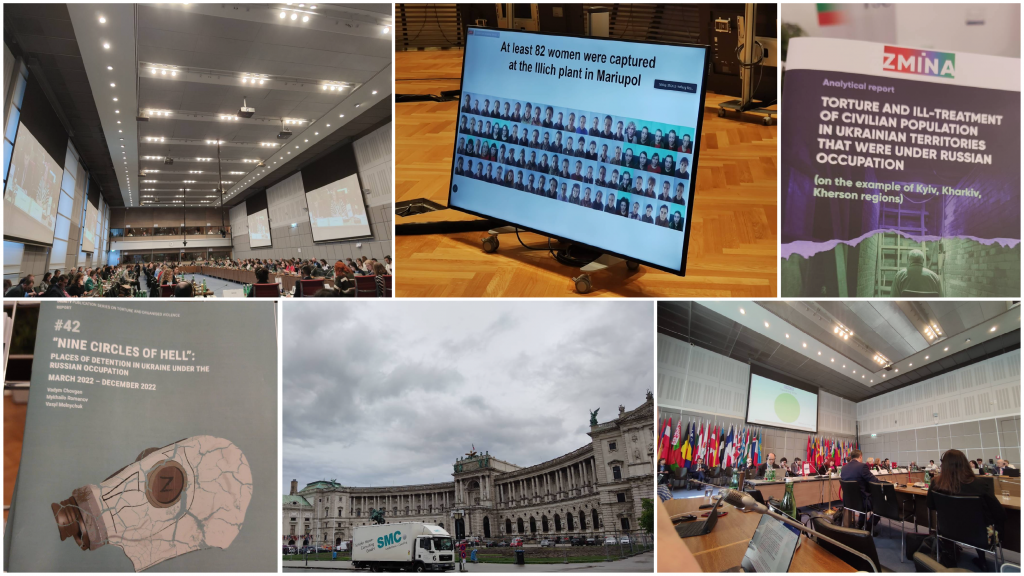
In the period between 23 and 24 of April 2023, OSCE organized the Supplementary Human Dimension Meeting II. The meeting was organized on the topic of Torture and Other Grave Breaches of International Humanitarian Law and Gross Violations of International Human Rights Law.
The meeting is organized by the OSCE Chairpersonship of North Macedonia, OSCE Office for Democratic Institutions and Human Rights.
Supplementary Human Dimension Meetings provide a platform for an exchange of views among OSCE participating States, OSCE institutions and other executive structures and international organizations, civil society and other stakeholders to discuss implementation of OSCE human dimension commitments within selected topics.
The second Supplementary Human Dimension Meeting of 2023 provided a forum for an exchange of views on combating torture and other grave breaches of international humanitarian law and gross violations of international human rights law.
The first session looked at the specific obligations for States in connection with grave breaches of international humanitarian law and discussed the link between grave breaches of IHL and war crimes. It examined the measures participating States should take to fulfil their IHL obligations, and how international organizations such as the OSCE contribute to ensuring accountability for grave breaches and respect for IHL.
The second session examined the importance of investigating and documenting allegations of torture to ensure perpetrators are held accountable and victims obtain redress. Participants discused the main challenges in documenting torture in situations of armed conflict, how to collect evidence while ensuring that victims are kept safe and not re-traumatized, and how co-operation among participating States, international organizations and civil society can be strengthened.
While there are no formal definitions of what constitutes “gross violations” of IHRL, the term has been generally understood to encompass violations that affect the most basic human rights, particularly the right to life and the right to physical and moral integrity. The third session discussed measures States can take to prevent gross violations of IHRL including in times of crisis, political instability and national emergencies, what redress is available, and the role national institutions, international organizations and civil society can play in responding to gross violations of IHRL in times of crisis.
The Promo-LEX Programme Director and Lawyer, Vadim Vieru, addressed during the panel discussion the issues related to the information of the victims of the war crimes among refugees and the need to strengthen the efforts of all the OSCE members on the war crime investigation and prosecution.
The Supplementary Human Dimension Meeting bring together representatives of 57 OSCE participating States, OSCE institutions and structures, international organizations, civil society, media and other stakeholders with relevant experience in the topic. The Partners for Co-operation are invited to attend and contribute with respect to their co-operation and links with the OSCE in the field.
On the night of April 8 to 9 2015, employees of the “militia” from the left bank of the Dniester kidnapped a couple from Vertiujeni village, Floresti district (right bank of the Dniester) from their own home. They were dragged at night on the gravel road from the village and were transported by a boat to the left bank of the Dniester to the “militia commissariat” of Camenca town. There the victims were beaten brutally, placed in the local solitary confinement of preventive detention and charged with the alleged theft of two rabbits.
The maltreatments lasted three days. On April 12, 2015, thanks to the intervention of the constitutional authorities, the two residents of Floresti district were released from illegal detention. The medico-legal expertise, carried out after the release of the victims established numerous physical trauma on their bodies, at the same time psycho-emotional consequences were found, as a result of the pressures to which the victims were subjected during detention.
After almost 5 years, in January 2020, the authorities of the Republic of Moldova managed to detain Andrei Samonii, a former collaborator of the “local militia”, involved in the abuses committed against the couple from Vertiujeni village, while he was trying to complete his documents at the Public Services Agency.
On August 5, 2020, by sentence of the Soroca Court (Central Headquarters), he was sentenced to 15 years of imprisonment for the crimes of housebreaking, kidnapping and acts of torture. The court fully admitted the civil action and ordered the collection of 20,000 euros for the benefit of the two victims as moral damages.
Regrettably, the victims’ ordeal continued. On September 01, 2020, Promo-LEX Association was notified by relatives of Mamontov Constantin (one of the 2 injured parties) about his detention on August 31, 2020 at one of the alleged customs checkpoints in the Transnistrian region. Constantin was released after 13 days of illegal detention. Apparently, his detention and repeated deprivation of liberty was applied by representatives of the de facto structures as revenge for the conviction on August 5, 2020 of their former colleague.
On October 11, 2022, the Court of Appeal of Balti decided to reduce the sentence from 15 to 6 years imprisonment and Andrei Samonii was convicted only for the crime of kidnapping. In addition, the Court of Appeal decided to acquit the convicted person for the acts of torture on the grounds that, “being a collaborator of the so-called militia commissariat, which is not recognized by the legal authorities of the Republic of Moldova, he cannot be subject to the crime of torture.”
Regarding the accusations related to committing the crime of housebreaking, the court found him guilty but released him from criminal liability following the expiry of the limitation period.
The Court of Appeal also reduced the amount of the non-material damage from €20 000 to 20 000 lei.
Disagreeing with the findings and the decision of the Court of Appeal, Promo-LEX’s lawyers appealed against the decision of the Court of Appeal of Balti. The criminal case is currently before the Supreme Court of Justice.
In the meantime, being in detention, Andrei Samonii initiated parallel legal proceedings in order to reduce the term of detention.
On January 31, 2023, the sentence was reduced by 519 days, following the finding of detention in inhuman conditions in Penitentiary No 11 of Balti and No 2 of Lipcani. The decision was upheld by the Court of Appeal of Balti on April 3, 2023.
On March 21, 2023, the provisions of the Law on Amnesty having been applied, the sentence was reduced by one third, i.e. by 2 years.
Even if his case is before the Supreme Court of Justice, even though the victims of the crimes have not been compensated, on April 7, 2023 Andrei Samonii was released from detention. He was deprived of his liberty for approximately 3 years and 3 months.
The early release from detention of a person convicted of kidnapping, accused of torture, together with the non-payment of compensation ordered by the courts as moral damage for the benefit of the injured parties, is not a fair measure, according to the principles of human rights.
Promo-LEX Association repeatedly urges the constitutional authorities to make every effort and to exercise the maximum effort and diligence to fulfill their positive obligations to hold accountable those who commit illegal acts, regardless of the place of their commission on the territory of the Republic of Moldova.
Today April 6, 2023, after almost two and a half years, Adrian Glijin was released from detention.
We recall that on October 7, 2020, around 1:00 p.m., Adrian, together with 3 other citizens, was kidnapped by unknown masked persons from a field near of the Cuzmin village, Camenca district (left bank of the Dniester river). After dozens of requests and approaches to the de facto administration, two months after the kidnapping, his relatives were informed that Adrian was accused of “treason against motherland” and is in detention in a solitary confinement in Tiraspol. In the meantime, Adrian’s family was subjected to more abuses. Representatives of the local security structures organized searches of the homes of the mother and wife, confiscated their personal belongings and vandalized the Glijin family’s means of transport.
In a press briefing on December 7, 2020, Pavel Voicu, Minister of Interior between 14.11.2019 and 06.08.2021, confirmed that the kidnappings organized by the law enforcement structures from the Transnistrian region occurred as revenge for the conviction of a former militiaman from the left bank of the Dniester River, involved in the kidnapping and torture of a couple from the Floresti district in April 2015.
Over the course of a year, relatives were declined the right to the meeting and information about Adrian’s medical condition. Just on 16.12.2021, after several efforts by the family and the Promo-LEX Association, which initiated the campaign „Show him alive”, his mother, Vera Glijin, was able to have an approximately 60-minute meeting at Remand centre No. 3 from the Tiraspol city. The meeting was not a confidential one and it was not possible to obtain complete and truthful information about his state of health and the concrete charges against him.
As a result of sending of a complaint to the European Court of Human Rights in January 2022 by the lawyers of Promo-LEX Association, the High Court decided on the priority examination of the case and on application of provisional measures for the first time in one of the “Transnistrian cases”.
On May 6, 2022, Adrian was „convicted” by the so-called “supreme court” of the Transnistrian region to 13 years and 6 months in prison for alleged “treason against the motherland”, the sentence being later reduced to 13 years.
As a result of repeated abuses committed by representatives of the Tiraspol regime, the situation of Adrian Glijin is representative for the so-called local judicial system from the Transnistrian region: kidnapping, invented and politically motivated criminal charges, illegal detention in inhumane conditions, absolute restriction of access to the case materials, including the “sentence of conviction”, impossibility of medical examination by an independent doctor and repeated refusals to confidential meeting with relatives. Moreover, the 19-month detention period during which Adrian was in «preventive detention» (07.10.2020-06.05.2022), was also against local legislation, which establishes a maximum period of “preventive detention” of 18 months.
During his detention, Promo-LEX Association provided legal assistance to his family and constantly insisted on the ensuring of fundamental procedural guarantees, access to an independent doctor and release from illegal detention.
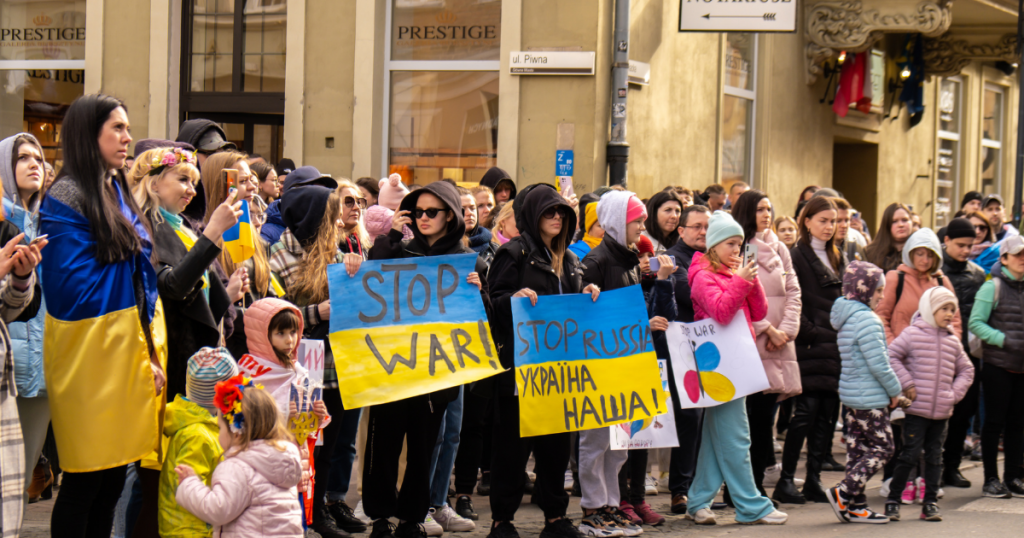
24 February marks one year since Russia’s full-scale invasion of Ukraine. To date, FIDH member organisations in Ukraine, the Center for Civil Liberties, and the Kharkiv Human Rights Protection Group, have helped to document close to 30,000 alleged international crimes. Behind these figures are deaths and grief of thousands of victims, exacerbated by the impunity of Russia’s leadership. FIDH and its members worldwide call on international institutions and governments to ramp up efforts to ensure justice in Ukraine as a means of promoting international peace and security.
One year ago, the world woke up in shock as Russia’s armed forces launched a large-scale attack against Ukraine in an apparent attempt to conquer the capital Kyiv and overthrow a democratically elected government. Along with the international community, FIDH strongly condemned Russia’s aggression. The offensive was resisted by Ukraine’s defenders, but the suffering of the Ukrainian people was only beginning. In one year, CCL, KHPG, and the other Ukrainian NGOs that are members of the “Tribunal for Putin” coalition, have documented approximately 30,000 incidents of alleged international crimes committed, for the most part, by the invading armed forces, including summary executions, torture, unlawful confinement, ill-treatment, rape, and other sexual violence committed in areas occupied by Russia’s armed forces. Many of these episodes of horrific violence have resulted in domestic investigations, in Ukraine and elsewhere, and already several prosecutions of Russian soldiers for violations of the laws and customs of war.
Numerous international accountability mechanisms have been set up to investigate and facilitate the prosecution of possible violations of international humanitarian law, including the Independent International UN Commission of Inquiry on Ukraine, the Organization for the Security and Cooperation (OSCE) Ukraine Monitoring Initiative, the Eurojust Joint Investigation Team and investigations by more than 10 additional national war crimes units, and international Mobile Justice Teams, among others. The International Criminal Court (ICC)opened a full investigation into the situation in Ukraine in March 2022. Effective cooperation and complementarity between these mechanisms, and their meaningful engagement with victims and civil society, will be key. The ICC does not have jurisdiction over the crime of aggression with respect to the situation in Ukraine, and, due to its mandate as a Court of last resort prosecuting those most responsible, it will only investigate and prosecute a handful of cases – a tiny fraction of violations that have already been documented with the vast majority of cases left to Ukraine, and other domestic jurisdictions under the principle of universal jurisdiction.
Moreover, these mechanisms will not be sufficient to root out impunity of the Russian leadership for crimes committed by Russia’s armed forces, or its private militias, in Ukraine, but also in Syria, Mali, Central African Republic (CAR), Libya, and, previously, in Georgia and Chechnya. This is due to many factors, including a lack of political will and capacity to prosecute the breadth of these crimes, both domestically and internationally.
Meanwhile, Russia’s war of aggression in Ukraine has not only exacerbated regional insecurity, but also led to a disruption of global food supplies, soaring inflation, and caused severe and lasting political, economic, and social repercussions on every continent. Ukrainian refugees have sought refuge as far away as North and Latin America. Food shortages due to diminished deliveries of wheat from Ukraine have been acutely felt in countries like Lebanon, Egypt, and Indonesia. Domestic mobilization into Russia’s Armed Forces has caused an exodus of Russians to Central Asia, Georgia, and Armenia, while aggressive recruitment by Russia’s so-called Wagner Private Military Company has targeted individuals from Kazakhstan, Tajikistan, Serbia, and also Zambia and Ivory Coast. Meanwhile, human rights abuses committed by Wagner in Syria, CAR, Libya, Mozambique, and Mali remain unpunished, giving a tacit endorsement of Russia’s ruthless methods in a bid to expand its influence in Africa by propping up fragile or authoritarian regimes in exchange for a license to plunder natural resources. Russia has also strengthened its ties with repressive governments in the Middle East and Asia, expanding its arms trade with Iran and Myanmar and increasing its oil exports and other forms of economic cooperation with China and Laos. This has helped Russia to soften the crippling effect of sanctions and to form an alliance of rights-abusing regimes that are emboldened by Russia’s impunity to amplify repressions at home.
In order to promote justice more effectively in Ukraine and globally, the recurrent threat to international peace and security stemming from Russia’s global pattern of abuses should be recognised and dealt with more affirmatively.
Standing in solidarity with the Ukrainian people, FIDH and its member organizations: