STUDY The status of peacekeeping forces in international law: the Republic of Moldova case

_article_1422365849On 27 January 2015, was launched, during a panel discussion, the Study “The Status of peacekeeping forces in international law: the Republic of Moldova case”.
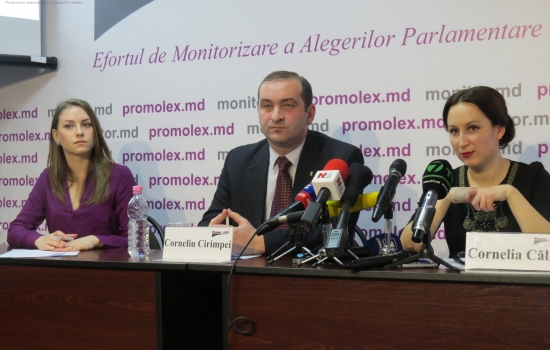
Using a scientific-practical approach, the author of the study is assessing from the perspective of international law the events of 1992, trying to explain to what extent the involvement of a third party (Russian Federation) can be seen as impartial. At the same time the author analyses the opportunity of the Agreement signed on 21.07.1992, given that the objectives of that agreement were neither achieved nor wished to be achieved, while the situation in the region seems to be provocative every time the Chisinau authorities try to promote an independent policy, aimed at advancing the interests of their citizens.

According to Ion Manole, the executive director of Promo-LEX, the role of the peacekeeping forces is not limited to deploying armed soldiers on a certain territory, but to contribute towards securing that region and re-establishing relations between the two banks. We stand for a political dialogue, but for one that is based on the norms of international law, and we want the authorities to be more active in this respect. Not least, the lack of solutions for these problems leads invariably to grave violations of human rights in the transnistrian region.

One of the conclusions of the study refers to the clear inefficiency of the current format of negotiation of the transnistrian conflict, underlining the fact that in the last 22 years the situation not only lacked any positive changes but the parties are place in unequal positions. The Republic of Moldova is the only subject of international law that represents this territory, and the arguments brought by the “transnistrian” side in favour of their right for separation are unfounded, and lack any norm of international law, the author underlined.

The author is also concluding that the Russian Federation has breached repeatedly the provisions of the 1992 Agreement, a legal document that bears it signature. In this sense, the author brings several arguments, such as: the inclusion, with Russian help, of the transnistrian side into the format of negotiations, the support of the Tiraspol administration in introducing some pseudo-customs and border checkpoints, and regular breach of the concept of humanitarian aid granted by a state or an international organization. In addition, the differentiation of economic relations between the Russian Federation and Republic of Moldova on the one hand, and between the Russian Federation and the “transnistrian” region – on the other, and not least the political influence of Russia in the transnistrian region, allows Tiraspol to have a non-constructive attitude towards the Chisinau authorities in the solution of the conflict.

Regarding the current format of the peacekeeping forces, one of the recommendations of the study highlights the need for a change of format into a civil and police observers based on principles that establish the contemporary concept of peacekeeping policies promoted by UN. Another recommendation calls for a more dynamic dialogue with the EU institutions to ensure a role as active as possible in the solution of the conflict, including through having a decisive role in the future format, without denying the importance of the states already present in the negotiation process – Ukraine and Russian Federation – although, in case of the latter, without the unimaginable and claimed right of veto.

The electronic version of the Report is available here.

The study was developed by Vitalie Gamurari, PhD, university lecturer at the Academy of Sciences of Moldova, within the project “Consolidation of respect for human rights in the transnistrian region of Moldova”, implemented by Promo-LEX with the financial support of the National Endowment for Democracy (NED).

For more details, please contact: Ion Manole, Executive Director, Promo-LEX Association, phone: (22) 450024, GSM: 069070800, e-mail: [email protected]


ECHR Communicates Case of Ribnita Investigator Kidnapped by Militsia with CNA Help

Recently, the European Court of Human Rights notified the respondent Governments about the case Negruţa v. Moldova and Russia (no.3445/13).

Ghenadie Negruta is a citizen of Moldova, originally from district Grigoriopol. Between 2008 and 2011, he served as a senior investigator in the so-called prosecution office in Ribnita.

On 14 June 2011, while in Rezina, he was seized by several representatives of the Transnistrian militsia [police], who were helped by officers of the Moldovan National Anticorruption Center (at the time, CCECC).

According to the applicant, CNA officers assisted illegal militsia representatives in conducting all their criminal proceedings in accordance with the region’s “laws” in a locality controlled by the constitutional authorities. Moreover, they used physical force against the applicant at the time of his arrest.

After the applicant’s car was searched and seized, Ghenadie Negruţa was seized and placed in the basement of the preventive detention isolator of the police department in Tiraspol, and two days later, a Tiraspol “court” has decided to extend his arrest for an indefinite period.

In April 2012, the “supreme court” in Tiraspol sentenced Ghenadie Negruţa to 4 years and 6 months in prison.

The applicant’s wife filed several complaints seeking to identify the CNA officers involved in the illegal arrest of her husband. The Internal Security Department of the CNA informed her that the respective officers have been identified. According to the Rezina Prosecutor office, criminal proceedings against them were started in January 2013, however, to date, Ghenadie Negruţa’s wife was not informed on the developments in the case. Ghenadie Negruţa was released early in 2014.

In his complaint to the European Court of Human Rights, the applicant claims a violation of Articles 3 and 5 paragraph 1, and Article 1 of Protocol 1 of the Convention. Ghenadie Negruţa is represented before the High Court by lawyers from the Promo-LEX Association.

More information on this case can be found on the website of the European Court of Human Rights.

For more details, contact: Alexandru Postica, Human Rights Program Director, Promo-LEX Association, tel: (022) 450-024, GSM: 069-104-851, email: [email protected].


ECtHR Decision on Latin Script Schools in Transnistria Still Ignored by Russian

The date of 19 January 2015 marks the 2-year anniversary of the deadline by which the ECHR decision on the case of Latin script schools from Ribnita, Grigoriopol and Tighina (Bender) had to be enforced.

We recall that on 19 October 2012, the Grand Chamber of the European Court of Human Rights delivered its judgment in the case of Catan and others v. Moldova and Russia. In the judgment, the Court recognized the violation of the right to education and Russia’s responsibility for the situation of Latin script schools in Transnistria. At the same time, in the ECtHR decision, Moldova was not recognized responsible for violation of the right to education in the said case.

The cases were sent in 2004 and 2006 respectively by parents, teachers and students from the towns of Ribnita, Tighina (Bender) and Grigoriopol of the Transnistrian region of Moldova, and concern violations of their rights to education, privacy and non-discrimination.

According to the judgment of the High Court, the Russian Federation was to pay all damages to the applicants, and to take all measures to put an end to the violations of the right to education in these schools in the Transnistrian region.

Over the past two years, Promo-LEX lawyers who represented the 170 applicants before the Court, continued monitoring the situation of the Latin-script schools in the Transnistrian region, and the progress in implementing the decision of the European Court. In this context, Promo-LEX sent several appeals to the Committee of Ministers of the Council of Europe, the institution responsible for monitoring the implementation of ECtHR decisions. For its part, the Committee of Ministers strongly insisted that each Member State had an unconditional obligation under Article 46 paragraph 1 of the Convention to enforce the final decisions of the Court, and ordered the Russian authorities to take all possible steps to end the violation of the applicants’ right to education.

Also, starting with 2 May 2014, Promo-LEX conducted a campaign  “Save Transnistrian Schools”, which aims, among other things, to show solidarity with the students, parents and teachers, show work and study at the Latin script schools located in the Security Zone, and to inform the public opinion about the problems faced by these schools on a daily basis.

The “Save Transnistrian Schools” campaign will be continued in 2015. You can follow the campaign on its official Facebook page here.

For more details, contact: Alexandru Postica, Human Rights Program Director, Promo-LEX Association, tel: (022) 450-024, GSM: 069-104-851, e-mail: [email protected].


Discrimination Case Regarding Young Woman Detained in Penitentiary no.13

Tatiana Machina is a young woman from Chisinau who received the status of 1st degree disability in July 2005 and can move around only in a wheelchair. She is currently in detention in penitentiary no. 13, and, according to a medical assessment, she needs permanent care by another person.

According to the young woman, she is detained in a cell on the second floor, in a bloc of the penitentiary, and she needs the help of other inmates to move around. The cell conditions have not been adapted for the needs of impaired Tatiana cannot do the most basic things by herself, such as take care of her personal hygiene or get food.

The young woman also believes that the administration of Penitentiary no. 13 did not take sufficient measures to ensure that she receives her disability allowance, which is guaranteed by law, although she submitted multiple requests in that regard to the administration.

In September 2014, Tatiana Machina submitted a complaint with the Council for the Prevention and Elimination of Discrimination and Ensuring Equality (CPEDEE) on the failure of the Department of Penitentiary Institutions and the administration of Penitentiary no. 13 to ensure reasonable accommodation and accessibility. The complaint also claims indirect discrimination by the local office of the National Social Insurance House for their refusal to pay the applicant her disability allowance on the grounds that she was already in the state’s care, that is, in detention.

On 11 December 2014, CPEDEE established the fact that Tatiana Machina was discriminated on both these criteria.

The full text of the Council’s decision is available here.

The applicant was represented by lawyers from the Promo-LEX Association.

The legal assistance n this case was provided under the Project “Strengthening the Capacities of the Civil Society from Moldova, Including the Transnistrian Region, to Fight Discrimination via Advocacy”, implemented by The Equal Rights Trust and the Promo-LEX Association and funded by the European Union.

For details, please contact: Carolina Bondarciuc, Promo-LEX Press Officer: GSM 069637849, Tel/Fax (+373 22) 450024, e-mail: [email protected]


Another two cases regarding ill-treatment and illegal detention have been communicated by the ECHR

Recently, the European Court of Human Rights has communicated to the government of Republic of Moldova the cases Grecu (nr.51099/10) and Gumeniuc (nr.48829/06).

The first case concerns Tatiana Grecu, who in February 2002 was taken into police custody. She was detained for more than 12 hours at the Ciocana police office, without any charges being brought to her and she was subjected to ill-treatment. While being detained, Tatiana received emergency medical care, and traces of violence were found as a result of the examination. Shortly after, a forensic expert reconfirmed that the injuries have been caused in the circumstances described by Tatiana Grecu.

Although she submitted a complaint to the Prosecutor’s Office, it rejected the complaint without giving any reasons. Subsequently, Tatiana Grecu was sentenced to 5 years of imprisonment for committing an offence.

In the complaint submitted to the High Court from Strasbourg, the applicant claimed the violation of Art.3 of the European Convention on Human Rights, application of ill-treatment by the police, lack of medical assistance during the detention period and inability to efficiently investigate the complaint regarding ill-treatment. The applicant also claimed violation of Art.5, unlawful deprivation of liberty, and Art.13 of the Convention, as the applicant had no efficient means of defending against the claimed ill-treatment. Details here.

The second case concerns Andrei Gumeniuc, who in 2005 received a fine from the traffic police for exceeding the speed limit. Subsequently, almost a year later, the court from Ocnița found that Mr. Gumeniuc failed to pay the fine and decided to replace it with 10 days of imprisonment. According to the applicant, he was not informed about the lawsuit and in June 2006 he was placed in detention in the Otaci police department. During the 17 hours spent in detention, the plaintiff suffered a heart attack, subsequently he benefited from emergency medical care and was released.

In front of the High Court from Strasbourg, the applicant claimed the violation of Art. 5, namely the unlawful deprivation of liberty. Details here.

In front of the Court, the applicants are represented by the lawyers from Promo-LEX Association.

For more details, contact: Alexandru Postica, Promo-LEX Association Program Director, Lawyer. tel: (22) 450024, GSM: 069104851, e-mail: [email protected].


30 Thousand Euros from the State Budget for Torture in Police Custody

Two brothers will receive 30 thousand euros for the torture they were subjected to while in police custody. The Government of Moldova admitted a violation of Art. 3, and namely the freedom from torture, and the European Court for Human Rights has acknowlegded the amicable solution in the case Repesco v. Moldova (application no. 64785).

In August 2007, Adrian and Constantin Repesco were violently seized and taken to the police inspectorate of sector Botanica under allegations of having committed a crime. While at the inspectorate, physical force was used against them to force them to admit to committing the crime. According to the statements by the two brothers, they were repeatedly beaten by several representatives of the police, up to losing conscience.

The mother of the two men says that she felt humliated for the whole period of these events: “The assigned compensation cannot be compared to a broken family. I fought and will continue to fight  fr my children, I knocked on the doors of every state body and institutions, and was met with shut doors. After my case changed hands of 18 differeent lawyers, I learned about the Promo-LEX Association, and they helped me and provided assistance for the whole duration of the trial at the EctHR, for which I am very grateful”.

During they stay in polcie custody, the two brothers received no medical assistance. Later, Constantin Repesco requested the help of the Center for the Rehabilitation of Victims of Torture “Memoria”. The ill treatments were confirmed in the Center’s conclusions, after having conducted multiple psychlogical examinations and tests, and Constantin Repesco requires rehabilitation, continuous observation, and long-term psychological and medical assistance.

In their application to the High Court in Strasbourg, the applicants reported violation of Art.3 of the European Convention for Human Rights, and namely ill treatments by the police, inhuman and degrading detention conditions, absence of medical care during the reporting period, and failure to efficiently investigate their complaint on ill treatments. A violation of Art.13 of the Conventon was also cited, in that the applicants did not have an effective remedy against the ill treatments they suffered.

The applicants were represented before the Court by lawyers and defense attorneys from the Promo-LEX Association. See details about the EctHR decision here.

For more details, please contact: Alexandru Postica, Program Director with the Promo-LEX Association, Defense Attorney. tel: (22) 450024, GSM: 069104851, email: [email protected].


Moldova and Russia to be held responsabile for forced enlisting in the army of the transnistrian region

Recently the European Court of Human Rights has notified the governments of Moldova and Russia about the application of Mr. Ivan Samatov (Application no. 8064/11).

In 2005, the young Ivan Samatov was forcibly enlisted in the army of the transnsitrian region, where he was subjected to inhuman and degrading treatment and forced to perform different jobs for officers. Due to continuous ill-treatment Ivan left the military unit. Later he was arrested by police and brought back to the same military unit, where the ill-treatment continued. For „deserting” the applicant was sentenced to 5 years imprisonment.

In his complaint to the European Court of Human Rights, the applicant complained about the violation of article 3, 5 paragraph 1 and 13 of the Convention. Attorneys from the Promo-LEX Association represented the applicants before the European Court for Human Rights.

The details on the application are available on the web site of the European Court of Human Rights.

Every year hundreds of young Moldovan citizens, residing in the eastern region of the country, are called for enlisting in illegal paramilitary structures. They are required to perform military service and  give oath to the secessionist entity. Details here.

For details, please contact: Alexandru Postica, Promo-LEX Association Program Director, Attorney at Law, tel: (022) 450-024, GSM: 069-104-851, email: [email protected].


Human rights violations in Transnistrian region again in the attention of the ECtHR

Recently the European Court of Human Rights has notified the governments of Moldova and Russia about the application of Mr. Valeriu Mitul and Iurie Coţofan (Application no. 33446/11).

Valeriu Mițul is the ex-mayor of Corjova village, from Dubasari district and Chairman of the “Corjova 1992” War Veterans Association. Iurie Coţofan is council adviser in the same village. Every year on March 2, Corjova villagers commemorate the victims of the 1992 war on the Dniester.

In 2011, the march to commemorate the victims of the 1992 war on the Dniester was taking place peacefully and without incidents, until the representatives of local militia requested the first applicant (Mr. Valeriu Mitul) to stop the march and not to hold the Moldovan flag.

The participants ignored the request of the local militia and continued by attending a religious ceremony. At the end of the commemorating ceremony 30 militia surrounded the participants and Valeriu Mițul and Iurie Coţofan were seized and escorted to the militia headquarters in the Dubasari town.

One hour after the incident, the applicants were charged with administrative offenses, namely resisting to the “MRT militia” during an “unauthorized meeting” were the Moldovan flag was displayed. On the same day, the so-called „judges” from Dubasari town, found them guilty of the charges, and applied seven days of administrative detention for each applicant. Subsequently Valeriu Mițul and Iurie Coţofan were released under an order of the leader of the region.

In their complaint to the European Court of Human Rights, the applicants complained about the violation of article 3, 5 paragraph 1, 11 and 13 of the Convention. Attorneys from the Promo-LEX Association represented the applicants before the European Court for Human Rights.

The details on the application are available on the web site of the European Court of Human Rights.

For details, please contact: Alexandru Postica, Promo-LEX Association Program Director, Attorney at Law, tel: (022) 450-024, GSM: 069-104-851, email: [email protected].


Promo-LEX: At Least 14 Million Lei Undeclared During the Campaign

_article_1418898445The Promo-LEX Association launched a Monitoring Report on the electoral candidates’ finances during the campaign for parliamentary elections on 30 November 2014. The document contains an analysis of the declared and undeclared revenues and expenses of the candidates 10 October – 30 November 2014.

Based on the current legal provisions on election funding, and on the analysis of declared revenues and expenses of the candidates, and the estimates of Promo-LEX observers with regard to the candidates’ reported and unreported revenues and expenses, the Election Monitoring Effort has uncovered several major deficiencies:

  • The total estimated quantum of total undeclared expenses was at least 14,916,866 lei (PDM – 9,592,846 lei, PLDM – 2,965,895 lei, PCRM – 703,917 lei, PL – 446,953 lei, PSRM – 411,636 lei, and others – 795,619 lei). Most of the undeclared expenses went to cover the organization of public events (74.82%);
  • Two electoral contenders (PD and PLDM) went beyond the 5% deviation from the set threshold, risking sanctions such as cancelation of their registration;
  • At least six candidates incurred expenses for organizing 181 concerts, 7 disco parties, two campaign launch events, and two concerts abroad. At least 91 musicians were involved in the events, which amounts to no less than 11,160,545 lei in unreported expenses;
  • Nine candidates failed to report at least 728,200 lei in advertising expenses;
  • Ten candidates had expenses for transportation, and, according to Promo-LEX observers’ estimates, they travelled approximately 114,718 km, thus unreported expenses amount to at least 397,723 lei;
  • Twelve candidates had at least 379 employees engaged in the campaign at their central and local party offices. The total amount of payment for their work was not less than 1,014,622 lei;
  • Ten electoral contenders involved a total of at least 4,032 volunteers in campaigning activities. Promo-LEX estimates show that at least 529,378 lei had to be spent for each working day of the volunteers.
  • At least four candidates (PLDM, PSRM, PDM and PL) conducted campaigning activities in no less than six countries. Unreported travel expenses amount to at least 49,945 lei;
  • According to Promo-LEX findings, 15 electoral candidates maintained at least 227 local offices throughout the country. A comparative analysis of the data presented in the candidates’ financial reports shows that the minimum quantum of undeclared rent expenses amounts 592,209 lei;
  • 15 candidates failed to report at least 77,900 lei in expenses for maintenance of permanent premises;
  • 26 candidates failed to report at least 366,344 lei as expenses for communication services.

The total amount of funds declared by the candidates during the electoral campaign was 116,721,720 lei. Candidates’ revenues grew 3.5 times compared with the campaign for 2010 elections.

According to the candidates, their declared expenses amounted to 116,721,908 lei, of which:

  • 90.5% were spent on advertising;
  • 2.56% were spent on public events;
  • 1.28% covered transportation expenses;
  • 1.01% were spent on renting premises;
  • Other expenses represented 4.65%.
  • Only one candidate declared expenses for the compensation of volunteers;
  • Only 4 candidates reported expenses for paying staff members and employees.

See the Report here.

The Election Monitoring Effort is part of the activities conducted by the civil society under the aegis of the Coalition for Free and Fair Elections.

The Monitoring Effort for the Parliamentary Election on 30 November 2014 has received technical assistance from the National Democratic Institute for International Affairs (NDI) and is funded by the United States Agency for International Development (USAID), the National Endowment for Democracy (NED), the Council of Europe, and the Stefan Batory Foundation from the funds provided by the Solidarity Fund as part of the “Support for Democracy” Programme of the Polish Ministry of Foreign Affairs.

For additional information, please contact:
Galina Sanduta, Press Officer of the Promo-LEX Election Monitoring Effort, GSM: 069 95 82 89,
E-mail: [email protected].


Joint Open Letter. Concern on the situation of human rights defenders from the Transnistrian region

JOINT OPEN LETTER

Iurie Leancă
Prime Minister of Republic of Moldova

Dmitri Medvedev
Prime Minister of the Russian Federation

Pavlo Klimkin
Minister of Foreign Affairs of Ukraine

William H. Moser
Ambassador of United States of
America in Republic of Moldova

Pirkka Tapiola
Ambassador, Head of the European
Union Delegation to Moldova

Michael Scanlan
Head of the OSCE Mission to Moldova

Victor Moraru
Ambassador of the Permanent Mission of the
Republic of Moldova to the United Nations

Re: Concern on the situation of human rights defenders from the Transnistrian region

Excellencies,

The Promo-LEX Association, Front Line Defenders, Civil Rights Defenders, and the Observatory for the Protection of Human Rights Defenders, a joint programme of the International Federation for Human Rights (FIDH) and the World Organisation Against Torture (OMCT), are writing to you regarding the harassment targeting human rights defenders from the Transnistrian region in the Republic of Moldova.

Brief Description of the Situation

The pressure cast by the administration in Tiraspol on human rights defenders from the Transnistrian region intensified in 2013–2014. Numerous representatives of the civil society are intimidated and subjected to libel on a daily basis for their work to promote and defend human rights in the Transnistrian region of the Republic of Moldova (Transnistria).

Human rights defender Stepan Popovschi was persecuted by the Tiraspol administration for his attempts to defend the property rights of thousands of residents of the region, and to hold public meetings. In March 2013, the activist’s home was searched, and a “criminal” file was opened against him.  More details on the case are available here.

Defense attorney Vladimir Maimust has been harassed for his professional activities. In September 2013, he an attempt was made to taket his life, when an explosive device was placed in his personal car. See details here.

Journalists and human rights defenders Nicolae Buceatchi and Luiza Dorosenco were accused of “subversive activities in Transnistria and inciting hatred towards the current authorities. These accusations were formulated in several videos published on YouTube in May 2014. Their complaints to the local investigatory bodies were ignored and were not followed through with. More details on these cases may be found here. See videos here and here.

The work of human rights defenders is viewed in the Transnistrian region as subversive, and as an attempt to undermine the security of the local regime and de facto administration. This is why the field of human rights is  not widely represented at the local level, and there are no efficient mechanisms or institutions to monitor the situation of human rights. Nevertheless, in the last year, the local administration took action to exercise control over human rights defenders and nongovernmental organizations from the region. See details here.

In the last 12 years, Promo-LEX[1] has been working in the field of human rights protection and promotion in Moldova, including the Transnistrian region, and encountered numerous obstacles and difficulties in its work.

On 5 December 2014, human rights defender Alexandru Zubco was banned access to the Transnistrian region. He was detained at the checkpoint in Bender and his car searched. After approximately 30 minutes, representatives of local security services (KGB) informed him that he was banned from the region, as his presence in Transnistria was “not welcome.”

In June 2014, Alexandru Zubco sued the Transnistrian security service in a court in Tiraspol for a ban imposed on his personal car in April 2014. The court rejected the application several times, invoking formal reasons. The application was finally admitted in October. In his application, the plaintiff requested that the ban be lifted. “I did not hope for a fair justice in the region, so I submitted the application namely to see how the mechanism of defending human rights works in Tiraspol. The hearing was set for 5 December, so I was on my way to Tiraspol to go to court,” said Alexandru Zubco.

Moldovan constitutional authorities informed Alexandru Zubco that the illegal “kgb” structures have been monitoring him in connection with his work with Promo-LEX. Alexandru Zubco has been with Promo-LEX since 2007 and is an active promoter of human rights, well known at the national and international level.

Relevant national and international standards

In 1992, the Republic of Moldova and the Russian Federation signed an agreement that guarantees freedom of movement  of goods, services and persons July, 21 1992. We find however that the guarantees provided in the respective document are not observed, and the de facto administration of the Transnistrian region tends to limit access to the region of various persons, including human rights defenders.

While the access of activists and human rights defenders to Transnistria is limited, a great number of residents of the region that face various social, economic or family-related issues and do not have access to assistance, including legal assistance; therefore,  the administration’s abuses continue. National and international human rights organizations have repeatedly called attention to the severe human rights situation in Transnistria[2]. The critical situation of human rights in the Transnistrian region was described in a 2012 report submitted by UN Senior Expert Thomas Hammarberg[3]. The situation has not been monitored since the report’s publication, and no positive changes have been recorded. The most important issue remains the impunity or lack of responsibility on the part of the local administration for their actions and severe human rights violations.

On 9 December 1998, in its Resolution A/RES/53/144, the UN General Assembly adopted a Declaration on Human Rights Defenders. The Declaration sets functional and formal guarantees for activists, journalists, volunteers, who conduct activities to promote and guarantee human rights. The states where the human rights defenders operate must ensure and guarantee of these rights.

In its Resolution adopted on 17 June 2010, the European Parliament established EU policies in favor of human rights defenders (P7_TA (2010) 0226), which emphasize that human rights defenders in third countries should be better protected through more effective EU human rights dialogues, and stresses the need to systematically raise the issue of the situation of human rights defenders in all political talks on human rights and in trade negotiations with third countries. It also reiterates the fact that the promotion, protection and security of human rights defenders should be considered as a priority issue in the EU’s relations tierce countries, which should be integrated at all levels and in all aspects and instruments of EU foreign policy to increase coherence, effectiveness and credibility of EU support to human rights defenders.

Since the recent acts of intimidation of human rights defenders in Transnistria by the de facto local administration raise deep concerns, as their rights to freedom of movement and freedom of expression are constantly violated, prompt interventions by EU Member States and the Kingdom of Norway, which shares the same democratic principles in favor of human rights defenders risking repressions in the Transnistrian region, are urgently needed.

In these circumstances, WE REQUEST:

  1. That Moldovan authorities be called on to observe their obligation to use effective measures to protect human rights defenders who are or may be at risk in the Transnistrian region;
  2. That all threats against human rights defenders who are at risk of persecution in the Transnistrian region be publicly condemned;
  3. That the authorities of the Russian Federation be actively involved and use their influence over the administration in Tiraspol to stop the pressure on human rights defenders in the Transnistrian region;
  4. Also, on the eve of the Universal Periodic Review of the Republic of Moldova by the UN Council for Human Rights that will take place  in 2016, that the Republic of Moldova be advised to extend the application of its laws and practices that enforce the provisions of the UN Declaration on human rights defenders to the Transnistrian region;
  5. Reinforced diplomatic efforts in regional and international bodies to ensure that human rights are observed in the Transnistrian region of Moldova;
  6. That humanitarian and financial support offered to the Transnistrian region be conditional on meeting and observing human rights standards.

We sincerely hope that you will take these elements into account.

Yours sincerely,

Civil Rights Defenders
Front Line Defenders
International Federation for Human Rights (FIDH) in the framework of the Observatory for the Protection of Human Rights Defenders
Promo-LEX Association
World Organisation Against Torture (OMCT) in the framework of the Observatory for the Protection of Human Rights Defenders


[1] Promo-LEX Association is a civil society organization with special consultative status with the UN (ECOSOC), whose purpose is to advance democracy in the Republic of Moldova through promoting and defending human rights and monitoring democratic processes. Promo-LEX was created in 2002 and through its advocacy activities ensures legal protection of citizens’ rights, including in the Transnistrian region. Over twelve years of its activity, over 70 strategic reasons got to the ECtHR, on 21 of them, the Court ruled positive judgments.