ENEMO Calls Azerbaijan for Immediate Release of Anar Mammadli

The European Network of Election Monitoring Organizations (ENEMO) once again calls Azerbaijan Government for immediate release of Anar Mammadli of Election Monitoring and Democracy Studies Centre (EMDS).  EMDS chairman Anar Mammadli was imprisoned by the Court of Serious Crimes for 5.5 years respectively following the Azerbaijan presidential elections of October, 2013 when critical reports were published on the electoral process by Anar Mammadli and his colleagues.

ENEMO believes that Anar Mammadli was conducting legitimate and peaceful work as part of the EMDS observation mission In accordance with the internationally recognized standards for domestic monitoring of elections placed in the DECLARATION OF GLOBAL PRINCIPLES FOR NON-PARTISAN ELECTION OBSERVATION AND MONITORING BY CITIZEN ORGANIZATIONS.  The EMDS reports strongly criticized the government for the electoral process violations and frauds, which creates the strong perception that legal grounds for the Azerbaijan human rights defenders imprisonment were fabricated.

The actions which took place in Azerbaijan regarding the arrest of human rights activists represent a political oppression on civil society organizations and pose a serious danger to the country’s democratic development.  NGOs in Azerbaijan have been facing restrictions in their operation for many years now, but during the last few years authorities have adopted various legislative amendments to create bureaucratic obstacles for local civil society organizations and to weaken their activities. New legislative amendments have enacted barriers for access to foreign funding, established new penalties, and broadened the range of grounds for temporarily suspending the work of an NGO.  ENEMO considers that the present legal procedures, instead of ensuring the rule of law aim at repressing civil society because of their work and critical views.

Several International Organizations have made statements declaring the arrest of human rights defenders as political and called upon the Azerbaijan authorities to release them.  In a joint written declaration[1] submitted at the January 2014 session of the Parliamentary Assembly of the Council of Europe (PACE), members of parliaments from Council of Europe member States have also called upon the authorities of Azerbaijan to release Anar Mammadli from pre-trial detention.  Amnesty International considers Anar Mammadli to be a prisoner of conscience on account of the legitimate exercise of his rights to freedom of expression and association, and calls for his immediate and unconditional release.[2]

ENEMO calls upon the Azerbaijan authorities to drop all the charges brought against Anar Mammadli and to release him immediately. We ask European Union, Council of Europe and other relevant international organizations to strongly condemn the imprisonment of Azerbaijan human rights activists, exert maximum pressure on the government of Azerbaijan to cease oppression of civil society organizations and fulfill Azerbaijan’s commitments with the European Convention on Human Rights.

We also call upon the authorities to ensure that human rights defenders and civil society members are able to carry out their legitimate activities without fear and harassment.

The European Network of Election Monitoring Organizations (ENEMO) is international network of independent grass root non-partisan CSOs that supports democratic development and citizen’s participation in political processes. It is composed of 22 leading domestic monitoring organizations from 17 countries of Central and Eastern Europe and Central Asia, including three European Union countries. ENEMO was founded on September 29, 2001 in Croatia. All ENEMO members are committed to the principles of non-partisanship, impartiality, transparency, objectiveness and accuracy.  ENEMO and its members respect and promote the international standards for free and transparent elections, as well as ways and mechanisms for education, engagement and empowerment of the people.

ENEMO Member Organizations: Centers for Civic Initiatives – Bosnia and Herzegovina, Center for Democratic Transition – Montenegro, Center for Free Elections and Democracy – Serbia, Coalition for Democracy and Civil Society – Kyrgyzstan, Committee of Ukrainian Voters – Ukraine; Election Monitoring Center – Azerbaijan, GONG – Croatia, ISFED – Georgia, It’s your choice – Armenia,  Citizens Association MOST – Macedonia, Pro Democracy Association – Romania, Republican Network of Independent Monitors – Kazakhstan, Golos – Russia, , Obcianske Oko – Slovakia, Belarusian Helsinki Committee – Belarus, Society for Democratic Culture – Albania, Monitoring Center – Montenegro, Viasna – Belarus, Promo LEX – Moldova, KRIIK Albania Association, Human Rights Centre “Viasna” – Belarus, Foundation for Support of Civic Initiatives – Kazakhstan; Kosovo Democratic Institute – Kosovo.


The Protection Order, Increasingly Used by Victims of Domestic Violence to Protect Their Rights

_article_1427789921The Promo-LEX Association launched an Assessment Report of the Issue and Enforcement of Protection Orders in Domestic Violence Cases in 2012-2014, with the financial support of the Law Program of the Soros Foundation-Moldova.

The Report makes a comprehensive assessment of the enforcement of protection orders in cases of domestic violence in the period 2012-2014. The four chapters of the Report analyze the changes in relevant laws and regulations, the capacities and perceptions of actors involved in preventing and combating domestic violence, and the data on the number of protection orders sent for execution to the police and social assistance, and put forth a seres of conclusions and recommendations.

On the functioning of the legal framework, the author appreciates the fact that the MIA, MOH, and MLSPF adopted internal regulations to clarify the concrete actions that must be taken by the police, social assistance departments (SADs) and other relevant bodies. However, the author notes, issues remain regarding the different ways of treating domestic violence complaints. Although Article 2011 paragraph 1 of the Criminal Code criminalizes domestic violence in a simplified form, there are cases when abusers continue to be held accountable under the contravention legislation. The uneven application of the provisions of the Criminal and Contravention Codes creates an unfair system of punishing perpetrators.

Victims of domestic violence are not fully aware of the possibilities offered by the law, and are not aware of the existence of bodies which have the obligation to act in such cases. Only 22% of victims interviewed knew before obtaining protection orders on the DAS competences in preventing and combating domestic violence. Another alarming figure shows that 50% of victims have little confidence that the police will protect them, and some victims said that the police often try to mediate the conflict and avoid strong action against the aggressors.

Finally, the statistics show a steady increase in requests for issuing protection orders. Thus, in 2012, there were at least 474 requests, in 2013 there were 663 request, while 995 requests were registered only in the first 9 months of 2014.

See the Report here.

The author puts forth several recommendations; her are the most important ones: signing and ratification of CAHVIO[1]; harmonization of the national legal framework in the field by adopting the amendments proposed by the working group under the MLSPF; introducing a unified legal practice in dealing with domestic violence by sanctioning the offenders under the provision of the Criminal Code; training of relevant actors in the field; creating emergency centers for victims of domestic violence in every territorial administrative unit, and others.

The study was based on information collected from all relevant line agencies, and on 125 interviews with representatives of the police, SADs and domestic violence victims who were issued a protection order.

For more information, contact: Carolina Bondarciuc, Promo-LEX Press Officer: GSM 069637849, Tel/Fax (+373 22) 450024, email [email protected].


[1] (Istanbul Convention) Council of Europe Convention on Preventing and Combating Violence Against Women and Domestic Violence


CoE Committee of Ministers Reaffirms Russia’s Obligation to Observe ECtHR Decisions

A recent session of the Committee of Ministers of the Council of Europe discussed the European Court for Human Rights [ECtHR] judgment on the case Catan and others.

According to the resolution adopted by the Vice-Ministers of the Committee of Ministers, during the meeting, they showed concern that, despite numerous appeals to the Russian Federation, to date, the Russian government has not sent any information to the Committee on their plan of actions to enforce the ECtHR judgment.

In this context, the Committee of Ministers reaffirmed the obligation of the Russian Federation as a member of the Council of Europe and signatory to the European Convention for the Protection of Human Rights and Fundamental Freedoms to enforce the judgments issued by the European Court.

The Committee also urged the Russian Federation to pay without delay the amounts awarded as moral and material damage under the judgment, and to inform the Committee on the timeline of its enforcement.

Earlier, the Russian authorities sent a memorandum to the Committee of Ministers on the case Catan and others. The document contains the conclusions of a roundtable, which took place in January this year, in Moscow, with the participation of representatives of renowned Russian universities, including: the Moscow State Institute of International Relations of the Russian Ministry of Foreign Affairs, the Moscow State University “M.V. Lomonosov”, the Russian State University “Druzhba Narodov”, the State Law Academy “O.E. Kutafin” in Moscow, the Kazan Federal University, and the State University of Novosibirsk.

According to the memorandum, the Grand Chamber of the ECtHR had exceeded its authority when it ruled in the case of the Latin script schools in the Transnistrian region.

For more information on this issue, contact: Alexandru Postica, Human Rights Program Director at the Promo-LEX Association, Lawyer. tel: (022) 450024, GSM: 069104851, email: [email protected].


At Least Six Russian Universities Joined In the Russian Government’s Effort To Leave the Decision in the Case Catan and Others Unenforced

Recently, the Russian authorities presented to the Committee of Ministers of the Council of Europe a statement on the case Catan and others v. Moldova and Russia.

The document contains the conclusions of a roundtable held in January in Moscow, attended by representatives of well known Russian universities, including: the State Institute of International Relations in Moscow under the aegis of the Ministry of Foreign Affairs of Russia, Moscow State University “Lomonosov”, Russian State University of “Druzhba narodov”, Moscow State Law Academy “O.E. Kutafin”, Kazan Federal University, and State University in Novosibirsk.

According to the conclusions, the Grand Chamber of the ECHR exceeded its authority when it pronounced its decision in the case of Latin script schools in the Transnistrian region.

The roundtable participants believe that the judgment of the European Court of Human Rights in the Catan and others case is unjustified and unfair. According to their conclusions, the judgment of the High Court in Strasbourg ignores the fundamental principles of international law, and the statement notes, among other things, that the judgment will remain unenforced. The authors question the professional skills of the judges, and the process of their selection and appointment. The text of the statement is available here.

Recall that on 19 October 2012, the Grand Chamber of the ECHR pronounced in open session a decision in case Catan and 27 others v. Moldova and Russia, Caldare and 42 others v. Moldova and Russia, and Cercavschi and 98 others v. Moldova and Russia, which establish the violation of the right to education of the 170 applicants, students and parents of the Latin-script schools in the region.

In this context, the Promo-LEX Association plans to organize a public debate with the academia in early April.

For more details, contact: Alexandru Postica, Program Director, Promo-LEX Association, Defense Attorney, tel: (22) 450024, GSM: 069104851, email: [email protected].


ECHR Penalizes Government Negligence

Today, the European Court of Human Rights established a violation of the right to freedom of assembly and association in the case Promo-LEX and others v. Moldova (Application no. 42757/09).

On 3 February 2009, representatives of Promo-LEX and CReDO, together with other civil society organizations, participated in a peaceful protest held in front of the Prosecutor General’s office in support of democracy and human rights in Moldova, including the right to freedom of assembly and association. The event was attended by Igor Grosu, later a plaintiff in the case.

Shortly after the start of the action, the protesters were attacked with tear gas by a group of individuals wearing masks, and suffered various injuries in the ensued fight.

Although the clashes occurred in front of the prosecutors from the Prosecutor General’s office, and police was called for help via 902, they refused to intervene to stop the violence, restore public order, and objectively document the case. See video materials of the incident here.

The applicants from Promo-LEX and CreDO did not demand pecuniary or moral damages, and stated that the recognition of the violation would constitute enough satisfaction, and Igor Grosu was to receive 1000 euros in pecuniary damage.

The High Court found a violation of Art. 11 of the European Convention, the right to freedom of assembly and association, and Art. 13, the right to an effective remedy. See details of the ECHR decision here.

For more details, contact: Alexandru Postica, Human Rights Program Director, Promo-LEX Association, defense attorney, tel: 0 (22) 450-024, GSM: 069-104-851, email: [email protected].


Promo-LEX to Monitor Court Trials Involving Drug Users

Promo-LEX monitors will observe court trials involving drug users in the north, center and south regions of the country, starting in February of this year.

The aim of the monitoring is to help improve observance of the rights of drug users in Moldova, and to prevent discriminatory treatments against them. Thus, for a period of 8 months, the effort will monitor 480 hearings in all the courts in Chisinau, Balti, Cahul, and Gagauzia. Drug users can also access free legal advice. To receive a consultation, call: 022-450-024.

The monitoring will also make a comprehensive assessment of perceptions, attitudes and issues faced by drug users in relation to the law enforcement.

The exercise will use two instruments: a monitoring questionnaire to measure the quality of justice, which will be filled by the monitors, and a satisfaction survey that will allow measuring the perceptions of drug users and their representatives about the quality of the administration of justice. The monitoring process will end in the publication of a comprehensive report.

Recall that in June 2014, Promo-LEX published a study: ”Police perceptions and behavior towards injectable drug users in Moldova”. Following the research conducted in the period January-May 2014, it was found that, although, in the recent years, there have been radical changes in the Moldovan legal provisions on penalties for drug users and preventing discrimination against them, so far, there is no effective mechanism for the implementation of this legislation and for monitoring and evaluating the implementation of the new prerogatives. Accordingly, injectable drug users continue to be subjected to discrimination by the police.

The monitoring will be conductd within the project ”Promoting the rights of injectable drug users in Moldova through monitoring, reporting and litigation”, implemented by Promo-LEX wth the financial support of the Soros Foundation – Moldova.

For more information, contact: Alexandru Postica, Human Rights Program Director, Promo-LEX Association: Tel: (22) 450-024, GSM: 069104851, [email protected].


Anti-Discrimination Council Establishes Ethnic-Based Discrimination in Case of Roma Person Denied Services in a Venue

Ion Bucur is an ethnic Roma and citizen of Moldova, and is from Drochia. In October 2014, he met with the management of a venue in town to discuss the details of organizing a family event.

According to the petitioner, there were no problems during the discussions with the management of the restaurant by phone, however, when he showed at a meeting as agreed, the venue management’s attitude changed radically. He was advised to go to another, allegedly more prestigious restaurant, and was told that prices for events involving Roma are double those for other events.

Although the petitioner agreed to pay double for the restaurant’s services, he was asked to pay an additional fee of 2,000 euros, as, according to the restaurant’s management, Roma people are heavy smokers and could damage the venue’s expensive carpets. Ion Bucur agreed to all conditions, however, after many discussions, the restaurant’s owner said he changed his mind and will not allow organizing the event.

In December 2014, Ion Bucur registered a complaint with the Council for the Prevention and Elimination of Discrimination and Ensuring Equality (CPEDEE), alleging discrimination in accessing publicly available services on grounds of ethnic origin. The petitioner claims that he was treated less favorably (differently) without objective and reasonable justification.

On 13 February, the CPEDEE established that Ion Bucur was discriminated based on his ethnicity, as defined by Arts. 1 and 2 corroborated with Art. 8 letters g) and h) of the Law no. 121 on Ensuring Equality.

The full text of the decision on this case is available here.

The petitioner was represented before the CPEDEE by a lawyer from the Promo-LEX Association.

The legal aid was granted under the project “Building the Capacity of the Civil Society in Moldova, including Transnistria, in Fighting Discrimination Through Advocacy”, implemented by The Equal Rights Trust and Promo-LEX and funded by the European Union.

For more details, contact: Carolina Bondarciuc, Promo-LEX Press Officer: GSM 069-637-849, Tel/Fax (+373 22) 450-024, email: [email protected]


ECHR to Examine Case on Inhuman Treatment and Failure to Provide Healthcare in Jail

Recently, the European Court for Human Rights communicated to the Government of Moldova the case Botnari v. Moldova (no.74441/14).

Viorica Botnari, a resident of Chisinau, was diagnosed with a form of blood cancer in 2003. In March 2010, the police arrested the applicant on charges of fraud and forged documents. According to the applicant’s account, she was detained in anti-sanitary conditions, in a cell without heating and drinking water, and received only one meal per day. During her detention, her treatment for cancer was interrupted, and she was not permitted a transfer to the hospital. One month later, Viorica Botnari was transferred to Penitentiary no. 13, where detention conditions remained inhuman. Although the applicant required continued treatment, she was detained in a cell with 16 persons, was subjected to passive smoking, in absence of a minimum of sanitary conditions and with very poor food.

The applicant’s health deteriorated rapidly as a result of her detention in inhuman conditions and suspension of her treatment. There was no oncologist in any of the two institutions where she was detained, and her chemotherapy sessions were suspended – she went through her last session in April 2013, when she was under home arrest.

Recall that, according to a report produced by the International Federation for Human Rights (FIDH) in collaboration with Promo-LEX: Torture and Ill Treatments in the Republic of Moldova, including its Transnistrian Region: Assumed Problems and Evaded Responsibilities, detention conditions in Moldovan penitentiaries, especially in Penitentiary no. 13, were classified inhuman and degrading. The report can be foundhere.

In her file submitted to the European Court for Human Rights, the applicant claims a violation of Article 3 of the European Convention, Prohibition of Torture, and Article 13, Right to Effective Remedy. Viorica Botnari is represented before the High Court by lawyers from the Promo-LEX Association.

Find more information on the cited case here.

For more details, contact: Alexandru Postica, Director of Human Rights Program of the Promo-LEX Association, tel: (022) 450-024, GSM: 069104851, [email protected].


Moldova and Russia might answer for infringement of property rights in the transnistrian region

Recently, the European Court of Human Rights has communicated to the governments of Republic of Moldova and Russian Federation the Casian case (18832/07).

The applicant, Petru Casian is a citizen of the Republic of Moldova and resident of Corjova village, a locality situated on the left bank of Nistru river which is under the administration of constitutional authorities.

In February 2008, his car was sequestered on the grounds of not leaving the transnistrian region before the expiry of the registration deadline from the so-called customs. The applicant was forced to pay a fine in order to recover his car. Although he requested help from the constitutional authorities, he received only formal replies by which he was told that his problem is impossible to solve.

Residents from the left bank of Nistru who own cars which are registered with the constitutional authorities are required to pay periodic “customs taxes” in the form of temporary import, which represents a violation of the right to free movement and affects ownership rights in various situations. The respective problems persist for several years, and lately they have a tendency to worsen.

In front of the High Court from Strasbourg, the applicant claimed the violation of Art. 1 of Protocol 1 of the European Convention for Human Rights and namely the restriction of the right to property ownership. Details here.

Before the court, the applicants are represented by the lawyers from the Promo-LEX Association.

For more details, contact: Ion Manole, Executive Director of Promo-LEX Association, tel: (22) 450024, GSM: 069070800, e-mail: [email protected]


Promo-LEX Findings and Recommendations at the End of the Monitoring Effort for the 2014 Parliamentary Elections

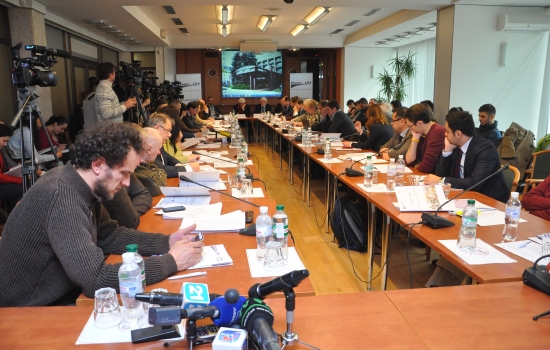
_article_1422529943On 29 January, the Promo-LEX Association presented the Final Report of the Election Monitoring Effort for the Parliamentary Elections of 30 November 2014. The document was discussed at a round table attended by representatives of relevant institutions (CEC, Parliament of Moldova, CCA, CNA, etc.), civil society, media, and other partners.

The report covers the performance of the main electoral contenders between 15 September and 9 December 2014. Promo-LEX found that electoral bodies and public administration authorities acted in a balanced manner, and most of the candidates conducted diverse and active campaigns.

Nevertheless, the actions of some candidates and public authorities, and the shortcomings in the electoral legislation, including those pertaining to campaign finances, determined the Monitoring Effort to formulate recommendations aimed to contribute to improving electoral processes and increasing public confidence in free and fair elections.

Thus, the Promo-LEX Association produced 42 recommendations directed at public authorities, electoral contenders, and other relevant actors, to improve the legal framework and electoral procedures. Here are the most relevant recommendations:

  • Revision of the mechanism of establishing a ceiling for funds to be spent during an electoral campaign in order to make it more uniform;
  • Implementation of a software program to verify the data from the protocols in accordance with the formulas proposed by the CEC in order to rule out accusations of influencing the results of the vote;
  • Streamlining the control mechanism for campaign funding and institute a single and uniform mechanism of verification/assessment of undeclared expenses;
  • Analysis of deficiencies identified in the functioning of the State Register of Voters (internet connection, technical issues, qualification of operators) and prevent situations when it may be endangered;
  • A lawful interpretation of the notions and terms in the Election Code pertaining to setting the date for elections, the start of the electoral period and of the campaign;
  • Passing the bill on the political parties and electoral campaign finances in the second (final) reading;
  • Revision and approval of gradual sanctions for electoral violations and extend the cases when a candidate could be withdrawn from the race or their registration could be cancelled, with the due explanations;
  • For candidates: internal sanctioning of members and supporters who failed to report electoral revenues or expenses or committed other election-related violations.

Click here to see the report.

The Monitoring Effort for the 2014 Parliamentary Election was able to produce its conclusions and recommendations thanks to the involvement and work of 2,325 national observers. The Recommendations have been formulated based on the findings in the 4,241 reports submitted by Promo-LEX observers on the ground, including 2,654 comprehensive visit reports, 543 incident reports, and 1,987 Election Day reports. A team of analysts summarized and analyzed the trends.

The Promo-LEX Association also conducted a Quick Count of the votes and a Parallel Vote Tabulation (PVT). The Final Monitoring Report for the 2014 Parliamentary Election was elaborated based on four progress reports presented during the electoral campaign, three reports presented on E-Day, a final report on E-Day, and a report on the monitoring of the candidates’ campaign finances.

The Election Monitoring Effort was part of civil society’s effort under the aegis of the Civic Coalition for Free and Fair Elections. The Monitoring Effort for Parliamentary Elections of 30 November 2014 benefits from technical assistance from the National Democratic Institute for International Affairs (NDI), and is funded by the United States Agency for International Development (USAID), the National Endowment for Democracy (NED), the Council of Europe and the Stefan Batory Foundation from the funds offered by the Solidarity Fund through the “Support for Democracy” Program of the Ministry of Foreign Affairs of Poland. Opinions expressed in this report belong to the authors and do not necessarily reflect those of the donors.

For more information, please contact:
Galina Sanduta, Press Officer of the Promo-LEX Monitoring Effort,
GSM: 069-958-289, email: [email protected]