Strategic Litigation – A Tool to Promote Equality in Moldova
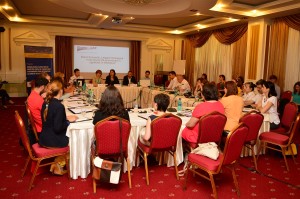
DSC_0119On 23 June 2015, Promo-LEX Association and the Equal Rights Trustorganised a round table entitled “Strategic Litigation – A Tool to Promote Equality in Moldova” wherelawyers, jurists, Non-Government Organisations and public authorities discussed how  strategic litigation can prevent and combat discrimination in the Republic of Moldova.

During the event, Andrei Brighidin, member of the Council on the Prevention and Elimination of Discrimination and Ensuring Equality, presented several Council decisions with strategic potential on cases of discrimination in the fields of employment, access to justice, access to public goods and services, and others.

“Besides the Council, there are also other bodies in charge of preventing and combating discrimination, which makes the importance of strategic litigation obvious. Because the Council decisions are often annulled by courts of law or ignored by public authorities, strategic cases have an important role to play,” said Mr Brighidin. He continued, “Non-Government Organisations and lawyers have the possibility to take on these cases and use the judicial system in the Republic of Moldova, as well as the existing regional and national human rights protection mechanisms to rectify certain structural issues, discriminating behaviours or discriminating laws and practices.”

The event also heard several lawyers present strategic cases which had been represented before the Council of Equality and National Courts of Law. These not only defend and help victims of discrimination, but serve as a precedent for others in similar situations, contribute to the eradication of certain systemic problems, and enforce change in existing discriminating policies and practices.

These presentations included: the case of Elena Voronina on the recovery of legal capacity ; the case of Cornel Baran on the discrimination in access to education because of disability and lack of reasonable accommodation; the case of Alexandru Cebotari on the discrimination because of disability in access to public services and lack of reasonable accommodation; the case Lawyers v. National Health Insurance Company on discrimination based on professional status and wealth when determining the price of the compulsory health insurance policy; and the case of Tatiana Machina  on the lack of reasonable accommodation for persons with disabilities in penitentiaries. .

“The law contains important provisions protecting people from discrimination. However, research carried out by Promo-LEX and the Equal Rights Trust shows that widespread prejudice and inequality persist” said Joanna Whiteman Head of Litigation at the Equal Rights Trust.

She continued, “We have seen that Roma cannot access many services because of discrimination, people with mental disabilities are institutionalised in inhuman situations, and the political opinion of public servants determines the stability of their employment. Strategic litigation can and should be used to ensure that such violations of anti-discrimination laws are condemned and that the laws are implemented in practice so that everyone in Moldova enjoys genuine equality.”

The roundtable event was organised in partnership with the Council on the Prevention and Elimination of Discrimination and Ensuring Equality under the project entitled “Strengthening civil society organizations from Moldova, including the Transnistrian region, to combat discrimination through advocacy actions”.  The project is implemented by the Equal Rights Trust and Promo-LEX Association with financial support provided by the European Union.

For more details, please contact: Olga Manole, Human Rights Program Coordinator, Promo-LEX Association, Tel: (+373 22) 44 96 26, 450024, e-mail: [email protected].
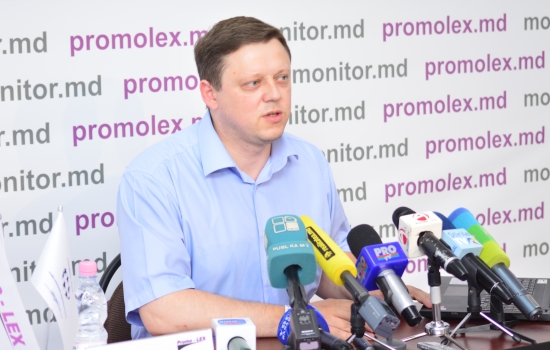


Internally Displaced Persons are not Protected by the Legislation of the Republic of Moldova

On 20 June, the UN Refugee Agency (UNHCR) and the international community worldwide celebrates the World Refugee Day in order to attract the public attention to the millions of refugees and internally displaced persons in the whole world, who were forced to leave their homes because of wars, conflicts or persecutions.

The annual UNHCR Report on Global Trends, made public on 18.06.2015, shows that the global phenomenon of displacement due to wars, conflicts and persecutions reached the highest levels ever and the trend is increasing rapidly[1]. At the global level, there are about 19.5 million refugees and 38.2 million people displaced within their own countries.

Though the Republic of Moldova made significant processes in the area of asylum, with the accession to the Convention relating to the Status of Refugees of 1951[2], and later by adopting the asylum law[3] aligned to the international standards, nothing was done with regards to internally displaced persons, and there aren’t any officially figures on the number of internally displaced persons[4].

We remind that in 1992 the Republic of Moldova faced a humanitarian crisis, when according to some estimations about 130 thousand people were displaced (from the Eastern region) as a result of the war on the Nistru river.[5]

Unfortunately, the lack of legislation on internally displaced persons raised the interest of some scientific researches only, who revealed a legal vacuum and lack of any guarantees to protect the internally displaced persons, as well as the need to adopt a law on internally displaced persons[6].

A closer analysis of the legislation of the Republic of Moldova reveals that currently it contains neither the term of internally displaced persons, nor any mechanisms to protect this category of people.

More specifically, Law No 270 of 18.12.2008 on Asylum in the Republic of Moldova contains only the notion of displaced people who, according to the definition, refer only to foreign persons, displaced from their country of origin to other countries, i.e. refugees, and other regulatory acts have either fallen into disuse[7], or have a very narrow scope[8].

In this context, based on the Guiding Principles of the UN on Internal Displacement[9] we recommend to the national authorities and the Office of the United Nations High Commissioner for Refugees of the Republic of Moldova to take the necessary measures in order to adopt a special law on internally displaced persons in the Republic of Moldova.

The need to adopt such a law is even higher, given that a de facto regime was established on the left bank of the Nistru river, whose secessionist administration has one of the worst human rights practices in Europe[10], and the persecutions by law enforcement bodies from the left bank of the Nistru river force people to leave their homes.

For more details, please contact: Carolina Bondarciuc, Press Officer Promo-LEX: GSM 060280980, Tel/Fax (+373 22) 450024, e-mail [email protected]


[1]http://www.unhcr-centraleurope.org/ro/stiri/2015/raport-unhcrtendine-globale-privind-stramutarea-forata-in-2014.html
[2]The Republic of Moldova joined the 1951 Convention and the Protocol Relating to the Status of Refugees by Law No 677 of 23.11.2001,http://lex.justice.md/index.php?action=view&view=doc&lang=1&id=312612
[3]Law on Asylum in the Republic of Moldova No 270 of 18.12.2008, http://lex.justice.md/index.php?action=view&view=doc&lang=1&id=330978
[4] http://www.unhcr.org/pages/49e48d3b6.html
[5] Bennett J. Internal displacement in context: the emergence of a new politics. In: Davies W. Rights Have No Borders: Worldwide Internal Displacement. London: Global IDP Survey, Norwegian Refugee Council, 1998, p. 12.
[6] http://www.cnaa.acad.md/news/2015/27042015/
[7] Government Decision No 658 of 21.10.1993  on the provision of housing to citizens forced  to leave the place of living in the Eastern districts of the Republic of Moldova
[8] Law No 105 of 16.05.2008 on the Protection of Witnesses and Other Participants in the Criminal Process
[9] UN Principles on Internal Displacement U.N. Doc E/CN.4/1998/53/Add.2,
published onhttp://www.brookings.edu/~/media/Projects/idp/GPEnglish.pdf
[10] Unfrozing a Frozen Conflict: Legal Aspects of the Separatist Crisis in Moldova, available athttp://www.statistica.md/publications/137/ro/Raport_Transnistria_Meyer_rom.pdf


Human Rights Without Frontiers International (HRWF) about human rights in the Transnistrian region and the case of Promo-LEX

Human Rights Without Frontiers published a newsletter about the Transnistrian region of the Republic of Moldov entitled „Monitoring of human rights in Transnistria: Promo-LEX human rights defenders under threat and pressure”.

In this regard, Human Rights Without Frontiers Int’l urges the Government of Moldova to protect Promo-LEX human rights defenders and the EU authorities to monitor their situation

HRWF makes a review on the evolution of the situation starting with december 2014, when Promo-LEX human rights defender, Alexandru Zubco was banned access to the Transnistrian region, continuing with the calumnious statements, published on the official web page of KGB, which were addressed directly to Promo-LEX Association and its members.

HRWF underlines that since the activity of human rights organizations  in the region is restricted, the situation of human rights in the eastern bank of Nistru river can not be monitored, thus allowing local admistration to further violate human rights and the fundamental freedoms.

Other articles from the newsletter reffer to:

  • The Mechanism of exercising one’s rights in Transnistria
  • Arbitrary arrests, abductions and detainment
  • Observance of the right to life

The electronic version of the Newsletter see here.


Promo-LEX Finished the Quick Qualitative Vote Counting

_article_143437733815 June 2015 // Chisinau. Promo-LEX Association carried out two special procedures to evaluate the quality of the electoral process and did the parallel vote tabulation in Chisinau, Balti and Comrat municipalities.
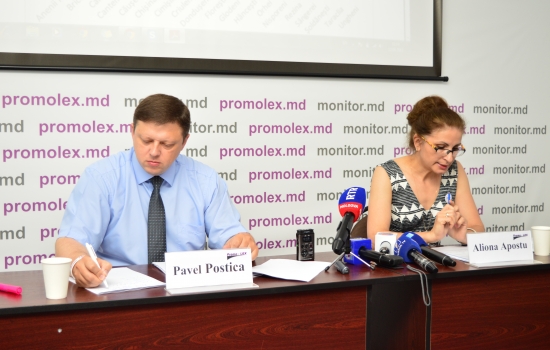
The quality of the electoral process in the general local elections of 14 June 2015 was evaluated on the basis of a representative sample, consisting of 600 polling stations, located throughout the Republic of Moldova, out of all 1987 polling stations opened. The selected sample is representative for the whole country with an error margin of maximum 3%.

According to Pavel Postica, the head of the Promo-LEX Observation Mission, the results of the parallel vote tabulation performed by the Association’s observers do not differ significantly from those announced by CEC. “The number of erroneous protocols is smaller, if compared with the previous years, including the Parliamentary elections of 2014 and 2011. This is thanks to the module, on the basis of which CEC operated, because previously they used to send the protocols in writing and no electronic quality checking was performed”, said Pavel Postica.

Parallel vote tabulation and irregularities found in Chisinau municipality

According to the preliminary results of the quick qualitative counting, the votes in Chisinau mun. are divided as follows:

Promo-LEX results % CEC results % Difference
E. Moscalciuc (PPPR) 144            0,05 145           0,05 -4
T. Tomacu (PPPM) 207            0,07 212           0,07 5
V. Climenco (MSPR) 263            0,09 265           0,09 2
A. Prohnițchi (PPPVE) 267            0,09 261           0,09 -6
D. Marcel (PLD) 286            0,10 281           0,09 -5
M. Cîrlig (PPRM) 564            0,19 574           0,19 10
CI Igor Caldare 579            0,20 565           0,19 -14
T. Turcanu (PNL) 609            0,21 633           0,21 24
G. Petrenco (PPCSNM) 610            0,21 608           0,21 -2
O. Brega (PDA) 4033            1,37 4066           1,37 33
M. Babuc (PDM) 6229            2,12 6417           2,17 188
S. Urechean (PLDM) 8674            2,95 8806           2,97 132
V. Chirtoca (PCRM) 12024            4,09 11964           4,04 -60
I. Cașu (PPPN) 14314            4,86 14424           4,87 110
O. Nantoi (BE PPEM) 29906         10,16 30126        10,18 220
Z. Greceanii (PSRM) 105400         35,82 105644        35,68 244
D. Chirtoaca (PL) 110151         37,43 111075        37,52 924


In addition, Promo-LEX observers registered 11 erroneous protocols, of the 306 submitted to CEC.

According to the observers, 131 irregularities were registered in the process of closing the polling stations and votes counting. Thus, the following irregularities were reported: 55 cases when people voted without the application of “Elections 14.06.2015” stamp in the loose leaf of the ID card; two cases of unjustified temporary stopping or suspension of voting in the polling station; seven acts of violence or intimidation of voters or other people; 10 cases of obstructing the free observation of all procedures; 54 cases when only one member of the Electoral Office of the Polling Station presented the ballot papers to all participants in the vote counting process; three cases when the boxes/packages with ballot papers sent to the constituencies were not sealed. See the attachment.

Parallel vote tabulation and irregularities found in Balti municipality

According to the preliminary results of the quick qualitative counting, the votes in Balti mun. are divided as follows:

Promo-LEX results  % CEC results  % Difference
Belousov Ruslan (Partidul – Renașterea) 66 0,13 66 0,13 0
Dorojco Vladimir (PSM) 111 0,22 90 0,18 21
Smolenco Mihail (Casa noastră – Moldova) 98 0,19 99 0,20 -1
Chirilciuc Nicolai (PPRM) 759 1,50 634 1,25 125
Dobrogeanu Vasile (PL) 854 1,69 860 1,70 -6
Guțul Lidia (PSRM) 1496 2,96 1512  2,99 -16
Chiseliov Serghei (PDM) 1921 3,80 1931 3,82 -10
Vacarciuc Vadim (BE Iurie Leancă) 2007 3,97 2025 4,00 -18
Marcoci Boris (PLDM) 2305 4,56 2315 4,58 -10
Mahu Octavian (PCRM) 4769 9,43 4394 8,69 375
Renato Usatîi (Partidul Nostru) 36186 71,55 36644 72,46 -458


Promo-LEX observers registered three erroneous protocols, of the 59 submitted to CEC.

According to the observers, 14 irregularities were registered in the process of closing the polling stations and votes counting. Thus, the following irregularities were reported: one case when a person voted without the application of “Elections 14.06.2015” stamp in the loose leaf of the ID card; two cases of unjustified temporary stopping or suspension of voting in the polling station; one act of violence or intimidation of voters or other people; three cases of obstructing the free observation of all procedures; seven cases when only one member of the Electoral Office of the Polling Station presented the ballot papers to all participants in the vote counting process; one case when the boxes/packages with ballot papers sent to the constituencies were not sealed. See the attachment.

Parallel vote tabulation and irregularities found in Comrat mun.

According to the preliminary results of the quick qualitative counting, the votes in Comrat mun. are divided as follows:

Rezultate Promo-LEX % Rezultate CEC  % Diferența
Dudoglo Nicolae 4423 38,04 4423 38,04 0
Anastasov Serghei (PPPN) 3955 34,01 3955 34,01 0
 Suhodolski Alexandr (PSRM) 1983 17,05 1983 17,05 0
Stoianoglo Serghei (PCRM ) 788 6,78 788 6,78 0
Sari Ivan 422 3,63 422 3,63 0
Ceșmidji Andrei (PPRM) 57 0,49 57 0,49 0


Promo-LEX observers have registered neither erroneous protocols, nor irregularities in the process of closing the polling stations and votes calculation. See the attachment.

Promo-LEX Observation Mission declares itself to be neutral and equidistant towards the election candidates; it is not an investigation body and does not assume the express obligation to support the observers’ findings by evidence.

The General Local Elections of 14 (28) June 2015 are monitored by Promo-LEX Association under its Monitoring Democratic Processes Program. The Observation Mission is part of the activities carried out by the civil society under the aegis of the Civic Coalition for Free and Fair Elections.

The Observation Mission of the General Local Elections of 14 (28) June 2015 is supported financially U.S. Agency for International Development (USAID) and Council of Europe and benefits of technical assistance provided by the National Democratic Institute for International Affairs (NDI). The opinions presented in the press release belong to authors and do not necessarily reflect the donors’ view.

For additional information please contact: Simion Ciochină, Communication Officer of the Observation Mission for the 2015 General Local Elections, Tel: 0 (22) 49 26 84, GSM: (+373) 69 11 96 94, E-mail: [email protected]


The Russian Federation Takes no Actions to Enforce the ECHR Judgment on the Case of Catan

On 11 June 2015, the Committee of Ministers of the Council of Europe issued a decision concerning the monitoring procedure of the judgment on Catan and others v. Moldova and Russia. According to the findings of the Committee of Ministers, Russia failed to present a plan of action in order to enforce the judgment on the case of Latin-script schools from the Transnistrian region, totally ignoring the ordered payment obligations.

We recall that on 25 September 2014, the same institution established the date of 1 November 2014, as the deadline by which the Russian Government shall provide all information concerning the actions of enforcement of the judgment of the Strasbourg Court.

The Russian Federation still remains responsible to ensure the operation of Latin-script schools in Transnistria, and must submit evidence of payment for compensation until 28 August 2015. The total amount of compensation as moral damages constitute 1 million and twenty thousand Euros and 50 thousand Euros are counted as representation cost.

The Committee of Ministers has requested the Secretariat to prepare an interim resolution text on this case, if these conditions are not met.

According to Human Rights Program Director, Alexander Postica, the secessionist government that has the tacit consent of the Russian authorities conduct a fierce campaign of denigration against these educational institutions. The purpose of these actions is to determine parents not to enroll their children in these institutions. Moreover, significant obstacles are mounted in order to hinder the technical equipment of these institutions.

For more details, contact: Alexandru Postica, Program Director of Promo-LEX Association, Attorney. tel: (22) 450024, GSM: 069104851, e-mail: [email protected]


On Death Penalties in the Transnistrian Region

The Republic of Moldova ratified the European Convention for the Protection of Human Rights and Fundamental Freedoms, including Protocols 6 and 13 concerning the abolition of death penalty. In 2013, Moldova signed the Joint Declaration on the abolition of the death penalty in Europe and around the world, adopted by the foreign ministers of 42 member states of the Council of Europe. Moldova has adjusted its national legislation and the death penalty is abolished. Despite this, provisions related to the death penalty exist on the territory “uncontrolled” by the constitutional authorities.

Excerpts from local punitive rules:

Article 43 (h) of the local Criminal Code provides death penalty as one of the forms of criminal liability.

Article 58 of the local Criminal Code states that:

  1. Death penalty as an exceptional punishment can be established only for particularly serious crimes threatening the life.
  2. Death penalty shall not be applied to women, persons below the age of 18 at the moment of the crime and men who have reached 65 years at the time of sentencing.
  3. Death penalty can be replaced by pardon with life imprisonment or imprisonment up to 25 years.

Death penalty shall not be applied for attempting and preparing the crime (Article 64).

Death penalty may be applied for:

  1. Murder of a person protected by the law (victim, witness and other persons enjoying protection during the criminal prosecution) (Article 104(3));
  2. Attempt on the life of a public official (Article 273);
  3. Armed rebellion (Article 275);
  4. Attempt on the life of a judge, prosecutor, investigator, bailiff or their family members, inclusively those benefiting from protection under criminal investigation (Article 291);
  5. Attempt on the life of the law enforcement officer, military personnel or their relatives (Article 314);
  6. Use of prohibited means and methods of war (Article 352);
  7. Genocide (Article 353);

NOTE:  Although a moratorium on death penalty was established in 1999, citizen F. Negru was sentenced to death in 2003.

Statistics:

1)Issued capital sentences: 2 (Case of Ilascu, 1993 and Case of Negrea, 2003). Mr. Negrea was pardoned to life imprisonment on 2 June 2015.

2)Executed capital sentences: none.

Methods of execution: Capital sentence is applied by institutions responsible for the punishment enforcement. Before the enforcement of the sentence, the death row inmate has the right to religious rites, including with the participation of the clergy. They are detained in closed prison in solitary confinement in separate cells. The final Court “judgment”, the decision of the “President of MRT” on the rejection of application for “pardon” or the decision of the “President of MRT” not to “pardon” the convict who refused to file an application for “pardon” are reasons for death penalty. Capital punishment is carried out by shooting and is not public. The body of an executed person is not given for burial and the place of burial is not communicated. The head of the prison where the execution took place shall inform the relatives about the execution of the sentence.


Promo-LEX Report: In the first round of the election campaign candidates committed a worrying high number of violations

_article_143409953912 June 2015 // Chisinau164 meetings of election candidates with voters, 70 concerts, 42 cases of giving away electoral gifts and 39 cases of using public resources – these are the main violations revealed in the Third Report of the Observation Mission of the General Local Election, presented today by Promo-LEX. The report reflects the electoral process in the Republic of Moldova during 21 May – 10 June 2015, on the basis of the findings made by Promo-LEX observers.
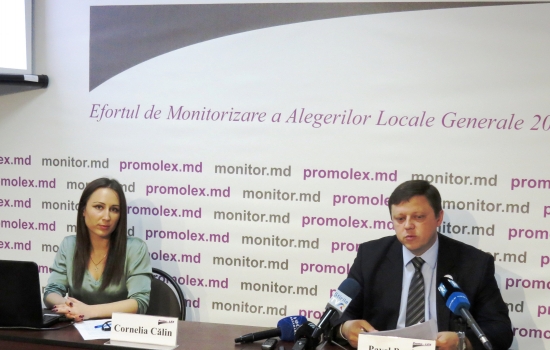
According to the Promo-LEX Association Report, during the election campaign for the General Local Elections of 14 June 2015, a worrying high number of violations committed by electoral stakeholders were found.

“It seems that the electoral stakeholders woke up from hibernation. Thus, we found that 10 parties, one electoral block and dozens of independent candidates organized various electioneering activities. Comparing to the previous reporting period, when only a few candidates initiated such activities, this time we noticed a spectacular increase in the number of electoral activities. The candidates used the traditional launching of election campaigns, meetings with voters, electoral concerts, distribution of electoral advertising, outdoor and media advertising, organization of sports activities, electoral tents etc.”, stated Aliona Onofrei, electoral analyst of Promo-LEX Observation Mission.

In addition, Promo-LEX found that only 16 election candidates filed their financial statements to CEC, and 15 reported revenue and expenses. According to the observers, 1554 citizens contributed during the reporting period with funds to the electoral budgets of political parties and electoral blocks. They donated approximately MDL 36.88 million.  The sources of funding stated as membership fees are still unclear.

“Overall, the election candidates reported MDL 51.21 million to CEC, with 76% of the reported expenses being spent for advertising. At the same time, no election contestant reported any rewards as expenses. The largest expenses were reported by PDM – MDL 17.30 million, accounting for 29.21% of the set threshold”, stated Pavel Postica, head of the Promo-LEX Observation Mission.

The Promo-LEX observers found that the logistical arrangements of polling stations are still a serious problem. At the same time, though the Ongoing Training Centre on Electoral Matters (OTCEM) reported 33 workshops for electoral officers, the number of trained people is still very low.

This is the last Monitoring Report of Promo-LEX from the first round of the 2015 General Local Elections.  The next report will be published on 26 June 2015, before the second round of voting.

The electronic version of the Report here.

Promo-LEX Observation Mission declares itself to be neutral and equidistant towards the election candidates; it is not an investigation body and does not assume the express obligation to support the observers’ findings by evidence.

The General Local Elections of 14 (28) June 2015 are monitored by Promo-LEX Association under its Monitoring Democratic Processes Program. The Observation Mission is part of the activities carried out by the civil society under the aegis of the Civic Coalition for Free and Fair Elections.

The Observation Mission of the General Local Elections of 14 (28) June 2015 is supported financially U.S. Agency for International Development (USAID) and Council of Europe and benefits of technical assistance provided by the National Democratic Institute for International Affairs (NDI).

The opinions presented in the report belong to authors and do not necessarily reflect the donors’ view.

For additional information please contact: Simion Ciochină, Communication Officer of the Observation Mission for the 2015 General Local Elections, Tel: 0 (22) 49 26 84, GSM: (+373) 69 11 96 94, E-mail: [email protected]


RESOLUTION adopted unanimously on 6 June 2015 following the Peaceful Protest of farmers from Dubăsari district

“We have the right to property, but we do not own our lands” was one of the slogans made by the farmers from Dubasari during the peaceful protest that took place on June 6, 2015. The purpose of the protest was to raise awareness regarding the real struggle they are facing and bring it to the attention of the authorities. More so, they intended to inform the broader population about their problems caused by the fact that they’re access to the land they own on the Ribnita Tiraspol route has been denied by the Transnistrian authorities, therefore breaking their rights to property.

On the February 6, 2013, the European Court of Human Rights informed the Governments of Moldova and the Russian Federation on eight applications that include complaints from 1651 owners of farmland in Dubasari as well as three farming companies. The applicants are residents and inhabitants of villages Dorotcaia, Pirita, Molovata-Noua, Pohrebea and Cocieri, situated on the left bank of the Nistru River, and own farmland in the vicinity of their villages.

At the Court, applicants allege a violation of Article 1 of the European Convention on Human Rights, in connection with the violation of the right of ownership or use of land shares, and of Article 13 in connection with the lack of an effective remedy at the national level in connection with violations of Article 1 of the European Convention.

See below Resolution adopted by the farmers.

Parliament of the Republic of Moldova

President of the Republic of Moldova

Government of the Republic of Moldova

OSCE Mission in Moldova

European Union Delegation 

Embassy of the USA in  Republic of Moldova

Embassy of the Russian Federation in Republic of Moldova

Embassy of the Ukraine in Republic of Moldova

RESOLUTION
adopted unanimously on 6 June 2015 following the Peaceful Protest 
of farmers from Dubăsari district

We, the undersigned, citizens of the Republic of Moldova, farmers from Dubasari district and owners of the plots of land located across the Rabnita-Tiraspol road (about 6 thousand ha of agricultural land), taking into account the fundamental principles of human rights, especially the right to protection of property, the abilities to respond and resist despite the continuous pressures and persecutions from the Tiraspol administration, as well as the passivity and irresponsibility of the constitutional authorities:-

  • REAFFIRMING that the property law in the Republic of Moldova is guaranteed by the Supreme Law and international treaties, to which the Republic of Moldova is a party;
  • RECALLING that since 1998, villagers, landowners and business entities from the Dubasari district haven’t had free access to the lands located across the Ribnita-Tiaspol road;
  • STATING that an illegal entity, which assumed abusively the de facto control over our proprieties in 2014, is preventing us from exercising our property right over the plots of land by applying various punitive mechanisms;
  • HAVING actually our private property expatriated;
  • EXCLAMING the indifference and impotence of the constitutional authorities to protect the private property of farmers Dubasari district;
  • INCURRING huge losses in terms of land quality, capital invested by business entities and human resources;
  • NOTICING a spirit of distrust in the values protected with human lives by the local population during the armed conflict on the Nistru river;
  • UNDERLINING the discriminatory treatment of the business entities based in Dubasari district, compared to the business entities registered with the Tiraspol authorities by the Central Government, i.e. the provision of advantageous facilities to the latter and ignoring the legal requirements of the former;
  • AIMING AT corruptibility and fulfilment of the economic interests of some mercantile centers from Chisinau and Tiraspol in their attempts to solve the problems of farmers from the left bank of the Nistru river;
  • INTUITING that landowners are victims of some political interests, placed on different barricades and left to their fate;
  • TIRED of the empty promises of the Chisinau authorities with regards to these issues;
  • INFORMING that the secessionist authorities DO NOT recognize the right to private property, respectively any meekness of the Chisinau authorities during the mutual negotiations could affect our property right, leading to our de jure loss of properties;
  • BELIEVING that the Government should make all efforts to maintain the property integrity, ensure the property right, whatever the costs involved in maintaining them in an uncontrolled area;
  • URGING the Government of the Republic of Moldova to have a mature attitude in the negotiation of the fundamental rights, as if they give up in favor of the separatist structures, the consequences will be of HISTORIC importance, affecting the property right and the constitutional control in Transnistrian region;
  • INVITING the international community, foreign embassies in the Republic of Moldova, and stakeholders involved in the negotiation to take a stronger stake in supporting the farmers’ efforts of ensuring their property rights.

WE REQUEST that the constitutional authorities WITHIN 30 DAYS:

  1. Ensure a free and immediate access to the agricultural lands, located across the Rabnita – Tiraspol road, to their owners;
  2. Guarantee the constitutional rights of the citizen of the Republic of Moldova to private property and free movement in the Transnistrian region;
  3. Require full recovery of all expenses incurred by business entities as a result of working and planting their lands during the 2013-2014 period;
  4. Develop a strategy for the social and economic development in the settlements of Dubăsari district, in particular those from the left bank of the Nistru river;
  5. Provide preferential loans and implement rural business support programs in the settlements from Dubăsari district, located on the left banks of the Nistru river;
  6. Allow the business entities in process of bankruptcy to reorganize their statutory activities;
  7. Compensate the forgone revenues of business entities and individuals, who partially lost their legal economic activity –  until the final resolution of the political conflict

Adopted today, June 6, 2015


Promo-LEX: 22 electoral stakeholders used administrative resources, and other 9 used electoral presents to promote themselves

_article_143220088821 May 2015 // Chisinau 22 electoral stakeholders used administrative resources, and other nine used electoral presents to promote themselves. These are some of the most severe violations recorded by Promo-LEX Association, which presented on 21 May the second Report of the Observation Mission of the General Local Election of 14 (28) June 2015. The report covers the period of 30 April – 20 May 2015 and reflects the electoral processes of the Republic of Moldova, as reported by Promo-LEX observers.

Most violations included in the report refer to the financing of the political parties. Promo-LEX experts found that only five of the nine election candidates that submitted reports to CEC, have reported their revenue and expenditures. At the same time, only four citizens contributed with MDL 950 thousand to the parties’ electoral funds. “The sources of funding stated as membership fees are still unclear”. Other funds worth MDL 3,418,200 were declared as donations from legal entities. Most expenses reported by election candidates were related to advertising – 83.1%. No election candidate has reflected during this period real expenses related to rental fees and maintenance of their permanent offices, salaries and remuneration” says Cornelia Calin, financial analyst of Promo-LEX Observation Mission.

In addition, Promo-LEX established that, unlike the previous election campaigns, during this campaign only several candidates started the electoral run with various promotion activities. They organized the traditional launches, meetings with voters, concerts, distributed promotional materials, placed outdoor and media advertising, tents, etc. At the same time, the local and regional media was passive, and the observers reported only five cases when it was used as an electoral instrument.

“We may state that during the monitored period CEC had an ordinary working regime. It recorded another electoral block and excluded a political party from the list of election candidates. We are glad that out of the 1231 national observers, who will be present at the elections, 1217 will be from Promo-LEX”, stated Pavel Postica, head of the Promo-LEX Observation Mission.

Promo-LEX observers also referred to the problem of designating a special place for electoral posters, which exists in many settlements. The decisions to provide venues for meetings of the election candidates were taken without any violations. However, at least 603 cases were reported when the local authorities delayed the approval of such decisions.

Electronic version of the Report here.

The next Monitoring Report of Promo-LEX will be published on 12 June 2015.

Promo-LEX Observation Mission declares itself to be neutral and equidistant towards the election candidates; it is not an investigation body and does not assume the express obligation to support the observers’ findings by evidence.

The General Local Elections of 14 (28) June 2015 are monitored by Promo-LEX Association under its Monitoring Democratic Processes Program. The Observation Mission is part of the activities carried out by the civil society under the aegis of the Civic Coalition for Free and Fair Elections.

The Observation Mission of the General Local Elections of 14 (28) June 2015 is supported financially U.S. Agency for International Development (USAID) and Council of Europe and benefits of technical assistance provided by the National Democratic Institute for International Affairs (NDI).

The opinions presented in the report belong to authors and do not necessarily reflect the donors’ view.

For more information, please contact: Simion Ciochina, Press Officer of the Promo-LEX Observation Mission of the General Local Election of 2015, GSM: (+373) 69 11 96 94, email: [email protected]


Civil society representatives from Moldova sent to European officials the application for membership to the European Union

Submitted by Moldovan civil society representatives
Eastern Partnership Civil Society Conference in Riga, 21.05.2015

Herewith we, representatives of Moldovan civil society,

HAVING REGARD to the Article 49 of the Treaty on European Union, according to which any European State which respects the values of respect for human dignity, freedom, democracy, equality, the rule of law and respect for human rights, including the rights of persons belonging to minorities, may apply to become a member of the Union;

HAVING REGARD to the Association Agreement between the European Union and its member states, of the one part, and Republic of Moldova, which acknowledge the European aspirations and the European choice of the Republic of Moldova;

CONSIDERING the common values and strong links of the Parties, established in the past through the Partnership and Cooperation Agreement and being developed within the framework of the European Neighborhood Policy and the Eastern Partnership, and recognizing the common desire of the Parties further to develop, strengthen and extend their relations;

RECOGNISING that the common values on which the European Union is built – namely democracy, respect for human rights and fundamental freedoms, and the rule of law – lie also at the heart of political association and economic integration as envisaged in this Agreement;

TAKING into account that the Association Agreement does not prejudice and leaves open the way for future progressive developments in EU-Republic of Moldova relations;

ACKNOWLEDGING that the Republic of Moldova as a European country, shares a common history and common values with the Member States of the European Union, and is committed to implementing and promoting those values; which for the Republic of Moldova inspire its European choice;

RECOGNISING the importance of the National Action Plan for the implementation of the Association Agreement to build economic integration and political association of the Republic of Moldova with the EU;

COMMITTED to strengthening respect for fundamental freedoms, human rights, including the rights of persons belonging to minorities, democratic principles, the rule of law, and good governance;

In the name of Moldovan citizens who strive for a democratic and European Republic of Moldova, whole and free –

Submit this application for membership of the Republic of Moldova to the European Union.