Human Rights in Moldova – Retrospective of 2014. Report
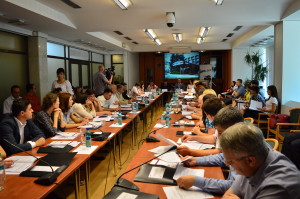
DSC_0464On July 16, 2015, Promo-LEX Association launched the Report on Human Rights in Moldova – Retrospective of 2014. The sixth edition of the Report provides the analysis, conclusions and recommendations given by 15 experts from 8 Non-Governmental Organizations dealing with the observance of human rights in the Republic of Moldova, including the Transnistrian region.

A number of strategic regulatory acts were developed in 2014, which aim at improving the situations related to the guarantee and respect of the right not to be subjected to torture and ill-treatment, which were implemented poorly. On the positive side, courts of law started to issue judgments of conviction on torture cases, by applying custodial punishments.

With regard to the right to liberty and security of person, during the last year the number of persons deprived of liberty grew and the number of detainees in penitentiaries grew respectively. This brought back into light the issue of over-crowded penitentiaries.

A survey conducted in 2014 by the Institute for Public Policies reveals that the poor, the elderly, people with mental and physical disabilities, and the LGBT community are the most discriminated categories of people. The legislative, institutional and administrative barriers represent a major problem in combating discrimination since they affect negatively the activity of the Council on the Prevention and Elimination of Discrimination and Ensuring Equality. Hence the Council is not empowered to apply sanctions, which leaves it at the discretion of courts of law, where the situation has not progressed.

With respect to domestic violence, it has to be mentioned that there are several shortcomings in implementing the legal framework, including: uneven enforcement of the legislation on administrative sanctioning of perpetrators for breaking the protection measures, but also the legislation on holding them accountable for domestic violence resulting in light injuries or insignificant impact on health. In this context, it is recommended to harmonize the national legal framework on prevention and combating of domestic violence with the European standards.

With respect to the Transnistrian Region, the Report highlights the phenomenon of arbitrary deprivation of freedom, stating that in 2014 ECtHR informed the defendant governments about 12 cases on alleged violation of Article 5 of ECHR. On the other hand, the actions and measures taken by the local administration have minimized the expression of any criticizing opinions against the regime, which was also proved by the ongoing persecution of human rights defenders. With regard to the right to property, the following problems can be mentioned: the de facto authorities of the region periodically block, limit or obstruct the access of farmers and owners from Dubasari district to their property. In addition, 2014 was marked by numerous incidents in the Latin-script schools, while the resolution of several problems in this area was postponed again.

See the Report here.

The Report was drafted under the project “Protection and Monitoring of Human Rights in the Republic of Moldova, Including the Transnistrian Region” implemented by Promo-LEX Association with the financial support of Civil Rights Defenders and SIDA.

For more details, please contact:  Carolina Bondarciuc, Press Officer: GSM 060280980, Tel/Fax (+373 22) 450024, e-mail: [email protected]



ECtHR will Examine a Case about the Bad Conditions of Detention in Five Penitentiaries from Moldova

The European Court of Human Rights has recently informed the Government of the Republic of Moldova about the case of Sergiu Flocea and four others v. Moldova. The case contains five applications filed with ECtHR , in different periods of time, and they all refer to the detention in inhuman and degrading conditions. The applicants alleged the violation of Article 3 of ECHR (the right not to be tortured and detained in inhuman and degrading conditions) corroborated by Article 13 (no effective remedies in national courts).

The applicants are the detainees Sergiu Flocea (case file No 39413/12) Penitentiary No 6 from Soroca, Valentin Bastovoi (case file No 40614/14) Penitentiary No 13 from Chisinau, Oleg Bojenin (case file No 53966/14) Penitentiary No 17 from Rezina, Ion Zestrea (case file No 68561/14) Penitentiary No 11 from Balti, and Mihai Cuiban (case file No 71243/14) detained in Penitentiary No 13 from Chisinau, transferred later to Penitentiary No 4 from Cricova.

In four of the five applications filed to the Court, the overcrowdedness of cells is alleged, in three of them – the lack of ventilation systems, in two – the lack of health care and sanitary conditions. Other applications complain against the lack of access to the library and poor quality of food.

The applicant Mihai Cuiban is represented by the lawyers and attorneys of Promo-LEX Association.

For details please check the official website of ECtHR.

For more details, contact: Alexandru Postica, Program Director of Promo-LEX Association, Attorney. tel: (22) 450024, GSM: 069104851, e-mail: [email protected]


Promo-LEX Interview: The Art of Strategic Litigation

Joanna_Whiteman_CroppedThe concept of strategic litigation is relatively new for the Republic of Moldova, and its implementation, especially when it comes to promoting equality, is a field that is not fully explored. We discussed the importance of strategic litigation in preventing and combating discrimination with Joanna Whiteman, Head of Litigation at the Equal Rights Trust.
For how long has strategic litigation existed and for how long has it been used to promote equality?

Dimitrina Petrova, Executive Director of the Equal Rights Trust, who was responsible for numerous strategic cases on Roma rights before the European Court of Human Rights, describes strategic litigation as an art, not a science. So the question ‘what precisely is strategic litigation?’ is a big one. What we generally mean by strategic litigation, is litigation that seeks to achieve a broader aim than justice for the victim in an individual case. Some have argued that it has its roots in the US system of class actions and involves taking cases which benefit large numbers of individuals. However, it is only in the last few decades that the notion of strategic litigation has started to exist. In terms of how long it has been used to promote equality, well, for the same time. Equality has been a key focus for organisations taking strategic litigation and the Trust sees such litigation as a key tool in the advancement of equality.

Why is it important to use strategic litigation as an advocacy instrument to promote equality?

There are a number of different, complementary ways to advance equality and the Trust approaches the advancement of equality through four key programmes. In addition to litigation, we recognise that advocacy, developing knowledge and resources on equality and non-discrimination and building a movement at the national, regional, and international levels are important ingredients in the promotion of equality.

At times strategic litigation is not the best approach but it’s clear from past experiences that sometimes governments don’t respond to lobbying or other advocacy engagement and the courts can have a strong voice in advancing equality when law is not being enforced or appropriately interpreted. We have clear evidence from the national level that having a strong judgment on a matter of equality or non-discrimination can have a big impact.

Can you give us an example of the most interesting and recent case of strategic litigation that had a big impact on promoting equality?

For several years, we have supported a case relating to a mental health institution based in Delhi called Asha Kiran, where a large number of residents died due to the appalling treatment they received in the institution. The case was argued on a number of grounds including deprivation of the right to life and discriminatory torture and inhuman treatment.

The case is ongoing but in March there was a very big success when the Supreme Court of India demanded that the central government and all regional state governments submit evidence to the Court so that it can assess how mental health institutions across India are operating.

To me, this case is a very good example of what can be done with strategic litigation. It was a case related to one institution, and now through the Supreme Court, attention has been brought to all mental health institutions throughout the whole of India. There is potential for all people with mental health disabilities housed in these institutions to be directly impacted. We will have to wait for the final outcome before we can fully assess this, but the case has already had positive results.

Do you have a few recommendations regarding strategic litigation here in Moldova?

There are a number of possible elements of strategic litigation. It may well impact on the broader public rather than just the individual. It could also be a case in which innovative legal arguments are brought before the court where there isn’t clarity in the law or where the law hasn’t been implemented in an adequate way.

In Moldova there are some very strong legal provisions for non-discrimination in the law but there hasn’t been a lot done on the side of implementation yet. There are some very good lawyers who have a good understanding of discrimination principles. There is also the Council on the Prevention and Elimination of Discrimination and Ensuring Equality which is willing to make decisions on discrimination. However, the problem seems to be getting the courts to accept the Council’s decision without overturning it. And the Council cannot provide remedies, only recommendations so it is particularly important for the courts to follow its lead. Until then, there may be an excellent decision but no effective enforcement of the Council’s recommendations. This is a big issue for litigation in Moldova. In terms of  the key issues for litigation here, the Equal Rights Trust and Promo-LEX have been and are continuing to work together to monitor discrimination across the country.

It’s still too early to give final conclusions but there are some key issues arising. There are problems of ill-treatment, discriminatory and inhuman treatment against people with disabilities and disadvantaged social groups in institutions. People’s rights to freedom of movement, to be free from inhuman treatment, to have a free private life are being infringed. Then we have a huge number of cases where Roma are being denied access to services and this seems to be systematic across the country. A final example is related to problems of discrimination on grounds of public opinion; a controversial issue and one, which has not yet received attention before the Council, but an area for future focus.

This interview represent the views of Joanna Whiteman and not necessarily those of the Equal Rights Trust.

The interview is part of the project entitled “Strengthening civil society organizations from Moldova, including the Transnistrian region, to combat discrimination through advocacy actions”.  The Project is implemented by Equal Rights Trust and Promo-LEX Association with the financial support provided by the European Union.

For more details, please contact: Carolina Bondarciuc, Press Officer, Promo-LEX Association, Tel: (+373 22) 44 96 26, 450024, e-mail: [email protected]


Analytical Note on the Uneven Practices of Bringing to Account Aggressors for Violating the Restraining Orders

Promo-LEX found that the bailiffs and the courts of law do not apply evenly the legislation when domestic violence restraining orders are violated.

This was revealed by the review of court judgements on restraining order violations.

According to Lilia Poting, a Promo LEX lawyer, “We have uneven practices of bringing to account perpetrators for violating the domestic violence restraining orders. In many cases the perpetrators were not held liable, and the victims had restraining orders on paper only, without being actually protected. The bailiffs do not interpret correctly the provisions of the legislation and refuse to start a trial on administrative offences on the basis of Article 318 of the Code of Administrative Offences for the violation of domestic violence restraining orders.”

The district police officer and the social worker are responsible of informing the perpetrator about the application of the restraining order and of taking action if it was violated or not executed, except for the protective measures foreseen in Article 314/4 (2) (e) and (f) of the Civil Procedure Code, which falls under the responsibility of bailiffs.

For the failure to comply with or for violating the protective measures imposed by order, the perpetrator shall be sanctioned in the following way: the first time – as for an administrative offence, according to the Code of Administrative Offences, while for recurrent violations after being already sanctioned – the perpetrator shall be indicted with a crime, according to Article 320 of the Criminal Code.

The bailiffs are the ones who have the competence to ascertain the failure to comply with any court judgement, including the restraining order, regardless of the authority responsible of enforcing those judgements.

More details see here, the information is in Romanian language.


RCTV Memoria: The whole society needs to join their efforts in order to rehabilitate victims of torture

LP MemoriaAfter making it through live-changing experiences, those who survived torture and other forms of violence are also facing discrimination during the rehabilitation. On the other hand, the financial resources for rehabilitation are not sufficient.
We discussed this with Ludmila Popovici, Deputy Director of “Memoria” Rehabilitation Center for Victims of Torture. We are referring to two major problems. First – the discrimination of victims, as they are not treated fairly by state institutions and other stakeholders, and second – lack of money for rehabilitation. As a solution for preventing the discrimination of victims of torture and other forms of violence, we, the whole society, need to turn our face towards them. I understand that torture or violence is not a pleasant topic, it is painful and could lead to reluctance, making many people elegantly turning their backs on victims and minding their own business. We should mobilize everyone, we should understand that these persons holding the status of victim, which we call survivors of torture and other forms of violence, are members of our society. They are among us. They are among our colleagues, among our neighbours, etc.

As long as these persons are ignored by the Government, donors, and citizens, they will feel marginalized, discriminated against and ignored, forgotten by the society and their life continues to be a nightmare.

Availability of financial resources for rehabilitation is a continuous and major problem, that we have been dealing with for 15 years of our activity, because we had budget deficits every year. Every year we had to fight for our survival as an institution, as a center, and we have continuously made efforts to raise money for rehabilitation.

In order to be able to provide rehabilitation services and the necessary support to victims, we have to join our efforts with those of our colleagues, citizens, Government institutions, donors, with everyone who wants the life of these people to return to normality, to live in a calm family environment, and enjoy peace within their families and their souls. We must understand how important it is to support such persons and contribute as much as we can.

A media subject developed during the anti-torture week that marks the International Day in Support of Victims of Torture –  June 26. Documentation and Investigation of Cases of Torture and Rehabilitation of Victims: Deficiencies and Solutions – a Promo-LEX initiative.


Promo-LEX: Law Enforcement Bodies Fail to Investigate and Punish the Torturers from the Transnistrian Region

UntitledThe lack of psychological expertise for the victims of violence and the lack of tactics of investigation of torture crimes committed in Transnistria are two major problems during the investigation of torture in the Republic of Moldova.
We discussed this with Vadim Vieru, Lawyer at Promo-LEX Association: Currently we can identify two pressing problems related to the investigation of cases of torture in Moldova; the first is the possibility to conduct a psychological examination for the victims of torture. At this stage, the criminal prosecution body may order only a psychiatric-psychological expertise, which is slightly different. If psychological examinations by professional experts were possible, then the cases would be better documented and investigated, and evidence would be accumulated regarding the facts of torture committed against persons.

The second problem is the investigation of crimes of torture committed in the Transnistrian region. Unfortunately, the General Prosecutor’s Office does not have any tactics to investigate the crimes of torture committed in the Transnistrian region and, as a result, torturers remain unpunished. I mean, there aren’t any concrete tactics for the investigation of this type of crimes and I would recommend to the General Prosecutor’s Office to develop specific tactics for the investigation of crimes committed in the Transnistrian region.

Thus, the main recommendations are: first, to amend and adjust the regulatory framework in order to have the possibility to conduct only a psychological examination, without psychiatric-psychological expertise and to train experts in this area. The second recommendation is to developed tactics for the investigation of crimes torture, committed in the Transnistrian region.

Material developed during the anti-torture week that marks the International Day in Support of Victims of Torture – 26 June.   Documentation, investigation of torture and rehabilitation of victims: gaps and solutions – a Promo-LEX initiative.


Amnesty Moldova: The Prosecutor’s Office Ignores and the Courts Delay the Examination of Cases of Torture

UntitledAlthough currently torture is not in the public eye in Moldova, in reality this phenomenon, which decreased slightly, still exists.  During the anti-torture week, we intended to identify and discuss the most important gaps and problems with the documentation, investigation of cases of torture and rehabilitation of its victims.
Igor Stoica, Program Coordinator, Amnesty International Moldova told us about the documentation of cases of torture: Cases of torture are documented in two ways: universal and legal.  The first way is the Prosecutor’s Office, which by law and the Code of Criminal Procedure must receive all complaints, react promptly, initiate criminal cases against the torturer, make statistics and place them on the website of the Prosecutor’s Office.  This is the first way. The second way is us, the organizations, working with victims and lawyers on a daily basis.

We work with these people, without formally receiving a complaint on paper, we hear their story, discuss the problem, the caused trauma and the remedy, where they should go, what they should do, if it is a civil or criminal case.

This documentation is a huge problem; the Prosecutor’s Office does not always cooperate in an efficient, good and positive way with non-government organisations and lawyers.  The Prosecutor’s Office sometimes ignores us, the courts delay the examination of criminal cases, which is another problem.  We document them, we present them, but cases are not prosecuted and the courts delay their examination. These are the two major problems that we face every day.

Our authorities are obliged by law to ensure decent and human treatment of any person that have to deal with.  The Prosecutor’s Office shall accept the written complaint as an existing fact, not to deny and reject it as an illusion or as something abstract, as it is doing sometimes by rejecting the claims without any grounds. Any complaint or request shall be examined in detail and accepted.  This is the main problem and our recommendation is to accept the complaints and bring them before the court.  The second recommendation is for the courts to examine promptly these files and punish the torturers by depriving them of liberty. No suspended punishments, no unjustified acquittal, but real punishments. And then the society will change.

Material developed during the anti-torture week that marks the International Day in Support of Victims of Torture – 26 June. Documentation, investigation of torture and rehabilitation of victims: gaps and solutions – a Promo-LEX initiative.


The parallel vote tabulation, performed by Promo-LEX on the second-round elections day confirm the preliminary results, announced by CEC

_article_143557380729 June 2015, Chisinau// On the day of second-round General Local Elections of 2015, Promo-LEX Association performed the parallel vote tabulation in Chisinau and Comrat municipalities.  Promo-LEX observers collected data from 308 polling stations from Chisinau and 12 polling stations from Comrat
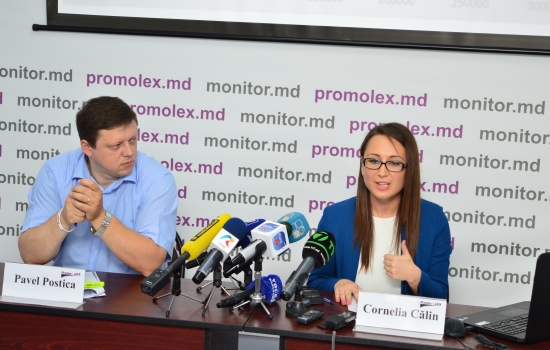
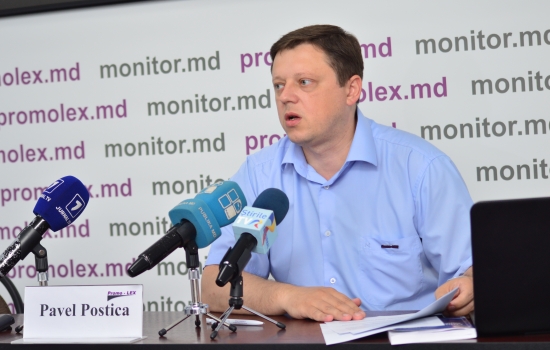
According to Pavel Postica, head of the Promo-LEX Observation Mission, the results of the parallel vote tabulation in Chisinau mun. do not differ significantly from the preliminary data announced by CEC. ”As reported by our observers, 163,544 persons voted for Dorin Chirtoaca, whereas the Central Electoral Commission presented 163,570 votes. Thus, there is a difference of 26 votes in the favor of the current mayor. At the same time, Zinaida Greceanii accumulated 141,953 votes, and CEC counted 141,929 votes, i.e. by 24 less. These figures are insignificant and occurred because 13 wrong protocols were registered in Chisinau. Most of these errors were made because some electoral officials were tired or trained insufficiently”, stated Pavel Postica.

See the Report here.

At the same time, the parallel vote tabulation performed by Promo-LEX Association in Comrat mun. corresponds fully with the CEC data. ”The preliminary voting outcomes show that candidate Serghei Anastasov accumulated 6357 votes, and Nicolai Dudoglo – 5119 votes”, stated Pavel Postica.

We remind that the Elections Observation Mission of Promo-LEX consisted of over 1500 national observers throughout the whole period of the General Local Elections of 2015. In addition, the Association conducted ”COME to VOTE!” Campaign, with the purpose of promoting informed and conscious voting among the electorate of the Republic of Moldova.

Promo-LEX Observation Mission declares itself to be neutral and equidistant towards the election candidates, it is not an investigation body and does not assume the express obligation to support the observers’ findings by evidence.

The General Local Elections of 14 (28) June 2015 are monitored by Promo-LEX Association under its Monitoring Democratic Processes Program. The Observation Mission is part of the activities, carried out by the civil society under the aegis of the Civic Coalition for Free and Fair Elections.

The Observation Mission of the General Local Elections of 14 (28) June 2015 is supported financially U.S. Agency for International Development (USAID) and Council of Europe and benefits of technical assistance provided by the National Democratic Institute for International Affairs (NDI). The opinions presented in the press release belong to authors and do not necessarily reflect the donors’ view.

For additional information please contact: Simion Ciochina, Communication Officer of the Observation Mission for the 2015 General Local Elections, Tel: 0 (22) 49 26 84, GSM: (+373) 69 11 96 94, E-mail: [email protected]


Promo-LEX Report: The second round of the local elections was marked by acts of violence and involvement of religious institutions in the campaign

_article_143530930626 June 2015 // Chisinau – Altercations between representatives of two parties in Bacioi v., Chisinau mun.; violent assault of an election contestant in Racovat v., Soroca d.; distribution of leaflets in the vicinity of several churches in Chisinau mun., which denigrated the image of a candidate for the position of Mayor of Chisinau mun. These are some of the most severe violations stated in the fourth Report of the Elections Observation Mission, presented by Promo-LEX. The report covers the electoral process in the Republic of Moldova during the period of 15-24 June 2015, on the basis of the findings made by Promo-LEX observers. See the report HERE.

According to the Promo-LEX Association’s report, during the election campaign for the second round of the General Local Elections of 28 June 2015 the number of electoral activities was lower. Thus, the election contestants organized at least 13 meetings with voters, 12 electoral concerts, and six election candidates carried out „door-to-door” activities. The outdoor and media advertising decreased, as well. At the same time, a big part of contestants submitted complaints, asking for the votes to be recounted.

“During the monitored period, the electoral bodies had an intense working regime, and focused on the processing of the results of the first round of voting. CEC adopted six Election Regulatory Decisions and reviewed a complaint, filed by one election candidate. At the same time, the second-level Constituency Councils and courts of law reviewed at least 37 complaints, 20 of which focused on votes recounting”, stated Pavel Postica, head of the Promo-LEX Observation Mission.

Promo-LEX analyzed the financial statements, submitted by election candidates to CEC during 6-12 June, and compared them with the observers’ findings in the field. Thus, Promo-LEX established that only 17 of all election candidates submitted financial statements to CEC, and 14 reported revenue and expenses. According to observers, during the reporting period only 786 citizens contributed with funds with the campaign budgets of political parties and electoral blocks. They donated approximately MDL 13.51 million.

“Overall, the election candidates reported to CEC revenue totalling at MDL 17.77 million. Most of the expenses reported by election candidates (71%) were intended for advertising. No election contestant reported any “salaries of temporary employed staff” as expenses during the reporting period. Insignificant amounts were reported on the lines of “rental of offices” and “related utilities”. Only one election contestant reported “expenses related to the delegation or secondment of people”. At the same time, the largest expenses for the election campaign of the 2015 local elections were reported by PDM – MDL 23.68 million, accounting for 39.98% of the threshold set by CEC. PSRM ranks the second – MDL 14.53 million (24.53%), and PPPN ranks the third with MDL 11.63 million (19.63%)”, stated Cornelia Calin, financial analyst of Promo-LEX Observation Mission.

At the same time, Promo-LEX recommends to criminal prosecution bodies to charge the persons guilty of having used administrative resources, offered electoral presents, instigated to violence and intimidated citizens.

We remind that the Promo-LEX Observation Mission will monitor on 28 June the second round of the 2015 General Local Elections and will organize three press conferences during the day, where it will present qualitative and quantitative information about the conduct of the electoral process on the whole territory of the Republic of Moldova. Promo-LEX will perform the parallel vote tabulation in Chisinau and Comrat municipalities.

Promo-LEX Observation Mission declares itself to be neutral and equidistant towards the election candidates; it is not an investigation body and does not assume the express obligation to support the observers’ findings by evidence.

The General Local Elections of 14 (28) June 2015 are monitored by Promo-LEX Association under its Monitoring Democratic Processes Program. The Observation Mission is part of the activities carried out by the civil society under the aegis of the Civic Coalition for Free and Fair Elections.

The Observation Mission of the General Local Elections of 14 (28) June 2015 is supported financially U.S. Agency for International Development (USAID) and Council of Europe and benefits of technical assistance provided by the National Democratic Institute for International Affairs (NDI).

The opinions presented in the report belong to authors and do not necessarily reflect the donors’ view.

For additional information please contact: Simion Ciochina, Communication Officer of the Observation Mission for the 2015 General Local Elections, Tel: 0 (22) 49 26 84, GSM: (+373) 69 11 96 94, E-mail: [email protected]


Torture in the Transnistrian region – Realities Behind the “Reality”

Annually on 26 June we mark the International Day in Support of Victims of Torture. In the Republic of Moldova, civil society organizations, international organizations and public authorities also organize activities and campaigns on this topic, but it is less discussed in the Transnistrian region.

In the Transnistrian region, the existence of legal provisions on death penalty in the ”criminal law”, suspicious deaths in prisons, inhuman and degrading conditions of detention, no criminal investigation of torture, and lack of a mechanism for rehabilitation of victims are just a few of the major problems.

Those from the region who report acts of torture and violation of human rights are persecuted. Any non-democratic regime is bothered by the presence of human rights defenders, i.e. by people who fight for the dignity, fundamental rights and liberties of other people.

The right not to be subjected to torture is a fundamental right, including for persons who live on the left bank of the Nistru river. No one is above the law, all citizens are equal before the law and no one should remain unpunished for the committed illegal acts, including for the application of torture or inhuman and degrading treatment.

Over 20 files of the Promo-LEX Association on the violation of Article 3 of ECHR, the right not to be subjected to torture, inhuman and degrading punishments or treatment, from the Transnistrian region were communicated to the defendant Governments by the Strasbourg High Court.

Promo-LEX Association has repeatedly drawn the attention on the phenomenon of torture in the Transnistrian region in several reports, studies and thematic articles. See Chapter Right to Live, Right not to be Subjected to Ill-treatment, Human Rights Report 2012-2013 andHuman Rights Report 2009-2010. Articles ”Torture, a means of investigation, details here or 22 Years of Raider Attacks and Terror like in 1937 = 22 Years of Raider Attacks and 1937-like terror”, details here.

For information on the conditions of detention in penitentiaries, including in the Transnistrian region, access the REPORT:   Torture and ill-treatment in Moldova, including Transnistria: Shared problems, evaded responsibility.

See below more data on the phenomenon of torture on the left bank of the Nistru river.

torture eng