Only 8 Years of Imprisonment for a Case of Domestic Violence that Resulted in the Victim’s Death
Centru Court of Law from Chisinau convicted C.V. to 8 years of imprisonment for acts resulting in the death of his wife – victim of domestic violence.
The incident took place in January 2014. In the wake of a conflict with his wife, C.V., being under the influence of alcohol, hit his wife many times with an axe. As a result, the victim was hospitalized with severe bodily injuries. In September 2014, after several months of coma, the woman passed away.
As testified by witnesses and revealed by evidence, the victim was repeatedly subjected to acts of domestic violence. The neighbours called the police many times for them to intervene and stop the abuses. Prior to this incident, C.V. was recorded as a perpetrator of domestic violence. In spite of this, the authorities failed to take appropriate measures and protect the victim.
Thus, the sentence pronounced by the Centru Court of Law found C.V. guilty of committing the crime envisioned in Article 2011 (3) (a) and (c) Domestic Violence, causing severe bodily or health injury and, respectively, the victim’s death. C.V. was sentenced to 8 years of imprisonment.
Promo-LEX lawyer, Dumitru Sliusarenco mentioned that the sentence will be challenged in a higher court. “Appropriate punishment of domestic violence acts, particularly the ones as severe as the case of C.V., must be one of the basic methods of combating domestic violence. Therefore, 8 years of imprisonment cannot be regarded as a fair punishment for such a cruel crime resulting in the victim’s death”, added the Promo-LEX lawyer.
According to Criminal Code of the Republic of Moldova, the maximum sanction for such crimes is 15 years of imprisonment.
For more details, please contact: Carolina Bondarciuc, Press Officer Promo-LEX: GSM 069637849, Tel/Fax (+373 22) 450024, e-mail: [email protected]
From Victim to Perpetrator: Authorities Failed to Protect Victoria Prutea
Victoria Prunteanu will spend the next three years and eight months in the prison for stabbing her husband to death in an attempt to defend herself from his attacks. The sentence was pronounced today by the Straseni Court of Law.
The court of law failed to take into account that Victoria Pruntenu was subjected to domestic violence by her husband throughout her whole marriage. Although she has asked for authorities’ help plenty of times, Victoria was not protected from her violent husband.
Though a restraining order was issued in August 2014, the victim remained in danger. The perpetrator violated the restraining order repeatedly, and the authorities failed to ensure her real protection.
The authorities found that both the woman and children were subjected to violence, but the police applied insignificant sanctions against the perpetrator, which had no effect on his behaviour. In the evening of 14 December 2014 Victoria was attacked one more time by her aggressive husband and she defended herself.
Promo-LEX lawyers will appeal the Judgement in a higher court. “If the authorities intervened promptly and implemented the law on domestic violence prevention and combating, the perpetrator would have been definitely held criminally rather than administratively liable for the committed violent acts. If Victoria were protected from her violent husband, the case wouldn’t have had this tragic outcome”, stated Lilia Posting, Promo-LEX lawyer.
It is important to note that Victoria Prunteanu comes from a socially vulnerable family and takes care of 5 minor children.
For more details, please contact: Carolina Bondarciuc, Promo-LEX Press Officer: GSM 069637849, Tel/Fax (+373 22) 450024, e-mail: [email protected]
Although the life of a young man is in danger, the authorities refused him asylum. ECtHR will examine the case
A young man, persecuted for alleged homosexual orientation, was refused asylum in the Republic of Moldova. The European Court of Human Rights will examine the case.
C.N. is a young man from Abia, Nigeria. In February 2013 he requested asylum in the Republic of Moldova, because in his community he is considered to be a homosexual, hence risking up to 14 years of prison and inhuman or degrading treatment.
In an official letter to C.N.’s lawyer, the Human Rights Adviser from UN Office in Moldova, confirmed that homosexuality is criminalized and homophobia is institutionalized in that country. Most of the times, the State is unable to protect victims of community violence.
As reported by the applicant, while a student he had a homosexual roommate, who was arrested and surrendered to the local community. The community representatives took the decision to hang that young man. C.N. also states that he was repeatedly apprehended and interviewed by police officers on his roommate’s sexual orientation. In this context, in October 2012, he was threatened by community representatives and was given one month to leave the settlement.
When requesting asylum in the Republic of Moldova, the young man explained to the authorities that the mere suspicion of being homosexual is a danger for his life. He also submitted evidence proving his statements.
The Bureau for Migration and Asylum of MIA rejected C.N.’s request, invoking that the presented circumstances do not pose a risk for the young man’s life. The applicant challenged the institution’s decision before the court. In the spring of 2015, the Supreme Court of Justice rejected C.N.’s request and held that there were no grounds for appeal.
The application to ECtHR was registered on 2 October 2015. The Court communicated the case on 9 December 2015.
Before the High Court, the applicant invoked the risk of being subjected to inhuman or degrading treatment by the Nigerian authorities or third parties as a consequence of his expulsion from the Republic of Moldova, which breaches Article 3 of the Convention.
The applicant is represented by Alexandru Cebanas, lawyer in Chisinau, and Vadim Vieru, Promo-LEX lawyer, in the European Court of Human Rights.
For more details, please contact: Carolina Bondarciuc, Press Officer Promo-LEX: GSM 060280980, Tel/Fax (+373 22) 450024, e-mail [email protected]
How much does domestic violence cost?
Five years of imprisonment and fifty thousand Moldovan lei – non-pecuniary damage for domestic violence.
The victim, mother of three children, claims that her husband had abused her physically and mentally for 15 years. Although she repeatedly asked the competent authorities for help, they failed to take appropriate measures to protect her.
In July 2015, the victim’s husband, being under the influence of alcohol, intentionally hit her once with a knife in the abdomen. According to the forensic report, the bodily injuries were qualified as severe and life-threatening. As a result, the victim was hospitalized and underwent a surgical intervention to remove her spleen. As a consequence, she received the severe disability degree.
On 16 December 2015, Leova Court of Law pronounced a sentence that found the perpetrator guilty of committing the crime envisioned in Article 2011 (3) (a) of the Criminal Code – Domestic Violence causing serious damages to body or health.
The perpetrator was sentenced to five years of imprisonment in a closed penitentiary. The victim is to receive the non-pecuniary damage in the amount of fifty thousand Moldovan lei.
For more details, please contact: Carolina Bondarciuc, Press Officer Promo-LEX: GSM 069637849, Tel/Fax (+373 22) 450024, e-mail: [email protected]
The Equality Council Found that Racial Profiling is a Major Form of Discrimination
The ethnic and racial stereotypes are still a problem for the Moldovan society. In this respect, Roma people from Moldova are often subjected to discrimination. The lawyers of Promo-LEX Association provided assistance on such a case of discrimination.
It is about the case of Cosmina Novacovici, a Roma woman who claims that she had been subjected to discriminatory treatment and humiliated by police officers of Buiucani Police Inspectorate, because of her ethnic origin. According to Mrs. Novacovici, in February 2015 she was apprehended by two persons who introduced themselves as police officers while she was shopping. Mrs. Novacovici was informed that she had been apprehended because she matched the profile of a law breaker, who committed a theft and namely: Gipsy woman, height 160-165, hail put tightly in a bun and black jacket.
The police officers did not provide any other details and insisted to escort her to the police station in order to provide explanations about her location when the crime was committed and undergo the recognition procedure. After 30 minutes of interrogation and humiliation inside the store, Ms. Novacovici being in an induced state of fear, gave up and went to the police station.
The humiliations continued in the police station, as well. Cosmina Navocovici was visually examined by a lady who treated her with contempt. After this, Mrs. Novacovici was further interrogated by the police officers, who insisted that she did not have the right to know more information, and the profile indicated by the victim was identical with her facial outlines, height and ethnic origin.
In March 2015, Mrs. Novacovici submitted a complaint to the Council on Prevention and Elimination of Discrimination and Ensuring Equality (CPEDEE), in which she complained about the humiliating treatment by police officers of Buiucani Police Inspectorate, motivated by the preconceived idea related to her race, expressed by racial profiling, her apprehension without any objective reason, except for the legal procedure and dignity humiliation because of the Roma origin.
In September 2015, the Council found that the allegations included in the complaint represent a major form of racial discriminationaccording to Articles 1, 2, 4 a) in conjunction with Article 8 h) of the Law No 121 on Equality. See the full text of the decision here.
The CPEDEE decision was appealed by the Buiucani Police Inspectorate in the court of law. Nevertheless, on 9 December 2015, the Buiucani Court of Law dismissed the application submitted by Buiucani Police Inspectorate on the annulment of the decision issued by CPEDEE on case No 239/15.
Legal aid was provided under the “Strengthening civil society organizations from Moldova, including the Transnistrian region, to combat discrimination through advocacy actions” Project, implemented by The Equal Rights Trust and Promo-LEX Association and financed by the European Union.
For more details, please contact: Carolina Bondarciuc, Promo-LEX Press Officer: GSM 069637849, Tel/Fax (+373 22) 450024, e-mail [email protected]
Human Rights are Not Optional
Human Rights Day is marked annually on 10 December[1]. On 10 December 1948, the General Assembly of the United Nations adopted the Universal Declaration of Human Rights, which along with other two Covenants [2] form “the International Bill of Human Rights”.
The Republic of Moldova has joined most of the international human rights treaties and ratified the International Covenant on Civil and Political Rights without any reserves[3]. Moldova ratified in 2007 the Optional Protocol, which empowers the Committee to examine individual requests regarding the violation of human rights.
This document was ratified with a territorial reserve – the Transnistrian region,[4] respectively, the Protocol is effective only on the territory effectively controlled by the authorities of the Republic of Moldova.
With the international commitments assumed when ratifying these important documents, the Republic of Moldova must safeguard the rights of each person who is under its jurisdiction, on the entire territory of the country. Even though the constitutional authorities of Moldova have limited ability to influence the process of remedying the situation, the Tiraspol administration has no legal status in the international law, while other states, except for Moldova, have not declared their jurisdictional competence over the situation from the Transnistrian region.
Practically, the territorial reserve made by Moldova upon ratification of the Optional Protocol, pleads for recognising the existence of a “legal vacuum” in the Transnistrian region. Which is inadmissible, because this territory does not fall under the term terra nullius from the international law, and the international community regards it as an integral part of the Republic of Moldova.
In this context, withdraw of the reserves would be a clear advantage for the persons whose rights have been violated in the Transnistrian region.
Promo-LEX Association
[1]In 1950, the General Assembly passed Resolution 423 (V), inviting all States and interested organisations to celebrate 10 December of each year as Human Rights Day [2]The International Covenant on Civil and Political Rights and International Covenant on Economic, Social and Cultural Rights. [3]The Republic of Moldova ratified, without any reserves, the International Covenant on Civil and Political Rights on 28 July 1990 by Government Decision No 217-XII, that entered into force on 26 April 1993, assuming the responsibility to fulfill the obligations stated in the main UN document on civil and political rights. [4] By Law No 260 of 06.12.2007, Moldova ratified the Optional Protocol to the International Covenant on Civil and Political Rights, with the following territorial reserve – the Transnistrian region: “Until the full restoration of the territorial integrity of the Republic of Moldova, the Protocol shall be effective only on the territory effectively controlled by the authorities of the Republic of Moldova”.
Promo-LEX Association joined the Office of the Ombudsperson in the Campaign against Gender-Based Violence
Promo-LEX Association joined the “16 Days of Activism Against Gender Violence” Campaign, which was conducted by the Office of the Ombudsperson.
On 25 November, a mobile team travelled to Gura Bacului commune, Anenii Noi district, to launch the Campaign and organize public discussions about domestic violence.
The Promo-LEX lawyer, Lilia Poting, informed the participants about the legal mechanisms to protect victims of domestic violence: who they can contact for help, how domestic violence victims can defend their rights, what a restraining order means, how crimes of domestic violence are punished.
The lawyers from the Office of the Ombudsperson spoke about the domestic violence cases examined by the Ombudsperson.
Valenta Seuta, CAP physiologist, spoke about the types of domestic violence, the cyclical nature of domestic violence and explained how to identify families that face such problems, what actions should take the victims, myths and realities about domestic violence.
Cezara Dilevschi and Violeta Rebeja, representatives of RCTV ”Memoria”, referred to the impact of domestic violence on its members: women, children, but also community, where victims can find rehabilitation and shelter: maternal centers, shelters and other support programs and services provided by “Memoria” Organization.
On 26 November, thematic public discussions were organized and held in Mereni village. The representatives of local public administration, teachers, parents of pupils of “Emil Nicula” High School along with other villagers participated in the general meeting on the topic “Violence – Dangerous Social Phenomenon”.
The Ombudsperson’s Institution has the following partners in this Campaign: Promo-LEX Association, RCTV “Memoria”, and Center for Assistance and Protection of Trafficked Victims (CAP).
ENEMO – Statement of preliminary findings and conclusions of the second round of Ukrainian local elections
The second round of Ukrainian local elections has met most international standards of free and democratic election s. However, certain legal provisions leave space for concern and discussion especially in relation to unequal access to election funds and media, unequal representation of all election contestants within election commissions, as well as unequal representation of all election districts within elected councils.
The European Network of Election Monitoring Organizations (ENEMO) is a network of 22 leading election monitoring organizations from 18 countries of Europe and Central Asia, including three European Union countries. This is the tenth Election Observation Mission by ENEMO to Ukraine, which began with the arrival of 8 core team members to Kyiv, on 1 October in order to observe the Local Elections 2015. ENEMO additionally deployed 50 long-term observers (LTOs) countrywide to observe and assess the electoral process in their respective regions for the elections on 25 October, as well as the second round of 15 November.
ENEMO has deployed 90 short-term observers (STOs) to observe the second round of elections throughout Ukraine. Together with mobile LTOs, ENEMO had 67 teams in the field during the Election Day on 15 November, which monitored the opening of 67 PECs, voting in 873 PECs and the closing of 67 PECs.
This preliminary report is based on the ENEMO observers’ findings from the field, where they focused on the work of election administration bodies after the first round of elections, election-related complaints and appeals, the conduct of election participants prior to the election day, as well as the overall conduct of elections during the Election Day of 15 November in terms of opening, voting, counting and the transferring of election materials to TECs and election related activities.
Preliminary conclusions
The Election Day on 15 November was mainly organized in line with the law and foreseen procedures by most Precinct Election Commissions (PECs), as well as Territorial Election Commissions (TECs).
ENEMO observers rated the voting process as good and very good in 98,9% of PECs, what is an improvement compared to the first round of elections. The conduct of PEC commissioners was highly commended by ENEMO observers in 99% of cases, whereas reports also state that in a number of cases PEC members did not receive proper training and were not fully aware of the legal procedures.
Representatives of one mayoral candidate predominantly manned commissions at some PECs, whereas in a number of cases, the total number of PEC members present during the observation was lower than legally prescribed. Also, several instances of citizens taking a photo of their vote were reported, as well as voters with strange white sticker on their passports, which have again raised some suspicions of vote buying in several PECs.
ENEMO observers rated the closing and counting procedures as good and very good in 98,5% of monitored PECs, which is a clear improvement compared to the first round of elections (88 %). Nevertheless, protocols coming from PECs continued to be affected by mistakes and as a result TECs ordered corrections of protocols in 52,9% of cases observed by ENEMO. These mistakes were mainly technical and could not disrupt the election process.
Conduct of TECs was generally professional and transparent. This was reflected by the fact that 97,6% of observed TECs received no official complaints on their work.
The previously criticized, highly politicized composition of TECs lead to a number of decisions made in favor of party interests rather than public interest of having democratic elections. Considering the previous evaluation of TECs by its observers, ENEMO would like to stress again the recommendation that an adequate professionalization of the partial and/or full composition of at least higher level TECs is highly necessary for future elections.
Concerns of ENEMO and many other stakeholders raised before elections, regarding the complexity of the new Law and the lack of knowledge of most PEC members have been justified. Mainly due to the lack of training and numerous replacements of PEC members, many TECs in all regions of Ukraine had to return a large number of protocols (even up to 60%) received by respective PECs to be corrected accordingly.
Many mayoral candidates have not managed to provide an adequate number of precinct commissioners from their side, which highly undermined the equal representation rule during ENEMO Election Observation Mission Ukraine, Local Elections, 25 October 2015 Statement of Preliminary Findings and Conclusions (17November 2015) P a g e | 3 these repeated elections, as the remaining PEC members were again selected by the relevant TEC in a questionable manner.
ENEMO would like to commend the Kiev Administrative Court of Appeals, as well as the High Administrative Court on their decisions to establish legality and legitimacy of elections in the city of Pavlohrad, thus allowing voters to express their free will
in the second round of elections, thus using the electoral system previously expected by all election contestants and voters.1
Direct and indirect vote buying remained a reported problem for Ukrainian elections during the campaign period prior to the second round of elections as well.
A number of candidates violated provisions of the Law on Local Elections, by starting their electoral campaign earlier in the second round of elections.2
Increased transparency of campaign financing and expenditures should remain an important task for Ukrainian lawmakers to be improved for future elections.
Changes of the electoral legal framework have not made a stronger personalization of the electoral system, as voters are still casting their votes for the parties. Nomination districts have not fulfilled their main purpose – to make a stronger link between the electorate and its representatives.
1 The system of absolute majority (“TRS” – two rounds system), used for electing Mayors in cities with 90 000 and more voters.
2 The law stipulates that the electoral campaign starts on the day following the day of the official publication of a decision of a respective TECs on repeated voting (also the second round of elections) and ends on last Friday before E-day, at midnight.
New violations of human rights in the Transnistrian region will be examined by ECtHR under the case Ion Iovcev and 13 others
On 20 October 2015, the European Court of Human Rights informed the responded governments on the case Ion Iovcev and other 13 v. Republic of Moldova and Russia (Case file no. 40942/14).
The applicants are teachers, employees, pupils, and parents from four schools with teaching in Latin alphabet from the Transnistrian region: “Lucian Blaga” Theoretical Lyceum from Tiraspol; “Mihai Eminescu” Theoretical Lyceum from Dubasari; “Stefan cel Mare” Theoretical Lyceum from Grigoriopol; and secondary school from Corjova village, Dubasari district.
After ECtHR pronounced a Judgment on the case Catan and others, in October 2012, the situation of Latin alphabet teaching schools in the Transnistrian region has not improved. Moreover, the local administration kept putting administrative and financial pressure on the institutions and harassed psychologically the teachers and pupils.
Three of the applicants believe that their right to freedom and safety was violated when they were apprehended in February 2014 – the headmaster, accountant, and driver of “Lucian Blaga” Theoretical Lyceum were accused of smuggling money.
The applicants also alleged that their right to respect for private and family life was also violated as a result of the interdictions to use Romanian language, based on the Latin alphabet. Thus, in applicants’ view, Article 8 of the Convention includes the right to recognizing the language as a part of ethnic and cultural identity. The language is an essential means of social interaction and development of personal identity and imposing a foreign alphabet aims, in this case, at forcing the adoption of a different linguistic and cultural identity.
Another aspect, invoked by the applicants who hold managerial positions, is the violation of Article 8 in terms of having the correspondence checked and the telephone conversations tapped.
The applicants are represented by the lawyers and attorneys of Promo-LEX Association.
As well, ECtHR provided information about the case Gheorghe Bobeico and others v. Republic of Moldova and Russia (Case file no. 30003/04), where the applicants are teachers and pupils of the boarding school from Tighina.
For more details, please contact: Alexandru Postica, Human Rights Program Director of Promo-LEX Association, Attorney. tel: (22) 450024, GSM: 069104851, e-mail: [email protected]
The series of trainings on Unitary Procedure for Investigation of Cases on Human Rights Violation in the Transnistrian Region came to a close
Promo-LEX in partnership with the National Institute of Justice and General Police Inspectorate conducted a range of thematic trainings for judges, prosecutors, lawyers, investigation officers, criminal prosecution officers and representatives of the Centre for Human Rights from Moldova (CHRM).
Thus, during September – October, 98 people benefited from 5 trainings.
The following topics were addressed: International standards on implementation and promotion of human rights in break-away areas that are beyond the control of constitutional authorities; Assessing the effectiveness of the investigation of criminal cases initiated on severe human rights violations committed in the Transnistrian region; Positive obligations of the State from the perspective of the European Court of Human Rights jurisprudence on cases from the Transnistrian region; National remedies to protect human rights in the Transnistrian region.
Representatives of Promo-LEX Association, Ministry of Justice, General Prosecutor’s Office and General Police Inspectorate were trainers at these trainings.
The events were organized with the financial support of the Open Society Institute from Budapest.
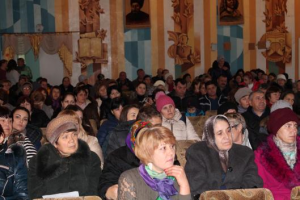 Promo-LEX Association joined the “16 Days of Activism Against Gender Violence” Campaign, which was conducted by the Office of the Ombudsperson.
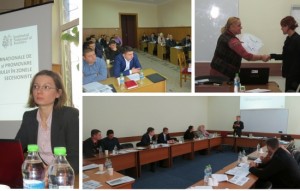 Promo-LEX in partnership with the National Institute of Justice and General Police Inspectorate conducted a range of thematic trainings for judges, prosecutors, lawyers, investigation officers, criminal prosecution officers and representatives of the Centre for Human Rights from Moldova (CHRM).