Money in politics – Promo-LEX interview with Daria Paprocka, international expert
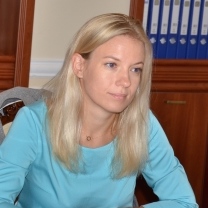
INJ_23_09_2014_intrev__Com_Ven__1During the past years, the Republic of Moldova made important steps to improve political parties’ funding regulations. However, we have several shortcomings in implementing laws, either due to parties’ resistance or to the fact that the authorities in charge of oversight and control lack capacities.

We spoke to Daria Paprocka – PhD in political sciences, with a wide work experience in different international organizations (OSCE/ODIHR, Venice Commission) and in the Republica of Moldova, about the most important aspects regarding the funding of the political parties from the Republic of Moldova, but also about who and how supervises their money. Daria Paprocka is the Promo-LEX expert in the field of political parties funding within the Project entitled „Fighting Political Corruption in the Republica of Moldova by Improving Political Parties’ Funding Regulations and Civic Oversight”.

  • How would you describe the current situation regarding the financial management of political parties in the Republic of Moldova?

When it comes to financial management of the regular functioning of political parties in Moldova a lot needs to be done. There needs to be a bigger clarity on the size of parties’ membership and on fees the members introduce, donations from private and legal entities need to be registered with due diligence and the manner in which the money is spend both at the central and at the territorial level is yet to be defined by many parties. The recent changes to the Law on Political Parties, which entered into force at the beginning of this year, will certainly stimulate a greater transparency of political parties’ financial management. It is definitely needed given the disillusionment of many Moldovans with the current political landscape.

  • Will the state funding contribute to a level playing field on Moldova’s political landscape?

Certainly it is not a remedy that will work in an instant, but yes – it is generally believed that state funding may achieve a greater equality between parties and limit undue influence on political parties as the need for private funding would be reduced. Having said that, it is important that the level of state support should not make political parties completely reliant on state funding, for it could lead to weakening of links between parties and their electorate. In case of Moldova the introduction of state funding does not eliminate private funding, thus parties will still be reaching out to the electorate and nourish the civic engagement in the political process.

  • Can membership fees be viable source of political parties financing in Moldova?

Generally membership fees and small donations rarely constitute a substantial part of political parties’ incomes. And Moldova is no exception to that rule. What’s more important is that legislation and political parties’ internal regulations clearly distinguish the membership fees from donations. The reason for that being there are no upper limits for membership fees and some countries use that to bypass donation limits. In case of Moldova, GRECO (Group of States against Corruption) recommended to take appropriate measures to limit the very risk that parties’ membership fees may be used to circumvent the transparency rules applicable to donations. Consequently, such provisions have been introduced to the political financing legislation.

  • Will the current legislation protect Moldovan politics from undue influence of the private sector?

My understanding of the latest changes to the Law on Political Parties is that this was precisely the aim of the legislator – to introduce more transparency to political financing and to protect Moldovan politics from undue influence of the private sector. A number of provisions have been introduced to achieve it. Introduction of the discussed already state funding, legal requirements related to the accountancy of membership fees and donations, the spending limits of the latters – to mention just a few key ones.

  • What is your opinion about the level of limits for donations from private and legal persons (200 and 400 average salaries respectively)?

There is couple of reasons for introducing limits for donations. First, designing any system of political financing it is important that the money does not prevail over the voice of citizens and second, which actually stems from the first, is to limit the possibilities of undue influence and corruption. For those objectives to be met the donations limits have to be set a level which encourages political parties to look for many donors rather than depend on few. Current donations ceilings, with the average Moldovan salary calculated at the level of about 4,500 lei amount to 900,000 lei for a private person and 1.8 million lei for a legal entity. It is unlikely that being set at such high levels they will serve their purpose of diversifying the political parties’ sources of donations.

  • OSCE/ODIHR recommended considering revision of the ban on donations on out-of-country income. What is your opinion on the subject?

The Committee of Ministers of the Council of Europe recommends that states should specifically limit, prohibit or otherwise regulate donations from foreign donors, reason for that being to protect a country against an improper and interfering foreign influence. I appreciate that this is the reason for ban of out-of-country donations in Moldova. But at the same time, Moldova’s situation, with 15% of the voters working abroad, is particular and the ban disfranchises a large part of the citizenry from the possibility to actively participate in political life of their country. It would be worthwhile to examine legal possibilities that would on one hand allow Moldovans living abroad to support financially political parties of their choice and on the other hand still protect Moldovan political landscape from an improper foreign influence.

  • Will vesting the CEC with the oversight responsibilities contribute to the transparency of the political funding?

Vesting the CEC with the oversight responsibilities implements the GRECO recommendation to mandate an independent central body, endowed with sufficient powers and resources and assisted by other authorities where necessary, so as to allow the exercise of effective supervision, the conduct of investigations and the implementation of the regulations on political funding. With the latest legislative changes to the Law on Political Parties the CEC is mandated to supervise the funding of both election campaigns and political parties in general. Under the amended Law the CEC will be receiving financial information from parties and electoral contestants as well as from other state bodies, therefore it will have a comprehensive overview of political finances. I believe all those provisions will allow the CEC to perform their oversight duties in the manner, which will contribute to the transparency of the political funding.

  • According to your assessment until now – does the external oversight contribute to the political parties financial transparency?

As the external oversight stakeholders I understand civil society and media. I think their role in contributing to the transparency of political financing could never be overestimated. They play a key role, as it is them who bring attention of the society to financial management of political parties. The work of CREDO in years 2010 and 2011 in the field of election campaign expenditures and the comprehensive monitoring of campaign finance issues which is done by PromoLEX during every elections contributed greatly to both the professionalism of political parties financial management and their transparency. It also raised awareness of the society about the campaign finance issues. I am glad to see that the PromoLEX undertakes a thorough research of the political parties financing at the time of when the legislative changes on political financing come into force. It shall serve as a good overview to both society and the political parties themselves as to which areas should be improved.

  • How would you assess the public interest in the political financing issues?

It is hard to assess since I do not live in Moldova any longer, but I believe people remain interested in political parties financing, especially that over the years budgets of some political parties have grown visibly. Also, the current disillusionment with the political establishment and the introduction of the state funding may trigger even greater public interest in funding of political parties. Thus, the implementation of the political parties’ financing reform will have to be accompanied by an awareness campaign on the subject.

The interview is conducted under the Project “Fighting political corruption in the Republic of Moldova by improving political parties’ funding regulations and civic oversight”. This Project is implemented by Promo-LEX Association, through Good Governance Fund of the British Embassy in Chisinau. The responsibility for the provided information rely on Promo-LEX Association and it does not necessarily reflect the position and opinion of the British Embassy.


Public Appeal on the Organization of the Minor Children’s Visits to Detention Institutions

To the Department of Penitentiary Institutions
and Non-Government Organisations

According to the press release of the Department of Penitentiary Institutions, on 12 February 2016, Chisinau Penitentiary No 13 hosted a group of children from Chisinau Children’s Resource Center.

The press release informs the public that “during discussions held with minor inmates, children understood the importance of freedom and realized that they have to study and have an appropriate behaviour in order to avoid such places in the future”.

Children, aged between 14 and 18 years, visited penitentiary’s cells and library. According to the social assistants and penitentiary’s staff, such excursions would be of an educative nature and are welcomed.  The press release also states that a new such excursion will be organized for children from families in need aged up to 14 years.

We believe that such practices are based on stereotypes and preconceived ideas related to children from socially vulnerable families and their predisposition to committing crimes. Moreover, when public authorities promote such messages, it perpetuates such preconceived ideas in the society. By doing so, the equality and non-discrimination principles set by the Convention on the Rights of the Child and other International Covenants, as well as by legislation and Constitution of the Republic of Moldova, are violated.

Promo-LEX Association calls upon the representatives of the Department of Penitentiary Institutions and other public authorities, as well as Non-Government Organisations not to admit the continuity of such practices.

Promo-LEX Association and The Equal Rights Trust implement the Project “Strengthening civil society organizations from Moldova, including the Transnistrian region, to combat discrimination through advocacy actions”. This project is funded by the European Union and is co-financed by Soros Foundation-Moldova. Promo-LEX provides, under the Project, free legal aid on discrimination cases.


Juvenile Victims of Sexual Offences are not Protected by Authorities

Although the Republic of Moldova lost several cases at the European Court of Human Rights in which it failed to conduct efficient investigations on accusations by juvenile victims of sexual assaults and rapes (cases of I.G. vs Moldova, see details here and N.A. vs Moldova, see details here), the defective practice still continues.

Using some procedural tricks, the perpetrators either escape prosecution, or are applied a milder or symbolic punishment. The situation is particularly dangerous when the victims of sexual assaults are juveniles and their guardians or parents to not have enough resources to fight the system. This is the case of a juvenile victim of rape, where the Orhei District Court pronounced a sentence that actually absolved two perpetrators from liability, while the third one was punished symbolically.

According to the victim’s testimonies of December 2014, she was deprived of liberty by three persons in a house from Orhei town, where she was forced to consume alcohol and have sexual intercourses against her will. At the time of the assault the victim was underage and reportedly was invited to that house by a friend, supposedly to a party. After the rape, the victim managed to get away and was found by her mother in a state of shock.

According to the case evidence, the police found many bottles of alcoholic drinks, narcotic substances (cannabis), and some items of the victim’s clothing at the crime scene. Nevertheless, Orhei Prosecutor’s Office accepted the defendants’ version that the juvenile victim had sexual intercourses wilfully, although the victim denied it. During the criminal prosecution they failed to check if the victim consented to have sexual intercourses, as alleged by defendants, and did not take into account other circumstances, such as: victim’s helplessness and age, the fact that the defendants consumed alcohol and narcotic substances, the bodily injuries found on the body of the victim and the state of shock that the victim was found in.

The Orhei Court sentenced only one of the defendants to 2 years in prison for deprivation of liberty, but without holding him criminally liable for rape, although the defendant admitted having had sexual intercourses.

The victim’s lawyer, Dumitru Sliusarenco argues that:  “The authorities neither investigate efficiently, nor protect juvenile victims of rape. Therefore, the situation turns paradoxical when the prosecutor’s investigation reached the conclusion that the victim had sexual intercourses wilfully, while being deprived of liberty against her will. In conclusion, one can see a vicious practice of investigating sexual offences, where offenders escape punishment, whereas victims are subjected to repeated victimization. As a consequence, the victims endure continuous emotional pain, are stigmatized and lose self-confidence and trust in the justice system.”

When the authorities (policemen, investigators, prosecutors) investigate sexual offences, they are influenced by gender-based prejudice and stereotypes, therefore their investigation is inefficient.

Legal aid is provided under the “Strengthening civil society organizations from Moldova, including the Transnistrian region, to combat discrimination through advocacy actions” Project, implemented by The Equal Rights Trust and Promo-LEX Association and financed by the European Union.

Find the video material on this case  here and here.

For more details, please contact: Carolina Bondarciuc, Promo-LEX Press Officer: GSM 069637849, Tel/Fax (+373 22) 450024,  e-mail:[email protected]


Is the Parties’ Membership Fee a Taboo Topic in the Republic of Moldova?

The financing of the political parties is a relatively new topic, which is too briefly discussed yet in the Republic of Moldova. For a better understanding, Promo-LEX Association, financially supported by the British Embassy in Chisinau through the Good Governance Fund, initiated the development of a Study on Practices and Methods used by Political Parties for the Financing of their Activity and the Achievement of Statuary Goals.

“We spotlighted the membership fees because they are the political parties’ main source of self-financing. The rest of financing mechanisms are external, that is private financing. At this point, we encounter a big issue in the Republic of  Moldova, because as long as membership fees cannot ensure the parties self-financing, they are left at the discretion of private donors, who in most cases are interested groups”, Pavel Postica, Director of the Program Monitoring Democratic Processes, Promo-LEX Association.

Following the development and enforcement of the methodology, the statutes of those 43 political parties, registered until 1 December 2015 with the Ministry of Justice, were analysed during the documentation. One of the first issues registered in respect of the financing of the political parties activity is related to the way of regulating the amount of membership fees.

Cornelia Calin, Promo-LEX analyst, submitted preliminary data and mentioned the following: “The statutes of 21 political parties (49% of the total number), contrary to the amendments to the Law on Political Parties made in April 2015, do not regulate expressly the amount of the fees. In 18 cases (42% of the total number) out of them, the membership fees are set and regulated in internal documents adopted by party collegial structures (National Politic Council, Standing Bureaus, Republican Council, National Coordination Council, etc.) through particular minutes or other internal regulations. The statutes of other 3 political entities (7% of the total number) do not include any provisions on the regulation of the membership fees and the amount/ procedure for payment of these contributions which are mandatory according to provisions of the current legislation”.

Thus, currently only 22 political parties (51% of the total number) regulated in their statutes the amount and procedure for payment of membership fees. In this context, Promo-LEX Association notes that the lack of express regulations included in the political parties’ statutes on the amount and procedure for payment of the membership fee, will represent, since 1 January 2016, a violation of the Article 25 (3) of the Law on Political Parties.

Other relevant aspects set at this stage of documentation are related to the quantum of membership fees. According to the statutes of the political parties which expressly stipulate the amount of membership fee, in 7 cases the membership fee vary from MDL 1 to 5. Other parties set their membership fee in amount from MDL 6 to 20 (in 4 cases) and from MDL 21 to 100 (in other 4 cases). In case of 6 parties that set the membership fee in their statute, its amount vary from 0.2% to 2.5% out of the monthly salary or income, pension, scholarship, while one political party set the quantum of its membership fee in the amount of 5% from the minimal salary on economy of the member of the political entity. According to the political parties’ statutes that expressly regulate the amount of membership fee, the latter are paid monthly in 18 cases (75%), quarterly in 1 case (4%) and annually in 5 cases (21%).

Pavel Postica emphasized that those 21 political parties, which are registered with the Ministry of Justice and which did not yet align their provisions of their Statute to the legal ones, violate the law in force.

“Thus, we recommend the Ministry of Justice to make a call to political parties, which did not made the appropriate amendments to their Statutes, to do so. The parties should be aware that they may not receive allocations from the state budget”, the Director of Promo-LEX Program added.

Promo-LEX analysis on the political parties’ membership fees is one of the first findings developed under the Project “Fighting political corruption in the Republic of Moldova by improving political parties’ funding regulations and civic oversight”, which was implemented during 1 December 2015 – 31 March 2016. This Project is implemented by Promo-LEX Association, through Good Governance Fund of the British Embassy in Chisinau.

The responsibility for the provided information rely on Promo-LEX Association and it does not necessarily reflect the position and opinion of the British Embassy.

For more details, please contact: Carolina Bondarciuc, Press Officer Promo-LEX: GSM 069637849, Tel/Fax (+373 22) 450024, e-mail: [email protected]

cotizatii-eng


The civil society organizations express their concern about the violation of freedom and personal security

The civil society organizations have signed a public appeal expressing their concern about the conduct of the representatives of the police and prosecutors regarding the unjustified and illegal detentions  and the  submission of   attempts groundless requests for preventive measures of arrest against people. The latest case which highlights the systemic problems is the detention  of the activist Anatol Matasaru.

We recall that on 28th of January 2016, Anatol Matasaru conducted a protest action in front of the National Anti-corruption Center. On 29th of January 2016, without being summoned and contrary to the provisions of art. 166, 167 of the Criminal Procedure Code, he was detained at his domicile by 14 policemen in plainclothes, without notifying to him the reason and the grounds thereof. More details can be find in the document.

This particular case and similar cases highlight the systemic problems in the area of enforcement of criminal procedural legislation and the provisions of art. 5 of the European Convention of Human Rights in the area of detention and arrest.

The signatories call on the Ministry of Internal Affairs, the General Police Inspectorate and the General Prosecutor’s Office to undertake urgent measures in this case, specifically by  conducting  duty investigations  within each institution in the case of illegal detention of the activist Anatol Matasaru.

Furthermore, the institutions concerned must ensure that their employees are trained in the area of guaranteeing  the right to liberty and security of person with regard to the application of deprivation of liberty measures.

The full text of the Appeal here.

For more details, please contact: Carolina Bondarciuc, Promo-LEX Press Officer: GSM 069637849, Tel/Fax (+373 22) 450024, e-mail:[email protected]


The Parliamentary Assembly of the Council of Europe asks for a more Effective Protection of Human Rights Defenders and NGOs

The Parliamentary Assembly of the Council of Europe urges Member States to invest efforts in order to protect human rights defenders and ensure an enabling environment for NGOs. In this respect, two Resolutions were adopted on 28 January 2016.

The Assembly stresses that the responsibility for protecting human rights defenders lies first and foremost with States and that in some circumstances States may also be held responsible for the action of non-State actors aimed at intimidating human rights defenders and for failing to carry out effective investigations into such action.

At the same time, the States are urged to ensure an enabling environment for the work of human rights defenders and NGOs and effective protection against acts of intimidation and reprisals, and conduct effective investigations of any such acts.

One of the Reports underpinning these Resolutions present some true-life cases when the rights of human rights activists and defenders were violated in the Member States of the Council of Europe. Some of them refer to the situation from the Republic of Moldova.

Mailis REPS, Rapporteur of the Committee on Legal Affairs and Human Rights and author of Strengthening the protection and role of human rights defenders in Council of Europe member States Report stated: “Moreover, activists from certain other countries are often subject to judicial or administrative harassment and to smear campaigns in the media; this is particularly in the case of those who work on sensitive issues. Human rights defenders working in the conflict zones, such as in Eastern Ukraine, Transnistria, complain about the lack of access to such territories. For example, members of a Moldovan human rights association, Promo-LEX, cannot enter Transnistria now, as they face serious criminal accusations”.

Liliana Palihovici, Head of the parliamentary delegation to PACE, also referred to the case of Promo-LEX Association, underlying the notoriety of this human rights organization in Moldova and the importance of its activity on the left bank of the Nistru River.

In her closing speech, Mailis REPS recommended to pay attention to the so-called grey zones, because it is specifically in these zones where the human rights and the defendants’ rights are violated most often.

The full text of the Resolutions in English is available here and here. The video from the meeting is available here.


He was born again – a young man from Bender gained his identity at the age of 21

^B862D24405E2FAFAB41CC49A9BF76E12C4F1EF45187B3EC0B6^pimgpsh_fullsize_distrSerghei Bondarev is originating from Bender, he is 21 years old, but has never had a Birth Certificate. Although he has all the documents issued by the Transnistrian administration, he does not have any document issued by the constitutional authorities, which limits several of his rights, such as the right to education or freedom of move.

The young man struggled intensively with the population documentation system of Moldova in order to prove his identity and obtain a birth certificate, issued by the constitutional authorities. He managed to do it in the court of law. On 15 December 2015, by the Judgement of Bender Court of Law, his application was admitted and the identity of citizen Bondarev Serghei was established. The Judgement become final on 15 January 2016 and was executed by the Civil Registry Office, which issued the birth certificate.

Serghei’s case highlights the systemic difficulties related to the documentation of the population born on the left bank of the Nistru River. For example, a person born in the Transnistrian region can be issued national documents on the request of one of the parents who has an ID card issued by a recognised authority. In spite of this, there are categories of persons who encounter major barriers in the documentation process, such as orphans or children whose parents were not issued national documents.

“So far, the procedure of recognising the identity of a person in the court of law is the only mechanism used in case of persons improperly documented from the Eastern districts of the Republic of Moldova, said Vadim Vieru, Promo-LEX lawyer. However, in the light of their positive obligations, the constitutional authorities must ensure observance of human rights on the left bank of the Nistru River and identify clear and accessible mechanisms for the documentation of the population from Eastern districts”.

Analysing this case, Promo-LEX lawyers found an interference in the private life of the applicant, which is safeguarded by Article 8 of the European Convention, in particular, the right to legal identity and identification in the social relations among other citizens or any other individuals or legal entities. In addition, the lawyers established that the young man was deprived illegally of his legal capacity, when the authorities refused to confirm his citizenship.

We remind that Promo-LEX Association reported the problems with the documentation of the population from the left bank of the Nistru River back in 2007-2008[1].

For more details, please contact: Carolina Bondarciuc, Press Officer Promo-LEX: GSM 069637849, Tel/Fax (+373 22) 450024, e-mail: [email protected]


[1]Report on Human Rights in Moldova, Retrospective of 2007-2008. Chapter entitled Right to Life, Freedom and Individual Safety:http://www.promolex.md/upload/publications/ro/doc_1259134469.pdf


Finanțarea partidelor politice – între mit şi realitate

FacebookLa 23 ianuarie 2015, a avut loc Atelierul de instruire pentru monitorii Promo-LEX în cadrul Proiectului „Combaterea corupției politice în Republica Moldova prin îmbunătățirea cadrului legal privind finanțarea partidelor politice și supravegherea civică”.

„Finanțarea partidelor politice, controlul partidelor de grupuri de interese economice sau oligarhice, corupția politică, finanțarea partidelor de peste hotarele ţării, traseismul politic – toate aceste titluri de știri se nasc de la un singur subiect – practic nimeni nu știe cine şi cum finanțează partidele politice din Moldova. Şi aici avem o sumedenie de supoziții fără a avea o analiză reală pe acest segment”, a menționat Pavel Postica, directorul Programului Monitorizare Procese Democratice al Asociației Promo-LEX.

„În cadrul acestui scurt proiect ne propunem să analizăm subiectul finanțării partidelor pentru a vedea şi a comunica societăţii imaginea reală, anume în acest moment de cotitură când urmează a fi pusă în aplicare finanțarea partidelor din bugetul de stat. În paralel vom vedea şi cum reacționează partidele atunci când sunt invitate să discute acest subiect destul de sensibil”, a mai adăugat Pavel Postica.

Astfel în următoarele două luni, peste 35 de monitori vor efectua interviuri cu reprezentanții oficiali ai partidelor politice din cadrul oficiilor centrale şi a reprezentanțelor teritoriale de pe întreg teritoriul Republicii Moldova. Discuțiile se vor axa pe diverse aspecte privind acumularea veniturilor și efectuarea cheltuirilor, iar toate datele acumulate vor fi reflectate în cadrul unui studiu tematic. Studiul va mai conține în special analiza cadrul legal existent cu privire la finanțarea partidelor politice, standardele și practicile internaționale existente în domeniu, statutele şi rapoartele financiare ale partidelor politice.

În continuare, Programul Monitorizare Procese Democratice va lucra la elaborarea unei metodologii pentru monitorizarea civică a finanțării partidelor politice și a campaniilor electorale, inclusiv sub aspectul finanțării activității acestora din bugetul de stat proporțional numărului de voturi obținute în cadrul alegerilor parlamentare şi locale.

Menționăm că, activitatea monitorilor Promo-LEX se bazează pe principii de imparțialitate, transparență și  responsabilitate, norme și valori democratice și standarde internaționale în monitorizare, asigurarea acurateței și profesionalism în formularea concluziilor. Toți monitorii semnează Codul de Conduită al Monitorilor Asociației Promo-LEX.

Scopul proiectului „Combaterea corupției politice în Republica Moldova prin îmbunătățirea cadrului legal privind finanțarea partidelor politice și supravegherea civică” este analiza situației curente în domeniul finanțării partidelor politice, îmbunătățirea reglementărilor privind finanțarea partidelor politice și supravegherea civică a finanțării acestora.

Pentru mai multe detalii, contactați: Carolina Bondarciuc, Ofițer de presă Promo-LEX: GSM 069637849, Tel/Fax (+373 22) 450024, e-mail:[email protected]


Political party financing – myth and reality

On 23 January 2016, an instructional workshop for Promo-LEX monitors took place as part of the project “Combating political corruption in the Republic of Moldova by improving the legal framework on political party financing and through civic supervision”.

“Political party financing, control over parties by economic interest groups or oligarchs, political corruption, the funding of parties from outside the country, party switching – all of these headline issues arise from the same theme: practically no one knows how or by whom the political parties of Moldova are financed. And here we have a host of conjectures without any real analysis in this area”, said Pavel Postica, director of the Monitoring Democratic Processes Program at the Promo-LEX Association.

“In the course of this short project we intend to analyze the subject of party financing in order to understand the real picture and convey it to society, especially at this turning point when funding for political parties from the state budget is about to be put into effect. At the same time, we will see how the parties react when they are invited to discuss this fairly sensitive subject,” Pavel Postica added.

In the next two months, more than 35 monitors will conduct interviews with official representatives of political parties at central and regional offices throughout the whole of the Republic of Moldova. The discussions will focus on several aspects of collecting income and making expenses and all the collected data will be reported in a thematic study. In particular, the study will contain an analysis of the existing legal framework for political party financing, international standards and practices in that domain, and the statutes and financial reports of political parties.

In the future, the Monitoring Democratic Processes Program will work on designing a methodology for civic monitoring of political party financing and electoral campaigns as well as of the funding received by parties from the state budget in proportion to the number of votes obtained in parliamentary and local elections.

We note that the activity of Promo-LEX monitors is based on the principles of impartiality, transparency, and responsibility, democratic norms and values, international standards of monitoring, and accuracy and professionalism in formulating conclusions. All monitors sign the Code of Conduct for Monitors of the Promo-LEX Association.

The scope of the project “Combating political corruption in the Republic of Moldova by improving the legal framework on political party financing and through civic supervision” is an analysis of the current situation in the area of political party financing, the improvement of regulations on the financing of political parties and civic supervision of political party financing.

For more details, please contact: Carolina Bondarciuc, Promo-LEX Press Officer: GSM 069637849, Tel/Fax (+373 22) 450024, e-mail:[email protected]


The Civil Society Organizations Condemn the Undemocratic Manner the Government led by Pavel FILIP was Sworn In

The signatories to this Declaration condemn the distortion of the democratic process in the Republic of Moldova based on the manner FILIPS’s Government was established, voted and sworn in. This has a severe impact on the confidence in this government. We call on policymakers to respect the principles of the rule of law and legislation as well as to rebuild lost confidence in state institutions through immediate and resolute actions.

The full text of the Declaration can be downloaded here.