We await the conclusions and recommendations of the UN Committee for Human Rights before the review of the Country Report on human rights in Moldova

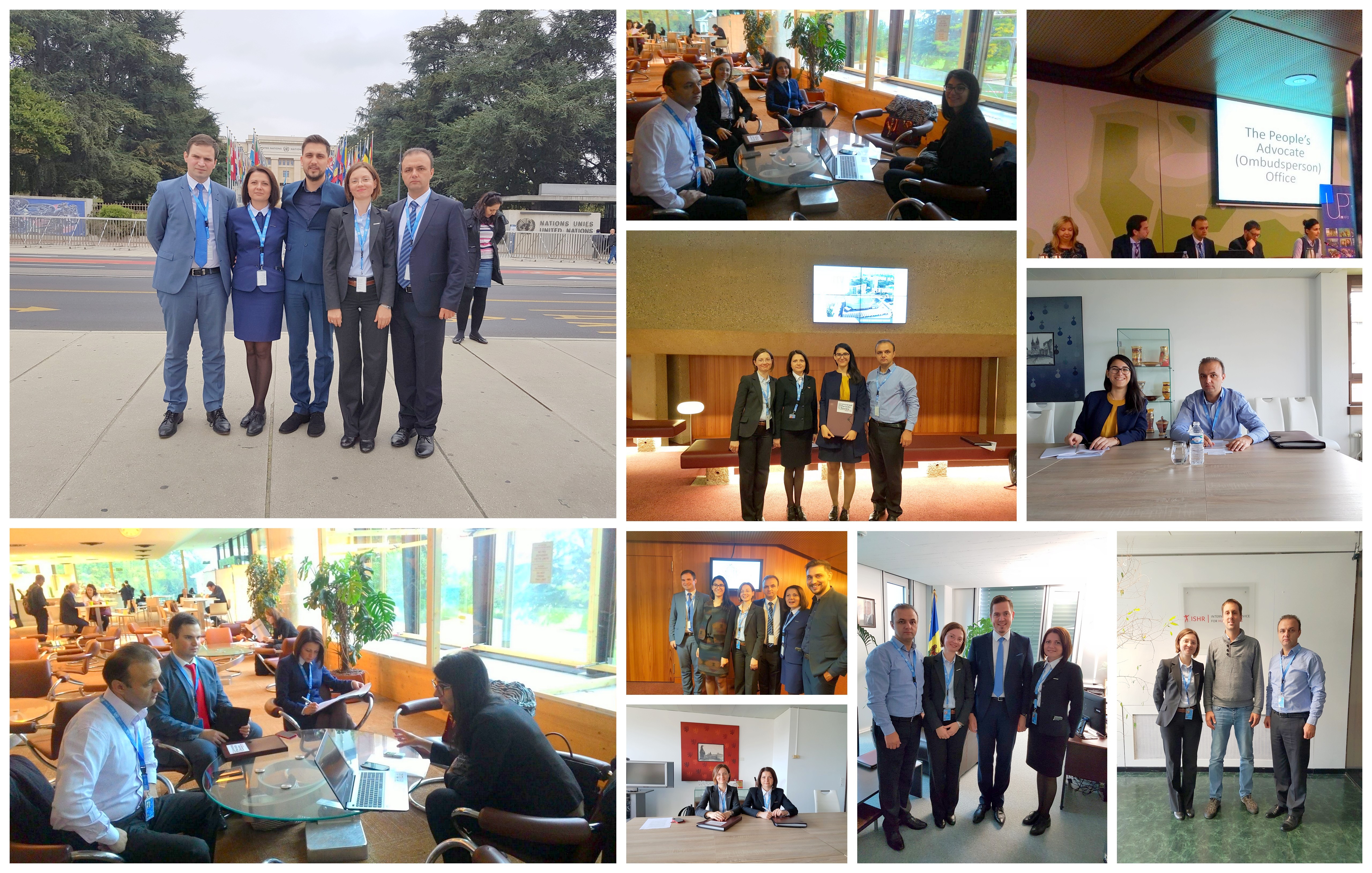
GENEVA On 18-19 October 2016, the UN Committee for Human Rights (CCPR) examined in its 118th session the third periodic report of the Republic of Moldova on the implementation of the International Covenant on Civil and Political Rights.

The committee consists of 18 international experts who act on their own behalf and do not represent their states of origin (a list of the current members of the CCPR is available here).

Following established procedures, representatives of civil society in the Republic of Moldova have submitted alternative reports.

This year four reports were sent, each prepared by different organizations (all reports are available in English here). On September 19, 2016 (before the beginning of debate on the Republic of Moldova’s periodic report), the Promo-LEX Association presented the UN Committee for Human Rights with its alternative report, which focused on the implementation of the Covenant in the Transnistrian region of the Republic of Moldova (details about Promo-LEX’s conclusions and recommendations can be found in the Report, available here or here).

Promo-LEX presented the Committee with the relevant information and with its views, including the report “Observance of human rights in the Transnistrian region of the Republic of Moldova 2015 Retrospect” (available here), which called the UN Committee’s attention to the urgent need to add the following subjects to the agenda of existing negotiations (1+1 and 5+2): the monitoring, promotion, and defense of human rights; and the objective evaluation of the success of the National Action Plan on Human Rights (PNADO) on the subject of the promotion and defense of human rights in the Transnistrian region.

From the first day of interactive debate on October 18, 2016 (which can be seen here), the members of the UN Committee have given particular attention both to the implementation of the Covenant in the Transnistrian region of the Republic of Moldova and to the need to add human rights in the Region and the implementation of PNADO to the negotiating agenda.

One of the Committee members, Mrs. Ivana JELIC (Montenegro) stated during that session (at 1:07:30 here) that there is a discrepancy between the obligation of the State to guarantee respect for human rights (according to the Covenant) and the reality that the Transnistrian region is still outside the de facto control of the Republic of Moldova. Therefore, the expert posed two questions to the Moldovan delegation: first, what actions has Moldova taken since 2013; and, what has the Government done to ensure that human rights are protected by the final results of the political negotiation process (in the 1+1 and 5+2 forums).

The Chief of the Delegation from the Republic of Moldova, Deputy Minister of Justice Mr. Eduardo SERBENCO (a list of delegates is available here), declared that the European High Court in Strasbourg has placed responsibility for human rights in the Transnistrian region on the Russian Federation as well as on the Republic of Moldova because the Transnistrian region is a creation of the Russian Federation. The positive obligation has been divided between the Russian Federation and the Republic of Moldova (the declaration can be seen here at 02:20:30).

In reply to the declaration of Deputy Minister of Justice Mr. Eduard SERBENCO, Mr. Yuval SHANY (Israel), one of the members of the Committee, noted that the above-mentioned interactive dialog (on October 18-19 2016) emphasized the responsibility of the Republic of Moldova and not that of the Russian Federation (here at 02:48:00 and the Deputy Minister’s reply at 02:53:18). When it was subject to review by the UN Committee, the Russian Federation was questioned about areas under its de facto control and its level of influence in those areas.

In addition, we appreciate that the delegation from the Republic of Moldova has shown a desire to continue the constructive dialog with human rights activists from the Transnistrian region and to cooperate fully with international bodies. To this end, Ambassador Tudor Ulianovschi (the Permanent Representative of the Republic of Moldova at the UN Office in Geneva) has extended (see here at 02:11:40) an open invitation to the Special Rapporteurs, encouraging them to visit the Republic of Moldova, including the Transnistrian region. The delegation from the Republic of Moldova has also reiterated the need to create a separate working group about adding human rights issues to the agenda of political negotiations, but work on that topic has been blocked by the Transnistrian authorities.

On November 4 2016, the Committee will make public its conclusions and recommendations about improvements in the observance of civil and political rights in the Republic of Moldova, in accordance with the International Covenant on Civil and Political Rights.

For more details, contact: Carolina Bondarciuc, Promo-LEX press officer : GSM 060280980, Tel/Fax (+373 22) 450024, e-mail: [email protected]
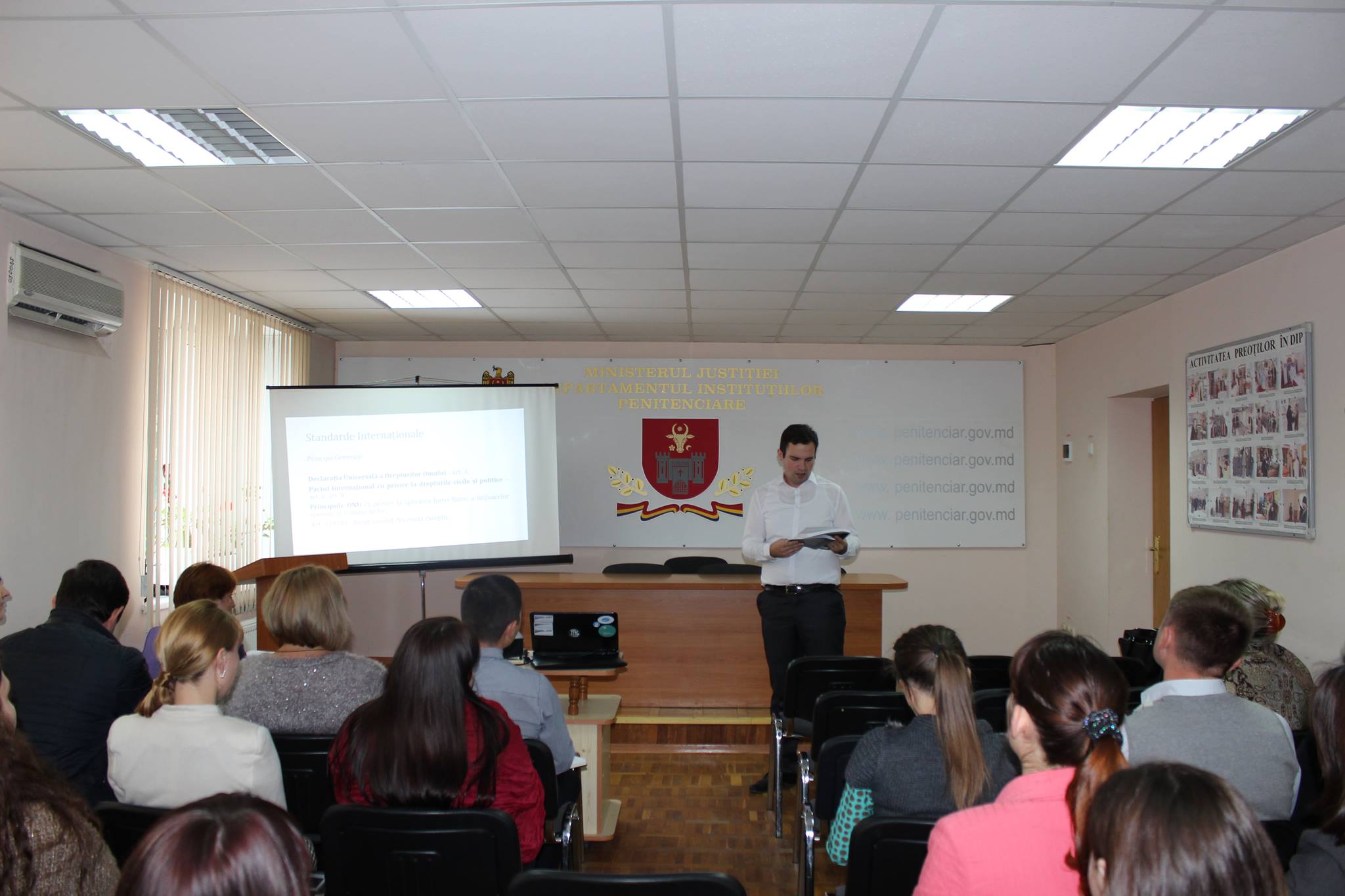


Promo-LEX Organized a Public Lesson for the Officers from the Department of Penitentiary Institutions

14799999_1111222348991666_766463037_oToday, Promo-LEX Association conducted a public lesson for the officers from the Department of Penitentiary Institutions on the use of physical force, special means and firearms.

The Promo-LEX lawyer, Vadim Vieru, discussed about the international and national frameworks on the limits of physical force use and special means. Also, together with the participants, he identified the loopholes of the institutional framework and discussed about a number of case studies on human rights violation.

At the same time, the Promo-LEX representative attended today a working meeting with Aureliu SUHAN, the Acting Director of the Department of Penitentiary Institutions, and other DPI employees. The meeting aimed to discuss the opportunity of a collaboration agreement between Promo-LEX Association and the Department of Penitentiary Institutions in order to train the staff from the penitentiary system in the use of physical force, special means and firearms.


Moldova’s examination session at the U.N. Human Rights Committee has begun

The 118th session of the U.N. Human Rights Committee began in Geneva on October 17th and will last until November 4th. During the session, the Human Rights Committee will examine the reports of 7 states, including the Republic of Moldova.

On October 18th – 19th 2016, Moldova’s implementation of the International Covenant on Civil and Political Rights will be reviewed and its national report (CCPR/C/AZE/3) for this reporting period will be examined.

The agenda of the 118th session of the Committee is available here.

The hearings on the Republic of Moldova and its report will begin on October 18th 2016 at 3:00 p.m. (Geneva time) and will continue the next day at 10:00 a.m. (Geneva time) Watch live here.

We note that the Promo-LEX Association already presented its alternative report on the third Periodic Review of the Republic of Moldova to the U.N. Human Rights Committee on September 19th 2016. Its report focused on the implementation of the Covenant’s provisions in the Transnistrian region of the Republic of Moldova.

More details about Promo-LEX’s findings and recommendations can be found in the Report, available here or here.


In Geneva, the 2016 Preliminary Assessment of the Universal Periodic Review Came to Its End

Geneva_1The 2016 UPR Preliminary Assessment (Universal Periodic Review of the UN Human Rights Council) took place during 4-7 October in Geneva. Promo-LEX Association had the opportunity to discuss about the human rights situation in the Republic of Moldova, reflected in the 7 Reports submitted for UPR.

During the three-day bilateral meetings with the Permanent Missions in Geneva of the following countries: Finland, USA, Czech Republic, Netherlands, Georgia, Uruguay, France, Ireland, Germany, Chile and Canada, but also with the Permanent Delegation of the European Union to the UN, Promo-LEX presented the main findings of the reports submitted for UPR and promoted the recommendations made in these reports.

The torture, ill-treatment, domestic violence, the right to elect and to be elected were several issues of concern presented during the public hearings.

As regards the torture and ill-treatment, the Executive Director, Ion Manole, noted that: ‘The Moldovan legislation does not comply with the UN standards in the field of torture prevention, and does not regulate in detail the conditions and limits of the application of physical force and special means. The Government fails to make sure the observance of Article 15 of UNCAT. Also, the health care services in the penitentiary system are underfunded and are still under the control of the penitentiary administration. The underfunded health care system affects in particular women’.

‘The constitutional authorities must not ignore the cases of torture and ill-treatment in the Transnistrian region’, added Ion Manole. In this context, the population from the left bank of the Nistru river also face problems such as: lack of legal and effective remedies, and also of human rights monitoring mechanisms in the Transnistrian region (including for cases of torture and ill-treatment), overcrowded prisons, lack of facilities for disabled detainees, inhuman conditions of detention, lack of health care services.

Although the final reading has recently adopted the package of amendments to domestic violence laws, some issues remain unresolved. An insufficient number of shelters and safe services for domestic violence victims is one of the issues. The protection order in cases of psychological violence is another one. At the same time, the courts fail to accept, as direct evidence to issue a protection order, the reports developed by the psychologists providing direct services to victims.

As regards the right to elect and to be elected, Promo-Lex highlighted the issue of independent candidates in the Republic of Moldova, who cannot enter the Parliament due to a high electoral threshold of 2%. There are also discriminatory provisions with regard to the registration of independent candidates. It is incumbent on the State to ensure equal regulations for parties and independent candidates in terms of access to vote. Last but not least, there are substantial discrepancies in establishing the financial ceilings for independent candidates and for political parties’ candidates in general local elections.

At the question and answer session, Ion Manole emphasized the need to finance the rehabilitation services for the victims of torture from the state budget. The Promo-LEX Director also touched upon the cases of human rights violations in the Transnistrian region of the Republic of Moldova, the situation of the human rights defenders, and the freedom of expression.

Promo-LEX, in partnership with national and international civil society organizations, prepared seven Reports for UPR, which were submitted to the Office of the High Commissioner for Human Rights (OHCHR).

The Reports are available below in English:

  1. Restrictions of the right to elect and to be elected and of the political rights of citizens;
  2. Situation of human rights in the Transnistrian region of the Republic of Moldova;
  3. Development of civil society environment in the Transnistrian region;
  4. Torture and ill-treatment in Moldova: The duties of the State and rights of survivors;
  5. Promotion of gender equality in Moldova;
  6. Domestic violence and violence against women;
  7. The rights of the persons with mental disabilities from the Republic of Moldova.

The Universal Periodic Review is a mechanism of the United Nations Human Rights Council, which helps to assess the extent to which UN Member States fulfilled the duties and commitments in the area of human rights.


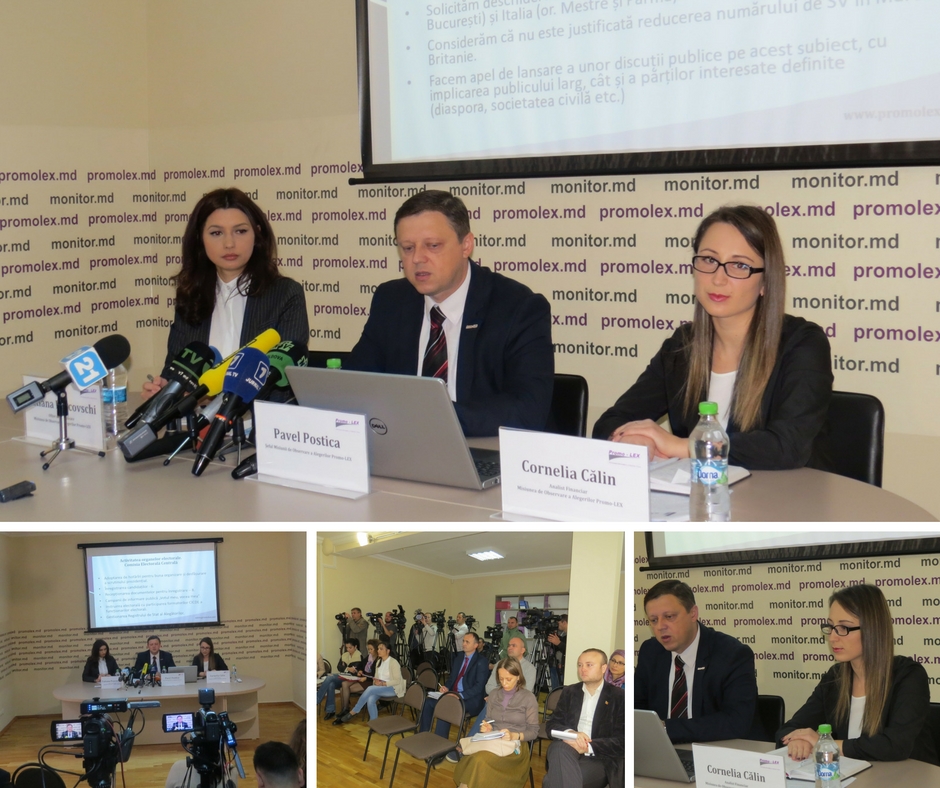
Promo-LEX notes the tendency of administrative resources use during the election period and believes it is necessary to increase the number of polling stations abroad

Untitled designPromo-Lex Observation Mission of the Presidential Elections of 30 October 2016 states in its Third Monitoring Report the tendency of administrative resources use in promoting a particular candidate/potential candidate for the position of President, cases of offering electoral gifts, denigration and black PR activities, cases when signatures were collected by unauthorised people and stakeholders dodging to report the actual expenditures incurred for signature collection. At the same time, Promo-LEX welcomes the increase in the number of polling stations abroad, but believes it is necessary to further increase their number in at least 6 countries.

During the monitored period, the submission of requests for the registration of presidential candidates came to an end. Out of 24 candidates, 8 failed to submit the application for registration to CEC, 7 of whom are independent candidates.

Promo-LEX Observation Mission welcomes the increase in the number of polling stations opened abroad for the Presidential elections of 30 October 2016 and the efforts made by authorities to inform the voters about the improvement of the access to vote on the election day. Promo-LEX believes it is unjustified to reduce the number of polling stations in the UK and notes, on the basis of the analysis carried out, the need to increase the number of polling stations in 6 countries: Russian Federation, Belgium, Ireland, France, Italy and Romania.

At the same time, Promo-LEX notes with concern the delay in the approval by the MPs of the amendments to the Criminal Code as regards the corruption of voters during the Presidential elections. Failure to timely approve the draft law criminalising the vote buying and failure to apply the provisions of Article 1811 of the Penal Code for the Presidential elections may jeopardise any liability and penalty to people who will allow such crimes. In this context, the Mission found a total of 10 cases of offering electoral gifts, of which: PDM – 5 cases and PPPSRM – 5 cases.

The quality of data in the State Registry of Voters remains a problem with the decline in voters’ confidence in the electoral process. Observers note several problems that repeat from one election to another: the inclusion of deceased people in the voters list and the failure of addresses included in the Registry to correspond to those indicated in the voter’s ID. In 7 settlements, Promo-LEX observers found that addresses included in the State Registry of Voters did not correspond to those in the voters’ ID. Only inChirsovo settlement of the Autonomous Territorial Unit of Gagauzia, the observers found 80 cases when addresses included in the Register were not the same as those in the voters’ ID. The observers also found deceased people included in the Registry of voters in at least 6 settlements.

Promo-LEX Observation Mission notes the tendency of using administrative resources in promoting a candidate or a potential candidate. Thus, during working hours, the representatives from local public authorities of level I and II were actively involved in collecting signatures and meeting with citizens during political and electoral campaigns. The findings revealed at least 20 cases of administrative resources use, of which: representatives of PDM – 13 cases; PPPSRM – 3 cases; PPPN – 1 case; PPMSPR – 1 case; PPPEM – 1 case and the Independent Candidate Vasile Tarlev – 1 case.

The monitoring of the collection of signatures by initiative groups shows that people who were not registered as members of initiative groups acted in the interest of at least 12 candidates. Unauthorized people collected signatures for the following candidates: Mihai Ghimpu (PL), Andrei Nastase (PP PDA), Marian Lupu (PDM), Iurie Leanca (PP PPEM), Igor Dodon (PP PSRM), Maia Sandu (PP PAS), Inna Popenco (PP MPSPR), Valeriu Ghiletchi (IC), Dumitru Ciubasenco (PP PN), Vasile Tarlev (IC), Vitalia Pavlicenco (IC) and Silvia Radu (IC).

Promo-LEX found that, during the monitored period, both political parties, and candidates that announced their intention to participate in the elections of 30 October, had a range of electoral activities. Thus, at least 32 electoral activities were noted, of which: Iurie Leanca/PP PPEM (4 activities), Dumitru Ciubasenco/PP PN (6 activities), Marian Lupu/PDM (7 activities), Igor Dodon/PP PSRM (5 activities), Andrei Nsstase/PP PDA (4 activities), Maia Sandu/PP PAS (2 activities), Mihai Ghimpu/PL (2 activities), Artur Croitor (1 activity), Vadim Brinzan (1 activity).

Of the 24 initiative groups who initiated the collection of signatures, only 11 submitted their financial statements during the entire collection signatures period. No initiative group reported amounts that would exceed the maximum threshold set by CEC in the amount of MDL 576 520. According to financial statements, only 3 initiative groups (PP PSRM, IC Vadim Brinzan, IC Roman Mihaies) indicated material donations and estimated them to the market value. This information is available in the financial documents submitted to CEC.

Promo-LEX Observation Mission notes with concern that at least 2 initiative groups (PP MSPRR and PL) submitted their `zero’ financial statements, despite the fact that they conducted promotion activities, both on online platforms and on billboards. Other 4 initiative groups (PP PDA, PP PPEM, IC Silvia Radu, IC Vadim Brinzan) sporadically indicated some expenditures and `zero’ expenditures in terms of concrete destinations, such as transport, promotion materials, volunteers remuneration. Promo-LEX also notes that no initiative group submitted actual expenditures for advertising on online platforms in order to collect signatures.

Promo-LEX Observation Mission consists of 42 long-term observers who will monitor the electoral process in all constituencies of the Republic of Moldova during 31 August – 30 November 2016. On the election day, Promo-LEX will delegate a short-term observer in each polling station of the country. Promo-LEX EOM will also perform the Parallel Vote Tabulation in all polling stations. The observers involved in the monitoring process sign the Code of Conduct of the Promo-LEX Independent National Observer, assuming the commitment to act efficiently, in good faith and in a non-partisan manner. The activity of all observers is coordinated by a central team consisting of 37 persons.

The activity carried out by Promo-LEX EOM and the “Come to Vote” campaign is currently funded by the United States Agency for International Development (USAID), the British Embassy in Chisinau, the National Endowment for Democracy and the Council of Europe. The opinions presented in the public reports of Promo-LEX belong to authors and do not necessarily reflect the donors’ view.

For more details, please contact: Tatiana Pascovschi, Communication Officer of Promo-Lex Election Observation Mission: GSM 060804022, e-mail: [email protected]


The newspapers hunt began in Transnistrian region

Nicolae Buceațchi-2-2Promo-LEX Association is acutely concerned about the continuous decrease related to the freedom of the press and the freedom of expression in the Transnistrian region, as well as it would give priority to the lack of mechanism for defending activists, journalists and  human rights defenders in the uncontrolled area.

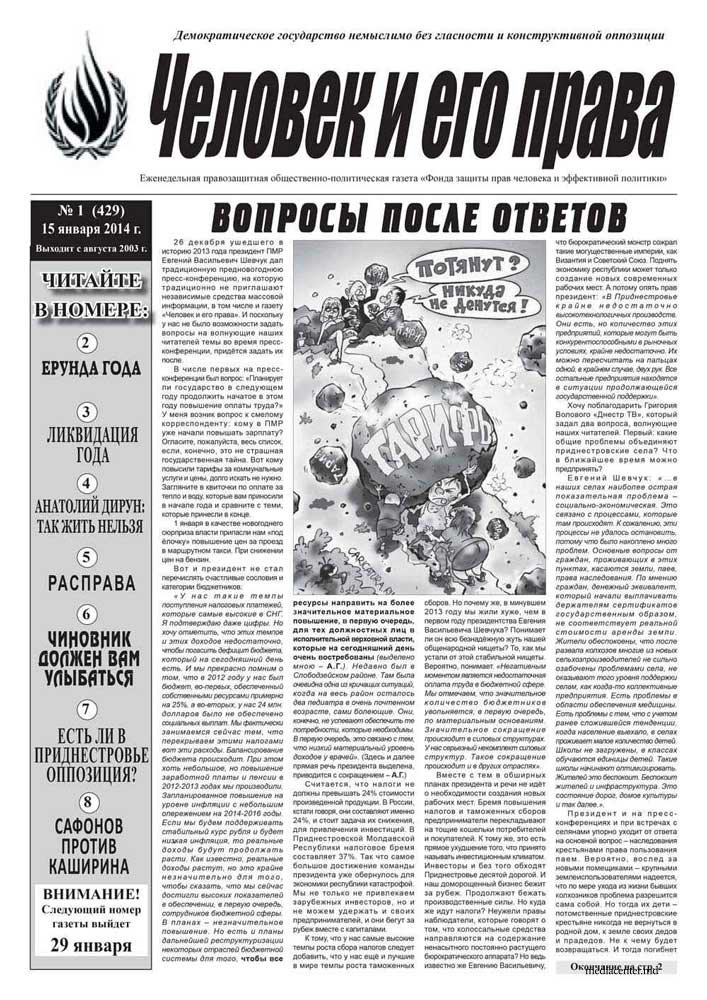
Recently, the representatives of Transnistrian militia have commenced the mass withdrawal of the single newspaper on human rights, corruption and politics «Человек и его права» („Chelovek i ego Prava”/The Person and his/her rights).  Numerous militiamen have seized the latest issue of the newspaper printed on  28 September 2016 from the delivery boxes in the private and residential areas, but also from the public spaces .  Such actions took place in Bender and Râbnița, within 3-4 October 2016. Many inhabitants were stopped by militia being intimidated and prevented from reading or distributing the newspaper . According to the local militia, the newspaper contains defamatory articles about the leader Evghenii Șevciuc.

Nicolai Buceațchi, the editor of the newspaper «Человек и его права», believes that the attacks on the are part of 1390761079_chiep_1_14-1the common scenario of the de facto administration in view of limiting the freedom of expression in the region. He says that the editorial has continuously been subject to administrative and legal repression and the activist physically aggressed. During 15 years of functioning, the editorial has faced a number of challenges, but the incident on 3 October 2016 is rather strange. Nicolai Buceațchi says he had been notified about the initiation of an criminal investigation and afterwards, on 5 October 2015 he received a document requesting the disclosure of data of the authors of articles from the issue printed on  28 September 2016. These intimidation  actions hamper both the activity of the editorial and the access to the population’s information from alternative sources.

The inhabitants are worried about the pressure on the journalists and subsequently the advancement  of the draft law on tightening the criminal and administrative liability for the offence.  The draft at issue provides for criminal sanctions in the form of  fines amounting from aprox. EUR 400 to 700, unpaid labor from  200 to 240 hrs. or correctional labor from 6 to 12 months. The amendments shall become effective as of 19 October 2016. The author of the initiative, the administration of  Tiraspol leader has notified that  the tightening complies with the rules of the Russian Federation.

Such actions by the local bodies are contrary to the international standards in the area entitling any person with the right to freedom of expression.  This covers the right to freedom of expression and the right to receive and impart information and ideas regardless the public authorities and frontiers.

Previously, the Association jointly with other international organizations has expressed its concerns about the situation of the human rights defenders and the defenders of the journalists who are  persecuted by the secessionist administration, see details here .

In this context, we repeatedly require the constitutional authorities and the international bodies the following:

  • To require de facto administration to ensure the right to freedom of expression in the region;
  • To require de facto administration to stop any forms of limiting the civil freedoms of the population;
  • To establish mechanisms for the protection of activists, journalists and the  human rights defenders in the Transnistrian region.

October 5, 2016

Почему милиция гоняется за газетой «Человек и его права»

Препоны в распространение газеты «Человек и его права» – проявление цензуры со стороны

государства

Николай Бучацкий получил письмо из Бендерского УВД

Идет охота на тех, кто распространяет и читает газету «Человек и его права»


The use of torture is punished with imprisonment; the Supreme Court has closed the Bogdan case

Tortură „în limitele legii” - Google Chrome 03022016 110308Those responsible for the use of torture in the case of Alexandru Bogdan will face imprisonment after the Supreme Court of Justice rejected the appeals of both the defendants and the injured party yesterday.

Thus, the ruling of the Chișinău Court of Appeals from December 1st, 2015 (delivered in full on January 15th, 2016) remains in force. In this ruling, the initial acquittal was overturned and sentences of 4 years of imprisonment (for one defendant) and 3 years of imprisonment (for the other two defendants) were handed down. The Court of Appeals also found that the application of physical force and special methods towards the injured party was neither justified nor proportional.

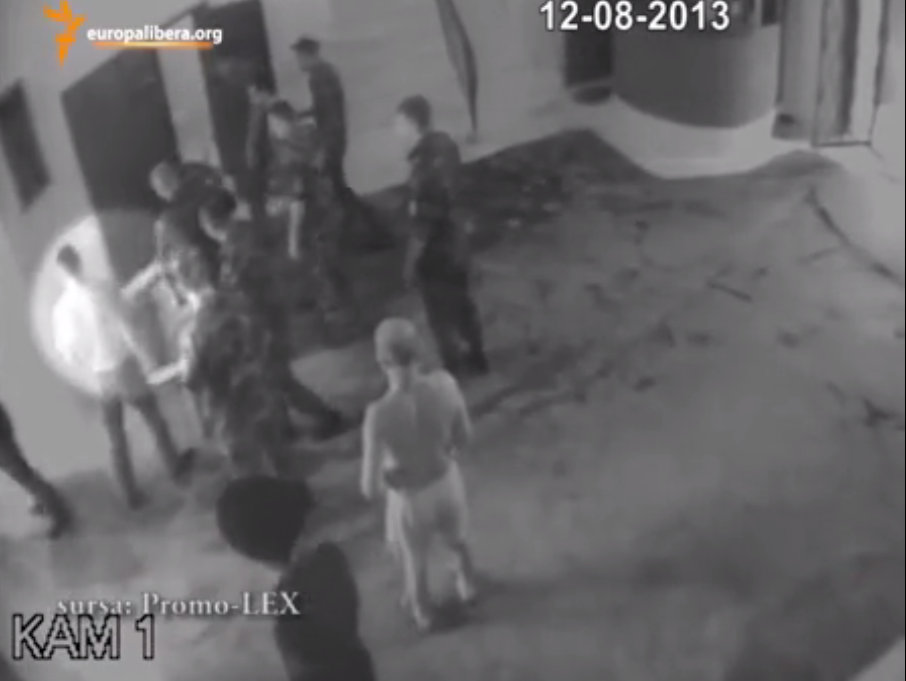
We repeat that Alexandru Bogdan was subjected to torture by 3 collaborators of the Department of Penitentiary Institutions in August 2013. He was beaten with a rubber baton, kicked and punched. This took place in Penitentiary Number 13.

This is one of the few cases in which a former high-ranking official from the Department of Penitentiary Institutions has been found guilty for acts of torture and will face imprisonment.

We note that the Promo-LEX Association has previously emphasized the need to adjust the legal framework with regard to the application of physical force and special methods in places of detention, and the need to train DPI representatives in this area.

Video material on this case entitled “Tortura în limitele legii” (“Torture within legal limits”) was released by Radio Free Europe as part of the Pur și Simplu (“Pure and Simple”) broadcast. See the link here.

For more details, contact: Carolina Bondarciuc, Promo-LEX Communications Officer: GSM 060280980, Tel./Fax (+373 22) 45-00-24, e-mail: [email protected]