Discrimination against women found in the first case submitted against Moldova at the UN Committee on the Elimination of Discrimination against Women

IMG_6250The Promo-LEX Association announces the first case from the Republic of Moldova in which the UN Committee on the Elimination of Discrimination against Women (CEDAW) has found the existence of discrimination, following from a lack of intervention in a case of domestic violence.

The plaintiff was born in 1959. She was a victim of domestic violence during a significant period of her life, but her complaints against her abuser did not come to anything. Criminal proceedings were begun regarding the complaints, but, repeatedly, they were suspended after a while. Eventually, the criminal case was closed because of the expiration of the statute of limitations. The plaintiff maintained that the authorities of the Republic of Moldova violated the provisions of the Convention on the Elimination of All Forms of Discrimination against Women.

On 10 March 2017, CEDAW made public the text of its recommendations adopted on 2 March 2017. The text contains the findings and conclusions of the Committee, that the Republic of Moldova did not fulfill its obligations and therefore violated the rights of the plaintiff under articles 1, 2 (a), (c), (d), and (e), 5 (a), and 16 of the Convention. The Committee decided that the authorities should take immediate and effective measures to guarantee the physical and psychological integrity of the plaintiff and that she should receive reparations proportional to the physical and psychological damage caused.

The Committee recommended modifying legislation so that it does not contain rules that are discriminatory toward victims of domestic violence, who are most often women. At the same time the Committee appreciated that the authorities are open to modifying the relevant legal framework. By accepting the competence of CEDAW to examine individual cases, the Republic of Moldova has also assumed the obligation to act in good faith, which means the obligation to take appropriate measures and to recover the reparations due to the plaintiff. Therefore, along with the need to fulfill general obligations, the state will need to pay reparations to the plaintiff. CEDAW has previously set moral damages comprising between 2500 and 5000 Euros for victims of discrimination.

The Optional Protocol entered into force for the Republic of Moldova on 28 February 2006. Up to now, only 3 complaints against the Republic of Moldova have been registered before CEDAW, and the one described above is both the first complaint registered and the first found in the favor of the plaintiff.

The additional protocol of the CEDAW was ratified by 189 states. Overall, CEDAW has registered only 113 cases since 2003. The CEDAW has found violations in 24 cases, a lack of violations in 2 cases, 35 cases have been declared inadmissible, and in 10 cases proceedings were closed. At the moment only 42 cases are pending.

The plaintiff was represented by lawyers and legal experts from the Promo-LEX Association.

The complete test of the Recommendations can be found here.

The press conference can be followed on Privesc.eu.

For more details, please contact: Carolina Bondarciuc, Promo-LEX Press Officer: GSM 060280980, Tel./Fax (+373 22) 450024, e-mail: [email protected]


¹The CEDAW Committee acts on the basis of the Convention on the Elimination of All Forms of Discrimination against Women, an international treaty adopted in 1979 by the General Assembly of the United Nations. The Treaty was ratified by the Parliament of the Republic of Moldova in Decision nr. 87-XII on 28 April 1994.

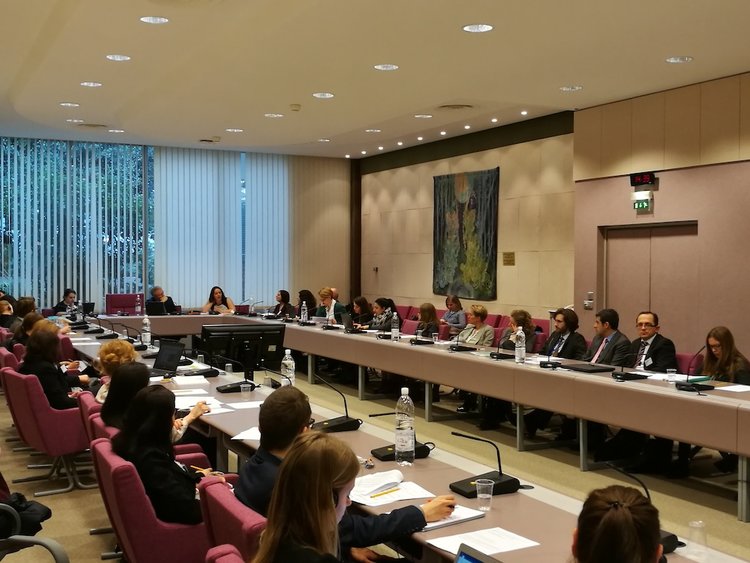

The frequent use of the pretrial detention in the Republic of Moldova – Speech at the UN Human Rights Council

 Statement of the 34th Session of the UN Human Rights Council
Item 6 of the agenda: Consideration of the UPR
report for Republic of Moldova
16 March 2017

 Delivered on behalf of International Federation for Human Rights and Promo-LEX Association

Mr. President,

FIDH and Promo-LEX Association welcome the recommendations made by states calling the Moldovan authorities to pursue the judicial sector reform and appreciate Moldova government’s commitment to implement them. However, we are disappointed that the issue of the extensive use of pre-trial detention has not been raised.

International human rights norms and national law of Moldova imposes that an accused be freed while he awaits his trial and that detention pending trial should be exceptional, always objectively reasoned and must correspond to the public interest. Abusive use of pre-trial detention in Moldova, however, remains a serious problem: courts routinely fail to provide relevant and sufficient reasoning to support detention awaiting trial and limit themselves to abstract and stereotypical restatements of legal grounds of detention.

According to the data of the Ministry of Justice, as of May 2016, out of 7892 people detained in penitentiary system institutions, 1421 were being detained pending trial. At the same time, over 1400 people were released from pre-trial detention in 2016 following discontinuance of prosecution (118), change of pre-trial detention to other form of restraint (803), withdrawal of proceedings (145) or punishment without deprivation of liberty (334)[1].

Therefore, plans to reform the penitentiary system and modernize prisons in Moldova should include measures to reduce the excessively high number of pre-trial detentions that will have a direct impact on the detention conditions, especially those related to overcrowding.

Thank you Mr. President.

Delivered by: Ion Manole, Promo-LEX Executive Director

[1]  Overcrowding in penitentiaries strategy of lessening/Department of Penitentiary Institutions/Ministry of Justice of the Republic of Moldova/Kyiv2016/ http://webcache.googleusercontent.com/search?q=cache:5nr94uDR2egJ:kvs.gov.ua/zmi/5_Moldova_penitenciary_overpopulation.pptx+&cd=1&hl=ro&ct=clnk


A safe and enabling environment for Human Rights Defenders in Moldova – Speech at the UN Human Rights Council

United Nations Human Rights Council
34th Regular Session,
Agenda Item 6: UPR Outcomes Republic of Moldova
16th March 2017

Oral Statement of the Promo-LEX Association (Promo-LEX)

Mr. President,

The Promo-LEX Association welcomes the adoption of the outcome of the Universal Periodic Review of the Republic of Moldova, which contains a number of important recommendations that the Moldovan Government supports.

Regarding the implementation of the recommendations on the protection of human rights in the Transnistrian region, a breakaway region of Moldova, the Promo-LEX Association’s assessment is that the Government’s performance in fulfilling its commitments during the period of the first UPR cycle has been far from satisfactory.[1]

At the same time, Promo-LEX is pleased to note Moldova’s acceptance of 6 recommendations regarding the promotion and protection of civil society space in Republic of Moldova, especially the recommendation to recognize explicitly the legitimacy of the job done by Human Rights Defenders and ensure that their work is carried out in a safe and enabling environment, without fear of reprisals, intimidation or acts of violence, which should be sanctioned, and those responsible be taken before justice[2]. Thus, Moldova has reaffirmed its commitment to the UN Declaration on Human Rights Defenders[3] and the Resolution on the protection of Human Rights Defenders adopted by the UN Human Rights Council[4] with the co-sponsorship of more than 60 States (including Moldova) on 24 March 2016.

States must now act to implement this resolution at the national level. There are specific challenges when protecting human rights in conflict zones. Similar situations exist in post-conflict areas, such as the Transnistrian region. The effective protection of civil society is extremely important when increased pressure on Human Rights Defenders working in conflict or post-conflict zones undermines human rights monitoring efforts[5]. There is a need for special, strengthened protection for Human Rights Defenders in such countries at the national level. National-level legal recognition and protection of Human Rights Defenders is essential for ensuring a safe environment for their work.

In the Transnistrian region, Human Rights Defenders, journalists, human rights activists and other civil society actors have been subjected to intimidation and harassment, including judicial harassment, restrictions on freedom of expression, association and movement, and arbitrary detention.[6] The situation has deteriorated during recent years, as the work of human rights defenders has come to be seen as subversive and as an attempt to undermine the regime and local administrations.[7]

During the 26th session of the Moldova UPR Working Group, the Moldovan representative (the Deputy Minister for Foreign Affairs and European Integration of the RM) expressed his concerns regarding human rights observance in the Transnistrian region, especially concerning the challenges that Human Rights Defenders face in the Transnistrian region as a result of actions taken by representatives of the Tiraspol security structures. Referring to the case of the Promo-LEX Association, the Moldovan delegation stressed its commitment to raising the issue of the protection of HRDs in existing negotiation formats.

Thus, we would like to reiterate the recent appeal of the Special Rapporteur on the situation of human rights defenders,[8] calling on the Government of the Republic of Moldova to take all necessary measures to ensure the security of human rights defenders operating in the Transnistrian region and their protection against retaliation, de facto or de jure prosecution, pressure or any other arbitrary action as a consequence of their legitimate work.

We hope that the above-mentioned encouraging statements of the Moldovan delegation and the acceptance of the UPR recommendations on the Protection of HRDs will be reflected in the actions of the Moldovan government. In this context, Promo-LEX calls on the Moldovan Government to take concrete steps to explicitly recognize the legitimacy of the work done by Human Rights Defenders and to implement the landmark HRC Resolution on the protection of human rights defenders at the national level.

Finally, we call on the Government to ask that international partners, mediators and observers in the 5+2 negotiation format on the Transnistrian settlement intervene and request that the de facto administration to immediately stop all persecution of HRD in the Transnistrian region.

Thank you Mr. President

Delivered by: Alexandru Postica, Promo-LEX Human Rights Program Director

[1] https://promolex.md/wp-content/uploads/2016/08/UPR-1_FINALA_civil-society_UPR_240316.pdf
[2] A/HRC/34/12,  recommendations: 121.133 (Romania), 121.134 (Austria), 121.135 (Poland), 121.136 (Uruguay) 121.137 (Belgium), 121.175 (Georgia); http://www.ohchr.org/EN/HRBodies/UPR/Pages/MDSession26.aspx
[3] Declaration’s full name is the Declaration on the Right and Responsibility of Individuals, Groups and Organs of Society to Promote and Protect Universally Recognized Human Rights and Fundamental Freedoms – with this longer title is frequently abbreviated to The Declaration on human rights defenders”;  http://www.ohchr.org/EN/Issues/SRHRDefenders/Pages/Declaration.aspx
[4]Resolution adopted by the HRC on 24 March 2016 – 31/32. Protecting human rights defenders, whether individuals, groups or organs of society, addressing economic, social and cultural rights:http://ap.ohchr.org/documents/dpage_e.aspx?si=A/HRC/RES/31/32; Over 180 NGOs from all over the world, including the Promo-LEX Association united to call on Member States of the Council to adopt the resolution.
[5] Resolution No.12/AA/2016 (draft Resolution No.15/AA/2016) November 29, 2016, Brussels Resolution of the Eastern Partnership Civil Society Forum on the effective monitoring of human rights in conflict areas by strengthening the protection of human rights defenders in the Eastern Partnership countries: http://eap-csf.eu/wp-content/uploads/ResolutionNo12_EN_final.pdf
[6] Recommendation CONF/PLE(2016)REC1 adopted by the Conference of INGOs on 24 June 2016 Protection of Human Rights Defenders in the Transnistrian region of the Republic of Moldova: the case of “Promo LEX” Association established in the Republic of Moldova:  https://rm.coe.int/CoERMPublicCommonSearchServices/DisplayDCTMContent?documentId=0900001680684cac
[7] JOINT SUBMISSION FROM PROMO-LEX ASSOCIATION and MEDIA CENTER/26th Session of the Working Group on the UPR United Nations Human Rights Council: https://promolex.md/wp-content/uploads/2016/08/UPR-1_FINALA_civil-society_UPR_240316.pdf
[8] A/HRC/34/52/Add. 1/ 20 February 2017 / Report of the Special Rapporteur on the situation of human rights defenders, Michel Forst: https://documents-dds-ny.un.org/doc/UNDOC/GEN/G17/038/21/PDF/G1703821.pdf?OpenElement


Courts in the Republic of Moldova choose to punish instead of rehabilitate drug users

IMG_6185Middle-aged, with unfinished studies, unmarried, without a permanent workplace and in trouble with the law—this is the typical profile of those accused of crimes related to the illegal circulation of drugs without the intent to sell. Usually, these people are punished with fines or suspended prison sentences, implying the existence of punitive practices for drug consumers and few resources directed toward supporting and rehabilitating them. These are some of the findings of the study “Judicial Practices when Examining Violations and Contraventions of the Illegal Circulation of Drugs without the Intent to Sell”, carried out by the Promo-LEX Association at the initiative of the Public Health Program of the Soros-Moldova Foundation.

The study is focused on legal practices for contraventions related to the illegal procurement and possession or consumption of drugs without a medical prescription (art. 85 of the Contraventional Code) and crimes related to the illegal circulation of drugs, psychotropic substances or analogues thereof without the intent to sell (art. 217 of the Criminal Code). The criminal and contraventional cases from all first-level courts in the Republic of Moldova that heard such cases in 2015 were studied.

The authors of the study appreciate that legal practices in this area conform to international standards and guarantees regarding the right to a fair trial. However, there are certain shortcomings, both at the legislative level and at the practical and institutional level, in the processes of criminal investigation and judicial examination in cases related to illegal circulation without the intent to sell.

One of these problems relates to the small amounts established by the “The List of Narcotic, Psychotropic Substances or Plants Containing Such Substances Identified in Illegal Trafficking and their Quantities”. The list is overwhelmingly predisposed toward imposing criminal liability on drug consumers, thereby reducing the effectiveness of the fight against drug trafficking and traffickers.

Another finding was that a large number of criminal cases are initiated because of the illegal circulation of drugs in insignificant quantities. This has the effect of increasing the volume of work for law enforcement agencies and courts. It would be possible to reduce this number if the quantities of narcotic substances were revised.

In addition, there were gaps in demonstrating defendants’ intentions and guilt in cases of cultivating, growing or keeping plants containing narcotics. The accused plead guilty officially, but they state that they were unaware that those plants grew on their land, that they did not know that the plants contained narcotic substances, or that they were grown for other purposes. So far, no additional research or testing methods have been established to confirm or indicate guilt in these cases.

According to information furnished by the Ministry of Internal Affairs of the Republic of Moldova, during the period 2015-2016 there was a total of 3265 contraventions on the basis of CC art. 85 (the illegal procurement or possession of narcotic substances, precursors, psychotropic substances and analogues thereof in small amounts or consumption of such substances without a doctor’s prescription). During the same period, 1672 criminal cases on the basis of CP art. 217 (the illegal circulation of narcotics, psychotropic substances or analogues thereof without the intent to sell) were recorded.

The drug problem remains serious, a fact supported by figures at the international level. According to the World Drug Report, about 27 million people (interval: 15,700,00-39,000,000), or 0.6% of the global population between 15 and 64 years of age, suffer from drug consumption and the many health problems related to it.

The electronic version in Romanian language is available here.

This study was carried out within the project “Promoting respect for the rights of Groups at High Risk of Infection in the RM”, implemented with the support of the Public Health Program of the Soros-Moldova Foundation.

For more details, please contact: Carolina Bondarciuc, Promo-LEX Press Officer: GSM 060280980, Tel./Fax (+373 22) 450024, e-mail: [email protected]


The Equality Council has released a decision in the case of M.P. vs Pavel Paduraru and the publication “Timpul de dimineață”

Discrimination and gender stereotypes remain some of the biggest problems confronting women in the Republic of Moldova. The effects of discrimination against women are many, from unequal salaries and underrepresentation in politics and management to serious forms of abuse and domestic violence.

One sensitive problem is attitudes towards women who are victims of sexual offenses, and, in particular, victims of rape. These attitudes are, in many cases, based on serious prejudices that can affect both how a crime itself is investigated and, at the same time, create a hostile environment for victims, demeaning and stigmatizing them.

Recently, the Council on Preventing and Eliminating Discrimination and Ensuring Equality published a decision released on 10 February 2017, in which it found that the use by a journalist of stereotypes and prejudices when discussing women in articles relating to rape cases and the private lives of victims constitutes discrimination on the basis of gender.

In particular, the Council found that: “ (…) the journalist, by publishing the article concerned, understood that the information on the victim would cause a negative reaction, but this knowledge did not persuade him to stop emphasizing this aspect. Moreover, the way in which he presented the second article, especially his use of the expression “the victim herself probably dragged the rapist to bed” confirmed the presence of a prejudice, which undoubtedly affected the attitude of the public toward this subject. Therefore, the Council found that he acted in bad faith, because the journalist did not publish a value judgment or idea, but publicly conveyed in the media a stereotype about women and the idea that a woman’s behavior and personality could be responsible for her so-called rape”.

According to the victim’s lawyer, Dumitru Sliusarenco: “This decision is a necessary one, because there are many prejudices in society about women who are victims of rape. Its importance mainly derives from the fact that it sets limits on the freedom of expression in public forums, because of the sensibility of the crime of rape and aspects related to that. At the same time, in its Decision the Council emphasized the necessity of respecting and protecting the private lives of participants in trials, especially of victims, an important position and one without precedent in the Republic of Moldova”.

Previously, the Promo-LEX Association has brought the lack of effective, uniform practices for investigating sexual offenses involving minors to the attention of the authorities. Details are here. This rape case, litigated by Promo-LEX, resonated in the mass media, which called it “the rape in Orhei.” There was much discussion in the media about this case, including those articles published by “Timpul de dimineață” that were recently been found to be discriminatory by the Press Council and the Council on Preventing and Eliminating Discrimination and Ensuring Equality.

Legal assistance was provided by the Promo-LEX Association within the project “Empowering civil society in Moldova and Transnistria to combat discrimination through documentation, litigation and advocacy”, a project implemented by the Equal Rights Trust and the Promo-LEX Association, financed by the European Union, and co-financed by the Soros-Moldova Foundation.

For more details, please contact: Carolina Bondarciuc, Promo-LEX Press Officer: GSM 060280980, Tel/Fax (+373 22) 450024, e-mail: [email protected]


Civil society requests the removal of the chapter on NGOs and mass media from the draft of the National Integrity and Anticorruption Strategy

In November 2016, the National Anticorruption Center released a draft of the National Integrity and Anticorruption Strategy for the years 2017-2020 (a continuation of the Strategy) for public debate. In its initial version the draft of the strategy focused on 7 pillars:

  • Parliament
  • The government, the public sector, and local public administrations
  • Justice and anticorruption agencies
  • The Central Electoral Commission and political parties
  • The Court of Accounts
  • The People’s Advocate (Ombudsman)
  • The private sector

In February 2017, the draft underwent conceptual changes, that is, the introduction of a new pillar (nr. VIII) dedicated to the activities of civil society and the mass media.

According to the authors of the draft, the inclusion of this chapter in the Strategy is needed to support the responsibility and independence of non-governmental organizations and mass media institutions, which at present are confronted with several problems including: a lack of confidence and integrity; financial dependence affecting priorities; and the involvement of political partisans—problems that negatively affect the efforts of civil society to fight against corruption. The authors maintain that the goal of the proposed actions and the expected results of pillar nr. VIII are to provide standards of ethics and integrity that can be implemented by non-governmental organizations, the mass media, and the donor community.

Civil society appreciates the efforts of the working group responsible for developing the Strategy, as well as the opportunity to present comments on the Strategy, but it has a critical position on the inclusion of Pillar VIII on the activity of civil society and the mass media as one of the priorities of the strategy on integrity and corruption.

Civil society organizations consider the inclusion of Pillar VIII in the Strategy to be a hasty and insufficiently justified action and request the exclusion of Pillar VIII from the strategy on the basis of the following arguments:

  • The premises for including Pillar nr. VIII were not based on a multifaceted analysis;
  • The authors’ approach—only including some of the organizations in the non-governmental sector and the mass media—creates a powerful presumption that the authors were aiming at a goal other than combating corruption and ensuring integrity in the non-governmental sector;
  • The expected results and indicators provided by the authors of the Pillar do not offer true solutions for combating corruption and ensuring integrity in the non-governmental sector.

To this end, civil society organizations developed a series of proposals, modifications, and additions for the Strategy that they sent to the authors of the draft.

Signatory organizations:

  1. The Association for Participative Democracy (ADEPT);
  2. The Legal Resource Center of Moldova (CRJM);
  3. Promo-LEX.


DOC – Proposals for changing and adding to the Draft of the National Integrity and Anticorruption Strategy (SNIA) for the years 2017-2020, sent for public consultation to the National Anticorruption Center (CNA)


EIN and OSJI briefing discusses cases from Azerbaijan, Belgium and Greece, Romania, Moldova and Russia

downloadOn 20 February 2017, the European Implementation Network (EIN) and the Open Society Justice Initiative (OSJI) convened its quarterly civil society briefing to the Committee of Ministers (CM) on cases scheduled for its review at the 1280th CM-DH meeting on 7-9 March 2017. On that occasion, EIN and OSJI briefed CM members on the implementation of cases of Rasul Jafarov v Azerbaijan, M.S.S v Greece and Belgium, Centre for Legal Resources on behalf of Valentin Campeanu v Romania, and Catan and Others v Moldova and Russia. The briefing took place at the premises of the Council of Europe, under the invitation of the Permanent Representations of Ireland and Norway.

Rasul Jafarov v Azerbaijan (Appl. No. 69981/14)

Rasul Jafarov is an Azerbaijani human rights defender and Chairman of the Human Rights Club whose arrest and pre-trial detention in August 2014 the European Court of Human Rights (ECtHR) found unlawful and aimed ‘to silence and punish the applicant for his activities in the area of human rights’ (violations of Articles 5 and 18, and 34 of the Convention). The Government of Azerbaijan has so far failed to take any individual measures to implement the judgment. It has not yet paid the compensation of €25,000 indicated by the ECtHR despite the deadline of 4 October 2016. The Supreme Court dismissed Jafarov’s appeal to re-examine the criminal case that led to his conviction on the basis that the ECtHR judgment of 17 March 2016 is a `newly discovered fact` provided for in the Criminal Procedure Code of Azerbaijan.

Information on the latest developments in the case was provided by Ramute Remezaite, Legal Consultant of the European Human Rights Advocacy Centre representing Rasul Jafarov before the ECtHR. Two written submissions to the CM can be found here and here.

M.S.S v Belgium and Greece (Appl. No. 30696/09)

The M.S.S group of cases concerns the degrading treatment of the applicants (asylum seekers or irregular migrants) on account of their conditions of detention such as overcrowding, insufficient ventilation, lack of regular access to toilets or sanitary facilities, unsuitable food or inadequate allowances for food in various detention facilities. The ECtHR found such a treatment amount to a violation of Article 3 of the Convention (degrading ill-treatment). Some of the cases of the group concern the violations of the applicants’ right to an effective remedy in relation to deficiencies in the examination of the applicant’s asylum application and the conditions of the detention.

At the briefing, Simon Cox, Migration Lawyer, Open Society Justice Initiative, Irem Arf Rayfield, Regional Researcher on Migration (Europe) – Amnesty International and Eleni Takou, Senior Advocacy Officer, Solidarity Center, Greece provided detailed information on the current state of execution of the cases and the suggested actions to be taken by the CM.

A joint NGO submission has been submitted to the CM and will be available here soon.

Centre for Legal Resources on behalf of Valentin Campeanu v Romania (Appl. No. 47848/08)

The case concerns the authorities’ failure to protect the right to life of Mr. Câmpeanu, a young man of Roma origin, orphaned, HIV-positive and diagnosed with profound intellectual disability. The ECtHR found a substantial violation of Article 2 of the Convention in relation to severe shortcomings in the social and medical care afforded to the applicant before his death at the neuropsychiatric hospital. Under Article 46 of the Convention, the ECtHR indicated that Romania take the necessary general measures to ensure that persons with mental health problems in a situation comparable to that of Mr Câmpeanu are afforded independent representation, enabling them to have Convention complaints relating to their health and treatment examined before a court or other independent body.

The current state of execution and the latest domestic developments were presented by Georgiana Iorgulescu, Executive Director, and Georgiana Pascu, Programme Manager of the Centre for Legal Resources (CLR), Romania.

The CLR submission of 20 February 2017 to the CM in response to the revised action plan of the Romanian Government of 2 January 2017 can be found here.

Catan and Others v Moldova and Russia (Appl. Nos. 43370/04, 8252/05 and 18454/06)

The case concerns the violation of the right to education of 170 children or their parents from Latin-script schools located in the Transdniestrian region of the Republic of Moldova. Pursuant to the “Moldavian Republic of Transdniestria” “law” on languages, they had suffered from the forced closure of these schools between August 2002 and July 2004, as well as from measures of harassment, which the ECtHR found in violation of Article 2 of Protocol No. 1 by the Russian Federation.

The review of execution of judgments process to date and the latest developments were presented by Alexandru Postica, Human Rights Programme Director, PROMO-LEX, Moldova. A brief summary of the presentation can be found here.

More information on the execution process of the cases supervised by the CM can be found on the HUDOC-EXEC database of the Department for Execution of Judgments of the European Court of Human Rights.

Source: http://european-implementation.net


Freedom of expression in the Transnistrian region in 2016 – A Promo-LEX Study

On 17 February 2017, the Promo-LEX Association organized a discussion panel with the topic: “Freedom of expression in the Transnistrian Region of the Republic of Moldova”. The debate began with a presentation of the findings of a study carried out by the Promo-LEX Association.

According to the study’s findings, a single specific rule on freedom of expression does not exist; instead, there are several separate, local rules that regulate certain aspects of freedom of expression. In reality, although that freedom is guaranteed, its implementation is not judicially or institutionally ensured. The fact that the so-called Constitution of the PMR does not guarantee residents the right to receive and disseminate certain information is important. In this way, the right of residents to, for example, request information on the activity of public institutions is limited.

In 2016, local mass media as well as social networks remained the most important means of expression and sources of information for the segment of the population interested in finding information and alternative opinions, although that segment continues to be persecuted. The concept of social networks (i.e. online forums) is not regulated; nor is the expression of opinions online, a fact that makes the unimpeded functioning of websites vulnerable. At least 16 informational sites remain blocked since 2012 (dniester.ru, tiras.ru, rodinapmr.ru, forum.pridnestrovie.com, forum.dnestra.com, openpmr.info, nistru.net, etc), and, during 2016, many cases of the persecution of people for criticism of the de facto administration of the Transnistrian region were recorded.

Also in 2016, a criminal penalty for denying the positive role of the Russian Peacekeeping Mission was introduced in the territory; in fact, experts interpreted this rule as an instrument for the persecution of any message or opinion of a critical nature expressed in the region against the regime’s interests or those of the representatives of the Russian Federation[1]. This initiative of the de facto administration was motivated by the fact that much discussion on the efficacy of the Peacekeeping Mission and the absence of any changes for the region’s population has appeared.

International and national provisions on human rights require that rights be guaranteed throughout the entire territory of a country. Taking this into account, one provocation remains the mechanisms for ensuring fundamental rights and freedoms in the zone outside of control, the so-called “conflict zone” or the region under the de facto regime. Up through the present, the administration in Tiraspol has ignored the efforts of the international community and civil society to monitor and to effectively defend human rights in that region.

“Guaranteeing fundamental human rights and freedoms is an obligation of every authority, whether de jure or de facto. The Tiraspol administration must accept a dialogue about human rights and take measures to ensure that they are respected”, maintains Ion Manole, the Executive Director of Promo-LEX.

The Promo-LEX Study in Romanian language here.

This event was organized within the project: “Promoting respect for human rights in the Transnistrian region of the Republic of Moldova”, implemented by the Promo-LEX Association, with the financial support of the National Endowment for Democracy (NED).

For more details, contact: Carolina Bondarciuc, Communications Officer: tel. 022/45 00, GSM: 060280980, e-mail: [email protected].

[1] ttp://www.vspmr.org/file.xp?file=41706


Promo-LEX: Adopting the “Big Brother” Law in its current form would seriously affect the right to privacy and freedom of speech

Yesterday, 14 February 2017, a public debate on Draft Law nr. 161 for Amending and Completing Some Legislative Acts (known as the “Big Brother” Law) took place. The event was a platform for discussion among civil society, the authorities, and the private sector, all of whom had the opportunity to express their opinions on the Draft Law, which would expand and strengthen law enforcement agencies’ control over the exchange of information. Finally, the conclusions of the debate were made public at a press conference, in which Vadim Vieru (Promo-LEX), Nadejda Hriptievschi (CRJM), Ana Chirița (the Moldovan Association of Information and Communications Technology Companies), Alina Radu (Ziarul de Gardă) and Veaceslav Bădărău (the Center for Combating Cybernetic Crimes of the IGP of the MAI) participated. The video is here.


The discussions began with the presentation of a legal opinion prepared by the International Center for Non-for-Profit Law at the request of the Promo-LEX Association. The ICNL is concerned about the fact that the Draft Law contains provisions that could have a “chilling effect” on the freedom of expression and the right to privacy. As drafted, the Amendments violate international standards guaranteeing these fundamental rights. Key concerns include the following: vague grounds for blocking websites, lack of judicial oversight for certain investigative techniques and no protection for whistleblowers and journalists. See the text of the ICNL’s opinion here.

The conclusions of the CRJM’s opinion and the joint opinion of the Venice Commission and the Council of Europe on Draft Law no. 161, which warn about a series of problematic provisions in the draft that should be modified or removed, were also discussed during the debate. In particular, the opinions warned about the extremely broad rights given to law enforcement agencies to intercept and investigate computer data, too many different types of infractions, and provisions for general surveillance measures, which are inefficient, cost money, and unjustifiably infringe on the right to a private life. The private sector, represented by several different service providers, found the language in many provisions of the draft vague, meaning these provisions will be difficult or impossible to implement in practice.

The organizers of the event remain firmly convinced that the adoption of the Draft Law in its current form would seriously affect the right to a private life and freedom of expression. “At this stage, taking into account the many critical opinions about this Draft Law, we believe that this Draft should be sent to the authors to be improved, as part of a consultative process that should also involve representatives of civil society, the mass media and the information technology and communications sector”, declared Vadim Vieru, a Promo-LEX lawyer. Even if this draft is not sent to the authors for a new version, the participants in the debate requested that Parliament ensure that the public is consulted on Draft Law no. 161. In particular, the publication of the new version of the draft—modified on the basis of the opinions expressed so far—is requested, so that civil society and the private sector have a reasonable amount of time to present their opinions on the new version and organize public debates before the presentation of the modified Draft no. 161 for debate in a legislative forum.

The President of the Parliamentary Commission for National Security, Defense and Public Order of the Parliament of the Republic of Moldova, Mr. Deputy Roman Boțan, assured the participants in the debate that all of their recommendations would be taken into consideration while revising Draft no. 161 and that the Commission for National Security, Defense and Public Order would ensure public consultation in a broad format before the presentation of Bill no. 161 for debate in Parliament.

We note that the Draft Law was adopted by the Government on 30 March 2016, and, shortly after, an Appeal by civil society was published, expressing concern about the negative consequences for fundamental human rights that could result from the adoption of the Draft. The Appeal can be consulted here.

For more details, contact: Carolina Bondarciuc, Communications Officer: tel. 022/45 00, GSM: 060280980, e-mail: [email protected].

[1]  The International Center for Non-for-Profit Law (ICNL) is an international non-for-profit organization that facilitates and supports the development of an enabling environment for civil society and civic participation. ICNL offers technical assistance, research and education to support the development of appropriate laws and regulatory systems for civil society organizations around the world. For more information, please visit: http://www.icnl.org


DOC – ICNL Opinion on the Draft Law no. 161 on Amendments and Supplements to Certain Legislative Acts (“Big Brother” Law)


Youth from 6 districts discussed informed voting

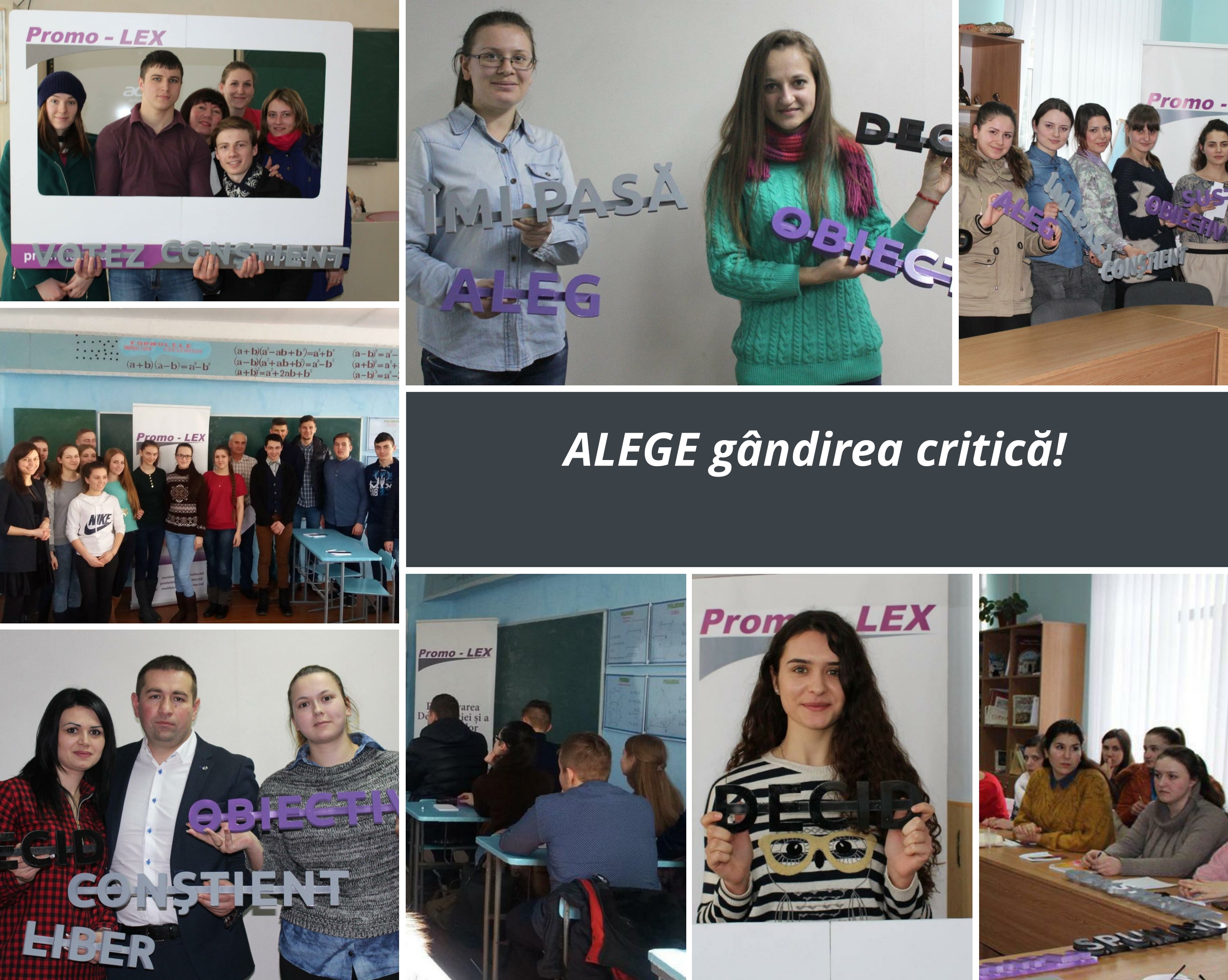
pf_1486980834More than two hundred young people in Comrat, Bălți, Cahul, Edineț and Coșnița participated in the campaign “ELECT to think critically”. This informational campaign on the right to elect and to be elected took place between February 7-10, 2017, and was organized by the Promo-LEX Association in the context of Global Elections Day.

The purpose of the campaign was to inform young people about the basic principles of free elections, as well as their roles as both voters and citizens in developing their local communities and elsewhere. In addition, the young people had a discussion about laws on financing political parties using the state budget and about the importance of monitoring political actors and holding them responsible.

The campaign consisted of presentations and discussions with experts from the Promo-LEX Association as well as film screenings, with the goal of developing a critical spirit in young people, as well as the inspiring them to find ideas and/or solutions for increasing the level of participation.