Promo-LEX Association participates in the works of the 92nd Session of the UN Committee on the Elimination of Racial Discrimination

Promo-LEX Association participates in the works of the 92nd Session of the UN Committee on the Elimination of Racial Discrimination in Geneva (24 April – 12 May 2017). During its Session, the Committee reviews the Report of the Republic of Moldova implementing the International Convention on the Elimination of all Forms of Racial Discrimination.

After reviewing the Report and consulting with the civil society actors, the Committee will formulate a series of binding recommendations, to be implemented by the Republic of Moldova.

‘Racial discrimination is still one of the most widespread patterns of discrimination in the Republic of Moldova. It varies from the discrimination at workplace, in education and social services to racial profiling, hate speech and hate crimes. Efforts taken by the authorities over the recent years were not enough to cause a significant improvement in this area’, says Dumitru Sliusarenco, Promo-LEX lawyer.

18160046_1433599803364163_1691145238_oDuring the past years, Promo-LEX Association has analysed the situation with the human rights of ethnic groups and national minorities. On 31 March 2017, Promo-LEX in partnership with the Anti-Discrimination Centre Memorial submitted an alternative report to the UN Committee on the Elimination of Racial Discrimination. Promo-LEX drew the attention to certain severe issues in the following areas:

– Social discrimination and intolerance,
– Public hate speech,
– Hate crimes,
– Discrimination of Roma and violation of their labour, education and housing rights.

The most important recommendations for the Government of the Republic of Moldova are the following:
– The Government shall develop and conduct continuous training programs for legal professional and representatives of public authorities on equality and non-discrimination, including application of these provisions to the local budgeting process, development of local policies and representation in local decision-making process.
– Authorities should intensify the efforts to prevent and combat hate speech at all levels. National Audio-Visual Center should elaborate an efficient monitoring mechanism to identify and sanction discrimination in media.
– The General Police Inspectorate and General Prosecutor’s Office should adopt efficient measures to uniform investigative practices, ensuring that hate crimes against ethnic minorities are properly investigated.
– The Government should implement the existing laws and policies; Authorities should monitor the efficiency of these measures.
– The Government should elaborate and adopt a mechanism for monitoring and evaluation of the implementation of the 2016-2020 Action Plan on the support of Roma population in Moldova.
– The Government should allocate adequate funding to national policies and action plans aimed at eliminating all forms of discrimination against ethnic and national minorities ensuring inclusive education and equal opportunities in employment.

The report to be published on the website in the ‘UN Committees’ category is attached​.


DOC – JOINT SUBMISSION OF THE PROMO-LEX ASSOCIATION AND ANTI-DISCRIMINATION CENTRE MEMORIAL


National Social Insurance House Obliged to Pay Social Allowances for Disabled Persons Deprived of Liberty

The Decision of the Civil and Administrative Litigation College of the Supreme Court of Justice of 13 April 2017[1] declared inadmissible the appeal of the National Social Insurance House against the Decision of Chisinau Court of Appeal of 16 December 2016 contesting the Decision issued by the Council on the Prevention and Elimination of Discrimination and Ensuring Equality on the case of Machina Tatiana v. Department of Penitentiary Institutions, Penitentiary No 13, National Social Security House.

Thus, the Decision No 155/14 of 11 December 2014, issued by the Council on the Prevention and Elimination of Discrimination and Ensuring Equality (hereinafter referred to as the CPEDEE) on the case of Machina Tatiana v. Department of Penitentiary Institutions, Penitentiary No 13, National Social Insurance House[2], on discrimination by refusal to provide a reasonable accommodation on the basis of disability, remains valid, and the recommendations should be performed by the subjects in charge, including by the National Social Insurance House.

By its Decision No 155/14, CPEDEE declared discriminatory Article 6(10) of the Law on State Social Allowances for certain categories of citizens, namely for disabled persons deprived of liberty in the penitentiaries not adjusted to this category of prisoners, considering that the social allowance is paid with the purposes to eliminate the barriers encountered by the disabled complainant, and the lack of a reasonable accommodation of the place she is detained supports the need of receiving this allowance, though if the complainant was reasonably accommodated in the penitentiary, the need to pay the social allowance would have been declined. The Court also stated that if the complainant was not restricted by the lack of reasonable accommodation in common and independent exercise of daily maintenance and care action, the need to pay the allowance would have been declined, but the situation of the complainant is completely different.

The Supreme Court of Justice stated the following: The arguments invoked under the appeal, according to which the lower courts ignored the main legal rule regulating the subject of matter, and, namely Article 6(10) and Article 7(1) of the Law on State Social Allowances for certain categories of citizens, cannot be considered, given that the purpose of the social allowance is to eliminate the barriers encountered by the disabled persons. Thus, considering the lack of reasonable accommodation for Machina Tatiana in the Penitentiary No 13, the public authority in charge of establishing the social allowance and its method of payment, the recurrent disregarded the purpose of the Law No 499, namely, to care, accompany and supervise. The lack of a reasonable accommodation of the place she is detained supports the need of receiving this allowance, but, if Machina Tatiana was reasonably accommodated in the penitentiary, the need to pay the social allowance would have been declined.

Against this background, even if the plaintiff was released from the penitentiary on the grounds of her disability, she still does not receive social allowances that should be paid through the National Social Insurance House under Article 6(10) and Article 7(1) of the Law on State Social Allowances for certain categories of citizens. During January – March 2017, Promo-LEX Association received similar complaints from disabled persons detained in penitentiaries and psycho-neurological institutions, who do not receive any social payments for the same reasons as the prisoner Machina Tatiana.

Also, during the same period, Promo-LEX received several complaints from prisoners with mobility impairments, who complaint about the lack of reasonable accommodation of the penitentiary infrastructure for persons with mobility impairments.

In these circumstances and considering the Decision of the Civil and Administrative Litigation College of the Supreme Court of Justice of 13 April 2017, Promo-LEX Association reminds the National Social Insurance House and the Department of Penitentiary Institutions about the need to execute the CPEDEE Decision of 11 December 2014 on the case No 155/14, by which the following were decided:

  • National Social Insurance House should recommend the adjustment of the legislation, considering the CPEDEE finding – Article 6(10) of the Law No 499 of 14 July 1999 on State Social Allowances for certain categories of citizens is discriminatory in relation to disabled persons deprived of liberty in penitentiaries not adjusted for this category of prisoners;
  • National Social Insurance House should resume the payment of social allowances to disabled persons detained in penitentiaries, hospitalised in psycho-neurological institutions, etc.;
  • Ministry of Justice and Department of Penitentiary Institutions should provide reasonable accommodation for all penitentiaries where disabled persons are detained.

For more details, please contact: Tatiana Pascovschi, Promo-LEX Communication Officer: GSM 060804022, Tel./Fax (+373 22) 45-00-24, e-mail: [email protected]


[1]http://jurisprudenta.csj.md/search_col_civil.php?id=36030
[2] CPEDEE, Decision No 155/14 of 11 December 2014, available at: http://egalitate.md/media/files/files/decizia_nr__155_depersonalizat_1273504.pdf


Promo-LEX Association Requires Emergency Measures Addressing the Hate Violence Against a GENDERDOC-M Association Female Employee

Promo-LEX Association expresses its concern about the acts of gender-based violence taken on 17 April against a GENDERDOC-M Association female employee.

Promo-LEX draws authorities’ attention on the fact that hate crimes are violent manifestations of intolerance and have a deep impact on not only the immediate victim, but also on the group the victim belongs to. Last but not least, hate crimes affect social community and cohesion.

To this end, pursuant to Article 7 of the Declaration of Principles on Equality[1], any act of violence or incitement to violence that is motivated wholly or in part by the victim having a characteristic or status associated with a prohibited ground, constitutes a serious denial of the right to equality. Such motivation must be treated as an aggravating factor in the commission of offences of violence and incitement to violence, and States must take all appropriate action to penalise, prevent and deter such acts.

Law enforcement bodies must intervene within their legal powers to ensure active replies to hate crimes, and guarantee the person’s and community’s safety. During the prosecution of the unlawful deed, they should consider and investigate efficiently the reason for the violence.

Where the law enforcement bodies and courts of law fail to reply appropriately to the large number of nationally reported hate crimes, the Parliament of the Republic of Moldova should enact in final reading, as soon as possible, the draft Law No 301 of 1 July 2016[2] (amending the Criminal Code and Contravention Code on offences motivated by prejudice, contempt or hatred).

Promo-LEX believes that a clear, concrete and understandable legal framework for the prevention of bias, contempt and hatred crimes will increase the possibilities of law enforcement bodies to use it in a concrete way. In addition, an efficient legislation will allow for creating a framework for the identification of cases and collection of data. However, the legislation is only a part of the reply to hate crimes. Along with other instruments, the effective regulatory framework might speed up the process of changing the bias and stereotypes in the society.

In its Report Addressing Discrimination and Inequality in Moldova, June 2016[3], Promo-LEX Association described several serious hate, contempt and bias-motivated crimes against LGBT persons, ethnic minorities, foreign nationals. The report found the law enforcement bodies’ reply unsatisfactory and recommended them to take more action, which we reiterate and require to be applied immediately, as follows:

  • Enact in final reading, as soon as possible, the draft Law No 301 of 1 July 2016 (amending the Criminal Code and Contravention Code on offences motivated by prejudice, contempt or hatred);
  • Train professionally the criminal justice staff involved in prosecuting hate crimes, and develop specific procedures to interact with victims and prosecute efficiently these cases;
  • Organize public education campaigns (particularly for youth) promoting tolerance and non-discrimination principles;
  • Adopt by the General Prosecutor’s Office certain internal regulations ensuring that hate crimes are properly investigated;
  • Provide training by the General Police Inspectorate for all law enforcement bodies to ensure that all hate crimes against LGBT, ethnic minorities and foreign nationals are properly investigated;
  • Collect accurate data on bias crimes, regardless of whether they are prosecuted as hate crimes;

You can read about the case of 17 April against Genderdoc-M female employee over here:  http://bit.ly/2om2n0Z .

For more details, please contact: Tatiana Pascovschi, Promo-LEX Communication Officer: GSM 060804022, Tel./Fax (+373 22) 45-00-24, e-mail: [email protected]


[1] http://www.equalrightstrust.org/ertdocumentbank/Pages%20from%20Declaration%20perfect%20principle.pdf
[2]http://parlament.md/ProcesulLegislativ/Proiectedeactelegislative/tabid/61/LegislativId/3349/language/en-US/Default.aspx
[3] From words to deeds: Addressing Discrimination and Inequality in Moldova, Equal Rights Trust Country Report Series: 7 London, June 2016. Source: https://promolex.md/wp-content/uploads/2016/08/ENG_doc_1469547155.pdf


Promo-LEX Warns that the Observance of the Human Rights in the Transnistrian Region Risks to Worsen

promo-lex-avertizeaza-asupra-riscului-nerespectarii-drepturilor-omului-in-transnistria-30890Promo-LEX Association expresses its concern about the observance of the human rights in the Transnistrian region. For two years, the human rights defenders lack access to monitor the situation and provide legal assistance both for human rights defenders and citizens from the Transnistrian region. Human rights area is locally underrepresented, and lacks mechanisms or institutions able to monitor the observance of human rights, with a heightened risk of worsened human rights situation and abuses from the part of Tiraspol administration.

Two years from the initiation of the criminal files on the name of Promo-LEX Association members by the so-called Ministry of State Security from Tiraspol, the former KGB, we find with concern that the access in the region for human rights defenders is still restricted. In addition, the status of the files initiated by Tiraspol administration on the name of Promo-LEX members is uncertain.

The multiple efforts made by Promo-LEX to raise awareness of the constitutional authorities, international organizations and de facto administration of Tiraspol to the situation of human rights defenders from the Transnistrian region, did not trigger a positive result. The over 20 applications and requests forwarded to the regional ‘authorities’ and ‘courts’ were refused or ignored. The constitutional authorities efforts to discuss, in the format of ‘5+2’ negotiations, the subject of the situation of regional human rights defenders failed.

The national and international organisations’ calls in relation to the serious human rights situation in the Transnistrian region also failed to change the attitude of Tiraspol administration to this situation. A last UN report was developed in 2012 by the expert Thomas Hammarberg and described the critical human rights situation from the Transnistrian region. Since 2015, the human rights situation can no longer be monitored by the human rights defenders from Chisinau. This leads to the lack of responsibility of local administration for its deeds and serious violation of human rights.

Thus, Promo-LEX Association requires:

  • President Igor Dodon to address the free access of Promo-LEX members in the Transnistrian region in the discussions with the de facto regional administration president;
  • Government of the Republic of Moldova, particularly the Bureau for Reintegration, to recommend insistently the inclusion of the issue of stopping KGB threats to Promo-LEX Association on the agenda of the ‘5+2’ format meetings;
  • de facto Transnistrian administration, particularly Mr. Ignatiev Vitalii, to answer to the questions put by the UN Special Rapporteurs on 7 December 2015, requesting to explain the legal grounds of the criminal file and of the special investigative measures applied to Promo-LEX and its members;
  • ‘MRT’ Investigation Committee to provide information on the initiated criminal file, to communicate information on the special investigation measures applied to Promo-LEX members and to hand the order to start the so-called criminal file against Promo-LEX;
  • Lapitchi Mihail, the so-called minister of state security of ‘MRT’, to cancel the so-called interdiction on Promo-LEX members.


Electoral System Design

Promo-LEX hosted a workshop about electoral systems on the topic “Electoral System Design”. Together with international experts Mette Bakken from Norway and Adrian Sorescu from Romania, journalists in Chisinau, civil servants from public institutions, and representatives of political parties heard about the principal components of designing an electoral system, categories of electoral systems, and the diversity of majoritarian, proportional representation, and mixed systems. At the end, the participants analyzed the criteria for choosing an electoral system, responded to questions about which system is appropriate for Moldova, and learned the steps for carrying out electoral reform.


DOC – Workshop on Electoral System Design. The Romanian version is here.

IMG_6418

IMG_6429

IMG_6432

IMG_6431


Detainees Continue to Complain about the Poor Conditions in Penitentiaries to the European Court of Human Rights

The European Court of Human Rights informed the Government of the Republic of Moldova about Mocanu (Case File No 14566/14) and Gavrilita (Case File No 22741/06) cases. The complaints were filed on the grounds of Article 3 (Prohibition of torture) and Article 13 (Right to an effective remedy) of the Convention and refer to bad conditions of detention and inadequate medical assistance in detention facilities.

The complaints submitted to the European Court of Human Rights invoked the following: small, narrow, cold cells with poor or even inexistent ventilation, overcrowded cells, poor lighting, limited access to the toilet, lack of access to medical assistance, no food for several days or low-calorie food, limited access to water, exposure to infections, etc.

The issue of bad conditions of detention of the penitentiary system of the Republic of Moldova was discussed during the Universal Periodic Review of the UN, in autumn 2016, when the Republic of Moldova received and accepted 12 recommendations with regard to the right not to be subjected to torture and inhuman or degrading treatment. The recommendation to improve the conditions of detention and medical assistance in penitentiaries was among the key ones formulated by the United Nations.

Promo-LEX Association urges the Moldovan Government to urgently implement the Action Plan submitted on 21 October 2013 to the Committee of Ministers of the Council of Europe for the execution of the judgments in Becciev, Ciorap and Paladi (DH-DD (2013)1168) groups of cases, by urgently adjusting the legal provisions on the penitentiary and detention system, increasing penitentiary funding, reviewing the current ways and practices in applying detention on remand in order to reduce the number of arrested persons, introducing effective remedies for bad conditions of detention, as well as accelerating the build of the new penitentiary in Chisinau municipality.

Bearing in mind the fact that the complaints refer to the violations that took place in Penitentiary No 13, Promo-LEX Association urges the Government to take the priority measures needed to reduce the overcrowding in penitentiaries, including by transferring the convicted detainees from Penitentiary No 13 to other penitentiaries, to introduce effective remedies for detention in bad conditions and non-provision of medical assistance, to allocate additional financial resources for detainees’ medical assistance.

The latest Report of the European Committee for the Prevention of Torture and Inhuman or Degrading Treatment or Punishment[1] (CPT)mentions that the current number of detainees in the penitentiary system exceeds the number of available places. The Report also notes that since the last visit in 2011, the penitentiary population grew up by about 1,300 detainees. Currently, based on the latest census data, the rate of imprisonment in the Republic of Moldova is one of the highest in Europe, being 260 detainees per 100,000 inhabitants. The average rate of imprisonment in Europe is 135 detainees per 100,000 inhabitants.

The applicants are represented before the High Court by lawyers of Promo-LEX Association. More information is available here and here.

For more details, please contact: Carolina Bondarciuc, Promo-LEX Press Officer: GSM 060280980, Tel./Fax (+373 22) 45-00-24, e-mail: [email protected]


[1]European Committee for the Prevention of Torture and Inhuman or Degrading Treatment or Punishment (CPT)


Promo-LEX Will Participate in the New DPI Officers’ Training in the Use of Physical Force and Special Means

IMG_1857On 6 April 2017, at the Instructive Centre, the Department of Penitentiary Institutions in cooperation with Promo-LEX Association organised a training for the newly-employed penitentiary system officers. The officers were trained to use physical force and special means. It was the first training ever.

‘The competent authorities have to ensure clear and predictable policies on the use of physical force and special means, train the persons authorised to use physical force, special means and firearms and efficiently investigate the cases of the abuse of the latter’, states Vadim Vieru, Promo-LEX lawyer.

A Cooperation Agreement between these two institutions aimed at streamlining the partnership in human rights promotion was signed in November 2016. Thus, Promo-LEX Association will continue training the DPI officers at the Instructive Centre on the basis of the signed Agreement.

In this context Promo-LEX appreciates the openness of the Department of Penitentiary Institutions in its communication and cooperation with civil society. Promo-LEX and DPI had several working meetings, where they discussed, among other topics, the possibility for Promo-LEX to train DPI employees in different areas related to human rights promotion and protection. See details here and here.

We remind that in February 2016, Promo-LEX Association emphasised the need to urgently regulate the use of physical force and special means in the detention facilities.One of the reasons was to avoid abuse on the part of institution’s representatives.That was also when Promo-LEX informed about the case of Alexandru Bogdan, the detainee who filed a complaint with the Military Prosecutor’s Office. This initiated a criminal case on the basis of Article 166(4)(c) and (d) of the Criminal Code of the Republic of Moldova (torture, committed by two or more persons, with the use of special torture tools). See details here.


Belarus: Civic solidarity movement condemns mass detentions and police violence against peaceful demonstrators, calls for a strong reaction by the international community

 Statement by members of the Civic Solidarity Platform

We, the undersigned members of the Civic Solidarity Platform (CSP), a coalition of human rights NGOs from Europe, the former Soviet Union region and North America, and other non-governmental organisations decry the mass detentions of peaceful demonstrators, journalists and human rights defenders, as well as the use of violence and abusive treatment targeting them in Belarus on 25-26 March 2017. These events were the culmination of a series of repressive measures taken by the authorities of the country since the beginning of March to stifle the public expression of grievances. Given the severity of this human rights crisis of unprecedented scale since December 2010, it is crucial that the international community takes resolute action to push for an end to the crackdown in Belarus and justice for those targeted by it.

We condemn the gross violations of the right to peaceful assembly, freedom of expression, freedom from arbitrary detention, and the right to fair trial in Belarus in connection with the recent peaceful protests, and call on the international community to use all available means to put pressure on the Belarusian authorities to immediately end these violations.

Such measures by the authorities should include:

  • immediately releasing those currently behind bars because of their involvement in the peaceful protests or their efforts to monitor them;
  • dropping charges against all those prosecuted on these grounds;
  • carrying out prompt, thorough and impartial investigations into all allegations of arbitrary detention, ill-treatment and other violations of the rights of protesters, passers-by, journalists, human rights defenders and political activists in connection with the protests; and
  • bringing those responsible for violations to justice.

We call in particular for the following concrete actions by international community in response to the current crackdown in Belarus:

To the OSCE:

  • The OSCE participating States should initiate and support the renewal of the Moscow Mechanism in relation to Belarus and the appointment of a new rapporteur for this process, in view of the fact that the current developments mirror those on the grounds of which this mechanism was invoked in 2011;
  • The OSCE Chairmanship should appoint a Special Representative on Belarus, whose mandate should include investigating the recent violations;
  • The Office of Democratic Institutions and Human Rights should monitor the trials of those facing charges because of their participation in the recent peaceful protests, or their efforts to monitor and report on them;
  • The OSCE Parliamentary Assembly should reconsider holding its annual session in Minsk in July 2017 and identify another host country and city for this event.

To the Council of Europe:

  • The Parliamentary Assembly of the Council of Europe should replace its current rapporteur on the situation in Belarus, ensuring that the individual holding this position forcefully speaks out against human rights violations in the country.

To the UN:

  • Members of the Human Rights Council should extend the mandate of the Special Rapporteur on the human rights situation in Belarus, continue urging the Belarusian authorities to allow the Special Rapporteur to visit the country, and adopt a strong resolution on the human rights situation in Belarus at the next session of the Council;
  • High Commissioner on Human Rights should publicly condemn the crackdown in Belarus and engage in direct contact with the Belarusian authorities on this matter.

To international financial institutions:

  • International financial institutions should apply strong human rights conditionality in the implementation of their programs in Belarus and refrain from allocating funding to government projects until the human rights situation in the country has substantially improved. Specifically, the European Bank for Reconstruction and Development should reinstate its calibrated strategy on Belarus.

To the EU:

  • The EU member states and institutions should apply stronger and more consistent human rights conditionality to the development of its relations with Belarus and consider the prospects of reinstating sanctions similar to those applied in 2011-12 for widespread human rights violations.

To the USA:

  • The US government should consider reinstating the sanctions against Belarus that it suspended in 2015-16.

Background information, based on reports from the ground:

In the afternoon of 25 March 2017, people took to the streets in the Belarusian capital of Minsk for planned peaceful protests on the occasion of the Day of Freedom, which commemorates the Belarusian declaration of independence in 1918. There was as a heavy police and security presence in the city, the downtown area where protests were due to be held was cordoned off, and traffic was blocked on the main Independence Avenue. Local and international human rights monitors representing the CSP member organisations documented the use of heavy-handed tactics by the law enforcement and security authorities to prevent the peaceful protests, for which authorities had not given advance permission as required by Belarusian law and in violation of international standards. At least 700 people were detained on 25 March, including elderly and passers-by. As can be seen on available photos and footage, police forcefully rounded up and beat protesters with batons, although these made no resistance. More than 30 journalists and photographers from both Belarusian and international media outlets were detained; cameras and other equipment of some of them were damaged by police. Toward the evening, police started releasing detainees from the detention facilities, in many cases without charge. However, others remain in detention, and dozens of individuals are expected to stand trial starting Monday 27 March on charges relating to their participation in the peaceful protests.

The following episode requires particular attention: At 12.45 pm local time on 25 March, about an hour before the start of the planned peaceful protest, anti-riot police raided the offices of the Human Rights Center Viasna and detained a total of 57 Belarusian and foreign human rights defenders and volunteers as well as journalists. Human rights defenders and volunteers had gathered there for a training on monitoring the protests and were planning to go to the streets of Minsk for observation of the assemblies. Among them were representatives of Viasna, the Belarusian Helsinki Committee, the Belarusian Documentation Center, Frontline Defenders, International Partnership for Human Rights and other organisations. The police shouted at all present, intimidated them, and ordered to lie down on the floor face down. 57 people were detained without any charges, packed in the buses and brought to the Pervomaisky district police station, where their belongings were searched and their personal information recorded. The detainees were held there for two and a half hours and were released afterwards without charges. One of the detained needed medical treatment because of injuries sustained when being beaten by police. The raid of the offices of Viasna and the detention of the monitors were clearly aimed at intimidating and preventing them from observing the peaceful assembly and documenting possible violations.

The crackdown continued on 26 March, with dozens of people being detained by police as they gathered at October Square in Minsk at noon to express solidarity with those detained the day before. Among the detained on 26 March were at least one human rights defender, one civil society activist and one journalist. Representatives of national and international human rights NGOs, including members of the CSP, continue to document violations perpetrated in connection with the events of the last few days.

The detentions on 25-26 March followed the earlier detention of about 300 people, including opposition members, journalists and human rights defenders in the last few weeks. These detentions have taken place against the background of a wave of peaceful demonstrations that were carried out across Belarus since mid-February 2017 to protest against so-called “social parasites” law which imposes a special tax on those who have worked for less than six months during the year without registering as unemployed. The legislation, which has affected hundreds of thousands of people in the economically struggling country, has caused widespread dismay. On 9 March, President Lukashenko suspended the implementation of the law but refused to withdraw it, resulting in further protests. Many of those detained have been fined or arrested for up to 15 days on administrative charges related to their participation in the peaceful protests. Over two dozen people are facing criminal charges on trumped-up charges of preparation to mass riots.

Signed by the following CSP members:

  1. Analytical Center for Inter-Ethnic Cooperation and Consultations (Georgia)
  2. Article 19 (United Kingdom)
  3. Association UMDPL (Ukraine)
  4. Bir Duino (Kyrgyzstan)
  5. Bulgarian Helsinki Committee
  6. Center for Civil Liberties (Ukraine)
  7. Centre for the Development of Democracy and Human Rights (Russia)
  8. Committee against Torture (Russia)
  9. Crude Accountability (USA)
  10. Freedom Files (Russia/Poland)
  11. German-Russian Exchange – DRA (Germany)
  12. Helsinki Association of Armenia
  13. Helsinki Citizens’ Assembly – Vanadzor (Armenia)
  14. Helsinki Committee of Armenia
  15. Helsinki Committee for Human Rights in Serbia
  16. Helsinki Foundation for Human Rights (Poland)
  17. Human Rights Center of Azerbaijan
  18. Human Rights First (USA)
  19. Human Rights House Foundation (Norway)
  20. Human Rights Information Center (Ukraine)
  21. Human Rights Monitoring Institute (Lithuania)
  22. The institute for Reporters’ Freedom and Safety (Azerbaijan/Georgia/Switzerland)
  23. Index on Censorship (United Kingdom)
  24. Institute Respublica (Ukraine)
  25. International Partnership for Human Rights (Belgium)
  26. Kazakhstan International Bureau for Human Rights and Rule of Law
  27. The Kosova Rehabilitation Center for Torture Victims
  28. Macedonian Helsinki Committee
  29. Moscow Helsinki Group (Russia)
  30. The Netherlands Helsinki Committee
  31. Norwegian Helsinki Committee
  32. Office of Civil Freedoms (Tajikistan)
  33. Promo-LEX (Moldova)
  34. Protection of Rights without Borders (Armenia)
  35. Public Association “Dignity” (Kazakhstan)
  36. Public Alternative Foundation (Ukraine)
  37. Public Foundation Golos Svobody (Kyrgyzstan)
  38. Public Verdict Foundation (Russia)
  39. Regional Center for Strategic Studies (Azerbaijan/ Georgia)
  40. Serbian Helsinki Committee for Human Rights
  41. SOLIDARUS e.V. (Germany)
  42. The Swiss Helsinki Committee
  43. Ukrainian Helsinki Human Rights Union
  44. Women’s International League for Peace and Freedom
  45. World Organisation against Torture (OMCT)

Other organisations who have joined the statement:

  1. Belarus Free Theatre
  2. Libereco – Partnership for Human Rights (Switzerland)
  3. PEN International

More signatures are being added.


UN Shows a Strong Support for Human Rights Defenders

On 24 March 2017, the UN Human Rights Council unanimously adopted the Resolution No 34 A/HRC/34/L.5, extending the Mandate of the Special Rapporteur on the situation of human rights defenders, Michel Forst for 3 more years.

Promo-LEX Association welcomes the adoption of the Resolution No 34 A/HRC/34/L.5, and considers that as long as there is no mechanism to protect the Human Rights Defenders at the national level, the notification of the UN Special Rapporteur on the situation of human rights defenders about the intimidation and harassment of the Moldovan Human Rights Defenders remains to be the only way to protect them.

This important Resolution affirms vital and legitimate work of the Human Rights Defenders and extends the mandate of the Special Rapporteur, tasked to support and protect them. Concurrently, it urges all States to cooperate and:

  • to assist the Special Rapporteur in the performance of his/her tasks;
  • to provide all information and to respond to the communications transmitted to them by the Special Rapporteur without undue delay;
  • calls upon States to give serious consideration to the requests of the Special Rapporteur to visit their countries.

‘Through this Resolution the UN Council has sent the States an important signal that human rights work is legitimate, and that Human Rights Defenders must be protected by States and non-state actors’. (Michael Ineichen, ISHR’s Director of Human Rights Council Advocacy).

The renewal of the mandate of the Special Rapporteur on the situation of human rights defenders, Michel Forst, comes at a vital time, since the working environment of the Moldovan Human Rights Defenders becomes more and more hostile.

The representative of Promo-LEX Association Alexandru Postica recently talked at the UN Human Rights Council about the need to develop a national mechanism to protect the Human Rights Defenders, CALLING on the Government of the Republic of Moldova to take concrete steps to implement through the national legislation the UN Declaration on Human Rights Defenders and of the[1] Resolution No 31/32 A/HRC/RES/31/32 Protecting human rights defenders.[2]

Not to forget that thanks to the intervention of the Special Rapporteur on the situation of human rights defenders, Michel Forst, the case of Promo-LEX Association was brought to the focus of the UN Council (see here).

We reiterate that the Special Rapporteur on the situation of human rights defenders, Michel Forst, together with other Special Rapporteurs, expressed their concern about the criminal proceeding initiated by the Security Services of Transnistrian region and application of ‘special investigation measures’ against Promo-LEX members, which, according to the Rapporteur, may greatly hinder the exercise of their right to freedom of expression and their work monitoring human rights violations in the region.


[1] Declaration’s full name is the Declaration on the Right and Responsibility of Individuals, Groups and Organs of Society to Promote and Protect Universally Recognized Human Rights and Fundamental Freedoms – with this longer title is frequently abbreviated to The Declaration on human rights defenders’; http://www.ohchr.org/EN/Issues/SRHRDefenders/Pages/Declaration.aspx
[2] Resolution adopted by the HRC on 24 March 2016 – 31/32. Protecting human rights defenders, whether individuals, groups or organs of society, addressing economic, social and cultural rights:http://ap.ohchr.org/documents/dpage_e.aspx?si=A/HRC/RES/31/32; We remind, that more than 180 NGOs, including Promo-LEX Association, support the call on the Member States to adopt the Resolution No 31/32 A/HRC/RES/31/32 Protecting human rights defenders.


Lessons from Kiev: Recapping the Election Data Academy

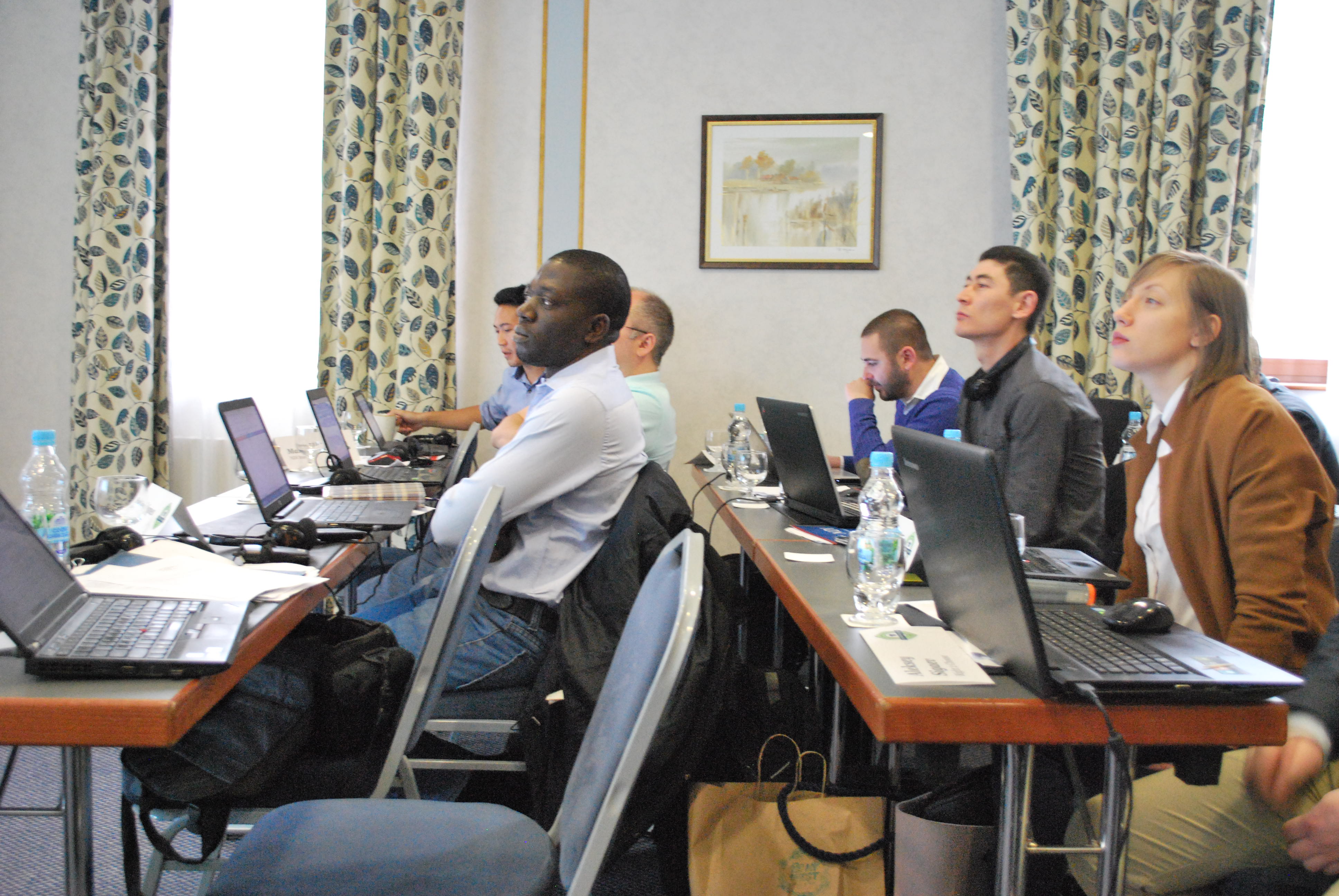
From February 20-23, 16 participants from 12 countries, including representatives from GNDEM member groups* convened in Kiev, Ukraine for an intensive four-day Election Data Academy. As part of the Open Election Data Initiative (OEDI), participating electoral experts and civil society leaders were led through interactive course modules that highlighted best practices for obtaining and using election data to advance electoral integrity, as well as given trainings on how to use various tools to collect, analyze, and manipulate data.

Over the course of four days, Data Academy participants went through three modules from OEDI, which were Paul Mario Kyaw Tanya Nurlan Iraklicreated for activists, civil society organizations, political parties, and journalists to learn how to analyze common datasets released during elections. The first module walked participants through how to review polling station lists and use Excel pivot tables to determine the number of polling stations and registered voters in each district. Module 2, an introduction to summarizing data, prepared participants to take the concepts of types and categories of data and apply them to Module 3, a tutorial on summarizing and analyzing polling station data.
Other Data Academy sessions included trainings on data visualization, such as using infographics to effectively show data trends and outliers; an introduction to data scraping tools like Python; and an overview of data conversion tools that allow users to manipulate election datasets. You can view the full four-day agenda here.

Throughout the Academy, election experts and civil society leaders actively applied new skills not only to existing election data analysis challenges but also broader political process monitoring initiatives. For example, representatives from Burma and Tunisia were able to collaborate in writing code to compile a comprehensive spreadsheet of the 2014 Tunisia presidential election results that previously existed in more than 200 separate files. “Free play” time each day allowed Data Academy participants to practice using newly-learned tools on their own, exchange best practices with other participants, and see how others were using these tools to analyze data in their countries.

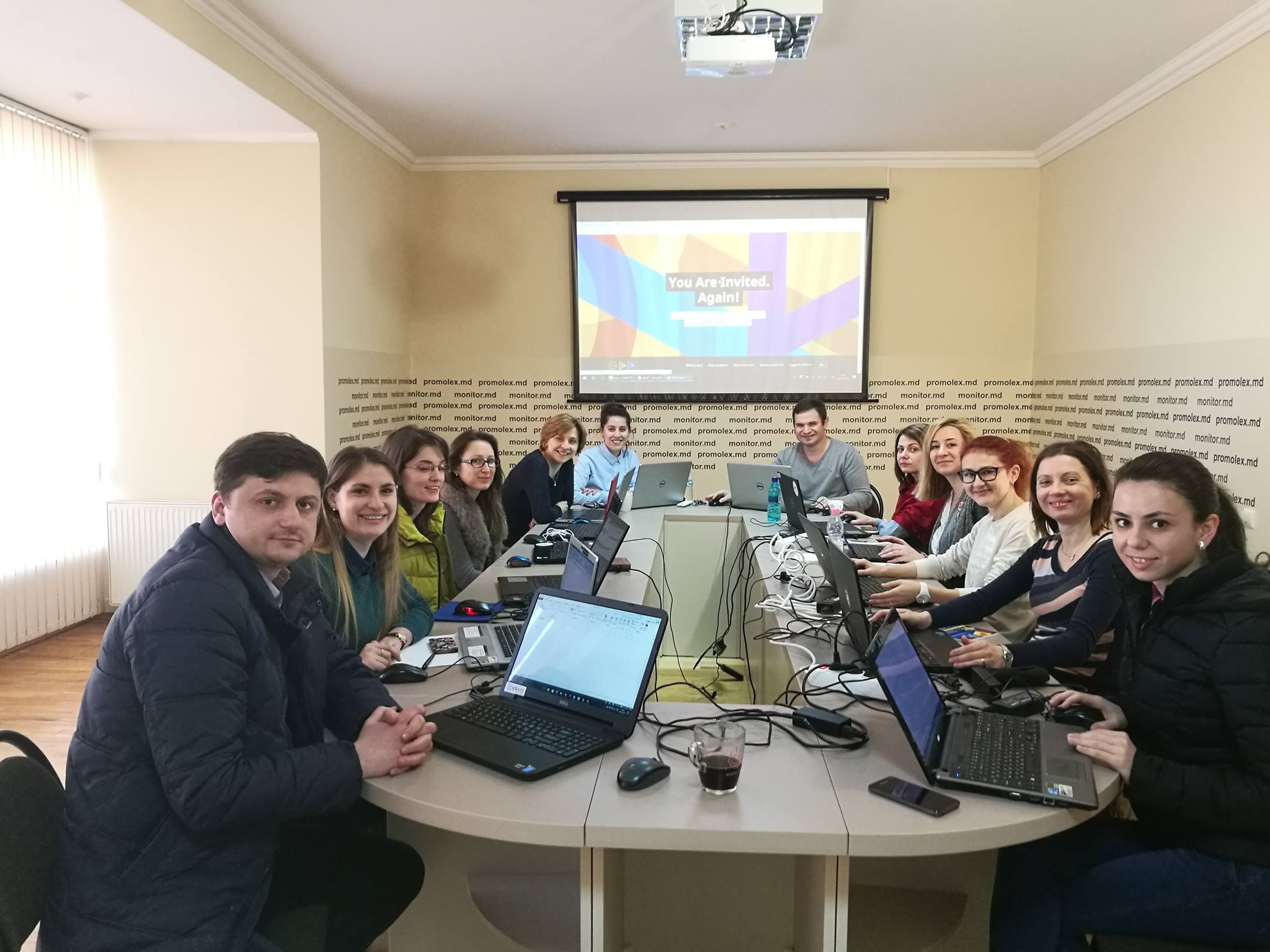
17097421_1312444642167138_1180889404458426719_oParticipants have already begun transferring knowledge gained at the Academy to their peers. Following the four-day Data Academy, GNDEM member Promo-LEX hosted its own Data Academy in Moldova on Open Data Day, March 4. The Promo-LEX Data Academy focused on the concept of open data and discussed much of what was covered in Kiev. Specific training exercises included sessions on data manipulation and cleaning, summarizing data, and how to review a polling station list.

In addition to the three election data modules that are available online, the OEDI team has created additional modules, focused on detecting bias in ballot qualification data and evaluating voter registration trends, that will soon be published. You will soon be able to test your skills with these modules on OEDI’s online academy. Finally, OEDI has compiled a resource document of data tools for transcribing data, scraping websites, and creating infographics.

*Representatives from the following groups attended the Data Academy: People’s Alliance For Credible Elections (PACE), Youth Initiative for Advocacy, Growth & Advancement (YIAGA), Promo-LEX Association, Civil Network OPORA, Election Monitoring and Democracy Studies Center (EMDS), Mourakiboun, R2C, and the Coalition for Democracy and Civil Society.

More at: www.gndem.org