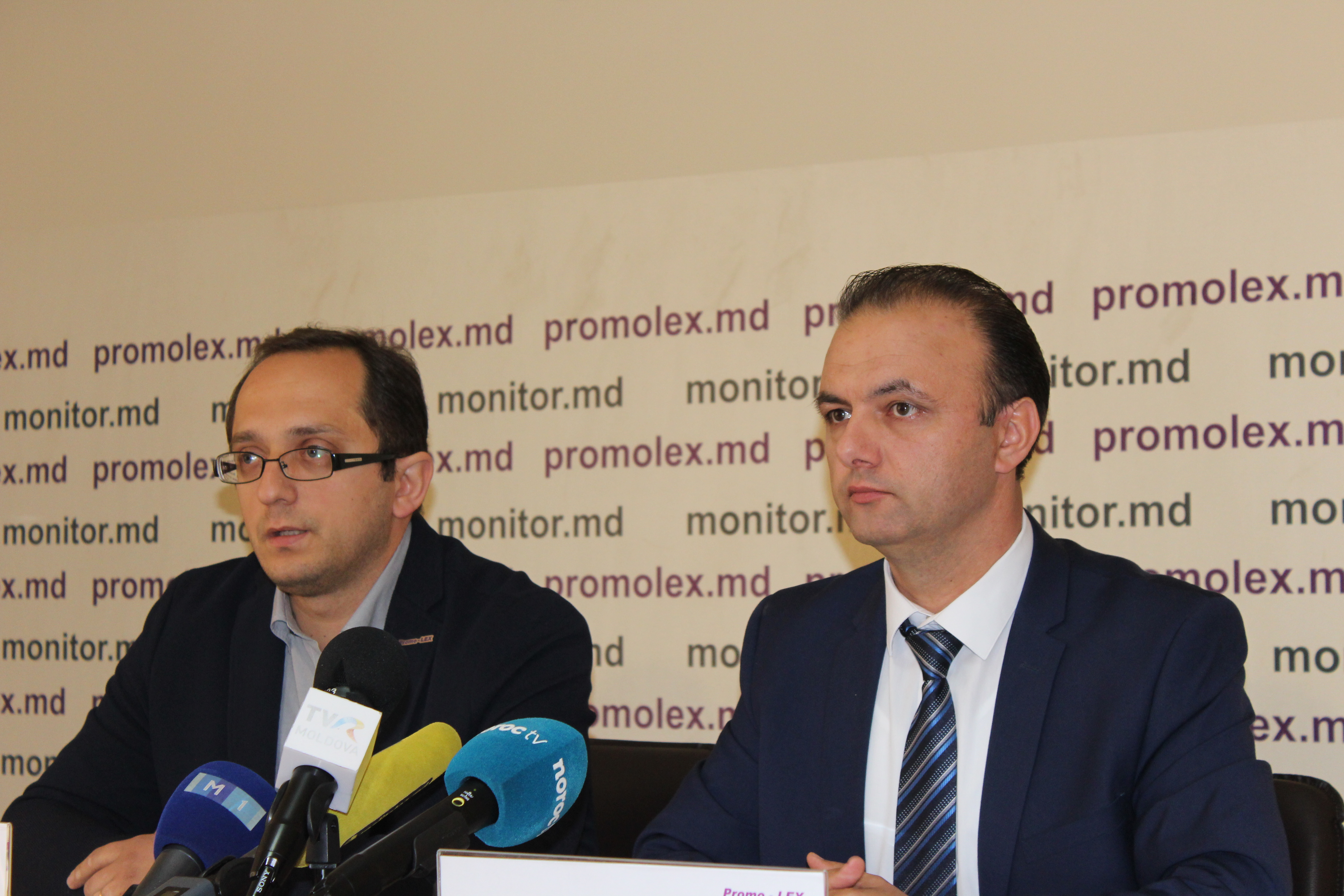
The attempt to limit foreign funding of NGOs endangers the functioning of democracy in Moldova and cannot, under any circumstances, be accepted


ECtHR Will Examine the Case of a Pensioner from Glodeni Who Was Hospitalised by Force in a Psychiatric Institution

Recently, the European Court of Human Rights informed the Government of the Republic of Moldova on Mihail Dogotar v. Republic of Moldova complaint (Application No 12653/15 of 28 February 2015).

Mihail Dogotar is a pensioner, who worked as an engineer for 45 years, and who has, for a long time, a dispute with the National Social Security House, unsatisfied with his pension. He was expressing publicly his dissatisfaction when the authorities held some meetings or in public ones.

The applicant complaint to the European Court of Human Rights about the violation of Article 5.1 of the Convention (unlawful apprehension) in terms of his forced hospitalisation in a psychiatric institution for seven days, after slapping a female member of the Government in that period. The deeds took place in May 2014. See details here. As a result, a criminal file was opened pursuant to Article 287(1) (hooliganism).

In May 2014, the Glodeni Prosecutor’s Office ordered the outpatient psychiatric forensic examination of the applicant. According to the applicant, two persons, dressed in civilian clothes, who introduced themselves as police officers, came to his house and asked him to accompany them to Balti town to carry out criminal proceedings. Subsequently, the applicant noted that the vehicle he was in actually drove to Balti Psychiatric Hospital. The applicant stood against entering the hospital, so he was handcuffed.

Mihail Dogotar says he was nervous during the examination because he has been lied to, and the investigation was performed against his will. As a result, the commission alleged the man was demented or amnesiac. The doctors recommended additional investigations and an inpatient psychiatric examination.

In June 2014, the prosecutor required Glodeni Court to order that the applicant be subjected to additional forensic psychiatric and psychological examination in the hospital. The prosecutor failed to invoke any special reasons for explaining the need to perform the psychiatric examination. The following served, inter alia, as rationale for the psychiatric examination ‘knowledge with certainty by the applicant that the victim was holding the position of Minister of Labor, Social Protection and Family of the Republic of Moldova’.

Glodeni Court examined the request of the prosecutor in the absence of the applicant, and the lawyer appointed to provide state-guaranteed legal assistance deemed necessary to support the prosecutor’s request, contrary to the client’s interests and without consulting his opinion. The Court approved the prosecutor’s request and ordered the applicant’s additional forensic psychiatric and psychological examination in the Clinical Psychiatric Hospital ‘Codru’ of Chisinau municipality.

In September 2014, the applicant was approached by three police officers telling him that they ‘have to arrest him’ under a court decision that must be executed. The police officers apprehended and transported him by force to the Clinical Psychiatric Hospital ‘Codru’ of Chisinau municipality – where he was hospitalised by force. During his stay in the Clinical Psychiatric Hospital, the applicant was subjected to medical examinations, blood samples and other analysis, different medical procedures and forced labor against his will. He was also closed in a section with other patients suffering from serious mental diseases.

According to Promo-LEX Association lawyer, Vadim Vieru: ‘It seems that the Moldovan authorities did not learn the lesson after in 2008 ECtHR convicted our country in the case of the political dissident Gheorghe David, (see David v. Moldova, Application No 41578/05 of 27 November 2007), referred in 1987 to forced psychiatric treatment by the former head of the state, Nicolae Timofti, a judge in those times, but also in other similar cases (see Gorobet v. Moldova, Application no 30951/10, 11 October 2011).Just like in other cases, no grounded reasons for depriving the person of liberty existed in the Dogotar case. The circumstances of the case make us believe that this person was deprived of liberty to apply him a masked punishment. This case reveals serious problems on how outpatient psychiatric examinations, as well as other problems related to the procedures of arrest used by policemen, and the quality of the legal assistance, etc. are ordered and executed.’

In December 2016, Glodeni Court fined Mr. Mihail Dogotar of 200 conventional units, pursuant to Article 287(1) (hooliganism), a file initiated in May 2014. The judgment is not final and irrevocable, being contested in the appeal court.

The European Court of Human Rights should issue a judgment related to this case after sending by the parties of remarks on inadmissibility and merits of the case.

For more details, please contact: Carolina Bondarciuc, Promo-LEX Communication Officer: GSM 060280980, Tel/Fax (+373 22) 450024, e-mail: [email protected]


Promo-LEX: Torture in Moldova is Worth MDL 1000

Promo-LEX Association is concerned about the fact that Moldovan law enforcement bodies continue to investigate torture crimes inefficiently. The investigation deadlines are excessively large, and torturers receive minimal punishments.

Cahul Court of Law pronounced, on 15 June 2017, a sentence in connection with a case of torture and excess of power or acting in excess of authority. Three MIA employees were convicted according to Articles 166/1 and 328 of the Criminal Code, being sentenced to three years and six months imprisonment with conditional suspension and deprivation of the right to run for a position for a seven-year period. The Court paid to the injured party MDL 554 for pecuniary damage and MDL 1000 for non-pecuniary damage.

On 21 April 2010, N.S., being at a gas station from Taraclia district, Balabanu village, has been ordered to accompany three MIA employees, Taraclia PS, to the hospital for testing drunkenness. Mr. N.S. refused to go on the grounds that he wasn’t driving the vehicle, but was staying in the café. MIA employees, without drawing up any procedural act and by force, transported him to the police station and, subsequently, to the Taraclia Police Commissariat, unlawfully depriving him of liberty for longer than eight hours.

Mr. N.S. was hand and feet cuffed without any legal ground, despite his severe disability of the left leg, wearing a prosthetic device. According to evidence submitted by the prosecutors, between 5 p.m. and 8 p.m., N.S. was beaten using fists, legs and other means of applying force. Subsequently, he was transported by force to the district hospital for testing alcohol level and was taken blood samples against his will. In case the person refuses to pass the medical expertise to determine the alcohol level, the police officers must drawn up a protocol (Article 273 of the CPC) describing the refusal grounds, but, by no means, should oblige the person to pass the medical testing.

N.S. lodged several complaints against MIA employees’ actions. The criminal prosecution phase of his criminal file brought against them lasted five years and the trial phase – two years, a total of over seven years.

According to Promo-LEX Association lawyer, Dumitru Sliusarenco: ‘The prohibition of torture and inhuman or degrading treatment is one of the absolute rights, guaranteed by the international conventions and treaties, which can never be violated, in any form, regardless of justification. Unfortunately, Moldovan authorities still encounter difficulties in prosecuting and sanctioning such cases, although the European Court of Human Rights has repeatedly convicted Moldova for similar cases. The inefficient criminal prosecution, excessive investigation deadlines and minimal punishments are the key issues the authorities remain outstanding at. Another major problem is the recovery of the injured party and the assurance of a fair satisfaction. In this case, the amount paid for the pecuniary damage is ridiculous, that is MDL 1000, which is an insult to the person who suffered both from an abusive behaviour of the law enforcement bodies and from seven years of file examination’.

For more details, please contact: Carolina Bondarciuc, Promo-LEX Communication Officer: GSM 060280980, Tel/Fax (+373 22) 450024, e-mail: [email protected]


Analysis – Is the citizenship of the Republic of Moldova attractive to the Russians soldiers from the Transnistrian region? How easily can it be obtained?

A notification requesting to construe Article 11 of the Constitution of the Republic of Moldova was registered with the Constitutional Court of the Republic of Moldova on 26.05.2014. The notification focused on whether the deployment of military troops of other states or under international mandate on the territory of the Republic of Moldova violated Article 11 of the Constitution.

This notification did not remain unnoticed by the Tiraspol administration, thus, on 24.10.2016, the ‘Supreme Council’ of Tiraspol put forth a draft law amending the Law on Citizenship of the Transnistrian Moldovan Republic, which, inter alia, eliminated — up to an absurd level — certain mandatory conditions for obtaining ‘citizenship of the Transnistrian Moldovan Republic’.

Thus, the Constitutional Court of the Republic of Moldova pronounced, on 2 May 2017, the Judgment No 14 construing Article 11 of the Constitution (the Republic of Moldova’s permanent neutrality), attesting in this respect the unconstitutionality of the deployment on the territory of the Republic of Moldova of any troops or military bases, managed and controlled by foreign states.

Following the Judgment No 14 of 02 May 2017 of the Constitutional Court, the Tiraspol administration, by the latest legislative amendments of 31 May 2017, ‘formalised’ that artificial mechanism put forth on 24.10.2016, to ease to a maximum extent the acquisition of ‘citizenship of the Transnistrian Moldovan Republic’ by the Russian citizens who support unconditionally and/or are part of the Russian army (Russian citizens performing their military service for at least one year in the peacekeeping bodies, including in the operational group of Russian troops from the Transnistrian region, as well as representatives of Prosecutor’s Offices and of other governmental bodies of the Russian Federation).

Also, certain general conditions for obtaining ‘Transnistrian citizenship’, such as: knowledge of language, refusal to hold another citizenship and the presence of legal sources of income, were also eliminated through these legislative amendments.

Following these amendments, the Tiraspol administration insists on maintaining the Russian troops on the left bank of Nistru River, by granting  ‘Transnistrian citizenship’. This sets preconditions for foreign soldiers to obtain quite easily the Republic of Moldova’s citizenship.

The impact of these amendments will be felt in time, as these measures come to strengthen the actual control of the Russian Federation over the territory of the left bank of the Nistru river. The actual control, which on the one hand is an obvious obstacle to the reintegration of the Republic of Moldova, and, on the other hand, due to its unlawful and arbitrary character, results in constant violations of the human rights for the citizens of the Republic of Moldova who live in the Transnistrian region.

In addition, due to the impossibility to check the accuracy of the ‘official’ information provided by the Transnistrian region, these data entail a high risk of manipulations to obtain fraudulently the Republic of Moldova’s citizenship.

The latest amendments to the ‘regulatory framework’, introduced by the de facto administration, are thus able to jeopardize the efforts made to ensure the Republic of Moldova’s security, including by the opportunity to grant to the Russian soldiers the Republic of Moldova’s citizenship. Republic of Moldova’s citizenship could thus be attractive to the Russian soldiers or other persons from the Russian Federation or CIS also due to the liberalised visa regime with the European Union, which could affect not only the security of the Republic of Moldova, but also the relationship with the European Union.

Due to the fact that the constitutional authorities do not have comprehensive and accurate data on persons that were on 1 January 1990 in the territory that is now controlled by the de facto administration of Tiraspol, nor data on persons born during the last 27 years, we recommend to establish additional filters to the procedures for granting the Republic of Moldova’s citizenship to the inhabitants of the eastern part of the country, precisely in order to avoid such situations.

For more details, please contact: Ion Manole, Promo-LEX Association Executive Director, Tel: 0 (22) 45 00 24, Mobile: 069070800, e-mail: [email protected]


International experts: Minor adjustments to the current electoral system can correct its main disadvantages, and a major reform of the electoral system may have profound impact on political life and democratic consolidation in Moldova

_DSC5273Today, 23 May 2017, the International Conference `Options and Considerations for Reforming the Electoral System of the Republic of Moldova. Comparisons from International Experience’, organized by Promo-LEX Association, with the participation of experts from the United Kingdom, Lithuania, Georgia, Ukraine, Belarus, Armenia, Norway and Romania, took place at Chisinau. The event aimed to contribute to debate the opportunity to change the Moldovan electoral system by comparing the impact of different electoral systems applied in different social, political, cultural, other contexts.

The ‘Electoral System Design in Moldova’ study, developed by the international experts Mette Bakken, Norway, and Adrian Sorescu, Romania, (see the presentation here) was presented during the conference. The authors of the study tried to answer the main question that dominates the public life at Chisinau over the past three months: ‘To what extent the electoral system change might be a solution to the people’s dissatisfaction or it could bring any improvements in political class and, if it could, what electoral system would bring the most advantages and the least disadvantages?’

In this context, the study analysed the pros and cons of each electoral system: the majority system in one round and the mixed-parallel system (drafts under discussion in the Parliament), and also the system of proportional representation in regional constituencies and the mixed member proportional system (with compensation). For more details about these electoral systems, including the simulation of 2014 parliamentary election results on the basis of these systems, please see pages 56-66 of the Study.

Experts Mette Bakken and Adrian Sorescu concluded in this study that despite that the electoral system in place has proven to carry both advantages and disadvantages, major changes to its design may have profound impact on political life and democratic consolidation. In Moldova, it is not clear what would be the result from passing from an electoral system to another one. To this end, the experts formulated the following recommendations: 

  • Adopt an open list proportional system whereby parties propose a priority list of candidates but where voters can make real impact on the rank-ordering and hence influence who accesses the Parliament.
  • Multi-member districts ought to be established. The establishment of districts should take into account the existing administrative structures.
  • The legal threshold for political parties should be reduced – to 3-4% – for single parties. In line with traditions in Moldova, incremental threshold may be used for electoral blocks.
  • The legal threshold for independent candidates should be removed. A natural threshold – resulting from other mathematical properties (electoral formula, district magnitude) of the electoral system – should apply.
  • Provided that an open list proportional system at regional level is adopted, the opportunity of introducing a two-tier system ought to be explored to guarantee the proportionality of the results at the national level.
  • Electoral system reform efforts, including adjustments to the existing PR system in use, must pay attention to how changes might interact with the recently introduced 40 percent quota rule.
  • Provided that Moldova changes the system by which representatives are elected to parliament, the issue of minority representation ought to be carefully monitored.
  • Provided that electoral reform entails the division of the country into electoral districts, one solution for Moldova is to establish separate electoral districts for citizens abroad.
  • Provided that electoral reform entails the division of the country into electoral districts and the Transnistrian region remains under the effective control of local authorities, policy makers ought to explore the possibility of the Moldovan Parliament working with vacant mandates.

The whole ‘Electoral System Design in Moldova’ study, developed by the international experts Mette Bakken, Norway, and Adrian Sorescu, Romania, can be downloaded at promolex.md.

To see all the presentations of the international experts and the discussions from the International Conference Options and Considerations for Reforming the Electoral System of the Republic of Moldova. Comparisons from International Experience’, follow the event record on privesc.eu platform: http://bit.ly/2q7oXQ1.

PDF


Position of Promo-LEX Association on the Declarations of the President of the Republic of Moldova

On 18 May 2017, the President of the Republic of Moldova, Igor Dodon, stated on his Facebook page (https://www.facebook.com/dodon.igor1/) that he is against the ‘No Fear 2017’ March that is to be organised on 21 May 2017. According to the President, such actions ‘contradict our traditional values, Orthodox faith, and morals’.

Promo-LEX Association expresses its concern about the President’s message, which does no less than divides the citizens into those who respect traditional values and Orthodox faith and those who ‘violate’ these, into the moral and immoral ones, those who practise Orthodox faith and the adepts of other religions.

We are concerned with the fact that the President of the Republic of Moldova promotes messages contrary with the Constitution of the Republic of Moldova he is obliged to protect and observe. One of the President’s duties is to strengthen the society so as to avoid conflicts, and in case of any, to settle them, respecting everybody’s rights.

Moreover, according to Article 40 of the Constitution, ‘Meetings, demonstrations, rallies, processions or any other assembly shall be free and may be organized and conducted only peacefully and without the use of any weapon whatsoever’. Note that Mr. President announced the organisation of major rallies supporting and promoting the traditional family values on the same day and relatively close to the route of the ‘No Fear 2017’ solidarity march.

Our concern is that the President Igor Dodon ‘ordered’ to organise such rallies, which implies that he used his powers and/or resources as President of the Republic of Moldova. It is worth noting that the social and cultural event entitled ‘Festival of the Family’ will be held by the PSRM in the Grand National Assembly Square. At the same time, the ‘No Fear’ march will pass through the Bucuresti Street, relatively close to the Festival. Thus, the President’s declaration about his categorical position against a march which will be held rather close to the event he will participate in, could trigger wrangles among the participants of the two events, as it happened before.

We urge the head of the state to observe the constitutional provisions and to become their warrantor and promoter. We also call the authorities to allow for proper holding of the events, and the rest of the society – to show tolerance and mutual respect, which form an integral part of a truly democratic state.

I would like to express my categorical position against holding the LGBT march.

I have informed the U.S. Ambassador Extraordinary and Plenipotentiary to Moldova, E.S. James D. Pettit, that it’s not only my personal stance, but the position of the vast majority of Moldovan citizens. I made it clear that such actions contradict our traditional values, Orthodox faith and morals. They cannot and will not be accepted either personally by me or by the public, in general.

In this context, I ordered to organise a number of activities to support and promote traditional family values, that will begin in the Grand National Assembly Square at 11 a.m., on Sunday.

We also discussed the amendments to the Electoral Code, Government reform, referendum on removing the General Mayor from his office, as well as progress in settling the Transnistrian dispute.


Promo-LEX found that the situation concerning electoral officials’ work schedule, reporting of all campaign funds and concerning the flaws of the lists of voters is precarious

IMG_7009From 14 April to 11 May 2017, Promo-LEX carried out an election observation mission for the new local elections of 14 May 2017. The mission covered 7 settlements where mayors are to be elected: Mereni v. (Anenii Noi d.), Hirova v. (Calarasi d.), Pervomaisc twp. (Causeni d.), Tipala township and Ulmu v. (Ialoveni d.), Racovat v. (Soroca d.), Tvardita t. (Taraclia d.). Today – 12 May, the Report No 1 of the election observation mission for the new local elections of 14 May 2017 was published.

ECC I registered 26 election candidates, of which 2 are independent candidates, whereas 24 were nominated by 7 political parties:PSRM – 6, PDM – 6, PCRM – 4, PN – 3, PL – 2, PPPDA – 2 and PAS – 1.

The team of observers found that in terms of organization of elections, the situation is not very good when it comes to the observance by the ECC I and EOPS members of the work schedule. As for ECC I, considering all 21 visits – 7 times (33.3% of cases) Promo-LEX observers found that the councils were not working during opening hours. As for EOPS, considering all 28 visits – 13 times (46.4% of cases) Promo-LEX observers found that the offices were not working during opening hours. The observation mission also found gaps in the content of the lists of voters.

Promo-LEX observers found that there were candidates who used administrative resources during the monitored period at least in 2 cases. In one of them, it was the PSRM candidate in the village of Pervomaisc (Causeni d.), while in the other – the independent candidate to the position of mayor in Tvardita (Taraclia d.). The administrative resources were used by attracting civil servants in electioneering during working hours, as well as by involving hierarchically higher representaties of public authorities in promotion activities during their working hours.

According to the information provided by Promo-LEX observers – at least 3 cases that can be qualified as goods and services given under the election campaigns were registered during the monitored period. The following candidates are concerned: PSRM – 1 case; PDM – 1 case; PCRM – 1 case.

According to the estimations of Promo-LEX OM with regards to the period between 14 April-5 May 2017 – at least 6 election candidates (PSRM, PCRM, PDM, PL, PPPDA, Tuni Corneliu IC) used campaign funds that they did not fully report. The total amount of unreported expenses goes up to MDL 24 859.

At the same time, from 6 to 9 May, Promo-LEX conducted the ‘Ieși la VOT!’ (‘Come and Vote!’) campaign in the 7 settlements in order to mobilize in an apolitical manner the  citizens who have the right to vote and to promote informed and conscious voting. Also, public electoral debates – that candidates and voters participated in – were organized in 2 settlement.

Promo-LEX Observation Mission consists of 4 long-term observers and a national coordinator, who will monitor the electoral process in all 7 constituencies. On election day, Promo-LEX will delegate a short-term observer to each polling station. The observers involved in the monitoring process sign the Code of Conduct of the Promo-LEX Independent National Observer, assuming the commitment to act efficiently, in good faith and in a non-partisan manner. The activity carried out by Promo-LEX EOM for the new local elections and the ‘Come to Vote’ campaign are currently funded by the United States Agency for International Development (USAID). The opinions presented in the public reports of Promo-LEX belong to authors and do not necessarily reflect the donors’ view.


Answer to the preliminary request lodged by Sergiu Sirbu, Deputy Chairperson of the Democratic Party of Moldova with Promo-LEX Association

On 3 May 2017, Promo-LEX Association presented the report entitled ‘Political Party Financing in the Republic of Moldova. 2016 Retrospective’. The MP Sergiu Sirbu wrote some comments on the social networking website Facebook about the conclusions drawn in the Promo-LEX report, whereby it demanded for ‘the report to be invalidated and fully reviewed in strict compliance with the law in force’.

Promo-LEX analysed the this preliminary request of the MP Sergiu Sirbu and came up with the following reply: under Article 16 of the Law on Freedom of Expression, the request of Sergiu Sirbu to invalidate the information on pages 19 and 22 of the report cannot not be met because the said preliminary request is likely to have been determined by a superficial reading of the text and the conclusions are likely to have been drawn only after having read bits of information from mass-media sources that, either purposefully or not, took over and published only fragments of the findings laid down in the report.

Find here the official answer of Promo-LEX Association to the MP Sergiu Sirbu. Find the original version here.


DOC – Text Promo-LEX


Two new ECtHR decisions confirm human rights violations in the Transnistrian region

IMG_6997On May 9, 2017, the European Court of Human Rights delivered two Decisions confirming human rights violations in the Transnistrian region. The decisions are related to the Eriomenco (42224/11) and Pădureț (26626/11) cases, in which the Russian Federation was found guilty of violating the right to freedom and security of person, the right to not be tortured, and the right to property.

Vitalie Eriomenco is a businessman who resides in the Slobozia district of the Transnistrian region. He was “arrested” in 2011 by representatives of the Transnistrian military. His businesses, which he had worked for a long time to develop, were unjustly appropriated, and his ownership shares were transferred to other people. On 30 December 2013, the so-called courts of the region found him guilty of fraud and sentenced him to 12 years of imprisonment with the forfeiture of his property.

Vitalie Eriomenco was detained for 5 and a half years, during which time he was subjected to inhumane and degrading treatment in prison in the Transnistrian region. Although his health visibly deteriorated, he was refused medical assistance. According to the findings of the Rehabilitation Center for Torture Victims “Memoria”, the lack of qualified medical assistance in the penitentiary institutions of the Transnistrian region seriously damaged the health of the applicant. Mr. Eriomenco was freed in September 2016, after he was pardoned by Evgheni Șevciuc.

The Court found that the right to not be subjected to torture or inhumane and degrading treatment (art. 3), the right to freedom and security of person (art. 5), the right to a private and family life (art. 8), the right to property (art. 1 of Protocol 1), and the right to submit an individual application to the Court (art. 34) were violated. The Court decided to collect EUR 142 775 in damages for the applicant.

The applicant in the second case is Dumitru Pădureț, an entrepreneur from the Cocieri locality. In August 2010 he was transporting goods to the agricultural market in Dubăsari. He was stopped by a person who introduced himself as a member of the “customs service” and who confiscated his automobile and his goods. In October 2010, the applicant was required to pay a fine of EUR 1,320 in order to recover his car.

The Court found that the right to property (art. 1 of Protocol 1) was violated and decided to collect EUR 6 320 in damages for the applicant.

 “The European Court of Human Rights remains the most effective instrument for determining human rights violations. The ECtHR decisions confirm what is reported by human rights defenders”, declared Ion Manole, the Executive Director of the Promo-LEX Association. In addition, Ion Manole emphasized the urgent need to identify and implement instruments and mechanisms for human rights monitoring by international institutions and organizations.

The applicants were represented before the Court by lawyers and legal experts from the Promo-LEX Association. Details on the Decisions can be found here and here.

For more details, please contact: Carolina Bondarciuc, Promo-LEX Communications Officer: GSM 060280980, Tel/Fax (+373 22) 450024, e-mail: [email protected]


Promo-LEX: State Subsidies are a Source Used for Enhancement of the Political Parties’ Core Activities, While Financial Reporting is Still Faulty

8456d843-3ca3-4252-991e-36a719f3be9aPromo-LEX Association presented the Political Party Financing in the Republic of Moldova. 2016 Retrospective’ Report on Wednesday, 3 May, during the debate entitled ‘Moldovan Political Party Finances in 2016: Transparency and Control?’. In its report made public, Promo-LEX finds that subsidies from the state budget became a source used for enhancement of the Moldovan political parties’ core activities. On the other hand, the reporting is still faulty in terms of following the requirements of filling in the financial statement. Only 28 of 45 political parties registered submitted their statements to Central Electoral Commission, whereas 17 political formations did not submit their annual financial statements.

5 of 27 parties are punishable by contraventional sanctions, because they reported about rented and owned offices, without reporting expenses related to their maintenance. Other 8 political formations risk being sanctioned and/or forced to pay into the state budget or to reimburse the cash donations above the set thresholds (MDL 5 050 currently), amounting toMDL30 423 862.PDM should pay a record amount of MDL 29 076 000 to the state budget or to reimburse it, followed at long distance by PL, which should pay to the state budget or to reimburse MDL 458 548, PP PN – MDL 441 350, PCRM – MDL 214 550, PP PDA – MDL 169 700, PPEM – MDL 24 300, PSP – MDL 23 950, PSRM – MDL 15 464.

Only 2 political parties (PPPN, PPPAS) included significant campaign expenses of MDL 2 128 644 and MDL 1 511 392, respectively, in their annual financial statements for 2016.The other political parties included insignificant expenses: PPPDA – MDL 450, PSRM – MDL 58 864, PDM – MDL 6 246, PL – MDL 14 648, PPD – MDL 340.

In 2016, 26 political parties had to receive subsidies from the state budget. The main funding source were donations, amounting to MDL 48 172 775, of which 49% were contributions from individuals and 1% – from legal entities, the following category was subsides from the state budget amounting to MDL 37 850 883 (39% of the total revenues) and membership fees amounting to MDL 10 326 459 (11% of the total amount), while other revenues were insignificant – MDL 1 713, constituting 0.002%.

According to the annual statements submitted to CEC, 19 of 28 concerned parties reported the revenues of MDL 96 905 367. Promo-LEX analysis shows that although 26 of 28 parties reported that they have members, only 11 formations mentioned membership fees. Promo-LEX Association found numerous internal irregularities of parties in terms of collection of fees and the risk of losing funding from the state budget in 2018. Only 2 political formations (PSRM and PPPN) comply with these legal requirements, i.e. more than a half of members pay these fees.

Promo-LEX analysis shows that the majority of expenses are that for print media and promotional materials – 69% of the total expenses; the second largest category being expenses for party offices and their maintenance – 9%; staff expenses accounted for (just as during the previous reporting period) 6% – being the third largest category, followed by the election campaign expenses – 5%; expenses for national and international travel – 4%; expenses for telecommunications – 2%; expenses for meetings and events – 2%; payment of membership fees in international organisations – 1% and other expenses – 1% of the total.

Promo-LEX estimated the parties’ total amount of unreported expenses for 2016 – at least MDL 4 493 442, by 14 political parties (PDM – MDL 1 059 207, PL – 907 877 lei, PCRM – MDL 791 832, PPPN – MDL 712 116, PPS – MDL 443 081, PPEM – MDL 252 379, PSRM – MDL 183 549, PP PDA – MDL 66 839, PPRM – MDL 23 800, PLDM – MDL 11 901, PPCD – MDL 25 200, PVE – MDL 10 932, PNL – MDL 3 552, PPPAS – MDL 1 117).

OTHER RELEVANT FIGURES 

Parties that submitted financial statements in 2016 – 28
Citizens, party members – 228 692
Parties lost 39 414 party members
Paid fees – MDL 10.33 million
State budget subsidies – MDL 37.85 million
Donations – MDL 48.41 million
Party branches – 437
Rented offices – 179
Owned offices – 14
Employed staff – 87

Estimates of the unreported operational expenses:

  • according to Promo-LEX monitoring at central and territorial branches of political parties, in 2016, 14 political parties had under management 171 offices, 106 employees and 42 transport units in use, of which 38 cars of the parties and 4 private cars;
  • unreported expenses for offices’ rental and maintenance – 7 political formations, total amount of MDL 2 769 826. PDM did not report at least MDL 939 619; PPPVE – MDL 10 000; PPRM – MDL 23 800; PPPPEM – MDL – 116 879; PCRM – MDL 783 350; PPS – MDL 378 751; PL – MDL 517 427;
  • unreported expenses for telecommunications – 7 formations (PCRM, PPPDA, PL, PPEM, PNL, PPS, PPPAS), total amount of MDL 81 842. PCRM – MDL 37 994;
  • expenses for work remuneration – 3 political formations (PPPN, PPEM, PL), total amount of MDL 967 019.

Estimates of the expenses for promotional events:

  • according to the data provided by Promo-LEX monitors, for the 1 054 events held in 2016 by the Moldovan political parties – at least 172 004 km were travelled across the country and over 30 000 km were travelled abroad by air;
  • at least 6 political parties incurred expenses for organizing 26 concerts (where at least 24 artists performed), 37 protests, 18 marches, 5 party congresses, etc.;
  • unreported expenses for public manifestations – 2 political parties (PL, PPPDA), total amount of MDL 30 275;
  • unreported expenses for press and promotional materials – 2 political parties (PLDM, PPEM), total amount of MDL 30 800;
  • unreported expenses for trips within the country and abroad – 6 political parties (PSRM, PCRM, PPEM, PL, PPS, PPPN), amounting MDL 171 491;
  • unreported expenses for other expenses estimated by Promo-LEX – gifts and donations provided by 6 political parties (PPPN, PDM, PL, PSRM, PPPDA, PPEM), total amount of MDL 442 189.

‘Political Party Financing in the Republic of Moldova. 2016 Retrospective’ Report is drawn up by Promo-LEX Association under the ‘Civic monitoring of political parties finances and support for the uniform application of the relevant legal framework in Moldova’ Project and the ‘Democracy, Transparency and Accountability’ Program, financed by the British Embassy in Chisinau and the United States Agency for International Development (USAID), respectively. The opinions presented in the Report belong to authors and do not necessarily reflect the donors’ view. The monitoring involved 35 territorial monitors, 5 regional coordinators and members of Central Team of Monitoring Democratic Processes Program of Promo-LEX Association.