Judgement in the case of farmers from Dubasari district came into force and the Russian Federation is obliged to execute it

The European Court of Human Rights (ECtHR) announced on Tuesday 4 December 2018 that it had rejected the request of the Government of the Russian Federation for the referral of the case No.21034/05, Sandu and others v. the Republic of Moldova and the Russian Federation to the Grand Chamber following the judgment of 17 July 2018.

In October 2018, the Russian Government requested a review of the ruling, by which the ECtHR found that Russia had violated the right to property of more than 1646 landowners from Dubasari district. The Russian Government challenged the conclusions of the ECtHR on its jurisdiction over the territory of the Transnistrian region, claiming that the Russian agents did not participate in the violation of farmers’ rights to property, although these arguments were rejected by the first panel of the High Court in Strasbourg.

The request of the Russian Government was examined by a panel of 5 judges of the Grand Chamber of the ECtHR, who decided to reject the request for referral to the Grand Chamber.

Alexandru Postica, Director of the Human Rights Program, Promo-LEX Association, said, “in accordance with Article 44 § 2 (c) of the European Convention on Human Rights, the decision of a Chamber becomes final when the panel, consisting of 5 judges of the Grand Chamber, rejects the request for referral to the Grand Chamber submitted by the participants under Article 43. In other words, the Russian Federation is obliged to unconditionally execute the judgment of the ECtHR of 17 July 2018”.

The case involves 1646 individuals and 3 agricultural companies from the Dubasari district (the villages of Dorotcaia, Parata, Molovata-Noua, Pohrebea and Cocieri). The ECtHR ordered Russia to pay moral damages in the amount of 1,500 euros to each farmer and 5,000 euros to each agricultural company. At the same time, the ECtHR ordered the Russian Government to pay pecuniary damages to the three agricultural companies, worth a total of 245,800 euros. Russia also has to incur 20,000 euros as representation expenses. In total, the Russian Federation has to pay 2 million 749 thousand 800 euros.

For more details, please contact:

Natalia Munteanu, Promo-LEX Communications Officer;

GSM: 069437040;

E-mail: [email protected]


Personal data from the unconstitutional structures in Tiraspol are unlawfully stored by the constitutional authorities and are to be removed from the State Register of Moldova

The National Center for Personal Data Protection (NCPDP) issued two decisions in two cases represented by Promo-LEX Association, concluding that the storage of information from the entities on the left bank of Nistru River infringes the law in force since the constitutional authorities (Ministry of Internal Affairs – MIA) cannot guarantee and/or legitimize the validity and accuracy of this information.

In 2017, Promo-LEX Association was notified by several people who could not obtain their passports in Moldova because they would have criminal records. The Public Services Agency justified back then its refusal to issue the documents on the ground that the ‘Register of forensic and criminological information’ (RFCI) managed by MIA had information received from the unrecognized structures on the left bank of Nistru River.

Since they had doubts about the accuracy of the information in the RFCI, Promo-LEX lawyers notified the NCPDP to check the lawfulness of personal data processing. While reviewing the notification, the Center found out that MIA processed during 1991-2005 personal data received from the unconstitutional authorities in Tiraspol. After 2005, Transnistria stopped to submit personal data. However, personal data recorded during 1991-2005 continue to exist in the RFCI, so people found in these databases are considered to be under criminal prosecution or having criminal records.

NCPDP found the infringement of the Law on Personal Data Protection and decided that the automated processing of certain special categories of data of citizens of the Republic of Moldova, on the basis of certain information provided by unconstitutional entities, is a violation of the principles of protection of individuals’ rights. NCPDP determined that these unlawful acts hinder the citizens to exercise their rights and freedoms, especially through inaccuracies when issuing criminal records or judicial certificates and, implicitly, potential damages resulting from them. NCPDP demanded MIA to destroy the stored information that concerns the citizens. Within ten days, MIA has to inform NCPDP about the measures taken to this end.

Note that on 29 March 2018 MIA issued the Order No 108 stating that ‘only the information issued by the constitutional bodies of the Republic of Moldova shall be taken into account when preparing the documents’. However, Promo-LEX lawyers consider that this mechanism fails to rectify the issues of the information stored in the RFCI during 1991-2005. Hence, it is paramount that MIA enforces NCPDP decisions. NCPDP decision can be appealed, MIA having 30 days to do it.

Certain state structures in the Republic of Moldova have also collaborated with the ‘law enforcement’ in Tiraspol. In 2012, a police colonel of the MIA sent to the unconstitutional authorities in Tiraspol the personal data of the Eriomenco, including Vitalie Eriomenco, illegally imprisoned by the Tiraspol regime. The Supreme Court of Justice obliged back then the MIA to pay reparations worth MDL 192,000 to the family of Vitalie Eriomenco because it unlawfully disclosed personal data to the illegal structures in Tiraspol.

The Decision of the Superior Council of Magistracy of 10 April 2012 also confirms the unlawful collaboration between the constitutional authorities and the structures in Tiraspol.

For more information, please contact: Natalia Munteanu, Promo-LEX Communication Officer; GSM: 069 43 70 40; E-mail: [email protected]


Promo-LEX position regarding the investigation into the interference of the Otwarty Dialog Foundation in the domestic affairs of the Republic of Moldova and the funding of some political parties


People under Provisional Arrest – Discriminated in the Exercise of Their Right to Medical Care

On October 10, 2018, the Council for Preventing and Eliminating Discrimination and Ensuring Equality (CPEDEE) acknowledged that, with respect to the possibility of using the protection measures applicable to the convicted people suffering from severe diseases, there was a sharp difference in treatment of persons under provisional arrest compared to the treatment received  by convicted persons.

In July 2018, Promo-LEX Association has submitted to the CPEDEE an inquiry concerning the case of Cosovan Serghei. The Association asked the Council to acknowledge the discriminatory nature of the treatment received by Mr. Cosovan, which is motivated by the consideration that since he is being held under provisional arrest, the protection mechanism applicable to the convicted persons suffering from severe diseases, similar to the one specified in Article 95  of the Criminal Code (Exemption from the Execution of Punishment for Seriously Ill Persons) and in Order of the Ministry of Justice no. 331 of September 6, 2006 on the approval of the Regulation on the exempt of seriously ill convicts from punishment,  could not be applied to him.  By submitting its recommendations to the Ministry of Justice and National Administration of Penitentiaries, the Association has also requested for general measures to be carried out in order to create a mechanism aimed at addressing the  previously mentioned systemic challenge.

The Council decided that the established facts pertaining to the Cosovan Serghei’s case constitute an example of discrimination on grounds of procedural status (provisional arrest) and has set forth to the Ministry of Justice and National Administration of Penitentiaries the following recommendations:

  • In Cosovan Serghei’s case, to ensure immediately the exercise of his right to proper medical care, including right to palliative care, which is unavailable within the penitentiary system
  • To put in place without delay a mechanism for exemption from execution of preventive measures in the form of provisional arrest and enforcement of the sentence, to be applicable to all detainees, regardless of their procedural status and the moment of contracting the health issue.

The Council has drawn attention to the fact that the situation of persons under provisional arrest and of convicted inmates is similar: people from both concerned groups are deprived of freedom and are in Ministry of Justice custody. In this context, the Council made reference to the ECHR’s jurisprudence, which ruled  that: non-provision of health protection measures to a person suffering from a severe disease for the sole reason of him/her being held under provisional arrest and that these procedures are applied only to convicted persons, constitutes a case of discriminatory treatment  because the people held under provisional arrest and the convicted inmates are held in similar conditions. The CPEDEE acknowledged that there are no objective and reasonable impediments for the Ministry of Justice not to supplement and/or to amend its Order so as to put in place a similar mechanism that could also be applied to seriously ill patients under provisional arrest.

A mechanism similar to that recommended by the CPEDEE in its decision issued on October 10, 2018, was implemented in the Russian Federation after two much publicized cases of death: Sergey Magnitsky’s case  from 2009, who was held under provisional arrest, and the death of Vera Trifonova, the Kit-Elit-Nedvizhimost CEO. These two cases drew attention to certain systemic challenges: defective medical care within the penitentiary system and differentiated treatment of people under provisional arrest compared to the treatment received by convicted inmates, with regard to the possibility of using the protection measures applicable to the convicted persons suffering from severe diseases.

Consequently, the systemic challenges identified in the provision of medical services within the penitentiaries of the Republic of Moldova, as well as the high number of deaths, impose urgently the need to develop a protection mechanism similar to the one applied to convicted persons. Thus, in accordance with Article 176 of the Criminal Procedure Code of the Republic of Moldova, during the execution of a preventive measure, such as provisional arrest, the Court must assess and give reasons whether the preventive measure is proportional to individual circumstances of the criminal case, including the person’s ‘health’. Despite this, the persons with serious health issues, who pose no real danger to the general public, are detained and unable to receive specialized medical care. This state of affairs, leads either to the detainees’ death or worsening of their health. Consequently, when an authority insists on application of provisional arrest, it would be fairer if some clear criteria for the application, substitution, revocation or termination of provisional arrest for seriously ill patients were set.

According to the 2017 Annual Report Review of the Penitentiary System, drafted by the Ministry of Justice of Moldova, 42 deaths were recorded within the penitentiary system. These deaths were largely due to medical reasons. According to the authorities, the largest number of deaths – circa 80-90% – was recorded in Pruncul Penitentiary no.16, i.e. an institution specialized in provision of medical services.

According to Article 66 of the Law no. 198 of December 21, 2012 on the Council’s Work on Preventing and Eliminating Discrimination and Ensuring Equality, the Council’s decision shall be an official act which entails a legally enforceable obligation for the subjects mentioned therein, provided that such a decision becomes final.

On September 26, 2017, Serghei Cosovan, aged 46 and suffering from end-stage decompensated hepatic cirrhosis, was arrested and incarcerated at the Penitentiary no.13. As a result of long detention, lack of qualified medical care and onset of life-threatening complications, Cosovan Serghei was transferred to Pruncul Penitentiary no.16, where he has been held till the present moment. Due to complications and worsening of this health, in October 2018, he was diagnosed with having accentuated degree of disability, which is characterized by accentuated functional deficiencies caused by ailments he is suffering from.

In March 2018, Promo-LEX Association has urgently referred the matter to the European Court of Human Rights, which within 9 days began examining the case.  The comments on this case were sent to the ECHR in July 2018, signaling the final stages of a case examination. In order to ensure the provision of quality medical services, apart from individual measures, it was also requested to draw up general measures for the Government of the Republic of Moldova with regard to transfer of the responsibility for the detained people’s health to the Ministry of Health, Labor and Social Protection. Regarding this particular case, the European Prison Litigation Network requested to act as a third party putting forward its arguments for the need of equivalence of medical care provided to detainees with that available within the public health system.

For more information on Serghei Cosovan’s case, please check the following links:

  1. Criminal Justice System of Moldova Endangers Human Lives https://promolex.md/12884-sistemul-de-justitie-penala-din-moldova-pune-in-pericol-vieti-umane/?lang=ro
  2. (Video) The case of Cosovan: Released from the penitentiary to be detained in the police isolator https://promolex.md/12194-video-cazul-cosovan-eliberat-din-penitenciar-ca-sa-fie-retinut-in-izolatorul-de-politie/?lang=ro
  3. People’s Advocate, Mihail Cotorobai shares the concerns of international bodies, civil society and relatives in the case Serghei Cosovan http://ombudsman.md/ro/content/avocatul-poporului-mihail-cotorobai-impartaseste-ingrijorarile-organismelor-internationale
  4. ‘Braguta Case-2’. Why a Seriously Ill Patient Has Been held Under Provisional Arrest for More than Half a Year?http://newsmaker.md/rom/noutati/cazul-braguta-2-de-ce-un-om-grav-bolnav-este-tinut-in-arest-preventiv-mai-mult-de-37403

For further details, please contact:

Natalia Munteanu, Promo-LEX Communication Officer

GSM: 069 43 70 40
E-mail: [email protected]


STATEMENT of Promo-Lex Association on the intentions to lift the ban on carrying out electoral agitation on election day and on the day preceding it

In the context of the legislative process initiated by the Parliament and the public debates concerning the appropriateness of lifting the ”election silence” requirement, during which the recommendations set forth on this issue by the Association have been heavily used, we have decided to come up with the following clarifications.

We would like to remind you that on August 20, 2018, following the request submitted by the “Legal Committee for appointments and immunities”, Promo-LEX has sent an Information Note detailing its arguments by which we expressed our disagreement with the invalidation of the General Mayor’s mandate elected in the Chisinau municipality elections held on May 20, 2018. Since no entity participating in the election process has requested the annulment of the elections, we consider that the Judicial Courts have assigned themselves an improper role in the electoral process.

Promo-LEX has clearly stated that the judicial courts have no right to participate as political stakeholders, but only judge cases according to legal proceedings to the extent requested by the participants.

We wish to state that Promo-LEX, due to the technical nature of this document, has not made the Information note available to the general public. But, in order to prevent any such hijacking and distortion of the messages sent by the Association, at the request of central public administration authorities or legal bodies, we reserve the right to disclose such documents as well as technical legal documents.

Moreover, we would like to point out that the proposal Promo-LEX had drawn up and endorsed concerning the lifting of the „election silence” requirement is the only one taken into consideration by the Legal Committee for appointments and immunities out of a total of 25 recommendations and 8 conclusions (that provide a synthesis of the situation) issued by the Association in the Information note on the need to improve the legal framework.

We continue to support the Promo-Lex recommendation concerning the lifting of the ban to carry out electoral agitation on election day and on the day preceding it, except in locations where the authorities can promptly intervene and sanction any such transgressions, i.e. in the polling station premises and in adjacent spaces.   Additionally, we consider that this change will bear the desired results only if certain complex and systemic changes are operated to the legal framework.  Taken out of context and implemented separately, such amendments may not have the desired effect, but, on the contrary, may skew the essence of the democratic voting procedures.

The recommendation regarding lifting the ban on carrying out the electoral agitation on election day and on the day preceding it proposed by Promo-LEX has been included in its activity reports during previous monitoring of elections from of at least three considerations.

Firstly, based on the current legal framework, we cannot speak of a genuine electoral ban on electoral agitation.  It is hypocritical to believe that the election day and the day preceding it as being free of any electoral agitation since the Parliament back in 2010 ruled that this ban does not refer to the information already circulating on the internet and to electoral campaign posters disseminated prior to the election day.

Secondly, our experience as monitors in prior elections has demonstrated that there were many episodes of electoral agitation (reflected in Public Reports issued by the Association), which were, to a large degree, left unsanctioned by the authorities. Under these circumstances, one cannot speak of a fair process since certain electoral contenders observe the ban, while others, on the contrary, have taken advantage of such impunity.

Finally, in the context of a collision between the right to freedom of expression and the ban on carrying out electoral agitation, the democratic standards in the field of election allow for such a measure.  Furthermore, a great number of European countries have adopted it.

Specifically, we would like to emphasize that electoral agitation, regardless of the time it is carried out, does not entail the permission to corrupt the voters.  The allegation itself, which seems to have become firmly rooted in the local public debates, is a further indicator of multiple systemic problems concerning observance of the electoral legislation.   Promo-LEX, on each occasion, has stressed that the corruption of voters must be sanctioned at any stage of the electoral process, regardless of the fact whether it is permitted or not to conduct electoral agitation on election day and on the day preceding it.

Even though we respect the right to freedom of expression, we cannot but express our regret that the decision factors, mass media outlets and opinion multipliers repeatedly hijack and take out of context the findings expressed by the Promo-LEX Association in its publications.

Under these circumstances we consider that we are both witnesses and victims of an apparently concerted effort to use in bad faith the findings, the name and image of the Promo-LEX Association. Moreover, we would like to highlight that the actions of political stakeholders, policy and decision makers, mass media outlets and opinion multipliers aimed at promoting certain legislative narrow-focused initiatives, which are taken out of context and disseminated with bad faith, may generate a series of adverse effects that are contrary to democratic norms. We express our full disagreement with the mass communication methods that we now witness, which Promo-LEX deems as manipulative.

In the light of the above Promo-LEX Association is reiterating:

  • The need for the political decision makers to approach all recommendations set forth by non-government organizations in their field of expertise in an equidistant and professional manner;
  • The need for MPs to treat all the recommendations proposed by Promo-LEX and detailed in the „Information note concerning request submitted by the Legal Committee for appointments and immunities, Parliament of the Republic of Moldova, no. 259 of August 20, 2018” in a systemic and fully engaged manner.
  • The need to amend the legal framework on electoral agitation carried out on election day and on the day preceding it, to comply with the democratic standards and with other recommendations proposed by Promo-LEX. Also, urges the stakeholders to abolish the practice of taking singular initiatives out of context, which, in the absence of a complex and systemic approach, may cause adverse effects.


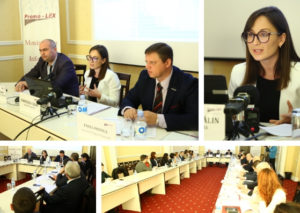
Access to Agricultural Land in Dubasari District Discussed at a Working Meeting in Cosnita

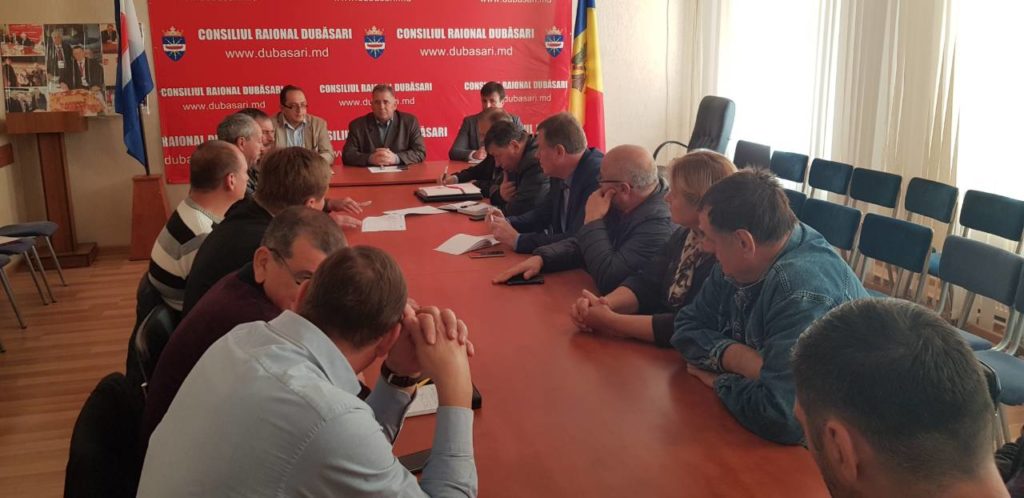
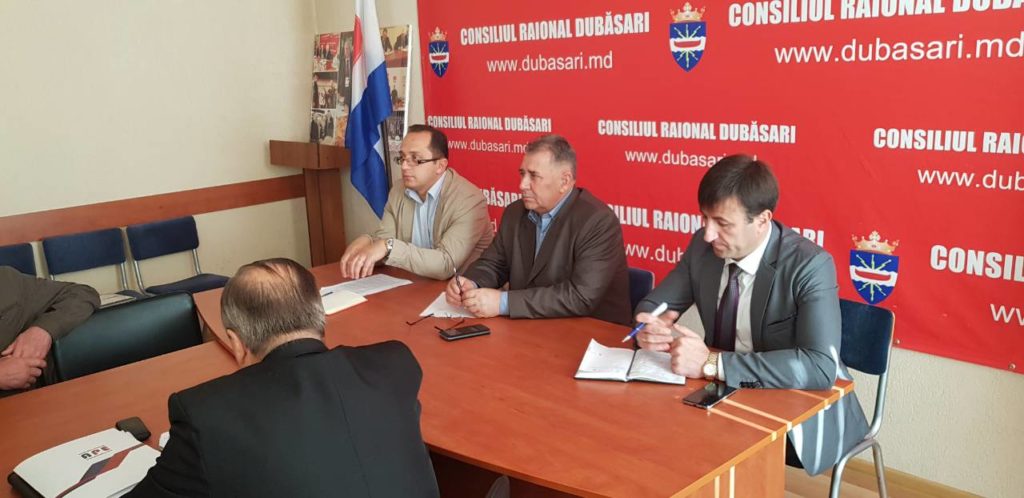
On November 7, 2018, the Promo-LEX Association organized a roundtable dedicated to “Problems and Prospects of Protection of the Right to Ownership of Land situated behind the Ribnita-Tiraspol Route”. The event was held at the Dubasari District Council in the village of Cosnita and was attended by representatives of the local public authorities of level I and II, economic agents and farmers, who own agricultural land behind the Ribnita-Tiraspol route.

Promo-LEX Association states that the issue of access to agricultural land on the left bank of the Dniester River that is under the jurisdiction of the constitutional authorities but under the control of the secessionist administration of the Dubasari district, is a complex problem that has to be analyzed from two perspectives.

 FOTO: Promo-LEX

First of all, it has to be emphasized that the ECtHR has exposed on the issue of blocking owners’ access to their land in Sandu and others v. the Republic of Moldova and the Russian Federation.  There is an opinion of a European jurisdiction that found in its judgment that there is no reason for land owners to conclude lease contracts for the land that they already own with the right of private property. Even if some policies have been implemented to mitigate the consequences of these illegalities, a number of economic agents have not been compensated for unauthorized seizure of their lands by other economic agents, who are residents of Transnistrian region, and at present, their complaints are still being examined by law enforcement bodies. There is a need to continuously monitor the respect of property right and inform the authorized institutions within the Parliamentary Assembly of the Council of Europe (PACE), to monitor the enforcement of the ECtHR rulings with respect to the complainants indicated in this case.

Another issue, which is tangential to the one exposed above, is the process of negotiation of the mechanisms that would provide the opportunity to overcome the land access crisis. Representatives of the authorities have ensured that the negotiation process takes into account the supreme interest of landowners and will not admit a repeated violation of their rights. However, several issues related to efficient land management have emerged in the process of designing new land-access mechanisms. Despite the fact that all land is distributed between people who individually or collectively cultivate the land, a large part of the areas cannot be subject to the mechanism that is to be implemented, because there are several technical problems related to documentation of the current owners, so that about 800 hectares of land are undergoing the process of documentation. Unfair competition between economic agents that had incurred immense losses in the years up to 2018, as well as some economic entities that benefited from certain subsidies, while cultivating the land taken without any permission, is another problem.

Foto: Promo-LEX

The participants appreciated the organization of the roundtable, as well as the interest of the Promo-LEX Association in the problems faced by farmers. The event was attended by representatives of the Reintegration Policy Bureau, who took note of the issues and solutions proposed by Promo-LEX experts and farmers in the region.

For information, please contact:
Natalia Munteanu, Promo-LEX Communications Officer
GSM: 069 43 70 40
E-mail: [email protected]


The Russian Federation appeals the Judgment of the ECtHR in the case of peasants from the Dubasari district before the Grand Chamber

The Russian Government has challenged the Judgement of the ECtHR in Case No.210 34/05, Sandu and others v the Republic of Moldova and the Russian Federation of July 17, 2018, whereby Russia was found guilty of violating the ownership right of more than 1,646 landowners from the Dubasari district.

The request of the Russian Government will be considered by a panel of 5 judges of the Grand Chamber of the ECtHR. The Russian Federation has requested a re-examination of Sandu and others case because it considers it has no jurisdiction over the Transnistrian region and is not guilty of violating the farmers’ property right. The authorities of the Russian Federation refer to the so-called Transnistrian bodies, which in their opinion, are guilty of blocking the peasants’ access to their own lands for more than 10 years. If the request of the Russian Government is accepted, the case will be examined by the Grand Chamber composed of 17 judges of the ECtHR, which will consider the arguments put forward by the Russian Government.

Alexandru Postica, Director of the Human Rights Program of the Promo-LEX Association, mentioned that in several Transnistrian cases, examined by the ECtHR, the referral requests for the Grand Chamber were rejected. “The issues raised by Russia are similar to the previous complaints, and the complexity of the Sandu and others case resides only in the large number of applicants. The arguments, put forward by Russia, have already been examined by the Grand Chamber, namely in the cases of Catan and others against the Republic of Moldova and the Russian Federation, 43370/04, 8252/05 and 18454/06; Mozer against Moldova and Russia, No. 11138/10″, Alexandru Postica says. The panel of five Grand Chamber judges is to express their opinion in 8 or 9 weeks. Please note that the Russian Government filed the request for a review on the last day when such a filing was possible, so it is obvious that the Russian authorities want to delay the execution of the judgement.

We remind the reader that on July 17, 2018, the European Court of Human Rights (ECtHR) found that the Russian Federation had violated the property right of Moldovan farmers from the Dubasari district, whose agricultural lands, located on the Ribnita-Tiraspol route, were seized by the administration of the Transnistrian region. Although the application submitted also targeted the Republic of Moldova, the Court found that only the Russian Federation is guilty of the violation of the applicants’ property right. In this case, the applicants are 1,646 individuals and 3 agricultural companies from the Dubasari district (Dorotcaia, Parata, Molovata-Noua, Pohrebea and Cocieri villages). The ECtHR ordered Russia to pay moral damages in the amount of 1,500 euros to each farmer and 5,000 euros to each agricultural company. At the same time, the ECtHR ordered the Russian Government to pay pecuniary damages to the three agricultural companies, worth a total of 245,000 euros. Russia also has to pay 20,000 euros as representation expenses. In total, only in this case, Russia has to pay 2 million 749 thousand 800 euros.

For more details, please contact: Natalia Munteanu, Promo-LEX Communications Officer; Mobile phone: 069437040; e-mail: [email protected]


Promo-LEX presented the Report on monitoring of the funding of political parties in the first half of 2018

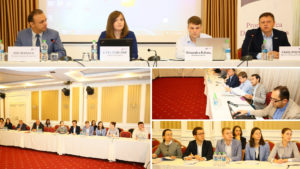
The Promo-LEX Association analyzed the financial statements of political parties for the first half of 2018, submitted to the Central Electoral Commission, and conducted the civic monitoring of the political parties funding for the same reporting period. At the round table on ‚Funding of political parties in the first half of 2018. Progress, regress or stagnation?’, held on Wednesday, 24 October 2018, Promo-LEX experts presented the findings from theMonitoring of the funding of political parties in the first half of 2018’ Report.

During the reporting period, the legal framework on the funding of political parties underwent substantial changes through the introduction of amendments that govern cash donations made by individuals, introduction of special measures aimed at providing financial support to political parties that observe the quota of at least 40% of women candidates from the total number of candidates proposed for all single-member constituencies, in parliamentary elections.

Selective attitude of the Central Electoral Commission towards political parties

Promo-LEX reiterates in this report that public interest as regards the identification data of the parties’ donors, in this case, the donors’ work place, which overlapped with the donated amount of money, prevails in the ‚Personal data protection’ equation. For the sake of transparency of the political party funding, these data are worth made public. According to Promo-LEX, the law expressly obliges the CEC to publish the donor’s residence and work place in the annual report, since by hiding these data, confidentiality is actually protected unreasonably.

Promo-LEX also raises the alarm about the CEC’s selective attitude towards political parties. So, the CEC deservedly imposes contraventional sanctions against parties, which fail to timely submit the financial statements for the first half of 2018. However, the attitude for the ruling parties is completely different, taking into account the situations widely reported in the media involving the possible simulation of collecting fees and donations.

Financial reporting by political parties to the CEC in the first half of 2018

The Promo-LEX Association notes that in the first half of 2018, 38 of 46 political formations submitted financial statements to the CEC, which is 83% of the number of political formations registered with the Public Services Agency. State subsidies are the main source of political parties funding in the first half of 2018, amounting to 19 908 403 MDL. The next funding sources are donations from individuals in the amount of 12 859 884 MDL and membership fees – 12 964 729 MDL.

Estimation of unreported expenses

Thanks to the monitoring of both central offices and territorial branches of political parties, Promo-LEX found that 14 political parties had under their management at least 212 offices, 226 employees and 49 vehicles in use and at least 1716 volunteers. At the same time, these parties conducted at least 1645 promotional activities and events. At least 4 political parties incurred expenses for the organization of 78 concerts, entertainment activities, including movie projection, social campaigns. According to estimates, four political parties (PPS, PDM, PN and PPPDA), about which the data were managed, failed to report the expenses amounting to at least 8 845 270 MDL for the organization of events.

Promo-LEX identified misstatement of the reported expenses and estimated undeclared expenses for work remuneration, public events, trips within the country and abroad for public events. The total amount of unreported expenses, estimated by Promo-LEX, on operating activities of political parties and political promotion in the first half of 2018, makes up at least 12 851 514 MDL, by 12 parties.

Charity or image transfer?

PDM, PSRM, PPS used the tool of transferring the image in promotional activities, from charity foundations or limited liability companies named after or associated with politicians. On their behalf, at least 95 charity events were carried out with the estimated expenses of at least 2 480 000 MDL –  amounts of money that political parties failed to report to the CEC, but collected dividends from them. Promo-LEX considers it necessary to regulate the activity of foundations in terms of their involvement in politically-oriented events and the transfer of images in favor of political parties or their members.

To conclude, Promo-LEX found that the quality of reporting is still imperfect in the first half of 2018. At the same time, the model of financial statement proposed by CEC does not grant full access to the financial information of political parties. The lack of certain expenses categories, as well as the lack in the statements of certain fields allow the subjects of reporting to generalize data, thus minimizing the transparency of expenses incurred under the above-mentioned categories.

The full report can be access here.

The ‘Monitoring of the funding of political parties in the first half of 2018’ Report was developed by Promo-LEX Association under the ‘Democracy, Transparency and Accountability’ Program funded by the United States Agency for International Development (USAID). The opinions presented in the Report belong to the authors and do not necessarily reflect the donors’ view.

For information, please contact:
Inga Stegarescu, Communications Officer, Promo-LEX Association;
GSM: 069 26 96 84;
E-mail: [email protected]


Promo-LEX: Lack of transparency in the activity of local public administrations

The Promo-LEX Association presented today, October 11, the Monitoring Report No. 3 on the Transparency of the Activity of Level II Local Public Administrations and ATU Gagauzia, based on the findings reported by the monitors, who surveyed the activity of the actors involved in the decision-making process over the period of 1 January to 30 June 2018.

The monitoring process aimed at studying compliance with the legal provisions and identifying the level of decisional transparency of the LPA II, giving an impetus to the civic activism and offering assistance to the LPA in order to increase transparency.

Increased use of social networks for communication with local authorities

According to the report, on-line communication channels continue to be most popular with the citizens, who want to be informed about the activity of the LPA II, recording a continuous increase compared to the previous period, i.e. social networks gained 17.14% in the second half of 2017. According to the Monitoring Report no. 3, both the LPAs II and the parties concerned prefer online sources, showing a ratio of 89.52% and 62.54%, respectively. With a 25% share, “traditional” mass media ranks second in communication preferences.

Webpages of LPAs do not provide for decisional transparency

Promo-LEX found that the webpages of LPAs II continue to ensure a low level of decisional transparency with the legal provisions in the field. However, the number of LPAs that have published, for example, the synthesis of recommendations has increased. The best results in this respect has been recorded by the authorities of the Straseni, Riscani and Cahul districts and the municipality of Balti. The LPAs from the Briceni, Calarasi, Nisporeni and Ialoveni districts are at the opposite extreme, showing the weakest results.

The number of people involved in public consultations is decreasing

Over the monitoring period, it was found that the number of people involved in public consultations decreased by 10% compared to the previous period. The reasons for such a decrease include, among other things, lack of their organization (18.51%) and lack of information (14.81%). Similarly, it has been revealed that certain categories of population, such as mothers with children and persons with special needs, faced impediments in their involvement in the decision-making processes and public consultations.

On the other hand, the accessibility of LPA buildings has increased due to the fact that they have been equipped with access ramps and a sufficient number of seats on the hallways. Similarly, LPAs significantly improved their attitude towards requests for official information.

Information on anti-corruption module is not placed on the webpages of LPAs

Positive developments have been registered with regard to the transparency of local public authorities’ activity in terms of their professional integrity. The most significant increase, by about 31%, was due to the publication of the CVs of the LPA leaders on official webpages. However, no LPA has placed information on the person responsible for anti-corruption. At the same time, the situation with anti-corruption hot-lines and institutional integrity plan remains alarming. It should be kept in mind that these requirements are mandatory, according to the existing legal norms, namely the provisions of Government Decision no. 188 on the content of LPA webpages.

The Promo-LEX Association finds a moderately positive state of affairs with regard to the transparency of public office contests. The LPA authorities, who indicated the organization of contests, largely followed the advertising conditions by placing the notice and their requirements on the webpage and in the media.

Low transparency of procurement process

It is alarming that the official webpages of LPAs ensure a low level of transparency in the procurement process, only 40% of LPAs publish reports on low-value public procurements and quarterly / semi-annual and annual monitoring reports on the execution of public procurement contracts. However, compared to the second half of 2017, we see an increase in the number of LPAs that have published information on procurement plans and annual reports on procurements.

Monitoring the transparency of decision-making process in LPAs II is a continuous activity, carried out by the Promo-LEX monitors during 2017, 2018 and 2019. Every six months, Promo-LEX will publish Monitoring Reports on the Transparency of LPA II and ATU Gagauzia.

The full report can be accessed here.

The initiative to monitor the transparency of the activity of the level II LPA authorities and that of UTA Gagauzia is funded by the United States Agency for International Development (USAID) in the framework of the Program for Democracy, Transparency and Responsibility (August 2016 – July 2019). The opinions expressed in the public reports of Promo-LEX belong to the authors and do not necessarily reflect the views of the funders.

For further information, please contact:
Inga Stegarescu, Promo-LEX Association Press Officer;
GSM: 069 26 96 84;
E-mail: [email protected]


Can Internet voting be a new tool for the elections in Moldova?

Today, 3rd October 2018, the Promo-LEX Association launched at a roundtable the “People’s perception of the information technology tools in the perspective of implementation of Internet voting” Study conducted by Livia Turcanu, independent expert. The study includes a detailed analysis of the international experience on the perception and trust in information technologies and Internet voting, of the situation in our country, as well as of the potential of using Internet voting by the Moldovan citizens.

The need for an Internet voting system is motivated by the importance of ensuring the right to vote for citizens living abroad and for other categories of voters who cannot come to the polling stations on the day of elections. Currently, there are both prerequisites that might facilitate the development and implementation of Internet voting, as well as risks in Moldova. The interviews conducted within the study reveal that the e-governance infrastructure that exists in the Republic of Moldova can facilitate the implementation of Internet voting or, at least, its testing through pilot projects.

In the same context, the study data shows that 100% of respondents of the online survey use social networks, 91% use e-commerce services, and 86% use Internet banking. In addition, 68% of respondents said that they use or know about electronic public services such as e-criminal record, e-declaration of income, etc. Thus, “the previous experience of interaction with various electronic processes, either online trade, payment with cards, use of electronic mail and social networks might influence positively people’s decision to also use electronic voting, in addition to these tools,” Livia Turcanu believes. As for the decision to use Internet voting or not, 86% of respondents said that they would use this voting option if it was introduced in the elections in the Republic of Moldova.

On the other hand, the current social-political context and the level of trust in public institutions do not favor the implementation of Internet voting. The study shows that only 11% of respondents fully agree and 21% partially agree that the level of people’s trust in the state institutions is sufficiently high for the implementation of an Internet voting system. The study also points out that, even the testing of Internet voting would imply considerable costs and efforts from the stakeholders.

In conclusion, the author of the study says, “at the legislation level, it is necessary to amend the legal framework to include both the regulation of the technical aspects of Internet voting and the procedures of the election process management and other operations in the context of a voting mechanism that is based on information technologies as well”. At the same time, people’s trust in the public administration and the democratic processes are at the basis of Internet voting that is practiced successfully in countries like Estonia or Switzerland. In this regard, the relevant institutions of the Republic of Moldova should work hard to increase people’s trust in the democratic processes, thus ensuring a fair and transparent election system.

The study also makes a set of recommendations, such as: obtain the trust and participation of the key stakeholders who are interested in the development of the Internet voting system; provide access for the diaspora to the electronic signature tools; ensure a high level of transparency of the process; gradually implement pilot projects, etc. All these are meant to

contribute to enhancing people’s trust in information technologies with a view to implement Internet voting,

*The “People’s perception of the information technology tools in the perspective of implementation of Internet voting” Study is conducted under the “Democracy, Transparency and Accountability” Program funded by the United States Agency for International Development (USAID). The opinions expressed in the Study belong to the authors and do not necessarily reflect the point of view of the donor.

For more information, please contact:
Inga Stegarescu, press officer of the Promo-LEX Association
GSM: 069 26 96 84
E-mail: [email protected]