Assessment findings on the implementation of CEC and CICDE’s strategic plans

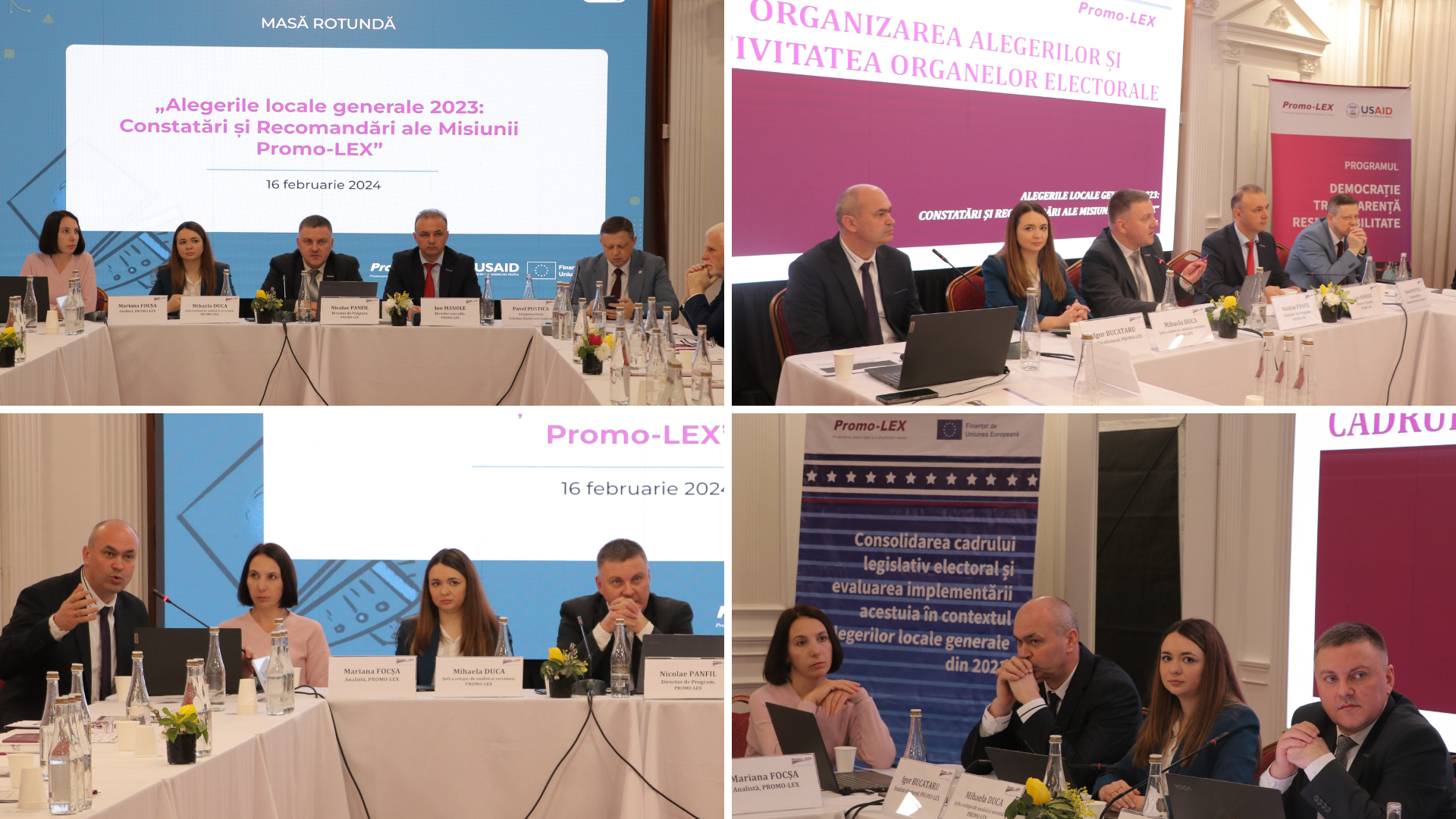
Today, 11 July 2024, Promo-LEX presented its report entitled “Implementation of Strategic Plans of the Central Electoral Commission and the Centre for Continuous Electoral Training” (Annual assessment: 2023 and Summing-up report: 2020 – 2023). The report presents an analysis of the development priorities and activities scheduled by CEC and CICDE for the monitored period.

CEC and CICDE’s 2023 achievements

In 2023 CEC committed to achieve 44 tasks related to 20 strategic activities. According to the Promo-LEX assessment, the electoral authority managed to achieve only 36% (16 out of 44) of all planned tasks, while 34% (15 out of 44) were partially achieved and 30% (13 out of 44) remained unachieved. The main achievements include amended regulatory framework, funding supervision and control for political parties and pre-election campaigns, renewed technical equipment to be used by electoral bodies, and election-related training of judges, prosecutors and journalists. However, CEC was challenged by publishing data on the funding of political parties and pre-election campaigns, the functioning of the financial control system and the creation of a voter profile.

As for CICDE, in 2023 the institution committed to achieve 40 tasks related to 16 strategic activities. Promo-LEX estimated that CICDE achieved 88% (35 out of 40) of all planned tasks, while 7% (3 out of 40) were partially achieved and 5% (2 out of 40) remained unachieved. CICDE’s main achievements include diversified partnerships and attracted external funds, as well as promotion of electoral education in schools and universities. However, CICDE had some challenges in having the training courses accredited and retaining experienced trainers.

Degree of CEC and CICDE’s entire strategic plan implementation (2020-2023)

In 2020-2023, CEC obtained the following results: 42% (39 out of 94) of all planned tasks were achieved, while 36% (34 out of 94) were partially achieved and 22% (21 out of 94) remained unachieved. CEC’s main achievements included optimized work processes and established sanctions for violating party funding rules. During the same period, CICDE achieved 91% (62 out of 68) of all planned tasks, while 8% (5 out of 68) were partially achieved and 1% (1 out of 68) remained unachieved. CICDE’s main achievements included electoral education integrated in schools and universities and an improved remote learning platform.

“As for CEC’s activity, certain challenges were identified that prevented the implementation of the Strategic Plan. Here we should mention that the elections were organized and carried out under new provisions, companies were identified that could develop software applications, and the implementation of some activities within the Strategic Plan was not within the institution’s competence. CEC’s results are moderate, despite the considerable effort that has been made. Thus, 44% of the tasks were taken and included in the new Strategic Plan 2024-2027. CICDE also faced certain challenges, among them the amended electoral legislation and the limited availability of experienced trainers. CICDE obtained very good results, having achieved 91% of the proposed tasks”, stated Mariana Dobrovolschi, electoral analyst, Promo-LEX.

Recommendations

Having monitored how CEC and CICDE’s 2020-2023 activities were implemented, Promo-LEX Association formulated several recommendations, such as:

  • Include major activities of strategic value in Strategic Plans;
  • Monitor on a regular basis the implementation of activities and assess the results achieved;
  • Adjust annual Strategic Plans;
  • Maintain constant collaboration with public authorities, civil society organizations and development partners;
  • Continue efforts to accomplish unachieved and partially achieved tasks.

“This report concludes the effort to monitor the Strategic Plans of the Central Electoral Commission and the Centre for Continuous Electoral Training for 2020-2023. The Central Election Commission and the Centre for Continuous Electoral Training have already approved strategic programs for the next period of 2024-2027. In this regard as well, our recommendations focus on the way to formulate tasks, objectives, activities and indicators, as well as on the way to implement them”, said Mihaela Duca-Anghelici, head of the analysis and research team, Promo-LEX.

The report “Implementation of Strategic Plans of the Central Electoral Commission and the Centre for Continuous Electoral Training” (Annual assessment: 2023 and Summing-up report: 2020 – 2023) can be accessed here.

The report “Implementation of Strategic Plans of the Central Electoral Commission and the Centre for Continuous Electoral Training” (Annual assessment: 2023 and Summing-up report: 2020 – 2023) was prepared within the “Democracy, Transparency and Accountability” program funded by the United States Agency for International Development (USAID). Promo-LEX Association has been monitoring the activity of CEC and CICDE since 2016 to strengthen the authorities’ accountability towards citizens and ensure fair, representative and competitive elections. The opinions expressed in the monitoring report belong to the authors and do not necessarily reflect the views of the funders.


For further information please contact:

Dumitrița Ciuvaga
Communications Manager
Promo-LEX Association
Tel.: +373 68 800 827


Political party funding in Moldova. Retrospective 2023: Growing dependence on state budget appropriations and unreported expenditures

Today, Promo-LEX presented its report on “Political party funding in Moldova. Retrospective 2023”. The document contains civic monitoring findings on the funding of political parties through the lens of their 2023 activities. The event brought together representatives of state institutions, such as the Parliament, CEC, the State Tax Service, the National Anti-corruption Centre, the Constitutional Court and the Court of Accounts, representatives of political parties and CSOs, as well as development partners.

According to the report, 2023 was marked by the entry into force of new legal provisions pertaining to political party funding. The most important changes concerned the prohibition for political parties to organize charitable (philanthropic) or sponsorship activities; the lowering of the cash donations ceiling to one average salary per economy; and the elimination of the limit of 3 average salaries per economy for donations made by citizens with income earned abroad, etc.

For the first time in Moldova, a political party has been outlawed after the Constitutional Court declared the Shor party unconstitutional, which led to its removal from the state register of political parties.

The monitoring revealed that the resources and efforts of investigative authorities have been activated in an unprecedented manner for Moldova to check the financing of political parties and preelection campaigns. Thus, a number of criminal cases were started against political parties for submitting fake financial reports, as well as for knowingly accepting funding from an organized crime group.

Political party income reporting

Promo-LEX found that the SSI “Control Financiar” information system, which is the main tool used for financial reporting, had operated with faults. This had a negative impact on the submission of financial reports, in the prescribed timelines and format, both for first quarter and annual reporting.

For 2023, 75% political parties submitted annual financial reports. Respectively, 92% submitted reports for the first quarter and 87% – for the second quarter. The reporting deadlines are July 15 for the first quarter, January 15 for the second quarter and March 31 for annual reports.

In the reporting period, only 34 out of the 61 registered political parties reported revenues totaling MDL 54.9 million. Another 22 parties reported “zero” income. The highest revenues were reported by PAS (41%), PSRM (18%), PSDE (9%), PCRM (7%), PN and PPPDA (6% each).

Once again, we found an increase in political party dependence on public funding sources – 84%, which is 2 p.p. more than in 2022. Income originating from state budget appropriations was reported by 23 political parties, totaling MDL 45.7 million. The largest share went to PAS (41%), PSRM (22%), PSDE (11%), PN and PPPDA (7% each). In the case of 10 parties, this was the only source of income. For comparison, in the European Union, the ratio of public and private sources in party revenues is 65% to 35% (in the newer democracies in Eastern Europe) and 55% to 45% (in consolidated democracies).

“The Republic of Moldova has far exceeded the EU average. This is a worrying trend in a context where most political parties seem to make no effort to attract financial support from citizens. We believe that political parties need to work more to involve and politically empower citizens, which will also help diversify the sources of funding for party activities. In this regard, the possibility should be considered to revise how state budget funds are provided depending on the amount of income obtained by parties from private sources”, said Mariana Focșa, finance analyst, Promo-LEX.

Income obtained from financial donations was reported by 18 parties, totaling MDL 4.8 million. According to the declared sources of income, 90% donations originated from salaries, 5% – from pensions, 3% – from unemployed people, and 1% – from scholarships and social benefits. In this context, only 19% of the total donations made by individuals exceeded the amount of 3 average monthly salaries per economy, to be verified by CEC.

Promo-LEX estimations of unreported expenditures by political parties

Promo-LEX identified several categories of expenditures in which the Association’s estimates are different – in some cases significantly – from the information reported to CEC. As a reminder, in the civic monitoring process, Promo-LEX estimates the parties’ expenditures on political promotion activities and compares them to those reported to CEC.

In 2023, the Association observed more than 2,500 political promotion activities organized by 24 parties, as well as 38 political activities carried out by the ex-PSPS/Ilan Shor’s Team. These included the distribution of political information materials, parties’ statutory activities and national travels. Most were reported for PAS, PSRM, ex-PPȘ/Ilan Shor’s Team and PR and CUB.

Thus, Promo-LEX estimated unreported expenditures of at least MDL 20.3 million by 24 parties and the formation lacking a legal status, ex-PPȘ/Ilan Shor’s Team. Of these, almost MDL 17 million (82%) were estimated for the ex-PPȘ and its affiliates – ȘANSĂ and PR. Most estimated expenses were made for political promotion events (46%), press and promotional materials (20%) and the renting/maintenance of premises (18%).

During the event, Promo-LEX made several recommendations to state institutions and political parties.

“A specific recommendation to the Parliament concerns the retrospective legal and impact assessment of the new legal framework relevant to the funding of political parties and preelection campaigns. Our advice is to regulate political and electoral funding by third parties. The Central Electoral Commission is advised to systematically publish information on started proceedings as a result of its political party funding supervision and control activities with a view to increasing transparency, as well as to extend the criteria for checking donations made to political parties beyond those exceeding 3 average salaries per economy”, said Mihaela Duca-Angelici, head of the analysis and research team, Promo-LEX.

The report on “Political party funding in Moldova: Retrospective 2023” is available here.

During 26 July 2016 – 31 March 2025, Promo-LEX Association is implementing the Democracy, Transparency and Accountability program funded by the United States Agency for International Development (USAID). As part of this project, the Association aims to monitor the funding of political parties, in particular, by observing and estimating the costs of their activities, as well as party finances as reported to CEC as the mandated authority.


For additional information please contact:

Dumitrița Ciuvaga
Communicator
Promo-LEX
Tel: +373 68 800 827


Preliminary findings of Promo-LEX Observation Mission on the organisation of the election campaign and conduct of election day on 19 May 2024

Promo-LEX observers monitored the conduct of new local elections and by-elections – the first of their kind after the 2023 general local elections – in nine localities across the country.

In five localities, the elections were held due to the small number of candidates or even the lack of candidates in last autumn’s elections, and in four – because the mayors elected in November 2023 were subsequently elected as rayon presidents.

In two of the nine localities – the villages of Chioselia Rusă and Cotovscoe (ATU Gagauzia) – people voted for both mayors and local councillors; in the v. Sagaidac (r. Cimislia), c. Tîrnova (r. Dondușeni), c. Hănăsenii Noi (r. Leova) and town of Bucovăț (r. Strășeni) – votes were cast only for mayors, and in c. Cealîc, s. Cairaclia and c. Salcia (r. Taraclia) – only for local councillors.

The following information was collected and reported by three long-term observers (LTOs) and seven short-term observers (STOs), who monitored each of the 13 constituted polling stations (PSs).

Overall, the elections were organised and conducted transparently and efficiently by the CEC. The permanent chairpersons of the level II electoral councils (CEC II) were also actively involved. However, the lack of a permanent electoral body, in the case of the Autonomous Territorial Unit of Gagauzia (ATUG), hindered the work of the lower electoral bodies in ATUG. In addition, at least at the initial stage of the training and work of electoral officials in ATUG and Taraclia, there were difficulties due to their insufficient knowledge of Romanian.

The data on the number of voters was transparent and access was given to the electoral rolls. Candidate registration was carried out according to the rules.

The election campaign was not very active, with most of the actions taking place in the last week before election day. The main way of campaigning has been door-to-door. In some localities Promo-LEX observers identified rumours of voter bribery, but the information could not be verified. There was little interest in the campaign from local and regional media. Observers encountered no obstacles in monitoring the elections.

Election Day. Opening procedures were observed in six PSs. Polling stations opened without delay. At the same time, only in one polling station the opening solemnity was ensured by singing the anthem and displaying the state flag. Cameras did not record the entire opening process in two polling stations (22/27; 33/21), and in one station (13/26) there was no safe for keeping ballot papers not distributed to polling station staff.

Basically, voting on election day was efficiently organised and ran smoothly. However, Promo-LEX observers reported 24 incidents, most of which related to unjustified group voting (6 cases – 11/39 Sagaidac), violation of the secrecy of voting (4 cases – 33/26 Salcia, 11/39 Sagaidac), interruption of the filming process (3 cases – 33/26 Salcia, 22/27 Hănăsănii Noi, 33/21 Samurza) and unjustified presence of unauthorised persons (3 cases – 22/27 Hănăsănii Noi, 11/39 Sagaidac).

The polling stations were closed according to the rules. The counting of votes by the electoral bodies was carried out swiftly. At the same time, four polling station offices (11/39 Sagaidac, 13/25 Tirnova, 33/22 Cealic, 36/57 Cotovskoe) ignored the rule whereby only one member had to present the ballot paper for counting. One polling station (13/25 Tîrnova) was insufficiently lit and in another (33/22 Cealîc) the video camera was not placed next to the vote counting table.

The observation mission also carried out a parallel vote count. According to Promo-LEX preliminary findings, all polls are valid and in four localities mayors were elected in the first round (see the table). In two other localities (Bucovăț and Tîrnova) the second round of elections will be held in two weeks’ time.

N. Locality Elected Mayor CEC preliminary results Promo-LEX preliminary results Difference
1. Hănăsenii Noi, Leova Lungu Iurie, PAS 229 (60.42%) 229 (60.42%)
2. Chioselia Rusă, ATUG Gospodinov Gheorghi, independent 240 240
3. Cotovscoe, ATUG Palic Gheorgi, independent 262 262
4. Sagaidac, Cimișlia Cojocaru Ion, PAS 412 (61.40%) 412 (60.42%)


Parallel counting of votes obtained by candidates for local councillor positions also confirms the preliminary results presented by CEC.

The minutes, according to the Mission, were completed by EBPS without errors.

Promo-LEX Association is an NGO having the largest experience in election monitoring at national level. Since 2009, this is the 27th Mission organised with the involvement of more than 17 thousand national observers. The purpose of the Observation Missions is to inform the public about the organisation and conduct of the elections and to increase confidence in the electoral process. The Observation Mission is taking place with the financial support of the United States Agency for International Development (USAID).

For more information:

Dumitrița Ciuvaga
Communicator
Promo-LEX Association
Tel: +373 68 800 827


Promo-LEX launches an Observation Mission for the by-election and new election of May 19, 2024

Today, April 10, 2024, Promo-LEX launched an Observation Mission (MO) for the new local election and by-election of May 19, 2024. Observation of the election process will cover the pre-election period, as well as the election day, including the second round of election in the towns and villages where it will occur.

The election will be held in 9 constituencies. Both mayors and local councilors are to be elected in two of them – the villages of Chioselia Rusa and Cotovscoe (ATU Gagauzia), only mayors – in the villages of Sagaidac (Cimislia district), Tirnova (Donduseni district), Hanasenii Noi (Leova district) and Bukovat (Straseni district), and only local councillors – in the villages of Cealic, Cairaclia and Salcia (Taraclia district). This is the first by-election and new local election held after the 2023 general local election.

The need to hold a new election and by-election in Chioselia Rusa and Cotovscoe (ATU Gagauzia), Cealic, Cairaclia and Salcia (Taraclia district) was caused by a small number of candidates or even by a lack of them where the candidate was taken off the list. For the first time in the history of local elections in Moldova, there were no candidates for the position of mayor, or local councils could not be set up in a legal manner because the number of validated mandates was below the legal requirement.

In this context, Promo-LEX Association recalls that one of the solutions to the problem above could be to build the capacities of local communities and local public authorities, including through the efficient implementation of the administrative and territorial reform.

In the case of new elections of mayors in the villages of Sagaidac (Cimislia district), Tirnova (Donduseni district), Hanasenii Noi (Leova district) and Bukovat (Straseni district) the election will be held on the grounds that the persons elected in November 2023 subsequently chose to act as district chairpersons rather than mayors.

In this context, we recall the provisions of Article 52 of the Electoral Code on the compensation of costs related to organizing and conducting elections. According to the law, in case of circumstances leading to the termination of a mayor’s mandate before the expiry of 12 months from the date of the decision validating the mandate, the electoral competitor who nominated the candidate elected as mayor shall compensate the state budget-funded costs related to organizing and conducting elections. Although the Central Electoral Commission initiated the drafting of the Regulation on compensation of costs related to organizing and conducting elections as early as January 25, 2024, the draft has not yet been published for public consultations.

Based on the experience of observing the general local election in 2023, Promo-LEX reiterates a series of recommendations that can be applied to this election by electoral bodies and courts of justice:

  • organize mandatory training for all election officials, including as part of the certification process;
  • examine appeals and provide solutions in a short time, so that the applicants can enjoy the right to an effective appeal;
  • ensure the transparency of electoral competitors’ financial reporting in the context of elections, including publication of information in compliance with open data principles;
  • have higher electoral bodies check cases of councilor candidate lists registered with alleged violations of the minimum representation quota of 40% for both genders;
  • provide timely technical and material support to lower electoral bodies to ensure their seamless work.

Promo-LEX Association is a non-governmental organization with the most extensive experience of monitoring elections at the national level. Since 2009, Promo-LEX has monitored 26 elections (local, parliamentary and presidential) involving over 17 thousand national observers. The purpose of Observation Missions is to inform the public about how elections are organized and conducted, as well as to increase citizen confidence in the electoral process.


Promo-LEX Association Calls for Equitable and Inclusive Postal Voting Pilot

Promo-LEX Association has issued an opinion on the draft law on the piloting of postal voting, a document to be presented today during public consultations organized the Moldovan Parliament’s Legal, Appointments, and Immunities Committee. This submission offers a comprehensive critique and set of recommendations, delving into the vital concerns and issues surrounding the deployment of this voting method.

Understanding the backdrop of the postal voting initiative is crucial to grasp its significance. The heightened diaspora participation observed in recent electoral events, notably the 2020 presidential and the 2021 early parliamentary elections, underscored the necessity for alternate voting options. These elections were marred by difficulties such as extensive queues and shortages of voting materials, underscoring the imperative for additional voting mechanisms.

Promo-LEX has articulated the critical need to embrace postal voting as a viable and necessary option, acknowledging the global precedent and the imperative to safeguard every Moldovan citizen’s voting rights, irrespective of their geographical location.

However, the assessment presented raises several concerns and identifies notable deficiencies within the proposed legislation. A primary issue highlighted is the challenge to the universality and equality of the vote. The draft law’s approach to restrict postal voting piloting to only US and Canada-based voters stands in conflict with the core principles of universal and equal suffrage. Consequently, Promo-LEX advocates for the expansion of postal voting to encompass all eligible voters desiring to utilize this alternative voting mechanism.

The document further underscores the critical need to adhere to international standards and constitutional mandates in rolling out postal voting. It emphasizes the paramount importance of maintaining transparency throughout the process, guaranteeing every voter’s right to a free and secret ballot. Consequently, further measures are therefore required to prevent external pressure, corruption and fraud in postal voting.

Furthermore, Promo-LEX experts identify several deficiencies and ambiguities in the drafting process of the proposed legislation, urging for its submission to public consultation prior to its adoption. The organization’s recommendations are directed towards refining the draft law to align with democratic standards and electoral principles, notably through securing affirmative assessments from esteemed international entities like the Venice Commission and the OSCE/ODIHR.

In conclusion, Promo-LEX Association expresses its support for the implementation of postal voting, but emphasizes the necessity of a thorough and transparent procedure in drafting and adopting the law, so as to guarantee the protection of electoral rights for Moldovan citizens.

The full opinion can be consulted here.


Sheriff, the Russian special services and their network of human rights violators in the Transnistrian region

Over 400,000 people live in the temporarily occupied territory of the country, in an environment that fundamentally contradicts democratic citizenship and human rights. This profoundly antidemocratic and illiberal order has been developed and consolidated for over 30 years not by abstract entities, but by specific individuals within the Transnistrian structures. For these individuals, the language of democracy, justice, and fundamental freedoms represent a threat to their authoritarian and discretionary power. Therefore, they have invested resources and exploited the vicious climate of impunity to institute and impose various repressive mechanisms.

Although this situation has persisted for over three decades, in the past three years, we have observed how critical and dissenting voices are portrayed as a threat to the security of the Transnistrian region. Freedom of expression has become a form of extremism, while reporting cases of torture is labeled as spreading false information. This alarming state of affairs led to the conviction of Victor Pleșcanov in 2022 for displaying the Ukrainian flag on the balcony of his apartment in Tiraspol, and the accusation of Vadim Pogorlețchi of treason for openly expressing opinions and photographing military unit no. 4043 in Tiraspol.

Since 2018, we have monitored the actions of leaders and representatives of Transnistrian structures who have adopted abusive decisions, ostracized critical voices, and subjected them to inhumane treatment, to bring these injustices to the public’s attention. We started with the conviction that authentic justice cannot exist for the region’s inhabitants as long as we do not know who are the initiators of these repressive mechanisms and who executes the illegal orders dictated by the leaders of Transnistrian structures. Identifying these individuals becomes even more important as data regarding Transnistrian representatives are increasingly classified, and access to information of public interest is drastically limited.

The analysis conducted by Promo-LEX shows that human rights abuses and violations are not committed solely by a small group of people, but by a network of individuals and structures affiliated with the Sheriff conglomerate and Russian services. Among those responsible for human rights violations in the Transnistrian region are alleged deputies from the so-called “Obnovlenie” party (“Renewal” in English), individuals who have held positions in “Sheriff” holding and continue to enjoy its support, as well as individuals who have built careers in Russian security structures. Some of them vehemently advocate for aligning with Russian legislation and replicating the Russian autocratic model in the left bank of the Dniester and Bender municipality.

The analysis also reveals that most of the abuses and violations committed in 2022 and 2023 against individuals or groups lacking protection are justified under the guise of security concerns and norms which are invented, exaggerated, and completely unfounded. The concepts of security and extremism are deliberately distorted by the leaders and representatives of the Transnistrian structures. In this way, they have been able to claim the role of securitization agents to institute exceptional measures and fortify a culture of fear.

This analysis does not represent a verdict and cannot replace the tasks of the justice system in any way. However, it reflects some of the alarming realities in the Transnistrian region of the Republic of Moldova and highlights the serious repercussions of impunity: the lack of protection for the region’s inhabitants and the systematic expansion of authoritarian patterns of Transnistrian structures.

Instead of conclusions, it is worth mentioning that, up to this point, we have managed to identify over 400 individuals responsible for human rights violations in the Transnistrian region. None of the identified individuals has been held accountable for their actions, despite authorities repeatedly stating that they will take prompt measures to hold them accountable and deter future transgressions.

The analysis can be accessed here.


Findings and recommendations of Promo-LEX Mission regarding the 2023 general local elections

General local elections of 5 (19) November 2023 have proved that the electoral legislation, applied for the first time, still needs improvement, and that changes to the legal framework during the electoral period have a negative impact on the fairness, transparency, predictability, and integrity of the electoral process. Lessons learned from the local election were discussed during a round table organized by Promo-LEX, attended by representatives of electoral bodies, other relevant institutions, political parties, judicial bodies, and civil society organizations.

When bringing forward the main findings and recommendations of the Observation Mission (OM), Promo-LEX analysts emphasized that elections took place in a challenging political, internal, and external context, shaped by several phenomena (military aggression against Ukraine and Russia’s hybrid war in Moldova; the unprecedented declaration of unconstitutionality of a political party in Moldova, political “migration” of mayors, etc.) which influenced the conduct of the election.

Overall, Promo-LEX evaluated the administration and conduct of election by electoral bodies as positive. CEC has been able to handle its duties, even though they were more complex given the new electoral legislation. However, the institution also faced challenges such as insufficient human resources; delayed adjustment of the legal framework to the provisions of the Electoral Code; certification procedure for new electoral officials; processing and timely publication of reports on campaign financing, as well as appeals and complaints filed by electoral actors. The heavy workload assigned to lower electoral bodies, especially ECEC I, which at times seems to have exceeded their capacities, has created difficulties in managing the electoral process.

Changing the rules of the game mid-game

Conducting the election during a state of emergency and through amendments to the Electoral Code made during the electoral period, including as a result of declaring a political party unconstitutional due to opaque and illegal financing, has sparked a cascade of uncertainties that demand to be addressed in the context of future elections.

Although the party declared unconstitutional was dissolved, its leaders continued to be involved in the electoral campaign through other parties resurrected on the eve of the elections or independent candidates. Approving changes to the existing legal framework, including by involving, contrary to the principle of legal certainty, the Commission for Exceptional Situations in restricting the right to be elected and in cancelling the registration of candidates, had a negative impact on the fairness of the electoral process and on the rights to elect and be elected. Such circumstances have created uncertainties for voters, electoral bodies, and electoral competitors, and transparency and predictability of the electoral process have been affected.

We recall that according to the Code of Good Practice in Electoral Matters, the stability of electoral legislation is one of the fundamental conditions of a democratic state based on the rule of law, and an important element of the credibility of the electoral process. Promo-LEX recommends that the Parliament refrain from approving amendments to electoral legislation during the electoral period or if there are objective circumstances warranting amendment, the law should be enforced in the next elections. We also emphasize that for an electoral process to be fair, where all electoral competitors enjoy equal opportunities, same rights to elect and be elected, the Exceptional Situations Commission must not intervene.

Promo-LEX found other legal issues that are not sufficiently regulated in the new electoral legislation and need to be solved. These refer, among others, to uncertainties regarding implementation of the restriction on the right to be elected for persons deprived of the right to hold managerial positions, the support of electoral competitors by subjects other than those who appointed them, the requirements for cancelling the registration of some electoral competitors and the image transfer from a political party that was declared unconstitutional to a political party registered in the electoral race, the control of the constitutionality of provisions in electoral matters, the late resolution of electoral disputes by removing the exception of unconstitutionality.

Illegal financing and misuse of administrative resources

According to Promo-LEX, among the most serious violations in the campaign remain the misuse of administrative resources and illegal financing. Although the electoral and related legislation has been tightened, there is no significant decrease in the number of such cases compared to the last general local elections.

According to Promo-LEX Observation Mission, 185 cases of administrative resource utilization were reported, particularly involving the engagement of individuals with public positions in campaign activities (61), organisation of electoral meetings within public institutions, with the employees of those institutions, during their working hours (56), and candidates attributing credit for public works/services carried out using public funds (41).

Promo-LEX observers have also identified at least eight cases that can be qualified as electoral gifting. In addition, security and law enforcement bodies state that there was also one case of systemic electoral corruption of both candidates and voters, which led to the cancellation of registration of candidates nominated by SP in all electoral constituencies.

More transparent reporting of campaign financing

The new electoral legislation strengthened the role of CEC in the supervision and control of the financing of electoral campaigns. In addition, even though the new Electoral Code seems to facilitate the process of opening the “Electoral Fund” account, just like in the case of the previous elections, several political parties have informed about the commercial banks’ refusal to open this account.

The late approval of the relevant regulatory framework appears to have created difficulties for competitors in filling in and submitting reports. However, Promo-LEX OM has found a relatively high degree of submission of financial reports by competitors at CEC. In addition, submission of reports by independent candidates to ECEC remains incomplete, though more transparent than in the previous local elections.

Out of 36 political formations that nominated candidates, 32 political formations submitted at least one campaign finance report, and 27 submitted weekly financial reports/corresponding information, including the final report. Even though in the first stages CEC was unable to publish the reports within legal terms, the process has improved along the way. The main financing sources, according to the reports, are income accumulated from individuals (donations) – 51% and own funds held on the accounts of political parties (34%).

As a result of the civic monitoring, Promo-LEX OM estimated unreported expenses for at least 4,743,455 lei. The most unreported expenses were estimated for PS (38%), followed by PSRM (16%) and PR (12%). Unreported expenses made up for 13% of the total reported expenses. Their share has decreased compared to the previous three national elections (the share of unreported expenses from the total reported ones for the parliamentary elections in 2021 was 32%; for the presidential elections in 2020 – 39%, and for the local elections in 2019 – 31%).

Although the campaign financing seems to have been more transparent, we still consider it to be low and requiring further attention. We recommend again adding provisions to the Electoral Code to regulate political and electoral financing by “third parties” more effectively.

Less hate speech than in the parliamentary and presidential elections.

The level of hate speech usage in the 2023 local general elections (102 cases) was much lower compared to the parliamentary elections in 2021 (299 cases) and the presidential elections in 2020 (448 cases); however, it remained at the same level as in the previous local elections in 2019 (101 cases). The main sources of spreading hate speech remained social media (54 cases) and the mass media (34 cases).

Next, hate speech was mainly used by men (89 cases), aged between 35-50 years (72 cases). The criteria that most often formed the basis of hate speech were “political affiliation” (69 cases), “sex/gender” (37 cases), “health” (27 cases), “professional activity” (11 cases) and “sexual orientation/gender identity” (11 cases). Of the total number of hate speech authors, 53% were electoral competitors and politicians. LGBTQI people continue to be the target of the most aggressive forms of hate speech. Marital status, gender roles, physical appearance, etc. formed the basis of sexist speeches directed against women in particular.

Promo-LEX notes a positive dynamic regarding the public authorities’ reaction to hate speech in the context of the 2023 general local elections. The number of registered complaints and documentation of alleged cases of hate speech is increasing compared to the last four years.

All the findings and recommendations of the Promo-LEX Observation Mission for 2023 general local elections are included in the FINAL REPORT, which can be accessed here.

The report and the communiqué have been prepared within the framework of the Observation Mission for General Local Elections of 5 (19) November 2023, carried out by Promo-LEX Association with the financial support of the United States Agency for International Development (USAID) under the “Democracy, Transparency and Accountability” Program and of the European Union under the “Enhancing the electoral legal framework and assessment of its implementation during 2023 local general elections” Project.


OPINION of the Promo-LEX Association on holding the republican referendum on the same day with the parliamentary or presidential elections

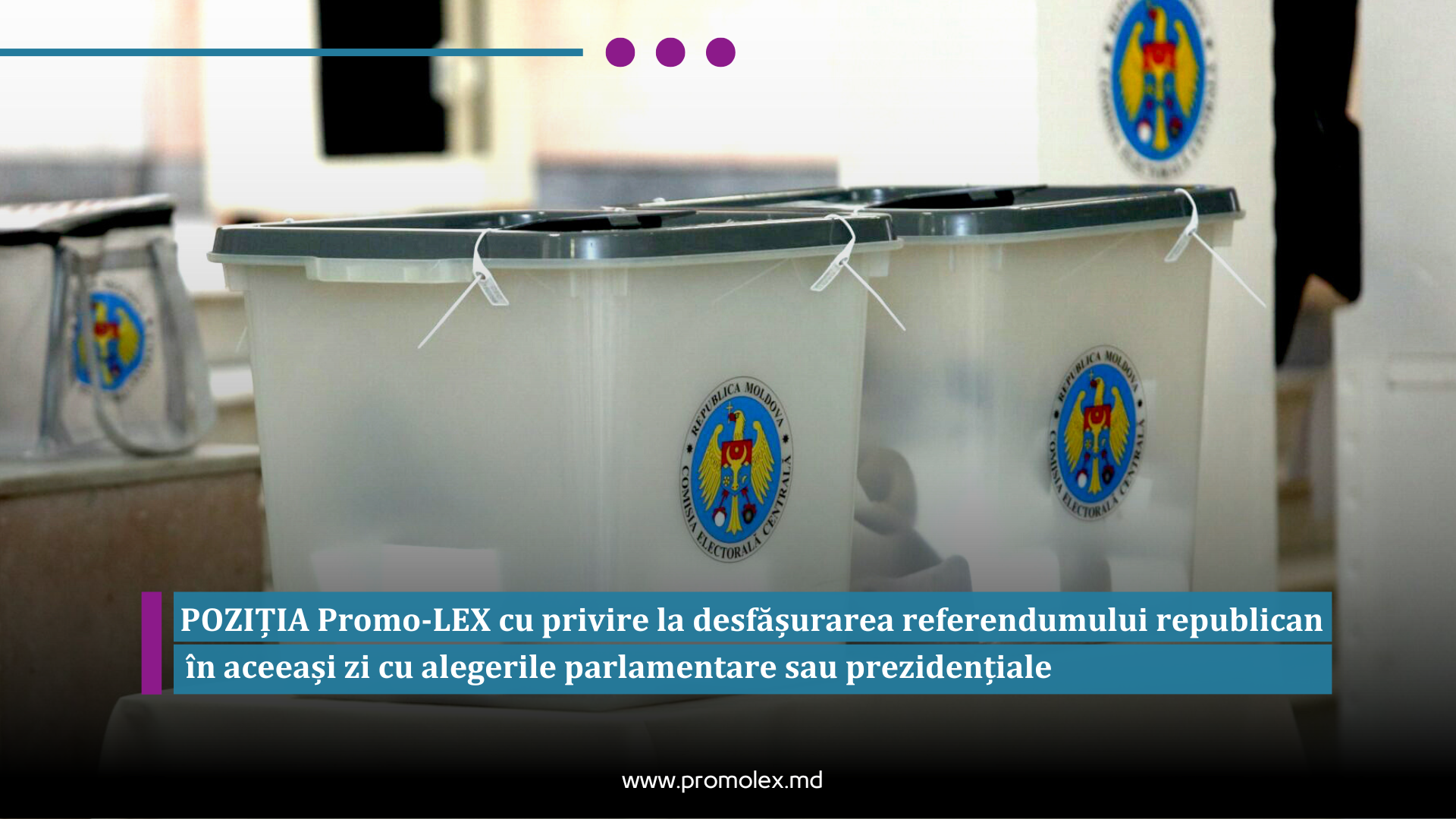
The Promo-LEX Association recommends the Parliament to review its initiative on the possibility of holding the republican referendum and the parliamentary or presidential elections simultaneously, in the context of the re-examination of the draft law, included in the agenda of the plenary session on Thursday, 18 January.

The Promo-LEX considers that art. 184 para. (2) of the Electoral Code which stipulated that the republican referendum cannot take place on the day of the parliamentary, presidential and general local elections should not be amended, as its provisions are in accordance with the recommendations of the European reference institutions in the field of democracy and international and national election observation missions.

We emphasize that the amendment of that article, which makes organizing the republican referendum and the presidential and parliamentary elections on the same day possible, was approved on 28 December 2023, by ignoring the legislation on decision-making transparency during consultation, debate and voting. Furthermore, it is not clear what are the reasons for amending the legislation from arguments presented by the author of the amendment on the organization of the referendum simultaneously with other elections.

The subject of European integration is one of strategic public interest for the Republic of Moldova, which should not be “adopted” or “monopolized” for electoral purposes by a certain political force. The fact that the initiative to organize the referendum on the same day with the presidential elections comes from a future candidate in the elections can give him/her an advantage over other candidates. We mention, in context, that the importance of the European path for the future of the Republic of Moldova as a democratic state and society has been demonstrated over the years by several governments of different political colors. Furthermore, at least 28 (45%) political parties out of the 63 registered ones, according to the Public Services Agency page, have included the desired “European integration” in their charters.

If the Parliament or another public authority will still decide to initiate a referendum for the 2024 autumn, simultaneously with the presidential elections, we believe that it should be a constitutional one, which would produce binding legal effects, given the issue of major national interest of the expected referendum. A possible constitutional referendum would imply supplementing the Constitution with rules on guaranteeing the European path of the Republic of Moldova, thus being more justified in terms of legal effects and organizational costs.

The Promo-LEX has previously expressed that the simultaneous holding of the referendum with the elections for various elective positions can affect the free expression of will of the people both during the referendum and the elections.

The full opinion can be consulted here.


The activity of the Parliament of 11th legislature through the prism of civic monitoring: findings, opinions, and recommendations

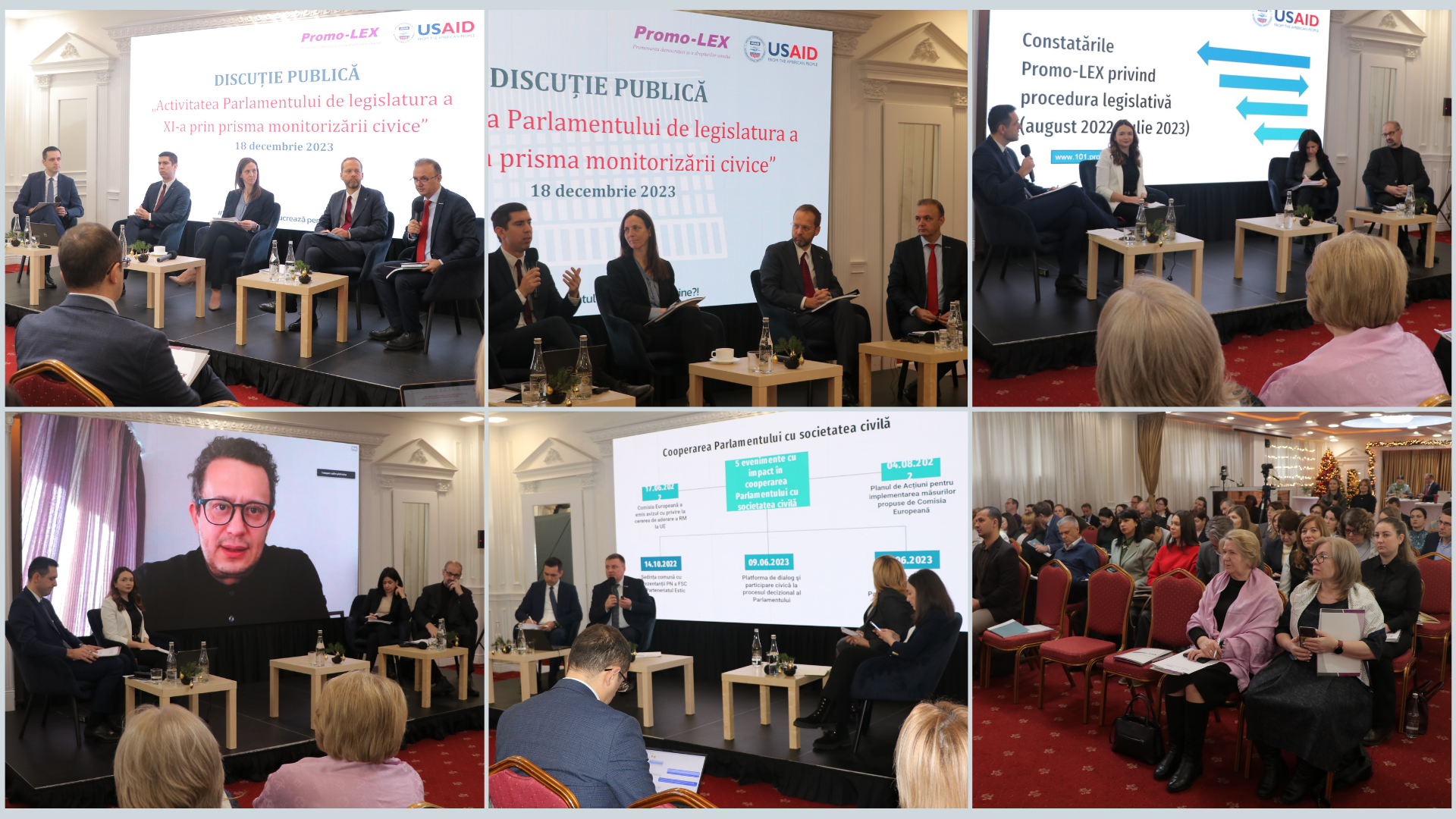
Compliance with the legislative procedure and decision-making transparency, the Parliament’s communication with citizens and stakeholders, and the Parliament’s exercise of parliamentary control are some of the issues addressed today, December 18, at the public discussion on “The activity of the Parliament of 11th legislature through the prism of civic monitoring”, organized by Promo-LEX Association.

The event was attended by the Deputy Speaker of the Parliament Mihail Popsoi, the EU Delegation Ambassador Jānis Mažeiks, the Deputy Chief of Mission of the U.S. Embassy Laura Hruby, MPs of the parliamentary majority and opposition, representatives of various public authorities, civil society experts, and foreign partners.

In his welcome speech, Promo-LEX Executive Director Ion Manole stressed that the monitoring of the Parliament’s activity, which Promo-LEX has been carrying out since 2016, is necessary and beneficial, first of all, for society, but also for the parliamentary institution, as it contributes to improving the quality and transparency of decision-making processes and to holding MPs accountable. “This monitoring effort helps us understand what are the problems, what might be certain obstacles, and becomes even more relevant in the context of the opening of EU accession negotiations for the Republic of Moldova. We understand that we need qualitative laws, very clear and transparent procedures. This is only possible when the Parliament is transparent and open.”

Deputy Speaker of the Parliament, PAS MP Mihail Popsoi, said the effort to monitor the Parliament’s activity is appreciated and used to improve the democratic processes in Moldova. “We recognize that even now there are questions related to the work of the Parliament, the situation is not perfect, but I want to say that the Parliament of Moldova has never been more transparent than today. Yes, it can be better, we recognize this and are always grateful for the recommendations you give us. We are fully open to improve things even further, especially in the new conditions, of opening accession negotiations, in which cooperation with civil society will have a central role.”

The EU Delegation Ambassador Jānis Mažeiks said that the monitoring of the Parliament’s activity is very important, as the parliamentary institution plays a specific role in the process of Moldova’s accession to the EU and has demonstrated, in recent years, its commitment to this process, adopting several important laws. “I want to thank the Promo-LEX Association for monitoring the legislative process, because it is an important reference point in our activity in terms of compliance with rules and procedures. It is very important to see not just what has been done, but how it has been done. We welcome positive progress in establishing a platform for collaboration with civil society in the Parliament, but it is important that certain structures be set up and strengthened to ensure broad consultation in the legislative process. Collaboration between the Parliament and civil society is very important. Equally important is the relationship within the Parliament, between the majority and the opposition. There must be collaboration in the interests of citizens, and we are ready to support interparliamentary dialogue, develop consensus where possible.”

The Deputy Chief of Mission of the U.S. Embassy Laura Hruby stressed the need and benefits of collaboration between state institutions and civil society for a democratic, prosperous, and secure future for the citizens of the Republic of Moldova. Transparent governance, cooperation between citizens and decision-makers, and independent, developing media are essential for this mission. “The monitoring efforts of Promo-LEX strengthen the link between the legislative process and the citizens of Moldova. Effective monitoring and accountability of the Parliament are essential as Moldova strives to ensure a European standard of living for its citizens. I am pleased that Promo-LEX’s new monitoring report shows progress in the process of public consultation of draft laws and we need to see how we can strengthen this progress further and what remains to be done. This monitoring report confirms once again that democracy develops through the involvement of citizens.”

During the event, Promo-LEX experts presented the main findings and recommendations from the annual report on monitoring the activity of the Parliament of 11th legislature for the period from August 2022 to July 2023. The report analyzes the activity of the parliamentary institution in terms of several aspects: compliance with the legislative procedure and decision-making transparency during the initiation, consultation, debate, and voting on draft legislation; the organization and conduct of plenary sittings; the activism of MPs in the legislative process; the work of parliamentary standing committees; the exercise of parliamentary control by the Parliament; the Parliament’s communication with citizens and stakeholders; budgetary and administrative management.

One of the authors of the report, Promo-LEX legal analyst Mihaela Duca, summarized the main findings and compared them with those of the previous monitoring period. “There has been a slight increase in the drafts publicly consulted by the Parliament, some of which were consulted in several rounds. However, the small number of draft laws consulted by the Parliament, together with the short time allotted for consultations and the defective publication of notices about them significantly impair decision-making transparency. Likewise, we have seen a positive trend in the publication of documents related to draft laws before they are voted on, but further efforts in this regard are still needed. The late publication of the agenda and its frequent completion at the beginning of the plenary sitting is a problem that has worsened compared to the previous monitoring period. Also, the high number of changes to the agenda has affected the predictability and transparency of the legislative process.”

The authors of the report prepared a total of 62 recommendations to the Parliament in the five chapters monitored. Most of the recommendations, 17, were formulated for the chapter of Compliance with Legislative Procedure. The Parliament is recommended, inter alia, to make a comprehensive and systemic revision of its Regulation or to adopt a new regulation that would ensure the functioning of the Parliament in a transparent and predictable manner; to standardize the procedures for announcing, organizing, and conducting public consultations, in particular by establishing precise criteria for their mandatory organization; to establish a clear and transparent mechanism that would ensure effective examination in all cases of objections and recommendations of the General Legal Directorate of the Parliament Secretariat, the Government, the anti-corruption expertise, and other entities that provided opinions or expertise; to publish the agenda of Parliament sittings on the official website of the institution at the beginning of the working week, as required by law.

The annual report on monitoring the activity of the Parliament of 11th legislature between August 2022 and July 2023 can be accessed here.

The monitoring report was prepared by Promo-LEX Association as part of the “Democracy, Transparency, and Accountability” Program, implemented with the financial support of the United States Agency for International Development (USAID Moldova). The aim of monitoring is to increase the transparency of the institution, to help improve legislative procedures, and to strengthen the interaction between MPs and citizens.


PUBLIC APPEAL on the immediate and unconditional release of Victor Plescanov from illegal detention

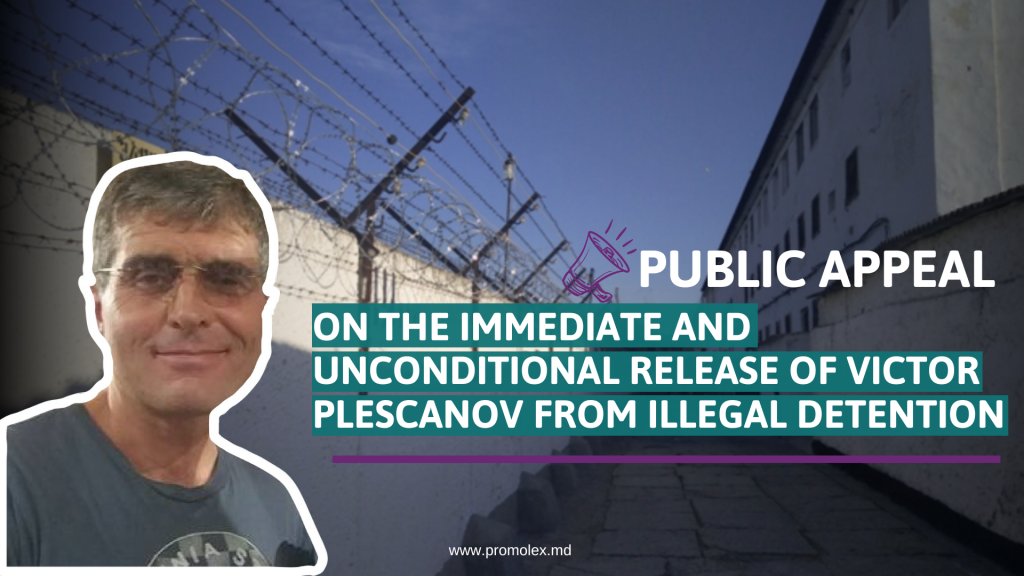
Victor Plescanov, the first person convicted in the Transnistrian region for flying the flag of Ukraine and condemning the Russian invasion of Ukraine,[1] must be urgently released from prison no. 3 from Tiraspol, following the identification of serious health problems.

On 23 November this year, Mr. Plescanov’s wife announced on social media that he had been diagnosed with an oncological problem. The information about the serious problems of unknown origin in the stomach was later confirmed by Stepan Popovski, a lawyer from the Transnistrian region, who also signaled the refusal of proper communication and information from the Transnistrian structures, but also their hostile attitude towards Victor Plescanov in the last 2 weeks.[2]

We recall that in 2022, the Promo-LEX Association condemned the illegal detention of Mr. Plescanov, and subsequently requested the emergency intervention of the constitutional authorities as a result of the poor medical condition and information regarding an alleged suicide attempt.[3] Information that regrettably came true later. However, his medical condition has not changed and he has not been released from illegal detention.

The United Nations Principles stress that “The enjoyment of the highest attainable standard of health is one of the fundamental rights of every human being”[4]. Also, the right of persons deprived of their liberty to medical assistance is one of the basic principles of the Recommendation of the Committee of Ministers of the Council of Europe Rec(2006)2 on the European Prison Rules, according to which “Persons deprived of their liberty retain all rights that are not lawfully taken away by the decision sentencing them or remanding them in custody”[5]. At the same time, the jurisprudence of the European Court of Human Rights, including that in “Transnistrian cases” illustrates that states that refuse to provide arrested or detained persons with prompt and adequate medical assistance have been repeatedly condemned for violating Article 2 (right to life) or Article 3 (prohibition of torture) of the ECHR[6].

In the meantime, diplomatic missions, national and international institutions, including the European Court of Human Rights, were regularly referred to this case. Recently, delegations of the OSCE Committee of Ministers were also informed about his condition.[7] However, his condition remained unchanged. Moreover, on 1 December this year, the leader in Tiraspol, Vadim Krasnoselskii, refused the pardon, and respectively the release of Mr. Plescanov from illegal detention[8].

  • Confirming the conviction and deprivation of liberty of Mr. Plescanov for criticism of the Russian army and Transnistrian structures;
  • Highlighting his illegal detention for more than 18 months in inhuman and degrading conditions, as well as his systemic physical and mental health problems;
  • Emphasizing the inability of the alleged medical system in the region, especially in places of detention, to provide adequate medical treatment;
  • We find that keeping Victor Plescanov in detention on the left bank of the Dniester River is dangerous for his life.

Promo-LEX Association publicly calls upon constitutional authorities, diplomatic missions, OSCE Mission to Moldova and the Office of the UN High Commissioner for Human Rights in Moldova to take the following measures:

  • To request the representatives of the Transnistrian structures, through the existing communication channels, the immediate release of Mr. Plescanov from illegal detention and the elucidation of his medical situation;
  • Ensure Mr. Plescanov’s access to hospital care of the highest possible quality, under humane and appropriate conditions, with access to the full range of diagnostic and treatment measures;
  • To constantly monitor the situation of Mr. Plescanov until his full restoration in the rights and freedoms violated;
  • To systematically inform the public about the measures that have been taken in this case.

________________________________________________________________________________________________

[1] The Tiraspol regime condemned the first person for openly criticizing the war in Ukraine,

https://promolex.md/22788-regimul-de-la-tiraspol-a-condamnat-prima-persoana-pentru-critica-deschisa-a-razboiului-din-ucraina/?lang=ro

[2] Letter of 1 December 2023 sent to the authorities by Stepan Popovski

[3]PUBLIC APPEAL for providing urgent medical assistance and release from illegal detention of the first person convicted in the Transnistrian region for criticizing the Russian war in Ukraine,

https://promolex.md/22988-apel-public-acordarea-asistentei-medicale-urgente-si-eliberarea-din-detentia-ilegala-a-primei-persoane-condamnate-in-regiunea-transnistreana-pentru-critica-razboiul-rusiei-in-ucraina/?lang=ro

[4] United Nations,  “International Covenant on Economic, Social and Cultural Rights Art. 12”, http://www.ohchr.org/EN/ProfessionalInterest/Pages/CESCR.aspx.

[5] Council of Europe, Recommendation of the Committee of Ministers of the Council of Europe Rec(2006)2 on European Prison Rules, https://search.coe.int/cm/Pages/result_details.aspx?ObjectID=09000016805d8d25.

[6]  The case of Drovorub vs Moldova and Russia, no. 33583/14 of 28 September 2021, https://hudoc.echr.coe.int/eng?i=001-211890

[7]Situation of political prisoners in the Transnistrian region communicated to delegations of the OSCE Council of Ministers,

https://promolex.md/24815-situatia-detinutilor-politici-din-regiunea-transnistreana-comunicata-delegatiilor-consiliului-de-ministri-al-osce/?lang=ro

[8]Order of Vadim Krasnoselskii of 1 december 2023, https://president.gospmr.org/pravovye-akty/ukazi/ob-otklonenii-hodataystv-o-po5milovanii.html