Farmers from Dubasari District – Double Victims of Transnistrians and of the Pandemic
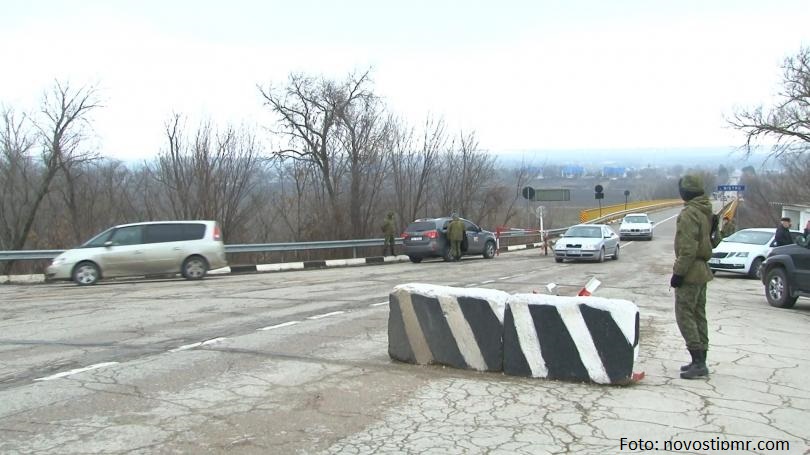
The secessionist regime from Tiraspol blocked the access of the owners of lands that are located to the east of the national road Ribnita-Tiraspol invoking the Covid 19 pandemic.

In the middle of spring agricultural works, the separatist regime in the Transnistrian region blocked again the access of the owners of lands located beyond the Ribnita-Tiraspol road. The secessionist authorities qualified their actions as measures to prevent the coronavirus pandemic, only that these actions target only the residents of villages under the jurisdiction of Chisinau. In villages that are controlled by Tiraspol, the agricultural works are done as usually.

The Head of SRL Agro-Tiras, Stefan Driga, from Cocieri, Dubasari, farms over 200 ha of land that is located beyond the national road Rabnita-Dubasari. ‘Due to the lockdown, they installed [military] posts right around the village [Cocieri]. Before that, the posts were installed on Ribnita-Tiraspol road, but now they are installed around the village’, told us the farmer.

According to a employee of the local mayoralty, concrete blocks were installed on the territory of the village, which harms seriously the owners because they cannot farm their land.

COCIERI COMMUNE IS SURROUNDED BY MILITARY POSTS

Another farmer, Valeriu Bacioi, from Dorotcaia, rents over 1,500 ha in that region. He told us that he notified immediately the Bureau for Reintegration Policies of the Republic of Moldova about this blockage.

‘Currently, all movement are blocked. Neither those who have Transnistrian passports are allowed to pass these posts’.

Nina Diordiev, the Secretary of Dorotcaia Local Council stated that ‘about four business entities’ in the village farm those lands. ‘People started to farm these lands in the autumn of 2018 and didn’t have any problems so far.’ The works were stopped due to the coronavirus pandemic’, noted the employee of the Mayoralty.

At the same time, farmers informed us about the fact that agricultural works in the regions controlled by Tiraspol are done as usually. This fact proves that the actions taken by the separatist regime are nothing else but measures aimed to intimidate the inhabitants under the jurisdiction of the Republic of Moldova.

According to the cadastral engineer of Parata Mayoralty, six business entities from this village lease land in that region. The women explained that most of the residents have 35 acres each beyond this road and for them it is not convenient to farm this land individually. The same source told us they sent to the Agriculture and Cadastre Division of Dubasari District Council a list of individuals and agricultural machinery provided by the business entities, who will be able to farm the lands that were occupied after the installation of control posts.

The Head of Agriculture and Cadastre of Dubasari District Council, located in Cosnita village, Sergiu Guvir, confirmed that he had requested the five mayoralties to draft a joint list of business entities, a list of individuals and agricultural equipment units that will have access to that area in order to perform the spring works.

THE BUREAU FOR REINTEGRATION POLICIES ‘TAKE ALL THE NECESSARY EFFORTS’
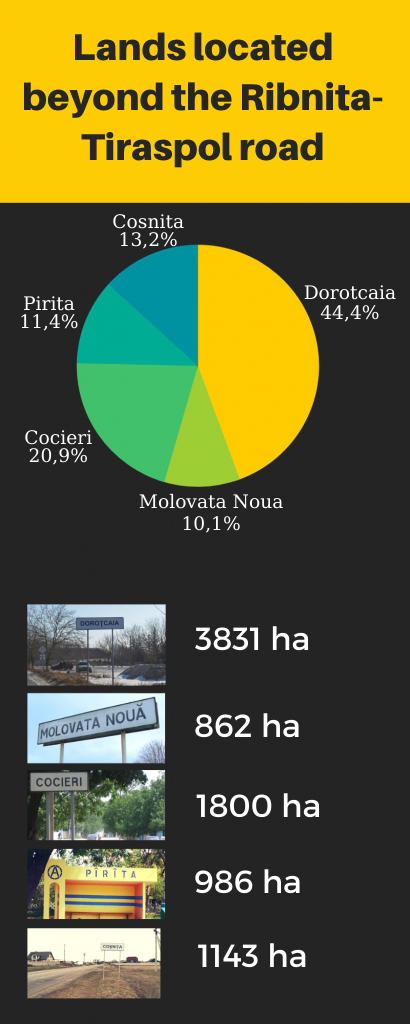
According to Sergiu Guvir, the villages Molovata Noua, Dorotcaia, Cocieri, Parata and Cosnita from Dubasari district have 6,496 ha of land that are located beyond the Ribnita-Dubasari-Tirspol road. These lands are owned by the inhabitants of the above-mentioned villages and are currently leased by 40 business entities, said Sergiu Guvir.

Asked to comment the measures applied by the Tiraspol regime to ‘fight’ the coronavirus pandemic, the Minister of Agriculture, Regional Development and Environment, emphasised that ‘there are no restrictions for performing the spring agricultural works provided that the imposed sanitary rules are observed’.

The head of the Division for Reintegration Policies under the Bureau for Reintegration Policies, Aurelia Barbaros, told us that Moldovan officials ‘take all the necessary efforts’ in order to unblock the farmers’ access to their lands.

The issue related to the agricultural lands located east of the national road Tiraspol-Dubasati-Ribnita emerged in 1998. At that time, the secessionist administration from Tiraspol installed posts on the Tiraspol-Ribnita road. In 2004, the secessionist regime from Tiraspol prohibited the access of more than 5,000 owners to 8,600 ha of land.

HOW THE PROBLEM OF LANDS EMERGED

The land located east of that road comprises the lands of Dubasari district inhabitants and the lands owned by state. It is about forest buffers, parts of lakes etc.

As a result, the lands were not farmed and the agricultural associations incurred huge losses. Moreover, certain enterprises went bankrupt, but small individual households were the most affected.

About 1,400 landowners were affected only in Dorotcaia village. This village faced the most serious problem because about 92% of its agricultural lands are located east of the road Ribnita-Tiraspol, which is controlled by the separatist administration from Tiraspol.

In 2006, the crisis of lands was solved through a palliative following the pressures of international bodies. The farmers signed three-year contracts with Dubasari district administration controlled by Tiraspol on the basis of which they were allowed to farm their lands.

Beginning with 2009, when the contracts expired, the farmers did not have access to their lands until two years ago.

THE IDENTIFIED SOLUTION IS AGAINST THE CONSTITUTIONAL RIGHTS

Moldovan authorities covered some of the losses provoked by this uncertainty. For example, the Government of the Republic of Moldova offered MDL 1,229 per ha to each owner of agricultural land in this area.

In August 2018, following the negotiations between the RM Government and the Tiraspol regime, the mechanism established in 2006 was reactivated. This time, the administration of Dubasari district, controlled by Tiraspol, offered certificates valid for 20 years to 40 business entities that were to farm the land rented from the locals.

But this solutions is against the national law. Although the constitutional authorities of Chisinau recognised the property rights of the inhabitants of Dubasari district over the lands, the peasants are forced to accept the certificates imposed by the secessionist regime of Tiraspol.

Note that the separatist regime of Tiraspol considers that those nine villages that are still under the jurisdiction of Chisinau are ‘territories temporary under the occupation of the Republic of Moldova’. This statement is propagated with intensity by the local TV and radio channels, including during the crisis.

Ion Manole, the Executive Director of Promo-LEX Association, organisation that provides legal aid to landowners from this area, stated that the Tiraspol authorities take systemic measures to worsen the situation of the inhabitants of Dubasari district.

‘Tiraspol does not give up this theory and tries to apply the method of carrot and stick. On the one hand, it attracts the inhabitants with certain facilities, on the other hand, it creates conditions to intimidate them.’

When speaking about the situation around these plots of land, the former member of the Joint Control Commission, ISS Colonel Ion Leahu, mentioned that Tiraspol regards the Camenca-Tiraspol road section  as a border.

‘Farmers were affected by the measures aimed to combat the coronavirus pandemic. I believe that Tiraspol will allow the farmers to farm their land because now it is the time when investments are made. Based on previous years’ experience, Tiraspol could ban the harvesting so that people who are close to the separatist regime could take over the crops.

ECHR JUDGEMENTS IN CASE OF LANDOWNERS FROM DUBASARI DISTRICT

As regards this legal dispute, the European Court of Human Rights (ECHR) issued in July 2018 the first judgement – case ‘Sandu and others v Moldova and Russia’, in favour of those 1,646 owners of agricultural lands and of those three agricultural businesses.

ECHR obliged Russia to pay EUR 1,500 to each farmer and EUR 5,000 to agricultural businesses as non-pecuniary damages. At the same time, ECHR ordered the Russian Government to pay EUR 245,800 as pecuniary damages to those three agricultural businesses. Moreover, Russia has to pay EUR 20,000 for representation expenses. The Russian authorities have to pay a total of EUR 2,749,800. In February 2020, ECHR issued a judgement in another case that involved farmers from Dubasari district – ‘Oprea and others v Moldova and Russia’.

The High Court found that Russia was responsible for violating the right of ownership and the right to use the lands. As stated by Promo-LEX in a press release, ECHR ordered to collect EUR 63,000 in favour of those 42 applicants for the as non-pecuniary damage and other EUR 4,000 for representation expenses and costs.

According to Ion Manole, Russia did not pay a single penny to these people. Actually, it did not pay damages for any legal disputes concerning violations on the left bank of Nistru River, except for the Pisari case.

‘For us, lawyers and human rights defenders, representatives of victims of abuses and human rights violations from the Transnistrian region of the Republic of Moldova, it is important to have the possibility to monitor the situation on the site without any obstacles, as well as  efficient tools to defend them when abuses and violations are found. The fundamental human rights cannot be negotiated, they should be promoted, guaranteed and defended.’

This article is developed under the ‘Strengthening the Observance of Human Rights in the Transnistrian Region’ Project, implemented by Promo-LEX Association with the financial support of the National Endowment for Democracy. 


The Promo-LEX Observation Mission for the New Parliamentary Elections of 15 March 2020 in the single-member constituency no. 38 from Hincesti

15 March 2020
21.30


On the opportunity of holding new parliamentary elections in the single-member constituency no. 38 from Hincesti on 15 March 2020

Context

On 27 December 2019 the Central Electoral Commission (CEC) set the date for holding the new parliamentary elections in the single-member constituency (SMC) no. 38 from Hincesti for 15 March 2020. We reiterate the Promo-LEX opinion according to which the date for the new parliamentary elections has been set by the CEC with delay, because the legal deadline covers the period from 5 February 2020 to 5 March 2020.[1].

Meanwhile, on 11 March 2020, four days before the day of the new parliamentary elections in the SMC no. 38, the World Health Organization (WHO) declared COVID-19 pandemic, in the context of the increase in the number of cases worldwide, as well as the increase in the geographical area of manifestation in more than 110 countries, and due to the increased risk of further spread of the infection globally[2].

At the meeting of the National Extraordinary Public Health Commission (NEPHC) on 8 March 2020 was announced the first case of COVID-19 infection in the Republic of Moldova. In the context of finding and spreading of the cases of COVID-19 infection, the NEPHC by Decision no. 7 of 13 March 2020 raises alert level to code red at national level on the epidemiological status. According to the legislation, “Code Red Alert” means an imminent risk of triggering a public health emergency.

On 11 March 2020, the CEC published and submitted a Circular Letter[3] designed to comply with the provisions of the NEPHC Decision of 10 March 2020, which involves preventing more than 50 people from being in one place and disinfecting the polling station area. Also, following the establishment of the Code Red at national level, on the evening of 14 March 2020, the CEC, by means of an announcement posted on a social network notified that it submitted an appeal to the NEPHC requesting the Commission’s opinion on the possibility of continuing the activities on the organization and conduct of the elections of 15 March this year. At the end of the announcement it was specified that “we will inform you further about the decisions taken”. In addition, until the beginning of the vote, there were no posts on the given topic.

On 15 March, the CEC received the reply of the President of the Supreme Security Council[4] stating that the Decision no. 7 of 13 March 2020 issued by the NEPHC provides for the exhaustive restrictions on the actions to be taken by public authorities, in order to prevent the worsening of the epidemiological situation in the country. However, these measures do not concern the organisation of elections, but require public authorities (including electoral authorities) to take all necessary preventive measures.

On 13-14 March 2020 in the public space appeared information about the fact that a person infected with the COVID-19 virus is from the village of Balceana, one of the localities near the SMC no. 38 from Hancesti.

We emphasize that in the public space on the days immediately before the elections day there were numerous requests of citizens about the opportunity to postpone the parliamentary elections, given that the citizens’ health is in danger.

Promo-LEX observers also reported only one case when a candidate requested “immediate cancellation of the elections in Hincesti” through a request submitted to the CEC on 14.03.2020[5].

Findings of the Promo-LEX observers on the elections day

At the press conference organized for the presentation of the Report no. 1 of the Promo-LEX Observation Mission for the elections in the SMC no. 38 on 12 March 2020, the Mission announced the creation of two mobile teams of observers for the elections day. In the circumstances of the rapid worsening of the epidemiological situation, the Promo-LEX OM has delegated only one team that worked in low observation regime.

The mobile team observed the processes of opening of polling stations and conducting the voting procedures in 11 polling stations out of 44 opened. According to observers, voting procedures were generally followed. Among the reported incidents are the reporting in at least three polling stations in two localities (Loganesti – PS no. 28, 29; Hincesti – PS no. 5) of organized transportation of voters.

We draw attention to the low turnout compared to the previous elections held in single-member constituencies:

Parliamentary Elections, 24.02.2019, SMC no. 38 Hincesti New Parliamentary Elections, 20.10.2019, SMC no. 17 Nisporeni New Parliamentary Elections, 20.10.2019, SMC no. 33 Chisinau New Parliamentary Elections, 15.03.2020, SMC no. 38 Hincesti
42.4% 43.5% 39.3% 23.3%


The cause of the low presence may most likely be the uncertain situation in the public space and the actions taken by the authorities. Thus, on the one hand the authorities called on all the population of the country to stay at home, in this respect being ordered to stop public transport in Chisinau, but also for the first time the activity of religious cults. On the other hand, a vote was held, in which voters were called to the polls.

Findings on the opportunity of holding the elections

According to art. 8 of the Electoral Code[6] elections take place on a single day, on Sunday or any other day indicated in the act establishing elections, throughout the country or locality. With reference to the issue addressed, art. 56 establishes that during the voting time it is forbidden to close the polling station and to suspend the voting, except in cases of mass disorder, natural calamities, other unforeseen circumstances, which put voters at risk or make it impossible to carry out voting. In such situations, the President of the electoral bureau may suspend voting for a maximum period of 2 hours.

According to the Promo-LEX OM, the imminent risks of the epidemic can meet the conditions of circumstances that put voters at risk, respectively, could be those exceptional cases that could lead to the suspension of voting for a certain period.

At the same time, we draw attention that these are not unforeseen circumstances for the elections day, these being known before the Elections Day, respectively the authorities should have demonstrated a more pro-active behavior and anticipate possible cases of illness on the Elections Day.

We appreciate that under the conditions created, both the electoral authorities and the authorities of the local public administrations, including the Extraordinary Public Health Commission of Hincesti district, have made efforts to minimize the epidemiological risks, both for the members of the electoral bodies and for the voters. According to observers, the members of the electoral bureaus were equipped with protective masks and gloves, also at the entrance to the PS and on the tables of the members of the electoral bureaus there were bottles of antiseptic solution.

We would like to emphasize that the conditions for postponement or cancellation of electoral procedures are expressly provided by the Electoral Code only for republican and local referendums. Articles 156 and 186 of the Electoral Code provide that if the date of the republican/local referendum was set for the day on which the state of emergency, siege or war is subsequently decreed or established, it shall be cancelled or postponed for another day. Thus, from the legislative point of view, there are no rules that would allow the postponement or legal cancellation of parliamentary elections. However, according to art. 66 of the Constitution of the Republic of Moldova, only the Parliament is the authority with the right to declare the state of emergency, siege and war.

At the same time, Law no. 212/2004 on the regime of the state of emergency, siege and war in art. 4 para. (2) expressly provides that during the state of emergency, siege or war, established throughout the country, it is prohibited to amend the Constitution, to adopt, amend or repeal organic laws and electoral legislation, as well as to conduct elections of central and local public authorities and Republican and local referendums.

However, according to Law no. 212/2004, the state of emergency is the set of measures of political, economic, social and public order nature, which can be established by the Parliament, including provisionally in some localities. This includes, in the event of imminent triggering or occurrence of exceptional situations of a natural, technogenic or biological-social nature.

Art. 20 of the aforementioned Law states that during the state of emergency, depending on the concrete situation, the following measures can be applied, including:

  1. b) establishment of a special country’s entry and exit regime;
  2. d) introducing a quarantine regime and other mandatory sanitary-antiepidemic measures;
  3. f) establishing a special working regime for economic agents and public institutions, solving other issues related to their activity, necessary to carry out rescue-unlock works and other non-delayable works;

We point out that the selected measures are exactly the ones approved and implemented consecutively by the NEPHC in the last period of time.

International standards for Public Security Providers in Elections[7] condition to a large extent the postponement of elections by ordering a state of emergency. In this context, we reiterate that the Parliament is the only public authority that could decide to postpone or cancel the elections, exclusively by establishing a state of emergency. Thus, the critical opinions to the address of the electoral bodies regarding the inaction to stop the elections have no legal support.

In addition, we mention that the members of the electoral bodies are in a duplicitous situation from the perspective of organizing elections and ensuring the conditions imposed by the Code Red of Epidemiological Risk. As a reminder, both the Criminal Code (art. 215) and the Contravention Code (art. 76) provide for sanctions for failure to comply with the measures on prophylaxis, prevention or control of epidemic diseases, if this caused the spread of such a disease (we reiterate that from the point of view of observers these minimum preventive actions took place in all polling stations visited by them). On the other hand, art. 181 of the Criminal Code establishes sanctioning for preventing the free exercise of electoral right or the activity of electoral bodies, that is to comply and organize the elections once another decision has not been issued by the Parliament.

In addition, from the perspective of the financial resources spent, we recall that for the organization of the new parliamentary elections in the SMC no. 38 from Hincesti were allocated financial means in the amount of  MDL 4 226, 7 thousand stipulated in the budget for the 2020 presidential elections, because no financial means related to the organization and conduct of new parliamentary elections were distributed in the CEC budget for 2020. Thus, any action taken by electoral bodies that would have attempted to stop the already initiated process, in the absence of an appropriate decision of the Parliament, can have legal consequences, including from the perspective of irrational spending of budgetary resources.

Conclusions

In the light of the above, we conclude:

  • that the Promo-LEX OM is not empowered to assess the degree of application of measures to prevent and respond to the infection with COVID-19, but according to observers, the electoral bureaus were equipped with the necessary minimum articles used for hygienic purposes. However, it is difficult to predict possible risks of contamination.
  • in this context, we emphasize the dedication in the performance of the functional duties by the members of the electoral bureaus and the behavior of the responsible voters who, in this situation of information uncertainty, chose to go to the vote and exercise their right;
  • according to the data available in the public space, only one candidate out of the five remaining in the electoral race addressed the CEC with the request for immediate cancellation of the elections;
  • we draw attention to the fact that Parliament is the only institution that could decide to postpone the initiated elections;
  • the Parliament must intervene legislatively on the need for explicit regulation of the mechanism for suspending or postponing the elections, including without the need to declare a state of emergency in this regard. However, otherwise, the electoral bodies are put in a distasteful situation to maneuver between the need to comply with the law and the need to ensure the satisfaction of the critical public requests substantiated de facto but without legal basis de jure on halting the electoral processes with the potential to spread the epidemiological infection.

The press release has been drafted as part of the Mission observing the new parliamentary elections of 15 March 2020 in the single-member constituency no. 38 from Hincesti, carried out by the Promo-LEX Association with the financial support of the US Agency for International Development (USAID) through the „Democracy, Transparency and Responsibility” Program.

The opinions expressed in public reports and press releases of the Promo-LEX OM belong to the authors and do not necessarily reflect the position of the donors or partners. The content of the press release may be subject to editorial revision.

For more information, please contact:
Inga Stegarescu, Press Officer of the Promo-LEX Observation Mission for the new parliamentary elections of 15 March 2020:
GSM 069269684, e-mail: [email protected]

………………………………………………………………………………………………………………………………………………………………………………………

[1] For more details on the organization and conduct of the new parliamentary elections please refer to: the Report no. 1 of the Promo-LEX Observation Mission for the new parliamentary elections in the single-member constituency no. 38 from Hincesti. http://bit.ly/38P3a16
[2] WHO Director-General’s opening remarks at the media briefing on COVID-19 – 11 March 2020. http://bit.ly/3d1fwXa
[3] http://bit.ly/2x0RpqR
[4] https://bit.ly/33ivho0
[5] According to the Facebook page of Dorin Chirtoaca, the political movement UNIREA filed a request to the CEC on 14.03.2020 to cancel the new parliamentary elections.
[6] We refer to the rule applicable to new parliamentary elections, in accordance with the legislation in force until the date of adoption of the Law no. 113/2019.
[7] Guidelines for Public Security Providers in Elections. OSCE/ODIHR, 2017. p. 30. http://bit.ly/39WWSOc


Promo-LEX: the negative trends in the electoral campaign for the single-member constituency no. 38 from Hincesti are still in place, and the normative gaps must be filled before the beginning of the presidential elections

The new parliamentary elections in the SMC no. 38 from Hincesti, held following the resignation of the MP Alexandru Botnari, in favor of the mayor’s office of Hincesti, are getting closer and the competitors registered in the electoral campaign are becoming more active.

This is one of the findings of the first Monitoring Report of the Promo-LEX Observation Mission, presented today, 12 March 2020, during a press conference. The report contains the monitoring results for the period 27 December 2019 – 11 March 2020.

The use of the national symbols but also of the image of the public authorities by the competitors, for promotional purposes

During the monitored period, the electoral competitors carried out 164 promotional activities, the most frequent being the distribution ones and those related to the placement of electoral displays – 44%, followed by meetings with voters – 30%.

The PSRM candidate used the image of the authorities, as well as disseminated election advertising without complying with the requirements for campaign materials.

The PAS, the UNIREA Bloc, the PLDM, the PSRM candidates have used the national symbols of the Republic of Moldova or of any other state as well as materials containing historical personalities. At the same time, the Promo-LEX observers have identified at least 40 cases of advertisement placement in unauthorized places (the PSRM – 17; the PPS – 15; the PAS – 7; the IC Grigore Cobzac – 1).

Costs of at least 112,542 lei are not reflected in the financial statements

The Promo–LEX OM estimated at least 112, 542 lei that failed to be reported by 5 electoral competitors: the PSRM (77 544 lei), the UNIREA Bloc (16 931 lei), the IC Cobzac Grigore (15 978 lei), the PPS (1 469 lei ), the PDM (620).

According to the reports submitted by the electoral competitors, the main share of the declared expenses falls on: advertising and campaign materials – 81%, meetings and events – 11%, salaries for the electoral staff – 4%; use of transport – 3%; others – 2%.

The Promo-LEX OM, especially taking into account the upcoming presidential elections, draws attention to the need to clearly regulate cases that can be qualified as indirect campaign financing by parties that do not participate in the elections but carry out electoral agitation.

Gender-biased and inaccessible to people with special needs electoral bodies

According to Promo-LEX observers from 44 precinct electoral bureaus formed within the legal time frame for the elections, in five cases PEB members failed to comply with the open voting procedure while performing the management election.

The gender composition of the PEB is not balanced, 85 % of them are women, and the proportions are maintained at the management level of the PEB. Please note that only women have been selected to serve as Bureau Secretary.

Availability of lower level electoral bodies to people with locomotor disabilities and/or special needs is far from being great: CECEU no. 38 is totally inaccessible while PEBs premises are not available at a proportion of 75%.

More active role of CEC in consideration and resolution of complaints related to procedural violations

According to Promo-LEX observers, during the monitored period one complaint was submitted to the CECEU and one request and one complaint to the CEC.

The Promo-LEX OM states a more active role of CEC in handling complaints and requests, compared to the practice of previous elections. At the same time, we draw attention to the fact that the effective processing of complaints and requests must be in strict compliance with substantive and procedural rules. Also, the CEC’s attitude and approach should apply equally to all electoral competitors, and to all similar situations.

We note that the number of voters on the main electoral lists for the new parliamentary elections of 15 March 2020 in the SMC no. 38, decreased by 493 citizens with the right to vote (from 61 728 to 61 235), compared to the parliamentary elections of 24 February 2019.

The full report can be accessed here.

The Observation Mission of March 15, 2020 New Parliamentary Elections is carried out by the Promo-LEX Association with the financial support of the United States Agency for International Development (USAID) through the Democracy, Transparency and Accountability Program.

For more information, please contact:
Inga Stegarescu, Promo-LEX Association Press Officer
GSM: 069 26 96 84;
E-mail: [email protected]


PUBLIC CALL regarding the unacceptability of pardoning possible administrative violations related to the use of undeclared or noncompliant funds for financing political parties during the first half of 2019


Mr. Dorin CIMIL
Chairman of the Central Election Commission

Members of the Central Election Commission


PUBLIC CALL

regarding the unacceptability of pardoning possible administrative violations related to the use of undeclared or noncompliant funds for financing political parties during the first half of 2019


The signatory member organizations of the Civic Coalition for Free and Fair Elections

Draw attention to the fact that, contrary to its own Regulation on the financing of political parties, the CEC has not verified or analyzed the content of the political parties’ financial reports for the first half of 2019 in reasonable time;

Stress that it was the first time that the CEC failed to examine the content of the biannual reports in reasonable time, confining itself to only checking the fact of their submission; and

Emphasize that this way the election authority has already pardoned possible violations of the administrative law and continues pardoning political parties’ possible violations committed by using undeclared or noncompliant funds gained illegally during the first half of 2019.

We draw attention to the fact that, pursuant to Article 29 of the Law on Political Parties, political parties must submit their financial reports to the CEC biannually by the 15th of the last month of the reporting period, and annually by March 31. Furthermore, para. 70 of the CEC Regulation on the financing of political parties states that the Commission must verify and analyze the financial reports and adopt a decision in this regard.

At its meeting of August 9, 2019, the election authority adopted Decision No. 2559 of August 9, 2019, on the submission of the political parties’ financial reports for the first half of 2019. By that decision, the CEC presented a quantitative analysis of the extent to which the 46 political parties registered in the Republic of Moldova had submitted their reports for the first half of 2019 and found that: 32 political parties had submitted their reports in due time; 10 political parties had submitted them out of time; and 4 had not submitted their reports at all. In addition, pursuant to Article 481 (3) of the Administrative Code, it was decided that the chairperson of the CEC would summon the executives of the political parties that had failed to submit the reports to have them sign the records of administrative violation.

We stress that the CEC did not perform the verification and analysis proper of the submitted reports as required by law. Despite the fact that this subject was on the agenda of the August 30 2019 meeting, the CEC members decided to put off the examination of the political parties’ financial reports for the first half of 2019 and to revisit this subject after the local general election of October 20, 2019.

As of the publication of this public call (February 27, 2020), the decision on the examination of the political parties’ financial reports for the first half of 2019 was still unapproved. Even worse, the CEC had announced Promo-LEX Association that the political parties’ financial reports for the first half of 2019 would be verified and analyzed along with the annual reports for 2019, due by March 31, 2020. Judging by the Commission’s practice, the decision on the political parties’ financial reports for 2019 could be approved in approximately two months after March 31.

We stress that this is the first time since the CEC started approving decisions on political parties’ biannual financial reports in 2016[1] that the election authority fails to give an opinion about the content of the biannual financial reports submitted by political parties.

Back on August 18, 2016, the CEC had approved Decision No. 111 on the political parties’ financial reports for the first half of 2016, where it had laid out its opinion about both the extent of submission and the content of the submitted reports. Further on, on September 19, 2017, the CEC had approved Decision No. 1118 on the political parties’ financial reports for the first half of 2017, where, once again, it included the analysis of both the compliance with the submission deadline and the completeness of the presented information. When it came to the analysis of the reports for the first half of 2018, the CEC chose to approve two distinct decisions: No. 1792 of August 21, 2018, on the submission of the political parties’ financial reports, and No. 1845 of October 23, 2018, on the examination of the financial reports.

Apparently, the analysis of the reports submitted for the first half of 2019 was to follow the model of 2018, involving two separate decisions: one on the submission, and one on the content of the reports after the verification by the CEC. But while the decision on the submission of the reports for the first half of the year was approved on August 9, 2019, the decision on the content of the reports based on the verification by the CEC has not been approved to this day.

We emphasize the wrongness of procrastinating the examination of the reports for the first half of 2019, all the more so that the time limit for imposing administrative liability for the possible use of undeclared or illegally gained funds is drawing to a close.

We remind that pursuant to Article 30 (2) of the Administrative Code, the general time limit for administrative liability is one year. This means that any possible violation political parties may have committed by using undeclared, noncompliant, or foreign funds during the reporting period (that is, the first half of 2019)—which should have been detected at the CEC’s analysis of the reports and which fall within the scope of Article 48 of the Administrative Code—will be covered by the presumption of pardoning/forgetting the offence upon the expiry of the time limit. Worse still, this can feed the perception of impunity among those who commit such violations, encouraging the deviant behavior of some political parties. In addition, the CEC’s attitude can lead to the loss of potential revenue for the state budget because the undeclared or noncompliant funds used by political parties are subject to forfeiture and become revenue in the state budget (Article 48 of the Administrative Code).

Given the above, the signatory organizations consider that, by this deliberate attitude, the election authority has already pardoned possible violations committed from January 1, 2019 through February 27, 2019 (the publication date of this public call) and continues pardoning possible violations related to the use of undeclared or noncompliant funds for financing political parties until the initiation of possible administrative actions. Again, such actions are possible only upon the approval of the CEC decision that enables the verification and analysis of the content of the political parties’ financial reports.

We stress that civil society’s monitoring reports on the financing of political parties, including those for the first half of 2019,[2] testify to multiple issues in the political parties’ financial reporting, such as: the receipt of cash donations without the use of cash registering equipment by political parties; the suspicious reporting of office rental expenses, where the offices were indicated without specifying the expenses; reasonable grounds for verifying the situations where political parties paid their staff monthly wages that were smaller than the official minimum wage for 2019 or where political parties have registered staff but did not report staff expenses; etc. In this context, one can also remind numerous journalistic investigations that had highlighted issues with the political parties’ fundraising mechanisms, which can also be examined from the perspective of undeclared or noncompliant funds.[3]

Furthermore, we reiterate Promo-LEX Association’s earlier finding that, in 2019, just like in 2016, 2017, and 2018, the CEC did not request political parties to submit their income statements for the second half of the year. We stress that the wording of Article 29 (1) of the Law on Political Parties is “biannually, by the 15th of the last month of the reporting period.” However, the CEC requested only two reports: the report for the first half of the year and the annual report, which “effectively shortens the time limit for punishing a political party”[4] if it had deviated from the administrative law, especially from Articles 48 and 481 of the Administrative Code.

Given the above arguments and the signatory organizations’ experience of monitoring the financing of political parties, we recommend the Central Election Commission:

  • To approve the CEC decision on the examination of the political parties’ financial reports for the first half of 2019 as soon as possible based on the comprehensive analysis of the reports, the funding sources, and the compliance with the existing regulatory framework;
  • To inform competent entities about the initiation of administrative actions for the violation of Articles 48 and 481 of the Administrative Code, as applicable;
  • To complement para. 70 of the CEC Regulation on the financing of political parties with provisions that would set reasonable time limits—which should not exceed “three months”—for the Commission’s verification and analysis of the reports submitted by political parties;
  • To make inquiries with the State Tax Service and the political parties with regard to the use of cash registration equipment by political parties, the amount of such equipment owned by each party, and its use for the parties’ fundraising activities (donations, membership fees, income from business operations); and to publish the obtained information of public interest.


[1] Law No. 36 of April 9, 2015, for the Amendment of Certain Legislative Acts. In: Official Gazette No. 93 of April 14, 2015.

[2] Report. Financing of political parties in the Republic of Moldova. 1st semester 2019. pp. 21 – 34. https://promolex.md/wp-content/uploads/2019/08/Raport_Finante_Partide_sem.I_-2019.pdf

[3] For example, the journalistic investigations of the rise.md team: Donatorii partidelor (I): „Am donat și Dumnezeu cu dânșii” (Party donors (I): I donated and hell with them). https://www.rise.md/articol/donatorii-partidelor-i-am-donat-si-dumnezeu-cu-dansii/; Donatorii partidelor (II): „Sunt permanent monitorizat” (Party donors (II): I am constantly monitored) https://www.rise.md/articol/donatorii-partidelor-ii-sunt-permanent-monitorizat/; Donatorii partidelor (III): interese pecuniare (Party donors (III): Pecuniary interests). https://www.rise.md/articol/donatorii-partidelor-iii-interese-pecuniare/

[4] Report. Financing of political parties in the Republic of Moldova. 1st semester 2018. pp. 22 – 23. https://promolex.md/wp-content/uploads/2019/06/raport_finantarea_partidelor_2019_RO_web.pdf


OPINIE Promo-LEX privind fundamentarea economico-financiară a proiectului de lege ferenda care prevede asigurarea caracterului permanent al mandatului de membru/ă a Comisiei Electorale Centrale (CEC)

Context

La data de 11 iulie 2019, Asociația Promo-LEX, a prezentat un Apel public privind necesitatea urgentării procedurilor de desemnare și confirmare de către Parlament a noilor membri ai CEC, precum și de alegere de către membrii CEC a conducerii autorității.[1]

În cadrul acelui Apel, a fost prezentat, inclusiv, un proiect de lege ferenda (a se vedea Anexa nr. 1) asupra legii nr. 56 din 18.06.2019 cu privire la modificarea și completarea articolului 20 Cod electoral nr. 1381-XIII din 21 noiembrie 1997. Proiectul elaborat de Asociația Promo-LEX propune o nouă viziune asupra mecanismului de constituire și activitate a autorității electorale. Proiectul recomandă, ca toți membrii CEC să activeze permanent, o nouă metodă de desemnare a membrilor CEC, precum și o nouă componență numerică a membrilor autorității.

Prin proiectul de lege ferenda, s-a propus ca toți membrii CEC să activeze permanent, precum și a fost sugerată diminuarea numărului de membri CEC de la 9 – la 7. În acest scop, pentru a elimina monopolul partidelor parlamentare la desemnarea membrilor CEC și a garanta reprezentativitatea tuturor puterilor statului în componența CEC, s-a propus un nou mecanism de desemnare. Astfel Promo-LEX propune ca un membru să fie desemnat de către Președintele Republicii Moldova, câte doi membri – desemnați de Parlament, Guvern și Consiliul Superior al Magistraturii. Membrii desemnați de Parlament trebuie să reprezinte atât majoritatea cât și opoziția. Un membru desemnat de Guvern trebuie să reprezinte organizații ale societății civile, iar un membru desemnat de Consiliul Superior al Magistraturii trebuie să reprezinte mediul academic.

Amintim că potrivit legislației în vigoare, CEC este constituită din 9 membri: un membru este desemnat de către Președintele Republicii Moldova, ceilalți 8 membri sunt desemnați de către Parlament, cu respectarea reprezentării proporționale a majorității și a opoziției. Permanent activează doar președintele, vicepreședintele și secretarul CEC. Mandatul componenței actuale a Comisiei expiră în 2021.

Prezenta Opinie, are drept scop completarea precedentelor demersuri ale Promo-LEX pe subiectul modificării legislației în vederea permanentizării statutului de membru a CEC, accentul fiind plasat pe fundamentarea economico-financiară a proiectului de lege ferenda propus de Promo-LEX.

Opinia integrală, în limba română, poate fi accesată aici. 

[1] https://bit.ly/2Odn4eJ


THE PROMO-LEX OPINION in the context of the Police Reform and the Community Police Activity on the rationality and the opportunity to restore the work of the district police officer in every locality

Summary

The Prime Minister of the Republic of Moldova, Ion Chicu, came up with the initiative to restore the institute of district police officers in every locality, but the2011–2012 police reform eliminated this institute”. Also, the Prime Minister came up with the proposal to substantially increase the salary of district police officers as well as to provide them with the necessary equipment.

Moreover, this issue was also included on the agenda of the Supreme Security Council, after which Igor Dodon, the President of the Republic of Moldova, underlined the fact that the Government of the Republic of Moldova looks into the possibility to increase the number of district police officers for the purposes of prevention of crimes and offences.

The Promo-LEX Association, as institution for monitoring the Police Reform thereof, considered it necessary to react to these initiatives with a view to preventing any possible activities, which it regards as contrary to the police modernization vector, rolled out in a consistent fashion by the Ministry of Internal Affairs (MIA) throughout the past years. In this context, Promo-LEX notes that during the period from 2016 to 2019 (the Police Development Strategy implementation period) the number of police precincts was reduced from 205 to 173, their infrastructure being outdated. Of the total number, 45% required major repairs or even physical relocation, whilst 41% required cosmetic repairs.

In addition to the strategic documents approved in 2016, which are expected to be finalised at the end of this year, during the period from 2016 to 2019 both the GPI and the MIA, as well as the Government of the Republic of Moldova have approved legal acts by which the authorities implicitly validated the optimization of the work of police precincts under the single management of a head of the police precinct according to the principle of specialization, “the activity of employees in the serviced administrative territories by attaching them to a certain locality (police post), this being an obsolete practice, which no longer corresponds to the present evolution of the society”.

The Promo-LEX Association states that all subsequent actions targeting both the community police and the work of district police officers, such as modernisation and renovation of police precincts, providing both the police precincts and district police officers with official vehicles as well as other equipment necessary for the conduct of their service activity, approval of the legal framework on the work of district police officers have been carried out in accordance with the aforementioned principle as well as on the basis of strategic documents adopted by public authorities.

Given that financial, human, material resources have been invested therein by state institutions as well as by donors, the Promo-LEX Association finds that the initiative of restoring both the police precincts and the work of the district police officer in every locality is capable of changing and diverting the course of the implementation of the Community Police Activity, leading to the non-capitalization and waste of the financial resources allocated in the last years as well as wiping out the efforts already made for the police reform. A collateral effect of the failure to implement the Police Reform could also be the decrease of the credibility of citizens as well as external development partners towards the central public authorities of the Republic of Moldova.

Furthermore, we reveal that during the last four years, 8%-15% of the posts in the GPI remained vacant, while for the period from 2019 to 2020 moratoriums have been instituted or extended on 15% of the maximum number of employees in the MIA. In this context, we believe that both the Executive, and the Supreme Security Council should have also considered the impact of failure to fill the vacancies for a continuous period of at least two years and take responsibility for the effects thereof on the good administration of the areas in management. Moreover, we consider it irresponsible for the government to set up and extend the moratorium when it intends to carry out reforms, with commitments to development partners.

On the same lines, we welcome the initiative to substantially increase the salary of the district police officers as well as to provide them with the necessary equipment, but the same financial and material benefits must be offered to all police employees, not just to a certain specialization. However, as long as moratoriums are being established by the State Policy on vacant positions and no efforts are made to fill them, the efforts to increase the salary and provide the district police officers with the necessary equipment will not have the effect of providing quality services and prompt response to citizens’ referrals.

Promo-LEX concludes that restoring the work of the district police officer in every locality can only be achieved following the fulfillment of the commitments made in good faith under the strategic documents adopted by the central public authorities. Only afterwards, after a thorough analysis of the existing state, of the efforts made in view of the reform, of the investments already made and the costs that will be incurred, it may be decided to consolidate the community police institution or, as the case may be, to restore the institute of the district police officer in every locality or develop any other police services. However, drawing on the powers of the MIA and the GPI to periodically adjust the police structures in relation to the trends of the criminal phenomenon, we tend to believe that the generic statements of the country leadership on appointing one district police officer in every locality, mean, in fact, the recognition of the error when adopting the moratorium for the recruitment of about 2684 persons within the apparatus of the MIA and all its subordinate institutions as well as the urgent need to fill, especially the number of district officers.

The full opinion can be accessed here.


Entering the new year with old-rooted problems: Russia convicted by ECtHR for violating the human rights in the Transnistrian region, in the case of Ilie Cazac

On January 7, 2019, the European Court of Human Rights published the judgment in the case of Ilie Cazac and Stela Surchicean vs Moldova and Russia. The High Court found the Russian Federation guilty of violating the right not to be subjected to torture and inhuman treatment, guilty of violating the right not to be subject to torture and inhuman treatment and the right to liberty and security in the in the Transnistrian region of the Republic of Moldova.

The case of kidnapping Ilie Cazac by the Transnistrian militia, was made public by his mother at the beginning of 2010. Ilie Cazac, 25 years old then, was employed in the Tax Inspectorate of Tighina municipality, a locality under the control of the illegal Tiraspol administration. On March 19, 2010, he was “detained” in Varnița, being accused of “high treason and espionage in favor of the Republic of Moldova”.

On February 9, 2011, following a closed “trial”, deprived of essential rights such as that of having a lawyer or meeting with relatives, Ilie Cazac was sentenced to 14 years of prison.

For more than a year and a half the parents of the young man, the lawyers from the Promo-LEX Association, and many international organizations have made efforts to release him. Finally, Ilie Cazac was released on October 31, 2011, being granted a “pardon” by the leader of the separatist region.

The High Court of Strasbourg acknowledged that the Russian Federation violated art. 3 providing for the prohibition of torture, art. 5 paragraph 1 referring to the right to freedom and security and art. 6 paragraph 1 regarding the right to a fair trial.

Thus, according to the judgment issued by the European Court of Human Rights, the Government of the Russian Federation shall pay EUR 42 000 as moral damages for the applicants and EUR 4000 as costs and expenses for representation.

The plaintiffs were represented by lawyers and legal experts from Promo-LEX Association.

For more details, please contact: Alexandru Postica, Lawyer, Program Director, Promo-LEX Association, Tel: (22) 450024, GSM: 069104851, e-mail: [email protected]


A P E L privind dispariția lui Alexandru Rjavitin

A P E L privind dispariția lui  Alexandru Rjavitin

La data de 29 decembrie 2019, Asociația Promo-LEX a fost sesizată de prietenii și rudele lui Alexandru Rjavitin referitor la dispariția acestuia din propria casă din localitatea Pervomaisc, r-l Slobozia din regiunea transnistreană a R.Moldova.

Amintim că Alexandru Rjavitin, fiind înrolat în structurile paramilitare din stânga Nistrului, în august 2015 a reușit să evadeze, acuzând grave abuzuri și încălcări ale drepturilor sale. El a trecut înot râul Nistrul și a mers trei zile pe jos până la Chișinău, în uniforma sa militară și în șlapi, pentru că nu a mai suportat umilințele și bătăile la care era supus. Pentru că a evadat și a îndrăznit să vorbească despre condițiile și tratamentul inuman la care a fost supus, administrația de facto de la Tiraspol i-a pornit ”dosar penal”.[1] Alexandru Rjavitin a fost protagonistul unui amplu reportaj în care a explicat situația tinerilor înrolați în așa numita armată transnistreană.[2]

Aflându-se la Chișinău, Alexandru Rjavitin a beneficiat de asistența Asociației Promo-LEX, fiind ajutat să-și confirme cetățenia Republicii Moldova și să-și perfecteze actele respective.[3] Datorită circumstanțelor descrise, Alexandru Rjavitin a evitat să meargă la familia sa rămasă în Transnistria. Totuși, din discuțiile cu familia și prietenii lui Alexandru Rjavitin, am aflat că acesta a avut nevoie să își viziteze familia în s. Pervomaisc. Astfel, a dispărut la data de 18 decembrie 2019, în jurul orei 20:00. Din comunicarea rudelor cu persoane terțe, presupunem că acesta a fost răpit de către structurile de forță ale administrației de la Tiraspol, și acum este deținut în ”Izolatorul de detenție provizorie al miliției din Tiraspol”.

Promo-LEX a monitorizat situația privind înrolarea forțată a tinerilor din stânga Nistrului în  structurile paramilitare locale și amintește despre faptul că fenomenul poate fi calificat drept privare ilegală de libertate, manifestată prin detenție în unitățile paramilitare din estul Republicii Moldova. Asociația Promo-LEX începând cu anul 2007 a atras atenția, în repetate rânduri, asupra fenomenului de înrolare forțată în structurile paramilitare ilegale, precum și asupra gravelor probleme, abuzuri și încălcări ale drepturilor fundamentale, cu care se confruntă majoritatea tinerilor înrolați forțat. Efectuarea ”serviciului militar” în regiunea transnistreană este obligatorie, eschivarea de la înrolare fiind sancționată cu amendă de cca 600$ SUA sau cu până la 2 ani de închisoare.

Un studiu privind Obligațiile militare ale locuitorilor regiunii transnistrene a Moldovei a fost realizat încă în anul 2008, acesta este disponibil aici: http://bit.ly/2tbtun0 în care Promo-LEX a arătat gravitatea problemei înrolării forțate și a sublinia gravele încălcări ale driturilor omului la acest capitol.

Reieșind din urgența cauzei, ținând cont de circumstanțele de mai sus care creează un dubiu rezonabil că Alexandru Rjavitin a fost răpit și ar putea fi supus unui tratament degradant și inuman,

S O L I C I T Ă M

  1. Biroului pentru Reintegrare și Avocatului Poporului (Ombudsman), să întreprindă acțiuni prompte de stabilire a locului detenției lui Alexandru Rjavitin, precum și să stabilească motivele reținerii, starea deținutului și condițiile de detenție, precum și să identifice în regim de urgență posibilități de a vizita locul de detenție pentru o întrevedere de documentare a cazului său;
  2. Prim-ministrului și Președintelui Republicii Moldova, să întreprindă acțiuni prompte în vederea eliberării imediate și necondiționate din detenție ilegală a lui Alexandru Rjavitin.
  3. Procuraturii Generale să investigheze situația descrisă mai sus prin prisma prevederilor Codului Penal, după caz să pornească o cauză penală;
  4. Misiunilor diplomatice să monitorizeze situația respectării drepturilor lui Alexandru Rjavitin și să susțină demersurile rudelor și ale avocaților Asociației Promo-LEX.

Promo-LEX recomandă tuturor locuitorilor din stânga Nistrului care bănuiesc că se află în vizorul așa ziselor instituții de forță să evite vizitarea rudelor și intrare pe acest teritoriu, pentru a evita repetarea situației lui Alexandru.


[1] Pur și Simplu: Evadare din Transnistria: „dezertorul”,
https://www.youtube.com/watch?v=dSiNQ-sDIgA

Mărturiile unui soldat fugit din armata transnistreană: E îngrozitor/ VIDEO, https://www.moldova.org/marturiile-unui-soldat-fugit-din-armata-transnistreana-e-ingrozitor-video/

[2] Pur și Simplu: Evadare din Transnistria: „dezertorul”,
https://www.youtube.com/watch?v=dSiNQ-sDIgA

Mărturiile unui soldat fugit din armata transnistreană: E îngrozitor/ VIDEO,
https://www.moldova.org/marturiile-unui-soldat-fugit-din-armata-transnistreana-e-ingrozitor-video/

[3] Persoanele reprezentate de Promo-LEX au contribuit la modificarea mecanismului legal de documentare a populației din stânga Nistrului,
https://promolex.md/12959-persoanele-reprezentate-de-promo-lex-au-contribuit-la-modificarea-mecanismului-legal-de-documentare-a-populatiei-din-stanga-nistrului/?lang=ro