Save Europe’s Overarching Security Structure Participating States Should Exercise Utmost Political Responsibility to Resolve Crisis in the OSCE

Appeal by members of the Civic Solidarity Platform, 16 July 2020

In the past weeks, a shocking process has unfolded of delegitimizing the work of four top officials of the Organization for Security and Co-operation in Europe (OSCE) by States participating in the organization and thus putting in question the value of the work of the institutions and bodies they have been leading. Details of choices they have made in their work have been blown up out of proportion in relation to the great volume and importance of the work realized. Much-needed reform activity started by Secretary General Thomas Greminger has been thwarted by linking his re-appointment to the re-appointment of the three heads of institutions. This threatens further the continuity and quality of the OSCE’s activities. Participating States’ Ministries of foreign affairs should urgently invest energy and time in this situation at the highest level.

Appointments to the positions in question should be based on merits in multilateral diplomacy, on success in previous governance and management roles, and strategic insight in what comprehensive security means in our days, including cooperation with civil society. No such process has been put in place. In fact, the future of any of the four has been linked to bickering over details in the operations of one or more of the other three.

We strongly support the notion of comprehensive security. A cross-dimensional approach linking security issues to civic freedoms and to economic and environmental matters is a unique chance to overcome dividing lines, create trust and invest in human well-being.
Building of real trust among our countries is conditional on the availability of freely gathered information and open debate about it. Trust is needed to stop a renewed arms race, resolve existing conflicts and protect sovereignty of states. Free information collection is a requirement for exposing rampant corruption, which crosses borders with the greatest ease and is a threat to us all. The looming of irreversible climate change and new public health challenges oblige us to cooperate internationally.

In all these fields, the OSCE has an important role to play. The stakes are high and only highly qualified persons should lead the organization. An open and transparent (re-)appointment process must be put in place.1 The appointment of one person should not depend on that of
one or more others. Steps must be taken to secure the continuity of work of the OSCE Secretariat and the institutions as long as no regularly appointed mandate holders are in place.

Participating States should exercise utmost political responsibility in these challenging times to urgently solve the crisis that is threatening the OSCE. We call on the Ministers of foreign affairs to engage in high-level dialogue immediately to agree on a constructive process of (re-)appointment for the four positions. States should not put their perceived national short term interest above the common long-term interest of more than one billion people all the way from Vancouver to Vladivostok.

ARTICLE 19 (UK/ international)
Association UMDPL (Ukraine)
Austrian Helsinki Association
Belarus Helsinki Committee
Belarusian Association of Journalists
Bulgarian Helsinki Committee
Centre for the Development of Democracy and Human Rights (Russia)
Centre for Participation and Development (Georgia)
Centre de la Protection Internationale (France)
Citizens’ Watch (Russia)
DRA (Germany)
Georgian Centre for Psychosocial and Medical Rehabilitation of Torture Victims
Helsinki Committee of Armenia
Helsinki Committee for Human Rights in Serbia
Helsinki Foundation for Human Rights (Poland)
Human Rights Center of Azerbaijan
Human Rights Centre (Georgia)
Human Rights Center ZMINA (Ukraine)
Human Rights House Foundation (Norway/ international)
Human Rights Monitoring Institute (Lithuania)
Hungarian Helsinki Committee
IDP Women Association “Consent” (Georgia)
Kazakhstan International Bureau for Human Rights and the Rule of Law
Kharkiv Regional Foundation “Public Alternative” (Ukraine)
Legal Policy Research Centre (Kazakhstan)
Macedonian Helsinki Committee (North Macedonia)
Minority Rights Group Europe (Hungary/ international)
Moscow Helsinki Group (Russia)
Netherlands Helsinki Committee
OMCT (Switzerland/ international)
Promo LEX (Moldova)
Public Verdict (Russia)
Public Association “Dignity”(Kazakhstan)
Social Action Centre (Ukraine)
Sova Center for Information and Analysis (Russia)
Swedish OSCE Network
Swiss Helsinki Committee
Truth Hounds (Georgia/ Ukraine)
Women of the Don (Russia)
Women’s International League for Peace and Freedom Germany

Please read here for the full statement.     



[Podcast] PUNCT pe URĂ | Episodul 5 – Democrația și rasismul


De câteva săptămâni, Statele Unite ale Americii sunt zguduite de protestele împotriva rasismului și a practicilor poliției.

În acest episod al podcast-ului ”PUNCT pe URĂ.” discutăm cu Dumitru Sliusarenco, avocat specializat în domeniul discriminării, stabilit de ceva timp în Statele Unite ale Americii, despre ceea ce au provocat protestele din SUA, măsurile întreprinse de diverși actori de la nivel național împotriva rasismului, dar și despre rasism privit din mai multe perspective într-un stat democratic.

Poți asculta acest episod în #soundcloud, #googlepodcasts sau #spotify.

Acest podcast este realizat de Asociația Promo-LEX cu suportul financiar al Fundației Soros-Moldova.


Promo-LEX Report: CEC and CICDE fulfilled 60% and 45% of the actions planned for 2019, respectively

Today, the Promo-LEX Association made public the Evaluation Report on the actions carried out by the Central Electoral Commission (CEC) and the Center for Continuous Electoral Training (CICDE) in 2019, considering the provisions of their Strategic Plans implemented in 2016-2019.

According to Promo-LEX, out of the 24 actions planned by the CEC to be completed in 2019, 15 (63%) were completely fulfilled, seven (29%) were partially fulfilled, and two actions (8%) remained unfulfilled.

The best results obtained are those related to the organization of elections and electoral information campaigns. In this context, in 2019, the CEC organized two national elections (parliamentary and general local elections) and conducted extensive voter information campaigns. Additionally, after the elections, the CEC developed two gender studies, dedicated to the ratio of men and women among candidates, observers and electoral officials. The studies, however, included only statistical data, without bringing to light relevant issues, such as registration of competitors disregarding the gender balance   and placement of candidates on electoral lists.

Less good results were recorded in developing and implementing the SIAS “Elections” modules, where in 2019, the electoral authority repeatedly failed to implement the “Financial Control” module, postponing it for 2020. Establishing, within the CEC, a new subdivision responsible for the supervision and control of political party and electoral campaign funding – an action, which was undertaken under the new Strategic Plan of the Authority – is also unfulfilled.

In the case of CICDE, Promo-LEX finds that out of the 34 actions planned, 17 (48%) were completely fulfilled, 9 were partially fulfilled (26%) and another 9 (26%) remained unfulfilled.

The best results were achieved by the institution in providing innovative and diversified trainings. In this regard, they analyzed and improved on a permanent basis the seminars organized, developed new training modules, identifying the target groups that required training.

On the other hand, the worst results were found in the implementation of the actions planned for recruiting and employing a permanent team of motivated trainers and in developing an e-learning training platform.

The actions planned to ensure the financial autonomy of the institution by developing a fundraising program and a self-financing policy of the institution also remained unexecuted.  Mention should be made of the fact that for the most part, the respective actions were taken over in the new Strategic Plan of the institution for the period of 2020-2023.

Following the evaluation of the actions carried out by the CEC and CICDE during 2019, Promo-LEX makes in the report in a series of recommendations to the electoral authority.

The full report can be found here.

For more information, contact:
Inga Stegarescu, Press Officer of the Promo-LEX Association;
GSM: 069 26 96 84;
E-mail: [email protected]


The Promo-LEX Association draws attention to the risk of not implementing the 2016-2020 Police Development Strategy on time and in full

The Promo-LEX Association, presented today, the Report no. 3 on “Civic Monitoring of Police Reform in the Republic of Moldova”. The Report contains a comprehensive analysis of the degree of achievement during 2019 by the Ministry of Internal Affairs and the General Inspectorate of Police of the objectives covered by the 2016 – 2020 Police Development Strategy and Policy Matrix on the implementation of the budget support for the years 2017 to 2020, offered by the European Union for the Police Reform.

During the conference held for the presentation of the Report, His Excellency, Mr. Peter Michalko, Ambassador of the European Union Delegation in the Republic of Moldova, stated the following: “Moldovan Police have taken important steps in implementing the reform in this sector in recent years. However, a number of issues remain. What needs to be done, for example, is to change the perception of the Police, from a body of power into a service-oriented institution operating in favor of Moldovan citizens. The European Union supports these efforts, as well as both the cooperation and close partnership between public authorities, the police and civil society, helping to ensure the proper implementation of the reform and the best possible service to citizens and rights thereof.”

The findings in the alternative report cover activities whose date for completion expired prior to 2019 and which have been qualified as unfulfilled in the Association’s previous reports. It also includes ongoing activities for the implementation of the 2016-2020 Police Development Strategy, as well as those activities that had the completion deadline expired at the end of 2019. The Promo-LEX conclusions are drawn up by reporting the actions and sub-actions fulfilled against the performance indicators and deadlines stipulated in the aforementioned strategic documents.

Thus, Promo-LEX found that out of the total number of activities planned within the Police Development Strategy, during the period between 2016 and 2019, 53 out of 84 sub-actions were to be fulfilled, i.e. 63%. These cover all the 5 strategic objectives:

Under Objective 1: Consolidating the responsibility, efficiency, transparency and professionalism of the Police, the following results were achieved: out of 25 sub-actions, 5 had been fully implemented, 10 partially fulfilled, 6 remained unfulfilled, while in the case of 4 sub-actions, the Association could not assign any rating due to too general formulations or unmeasurable indicators.

In this context, Promo-LEX draws attention to a considerable risk of failure to meet the performance indicators set for 2020, related to the achievement of the ratio of 40% officers versus 60% non-commissioned officers employed with the Police sector and operationalization of the Integrated Training Center for Law Enforcement (ITCLE).

As for the Objective 2: Fair, efficient and effective application of human rights legislation in the activity of the Police, following the analysis of four sub-actions, it was found that 2 of them are fulfilled, while the 2 other – unfulfilled.

Similarly, according to Promo-LEX observations, only 3 (30%) of the sub-actions covered by the Objective 3 have been fulfilled: Consolidating the capacities of the Police to fight organized crime, trafficking in human beings, cybercrime, violence, including gender-offenses, drug and weapons smuggling, counterfeiting and money laundering. Under the same objective, one sub-action (10%) remained unfulfilled, 3 (30%) are partially fulfilled, while in the case of the other 3 sub-actions (30%) it was difficult to assess the achievement thereof.

Also, in the period between 2016 and 2019, 11 sub-actions were to be implemented under the Objective 4: Creating a modern police service in compliance with the best international standards and practices of the European Union, able to respond proactively and equally to the needs of the citizens and the society as a whole. According to the Promo-LEX findings, 2 of these were fulfilled, while 1 remained unfulfilled. Other 6 sub-actions were qualified as partially fulfilled, while in the case of 2 actions it has not been possible to assign any rating.

As for the degree of achievement of the Objective 5: Promoting and implementing the principle of zero tolerance for corruption, discrimination and ill-treatment in the activity of the Police, 3 sub-actions were to be implemented by the end of 2019. In reference thereto, Promo-LEX qualified two sub-actions as partially fulfilled, while the third sub-action was qualified as unfulfilled.

In conclusion, Promo-LEX notes that, of all actions and sub-actions implemented by authorities between 2016 and 2019, 13 sub-actions (25%) were qualified as being fulfilled, 21 sub-actions (40%) – partially fulfilled, 10 sub-actions (19%) unfulfilled. Other 9 sub-actions (17%) are too generally formulated, thereby make it impossible to measure the achievement thereof.

It was also found that, out of 8 sub-actions whose deadline was the year 2019, 2 (25%) were qualified as being partially fulfilled, 1 sub-action was qualified as unfulfilled (13%), while in the case of 5 sub-actions Promo-LEX could not give any comments on the achievement thereof (4 of them covering the acquisition of equipment). On the same lines, it was found that at least 4 sub-actions present a considerable risk of non-implementation of the performance indicators: 3 of them cover the development of information systems, while 1 covers the conduct of public procurements.

Also, Promo-LEX ascertained that, of all performance criteria set for 2019 within the Policy Matrix on the implementation of the budget support, 4 actions reached the indicators set (44.4%); in the case of other 4 actions the indicators thereof were partially achieved (44.4%), while in the case of one action the indicators thereof failed to be achieved (11.1%).

The Report no. 3 on Civic Monitoring of Police Reform can be accessed here.

The report was developed as part of the “Civic Monitoring of Police Reform in the Republic of Moldova” project. The project is funded by the European Union, co-financed and implemented by the Promo-LEX Association.

The “Civic Monitoring of Police Reform in the Republic of Moldova” project emphasizes the role of civic oversight by non-governmental organizations during the implementation of reforms, as well as the right of citizens to participate in the decision-making process. The overall objective of the project is to consolidate the accountability, efficiency and transparency of the Police Reform in the Republic of Moldova.

For more details, please contact:
Inga Stegarescu, Press Officer of the Promo-LEX Association; GSM: 069269684,
e-mail: [email protected]


European Union Delegation to the Republic of Moldova
M. Kogalniceanu Street 12
Chisinau, MD 2001
Visit us on Facebook: https://www.facebook.com/EUDelegationMoldova


[Podcast] PUNCT pe URĂ | Episodul 3 – Discursul de ură în Codul Contravențional

În noul episod ”PUNCT pe URĂ.” Ian Feldman, președintele Consiliului pentru prevenirea și eliminarea discriminării și asigurarea egalității din Moldova, vorbește despre amendamentele la Codul Contravențional propuse în proiectul de lege privind infracțiunile motivate de prejudecată.

Acest podcast este realizat în cadrul campaniei ”VOT pentru lege. PUNCT pe ură.” implementată de Asociația Promo-PEX cu suportul financiar al Fundației Soros-Moldova.


Human rights must prevail over politics in the dialogue between Chisinau and Tiraspol

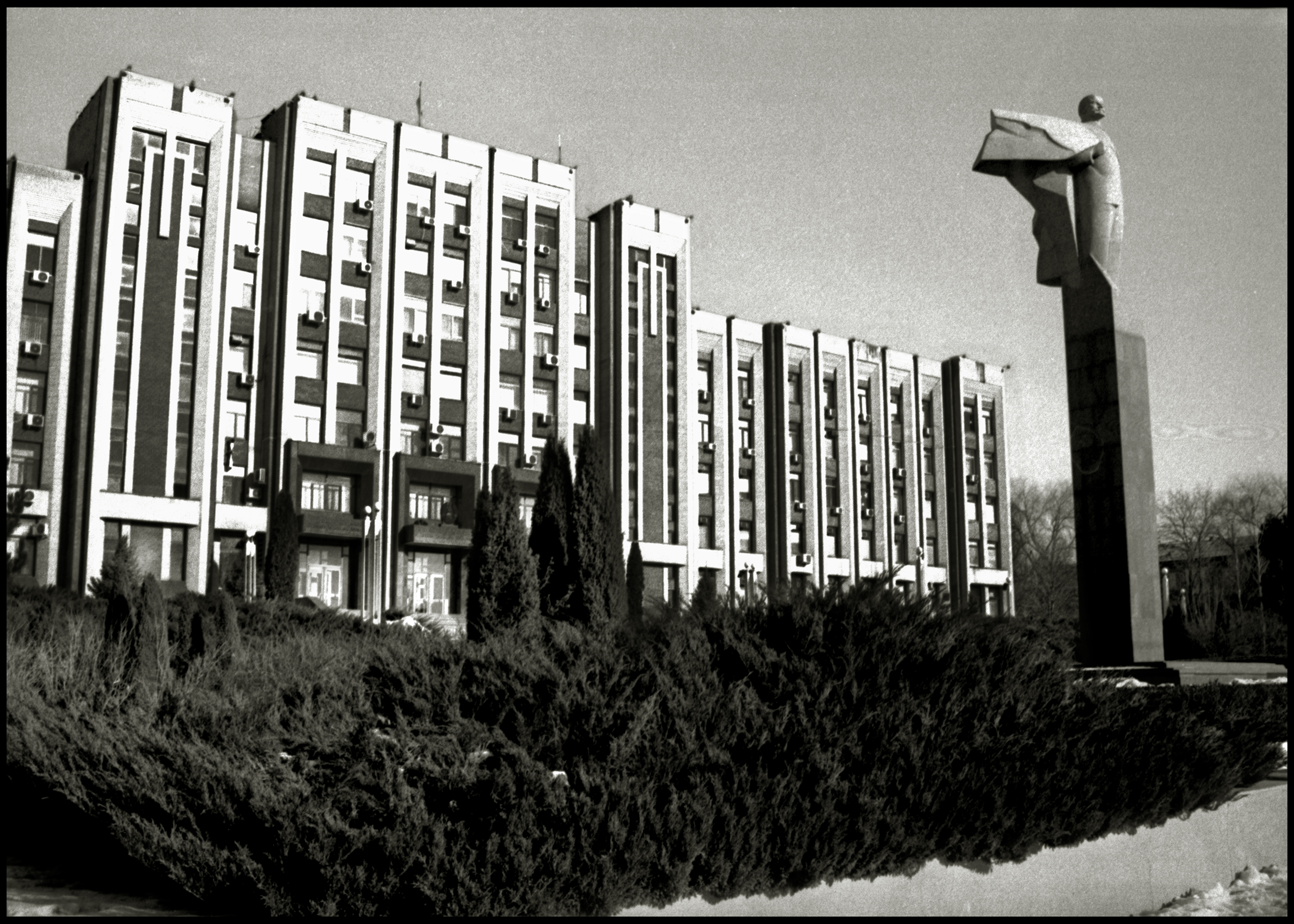
“The dialogue between Chisinau and Tiraspol in the context of the COVID-19 crisis: challenges and solutions” was the topic of discussions at EU Debates Cafe, an event organized by the Institute for European Policies and Reforms. Cristina Lesnic, Deputy Prime Minister for Reintegration, Andrei Popov, President of the Institute of Strategic Initiatives and Ion Manole, Executive Director, Promo-LEX Association, attended the event.

The discussions focused over three main areas: the healthcare in the Transnistrian region, the situation in the security zone and human rights issues.

Ion Manole, the Executive Director of Promo-LEX listed several difficulties identified during the monitoring of the situation on the left bank of the Nistru River once the state of emergency was declared. These included the establishment of posts and the installation of blockades in several localities, especially the commune of Cocieri, therefore creating additional obstacles to the free movement.

The Executive Director of Promo-LEX mentioned the beneficial approach of Chisinau authorities, who are inquiring about the problems faced by the citizens on the left bank of the Nistru River and are willing to intervene to settle them. He also stressed that the local authorities are having an increasingly insensitive behavior, accompanied by a hate speech.

In the context of the COVID – 19 pandemic, some dialogue formats and institutions proved to be ineffective, considers Ion Manole, among them the 1 + 1 format, the thematic working groups but also the Joint Control Commission. Furthermore, the role of the OSCE is unclear, which in the opinion of the expert must be more active and more efficient. First, they have to monitor the situation, this being the basic role of the mission in the Republic of Moldova. The OSCE must also inform the public and partners about the de facto situation in the region they are monitoring. Another step would be the public television debates between the two banks, so that the population from the whole territory would have access to this information. The events on the left bank of the Nistru River are discussed in the national press and the population in the region has access to this information and can make its opinion known to the population from the right bank. A the same time, the opinion leaders, the experts and the human rights organizations from the right bank cannot reach the public on the left bank of the Nistru River. Last but not least, the OSCE should intervene promptly and effectively whenever there are certain situations, cases or incidents.

“Too much attention is paid to political and diplomatic issues and it is too easy to overlook issues related to the violation of fundamental human rights in the Transnistrian region, for now especially in the security zone. The population on the left bank of the Nistru River distrusts the efficiency of the negotiations and the actions of the stakeholders involved in the process of settling the Transnistrian problem. The voice of the locals from the Transnistrian region is not heard and their problems have not been solved for years. Despite various programs and measures to increase the confidence, the effect is the opposite, “said Ion Manole.

The recommendation to the authorities is to place more emphasis on the issues related to monitoring and observing the human rights. Since the Transnistrian territory is not the private land and the private property of the group of people who are controlling it, the situation in which the press, lawyers, human rights defenders or diplomats do not have access to this territory already for about 30 years is completely unconceivable. Hundreds of thousands of people, who have fundamental rights are living over there.

“If we lose the confidence of the population, it will be much more difficult to know the real situation, and, by not trusting, the people will no longer refer to the authorities. Thus, we must focus the efforts towards the population on both banks of the Nistru River and less towards the local administration”, added Ion Manole.

The executive director of Promo-LEX stressed the importance of monitoring the human rights in the Transnistrian region; he concluded, “If human rights prevail, we shall be successful in the dialogue as well”.


Promo-LEX Warning: Party Financing in 2019 has the lowest level of reporting to the CEC compared to 2014-2018

The civic monitoring of political party financing in 2019, carried out by the Promo-LEX Association, revealed unsettled legislative loopholes, unreported expenses amounting to about 19.02 million lei, as well as a law level of financial reporting to the CEC.

Promo-LEX warns about parties’ low level of financial reporting 

This year, for the first time since 201 4, Promo-LEX found the lowest rate of party financial management annual reporting to the CEC.  As of May 7, 2020, 19 political parties (43%) managed to submit the reporting in time, one party submitted it with a delay and 26 political parties failed to submit any reporting at all.

It should be mentioned that the Promo-LEX Association took account of the specificity of the state of emergency instituted in the Republic of Moldova. However, the Association found that the CEC did not have a proactive and transparent attitude in settling the issue, disregarding the necessity to remind the parties of their reporting obligation, as well as to present, receive and publish the financial reports under exceptional circumstances.

Revolutionary amendments made to legal framework still leave legal loopholes

In 2019, the legal framework for party financing underwent extensive changes ensuring its improvement, including reduction of the amount of donations from natural and legal persons from 200 and 400 average annual salaries to 6 and 12 for the respective year; donations in the amount of three average annual salaries from  nationals residing abroad have been allowed;  a special ceiling has been set at a maximum of 10% of annual income for civil servants and persons holding public dignity offices, etc.

Despite these substantial legislative improvements, there are unsettled legislative loopholes that arise our concern. In particular, we refer to the lack of transparency due to the absence of obligation to publish primary information on political party donors and the vulnerabilities caused by hiding these data. Another vulnerable issue is CEC’s insufficient control and supervision of the financing of political parties.

Reported revenues and expenses

According to the annual reports submitted to the CEC, out of 20 political parties concerned, 16 indicated revenues in the amount of 70,028,301 lei and a total initial balance in the party account of 33,453,572 lei as of January 1, 2019. The amount of reported expenses being 94,119,778 lei, with a final balance of 9,362,096 lei as of December 31, 2019. The other 4 parties that submitted their financial statements did not indicate any revenues and expenses.

Regarding the structure of declared revenues, the CEC found that the subsidies from the state budget represented the main source of party funding in 2019 (39%). Other important revenue sources include membership fees (32%),  donations from individuals (18%) and donations from legal entities (11%).

Charitable foundations continue to promote political parties and their leaders

The civic monitoring, carried out by Promo-LEX in 2019, found that 17 political parties, visible in the public space implemented at least 2,936 promotional activities and events.

In 2019, charitable foundations did not hesitate to engage in promotional activities. Thus, the monitors found three charitable foundations, and a limited liability company, through which indirect political promotion was made, these are: “EDELWEISS” Foundation associated with Vladimir Plahotniuc and the PDM, “Din Suflet” Charity Foundation associated with the  PSRM and President Igor Dodon, as well as Social Stores LLC / “For Orhei” Association connected  with Shor Party and “Renato Usatii” Foundation associated with the PN.

The expenses estimated for these activities amount to at least 2,701,460 lei. However, none of the parties associated with the 4 entities mentioned above reported promotion expenses for charity activities.

Estimation of unreported expenses

The Promo-LEX Association found that 17 political parties failed to report a total amount of   19,021,373 lei. Traditionally, the most untransparent category of expenses is that of public events (9,044,424 lei).

Estimates of expenses for maintenance of headquarters and staff also revealed discrepancies, therefore, we emphasize the urgent need to verify the annual / semi-annual reports on financial management of political parties to ensure the correspondence of the reported financial situation to the real situation.

Civic monitoring carried out by Promo-LEX in the period of 2016- 2019 revealed large discrepancies between the financial statements reported to the CEC and the estimates of the Association. Thus, in 2016, unreported expenses amounted to 4.49 million lei, in 2017 to 42.75 million lei, in 2018 to 17.59 million lei and in 2019 to 19.02 million lei. It should be mentioned that compared to the expenses officially reported to the CEC ((94,12 million lei), the level of estimated expenses (19,02 million lei) reaches 20%.  The highest share of undeclared expenses was reached in 2017, when it amounted to 48%. For more details, see the chart below.

The full report can be found here.

* The Report “Financing of Political Parties in the Republic of Moldova. 2019 Retrospective” has been produced as part of the “Democracy, Transparency and Accountability” Program funded by the United States Agency for International Development (USAID). The views expressed in the Report are those of the authors and do not necessarily reflect the views of the funders.  

For more information, contact:
Inga Stegarescu, Press Officer of the Promo-LEX Association;
GSM: 069 26 96 84;
E-mail: [email protected]


Gaps in the legal framework and insufficient transparency – steady-state problems of both the parliamentary oversight and the public service hiring process

May 19th, 2020

The Promo-LEX Association presented today, during a press conference, the Annual Reports on “Monitoring Parliamentary Oversight for 2019” and “Monitoring on appointment/termination of public offices in 2019”.

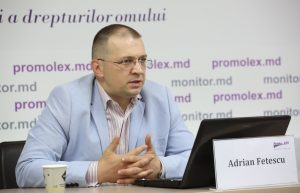
According to the expert Adrian Fetescu, the author of the report on “Monitoring Parliamentary Oversight for 2019”, there was still a stagnation in the legislative’s activity for 2019 on the parliamentary oversight dimension. The majority of the recommendations made on this issue in the Monitoring Reports for the years 2016 to 2018 had not been taken into account. Moreover, in 2019 the process of strengthening the regulatory framework and Parliamentary oversight tools was not finalized, although in November 2018 the draft Code of Parliamentary Rules and Procedures was voted in its first reading.
As a result of those reflected in the Report on Monitoring Parliamentary Oversight for 2019, the following findings were made:

  • the Parliament, its working bodies and Members are not making full use of constitutional levers with a view to exercising a genuine parliamentary oversight.
  • There is no legal framework that would allow sanctioning the decision-makers, including members of the Government providing false, incomplete or erroneous information to MPs and committees of inquiry.
  • There is neither clear description in the regulatory framework of the working procedures, nor of the parliamentary oversight appropriate limits.
  • Information about the parliamentary oversight activity is incomplete or completely missing from the official website of the Parliament (parlament.md).

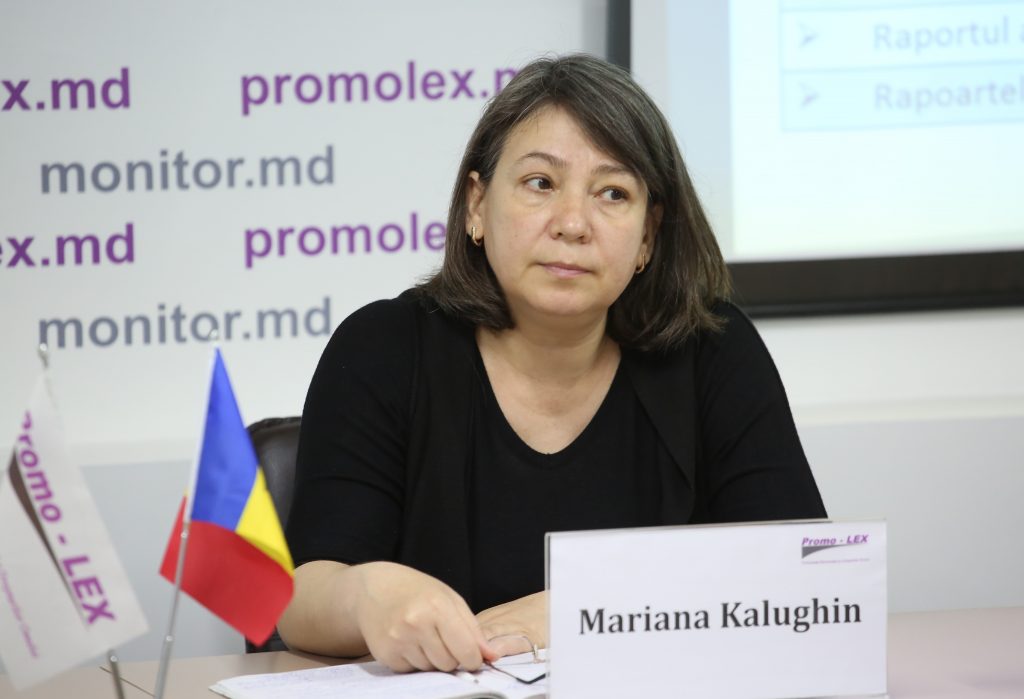
In reference to the second report on “Monitoring on appointment and termination of public offices in 2019” presented during the same press conference, the expert Mariana Kalughin, emphasised the most important findings concerning the appointment and termination of public offices 2019. In this context, the expert stated that it has been a very challenging year, however, things did not evolve essentially, compared to the years 2016-2018:

  • The principles of legality, independence, integrity and transparency are guaranteed to a limited extent. The “minimum” rating presented in the report is given due to failures to guarantee the principles of independence and transparency. In particular, it is worth noting the trend of politicization of some offices that should have remained professional. This approach needs to be reconsidered.
  • The legal provisions in this area do not cover all situations and are not sufficiently clear and enforceable.
  • Competition Committees have been set up but they did not always operate fully and efficiently. As progress we can mention the inclusion of representatives of civil society and academia in the composition of the Competition Committees, which, unfortunately, has not always enhanced the credibility of the procedures thereof.
  • As regards the application, there have been cases when, even if competitions have been organised and conducted, the results thereof have been challenged by the organisers. This has fundamentally damaged the prestige and credibility of both public competitions and the authorities organizing them.

The reports have been developed by independent experts contracted by the Promo-LEX Association. Both reports contain recommendations addressed to the Parliament, the President of the Republic of Moldova and the Government. The Promo-LEX Association has prepared similar reports for 2016 – 2018 which may be accessed HERE.

For more details, please contact:
Inga Stegarescu, Press Officer of the Promo-LEX Association;
GSM: 069 26 96 84;
E-mail: [email protected]


Promo-LEX Association launches the civic platform www.politia.monitor.md to encourage communication between citizens and the Police

The General Inspectorate of Police (GIP) is currently implementing the 2016-2020 Police Development Strategy. To this end, in 2017, the Government of the Republic of Moldova signed with the European Union the financial agreement aimed at the “Support for Police Reform”.

The main indicator of the efficiency of Police Development Strategy is the level of confidence citizens have in the activity of the Police. According to the survey, held by the national Public Opinion Barometer at the end of 2019, about 39.5% of the citizens stated that they have much or some confidence in the Police. Account should be taken of the fact that the target was set at 41%. Thus, there has been noticed a slight but variable increase in the citizens’ confidence in the Police, which in April 2016 was of 25,8%. We also find that, in addition to the efforts made to implement the internal reforms, to equip and train police officers, transparent and open communication with citizens and society, as a whole, has played an important role in achieving a higher level of public confidence in the Police.

Starting with December 2018, the Promo-LEX Association has contributed to achievement of this goal by implementing the project “Civic Monitoring of Police Reform in the Republic of Moldova”, carried out with the support of the European Union. In this period, Promo-LEX prepared and published two monitoring reports on the implementation of the Police Reform, contributed to the training of 26 communicators of the General Inspectorate of Police, awarded three sub-grants for the actions of local social organizations. Additionally, in partnership with the General Inspectorate of Police, the Association carried out a Campaign to inform citizens about the objectives and achievements of the Police Reform. The campaign reached 23 settlements of the country. Now, to enhance the communication and interaction between citizens and the Police, Promo-LEX launches the www.politia.monitor.md platform.

Thus, as of May 8, 2020, any person can report online, through the interactive map of www.politia.monitor.md, problems or violations of the law committed by citizens, civil servants, police officers, including:

  • acts of corruption,
  • cases of influence peddling or illicit enrichment,
  • abuse of office and misuse of powers,
  • forgery of public documents,
  • improper fulfillment of duties,
  • acts of torture, inhuman and degrading treatment,
  • cases of discrimination,
  • violation of legal regime of incompatibilities,
  • conflicts of interest,
  • violation of police employees’ rights.

Likewise, violation of police officers’ rights can be reported, account being taken of their official status. Promo-LEX will monitor all the cases reported regardless of their nature, and will undertake the necessary actions in those limited cases that will require the intervention of the representatives of the Association.

The platform also contains a set of standard forms that provide free legal guidance to those who would like to formally notify the competent authorities of the violations reported through the interactive map.

At the same time, the platform will inform the citizens about the progress of the Police reform, as well as about the activities and results of the “Civic Monitoring of Police Reform in the Republic of Moldova” project, implemented by the Promo-LEX Association.

For more information, please contact:
Inga Stegarescu, Press Officer of the Promo-LEX Association
GSM: 069 26 96 84;
E-mail: [email protected]


PUBLIC APPEAL on the urgent need to settle legal issues that may affect the organization and conduct of the presidential elections in the Republic of Moldova in the autumn of 2020