Worrying findings of Promo-LEX Observation Mission in the Second Monitoring Report for the Early Parliamentary Elections of 11 July 2021

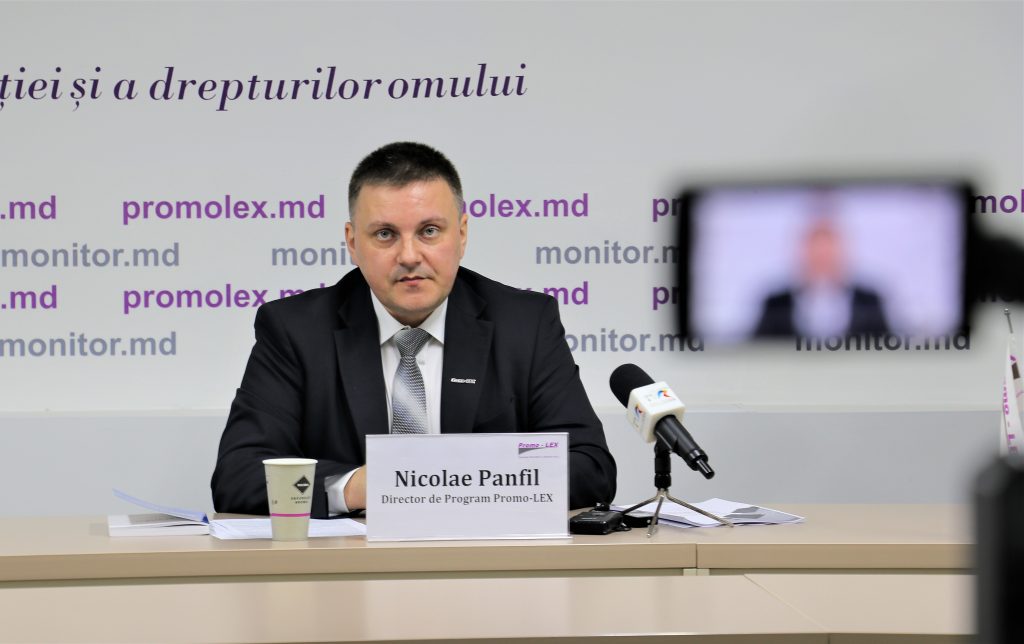
Promo-LEX Association has launched today the Second Report of Promo-LEX Observation Mission (OM) for the early Parliamentary Elections of 11 July 2021. The report contains electoral findings reported by observers between 12 and 25 May 2021.

The main aspects covered by the report:
The perpetuated tendencies in the development of the electoral campaign

As of 26 May 2021, CEC have registered eight contenders (six parties and two electoral blocs), and other two files are under review. The minimum representation quota for both sexes (40%) was respected by all candidates. We also mention that, in all eight cases, the positioning of the candidates on the lists was done in compliance with the legal provisions, at least four candidates for every ten places.

In this context, Promo-LEX OM found that most of the contenders started campaigning without registering their trustees.

At the same time, according to Promo-LEX observers, some (potential) electoral contenders started campaigning before the legal term. Thus, at least 15 activities with electoral overtones (without any urging to vote) were reported to be conducted by contenders/potential contenders, as well as 18 cases of urging to vote for a certain electoral contender/potential electoral contender (17 – Electoral bloc of Communists and Socialists (BECS), 1– ‘ALLIANCE FOR ROMANIANS UNIFICATION’ (AUR) Political Party.

At the same, since their formal registration for the electoral run, 46 activities were reported to be conducted by four electoral contenders between 21 and 25 May 2021 – PAS (80%), BECS (11%), BERU (7%) and PPS (2%). The most popular activities included dissemination of electoral materials (63%) and meetings with voters (28%).

Promo-LEX observers also reported at least 121 cases (BECS) that can be regarded as use of administrative resources. Of them, in 120 cases public sector employees were involved in campaigning activities and one case was about taking merits for services funded with public money.

In addition, at least 2 cases were reported that can be regarded as gifts with electoral impact (BECS – 1, BERU – 1), as well as one case that can be regarded as involving the President of the Republic of Moldova in campaigning for an electoral contender (PAS).

The electoral contenders for the early Parliamentary Elections may spend 4 times less money, compared with the 2019 Parliamentary Elections

During the reporting period, CEC established the general threshold of MDL 20,707,700 for the funds that can be transferred on the ‘Electoral Fund’ account of the electoral contender and of the initiative group, which is four times less than for the 2019 Parliamentary Elections (MDL 86,871,856). The significant difference between the amounts established in 2019 and 2021 was caused by the amendments made to the Electoral Code (August 2019) and the set threshold of 0.05% of the forecast revenue of the state budget for the respective year.

According to Promo-LEX observers, as of 25 May 2021 CEC has not published on its website any report of the political parties that should make transfers on the ‘Electoral Fund’ account. In addition, only PAS presented information on opening the ‘Electoral Fund’ account, though this information should be published by the deadline of 26 May 2021.

Pre-registration – a tool by which citizens can influence the number and geography of polling stations

We want to draw attention to the increase in the number of preliminary registrations by about 40,000 as compared with the presidential elections of November 2020. According to Promo-LEX estimates, in the last two weeks, in at least 8 countries, the number of polling stations changed only on the basis of the indicator regarding the number of preliminary registrations.

As regards the distribution of polling stations per countries, according to Promo-LEX estimates and if we take into account those 150 PS budgeted by CEC as a calculation basis, the highest number of polling stations will be established in Italy (28), Russian Federation (21), Germany (13), United Kingdom (11), France (9) and Romania (9).

Also, based on the 191 PS proposed by MFAEI, the highest number of PS will be established in Italy (37), Russian Federation (29), Germany (17), United Kingdom (16), France (12) and Romania (11).

Risks to the smooth organisation and conduct of the election

Promo-LEX OM draws the attention to some uncertainties related to the constitutionality of Article 51(4) of the Electoral Code. This refers to the prohibition to hold candidates to account or impose any sanctions during the electoral period without the consent of the electoral body that registered them. Given that a provision with exact the same form and content as Article 51(4) of the Electoral Code has been declared previously non-constitutional, Promo-LEX OM believes that the above article should not and may not be applied by authorities, and the electoral contenders may not use these safeguards.

Promo-LEX OM also underscores that, though the election organisation and electoral campaigning have already started, clear measures of preventing and controlling the spread of COVID-19 infection in electoral context have not been approved yet. The lack of such measures increases the risk of higher COVID-19 infection rates.

There is also no Government Decision to ensure full coverage of expenses for the organisation of the early parliamentary elections. We reiterate the concern related to the uncertainty in the central public authorities’ capacity to identify enough funds for a smooth conduct of the elections.

During the monitored period, the Central Electoral Commission approved 63 decisions, including one regulation, and two others were adjusted to the legal norms specific to the proportional system. At the same time, according to Promo-LEX, at least five more CEC regulations need to be adapted to the amendments to the Electoral Code.

According to our findings, during the current elections the LPAs again ignore their duties to appoint members of electoral bodies. Promo-LEX OM identified at least seven DEC II (19%) with no members appointed by level-two LPAs.

Another election affected by incitement to hate and discrimination

On the basis of the information submitted by monitors between 11 and 24 May 2021, we identified at least 23 cases of hate speeches and incitement to discrimination in the public space, in the media and in the online environment of the Republic of Moldova.

Thus, six electoral contenders/politicians used non-tolerant expressions: Renato Usatii (BERU) – five cases and Vladimir Voronin (BECS), Octavian Ț (BE PUN), Vasile Bolea (BECS) and Vladimir Odnostalco (BECS) – one case each.

Of the 23 cases of hate speech or incitement to discrimination identified, 9 cases targeted contenders/potential contenders/politicians: Vladimir Voronin (BECS) – 2 cases, Maia Sandu (President of the Republic of Moldova) – 2 cases, Natalia Albot (activist and journalist on the electoral list of PAS, who withdraw her candidacy on 21.05.2021 / 2 cases), Igor Dodon (BECS), Dumitru Diacov (PDM) and Vasile Bolea (BECS) – one case each.

The full report can be accessed here.


The report is developed as part of the Observation Mission for the Early Parliamentary Elections of 11 July 2021 conducted by Promo-LEX Association with the financial support of the United States Agency for International Development (USAID) via the ‘Democracy, Transparency and Accountability’ Program, as well as the Embassy office of the Kingdom of the Netherlands in Moldova through the project “Support for informing citizens and civic observation of Early Parliamentary Elections in 2021 in the polling stations created by voters in the Transnistrian region”. ‘Hate speech’ component is supported by Justice and Human Rights Department of Soros Foundation Moldova under ‘Consolidation of a platform for the development of activism and education in the area of human rights in Moldova – stage IV’ Project.


For more details, please contact:
Inga Stegarescu, Press Officer of Promo-LEX Association;
GSM: 069 26 96 84;
E-mail: [email protected]


Promo-LEX: restrictions on freedom of movement, kidnappings, the fight against “extremists” or the situation – the worst human rights issues in the Transnistrian region in 2020

Today, May 21, 2021, during a press conference, the Promo-LEX Association launched the Annual Report – “Human Rights in the Transnistrian region of the Republic of Moldova”. The document includes findings on the situation on the left bank of the Dniester River in the field of human rights, as well as an analysis of the actions of relevant actors during 2020.

Background. In 2020, the territory on the left bank of the Dniester River became even more isolated than in previous years. If previous reports revealed a lack of access for human rights monitoring institutions or missions, by 2020, the situation has worsened as a result of additional restrictions. The COVID-19 pandemic was used by the de facto administration of the region as a screen for a series of actions to limit fundamental rights and freedoms.

Pandemic as an argument. Under the pretext of the epidemiological situation, at least 37 illegal checkpoints were abusively installed and the access of the population, and also of the economic agents in the region was blocked. Even though the number of checkpoints has been reduced to 11, the situation regarding freedom of movement has not improved.

Kidnapped for “betrayal of the fatherland”. Another problem that has returned to the present day is the phenomenon of kidnapping, committed by the force structures in the Transnistrian region. During the months of August-October 2020, at least 7 cases were registered in the Security Zone when the force structures kidnapped people invoking various reasons, but most frequently reasons for collaboration with the law structures of the Republic of Moldova were invoked. Two of them are illegally detained by the alleged bodies in the region.

Extremist activists? These actions were preceded by the adoption of actions to restrict political freedoms such as the adoption of a Strategy to prevent extremism in Transnistria for the years 2020-2026[1]. This document gave free rein to intimidation of activists in the region, and during 2020 there were several cases of restriction of the right to free expression and assembly.

In the context of these abusive actions of the de facto administration of the Transnistrian region, the authorities of the Republic of Moldova, but also the external partners involved in the negotiation process were unable to solve, even partially, the identified problems.

According to Promo-LEX lawyer Pavel Cazacu: “The fact that the human rights situation worsened considerably in the Transnistrian region once again demonstrates the imperative need to identify mechanisms for individual sanctions against persons responsible for serious human rights violations in this territory.”

Promo-LEX recommendations:

  • Active involvement and immediate reaction in order to solve individual cases of serious human rights violations;
  • Promoting the need for unconditional access for international human rights monitoring institutions on the territory of the Transnistrian region;
  • Adoption by the Parliament of the Republic of Moldova of the draft law on the mechanism for sanctioning persons responsible for human rights violations (Magnitsky Law);
  • Coordination between state institutions for strategic activities in the field of human rights in the Transnistrian region.


[1] Strategy to prevent extremism for the years 2020-2026, http://president.gospmr.org/pravovye-akty/ukazi/ob-utverjdenii-strategii-protivodeystviya-ekstremizmu-v-pridnestrovskoy-moldavskoy-respublike-na-2020-2026-godi.html


The first findings of Promo-LEX Observation Mission for the Early Parliamentary Elections of 11 July 2021

As per Presidential Decree of 28 April 2021 on dissolving the Parliament and setting the date of the elections, the early Parliamentary Elections will be held on 11 July 2021 — an important ballot for the decision-making quality and strategic direction in the Republic of Moldova.

With the aim of developing democracy in the Republic of Moldova, including in the transnistrian region, Promo-LEX has launched today the XXIth Election Observation Mission (OM). Promo-LEX also presented the first Monitoring Report for the Early Parliamentary Elections of 11 July 2021.

The report covers both the pre-electoral period and the electoral period before the onset of candidate nomination procedures (23 December 2020 – 11 May 2021).

Relevant legal framework for the Early Parliamentary Elections of 11 July 2021

As the mixed electoral system was cancelled and Law No 113 of 15.08.2019 reintroduced the proportional elections, the early Parliamentary Elections of 11 July 2021 will be held on the basis of the latter. The principle of electoral law stability, stating that any substantial changes should be made prior than one year before the election, was hence complied with.

At the same time, we would like to draw the attention to draft Law No 263 of 19.06.2020, which was not passed in the second reading in the Parliament, but which contains a series of useful provisions for the proper conduct of elections[1]. At least two other draft laws on amending the Electoral Code were tabled in 2020, intended to ensure the right to vote and safety measures for elections amidst the pandemic[2]. None of these drafts was included on the Parliament’s agenda.

Promo-LEX regrets that only 7 of the 22 recommendations for legal/regulatory framework improvements, made after the 2019 Parliamentary Elections, were implemented fully or partially.

Risks to the good organisation and conduct of the elections of 11 July 2021

Given that the Parliament may not amend the State Budget Law any more, the Government should make sure that the needed funds are allocated for the elections. The Government Decision on Funds Allocation was approved on 12 May 2021 to this end. It was thus decided that the Ministry of Finance allocate to the Central Electoral Commission the first tranche of MDL 70,000.0 from the Government’s Reserve Fund for the organisation and conduct of the early Parliamentary Elections on 11 July 2021, accounting for 56% of the budget estimated by CEC. We hence underline that, in order to avoid potential risks and uncertainties for the smooth organisation and conduct of the elections, the Government should commit to covering the full cost of the elections.

The possible impact of COVID-19 on the elections is another challenge to the good organisation and conduct of the elections of 11 July 2021. We underline that the electoral authority and public authorities already have relevant experience, accumulated during the 2020 Presidential Elections. Nonetheless, we underline the need to find ways to vaccinate, as a matter of priority, the electoral officials and persons authorised to monitor the electoral activity, as well as the needs for CEC approval of the Instructions on Measures of COVID-19 Prevention during the electoral period, in order to minimize the risks of infection spread.

The importance of preliminary registration to determine the number and location of polling stations for voters abroad and from the transnistrian region

The polling stations for voters from the transnistrian region and for those abroad should be set up transparently, in line with the law and the best practices established by CEC at the 2020 Presidential Elections (by applying a clear mathematical formula to establish the number and location of polling stations abroad).

According to Promo-LEX estimates (on the basis of data available on 11 May 2021), if compared with the previous elections, the number of polling stations for the early Parliamentary Elections of 11 July 2021 should be increased in Germany (+6), Russian Federation (+4), and UK (+4), and it could be decreased in USA (-5), Romania (-4) and Italy (-3).

We hence recommend that citizens who will be abroad on the election day, as well as those living in the transnistrian region, to register preliminarily until 26 May 2021. We also underline the need for authorities to promote more actively this instrument in order to have accurate information about the number and location of citizens willing to cast their votes.

Dynamics of the number of voters included in the State Voter Register (SVR)

Promo-LEX noticed a constant, though insignificant diminution in the number of voters in SVR. Thus, as per CEC data, on 4 May 2021 the number of voters was lower by 7,529 people compared with 2 September 2020.

We find, however, an increase in the number of voters without domicile/residence and of those from the transnistrian region (15.1% of the total number), thus resulting in a higher share of citizens who could vote on additional lists.

Hate speech used more often during pre-electoral and electoral periods

According to Promo-LEX data, hate speech was used to a higher extent during 2018-2020, with a stronger dynamic during the pre-electoral and electoral periods. We also draw the attention to the failure of the Parliament of the Republic of Moldova to take any actions between December 2020 and April 2021 in order to implement the Constitutional Court recommendations of 2016 and 2020 to review the law and set up control mechanisms and sanctions for involving religious cults in electoral campaigns, and to prevent and respond to electoral contenders’ hate speeches, including online.

Therefore, in order to raise the awareness of election campaign stakeholders and prevent the use of hate speech and incitement to discrimination, Promo-LEX Observation Mission will continue monitoring this phenomenon during the elections of 11 July 2021, as well.

You can access the whole report here.

The report is developed as part of the Observation Mission for the Early Parliamentary Elections of 11
July 2021 conducted by Promo-LEX Association with the financial support of the United States Agency
for International Development (USAID) via the ‘Democracy, Transparency and Accountability’
Program. ‘Hate speech’ component is supported by Justice and Human Rights Department of Soros
Foundation Moldova under ‘Consolidation of a platform for the development of activism and education
in the area of human rights in Moldova – stage IV’ Project.

For more details, please contact:
Inga Stegarescu, Press Officer of Promo-LEX Association;
GSM: 069 26 96 84;
E-mail: [email protected]
_____________________________________________________________________________________________________________________

[1] Prohibition of hate speech and/or speech inciting hatred, gradual sanctions for violation of the electoral law; sanctions for involving religious cults and other non-commercial organisations in electioneering; regulation of organised transportation of voters to polling stations etc.

[2] The draft Law No 210 of 28.05.2020, and draft Law No 414 of 06.10.2020 provided for two consecutive days of election and adjustment of the relevant rules for two-day elections.


Medical care and precarious conditions of detention in the case group I.D. v. Moldova to the attention of the Committee of Ministers of the Council of Europe

On April 27, 2021, the Promo-LEX Association sent to the Committee of Ministers a communication on the execution of general measures in the group of cases I.D. v. Moldova. The group of cases mainly concerns the precarious conditions of detention and the lack of access to adequate medical care during detention. The Committee has previously made binding recommendations for the Government of the Republic of Moldova, that need to be implemented.

Previously, the Promo-LEX Association also sent communications on this group of cases on 20 May 2019 (see DH-DD (2019) 635 [1]) and 20 April 2020 (see DH-DD (2020) 384 [). 2]). These communications described current problems in the field of ensuring detention conditions in accordance with CoE and UN standards, the quality of healthcare (including in the context of the COVID-19 pandemic), overcrowding in the penitentiary system and significant delays in the construction of a penitentiary.

In its communication, Promo-LEX described some concerns about the application of the new preventive and compensatory remedy to challenge the precarious conditions of detention (including the ineffectiveness of the preventive remedy in specific situations, the excessive length of examination of detainees’ complaints in court and insufficient financial as compensation.

By Decision of the Committee of Ministers of 4 June 2020 (CM / Del / Dec (2020) 1377 / H46-21) it was decided to continue to supervise the execution of the general measures formulated in case group H46-21 I.D. v. Republic of Moldova (Complaint No. 47203/06). Thus, the Committee invited the authorities to provide, by 31 March 2021, information on the following issues:

  • the practical application of the preventive and compensatory remedy;
  • information on alternative measures applied to improve precarious detention conditions;
  • measures taken to further improve healthcare in detention facilities;
  • the practice of the criminal investigation body and the courts for examining the detainees’ requests regarding the approval of meetings with family members.

At the last session, the Committee of Ministers made the following specific recommendations to the Government, the implementation of which was analyzed in the Promo-LEX communication:

  • called on the authorities to complete without delay the review of the preventive and compensatory mechanism and encouraged them to cooperate closely with the Secretariat in this reform process and to keep the Committee of Ministers informed of all developments in a timely manner;
  • during the review of the preventive and compensatory mechanism, asked the authorities to take all necessary measures to avoid the influx of new, well-founded claims before the European Court of Justice and noted in this context that the amounts of internal compensation should not be unjustified compared to the amounts granted by the European Court in similar cases;
  • further called on the authorities to ensure that the legal deadline of three months for examining detainees’ complaints lodged in the context of the preventive and compensatory mechanism is met;

The next evaluation of the measures undertaken by the Government of the Republic of Moldova in the group of cases I.D. v. Moldova, will be resumed at one of the nearest sessions of the Committee of Ministers planned for 2021.


PUBLIC APPEAL Of the National Platform of the Eastern Partnership Civil Society Forum on the attempt of abuse of state power by a group of MPs in the parliament of the Republic of Moldova

April 23, 2021

The Constitution of the Republic of Moldova is the Supreme Law of the state. No law and no other legal act contrary to the provisions of the Constitution has legal force;

We urge the Parliament of the Republic of Moldova and other political actors to refrain from unfounded attacks on the Constitutional Court and judges, as they promote a culture incompatible with the values of the rule of law. The Constitution of the Republic of Moldova is the supreme law of the society and the state, the observance of which is an axiom, and the decisions of the Constitutional Court, including the above-mentioned opinion, are final and cannot be challenged.

We find that the actions taken by the parliamentary majority by approving the Parliament Decision on withdrawing the vote of confidence to Ms. Domnica Manole, President and Judge of the Constitutional Court are contrary to the Constitution, the Law on the Constitutional Court, Constitutional Court Decision no. 8/2013 and constitutes the elements of the abuse of state power. At the same time, the approval on the same day, one hour after the decision of the Parliament, appointing another judge to the Constitutional Court, knowing the requirements on how the mandate of a judge in the Constitutional Court is revoked, demonstrates the intention of the parliamentary majority to abuse the state power.

We support the decision of the President of the Republic of Moldova to convene the Supreme Security Council in order to discuss and take immediate action by the competent authorities that are required to stop illegal actions against the Constitution and state power.

We urge the Prosecutor General to take the necessary action to ensure compliance with the law and the immediate stop of illegal actions of the Parliament majority. We consider that the actions of the Parliament and of the parliamentary majority constitute the elements of the crime of abuse of state power provided by article 339 of the Criminal Code.

We call on development partners and diplomatic missions accredited to the Republic of Moldova, the Council of Europe and Delegation of the European Union to the Republic of Moldova to react promptly to these actions of abuse of state power and blatant violation of the Constitution of the Republic of Moldova, including the independence of the Constitutional Court.


A person was arbitrarily and illegally detained for 17 days in prison. The government is obliged to pay the amount of 38000 MDL

On 14 April  2021, the Supreme Court of Justice issued a Judgment on the case of a man illegally and arbitrarily detained in the penitentiary institution, the appeal of the Ministry of Justice being rejected. In this case, the Government is obliged to pay the applicant the amount of 38000 MDL as non-pecuniary damage.

The Promo-LEX Association represented in the national courts a plaintiff who requested through his action to have found the violation of the provisions of art. 5 of the ECHR (Right to liberty and security of person). He complained that he had been deprived of his liberty illegally and arbitrarily for 17 days in the penitentiary institution. The penitentiary refused to release the applicant from the execution of the prison sentence immediately from the date of the ruling on the conditional remission of sentence.

For the illegal and arbitrary detention, the applicant brought a civil action before the court. In his application, the applicant sought compensation for non-material and material damage caused, at the expense of the state. The applicant rewuested to the court for the direct application of the Convention in his case, due to the lack of special rules in national law that would be applicable in similar situations.

The Centru District Court of Chisinau, on 20 February 2020, upheld this claim and found a violation of the applicant’s right to liberty for a period of 17 days. In order to compensate the damage, the amount of 3952.50 MDL, material damage, and the amount of 34000 MDL moral damage were granted, which is the equivalent of 2000 MDL for each day of illegal detention. The court correctly determined when the applicant was to be released from prison. According to the court decision, “the court finds that, contrary to the provisions mentioned above, in the operative part of the conclusion of the Chisinau Court (Ciocana headquarters) of 28 June 2019, the order of immediate release of the plaintiff Obneavco Vladimir is not indicated, reason for which the administration of the Penitentiary no. 9 – Pruncul did not release the applicant from detention on the day of the decision, he was released on 15 July 2019, ie over 17 days from the decision of 28 June 2019, which is inadmissible and seriously infringes the applicant’s rights and interests.”. The decision can be accessed here.

The judgment was challenged by the defendant, but was upheld by the Chisinau Court of Appeal. In the motivation of the Decision of 6 October 2020, the Chisinau Court of Appeal found: “it was established with certainty that the plaintiff / respondent was illegally deprived of liberty for a period of 17 days, which in turn constitutes a violation of the right to liberty guaranteed by the Constitution of the Republic of Moldova at art. 25, as well as art. 5 of the Convention for the Protection of Human Rights and Fundamental Freedoms, which states that everyone has the right to liberty and security of person”. The decision can be accessed here.

On 14 April 2021 the Supreme Court of Justice declared inadmissible the appeal lodged by the Ministry of Justice in the applicant’s action, represented by the lawyer of the Promo-LEX Association, against the Minister of Justice, concerning the finding of violation of the right to liberty, reparation of material and moral damage. The conclusion can be accessed here.

According to Promo-LEX lawyer, Victoria Gamurari: The decision of the national courts is important from the perspective of the direct application of the European Convention on Human Rights, as well as the correct interpretation of the moment when the conclusions of the investigative judges on the application of parole are to be implemented. These Judicial Conclusions are enforceable immediately from the moment of delivery. It is gratifying that the non-pecuniary compensation awarded to national courts corresponds to the amounts decided by the ECHR in similar cases.

In cases of violation of the provisions of art. 5 of the Convention and the award of compensation for violation of this right, the Republic of Moldova tends to award small amounts that do not correspond to the suffering caused to the applicants. A broader picture of this phenomenon is developed in the Study on the observance of Article 5 of the Convention for the Protection of Human Rights and Fundamental Freedoms by the Republic of Moldova (2018). This can be fully accessed here.

Examples of Court Judgments in case of compensation for the term of illegal detention.

Name of the case Term of illegal detention Compensation granted by national courts Compensation granted by the ECHR
Case Grecu v. Republic of Moldova (no. 51099/10, 30 May 2017) 1 day 3,200 Euro 11,800 Euro
Matasaru and Savitchi v. Republic of Moldova

(no. 43038/13, 10 July 2018)

6 hours 45 min. (both applicants)

4.5 hours (first applicant)

6 hours (first applicant)

900 Euro (first applicant)

270 Euro (second applicant)

8000 Euro
Cucu and others v. Republic of Moldova (no. 7753/13, 75188/13 and 76511/14, 10 July 2018) 10 days (first applicant)

7 days (second applicant)

9 days (3rd applicant)

835 Euro additional 625 Euro (first applicant)

428 Euro additional 444 Euro (second applicant)

317 Euro (3rd applicant)

4000 Euro for each applicant
Case of Pasa v. Republic of Moldova (no. 50473/11, 15 May 2018) 1 month EUR 5000


Rata populației penitenciare din Republica Moldova este cu peste 25% mai mare decât media europeană

Consiliul Europei a publicat la 8 aprilie 2020 raportul anual SPACE (Statistici penale anuale privind populațiile penitenciare pentru anul 2020). Raportul poate fi accesat aici: https://bit.ly/32ufpzl

Potrivit Raportului, În Republica Moldova, cât și în Turcia, Federația Rusă, Georgia, Lituania, Azerbaidjan, Republica Cehă, Polonia, Republica Slovacă, Estonia, Letonia, Muntenegru, Albania, Ungaria, Serbia, Malta, rata populației penitenciare la 100.000 de locuitori este foarte înaltă. Aceasta este cu peste 25% mai înaltă decât valoare medie europeană.

Numărul deținuților și a populației penitenciare la 31 ianuarie 2020 în Republica Moldova este de 6716 persoane. Rata standardizată este de 166,5 deținuți la 100.000 de locuitori. În 2020 populația penitenciară a scăzut cu 15,5% în comparație cu anul 2019.

Pentru mai multe detalii, accesați:

Din 2010 până în 2020, în Republica Moldova rata standardizată a populației penitenciare semnalează cifre fluctuante, însă din 2016 se înregistrează o scădere treptată a populației penitenciare în Republica Moldova.
Comparativ cu state membre al Consiliului Europei, cu o populație similară, cum ar fi Georgia și Lituania, rata populației penitenciare în Republica Moldova este mai mică. La 31 ianuarie 2020, în Georgia populația penitenciară este de 9806, iar în Lituania 6138 de persoane.
Suma medie pentru întreținerea unui deținut pe zi în Republica Moldova este de 9,7 Euro. Această sumă este cu mult mai mică, decât în Georgia care este de 12,6 Euro sau Lituania care este de 30 Euro.
Vârsta medie de persoanelor deținute în Republica Moldova este de 35 de ani. În timp ce în Georgia este de 44 ani, iar in Lituania de 37.
În 2020 sunt 406 de femei aflate în custodia statului, ceea ce constituie 6% din populația totală a penitenciarelor din Republica Moldova. În Georgia, unde populația penitenciară de gen feminin este de 391 persoane, adică 4% din totalul populației. Iar Lituania are o populație penitenciară de gen feminin în număr de 288, ceea ce constituie 4,7% din totalul populației penitenciare.
Pe parcursul anului 2020, în penitenciarele Republicii Moldova au decedat 36 de persoane. În penitenciarele din Lituania, numărul deceselor a ajuns la 29 persoane. Iar Georgia înregistrează un număr mult mai mic de decese în penitenciar în anul 2020, de doar 9 persoane.
Raportul SPACE I 2020 conține informații la nivel de țară privind populația instituțiilor penitenciare din statele membre al Consiliului Europei. Acesta a fost făcut public la data de 11 aprilie 2021.
Raportul reflectă și starea de fapt în penitenciarele din Republica Moldova.


OPINION NOTE The ban on all public assemblies in the Republic of Moldova is unjustified and excessive


Promo-LEX Association and CPR Moldova

  • Request that the Commission for Emergency Situations revises its Directive no. 1 of 01.04.2021 and abolishes its ban on public assemblies.
  • Recommend that subsequent decisions restricting freedom of assembly during the Covid-19 pandemic are based on a carefully reasoned analysis of circumstances and the potential impact of such restrictions.

On 30 March the Republic of Moldova’s caretaker cabinet submitted to the Parliament a draft decision on declaring a national state of emergency in relation to the public health situation in the country marked by an increase of COVID-19 infections.

The next day, the parliament’s legal committee has approved its report on the draft decision to declare emergency for the entire territory of the Republic of Moldova for a period between 1 April and 30 May 2021. The draft decision was submitted to the Committee by the Socialists Party’s MPs Vasile Bolea, Alla Dolinta and Alexandr Suhodolski.

After a few hours of debates, the Parliament has adopted the decision by a majority. A state of emergency was declared for sixty days starting 1 April 2021. Article 2 of the Parliament Decision no. 49 on introducing the state of emergency reads, inter alia, that ”during the emergency, the Commission for Emergencies of the Republic of Moldova issues directives to ban gatherings, public manifestations and other mass actions”.

On 1 April 2021, the Commission for Emergencies, adopted its Directive no. 1, reiterating the main restrictions previously adopted by the National Public Health Emergency Commission. Among others, point 6 of the CE directive says that: gatherings, assemblies, public manifestations, meetings and other mass actions are banned.

This directive effectively suspends for a period of 60 days the constitutional right of Moldovan citizens to freedom of assembly (Article 40 of the Constitution) – without sufficient justification and with a risk to restrict disproportionately civil and political rights. Promo-LEX and CPR Moldova believe that this rule is unjustified and excessive based on the following:

  1. The ban is illegal, arbitrary and contradictory.

International human rights treaties ratified by the Republic of Moldova – ICCPR and ECHR among others – provide that no restrictions may be placed on the exercise of freedom of assembly other than those imposed in conformity with the law and which are necessary in a democratic society in the interests of national security or public safety, public order, the protection of public health or morals or the protection of the rights and freedoms of others. Rules to similar effect are contained in Article 54 of the Moldovan Constitution. The United Nations Special Rapporteur on the rights to freedom of peaceful assembly and of association has recently urged that ”it is imperative the crisis not be used as a pretext to suppress rights in general or the rights to freedom of peaceful assembly and of association in particular”.

Although apparently pursuing the legitimate aim of preventing the spread of SARS-CoV-2, the measure is ill-grounded since it was imposed without providing any reasoning for its necessity. Public authorities didn’t bring any evidence to prove that peaceful assemblies lead to the proliferation of infections or that previous restrictions to control health risks during assemblies – such as wearing masks, limiting the number of participants, the mandatory social distancing of at least 1 meter, penalties for violations of the restrictive measures – have not worked.

  1. The ban is neither necessary nor proportional.

Rather than banning peaceful assemblies altogether, the authorities should continue to impose limited time, place and manner restrictions that would address the relevant public health risks. Holding assemblies outdoors, in a spacious place, for short periods of time and keeping social distance is compliant with the standards agreed by the healthcare experts. A ban on assemblies that would be compliant with the general rules set above is not proportional to the legitimate aim pursued.

Taking into account the risks of infection with SARS-CoV-2, authorities should restrict mainly indoor gatherings held with many participants, for a long period of time and those that do not observe physical distancing.

In this regard, Directive no. 1 of 01.04.2021 does not explicitly regulate religious gatherings held inside places of worship nor explains whether the general provision of point 6 applies to them as well. Also, the Directive does not ban gatherings in shopping malls and public transport, which usually involve a significant number of people interacting indoors.  Furthermore, point no. 5.3 of the directive allows for professional meetings, assemblies and summits with the physical presence of persons, for a duration not exceeding 60 minutes and in a limited number according to the rule of 4 square meters per person of the room area. Finally, the regulations in force allow commercial activities, such as the activity of the markets, which are associated with the presence of a large number of persons. We believe that a similar approach of limiting risks instead of banning should apply to peaceful assemblies in accordance with the Law on assemblies.

  1. The ban has a disproportionate impact on civil and political freedoms.

Although drafted in broad terms, the ban on public meetings, gatherings, assemblies, demonstrations and other mass actions could have a disproportionate impact on civil and political freedoms. Such a ban, in conditions of health, political and economical crisis could be interpreted as a tool to prevent protests and expressing opinions critical of the government. As such, the ban carries a high risk of being mishandled by the authorities to censor opposition and rights groups in a critical period for the country.

To achieve the expected effect of decreasing infections and relieving the healthcare sector, restrictions must be systematic, non-contradictory and based on scientific evidence. We believe that the ban on peaceful assembly during the state of emergency does not meet these criteria and is in effect disproportionate and excessively restrictive to citizens’ rights.


Transparency of the activity of level-two local public administration in 2020

Transparency of the local decision-making process and access to official information are essential in ensuring efficiency of the decision-making. Based on this assumption, during 2017-2020 Promo-LEX Association monitored the activity of level-two local public administration authorities (LPAs) and of the autonomous territorial unit of Gagauzia (ATUG) in terms of decision-making transparency at the local level.

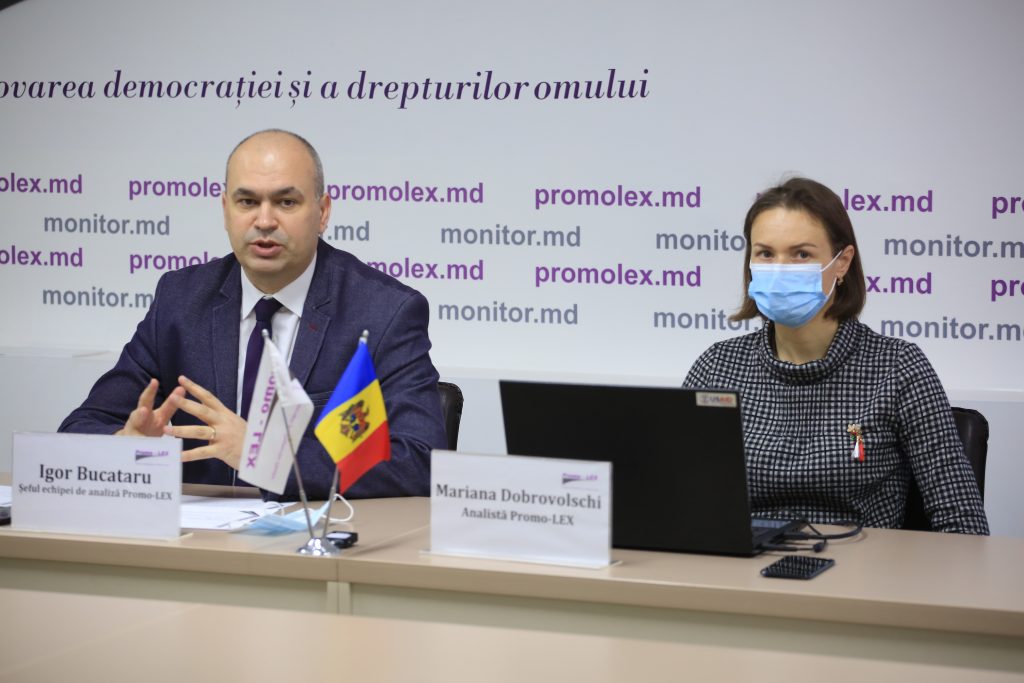
In this context, on 30 March 2021, Promo-LEX Association presented during a press conference the findings and recommendations formulated in the Report no. 6 on the transparency of the activity of level-two local public administration for 2020. Being the last report of this series, it also contains conclusions on developments in this area during 2017-2020.

Thus, with regards to the monitoring period of January-December 2020, Promo-LEX found a weak observance by level-two LPAs of the legal requirements for decision-making transparency.

More transparent meetings of level-two LPAs, including as a response to the COVID-19 pandemic


Amidst the pandemic, during 2020 level-two LPAs’ deliberative authorities organised meetings both with the physical presence and online, complying in most of the cases with the relevant legal requirements. However, compared to the previous period (2019) monitored by Promo-LEX, the rate of placing the decisions adopted during those meetings on the website decreased by 4%.  At the same time, if compared with the decisions published on the official website of LPAs, in 2020 the number of decisions entered into SRLA was by 16.98% higher. We draw the attention that entering the acts in SRLA does not exempt level-two LPAs from the obligation to place them on their official website.

Promo-LEX Association appreciates and welcomes the live streaming of level-two authorities’ deliberative meetings, regarding this as an element of maximum transparency of the decision-making. Thus, in 2020, the percentage of live-streamed meetings grew by 16.45%, being used by 51.42% of LPAs, including as a response to the COVID-19 pandemic.

LPA websites – the main source of communication

According to the Monitoring Report, the preferred way of communication between LPAs and stakeholders (media, NGOs and active citizens) interested in the decision-making process has overall remained the same, with websites being the most common source of communication. At the same time, compared with the first semester of 2019, both LPAs and stakeholders are using social networks to a higher extent.

At the same time, Promolex found a progress of the level of conformity of the legal provisions of the content of the LPA web pages in terms of decisional transparency.  The analysis of the situation per LPA proves that the authorities from Balti municipality, and Sangerei and Straseni districts are doing best in this area. LPAs from Anenii Noi, Briceni, Drochia and Taraclia districts are at the opposite extreme.

Low access to public information

Promo-LEX found a nearly 9% decrease in the rate of answers provided by level-two LPAs within the legal deadline and with a full content.

In retrospect, during 2017-2020 the LPAs from Chisinau municipality, Anenii Noi and Rezina districts had the weakest results in terms of providing answers to requests for information.

Low transparency of public procurements

It is alarming that the LPAs’ official websites ensure a low transparency of the procurement process, being limited to the publication of the Procurement Plans. Most of the LPAs do not place on their official websites any reports on low-value public procurements (only 15 LPAs), nor quarterly/bi-annual or annual reports on monitoring the execution of public procurement contracts (only 9 of the 35 LPAs). In 2020 the number of LPAs that complied with legal requirements decreased, compared to the previous periods.

Minimum actions taken to provide the needed facilities for persons with special needs

Though other two buildings of LPAs have become more accessible for persons with special needs (27 of the 35 LPAs) in 2020, we attest to the lack of attitude or actions by LPAs in order to facilitate the conditions for people with special needs. Similarly to the previous monitoring period, 33 LPAs (except LPAs from Leova and Cantemir) did not arrange a special room for mothers with children, and 34 LPAs do not have a WC friendly for this category of applicants.

In retrospect, the conclusions formulated after analysing the degree of compliance with legal provisions during 2017-2020 are equivocal. On the one hand, thanks to the efforts made by Promo-LEX monitors and other stakeholders, most of the monitored indicators have improved, on the other hand the improvement trends do not seem to be systemic. Though the degree of compliance with the law has overall improved, we draw the attention to some important elements of transparency, which worsened during the monitored period:

  • lower engagement of stakeholders in the decision-making processes at the LPA II level;
  • fewer decisions, approved by level-two local public authorities, published on the website.

Promo-LEX believes that the duplicity of noticed trends is certainly determined by the quality of the LPA’s activity, and also to a great extent by the existing uncertainties concerning the future of level-two public administration in the Republic of Moldova. The sustainability and quality of LPA II activity will be affected as long as the State authorities do not present a clear vision in this area.

The full report can be accessed here.

The initiative for monitoring the transparency of the activity of level-two LPAs and ATUG was funded by the United States Agency for International Development (USAID), under ‘Democracy, Transparency and Accountability’ Program. The opinions presented in the public reports of Promo-LEX belong to authors and do not necessarily reflect the donors’ view.

For more information, please contact:
Inga Stegarescu, Press Officer of the Promo-LEX Association;
GSM: 069 26 96 84;
E-mail: [email protected]


Opinion of the Promo-LEX Association: The return to the military rank titles within the Ministry of Internal Affairs is devoid of logic and usefulness, and could reverse the police reform path

On 25 March 2021, Promo-LEX Association reached out to the Parliamentary Committee for National Security, Defence and Public Order, asking to consider its findings, conclusions and recommendations regarding the draft Law No 511 of 10.12.2020, which provides for the return to military ranks within the Ministry of Internal Affairs.

Following the analysis of the draft law, Promo-LEX believes that assigning military ranks to a civilian police entity is devoid of logic and usefulness. According to the European Code of Police Ethics and the explanatory memorandum, the police, when performing their duties, shall be under the responsibility of civilian authorities.

At the same time, note that ‘demilitarisation’ of the police and delimitation of the police officer status from other categories of servants was one of the goals set up in the Concept Paper on the Reform of the Ministry of Internal Affairs. Although the formal aspect of ‘demilitarisation’ was solved by granting the status of a civil servant to the personnel with special status in the MIA, nevertheless, other measures were to be carried out to ensure the effective, lasting transformation of the Police activity. Thus, the civilian police model implies understanding and assuming the fact that order and security are a public service for the benefit of the community.

The issue of demilitarisation is mentioned in several strategic documents, including in the Police Development Strategy for 2016-2020. It is noteworthy that the implementation of this Strategy was possible thanks to the generous support provided by the development partners of the Republic of Moldova, particularly the budget support for the Police Reform granted by the European Union in the amount of about EUR 51 million. Given that the authorities of the Republic of Moldova demonstrate a lack of consistency in the measures promoted in this area and that the practical usefulness of the draft Law voted in the first reading is questionable, we draw the attention of the Parliament of the Republic of Moldova, the Ministry of Internal Affairs and the Presidency to the risk of losing the confidence of development partners and the financial support granted for the implementation of real reforms in this area.

In addition to the arguments presented above, Promo-LEX Association points out that, although one of the stated purposes of the draft Law is to eliminate confusion and uncertainty about special ranks, as well as the need to correlate them with the special ranks of other public institutions, by returning to the old special ranks corresponding to the military ones, in fact, more confusions and ambiguities will be created, especially in relation to the special ranks of the sub- officers. Thus, we believe that the confusions invoked by the draft Law’s authors are a natural consequence of any process of reform or reorganisation. Respectively, by promoting the current titles of special ranks applied in the MIA and by communicating actively with people about the reform itself and its advantages, the problem identified by the authors of this draft Law could be solved.

In conclusion, after analysing the draft Law No 511 of 10.12.2020 the Promo-LEX Association finds that its approval in the second reading would be detrimental to the system of the Ministry of Internal Affairs. Promo-LEX Association recommends the authors to withdraw the draft Law from further examination, or, as the case may be, that the Parliament of the Republic of Moldova rejects it in the second reading. If this draft Law is passed in the second reading, we recommend the President of the Republic of Moldova, pursuant to the Article 93(2) of the Constitution of the Republic of Moldova, not to promulgate this law and send it for review to the Parliament.

Find the Promo-LEX Association opinion below:

For more information, please contact:

Inga Stegarescu, Press Officer of the Promo-LEX Association
GSM: 069 26 96 84;
E-mail: [email protected]