The establishment of polling stations abroad and other issues related to the electoral process could affect the integrity of the early elections of 11 July 2021
The use of administrative resources, involvement of religious denominations in the election campaign, undeclared financial expenses, as well as intimidation/use of violence against candidates. These are the main findings of the Promo-LEX Observation Mission, reflected in Report No 4 on monitoring the early Parliamentary Elections of 11 July 2021.
In addition to the findings identified by monitoring the electoral activities carried out by the 23 candidates registered in the electoral race, Promo-LEX OM draws the attention of the competent authorities – the Central Electoral Commission, the Government of the Republic of Moldova and the Ministry of Foreign Affairs and European Integration on the need to urgently identify solutions to ensure the proper conduct of the election, both in the country and abroad.
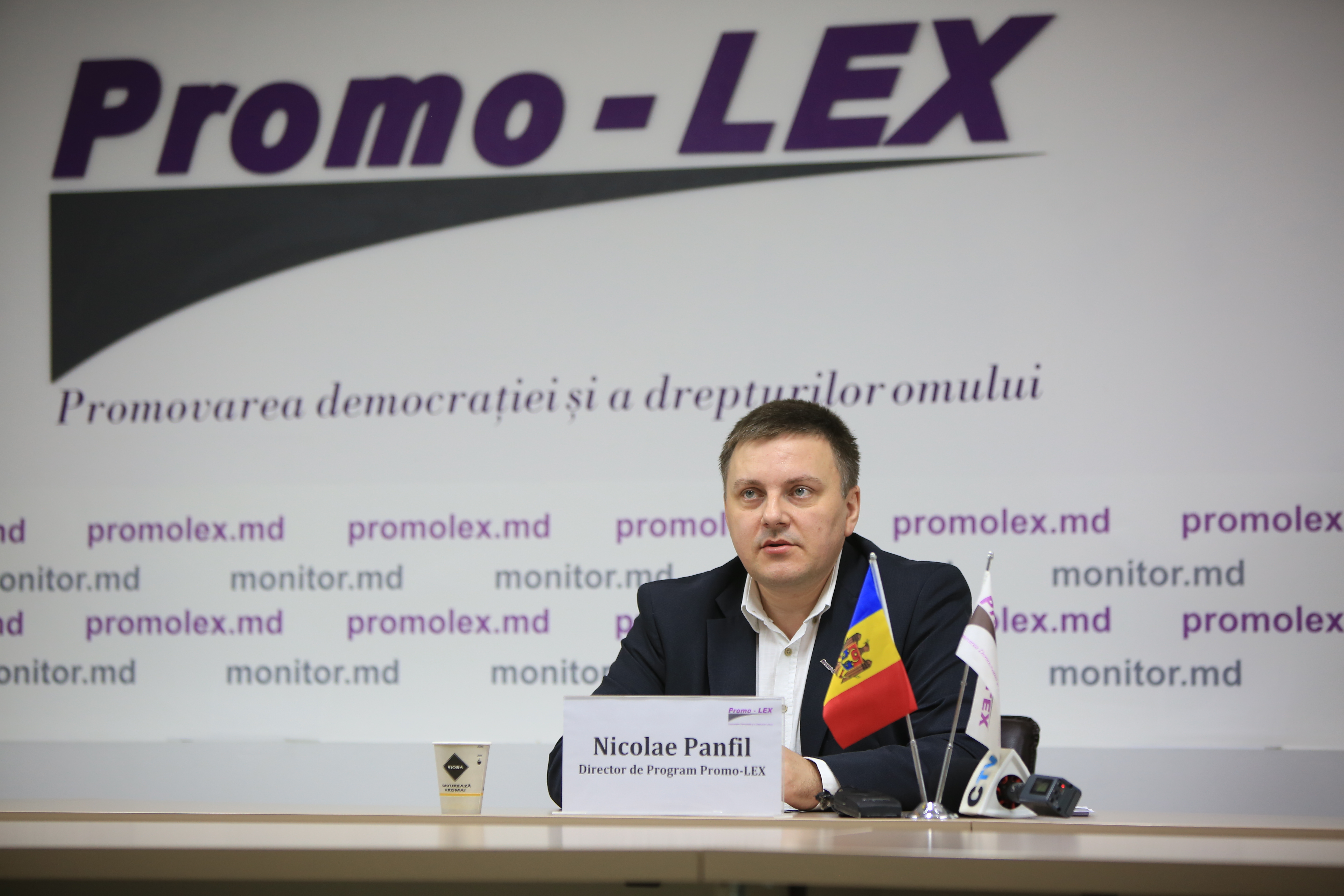
Achievements and shortfalls in the work of electoral bodies
During the period under observation, the CEC registered the last six candidates. Thus, for the early Parliamentary Elections of 11 July 2021, a total of 23 candidates are registered, of which: two electoral blocs, 20 parties and other socio-political organisations and one independent candidate. Thusly, we confirm a competitive nature of the elections.
In view of the difficulties reported by the law enforcement bodies, the CEC revised its previous decision to open 44 polling stations for the transnistrian region voters, excluding the 3 polling stations established on the territory that is not controlled or is partially controlled by the constitutional authorities.
As to the opening of polling stations abroad, we note that this process was contested, being examined and resolved within 11 days (the delay in this case seems to be justified, given the large number of participants in the process, the large number of appeals filed by parties, the rejection of the exception of unconstitutionality, as well as the complexity of the subject under consideration.
However, on 17 June 2021 the Chisinau Court of Appeal partially annulled the CEC Decisions of 5 June and 8 June 2021, for the establishment of 139 PSs and 146 PSs respectively. It should be noted that in the reasoning of its judgement, the Chisinau Court of Appeal considered several arguments, namely that the CEC and MFAEI had the obligation to cooperate effectively and efficiently, to identify the information required by the legislator and establish with maximum accuracy the required number of polling stations abroad (based on the legal criteria laid down in Articles 30 and 31 of the Electoral Code), thus contributing to the creation of real rather than illusory opportunities for the voters abroad to exercise their right to vote.
Afterwards, the judgement issued by Chisinau Court of Appeal was upheld by the Supreme Court of Justice as a result of CEC appeal. On 23 June 2021 CEC met again and decided to set up 150 PSs abroad. We underline in this context that the deadline for setting up polling stations was 5 June 2021, hence the intense efforts made by CEC and MFAEI to ensure a good organisation and conduct of overseas voting is praiseworthy.
Promo-LEX OM also found a higher number of accredited observers (+160), compared with the same stage of the Presidential Elections of 1 November 2020. There are 1,201 observers overall, of whom 1,019 are national observers and 182 are international experts.
Other problematic aspects related to the operation of electoral bureaus include partial compliance by PEBs with the working schedule (104 (29%) of the 356 bureaus visited were closed), PEB premises inaccessible for persons with physical impairments (of the 233 PEBs assessed, only 98 (42%) are accessible), and existence of a gender imbalance in the PEB membership, where 84% are women.
Worrying findings related to electoral contenders
With the advancement of the election campaign, the number of electoral activities noticed has literally doubled (1 111 activities), compared with the previous monitoring period. At the same time, we point out the lack of campaign activities attended by candidates in transnistrian region. On the other hand, the contenders organised at least 11 electoral meetings abroad, that were attended by candidates.
However, the number of violations reported by Promo-LEX observers is increasing. During the reference period, at least 61 cases were reported that could be considered as the use of administrative resources for electoral purposes, by: BECS – 28 cases, PDM and BERU – 9 cases each, PPPDA – 5 cases, PAS – 4 cases, PPȘ – 3 cases, PDCM – 2 cases and AUR – one case.
Promo-LEX observers also reported a case that could be considered as an act of offering gifts with electoral impact, that targeted a PPPDA candidate. Five cases were reported as well (three – PAS and one case each – BECS and AUR) where images/state symbols of the Republic of Moldova or other states were used.
We point out at least six cases of campaign activities that targeted religious cults. Among them, four cases targeted BECS and one case each – AUR and PAS.
Unfortunately, the election campaign continues to be marked by intimidation and use of violence, with at least 7 such cases identified. AUR is involved in 5 cases – in 3 cases they were assaulted, and in 2 cases AUR was held responsible for intimidation/violence. BECS and PACE are targeted as intimidated parties in one case each.
The electoral contenders still do not report their actual expenses
From the beginning of the election campaign and until 18 June 2021, 15 electoral contenders (PACE, PPCC, BERU, PPȘ, PAS, BECS, PDM, PPPDA, PUN, PDA, AUR, PDCM, PLD, PPPO, PVE) declared total revenue of MDL 19,140,890. On the other hand, the declared expenses total at MDL 16,890,374. Most of the reported expenses covered electoral advertising – 54% and promotional materials – 30%.
At the same time, Promo-LEX estimated at least MDL 4,114,217 as non-reported expenses: BECS – MDL 1,332,446, PAS – MDL 542,992, PPPDA – MDL 494,816, AUR – MDL 381,102, PPS – MDL 341,683, PPCC – MDL 327,365, PDM – MDL 310,654, PACE – MDL 199,425, BERU – MDL 98,106, PUN – MDL 56,771, PDCM – MDL 16,345, PDA – MDL 7,960, PPN – MDL 2,333, PVE – MDL 1,000, PPM – MDL 600, PLD – MDL 600. Most of the estimated non-reported expenses referred to promotional materials (52%), secondment/detachment of persons (21%) and outdoor and mobile advertising (12%).
However, it is important to note here that the electoral contenders that have expenses not covered by the information they submitted to CEC (expenses estimated by Promo-LEX as not reported) are expected to report further expenses in next reports filed to CEC, and the total expenses during the election campaign will be included in the final report to be submitted to the electoral authority by 9 July 2021 (two days before the election day).
Other organisational activities in the context of the early parliamentary election
During the reference period, the Government passed two decisions relevant for this election. The first one ensures a higher access to vote by obliging the Public Services Agency to issue the ID cards requested during the past month before the election no later than two days before the election date, regardless of the requested issuance period.
The second Decision (No 93) increased the appropriations to the Government’s reserve fund by over MDL 25 million. However, this Decision does not guarantee that the appropriated funds will be used to cover the costs of election. In this context, Promo-LEX OM reiterates its opinion that the Government must pass, as a matter of urgency, a decision providing additional funds for the organisation of the election.
Unfortunately, we still find drawbacks in the LPAs’ performance related to their duty to ensure a transparent and correct electoral process, though these indicators have slightly improved, compared to the previous period.
At the same time, Promo-LEX OM regards as abusive the decision of Orhei Mayors Office of 21 June 2021 that prohibits meetings with voters by setting up temporary constructions (tents).
Election campaign with hate and discrimination messages
During 8-21 June 2021, the observers reportedly identified at least 30 cases of hate speech and incitement to discrimination in the public space, in the media and online in the Republic of Moldova. Thus, four electoral contenders used non-tolerant expressions: Igor Dodon – 2 cases (BECS), Vladimir Voronin – 2 cases (BECS) and Dorin Chirtoaca – 1 case (AUR).
Of the 30 cases of non-tolerant messages identified by Promo-LEX, 12 targeted six electoral contenders: (Igor Dodon ( BECS) – 4 cases, Vladimir Voronin (BECS) – 4 cases; Igor Grosu (PAS), Marina Tauber (PPS), Marc Tkaciuk (PPCC) and Vlad Bilețchi (AUR) – one case each. Other two cases affected supporters of PAS and BECS. And the remaining 12 cases targeted LGBTI persons, women, migrants, Roma and other social groups.
The report is developed as part of the Observation Mission for the Early Parliamentary Elections of 11 July 2021 conducted by Promo-LEX Association with the financial support of the United States Agency for International Development (USAID) via the ‘Democracy, Transparency and Accountability’ Program, of the Council of Europe through the project “Support for the civic observation of the early parliamentary elections of 2021 in polling stations created abroad”, as well as the Embassy office of the Kingdom of the Netherlands in Moldova through the project “Support for informing citizens and civic observation of Early Parliamentary Elections in 2021 in the polling stations created by voters in the Transnistrian region”. ‘Hate speech’ component is supported by Justice and Human Rights Department of Soros Foundation Moldova under ‘Consolidation of a platform for the development of activism and education in the area of human rights in Moldova – stage IV’ Project.
For more details, please contact:
Inga Stegarescu, Press Officer of Promo-LEX Association;
GSM: 069 26 96 84;
E-mail: [email protected]
____________________________________________________________________________________________________________________________
ABBREVIATIONS
NIA – National Integrity Agency
LPA – Local Public Authorities
Art. – Article
AUR — ‘ALLIANCE FOR THE UNION OF ROMANIANS’ Political Party
EB – Electoral bloc
BECS — Electoral bloc of Communists and Socialists
BERU — Electoral bloc ‘RENATO USATII’
PEB – Precinct Electoral Bureau
BRP — Bureau for Reintegration Policies
CEC – Central Election Commission
DEC – level-two District Constituency Council
CICDE – Centre for Continuous Electoral Training
NEPHC – National Extraordinary Public Health Commission
SCS — Supreme Council of Security
JCC — Joined Control Commission
let. – letter
MFAEI — Ministry of Foreign Affairs and European Integration
MIA – Ministry of Internal Affairs
OM – Observation Mission
REPORT no. 3 | Observation Mission for the Early Parliamentary Elections of 11 July 2021
Report No 3 of Promo-LEX OM: Significant Concerns in the Context of an Increasingly Dynamic Election Campaign
Promo-LEX identifies an increasing number of gaps in the organisation and conduct of the election campaign for the early Parliamentary Elections of 11 July 2021. During the reporting period (26 May 2021 – 8 June 2021), a series of positive aspects were identified, as well as many concerns about the electoral process.

The activity of electoral bodies: achievements and problems during the reporting period
Promo-LEX OM found an acceleration of the observers’ accreditation process, during the reporting period being accredited a number of 734 (91%) out of 811 observers. The management of DECs was also elected by the legal deadlines, with observance of the gender balance for management positions, except for the position of DEC secretary, 84% of which being held by women.
One of the issues in DEC activity is the failure to meet the work schedule. Thus, out of 83 visits made in the working hours, during seven visits (8%) the DEC II offices were closed. Another problem is related to the non-accessibility of DEC II offices for people with disabilities, as only 17 (46%) out of 37 premises are accessible to people with mobility impairments.
A number of 2149 PSs were set up for the early Parliamentary Elections of 11 July 2021, including 1959 by DEC II. On the other hand, many problems are related to the CEC work in the context of adopting decisions on establishing polling stations for the voters in the transnistrian region – 44 PSs and abroad – 146 PSs.
Therefore, though a smaller number of voters from the transnistrian region participated in the 2020 Presidential Elections in comparison with 2019 Parliamentary Elections, for the election of 11 July 2021 2 more PSs were arranged. We also note that 2 PSs were set up in Bender and 1 PS in Corjova village, and given that Government authorities did not get an efficient control over these communities, there could be significant risks (expressed by the Security and Intelligence Service and Bureau for Reintegration Policies) for the security of the electoral process and its participants.
Regarding the polling stations for the voters outside the country, CEC first constituted on 5 June 2021 only 139 PSs, without considering the legal criteria for their establishment provided in Electoral Code. As a result of the social and political pressures, CEC reviewed its decision, and, on 7 June 2021 it decided to set up 146 PSs. According to Promo-LEX OM, CEC had to start from 150 polling stations, as it was set in its expenditure estimate, with potential increase of their number if MFAEI/the Government granted the availability of sufficient funds.
More active electoral contenders — more incidents
 The activity of electoral contenders enhances along with the increase in the number of registered contenders, as well as with the progress of the election campaign. Thus, by 8 June 2021, three days before the expiry of the deadline for the submission of registration applications, CEC registered a total of 17 electoral contenders, with two other applications being under examination. In comparison with Parliamentary Elections of 24 February 2019, there was a total of 15 contenders in the national constituency. During 26 – 8 May 2021, at least 673 electoral activities conducted by nine electoral contenders were reported, with BECS – 357 (53%) activities and PAS – 177 (26%) activities as the most active.
There is also an increase in the number of violations reported by Promo-LEX observers. Thus, during the reference period, at least 42 cases that can be regarded as use of administrative resources (involving public employees in election campaign activities – 27 cases; taking credit for works/services performed from public funds – 3 cases; organisation of electoral meetings within state institutions with their employees, during their working hours – 12 cases) were reportedly carried out by: BECS – 34 cases, PDM – 4 cases, PAS – 2 cases, BERU and PDCM – 1 case each.
Report No 3 of Promo-LEX OM also includes one case that may be regarded as gifts with electoral impact, involving the BECS candidate (a playground for the community Parcani, Slobozia). There were also eight cases of using the image/state symbols of the Republic of Moldova and other states for electoral promotion purposes (4 – PAS, 2 BECS and by 1 case – PPPDA and PUN).
We draw attention to two cases of campaign activities engaging religious cults. On the one hand, one case was reported where representatives of religious cults engaged directly in the PDM election campaign, on the other hand, BECS used the image of religious cults in promotion activities.
Expenses not reported by the electoral contenders amounting to MDL 1 922 687.
During 21 May – 4 June 2021, seven electoral contenders (PPCC, BERU, PPS, PAS, BECS, PDM and PPPDA) reported a total revenue amounting to MDL 9 551 708. On the other hand, the amount of the declared expenses is about MDL 5 880 932. Most of them were reported to be used in political advertising – 39%, for promotion materials – 34% and for the organisation of electoral events – 16%.
At the same time, Promo-LEX OM estimated at least MDL 1.922.687 as undeclared expenses during the first two weeks of the election campaign, of which PAS – MDL 1.068.194 (56%), BECS – MDL 457.335 (24%), PPPDA – MDL 119.860 (6%), PPCC – MDL 91.909 (5%), PACE – MDL 86.249 (4%), PPS – MDL 81.509 (4%), PDM – MDL 13.185 (1%), BERU – MDL 4.447. The costs for advertising materials (56%), and outdoor and mobile advertising (18%) have the biggest share of the unreported expenses.
Activities of other public institutions in the context of the early parliamentary elections
On 28 May 2021, the Presidency held a meeting of the Supreme Security Council, one of the subjects on its agenda being related to the risks of corruption in the process of financing political parties and election campaigns. PROMO-LEX supports the need to ensure lawful and transparent financing of parties and electoral contenders, but we draw the attention of public authorities to the importance of refraining during the electoral period from actions that can be interpreted as interfering or influencing the electoral process.
Though with a delay, the National Extraordinary Public Health Commission approved the Instruction on Organisation and Conduct of Elections by Central Electoral Commission amidst the COVID-19 Pandemic. We however express our concern that some of the unclear provision of the Institution, found during the presidential election, have not been corrected.
Unfortunately, we still find gaps in the way LPAs fulfil their duties of ensuring a transparent and accurate electoral process. For this election as well, the Chisinau Municipal Council failed to approve the nomination of PEB members by local public authorities. In this context, we draw the attention that using the CEC’s Register of Electoral Officials as a replacement of the LPA powers to appoint PEB members undermines the transparency of the electoral process and raises concerns about the integrity of procedures.
At the same time, PROMO-LEX OM is worried about the information shared by the Congress of Local Authorities from Moldova (confirmed by other sources, as well) that a number of mayors reported unplanned checks started by investigation and control authorities during the electoral period, including at the request of two MPs, electoral contenders.
Notifications not addressed in a swift manner and high rate of rejected complaints
During the monitored period, 5 complaints and 4 notifications were filed to CEC, most of them being against electoral contenders. The notifications were not addressed within the maximum period stated by the law, and 3 of the 5 complaints filed were rejected by CEC.
Other at least 10 complaints were filed with the Chisinau Court of Appeal against CEC actions and decisions. Until 8 June 2021, the Chisinau Court of Appeal issued its resolution on 5 complaints, within the legal term, rejecting them due to the lack of actual harm to the personal right of voter or electoral contender. Regarding complaint rejection, PROMO-LEX regards the rationale invoked as ungrounded, as any electoral violation affects the voters’ right to form an opinion or the electoral contenders’ right to run for elections on equal terms.
Hate speech and incitement to discrimination are not sanctioned during this election either
In spite of the Code of Conduct on the conduct and media coverage of the election campaign for the Parliamentary Elections of 11 July 2021, Promo-LEX monitors found at least 36 cases of hate speech and incitement to discrimination – by about 33% more compared to the previous monitoring period.
The report is developed as part of the Observation Mission for the Early Parliamentary Elections of 11 July 2021 conducted by Promo-LEX Association with the financial support of the United States Agency for International Development (USAID) via the ‘Democracy, Transparency and Accountability’ Program, of the Council of Europe through the project “Support for the civic observation of the early parliamentary elections of 2021 in polling stations created abroad”, as well as the Embassy office of the Kingdom of the Netherlands in Moldova through the project “Support for informing citizens and civic observation of Early Parliamentary Elections in 2021 in the polling stations created by voters in the Transnistrian region”. ‘Hate speech’ component is supported by Justice and Human Rights Department of Soros Foundation Moldova under ‘Consolidation of a platform for the development of activism and education in the area of human rights in Moldova – stage IV’ Project.
For more details, please contact:
Inga Stegarescu, Press Officer of Promo-LEX Association;
GSM: 069 26 96 84;
E-mail: [email protected]
THE POSITION OF THE CIVIC COALITION FOR FREE AND FAIR ELECTIONS in relation to the illegal decision of the Central Electoral Commission on the opening of polling stations abroad for the early Parliamentary Elections of 11 July 2021
7 June 2021
The Civic Coalition for Free and Fair Elections condemns the illegal and irresponsible decision of the Central Electoral Commission to open only 139 polling stations abroad for the early Parliamentary Elections of 11 July 2021.
The Civic Coalition for Free and Fair Elections requests CEC to:
- urgently amend Decision No 4966 of 5 June 2021 on the establishment of polling stations abroad;
- apply in good faith the three criteria provided for in the Electoral Code for establishing at least 150 polling stations abroad, with the possibility of increasing their number if the MFAEI/Government provides enough budget to CEC for this purpose;
- publish all the documents related to the process of setting up polling stations abroad, including the recommendations and the prior consent of the MFAEI.
The Coalition’s assessment of the CEC Decision No 4966 of 5 June 2021 on the establishment of polling stations abroad, as well as the above requests are based on the following findings and arguments:
- The Central Electoral Commission did not take into account the three criteria[1] laid down in the Electoral Code for the establishment of polling stations abroad. The CEC’s disagreement with the criteria established by the legislator for setting up polling stations abroad or the lack of clarity in relation to them does not entitle the Commission to not use them. These criteria had to be applied compulsorily, taking into account the positive practice of the 2020 Presidential Elections, when the CEC gave each criterion an equal weight[2].
- According to the Electoral Code (Article 31(2)) polling stations shall be established for voters abroad for each individual election. Despite this legal provision, according to the statements of some CEC members, is was decided to establish 139 polling stations on the basis of the principle of preserving the number and locations of the polling stations established for the 2020 Presidential Elections.
- There is an uneven interpretation and application of the legislation in force by CEC. Thus, for example, in the context of adopting Decision No 4965/2021 on the establishment of polling stations for the voters from the communities on the left bank of the Nistru River (Transnistria) for the early Parliamentary Elections of 11 July 2021, in order to justify the need for more polling stations than in the 2020 Presidential Elections, the rapporteur presented among other reasons the following: a) an LPA requesting to set up a polling station in the locality; b) during the presidential elections many instances of voters queuing in front of the polling stations were registered and there is a need to streamline the flow of voters.
In contrast, compared to the establishment of PSs for the voters in the transnistrian region, where fewer voters voted in the 2020 Presidential Elections (31,784 voters in the second round) than in the 2019 Parliamentary Elections (37,257 voters) and the number of polling stations was increased by 2 PSs, in the case of the polling stations for the voters abroad, even though in the 2020 Presidential Election (second round) almost four times more voters voted (263,177 voters) than in the 2019 Parliamentary Elections (about 76,600 voters), the number of polling stations was not changed.
- If we use the data published on inregistrare.cec.md and www.cec.md and verify the application of the calculation formula that led the CEC to the approval of the CEC Decision No 4966/2021, maintaining the maximum number of 139 polling stations, established by the CEC, serious discrepancies a noticed between the number of polling stations approved by CEC and the number obtained according to the calculation formula (see Annex 1). These discrepancies show that the Central Electoral Commission acted contrary to the Electoral Code and its own arguments presented in the rationale of Decision No 4966/2021.
- The CEC deliberately acted against the interests of voters abroad, who clearly expressed their intention to vote. In this context, we remind that in the second round of the Presidential Elections in November 2020, voter turnout abroad was unprecedented, of 263,177 voters. At the same time, as of 26 May 2021, the results of the pre-registration showed 100050 declarations submitted online or on paper, of which 39940 registrations made in 2021. Thus, CEC has completely ignored the problems faced by our citizens in the last elections in United Kingdom, France, Germany, Italy and other countries (insufficient ballot papers, very long queues in front of polling stations, the enormous efforts and expenses incurred by citizens to go to the polls).
- The resolution part of the CEC decision No. 4966/2021, in particular the annex, does not correspond in terms of logic and content to the descriptive part of the decision. Particularly, the descriptive part refers to: a) the organization of 150 polling stations, the expenses of which were provided in the estimated expenses developed by CEC; b) the organization of 190 polling stations, based on the embassies proposals; c) the organization of 162 polling stations, a list of which was sent for approval to the Government and MFAEI.
From the complete text analysis of the CEC decision but also the manner how the meeting took place, we can say that the initial meaning of the draft decision (which proposed the setting up of 162 polling stations) was abruptly diverted and without justification by the author and supporters of the amendments that led to the establishing of 139 polling stations abroad.
- The CEC did not take into account its own decision No 4816 of 30 April 2021 by which it adopted the estimate of expenses for the organization of elections, including for the setting up of 150 polling stations abroad. Although the Government has so far allocated only about 56% of the amount estimated in the estimate of expenses (MDL 125,046.7 thousand), it showed its willingness to allocate to the CEC the additional necessary financial means, starting with 20 June 2021. The lack of effective communication on expenditure for polling stations abroad is imputed to both the Central Electoral Commission and the Government. However, as long as the necessary financial means are identifiable, the failure of the Government to provide an answer in short time cannot be a reason to limit the number of polling stations.
Note that the MFAEI State Secretary confirmed, at the CEC meeting of 05.06.2021, the possibility to identify the needed funds in the MFAEI budget, including for the establishment of 191 polling stations. We also draw the attention to the fact that, the costs estimated for the organisation of the previous elections were as a rule by 20% higher than the actual/final costs incurred by CEC. We are hence convinced that there are the necessary preconditions for CEC to set up at least 150 polling stations abroad, with the possibility of increasing their number if the Government provides enough budget to CEC.
- The process of deciding on the polling stations to be established abroad was not transparent, with the relevant decision taken on 5 June 2021 without any public consultations with interested stakeholders. Neither the initial draft CEC decision (envisaging 162 polling stations abroad), nor the recommendations of the Ministry of Foreign Affairs and European Integration on the number and location of polling stations abroad were made public.
ANNEX: 1

Algorithm for calculating the number of polling stations abroad, on the basis of the three criteria stated in Article 31 of Electoral Code[3]
| Country | Voters at the last election | Value / share of voters (%) | Preliminary registration | Value/ share of preliminary registration (%) | MFAEI information | Value/ share, MFAEI information (%) | Total value/ share (%) | Formula PS No |
| Country 1 | A1 | A1V= A1*100% / T1 | A2 | A2V= A2*
100% / T2 |
A3 | A3V= A3*100% / T3 | W=(A1V+A2V
+A3V) / 3 |
N*W / 100% |
| Country 2 | B1 | B1V= B1*100% / T1 | B2 | B2V= B2*
100% / T2 |
B3 | B3V= B3*100% / T3 | X=(B1V+B2V
+B3V) / 3 |
N*X / 100% |
| Country 3 | C1 | C1V= C1*100% / T1 | C2 | C2V= C2*
100% / T2 |
C3 | C3V= C3*100% / T3 | Y=(C1V+C2V +C3V) / 3 | N*Y / 100% |
| Country n | D1 | D1V= D1*100% / T1 | D2 | D2V= D2*
100% / T2 |
D3 | D3V= D3*100% / T3 | Z=(D1V+D2V +D3V) / 3 | N*Z / 100% |
| Total | T1 = A1+ B1+ C1+D1 | 100% | T2 = A2+ B2+ C2+D2 | 100% | T3 = A3+ B3+ C3+D3 | 100% | 100% | N |
where:
A1, B1, C1, D1 stand for the number of voters abroad who participated in the last national election in the country of reference.
T1 stands for the total number of voters abroad who participated in the last national election.
A1V, B1V, C1V, D1V stand for the radio of voters abroad, in the country of reference, who participated in the last national election to the total number of voters who participated in the last election.
A2, B2, C2, D2 stand for the number of preliminary registrations made by voters who are abroad, in the country of reference.
T2 stands for the total number of preliminary registrations made by voters who are abroad, in their countries of reference.
A2V, B2V, C2V, D2V stand for the ratio of preliminary registrations made by voters who are abroad, in the country of reference, to the total number of preliminary registrations.
A3, B3, C3, D3 stand for the number of voters abroad, in the country of reference, according to the information presented by the Ministry of Foreign Affairs and European Integration.
T3 stands for the total number of voters abroad, according to the information presented by the Ministry of Foreign Affairs and European Integration.
A3V, B3V, C3V, D3V stand for the radio of voters abroad, in the country of reference, who participated in the last national election to the total number of voters who participated in the last election.
W,X,Y,Z is the total value/share of each individual state, calculated on the basis of the 3 (three) criteria.
The total value/share of each individual state is calculated as an average of the three criteria. The total value/share will be the basis for determining the total number of polling stations to be established in that country.
N stands for the total number (150) of the polling stations to be established abroad by the Central Electoral Commission.
PS No (number of polling stations) is the ratio of the total number of polling stations to be established by CEC to the value/share of each country.
* If data are not available for one of the three criteria for a certain country, 0 will be used as the initial value for the criterion concerned. Thus, for example, no polling station was set up in Country 1 at the previous election because no voter had registered preliminarily. Hence, the first criterion for Country 1 will amount to 0 — the number of voters who participated in the previous national election.
www.alegeliber.md – The Civic Coalition for Free and Fair Elections is a permanent, voluntary entity consisting of 35 Moldovan NGOs, which aims at developing democracy in the Republic of Moldova by promoting and conducting free and fair elections according to the standards of ODIHR (OSCE), Council of Europe and specialised affiliated institutions.
______________________________________________________________________________________________________
[1] (1) voter turnout at the previous election, (2) the results of the preliminary registration and (3) the number and place of the residence of the citizens with the right to vote abroad, based on the information obtained by the MFAEI from the competent authorities of the countries of their residence.
[2] The calculation formula was proposed by Promo-LEX Association and adopted by the Association for Participatory Democracy ADEPT.
[3] CEC used this algorithm to determine the number of polling stations abroad for the 2020 Presidential Elections, and reportedly (because de facto the CEC members who voted for the decision totally neglected the algorithm) this algorithm underpinned the decision on the polling stations set up for the early Parliamentary Elections of 11 July 2021.

Worrying findings of Promo-LEX Observation Mission in the Second Monitoring Report for the Early Parliamentary Elections of 11 July 2021
Promo-LEX Association has launched today the Second Report of Promo-LEX Observation Mission (OM) for the early Parliamentary Elections of 11 July 2021. The report contains electoral findings reported by observers between 12 and 25 May 2021.
The main aspects covered by the report:
 The perpetuated tendencies in the development of the electoral campaign
As of 26 May 2021, CEC have registered eight contenders (six parties and two electoral blocs), and other two files are under review. The minimum representation quota for both sexes (40%) was respected by all candidates. We also mention that, in all eight cases, the positioning of the candidates on the lists was done in compliance with the legal provisions, at least four candidates for every ten places.
In this context, Promo-LEX OM found that most of the contenders started campaigning without registering their trustees.
At the same time, according to Promo-LEX observers, some (potential) electoral contenders started campaigning before the legal term. Thus, at least 15 activities with electoral overtones (without any urging to vote) were reported to be conducted by contenders/potential contenders, as well as 18 cases of urging to vote for a certain electoral contender/potential electoral contender (17 – Electoral bloc of Communists and Socialists (BECS), 1– ‘ALLIANCE FOR ROMANIANS UNIFICATION’ (AUR) Political Party.
At the same, since their formal registration for the electoral run, 46 activities were reported to be conducted by four electoral contenders between 21 and 25 May 2021 – PAS (80%), BECS (11%), BERU (7%) and PPS (2%). The most popular activities included dissemination of electoral materials (63%) and meetings with voters (28%).
Promo-LEX observers also reported at least 121 cases (BECS) that can be regarded as use of administrative resources. Of them, in 120 cases public sector employees were involved in campaigning activities and one case was about taking merits for services funded with public money.
In addition, at least 2 cases were reported that can be regarded as gifts with electoral impact (BECS – 1, BERU – 1), as well as one case that can be regarded as involving the President of the Republic of Moldova in campaigning for an electoral contender (PAS).
The electoral contenders for the early Parliamentary Elections may spend 4 times less money, compared with the 2019 Parliamentary Elections
During the reporting period, CEC established the general threshold of MDL 20,707,700 for the funds that can be transferred on the ‘Electoral Fund’ account of the electoral contender and of the initiative group, which is four times less than for the 2019 Parliamentary Elections (MDL 86,871,856). The significant difference between the amounts established in 2019 and 2021 was caused by the amendments made to the Electoral Code (August 2019) and the set threshold of 0.05% of the forecast revenue of the state budget for the respective year.
According to Promo-LEX observers, as of 25 May 2021 CEC has not published on its website any report of the political parties that should make transfers on the ‘Electoral Fund’ account. In addition, only PAS presented information on opening the ‘Electoral Fund’ account, though this information should be published by the deadline of 26 May 2021.
Pre-registration – a tool by which citizens can influence the number and geography of polling stations
We want to draw attention to the increase in the number of preliminary registrations by about 40,000 as compared with the presidential elections of November 2020. According to Promo-LEX estimates, in the last two weeks, in at least 8 countries, the number of polling stations changed only on the basis of the indicator regarding the number of preliminary registrations.
As regards the distribution of polling stations per countries, according to Promo-LEX estimates and if we take into account those 150 PS budgeted by CEC as a calculation basis, the highest number of polling stations will be established in Italy (28), Russian Federation (21), Germany (13), United Kingdom (11), France (9) and Romania (9).
Also, based on the 191 PS proposed by MFAEI, the highest number of PS will be established in Italy (37), Russian Federation (29), Germany (17), United Kingdom (16), France (12) and Romania (11).
Risks to the smooth organisation and conduct of the election
Promo-LEX OM draws the attention to some uncertainties related to the constitutionality of Article 51(4) of the Electoral Code. This refers to the prohibition to hold candidates to account or impose any sanctions during the electoral period without the consent of the electoral body that registered them. Given that a provision with exact the same form and content as Article 51(4) of the Electoral Code has been declared previously non-constitutional, Promo-LEX OM believes that the above article should not and may not be applied by authorities, and the electoral contenders may not use these safeguards.
Promo-LEX OM also underscores that, though the election organisation and electoral campaigning have already started, clear measures of preventing and controlling the spread of COVID-19 infection in electoral context have not been approved yet. The lack of such measures increases the risk of higher COVID-19 infection rates.
There is also no Government Decision to ensure full coverage of expenses for the organisation of the early parliamentary elections. We reiterate the concern related to the uncertainty in the central public authorities’ capacity to identify enough funds for a smooth conduct of the elections.
During the monitored period, the Central Electoral Commission approved 63 decisions, including one regulation, and two others were adjusted to the legal norms specific to the proportional system. At the same time, according to Promo-LEX, at least five more CEC regulations need to be adapted to the amendments to the Electoral Code.
According to our findings, during the current elections the LPAs again ignore their duties to appoint members of electoral bodies. Promo-LEX OM identified at least seven DEC II (19%) with no members appointed by level-two LPAs.
 Another election affected by incitement to hate and discrimination
On the basis of the information submitted by monitors between 11 and 24 May 2021, we identified at least 23 cases of hate speeches and incitement to discrimination in the public space, in the media and in the online environment of the Republic of Moldova.
Thus, six electoral contenders/politicians used non-tolerant expressions: Renato Usatii (BERU) – five cases and Vladimir Voronin (BECS), Octavian Ț (BE PUN), Vasile Bolea (BECS) and Vladimir Odnostalco (BECS) – one case each.
Of the 23 cases of hate speech or incitement to discrimination identified, 9 cases targeted contenders/potential contenders/politicians: Vladimir Voronin (BECS) – 2 cases, Maia Sandu (President of the Republic of Moldova) – 2 cases, Natalia Albot (activist and journalist on the electoral list of PAS, who withdraw her candidacy on 21.05.2021 / 2 cases), Igor Dodon (BECS), Dumitru Diacov (PDM) and Vasile Bolea (BECS) – one case each.
The full report can be accessed here.
The report is developed as part of the Observation Mission for the Early Parliamentary Elections of 11 July 2021 conducted by Promo-LEX Association with the financial support of the United States Agency for International Development (USAID) via the ‘Democracy, Transparency and Accountability’ Program, as well as the Embassy office of the Kingdom of the Netherlands in Moldova through the project “Support for informing citizens and civic observation of Early Parliamentary Elections in 2021 in the polling stations created by voters in the Transnistrian region”. ‘Hate speech’ component is supported by Justice and Human Rights Department of Soros Foundation Moldova under ‘Consolidation of a platform for the development of activism and education in the area of human rights in Moldova – stage IV’ Project.
For more details, please contact:
Inga Stegarescu, Press Officer of Promo-LEX Association;
GSM: 069 26 96 84;
E-mail: [email protected]
The first findings of Promo-LEX Observation Mission for the Early Parliamentary Elections of 11 July 2021
As per Presidential Decree of 28 April 2021 on dissolving the Parliament and setting the date of the elections, the early Parliamentary Elections will be held on 11 July 2021 — an important ballot for the decision-making quality and strategic direction in the Republic of Moldova.
With the aim of developing democracy in the Republic of Moldova, including in the transnistrian region, Promo-LEX has launched today the XXIth Election Observation Mission (OM). Promo-LEX also presented the first Monitoring Report for the Early Parliamentary Elections of 11 July 2021.

The report covers both the pre-electoral period and the electoral period before the onset of candidate nomination procedures (23 December 2020 – 11 May 2021).
Relevant legal framework for the Early Parliamentary Elections of 11 July 2021
As the mixed electoral system was cancelled and Law No 113 of 15.08.2019 reintroduced the proportional elections, the early Parliamentary Elections of 11 July 2021 will be held on the basis of the latter. The principle of electoral law stability, stating that any substantial changes should be made prior than one year before the election, was hence complied with.
At the same time, we would like to draw the attention to draft Law No 263 of 19.06.2020, which was not passed in the second reading in the Parliament, but which contains a series of useful provisions for the proper conduct of elections[1]. At least two other draft laws on amending the Electoral Code were tabled in 2020, intended to ensure the right to vote and safety measures for elections amidst the pandemic[2]. None of these drafts was included on the Parliament’s agenda.
Promo-LEX regrets that only 7 of the 22 recommendations for legal/regulatory framework improvements, made after the 2019 Parliamentary Elections, were implemented fully or partially.
Risks to the good organisation and conduct of the elections of 11 July 2021
Given that the Parliament may not amend the State Budget Law any more, the Government should make sure that the needed funds are allocated for the elections. The Government Decision on Funds Allocation was approved on 12 May 2021 to this end. It was thus decided that the Ministry of Finance allocate to the Central Electoral Commission the first tranche of MDL 70,000.0 from the Government’s Reserve Fund for the organisation and conduct of the early Parliamentary Elections on 11 July 2021, accounting for 56% of the budget estimated by CEC. We hence underline that, in order to avoid potential risks and uncertainties for the smooth organisation and conduct of the elections, the Government should commit to covering the full cost of the elections.
The possible impact of COVID-19 on the elections is another challenge to the good organisation and conduct of the elections of 11 July 2021. We underline that the electoral authority and public authorities already have relevant experience, accumulated during the 2020 Presidential Elections. Nonetheless, we underline the need to find ways to vaccinate, as a matter of priority, the electoral officials and persons authorised to monitor the electoral activity, as well as the needs for CEC approval of the Instructions on Measures of COVID-19 Prevention during the electoral period, in order to minimize the risks of infection spread.
The importance of preliminary registration to determine the number and location of polling stations for voters abroad and from the transnistrian region
The polling stations for voters from the transnistrian region and for those abroad should be set up transparently, in line with the law and the best practices established by CEC at the 2020 Presidential Elections (by applying a clear mathematical formula to establish the number and location of polling stations abroad).
According to Promo-LEX estimates (on the basis of data available on 11 May 2021), if compared with the previous elections, the number of polling stations for the early Parliamentary Elections of 11 July 2021 should be increased in Germany (+6), Russian Federation (+4), and UK (+4), and it could be decreased in USA (-5), Romania (-4) and Italy (-3).
We hence recommend that citizens who will be abroad on the election day, as well as those living in the transnistrian region, to register preliminarily until 26 May 2021. We also underline the need for authorities to promote more actively this instrument in order to have accurate information about the number and location of citizens willing to cast their votes.
Dynamics of the number of voters included in the State Voter Register (SVR)
Promo-LEX noticed a constant, though insignificant diminution in the number of voters in SVR. Thus, as per CEC data, on 4 May 2021 the number of voters was lower by 7,529 people compared with 2 September 2020.
We find, however, an increase in the number of voters without domicile/residence and of those from the transnistrian region (15.1% of the total number), thus resulting in a higher share of citizens who could vote on additional lists.
Hate speech used more often during pre-electoral and electoral periods
According to Promo-LEX data, hate speech was used to a higher extent during 2018-2020, with a stronger dynamic during the pre-electoral and electoral periods. We also draw the attention to the failure of the Parliament of the Republic of Moldova to take any actions between December 2020 and April 2021 in order to implement the Constitutional Court recommendations of 2016 and 2020 to review the law and set up control mechanisms and sanctions for involving religious cults in electoral campaigns, and to prevent and respond to electoral contenders’ hate speeches, including online.
Therefore, in order to raise the awareness of election campaign stakeholders and prevent the use of hate speech and incitement to discrimination, Promo-LEX Observation Mission will continue monitoring this phenomenon during the elections of 11 July 2021, as well.
You can access the whole report here.
The report is developed as part of the Observation Mission for the Early Parliamentary Elections of 11
July 2021 conducted by Promo-LEX Association with the financial support of the United States Agency
for International Development (USAID) via the ‘Democracy, Transparency and Accountability’
Program. ‘Hate speech’ component is supported by Justice and Human Rights Department of Soros
Foundation Moldova under ‘Consolidation of a platform for the development of activism and education
in the area of human rights in Moldova – stage IV’ Project.
For more details, please contact:
Inga Stegarescu, Press Officer of Promo-LEX Association;
GSM: 069 26 96 84;
E-mail: [email protected]
_____________________________________________________________________________________________________________________
[1] Prohibition of hate speech and/or speech inciting hatred, gradual sanctions for violation of the electoral law; sanctions for involving religious cults and other non-commercial organisations in electioneering; regulation of organised transportation of voters to polling stations etc.
[2] The draft Law No 210 of 28.05.2020, and draft Law No 414 of 06.10.2020 provided for two consecutive days of election and adjustment of the relevant rules for two-day elections.
REPORT no. 1 | Observation Mission for the Early Parliamentary Elections of 11 July 2021