Promo-LEX Association launched the third report on the monitoring of the campaign for the July 29, 2009

_article_1248690867Chisinau, 27 July 2009. Promo-LEX Association launched the third report on the monitoring of the campaign for the July 29, 2009. The monitoring was done in 7 electoral constituencies, namely Floresti, Rezina, Dubasari, Anenii Noi, Causeni, and Stefan Voda and the Transnistrian region of Moldova. The monitoring report covers the period between July 19-26, 2009.

“The Promo-LEX monitoring effort notes that the electoral process continues with violations of the electoral legislation by the actors involved”, said Ion Manole, President of Promo-LEX.

In the monitored regions, the legal provisions on compiling and publicizing voter lists were largely ignored or only partially respected; errors were identified in these lists, including the inclusion of persons that are passed away.

A pattern of undue influence and intimidation of voters is also noted, including by obliging citizens to participate at electoral meetings. Occurrences of intimidation of representatives of electoral contestants by the public administration have been reported.

Voters from the Transnistrian region were not informed by the electoral authorities on the voting procedure (place and date of elections). Because no voter lists have been prepared for these voters, they were unable to possibly obtain absentee voter certificates.

The monitoring of the July 29th early parliamentary elections in 7 electoral constituencies is a project implemented by Promo-LEX Association within the Civic Coalition for Free and Fair Elections “Coalition 2009”. Nearly 270 election observers were deployed to monitor the elections in Floresti, Rezina, Dubasari, Anenii Noi, Causeni, and Stefan Voda and the Transnistrian region of Moldova.

The project is being implemented with financial support provided by the National Endowment for Democracy (NED).


DOC – Report No 3


Promo-LEX issued the second monitoring report on early parliamentary elections in 7 regions of Moldova

Chisinau, July 21, 2009. Promo-LEX Association launched the second report on the monitoring of the campaign for the July 29, 2009. The monitoring was done in 7 electoral constituencies, namely Floresti, Rezina, Dubasari, Anenii Noi, Causeni, and Stefan Voda and the Transnistrian region of Moldova. The first monitoring report covers the period between July 11-20, 2009.

During the monitoring period, similarly to the findings of the previous report of July 14, the Promo-LEX monitoring effort notes that the electoral law was not fully adhered to by the stakeholders.

In certain localities, non-observance of electoral regarding posting voter lists determined a low interest for verifying those lists by the voters. In addition to violations concerning the deadline and other conditions for posting voter lists, Promo-LEX observers noted shortcomings in the information included by the mayoralties in those preliminary lists. Promo-LEX is concerned that the ambiguous definition of responsibilities in compiling voter lists may affect the quality of the voting.

The monitoring mission also notes a worrying trend of hindering observation efforts for the election. The public authorities and law enforcement intimidated and harassed Promo-LEX observers for their activities. The Stefan Voda district administration hindered the training of observers.

Observers also reported patterns of undue influence on voters on behalf of electoral contestants and public authorities in the monitored districts. The perpetuation of such trends of undue influence on and blackmail of voters for their voting options also raises concerns regarding the fairness of the electoral process.
The monitoring effort noted a pattern among the electoral contestants of violating the legal ban on electoral gifts and material goods to voters. The pattern of posting electoral materials in unauthorized areas, noted in the previous monitoring period, also continued. The systemic attempts of various actors to hinder contestants’ electoral activities also raise concerns.

Promo-LEX observers reported multiple cases of use of public office and resources for electoral purposes. The shortcomings in the legislation and the dishonest use of public resources by certain electoral contestants limits the voters’ opportunities to make uninfluenced voting decisions.

The electoral bureaus of polling stations from the monitored region did not start their work on time. Violations of the electoral calendar thus create difficulties for properly conducting the electoral process.

Promo-LEX will continue to monitor the election process and will publish other monitoring reports to election day. The project is being implemented with financial support provided by the National Endowment for Democracy (NED).

For more information please contact Association President Promo-LEX, Ion Manole, tel. 49.26.84, e-mail: [email protected]


Promo-LEX issued the first monitoring report on early parliamentary elections in 7 regions of Moldova

_article_1247571399Chisinau, 14 July 2009. Promo-LEX Association launched the first report on the monitoring of the campaign for the July 29, 2009. The monitoring was done in 7 electoral constituencies, namely Floresti, Rezina, Dubasari, Anenii Noi, Causeni, and Stefan Voda and the Transnistrian region of Moldova. The first monitoring report covers the period between June 16 and July 11 2009.

“Through this monitoring, we want to ensure free and fair elections throughout the country. Given the monitoring experience of the election process in the Transnistrian region, this time we decided to do more. We will observe the electoral process in a number of districts located on the right bank of the Nistru, where polling places are traditionally set up for Transnistrian voters” stated Ion Manole, President of Promo-LEX Association.
The first monitoring report concludes that the electoral campaign is characterized by a series of patterns that can limit the voting opportunities of certain groups of voters and delays the execution of the calendar plan set by the Central Election Commission.

“As the elections will take place on a workday, the Moldovan voters abroad and the Transnistrians will not be able to make their choice. Thus, their right to vote is infringed. The obligation to vote at the temporary place of residence and the lack of additional regulations make the participation of students that are in some other places difficult,” said Ion Guzun, jurist at Promo-LEX.

The observers reported occurrences of undue influence on voters, excessive involvement of law enforcement agencies into the electoral process, undue involvement of underage citizens into campaign activities, and preferential treatment of some electoral contenders by the local public administration.

By the the end of the monitored period, district electoral councils have not yet made public the information on the boundaries of polling stations, address and contact information of polling stations, despite a deadline date set for July 3. Also, the Central Election Commission has failed to collect from the local public administrations, in pre-established terms, the electoral lists. Some of the submitted lists are incomplete.

Promo-LEX Observers have noted that the recommendations made by national monitoring groups in 2005 and 2009 have been implemented in a reduced and selective manner. For the upcoming early elections, the election authorities did not announced the opening of additional polling stations to ensure the voting rights of citizens lfrom the Transnistrian region. Authorities have not investigated the cases of violation of electoral legislation reported by monitoring groups. The electoral lists continue to be a major concern. It remains unclear who holds the final responsibility for drawing up electoral lists. Electoral administration has ordered application of a special stamp on the accompanying sheets of voters ID, without taking any other measures to prevent multiple voting.

Promo-LEX will continue to monitor the election process and will publish other monitoring reports to election day. The project is being implemented with financial support provided by the National Endowment for Democracy (NED).

For more information please contact Association President Promo-LEX, Ion Manole, tel. 49.26.84, e-mail: [email protected]


DOC – Report No 1


Parliamentary elections have neither been free nor fair for the Transnistrian region residents, Promo-LEX

_article_1244448654Elections on April 5th 2009, conducted within the Transnistrain region, were characterized by obstacles created by the authorities in Tiraspol on one hand and negligence of the ensurance of the constitutional right to vote of citizens within this territory by the constitutional authorities on the other. This conclusion was reached by the experts at Promo-LEX , who have launched the final report on the electoral monitoring process in the Transnistrian region of Moldova during the 2009 parliamentary elections.

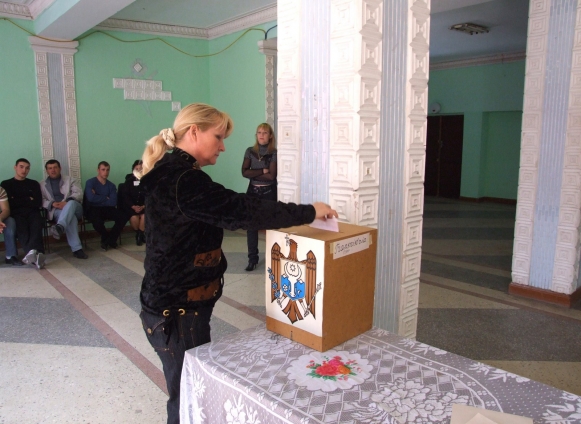
Promo-LEX holds the opinion that participation of citizens from the Transnistrian region is merely a formality, limited to the procedure for applying the “voted” stamp in the ballots and placing them in the ballot box. There were only ten polling stations open for the citizens of the Transnistrian region, located on the areas bordering land under the control of the constitutional authoritative bodies. This flagrantly violates the electoral code, which dictates that there must be more than 30 polling stations, with numbers of voters per station not exceeding 3,000. Moreover, the CEC (Central Electoral Commission) has published only 14,500 ballots for a total of approx. 223,580 potential voters, thus excluding from the beginning the possibility to vote of 209,080 voters from this territory, which is more than 8% of the total numbers of voters in Moldova. In this context, only 4042 persons from the Transnistrian region voted, which represents approximately 50% of the participants that had participated in the previous parliamentary elections.

“The conduct of democratic elections is not possible without respect for human rights, particularly the freedom of expression and press, freedom of movement within the country, freedom of assembly and freedom of association for political purposes. Parliamentary elections were carried out with multiple violations for the Transnistrian region inhabitants. There have been numerous reported cases of intimidation and persecution of the population from the Transnistrian region in order to determine their non-participation in the electoral voting. Thus, we can safely say that the voting was neither free nor fair,” states Pavel Postica, lawyer, Promo-LEX .

The Tiraspol administration stated categorically on behalf of the people against the participation in the vote, thus attempting to influence both the attitude of the people and the atmosphere in society. Thus, voters in the region have claimed three major obstacles to their participation in elections: the stamping of the sheet accompanying the ID document, rigorous control and registration at the check posts and their eventual registration by the regional secret services present at polling stations.

Promo-LEX declares that voters have not had the full opportunity to be informed about voting on April 5th, about the electoral candidates, and their electoral platforms. On one hand, the electoral candidates have not been forthcoming, being reported just few cases of electoral agitation and information of the population. On the other hand the media has not addressed issues related to the equidistant information of the population regarding the electoral process in Moldova. As a result, the influence of mass media sources from the region prevailed and led to an massive absence of inhabitants at the polling stations.

The post-election period, particularly after the protest in Chisinau, was marked by intensification of control at the check posts. Although there had been several threats made, there had not been registered cases of dismissal for those who had participated in the elections.

Promo-LEX experts recommend the implementation of specific actions in order to improve the voting process in Transnistria. These actions include: the modification of a series of provisions of the Electoral Code, including separate electoral offices for the Transnistrian region and the creation of optimal conditions to encourage citizens to participate more actively, allocating the funds necessary for the facilities, the opening of 500 polling stations within the Transnistrian region, ensuring the security for all polling stations, the provision of qualified legal assistance free from state and/or electoral candidates for those detained or persecuted by the representatives of the force structures in the Transnistrian region, investigation of all cases which have created obstacles to the exercise of electoral rights in the Transnistrian region and the punishment under the law for all those guilty.

Association “Promo-LEX ” is a member of the Civic Coalition for Free and Fair Elections “Coalition 2009”. The project is supported financially by the Eurasia Foundation from resources provided by the Swedish International Development Cooperation Agency (Sida/Asdi) and U.S. Agency for International Development (USAID).

The complete version of this report in English can be accessed here.

For further information please contact: Promo-LEX Association, Lawyer, Pavel Postica, tel (+373 22) 45 00 24,
email: [email protected]


Final Report Electoral Process Monitoring in the Transnistrian Region of Moldova / Parliamentary Elections 2009

cover ro cover eng


Parliament Elections 2009 / Transnistrian region

_article_1239088510Polling place in Corjova blocked / 2009-04-05/08:46

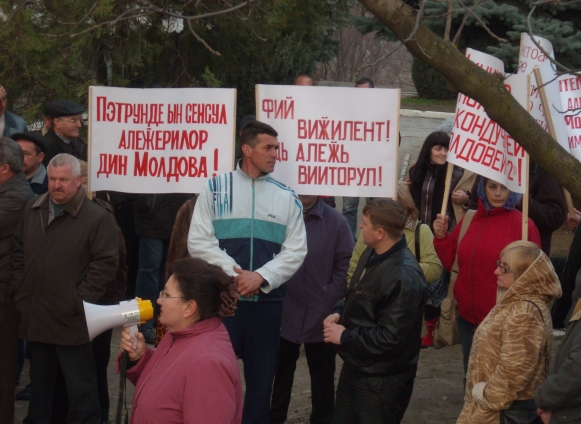
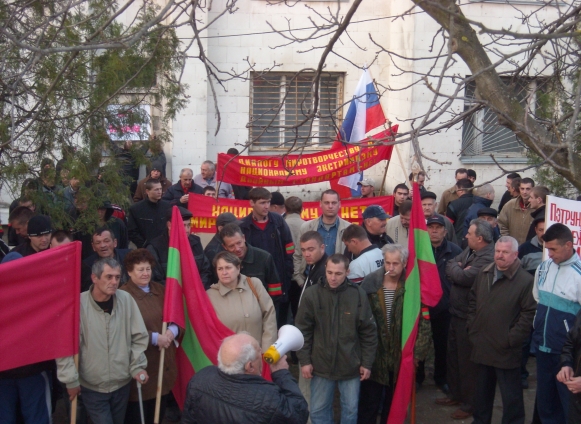
2009-04-05/08:46 /Access to the polling station No. 5 in Corjova village of Dubasari district is blocked. Pavel Postica, observer on behalf of Promo-LEX Association, has told Info-Prim Neo that about 300 civilians are holding a protest in front of the polling place set up at Mihai Eminescu High School. The ballot box was sequestrated and is kept in a militia car.

According to Postica, the protesters are representatives of different local public associations: veterans of the Afghan war, the Women’s Union of Dubasari, the Union of Transnistria’s Defenders, Kazaks. The protesters carry placards and flags of Russia and Transnistria and chant: “No to Illegal Elections!”.

The protest is peaceful, but access to the station is blocked. Moldovan policemen watch the protest from a distance. No person managed to vote until 08.30.

Postica also said that the Transnistrian militia blocked the access roads to Cocieri village, where t here was set up another polling place. “We were informed that the road along the barrage is also blocked. One can cross the river only with the ferry,” Postica said.

The mayor of Corjova village Valeriu Mitul said that the power supply in the village was cut off at 5.00, while at 6.40 the polling station was blocked and the ballot box confiscated. “Transnistrian militiamen and nongovernmental associations came here and blocked the village roads with special equipment, while mobile groups go through the village and urge the people not to go to the polls,” Mitul said. According to him, the members of the electoral office are inside the polling place.

The Central Election Commission (CEC) announced that all the polling places were opened at 7.00. The voting started as planned, with no incidents, except Corjova village, where the law enforcement bodied of the unconstitutional separatist authorities occupied the polling station No.5 and do not allow the people to vote, says a communiqué issued by the CEC this morning.

International observers from the Embassy of Ukraine, Embassy of the United States, the OSCE, the European Union and representatives of the Ministry of Reintegration are on the spot, the communiqué says.

Jurisdiction over Corjova is disputed between the central authorities in Chisinau and regional authorities in Tiraspol. During the 2007 local elections in Corjova, Transnistrian law enforcement bodies prevented voters from entering the polling station. A number of villagers that wanted to vote and police officers were then mistreated by the Transnistrian militia that destroyed the electoral supplies of the station. Afterward, the Parliament of Moldova extended the term of the local elected authorities until there were created conditions for holding elections. During the 2005 parliamentary elections, Transnistrian authorities blocked attempts to carry out mobile voting for home -bound voters, while in 2003 the polling station for Corjova was opened in the neighboring village Cocieri, which is controlled by the Moldovan constitutional authorities.

Corjova polling station will remain closed / 2009-04-05/10:26

The Central Election Commission (CEC) has decided to leave the polling station in Corjova village closed following a petition by the Dubasari Constituency Council, Info-Prim Neo reports.

The decision came after a group of roughly 300 persons blocked the entrance to the poling place. Power, water and gas supply was halted in the village, and the ballot box was taken away, said CEC chairman Eugeniu Stirbu.

According to CEC’s decision, the 1,350 eligible voters from Corjova will be able to cast ballots at the poling station no.4 in neighboring Cocieri, some 4 kilometers away, or in Ustia village, so as not to overload the former station.

“The present situation renders voting in Corjova impossible, and this decision is to prevent potential incidents and keep the citizens in the region safe from any harm”, said
Stirbu.

Separatist authorities hinder people from voting, Promo-LEX / 2009-04-05/11:56

The separatist Transnistrian authorities prevent the Moldovan citizens from voting by stopping the voters at the customs posts or sequestrating the license numbers of the units of transport, Ion Manole, president of Promo-LEX Association that monitors the elections in Transnistria, has told Info-Prim Neo
Two buses with voters from Bender were stopped at the customs post that is 2 km from Varnita. The voters had been held for about 10 minutes until the Russian peacekeepers intervened, insisting that the voters are allowed to go to the polling place in Varnita. Yet, the mobile ballot box designed for the prisoners held in the Bender penitentiary remained at the customs post.

According to Ion Manole, the Transnistrian authorities hinder the holding of elections in the region and the movement of the voters that want to mark their ballots at the polling places set up in the zone controlled by the constitutional authorities of Moldova.

“Certainly, the people will not go to the polls. At a number of state-owned companies, the people were told to bring the Moldovan passport and card when they come to work on Monday (the persons that vote get the special stamp “Elections 05.04.09” in their identification papers – e.n.). It is obvious that they were banned from going to the polls,” Ion Manole said.

Manole added that the authorities in Grigoriopol confiscated the license numbers of the buses that were to transport voters, while in Camenca it’s like a period of war as there is silence and no one travels along the streets.

“In Camenca, both the Transnistrians and the Moldovans doubled the police posts. I understand the actions of the Transnistrians, not yet of the Moldovans… The Moldovan post is out of place. It’s like a real customs post at Moldova’s border,” Ion Manole said.

Separatists continue impeding elections, Promo-LEX / 2009-04-05/14:49

People living in the Transnistrian region see more and more obstacles in their way to vote in the ongoing Moldovan parliamentary poll, as numerous complaints of intimidation by the Transnistrian authorities keep coming by telephone to the association Promo-LEX, an organization that watches the electoral process in the breakaway region, Info-Prim Neo reports.

“In Grigoriopol, some people heading for the polling station got their car impounded. The local police fenced themselves and refused to explain their reasons. Those people are very upset because they cannot travel to the station. Also, the people who have to vote in Cocieri are forced to travel by foot there. Whereas the younger ones can handle that, the elderly give up in anger and despair”, said Promo-LEX chairman Ion Manole.

“Usually people aren’t registered when they exit the region, but today there have been a lot of cases when people got registered in order to be intimidated and frightened”

Manole also said many people refuse to vote, because if they would, their ID papers would be stamped to confirm that they voted. “At the same time, there is a polling station in Rezina where the stamp isn’t applied, leaving room for fraud”, he added.

Moldovan authorities call for international denunciation of Tiraspol’s actions / 2009-04-05/15:36

The Moldovan Ministry of Integration is condemning the violent actions by the law enforcement bodies of the unconstitutional regime in Tiraspol, which have prevented the citizens in Corjova village, Dubasari district, from reaching the polling place. At the same time, the Moldovan authorities are appealing to the international community for a denunciation of those actions, Info-Prim Neo reports, quoting a communique from the Ministry.

According to the communique, the Ministry of Integration considers that Smirnov’s regime must bear all responsibility for the actions which led to destabilization and tension in the Security Zone, and the potential consequences.

“The Moldovan authorities are deeply saddened that the efforts made with the involvement of the participants in the Transnistrian settlement process have failed to produce favorable conditions for the free movement of the citizens living on the left bank of the Nistru and f ree participation in Moldova’s parliamentary elections”, the communique reads.

At the same time, the Moldovan authorities are expressing hope that the international organizations will take adequate measures to ensure respect for human rights and fundamental freedoms in the Transnistrian region.


Promo-LEX: “Who and when told Transnistrian voters where to vote? No one” / 2009-04-05/18:01

The voters from the Transnistrian region who are coming to the 10 polling stations set up for them on the right bank of the Nistru go to wrong places because they don’t know where they are registered. “Who and when told the Transnistrian voters where to vote? No one”, says Ion Manole, the chairman of the association Promo-LEX, an organization that watches the electoral process in the breakaway region.

“It’s not that they were misinformed, they weren’t informed at all… There were people who came from Tiraspol to Hagimus, though they should have gone to Varnita. There were people who came from Slobozia to Varnita, but they were expected in Rascaieti”.

Manole blames the failure on the Moldovan authorities. “If they opened 10 polling places, they should have informed all the people by all possible means”.

http://www.info-prim.md
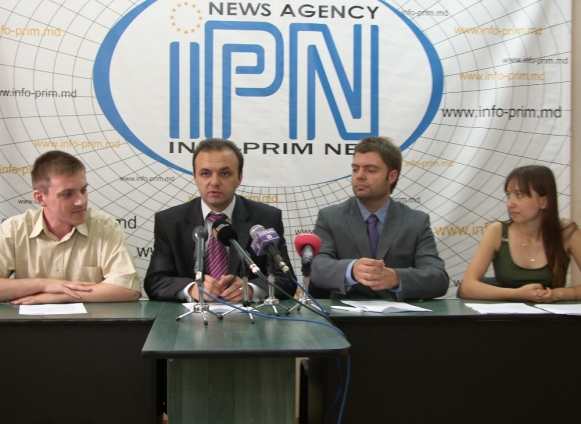


Promo-LEX: Results of the third monitoring report of the Parliamentary Elections in the Transnistrian region of Moldova. Monitoring period April 3rd – 22nd, 2009

_article_1241085210Promo-LEX Association, member of the Civic “Coalition 2009” for Free and Fair Elections issued the third monitoring report of the Parliamentary Elections in the Transnistrian region of Moldova for the period April 3rd – 22nd, 2009

The project “Monitoring of the electoral process in the Transnistrian region of Moldova” is financially supported by the Eurasia Foundation with funds provided by the Swedish International Development Cooperation Agency (Sida/Asdi) and the United States Agency for International Development (USAID).

Summary

The authorities have not ensured minimal conditions for suffrage right exert by people from the Transnistrian region of the Republic of Moldova. There was registered a lack of information as regards the electoral competitors and their programs as well as the place, date and the documents necessary for exerting the suffrage right.

On the Election Day the roads to the localities where the polling stations have been established were strongly patrolled by numerous teams of road militia, being recorded cases of withdrawal of driving license and vehicle number plates form persons transporting voters to polling stations (Grigoriopol district). Some of the access ways to the localities in which the polling stations have been established were blocked.

The CEC Decisions have not been uniformly respected, in compliance with which the elections’ result should have been registered in a special separate form.
This very fact increased the number of voters enlisted on additional rolls. There has been registered a deficit of 674 voting ballots for the electoral district 15 Dubăsari.

Promo-LEX has obtained CEC consent for the verification of the voter rolls for the 10 polling stations at which Transnistrian region people participated, but the access to rolls was ensured only to six polling stations.
We were not able to get access to voter rolls from the electoral districts No.18 Floreşti, No.26 Rezina and No.3 Anenii Noi.

No cases of dismissal on the grounds of participation at the elections on April 5, 2009 were reported, despite the threats to some people or representatives of various region structures and institutions.

There have been ascertained various encroachments of the electoral legislation, as a result of monitoring polling stations set up for Transnistrian region voters: the impossibility of establishing Corjova polling station No. 5/15, the lack of indicator plates of the polling stations, the presence of police men in civilian clothes nearby the polling stations, the electoral campaign on the election day, inappropriate appliance of the provisions as regards the application of the seal „Elections 5.02.2009”, acceptance of voters on the basis of other documents than those provided for by the legislation, the inadequate training of electoral officials, inappropriate appliance of legal provisions as regards the concomitant disposal of “domicile” and “residence”, the impossibility of movement of a mobile ballot box on the territory effectively controlled by the secessionist authorities, etc.

As a result of the siege of Corjova polling station No. 5/15, only 91 voters, out of 1350 enlisted on initial rolls, came to the two polling stations where the voting for locality voters was allowed. The peace keeping mechanism could not ensure minimal conditions for suffrage right exert in the region.

Therefore, 4042 voters from the Transnistrian region participated in the 5th April a Parliamentary elections, which is about 50% of the number of voters who participated at the previous elections, and 1, 8% of the total number of Transnistrian voters. The decrease of voters’ number can be explained by unprecedented actions of intimidation, prosecution and control exerted over the region voters. In the same time the constitutional authorities have not ensured a necessary minimum of electoral information to voters for their participation in the elections.

Generally, the mass media means of information from the region presented the parliamentary elections from April 5, 2009 on the Election Day. During the post-electoral period, the mass media depicted strongly the events from the center of the capital. As compared to the pre-electoral period, the post-electoral information was impartially presented.

Recommendations:

  • Strengthening efforts as regards the electoral system amendment, in order to ensure rights and non discriminatory conditions for Transnistrian;
  • Strengthening diplomatic efforts as regards raising national and international public opinion awareness and persuading Tiraspol administration to ensure minimal condition for the exert of suffrage right;
  • Notification of Transnistrian voters about all electoral procedures;
  • Continuous professional training of electoral officers;
  • Ensuring strict evidence of printing and distributing voting ballots for the purpose of insufficiency non admission or exaggerated excess;
  • Reviewing the system of voter roll preparation;
  • Investigation all the cases which created barriers for electoral rights exert in the Transnistrian region and sanctioning all the culpable persons in compliance with the current legislation.


Coalition 2009: Unfair and partially free elections. Electoral process tainted before elections

_article_1239188073The Civic Coalition for Free and Fair Elections – Coalition 2009 considers that the April 5 parliamentary elections were not fair and only partially free given the situation of the Transnistrian voters. Such a position was expressed by the over 70 nongovernmental organizations that form part of the Coalition, Info-Prim Neo reports.

According to Coalition 2009, the election campaign was marked by multiple violations of the electoral legislation: use of public resources (at least 41 cases proved) and pressure and influence on the election runners (at least 21 cases proved) and voters (minimum 33 cases proved).

The public stations with national coverage Moldova 1 and Radio Moldova favored the ruling party in the news programs that were transformed into instruments for manipulation and propaganda in favor of the PCRM and against the Opposition parties. Similar violations were committed by the private stations NIT, N4, EU TV and Antena C. Therefore, the electoral contenders had limited possibilities of presenting their platforms and expressing their viewpoints on different problems. “So, we can say that there was no political pluralism during the election campaign,” Coalition 2009 says in its final report.

Coalition 2009 also said that the election campaign was not stopped when it should. On April 4, 2009, EUTV, N4, NIT, PRO TV, and TV 7 rebroadcast programs biasing in favor or against election runners. Also, the state news agency Moldpres favored the PCRM on the election day, broadcasting news about how the top three candidates on the PCRM list Vladimir Voronin, Marian Lupu and Zinaida Greceanai voted, but reported nothing about the vote of other election contenders.

According to the Border Guard Service, 627,959 Moldovans are constantly abroad. Given that these citizens make up at least 20% of the total voters, Coalition 2009 considers that the 33 polling stations opened abroad could not provide optimum voting condition for them. The Coalition said that in the final report on the monitoring of the 2005 legislative elections, the nongovernmental organizations recommended the authorities to take the necessary measures to ensure the right to vote of the Moldovans that are abroad in the future electrons.

The irregularities in Moldova’s Transnistrian region were much more serious. The authorities did not create minimum voting conditions for about 10% of the Moldovan voters living in the region. There were carried out no electoral activities such as debates and meetings with the voters. The Moldovan authorities did not inform the voters in the region about the voting procedure and where they should vote. Also, the number of polling places set up for Transnistrian voters was much lower than necessary.

Coalition 2009 draws attention to the fact that the irregularities committed in the April 5 elections are similar to those mentioned in the 2005 reports of the Civic Coalition for Free and Fair Elections, but during the four years the authorities did not take steps to improve the situation.

Coalition 2009 is a voluntary union of Moldovan NGOs that aim to contribute to free, fair, transparent and democratic elections for the Parliament. It continues the activities promoting free and fair elections initiated by Coalition 2005 and Coalition 2007 and has over 70 NGO members.

www.info-prim.md


Over 200,000 Moldovans in Transnistrian region will not be able to vote, Promo-LEX

_article_1239008205The Moldovan citizens living in the Transnistrian region are discriminated in exercising their right to vote, including by the electoral authorities of Moldova. This is the conclusion of the second report on the monitoring of the electoral process in Moldova’s Transnistrian region for the 2009 parliamentary elections presented on April 3, Info-Prim Neo reports.

The Central Election Commission (CEC) distributed only 14,500 ballots to the 10 polling places set up in the region, while the data of the Ministry of Information Development show that 223,580 Moldovans are eligible to vote in Transnistria. So, about 209,000 persons will not be able to vote there, said Pavel Postica, jurist at Promo-LEX.

The CEC made such a decision basing on the data of the 2005 parliamentary elections, when about 8,000 persons voted in the 10 polling places. “But this is not the real situation,” said Pavel Postica. “There are much more persons in the region that want to take part in elections but cannot because they are intimidated by the Transnistrian authorities, while the Moldovan authorities did not create the necessary conditions for them. The people were not informed about the place, date and method of voting. A large part of the residents do not even know where they could vote,” Postica said.

According to Ion Manole, president of the Promo-LEX Association, the most difficult situation is in Corjova village of Dubasari district. “It is two days before the elections, but the polling station No. 5 in Corjova does not have the necessary supplies. The ballot boxes remain sequestrated at the customs post near Pohrebea village of Dubasari district. The village is patrolled by militiamen in uniform. The inhabitants are threatened that if they go to the polls, the clashes will be more serious than in June 2007,” Ion Manole said. “After sequestrating the boxes on March 19, the y started to exert pressure on the priest, mayor, members of the electoral office and ordinary people. All those that work at companies in Dubasari have been threatened with dismissal.”

The report authors ascertained that the electoral campaign in the region had a sporadic character because the Transnistrian customs officers confiscated many of the electoral materials and because the electoral contenders had a lackadaisical attitude. Yet, the monitors of Promo-LEX noticed that election posters of the PCRM appeared in Tiraspol and Bender on March 25, when President Vladimir Voronin and the Transnistrian leader Igor Smirnov were to have a meeting. “The posters were placed high on posts, including near militia posts and peacekeepers posts. This makes us think that the action was coordinated with the Transnistrian authorities,” Ion Manole said. No other posters were observed in the two towns were there are concentrated the largest part of the voters in the region – about 88,000. At the same time, the MAE, UCM, PL, and PLDM campaigned in such settlements as Camenca, Rabnita, Grigoriopol, Slobozia.

The monitors also established that the local mass media covered the legislative elections in Moldova from a negative angle, urging the people not to take part in elections and report when they see somebody transporting electoral materials.

The report was prepared by Promo-LEX Association as part of the Civic Coalition for Free and Fair Elections “Coalition 2009”. It covered the period between March 10 and April 2, 2009. Seven observers collected the data.

The monitoring of the electoral process in the Transnistrian region is a novelty in Moldova’s election history. The project was financially supported by Eurasia Foundation from the resources of the Swedish International Development Cooperation Agency and the United States Agency for International Development.

For the full text of the Report click here

source: http://www.info-prim.md


Informing activity “Right to vote and to be elected. The importance of the elections”

_article_1239190181Members of the Youth Leader’s Network from the Transnistrian region organized on 28 March 2009, in the High School “Alexandru cel Bun”, city Bender, an informing activity on electoral education – “The Right to vote and be elected. The importance of elections”. The seminar was attended by 20 young people, students of XI and XII forms, who are citizens of the Republic of Moldova and have the right to vote..

The activity was carried out in order to inform young people about the organization of the parliamentary elections on April 5, 2009, when they will exercise their right to vote for the first time. Young people were trained regarding the correct procedures for exercising this right, they learned about the importance of this experience and rules to be considered in the polling stations for their locality.

Theoretical elements of the activity – the legal exposures from the electoral, current legislation contributed to the understanding of the substance of the right to vote. Participants enjoyed the opportunity to see through graphs, how a polling station looks and what is the procedure to be followed for the proper exercise of their right to vote.

The activity’s developed structure allowed young people to maintain discussions and debates on different topics, ideas and opinions regarding the importance of exercising the right to vote and fairness of conducting elections in Transnistrian region. Also, they mentioned the phenomenon of misinformation of the population, youth’s indifference and lack of interest, low level of civic culture of citizenship, fact that influences the attitude of the voters towards the importance and the need to exercise their right to vote. Based on information that they gained during the informing activity, pupils tried to answer from their own point of view the question “why is it important to vote?”, answers led to contradictory attitudes, but the main point found is that young people are convinced to go to vote. Participants were impressed by the discussions from which they learned useful things about what is necessary for a citizen with the right to elect and to be elected.

Activity was carried out by members of the Network of Young Leaders from Transnistrian region.
Cazac Ala, Tatiana Breahni.

The Network of Young Leaders from Transnistrian region was established by Promo-LEX Association within the project “Strengthening youth initiative groups from Transnistrian region, project financially supported by the Royal Netherlands Embassy in Kiev through the MatraKAP Program.