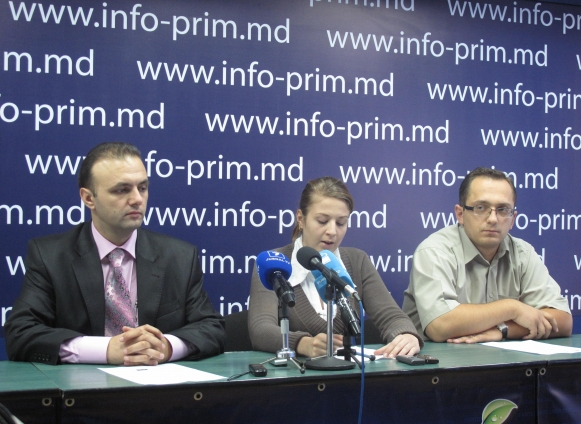
Promo-LEX Association has released the pre-electoral Monitoring report on the early parliamentary elections

October 14, 2010. Promo-LEX Association has released the pre-electoral Monitoring report on the early parliamentary elections of 28 November 2010.

The present report refers to the period from September 29 – October 12 and describes the electoral environment, analyzes the electoral legislation and relevant regulations and presents the review of the field findings by observers. In the monitoring period, the mission found that the election authorities have showed an overall unbiased behavior and, with few exceptions, have met the deadlines prescribed by the legislation.

The Central Election Commission (CEC) developed a number of regulations and guidelines meant to clarify and enhance the electoral legal framework. The CEC established the electoral constituencies, approved the estimate of costs, and imposed a cap on the campaign financing. Also, the CEC authorized the first national observers.

The election campaign has so far been proceeding in low gear. The CEC established the place and time for submitting applications for the registration of the candidates in the early parliamentary elections of 28 November 2010. During the monitoring period, twelve political parties obtained registration with the election authority as electoral contenders. Some of the political parties kicked off their campaigns before obtaining formal registration.

The main findings formulated in the report concern the need to revise the Timetable with a view to bringing it in line with the provisions of the electoral legislation; to monitor how candidates observe the requirement to step aside from certain posts and warn those who fail to do so; to carry out information and electoral education campaigns to stimulate a high voter turnout, including on the eastern side of the Nistru River.

To exclude abuses of administrative resources in electoral purposes, the observation mission encourages the electoral contenders to ensure that the candidates on their lists step aside temporarily from their public posts for the duration of the electoral period.

Promo-LEX is conducting a long-term monitoring of the electoral period preceding the early parliamentary elections on 28 November 2010 within the Civic Coalition for Free and Fair Elections. Promo-LEX will employ in the monitoring process 42 long-term observers deployed in all the districts of the country. The Promo-LEX observers received training on electoral procedures and instructions regarding the impartial and independent character of the monitoring effort. The recommendations of the monitoring mission are developed in good faith and aim to contribute to the improvement of the electoral process.

“We are expecting the campaign to be diverse and active,” said Ion Manole, the Chief of the Promo-LEX Monitoring Effort. “Promo-LEX observers will pay close attention to the fairness of the electoral process and the behavior of the competitors.”

This project is implemented with technical and financial assistance from the United States Embassy in Moldova, the National Endowment for Democracy (NED), the National Democratic Institute for International Affairs (NDI) and the United States Agency for International Development (USAID). The opinions expressed in the report belong to the authors and do not necessarily reflect the opinions of the donors.

The report is available here.

Contact person Pavel Postica, Legal Department Promo-LEX, Tel. +373 22 211-622.


REPORT 1 Monitoring the early parliamentary elections of 28 November 2010

Raport 4 electoral 2000 Electoral Report 4_2010


Final Monitoring the national constitutional referendum of 5 September 2010

_article_1286370937October 6, 2010. Promo-LEX Association has released the Final Monitoring the national constitutional referendum of 5 September 2010.

Promo-LEX carried out a nationwide monitoring effort to observe the national constitutional referendum of 5 September 2010 in the period from 7 July 2010 to 10 September 2010. The findings of the monitoring mission are based on direct observation of the electoral process carried out by a network of 42 long-term observers in all the rayons (districts) of the country. On voting day, other 300 short-term observers were involved in the observation, being assigned to select polling stations from a nationally representative sample.

The final monitoring Report includes the findings and the recommendations made in the period preceding the referendum campaign, during the campaign and on the voting day.

During the monitoring period Promo-LEX observers found that the public and election authorities were overall prepared satisfactorily to cope with the tasks related to the poll. The observation revealed no cases of discrimination against the referendum participants or voters by the public or election authorities. However, the voters residing in the Transnistrian region were confronted with unfavorable conditions for their right to vote.

During the referendum, the monitors observed that the number of applications for mobile voting was lower than in the previous campaigns. Massive mobile voting had in the past raised concerns about the fairness of the electoral process. At the same time the overall turnout was also considerably lower in this latest poll.

The Promo-LEX monitoring effort revealed a number of deficiencies related to the legal framework adopted in the period preceding the referendum, which partly contradicted the Election Code. Shortcomings were registered in the process of organizing the poll, both due to flawed development and implementation of the Timetables established by the CEC. Other problems were observed in the process of compiling, publishing and verifying the electoral rolls and in sending invitations to voters. Shortcomings were also observed in relation to the establishment of and supply arrangements for the electoral bureaus of the polling stations (PEB). Other objections were formulated with respect to the level of instruction and the activity of PEB members on voting day in a number of locations.

Two political parties represented in Parliament failed to delegate representatives to electoral bodies of first and second levels. Hence, the electoral bodies were predominantly formed by the “majority” political parties and in some cases with the contribution of the local authorities.

A number of political parties and sociopolitical organizations officially registered with the CEC as referendum participants submitted incomplete and overdue financial reports to the election authorities. Almost every second referendum participant failed to present financial reports to the CEC in the established time limits. For its part, the CEC made insufficient efforts to verify the information presented by the participants in their financial reports. Also, the referendum participants generally had a disregardful attitude towards the Code of Conduct.

Additionally, Promo-LEX observers found multiple and worrisome cases of undue influence exerted on voters, in particular on the voting day. The monitors reported cases of undue influence exerted on voters by the representatives of some public institutions, local authorities and universities. Cases of intimidation were also registered with respect to the voters residing in the Transnistrian region, who were prevented by the representatives of the Tiraspol administration from exercising their right to vote. The observers also noted a number of cases where the participants made financial donations to voters or entities in an electoral context.

The Promo-LEX monitoring effort found numerous instances when local authorities’ representatives engaged in campaigning in favor of certain referendum participants. Observers also noted numerous activities aimed at boycotting and obstructing the electoral process by some referendum participants and representatives of local authorities. Such activities were prevalent on the voting day.

Other cases concern the abusive use of campaign advertising by a number of referendum participants, which was partly due to imperfections in the electoral legal framework.

Among the positive tendencies, specifically in the context of organizing the voting abroad was the fact that most of the Moldovan diplomatic missions had posted on their web pages information on the Referendum and the voting process.

One of the key recommendations formulated by the Promo-LEX monitoring mission is the need to develop a set of functional mechanisms for the proper implementation of the electoral legal framework by the local and election authorities. There is also a need to introduce additional measures to improve financial reporting and create favorable conditions for the exertion of the right to vote across the entire national territory, with the imposition of sanctions for the public authorities which violate this right.

The findings and recommendations of the Promo-LEX monitoring effort are formulated in good faith and aim at improving the electoral processes and the voter confidence in this fundamental democratic exercise.

This project is financially and technically supported by the Organization for Security and Co-operation in Europe (OSCE), the United States Embassy, and the East Europe Foundation, with resources from the Swedish International Development Cooperation Agency (Sida), the Ministry of Foreign Affairs of Denmark, the National Endowment for Democracy (NED), and the United States Agency for International Development (USAID) through the Eurasia Foundation. Any opinions expressed belong to the authors and do not necessarily reflect the opinions of the donors.

The report is available here.

Contact person: Pavel Postica, Legal Department Promo-LEX, Tel. +373 22 211-622.


FINAL REPORT Monitoring the national constitutional referendum of 5 September 2010

Raport referendum 2010 eng Referendum 2010 raport final Undddtitled


Final monitoring report on voting process abroad for the national constitutional referendum on 5 September 2010

_article_1284707244September 17, 2010. Promo-LEX Association has released the Final monitoring report on voting process abroad for the national constitutional referendum on 5 September 2010.

The monitoring of the national constitutional referendum, which took place on September 5, is a project implemented by the Association Promo-LEX in partnership with “Moştenitorii” Association as part of the Civic Coalition for Free and Fair Elections “Coalition 2009”.

A number of 79 national observers monitored the voting process in the constitutional referendum at 40 polling stations in Belgium (Brussels), the Czech Republic (Prague), Greece (Athens, Heraklion, Thessaloniki), France (Paris, Toulouse), Germany (Berlin, Munich, Hamburg), Spain (Madrid, Santander), Portugal (Lisbon, Faro, Portimao), Romania (Bucharest – 2, Galaţi, Timişoara, Cluj, Iaşi), the Russian Federation (Moscow, Domdedovo, Mozhaisk, St. Petersburg), Ukraine (Odessa), Italy (Rome – 2, Mestre – 2, Milan – 2, Padua – 2, Bologna -2, Parma, Turin, Verona, Naples).

This project is implemented with support from the Democracy Support Programme in Moldova, a joint initiative between the European Union and the Council of Europe.
The expressed opinions belong to the authors and do not necessarily reflect the opinions of the donor.

Summary

On Election Day the independent observers assigned to the 40 polling stations opened abroad aimed to monitor all the electoral processes taking place at the polling stations as well as to monitor the results of the education and information efforts destined for the voters abroad.

The observers noted a high degree of satisfaction and enthusiasm among the Moldovans who voted at the polling stations opened in the foreign cities where Moldova does not have embassies or consulates. There wasn’t recorded any case of intimidation of the voters or observers by the election officials, who, on the contrary, demonstrated receptivity and a constructive attitude. Some of the members of the Electoral Bureaus of the Polling Stations (EBPS) cooperated with the local authorities from the cities which hosted the polling stations to provide these with transparent ballot boxes and polling booths.

At the same time, the observers noted an unsatisfactory level of competence of the EBPS members, who often had little knowledge about the voting procedures. Furthermore, the monitors revealed cases where some EBPS members had had no specific training at all. In certain cases the EBPS members didn’t even know if their work was voluntary or they were going to be paid for it.

The monitors observed numerous cases where the polling stations were opened to voters later than 07:00, in some cases with delays of half an hour. Of particular concern was also the widespread unauthorized absence of some EBPS members on Election Day, most often these were members delegated by the referendum participants.

Another serious concern is related to the extremely weak, and sometimes even inexistent, education and information campaign destined for the voters abroad. Particularly concerning were the often cases where the voters didn’t know which identity documents to produce to be allowed to vote – 360 voters were unable to vote because they had only an identity card (buletin de identitate) to show. In the same context, there were many complaints from the voters related to the extremely poor information efforts concerning the referendum; in particular, concerning its purpose, its essence, the potential effects, etc.

The monitors express their concern over the often cases of presence of the law enforcement officers at the voting sites. While refraining from direct contact with the voters, the presence of the police officers could nevertheless intimidate some of the Moldovans who stay abroad without authorization.

Considering the findings made and the concerns formulated, the observers developed a set of recommendations for the electoral actors aiming to improve the quality of the electoral process. Among these the most important is the appeal addressed to the election authorities to carry out more extensive education and information efforts for our citizens abroad and provide better training for the EBPS members. The public authorities are encouraged to collaborate with the local law enforcement bodies in order to avoid the presence of their uniformed and armed representatives near the polling stations on voting day.

The referendum participants (and electoral candidates in the future) are recommended to discipline the members they delegate to the EBPS abroad in order to ensure the presence of all the EBPS members on Election Day and their active participation in all the electoral proceedings. Additionally, the campaigners are encouraged to carry out more extensive information activities aimed at familiarizing the voters abroad with the positions they promote.

The report is available here.

Note: For further information contact the Legal Department Promo-LEX, Alexandru Postica, tel. (+373 22) 211-622.


FINAL REPORT Monitoring the national constitutional referendum on 5 September 2010 at the polling stations abroad

UntitlSfdSded UnSDvDtitled


Promo-LEX Association launched the preliminary report on voting day

_article_1283847561September 6, 2010. Promo-LEX Association launched the preliminary report on voting day on the national constitutional referendum of 5 September 2010.

The monitoring of the national constitutional referendum, taking place on September 5, is a project implemented by the Association Promo-LEX as part of the Civic Coalition for Free and Fair Elections.

The monitoring effort by Promo-LEX includes 42 long-term observers, who monitor the electoral process in all the electoral constituencies in Moldova in the period from 13 August 2010 to 10 September 2010. The long-term observers were assisted by some 300 short-term observers (15% of the total polling stations, distributed across the territory of Moldova, based on a representative sample) who monitored the electoral process on election day. The activity of all the observers will be coordinated by a central team whose structure was conceived prior to the poll.

CONCERNS
1.Many EBPS were insufficiently prepared by the local public administration;
2.In a series of cases it was impossible to solve the problems within the polling stations because the EBPS would not meet the quorum necessary for adopting a decision;
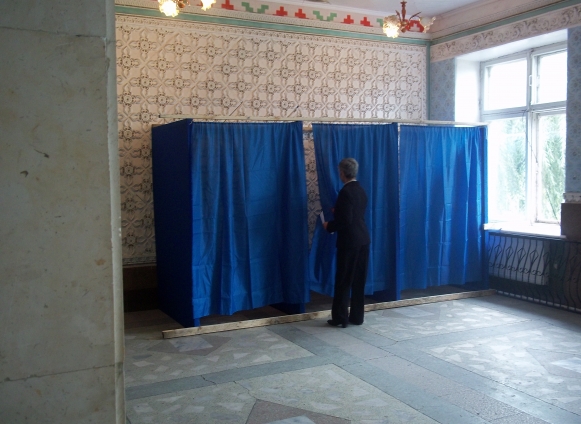
3.The voting process was negatively affected by the fact that the EBPS were improperly arranged;
4.A wider range of electoral frauds were employed (inappropriate issuance of ballots, voters using more than one ballot, introduction of deceased persons in the voters’ rolls);
5.The transparency of EBPS was restricted during the voting process (observers were not allowed to film or take pictures);
6.There was a notable decrease in the authorities concern in ensuring the voter’s right to a secret voting;
7.Citizens from the Transnistrian region were restricted in enjoying their voting rights;
8.There was a lack of access to information on the voting process of the central electoral administration;
9.In a number of cases the voters’ options were susceptible to influence by the campaign advertising displayed in the proximity of the polling stations;
10.There were cases of abusive influence on the voting process by the local public administration and the observers representing participants in the referendum;
11.The free enjoyment of the right to vote was hampered through intimidation and restrictions imposed on the free movement by the separatist forces.

RECOMMENDATIONS
1.Develop and introduce measures to penalize EBPS members who do not comply with their legal obligations;
2.Pay more attention to the appropriate arrangement and equipment of EBPSs;
3.Identify a clear mechanism for preventing and penalizing frauds in the voting process;
4.Ensure necessary conditions for the enjoyment by citizens from the Transnistrian region of their right to vote, by creating EBPSs on the right bank and providing transportation to the polling stations;
5.Improve the legislation on outdoor campaign advertising;
6.Identify a clear mechanism for preventing and penalizing public administration for abusively influencing the voters’ choice.

The report is available here.

Note: For further information contact the Legal Department Promo-LEX, Pavel Postica, tel. 211 622.


Preliminary REPORT on voting day / national constitutional referendum of 5 September 2010

SDSDvDv. UntitlSDSDfed


Voting process abroad / Republican Constitutional Referendum of September 5, 2010

_article_12838477836 September 2010. The “Promo-LEX” Association in partnership with “Moştenitorii” Association monitored the voting process in the constitutional referendum at 40 polling stations located out of the Republic of Moldova*.

According to preliminary results, 11,517 people cast their votes in 34 out of the 40 monitored polling stations. Of the total number of valid votes, 98% were in favor of the proposal put forth in the referendum, 1.9% were against, and less than 0.1% of the ballots were declared invalid.

In the great majority of cases, the election authorities demonstrated a cooperative and proactive attitude and didn’t create obstacles to the voting process or its monitoring by the observers. Even if the members of the electoral bureaus were not always well-informed about their duties in organizing the voting process, they didn’t hesitate to consult the opinion of the observers, the provisions of the Election Code and other electoral rules.

However, inadequate knowledge of the voting procedures led to cases where voters were allowed to the voting booth upon producing other documents than a passport or a seaman’s book. For example, in the Italian city of Padua, 2 persons voted with their identity cards (buletin de identitate). At one of the polling places in Milan, Italy, unauthorized persons were observed staying inside the station throughout the day and the members of the electoral bureau justified their presence by saying that those persons were “hosts who won’t cause any trouble”. Several cases were observed at the same polling stations in which two voters entered the same voting booth at a time. In contrast, at the polling station in Lisbon, Portugal, the election officials barred accompanying children from entering the voting booth together with their parents.

The observers noticed an unsatisfactory degree of information and education efforts destined for voters abroad. Some 300 voters in over 20 locations were not allowed to vote because they didn’t have the required identity documents (passport or seaman’s book) with them. Furthermore, many people expressed their indignation at the poor, and often inexistent, information campaign concerning the vote. Such situations were observed in a great part of the voting stations located in Italy, the Czech Republic, France (Paris), and Greece (Athens, Heraklion). In Portugal (Faro) and in Italy (Padua) there were observed billboards instructing voters to vote with their identification cards.

Many polling stations abroad were opened with delays ranging from 10 minutes to 1 hour and 20 minutes, in breach of procedures. This happened in Germany (Hamburg, Munich), Italy (Mestre – 2 stations, Milan – 2 stations), Portugal (Portimao), Spain (Madrid), and Ukraine (Odessa). In most of the monitored polling stations, some of the members of the electoral bureaus were not present at the opening hours. This was observed at all the polling stations in France and Greece, in the Czech Republic, at three stations in Italy and Russia, and in the French city of Toulouse.

The presence of local law-enforcement officers near the polling places at distances smaller than 100 meters in Germany (Berlin), Greece (Athens), Italy (Mestre and Turin), Portugal (Lisbon), Russia (Moscow) didn’t cause any events that could be perceived as evident intimidation, such as demanding of ID papers or any of the sort. However, it is likely that some of the Moldovan citizens who stay illegally in the respective countries were afraid to turn out for the vote, a fact confirmed by accounts of voters in the towns where there were no law-enforcement officers near the voting stations. In many cases, it was the election officials who requested the presence of the law-enforcement officers, citing the need to ensure order and voters’ safety, and in Madrid citing concerns of potential terrorist attacks.

Over 98% of the people who voted, a total of 11,323, were listed in supplementary electoral rolls. In some polling stations there were no primary voter rolls at all. Such situations were observed in Greece (Heraklion), Italy (Mestre and Bologna), and Spain (Santander). At the same time, in Hamburg (Germany) a number of voters were unsuccessful in finding their names in the primary electoral rolls despite submitting on-line requests to that effect on the Central Election Commission’s website. Also in Hamburg, the primary electoral list was obtained by e-mail only at around 8:00 in the morning on election day.

In Russia, the packs of ballots destined for the polling station in Domodedovo were sent to the station in Mojaisk and vice-versa. Another faux pas happened with the electoral supplies destined for the polling stations in Bucharest and Lisbon.

In Italy, not any of the polling stations received voting boxes, with two of them using cardboard boxes in stead.

Instances of campaigning activity inside or near the voting station on election day were sporadic and didn’t amount to a trend. One person was observed campaigning in favor of a political party outside the polling station in Mestre, Italy, and a number of newspapers of another political party were observed near the same station.

Rather concerning, however, are cases of intimidation of voters before the day of the referendum reported in a number of towns – Italy (Mestre, Milan and Padua), Russia (Mojaisk and Moscow). Even in the absence of direct proofs, the repeating of the same stories of intimidation in different places is a concern.

* A number of 79 national observers monitored the voting process in the constitutional referendum at polling stations in Belgium (Brussels), the Czech Republic (Prague), Greece (Athens, Heraklion, Thessaloniki), France (Paris, Toulouse), Germany (Berlin, Munich, Hamburg), Spain (Madrid, Santander), Portugal (Lisbon, Faro, Portimao), Romania (Bucharest – 2, Galaţi, Timişoara, Cluj, Iaşi), the Russian Federation (Moscow, Domdedovo, Mojaisk, St. Petersburg), Ukraine (Odessa), Italy (Rome – 2, Mestre – 2, Milan – 2, Padua – 2, Bologna -2, Parma, Turin, Verona, Naples).

This project is funded by the “Democracy Support Programme”, a joint initiative between the European Union and the Council of Europe.

Contact Person: Olga Gordila, Tel +3737 22 449626


First preliminary report on voting process abroad / National Constitutional Referendum

_article_1283848986The “Promo-LEX” Association in partnership with “Moştenitorii” Association monitored the voting process in the constitutional referendum on September 5, 2010 at 40 polling stations located out of the Republic of Moldova*.

A number of shortcomings marked the voting process at the polling stations abroad monitored under this initiative:

A number of out-of-country polling stations were opened with delays and in breach of procedures. In the Italian town of Mestre, the polling station (PS) no.323 opened one hour and a quarter later than it should have, while the electoral bureau of that station had never assembled for a formal meeting until shortly before the start of the poll. The start of the vote was also delayed in Milan (PS no.356), Madrid (PS no.339), Santander (PS no.370), and Odessa (PS no.350).

In most of the monitored polling stations, there were members of the electoral bureaus who were not present at the opening hours. Such situations were registered at the polling stations in Greece, at some polling stations in Italy and Russia, and in Toulouse and Odessa.

Of particular concern was the presence of law-enforcement officers in the immediate vicinity of the polling places abroad. For example, when the polling place no.338 opened in Moscow, there were 15 uniformed policemen outside the station (when the Romanian version of this report was first issued in the course of election day, the group of policemen had dispersed, but one or two were periodically reappearing). Similarly, 6 police officers were observed near the polling station hosted by the Moldovan Embassy in Athens, Greece. A police patrol was stationed outside the polling place in Madrid, Spain. The polling station in Turin was opened close to a police station. In most of the cases, it was the election officials who requested the presence of the law-enforcement officers, citing the need to ensure order and voters’ safety, and in Madrid citing concerns of potential terrorist attacks.

In some cases, the members of the electoral bureaus had a very poor knowledge of the voting procedures. In Padua, Italy, two cases were registered where voting was allowed with an identity card (buletin de identitate). Most of the voters were entered on supplementary lists as the primary electoral rolls were imperfect. Some polling stations didn’t have primary voter rolls at all. This was observed in Heraklion, Greece, and at both polling stations in Mestre, Italy.

In Russia, the packs of ballots destined for the polling station in Domodedovo were sent to the station in Mojaisk and vice-versa. Another faux pas happened with the electoral supplies destined for the polling stations in Bucharest and Lisbon.

In Italy, most of the polling stations didn’t receive voting boxes, with two of them using cardboard boxes in stead. The same problem in Greece was solved in cooperation with the Greek public authorities, which offered polling booths and transparent boxes for the referendum.

* A number of 79 national observers monitored the voting process in the constitutional referendum at polling stations in Belgium (Brussels), the Czech Republic (Prague), Greece (Athens, Heraklion, Thessaloniki), France (Paris, Toulouse), Germany (Berlin, Munich, Hamburg), Spain (Madrid, Santander), Portugal (Lisbon, Faro, Portimao), Romania (Bucharest – 2, Galaţi, Timişoara, Cluj, Iaşi), the Russian Federation (Moscow, Domdedovo, Mojaisk, St. Petersburg), Ukraine (Odessa), Italy (Rome – 2, Mestre – 2, Milan – 2, Padua – 2, Bologna -2, Parma, Turin, Verona, Naples).

This project is funded by the “Democracy Support Programme”, a joint initiative between the European Union and the Council of Europe

Contact Person: Olga Gordila, Tel +3737 22 449626