The initial findings of the observers from Promo-LEX

Promo-LEX Association launches its first election monitoring report of the summer 2011 election campaign. The report covers the period April 18 to May 5 and describes the pre-election context, the main developments in the campaign, presents findings about the performance of the local government, election authorities, electoral competitors and the local media and makes a number of recommendations.

According to observers from Promo-LEX the pre-election period was marked by uncertainty about the date of the general local elections. Electoral Code changes were made outside the period prescribed for that purpose by the Venice Commission. The election date was within the limits set by the Electoral Code, without affecting the continuity of local government activity.

Promo-LEX Observers have noted that local authorities tend to comply with the deadlines set by the electoral law and take measures to create equal conditions for all candidates. Local authorities, with some exceptions, provide sufficient logistical support to the electoral authorities.

The election bodies were set up, with some exceptions, within the deadlines established by law and were fair towards electoral competitors. Shortcomings were found in the establishment of polling stations, displaying of information on the premises of polling stations. Until May 3, 2011, systematic information of the official website of the Central Election Commission had not been placed on the premises of polling stations and neither were their contact details.

Observers were informed on at least two cases of an inability to exercise the right to be elected as a local representative in the local administrative-territorial region of Bender and the Transnistrian region, for the lack of electoral authorities.

In most municipalities the standardized approach does not work on the preparation, administration, updating and verification of voter lists. After verifying voter lists were accessible to observers, it was found that there were not any hinderances.

Observers reported isolated cases of extensive interpretation of election law. This led to campaigning before the official registration by candidates before the electoral authorities, including the provision of electoral gifts. Of particular concern was the application of physical and mental violence against opponents of opinion / policy and use of administrative resources.

According to I. Manole, head of the monitoring effort “these violent incidents show the low level of political culture and lack of democratic traditions in Moldovan society, recommending the initiation of awareness raising and civic education campaigns to promote a spirit of tolerance and civilized behavior, so that violence should be avoided.”

Observers have noticed the active involvement of national, local and regional media in election coverage and in particular covering the performance and behavior of the election authorities and competitors. At the moment, some legal shortcomings were noticed, relating in particular to identify the authors of election advertising in accordance with legal norms.

Recommendations of Promo-LEX observers are made in good faith and to improve the electoral process. These are based on findings and indicate in particular the direction of intervention required, without dictating solutions.

The project “Monitoring the local elections of 5 June 2011” received technical and financial assistance from the National Democratic Institute for International Affairs (NDI).The opinions expressed herein are those of the authors and do not necessarily reflect the views of donors.

For more details, contact: Carolina Bondarciuc, Public Relations Officer
Tel: (22) 450024, GSM: 069637849, e-mail: [email protected]


REPORT nr.1 Monitoring general local elections of June 5, 2011

Raport 3 elecoral 2011 Electoral 3 din 2011 eng 


Promo-LEX Association will monitor Local Elections of June 2011

_article_1303304310Promo-LEX Association launches the monitoring effort of the general local elections of June 5th 2011, within the Civic Coalition for Free and Fair Elections, Coalition 2009. The monitoring effort aims to increase public trust in the electoral processes, provide impartial and non-partisan information about the electoral campaign and elections’ administration and contribute to more free and fair elections that will increase the democratic change in Moldova.

“It is highly important to determine and compare trends of this election campaign with the trends of the previous campaigns in order to see the evolution or the involution of the election legislation, to assess the behavior of different election competitors and the accuracy of this election campaign”, stated Corneliu Cirimpei, Network Coordinator within the monitoring effort.

On the national level, Promo-LEX monitoring effort will include 40 long-term observers in all electoral constituencies and about 700 short-term observers that would monitor election process on the E-day.
The activity of all observers is coordinated by a core team that is responsible for their training in election procedures and independent and non-partisan character of the monitoring effort. Core team will also carry out the analysis of the observer’s findings throughout the monitoring effort.

The observers will report their findings in a standardized form, based on direct observations, meetings with interlocutors and consulting official documents. In some constituencies, Promo-LEX will conduct special operations, such as: Parallel Vote Tabulation (PVT), statistically based observation focused on election procedure’s quality (Quick Count) and E-day observation through mobile observation teams.

Promo-LEX monitoring effort is a non-partisan program that aims to increase voters’ trust in election process, regardless of who wins the elections. Based on the observer’s findings, Promo-LEX monitoring effort will highlight the trends of the election process and, where relevant, will raise concerns. The latter will serve to develop a set of recommendations designed to improve the electoral process and increase public confidence in elections.

Publications of the previous Promo-LEX’ monitoring efforts are available here.

The Promo-LEX Association is a non-governmental organization focused on promoting democratic values and on implementing internationally recognized standards in the Republic of Moldova, including the Transnistrian region. Promo-LEX monitoring effort is implemented with technical and financial assistance from the National Democratic Institute for International Affairs (NDI).

For more details please contact: Carolina Bondarciuc, Communication Officer
Tel: (+373 22) 450024, GSM: (+373)69637849, e-mail: [email protected]
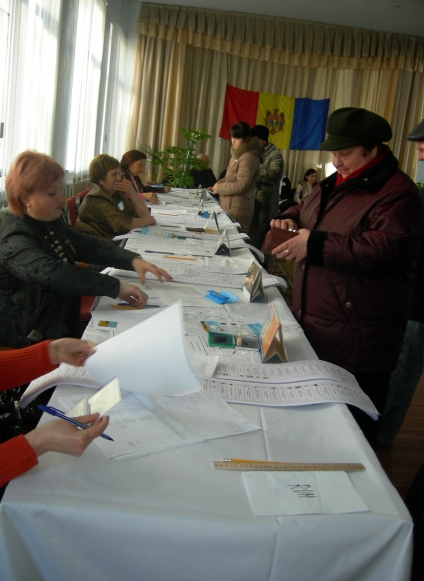


Promo-LEX Association will monitor Local Elections of June 2011

Promo-LEX Association launches the monitoring effort of the general local elections of June 5th 2011, within the Civic Coalition for Free and Fair Elections, Coalition 2009. The monitoring effort aims to increase public trust in the electoral processes, provide impartial and non-partisan information about the electoral campaign and elections’ administration and contribute to more free and fair elections that will increase the democratic change in Moldova.

“It is highly important to determine and compare trends of this election campaign with the trends of the previous campaigns in order to see the evolution or the involution of the election legislation, to assess the behavior of different election competitors and the accuracy of this election campaign”, stated Corneliu Cirimpei, Network Coordinator within the monitoring effort.

On the national level, Promo-LEX monitoring effort will include 40 long-term observers in all electoral constituencies and about 700 short-term observers that would monitor election process on the E-day.
The activity of all observers is coordinated by a core team that is responsible for their training in election procedures and independent and non-partisan character of the monitoring effort. Core team will also carry out the analysis of the observer’s findings throughout the monitoring effort.

The observers will report their findings in a standardized form, based on direct observations, meetings with interlocutors and consulting official documents. In some constituencies, Promo-LEX will conduct special operations, such as: Parallel Vote Tabulation (PVT), statistically based observation focused on election procedure’s quality (Quick Count) and E-day observation through mobile observation teams.

Promo-LEX monitoring effort is a non-partisan program that aims to increase voters’ trust in election process, regardless of who wins the elections. Based on the observer’s findings, Promo-LEX monitoring effort will highlight the trends of the election process and, where relevant, will raise concerns. The latter will serve to develop a set of recommendations designed to improve the electoral process and increase public confidence in elections.

The Promo-LEX Association is a non-governmental organization focused on promoting democratic values and on implementing internationally recognized standards in the Republic of Moldova, including the Transnistrian region. Promo-LEX monitoring effort is implemented with technical and financial assistance from the National Democratic Institute for International Affairs (NDI).

For more details please contact: Carolina Bondarciuc, Communication Officer Tel: (+373 22) 450024, GSM: (+373)69637849, e-mail: [email protected]


Conclusions from the Public Debate: “The elections of 28 November 2010 through the prism of improving the Moldovan electoral processes”

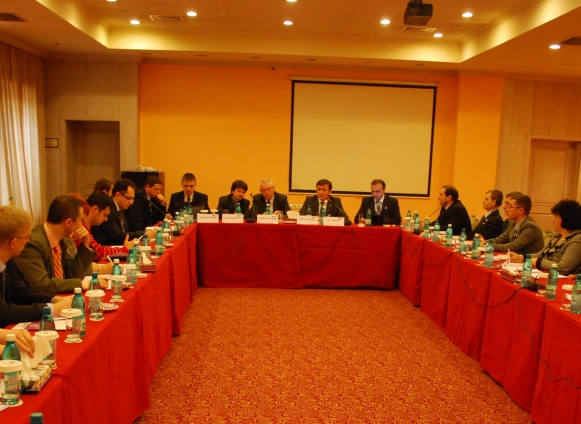
_article_1299158542Wednesday, March 2, 2011 Promo-LEX Association organized the public debate on topic “The elections of 28 November 2010 through the prism of improving the Moldovan electoral processes”.

Based on the findings of the Final Monitoring Report of the early parliamentary elections of 28 November 2010, this public debate focused on issues such as poor preparation of voter lists, lack of financial transparency from candidates in terms of reflecting expenditure and the use of administrative resources for electoral purposes.

At the opening event, Ion Manole of Promo-LEX said that “although the Central Election Commission was one of the most open and transparent government institutions in recent years and was successfully conducted within a fairly narrow period between two Parliamentary elections and a referendum, there is much more to do. This is demonstrated by the numerous findings, conclusions and recommendations contained in the reports of observers monitoring the elections from Promo-LEX”. In this context, Ion Manole stressed the necessity and importance of continuing the partnership between civil society and electoral bodies.

According to Iurie Ciocan, President of the Central Election Commission, one of the main remaining issues was that of voter rolls. During the debate the need for intervention in the procedure for compilation and verification of voter lists was emphasized. “We have a clear position on the proposals and despite gaps in the exchange of opinion we have established some regulatory pathways,” said Iurie Ciocan.

Irregularities in reporting of expenditures by electoral competitors have also been detected. Pavel Postica, lawyer at Promo-LEX and Deputy Chief of the monitoring effort stated that it may be the case that the Election Commission needs to review the rules, in order to require competitors to show very clear how money is managed. This is also relevant in the context of the upcoming local elections, where the control over financial transparency will lie on District Election Commissions, which will mean even less opportunity to verify the financial transparency of electoral competitors.”

In the discussions were drawn the main recommendations made by Promo-LEX, including the need to establish a single mechanism for checking the validity of its registration by voters in electoral lists, simplification of the procedures for checking the logical validity of the vote counting and to establish a clear mechanism to verify data for the detection of inconsistencies in the protocols.

Participants attended the event concluded that such debates are welcomed, and not only around local or parliamentary elections, and attempts to improve the electoral process must be continuous, contributing thus to the ultimate goal to have free and fair elections.

Nicolae Panfil, Secretary of the Coalition for Free and Fair Elections stated: “It is important that after the release of monitoring reports to have such discussions on the conclusions and recommendations so that we make them be heard, and thus improve the effective organization of elections. This event has started what we may consider an activity in view of the upcoming elections and both the Coalition and Promo-LEX will already be mobilized in this regard ”

The event was attended by representatives of the electoral authorities, central and local public authorities, political parties and of the civil society.

For more details, contact: Ion Manole, President, Promo-LEX Association
Tel: (22) 450024, GSM: 069070800, e-mail: [email protected]


The final report of the Promo-LEX monitoring mission draws recommendations for improving the electoral process

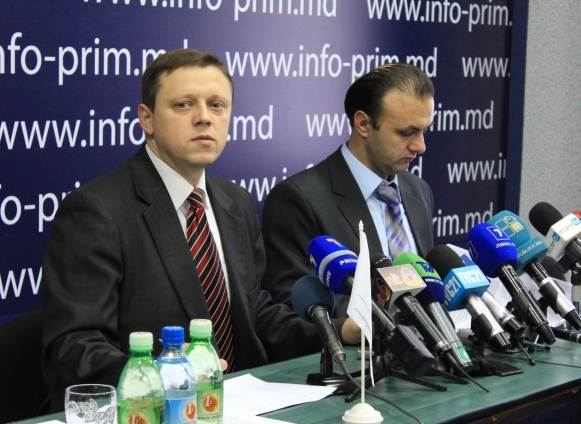
_article_1297170693Chişinău, February 8, 2011 – The monitoring of the early parliamentary elections on November 28, 2010 final report launched today by the Promo-LEX association concludes the monitoring effort’s activity and includes the main tendencies reported by the observers, the effort’s concerns and the recommendations aimed at improving the electoral process in the Republic of Moldova.

The Promo-LEX effort has reported a balanced performance of both the public and the electoral administrations. It also observed that the majority of the electoral competitors have carried out diverse and active campaigns in a healthy competitive environment. Voters have demonstrated an increased interest in the electoral process, providing a massive presence on the election day. The results of the specialized operations carried out by Promo-LEX have largely confirmed the official results, both for the initial count and for the votes recount.

Nevertheless, the electoral process demonstrated a number of deviations from existing national electoral procedures and international democratic electoral practices. Some of these deviations were of sporadic nature, while others were systemic. Electoral competitors failed to demonstrate financial transparency and isolated cases of violence and intolerance overshadowed the electoral campaign.
Moreover, Promo-LEX found that the processes of counting and of recounting the votes involve an excessive use of logical controls, thus making these processes susceptible to human error. Regretfully, the monitoring effort found a passiveness from the side of voters as far as verifying the correctness of their entry into the voting rolls.

“Although the November 28 elections have represented an active democratic exercise, we remain concerned about the limited transparency of the main decisions taken as part of the electoral process”, said Pavel Postica, Deputy Chief of the Monitoring Effort. “Announcing the date of elections, amending the electoral legislation in a hasty manner, campaign financing and clashes between competitors, over-night held recount – all these could shatter in the future the voters’ trust in the electoral process.”

Based on the reported tendencies, the monitoring effort has formulated a list of concerns which are grouped based on the weight of the following criteria: the number, the geography and the repetition in time of the findings; the consequences on the electoral processes and on the involved persons; the expediency of the intervention from the part of the authorities. These concerns served as basis for putting together a list of recommendations made in good faith and aimed at contributing to the improvement of the electoral processes and raising the level of trust of the population towards elections.

Promo-LEX has carried out the long term monitoring of the electoral period in the context early parliamentary elections from November 28, 2010 within the framework of the Civic Coalition for Free and Fair Elections. The effort has monitored the electoral process in all the electoral districts of the Republic of Moldova in the period October 6 – December 27, 2010. The Promo-LEX monitoring team has included 42 long term observers, 30 medium term observers and approximately 2,400 short term observers. The observers’ activity has been coordinated by a central team which, among others, was responsible for training all the observers in the field of electoral procedures and of the non-partisan and independent character of the monitoring effort.

Promo-LEX has carried out a parallel vote tabulation operation (PVT), a qualitative and quantitative quick count of votes (Quick Count), a monitoring of the election day using mobile teams. For the vote recount, Promo-LEX has conducted a parallel tabulation of the recount results. The effort has published 4 interim reports during the electoral campaign, 3 interim reports on election day, has issued press releases on 3 special operations carried out on election day and has drafted the present final report.

Promo-LEX is a non-governmental, non-partisan and not-for-profit organization, promoting in the Republic of Moldova, including in the Transnistrian region, of democratic values and of international human right standards. The Promo-LEX monitoring effort was implemented with technical and financial assistance from the United States Embassy in Moldova, the National Endowment for Democracy (NED), and the National Democratic Institute for International Affairs (NDI). The opinions expressed in this report belong to the authors and do not necessarily reflect the opinions of the donors.

The full copy of the report is available here.

For more details, please contact: Ion Manole, Head of the Promo-LEX Monitoring Effort: Tel: (22) 450024, GSM: 069070800, e-mail: [email protected]


FINAL REPORT Monitoring of the early parliamentary elections of 28 November 2010

2010 Raport final Final Report 2010


Promo-LEX found the vote recount was carried out timely, but with some procedural irregularities and careless attitude

_article_1292830352Following the monitoring of the ballot recount tabulation in all the District Electoral Constituencies (DECs) in the country, and a Parallel Tabulation of Recount Results with a maximum margin of error of 0.49%, Promo-LEX found that the vote recount confirmed the results of the initial count.

The Promo-LEX monitoring effort deployed over 80 observers across the country. The monitors observed directly the process of dispatching the sacks with electoral materials to the precinct electoral bureaus (PEBs). After the recount the observers watched the delivery of protocols and other electoral materials from the PEBs to the DECs. The observers made digital copies of the recount protocols using digital cameras. Based on the photographs, Promo-LEX central teams carried out a Tabulation of Recount Results, parallel to the CEC.

Despite technical deficiencies and a careless attitude shown by some election officials, the vote recount process met the deadlines and most of the legal standards. The Promo-LEX monitoring effort congratulates the CEC for the rapid organization of the majority of electoral officials across the country. Promo-LEX is also pleased to note a substantial increase in the number of PEB protocols compiled in compliance with the logical controls, based on the formulas suggested by the CEC.

Yet, the Promo-LEX observers found a number of irregularities and deficiencies in the recount process. To help improve similar efforts in the future and guided by its mission of a responsible monitoring effort Promo-LEX is drawing the attention of the relevant electoral stakeholders to the observations compiled in this document.

Among the observations of the Promo-LEX monitoring effort is the delayed start of the recount process. According to the CEC Guidelines, the recount was due to start at 08:00 beginning with the distribution of electoral materials from courts to PEBs. Delayed distribution of sacks with electoral documents was registered in 24 out of 35 electoral constituencies. Thusly, in 18 electoral constituencies the recount started with delays of up to one hour, and in 6 other electoral constituencies the process was delayed by more than one hour.

Other shortcomings were related to the training of the PEB members. Some DECs failed to give the recount specific instruction to the members of the PEBs before the day of the recount. In some regions the training was done on the very day of the recount, which delayed the process of distributing the electoral materials.

The Promo-LEX observers in 8 (23%) constituencies reported 30 isolated cases where the seals on the sacks containing the electoral materials were seemingly broken. Based on its observations, Promo-LEX can assert that the seals are of poor quality material that can easily scramble to pieces during transportation, relocation, or in other similar circumstances. Thusly the reports about broken seals are inconclusive as to evaluating the integrity of the electoral materials at this stage of the recount.

The dispatch of the packages with electoral materials for the recount breached some provisions of the CEC Guidelines. According to the Guidelines, the packages with the electoral documents are dispatched to the PEB chairperson in the presence of at least two PEB members, accompanied by a policeman. This requirement was observed only in 6 (17%) electoral constituencies; in 848 out of 1,962 polling stations this rule was not adhered to.

The ballot count normally follows two verification procedures: the preparatory procedure of compiling a Special Count Form and the procedure of verifying these preliminary data. The electoral officials failed to use any of these procedures during the December 15, 2010 recount, neither was it advised by any CEC regulations.

The electoral officers at some DECs prevented the Promo-LEX observers from taking digital photographs of the recount protocols. This occurred in particular in the Chisinau municipality, the districts of Botanica and Ciocana. The recount protocols from Ciocana were made available to the observers only on the day following the recount, at the Chisinau DEC. The reasons for the refusal in some cases were obscure, and this prompted the Promo-LEX to file a complaint. The response to the complaint was received on 17 December 2010, which reads the observers were prevented from taking pictures because they allegedly failed to inform the chairperson of the Chisinau Election Council “[…] of their intentions”. The observers could not find the DEC chairperson on that day, while readily and publicly available contacts to reach him were absent. In the end, the recount protocols from 3 polling stations from Botanica were never made available to the observers.

Following the processing of the 1,959 copies of the protocols available to the observers, Promo-LEX found deviations from the verification rules advised by the CEC in 147 protocols. For various objective reasons, including quality shortcomings of some photographs taken by the observers, 100 protocols were not processed and thusly excluded from the analysis.

After processing and calculating data from 1,712 (87%) domestic protocols, excluding the data from overseas voting, Promo-LEX has found that the Parallel Tabulation of the recount confirms the official preliminary results announced by the CEC immediately after elections. The maximum margin of error following the extrapolation of data from 1,962 polling stations in the country is 0.49%. A table containing comparative data is annexed.

The findings and the recommendations of the observation mission are formulated in good faith and aim to contribute to improving the electoral process. The Monitoring of the Preterm Parliamentary Elections of 28 November 2010 Project is carried out within the framework of the Civic Coalition for Free and Fair Elections. The project is implemented with technical and financial assistance from the United States Embassy in Moldova, the National Endowment for Democracy (NED), and the National Democratic Institute for International Affairs (NDI). The opinions expressed in the report belong to the authors and do not necessarily reflect the opinions of the donors.

For more information contact Cristina Nicolenco, Promo-LEX press officer, at phone (22) 211622, GSM 069882392, and e-mail: [email protected]


DOC- PVT


Promo-LEX Parallel Vote Tabulation and Quick Count Confirm CEC Preliminary Results

PVT QC 2010Promo-LEX, a non-partisan non-governmental organization that seeks to advance democracy and promote human rights in Moldova, has found that, after conducting its parallel vote tabulation of all 1962 domestic polling stations, its Quick Count findings were within the margin of error and confirm the preliminary official tabulation by the Central Election Commission of domestic votes. An annex is attached illustrating the results. Promo-LEX analysis covered both the quality of electoral processes as well as actual vote tabulation.

“I’m sure that as a result of collaboration and partnerships between the electoral stakeholders that the elections have been carried out successfully and have been recognized as more democratic by several categories of observers,” said Deputy Head of the monitoring effort, Pavel Postica. “On behalf of the Promo-LEX central team, I thank all our observers for their dedication and professionalism throughout the monitoring mission.”

Promo-LEX found that although election day was long and, in many cases, conditions in the polling stations were very difficult, often lacking proper heat and lighting, the counting and tabulation of results was generally conducted in an orderly manner and in good faith. The vast majority of protocols were completed without major flaws. Out of 1962 protocols, only four had inconsistencies that were serious enough to require a recount at the polling station. These concerns were eventually resolved. Promo-LEX appreciates that polling station and district election council officials were mostly cooperative and appeared to be working in good faith to carry out their duties.

Furthermore, according to Promo-LEX’s statistical observation, 99 percent of polling stations opened on time with ballot boxes shown to be empty before sealing and voting booths arranged to ensure the secrecy of the vote. In 94 percent of polling stations there were no complaints by competitors or voters and in 92 percent of Promo-LEX observers were shown ballot papers during the vote count, allowing them to confirm final tabulation numbers.

With no evidence of fraud or major wrongdoing, Promo-LEX is taking the opportunity to fine tune the process. In examining individual protocols, Promo-LEX did find minor inconsistencies in 390 of the country’s protocols, as follows: Chişinău 76, Bălţi 13, Basarabeasca 4, Briceni 8, Cantemir 11, Călăraşi 10, Cimişlia 7, Criuleni 9, Donduşeni 7, Drochia 1, Dubăsari 3, Edineţ 15, Făleşti 19, Floreşti 14, Hînceşti 11, Ialoveni 15, Leova 10, Nisporeni 6, Ocniţa 4, Orhei 1, Rezina 15, Rîşcani 11, Sîngerei 11, Soroca 21, Străşeni 1, Şoldăneşti 7, Ştefan Vodă 9, Taraclia 6, Teleneşti 8, Ungheni 21, UTA Găgăuzia 8. Yet, these inconsistencies were not large enough to shift the final domestic outcome. While some of the discrepancies may have resulted from deficiencies in the process of copying the protocols, Promo-LEX found that most of the shortcomings fell into four categories:

  • Minor errors in basic arithmetic. Calculations are done manually, making them very susceptible to human error. Sums of individual vote tallies were sometimes off by one or two votes. With 39 competitors listed, each requiring individual tabulation, the risk of a mathematical error was naturally high.
  • Confusion on the part of election officials due to unclear wording in the protocols. The protocols included questions meant to check the management of ballots; however, the wording was difficult for a layman to understand and lacked further explanation. Promo-LEX found these errors in the fields calculating the total number of ballots issued and the total number cast, and in those calculating the total number of ballots received by the polling station, but not used.
  • Lack of sufficient verification practices. Although representatives of electoral competitors are given the opportunity to review the protocols they appear to lack either the training or the will to exercise this right effectively. At the same time there are no official standardized procedures for correcting errors that are found. It is left to the discretion of individual polling station or DEC officials.
  • Access to electoral lists by observers was limited on election day. While observers could periodically check lists, as individual voters signed in to receive their ballots, Promo-LEX observers who requested to analyze the electoral lists in more detail were not all given full access.

RECCOMENDATIONS

Given the above, Promo-LEX recommends that electoral and public authorities:

  • Simplify and provide explanation of protocol questions, and include these instructions on the protocol form itself;
  • Develop and implement standardized procedures for PEB and DEC officials to correct errors that are identified by logical checks on the protocol;
  • Improve logistical arrangements of polling stations to reduce opportunities for human error. For example, polling stations could be equipped with computers and software that would be able to perform mathematical functions and logical checks. Additionally, physical conditions of the polling stations could be improved, to provide sufficient light for workers and heat throughout the day.
  • All relevant officials should be made aware of their obligation to provide access to electoral lists, and held accountable by electoral authorities should they fail to do so.

For election day, Promo-LEX conducted a comprehensive observation and PVT by deploying observers to every polling station in the country. Complementing the comprehensive PVT, the Quick Count was based on a representative statistical sample of 299 polling stations. The findings and recommendations of the monitoring mission are made in good faith and aim at improving the quality of the electoral process. This project is implemented with technical and financial assistance from the United States Embassy in Moldova, the National Endowment for Democracy (NED), and the National Democratic Institute for International Affairs (NDI). The opinions expressed in the report belong to the authors and do not necessarily reflect the opinions of the donors.

###

Promo-LEX is a Non-Governmental Organisation focused on promoting democratic values and on implementing internationally recognised standards in the Republic of Moldova, including the Transnistrian region. The Promo-LEX team consists of young human rights activists striving for change within Moldovan society, advancing democracy and combating human rights violations in Moldova.

Please find attached Parallel Vote Tabulation and Quick Count in ANNEX

For more information contact Cristina Nicolenco, Promo-LEX press officer: Tel: (22) 211622, GSM: 069882392, e-mail: [email protected]


DOC – PVT


Promo-LEX Quick Count anticipates election results

_article_1291022497The Promo-LEX Association has carried out a Quick Count of the votes cast in the early parliamentary elections on 28 November 2010. The procedure was conducted on a nationally representative sample covering 299 polling stations out of the total 1,962. The sample was selected based on stratified simple random sampling.

The Quick Count results look as follows:
The Party of Communists of Moldova – 40.07%;
The Liberal Democratic Party of Moldova – 28.64%;
The Democratic Party of Moldova – 13.73%;
The Liberal Party – 8.90%;
Other competitors – 8.67%.

The Quick Count is a method for assessing the quality of the voting process and for forecasting the final outcome of the elections with maximum precision. The Quick Count both analyzes the conduct of the polling stations and predicts the options of the voters. The margin of error of the results is maximum 1% upon processing 100% of the sample’s data.

With the Quick Count conducted, Promo-LEX is concerned about the fact that at least one third of the protocols have been erroneously tabulated and that the electoral officials of 2nd and 3rd levels have limited knowledge about how to correct these errors.

In this context, Promo-LEX is recommending: to provide adequate training to PEB and DEC members both with regard to the procedures of voting and vote counting and with regard to the tabulation of the ballot protocols. At the same time, explicit provisions should be introduced to clarify the procedures of correcting erroneously tabulated protocols.

Promo-LEX is conducting its monitoring effort within the framework of the Civic Coalition for Free and Fair Elections. On election day the mission deployed 2,500 observers in all the polling stations across the country.

For additional details please contact: Cristina Nicolenco, Promo-LEX Press Officer, Phone: (22) 211622, GSM: 069882392, email: [email protected]