By December 2021, the Russian Federation must come up with a concrete plan for the execution of ECtHR judgments in cases concerning the violation of the right to education in the Transnistrian region
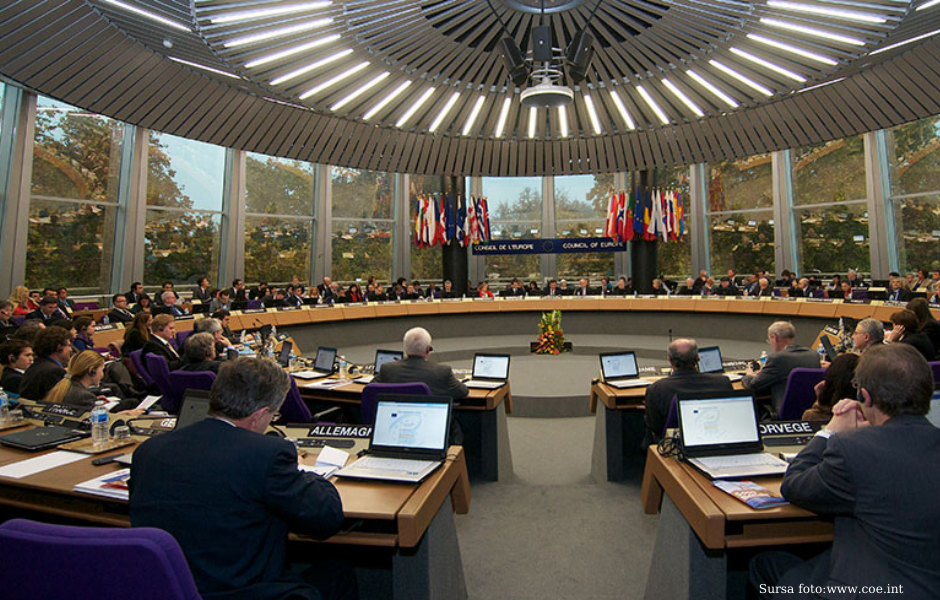 At its meeting on 7-9 June 2021, the Committee of Ministers of the Council of Europe issued a new decision on the group of cases Catan and others v. Russian Federation (no. 43370/04). The group of cases refers to the violation of the right to education of students in schools with Latin script in the Transnistrian region of the Republic of Moldova.
Why Russia? The European Court found that, “by virtue of the ongoing military, economic and political support provided by the Russian Federation to the de facto administration from Tiraspol, which otherwise could not survive, Russia assumes responsibility under the Convention for the violation of the applicants’ right to education. ” Thus, Russia is the one that has the necessary influence on the administration from Tiraspol and should intervene to ensure respect for human rights.
Mother-tongue education. The Committee of Ministers reiterated the fundamental importance of primary and secondary education for the personal development and future success of each child and insisted on the rights of students to continue the educational process in their mother tongue, without obstacles and harassment.
Compensation was not paid. The Committee of Ministers has found that the victims have so far not received any form of compensation for the violations suffered, including the payment of just satisfaction. The Committee of Ministers therefore strongly insists on the unconditional obligation of each respondent State, under Article 46 § 1 of the Convention, to comply with every final judgment in the cases to which it is a party, including by paying any just satisfaction awarded by the Court.
The CoE Secretariat will address the Ministry of Foreign Affairs of the RF. Due to the fact that the Russian Federation has not prepared any action plan setting out the concrete measures taken or envisaged by the Russian authorities for the implementation of the decisions, the Committee of Ministers invited the Secretary General to write a letter to the Minister of Foreign Affairs of the Russian Federation, to emphasize both the fundamental importance of the right to education and the unconditional obligation to comply with the judgments of the Court, including the payment of just satisfaction to the applicants in judgments relating to this case.
Tougher measures follow. If no tangible progress will be made on enforcement measures in the case of Catan and others until the next examination by the Committee of Ministers (December 2021), the Committee of Ministers has decided to consider all appropriate means to ensure the implementation of the Decision on this case. The Promo-LEX Association submitted several communications inviting the Committee of Ministers to adopt a decision on the referral to the European Court regarding the refusal of the Russian Federation to comply with the binding force of ECHR judgments.
Brief history. Judgment of the European Court of Human Rights (ECHR) in Catan and Others v. Moldova and Russia on 19 October 2012. This found a violation of the right to education for students and parents in Romanian-teaching schools in the Transnistrian region of the Republic of Moldova.
At the same time, the Court ruled that the Russian Federation must pay, within three months, EUR 6000 for each applicant as non-pecuniary damage and EUR 50 000 as representation costs and expenses.
We remind you that in the “file of schools” with teaching in Romanian in the Transnistrian region there are two other cases: Bobeico and others; Iovcev and others.
The case Bobeico and others is similar to the Catan case, the same violations being found.
In the case of Iovcev and othersthe ECHR found a violation of the applicants’ rights as a result of pressure from the de facto structures of the “RMN” in a campaign of harassment and intimidation against Romanian-teaching schools in the Transnistrian region of the Republic of Moldova during 2013-2014.
We remind you that on the left bank of the Dniester there are still provisions sanctioning the use of Latin spelling.