The Decree of Krasnoselski Left Six Districts of the Republic of Moldova Without Doctors

Various district hospitals and family doctors centres from Soldanesti, Rezina, Floresti, Dubasari, Criuleni and Causeni districts were left without doctors due to the state of emergency declared by the leader from Tiraspol on 17 March. Almost 100 doctors and health workers notified the Bureau for Reintegration Policies from Chisinau that they were not able to go to work because of Tiraspol’s interdiction. At the same time, the employees of the Metallurgical Plant from Ribnita, who live in Rezina, commute unhindered.
In the middle of pandemic, doctors from the Transnistrian region are the only category forced to observe the 14-day quarantine regime if they go to work in the health facilities located on the territory controlled by the constitutional authorities from Chisinau. Nonetheless, the constitutional authorities allowed the secessionist regime from the left bank of Nistru River to make laboratory tests in Chisinau, as they are not technically endowed to do it themselves.
According to the heads of health facilities who were contacted by the reporters of the Center for Investigative Journalism from Moldova, Tirapol argued that doctors are a category that is vulnerable to contracting the virus, and their free movement on both banks of Nistru River would increase the danger of contamination for the population on the left bank of Nistru River.

Rezina-Rabnita. Rezina District Hospital has 17 employees from Rabnita, ‘almost all them full time specialist’, says the head of the facility, Nina Postu. They have not been able to come to work for about a month, since 17 March, due to the state of emergency declared by Tiraspol. Those 17 doctors were entitled with paid leaves.
‘I tried to solve this issue via the Bureau for Reintegration Policies. They are allowed to come to this side, but they have to stay here. We need a doctor to really stay here, but the rest of them have small children, sick parents and they cannot stay’, told us the head of the health facility.
Nina Postu also said that because of some doctors not being able to come to work, those who are left are really struggling. Most of them are are at work all the time. The facility has only one infectious diseases physician who is responsible of the ward where three Covid-19 patients were admitted. At the same time, the so-called Transnistrian border guards allow the employees of the Metallurgical Plant of Rabnita and of two cement factories to commute unhindered.
Asked to comment on this situation, the Bureau for Reintegration Policies used a ‘diplomatic’ language: ‘We received various requests from different business entities asking to allow the free circulation during the state of emergency, on both banks of Nistru River.’
‘We believe that limiting the free movement is an abuse and we confirm that certain topics on the agenda of negotiations cannot be excluded due to the check of their sustainability level’.
Rabnita-Soldanesti. Soldanesti District Hospital has 14 doctors, a doctor’s assistant ad a nurse who live in Rabnita. Most of them are employed on the basis of concurrent employment and they took paid leave. The head of the hospital, Veaceslav Palii couldn’t tell the reporters if the leave applications of his staff from the left bank of Nistru River were determined by the state of emergency declared by the separatist administration from Tiraspol or by their own will.
‘At present, two doctors are willing to work until the quarantine ends. The doctor from the intensive care unit is from the left bank of Nistru River and will not leave to see her family until the quarantine ends. Soldanesti District Council provided her with a place to live and food’, said the doctor. Currently, there is one confirmed case of COVID-19 on the territory of Soldandesti district, but the patient is hospitalised at Chisinau Psychiatric Hospital and there is one suspected case.
Camenca-Sanatauca. Liuba Covali, aged 46, lives in Camenca, the region on the left bank of the Nistru River, and she is the head of Sanatauca Health Centre, Floresti. On the morning of 17 March, when she passed the border passing point she was announced by the so-called border guards of the unrecognised authorities from Tiraspol that if she was planning to return home, she would have to observe the 14-day quarantine regime.
She decided to stay in Sanatauca because she couldn’t leave the facility she was the manager of in times of pandemic. ‘I couldn’t have stayed home in such conditions’, explains the women her decision.
Sanatauca Health Centre covers three villages – Sanatauca, Napadova and Japca. Once she got to work, she notified immediately the Bureau for Reintegration Policies of the Republic of Moldova.
Cocieri-Dubasari. Raisa Spinovschi, Mayor of Cocieri, told reporters that two family doctors from her village live in Dubasari, the Transnistrian region.
‘After the set up of the military posts on the territory of our village, these two doctors cannot come to work because according to the Transnistrian police, they are in the risk category and could contribute to the outspread of the coronavirus in the Transnistrian region’, said the Mayor. There are three family doctors in Cocieri village. Now, however, there’s only one doctor in this health centre.
‘Doctors from Dubasari consult the patients and monitor those who came back from abroad by phone. For more serious cases, there is only one family doctor for about 5,000 inhabitants. She is over 60 years old and she tries hard to consult everyone, she works overtime a lot’, told us Raisa Spinovschi.
Besides Cocieri Family Doctors Centre, an emergency health care centre operates in the village and it has three employees and a dentist from Dubasari who cannot come to work. However, the situation remains unstable. On 15 April, several doctors who work in Criuleni
Dubasari–Criuleni. According to the Executive Director of Promo-LEX Association, Ion Manole, the doctors from Dubasari who work in Criuleni stayed initially in quarantine for 14 days and tried to go back to work, but they were forced again to stay in quarantine.
‘During four days they were able to go to work in Criuleni on the basis of a list agreed by Chisinau with Tiraspol.’ Today [15 April] they were prohibited to go to work from Dubasari to Criuleni and were placed again in quarantine. ‘When they asked to be allowed to leave the separatist region and said they would stay in Criuleni until the epidemic ends, they were accused of not being patriots of the Transnistrian motherland. True patriots should serve their motherland in such times’, added Ion Manole.
Bender-Anenii Noi. Two employees of Anenii Noi District Hospital live on the left bank of Nistru River. ‘One of them was provided accommodation and food, while the second one is employed on the basis of concurrent employment and took paid leave because of not being able to come to work, told us the Deputy Head of the hospital, Alexandru Nastas.
Also, one employee of Anenii Noi Health Centre, who lives on the left bank of Nistru River, will be provided accommodation. Three out of six family doctors from Varnita Health Centre from the same district live in Bender. They were not able to go to work due to the state of emergency declared by the secessionist regime from Tiraspol.
Bender-Causeni. One employee of Causeni District Hospital, an infectious diseases physician, lives in Bender and needs a permit in order to be able to commute between Bender and Causeni. ‘We filed a request with the Bureau for Reintegration Policies. At present, this physician is in Causeni and was provided accommodation’, told us Viorel Ceban, the Deputy Head of Causeni District Hospital.
Three employees of Causeni Family Doctors Centre live in Bender and two of them – a doctor and a nurse – cannot go to work. One of them, who is the family doctor in Carnateni village, is at work. ‘With or without these doctors, we have many communities without family doctors at all’, told us the senior nurse, Diana Carlig.
About 100 Health Workers Were Prohibited From Going to Work on the Right Bank
The Bureau for Reintegration Policies informed us that it was notified by the local public authorities and by the Ministry of Labor, Health and Social protection about 95 individuals who couldn’t go to work because of the quarantine regime imposed by the Transnistrian authorities. Chisinau authorities assume that the actual number could be bigger.
At the same time, the reporters were informed that the Bureau for Reintegration Policies does not have accurate data about the number of employees of health facilities in the security area who live with their families in the eastern districts of the Republic of Moldova.
Asked to speak about the measures taken to unblock the movement of doctors, the Bureau for Reintegration Policies informed us that they filed a direct request with the Transnistrian authorities to facilitate the movement of health workers in the Security Area.
Emergency Solution: ‘Forced’ Accommodation on the Right Bank of Nistru River
After the refusal of the Transnistrian authorities, the Bureau for Reintegration Policies notified the participants in the ‘5+2’ format and the Council of Europe Commissioner for Human Rights, Dunja Mijatovici, to get involved and unblock the situation. Finally, it was decided to provide the health workers who work in the Security Area, but live on the left bank of Nistru River with temporary accommodation in the communities where they work.
The costs for accommodation and other administrative arrangements for health workers/doctors are covered with the support from the European Union under the Confidence Building Measures Program on both banks of Nistru River, implemented by UNDP Moldova.
The representatives of the hospitals contacted by the reporters said that the doctors form the left bank of Nistru River, who decided to continue to work during the state of emergency, were already provided accommodation and everything they need by the local authorities. The accommodation of doctors in the communities where they work is done on voluntary basis, and so far, 14 doctors from seven districts were among the beneficiaries.
‘This is a temporary solution meant to ensure the access of citizens to health services. We didn’t give up the efforts to ensure the free circulation of the population and, first of all, of health workers throughout the Republic of Moldova’, stated the Deputy Prime Minister, Cristina Lesnic.
Note that these measures apply only to doctors and health workers who decided to stay on the territory that is under the jurisdiction of Chisinau.
Arrested for Doing Their Job
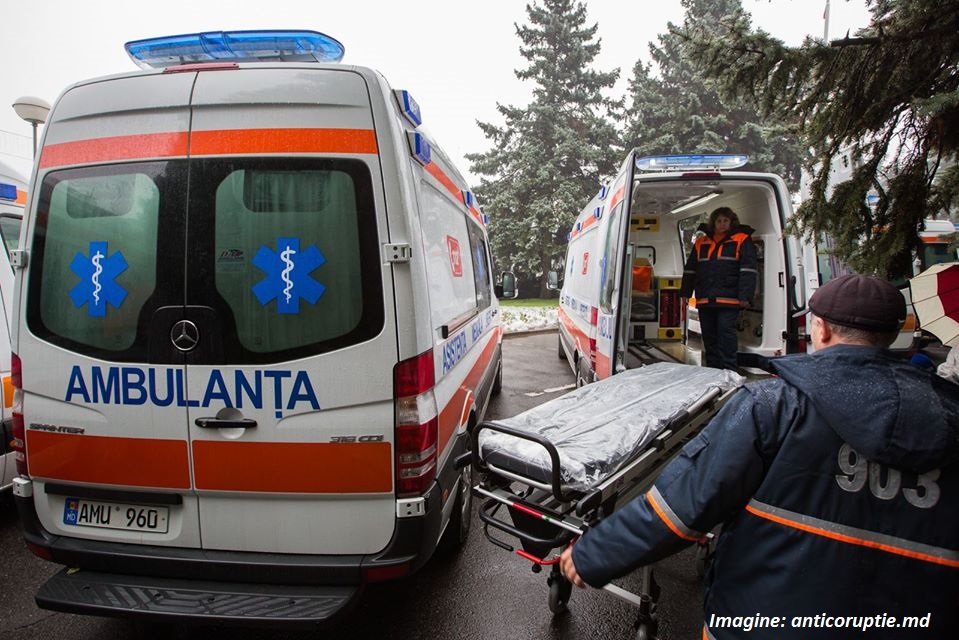
Remember that two workers from Molovata Noua who work as ambulance drivers at Dubasari District Hospital, were detained on 3 April and were condemned to 15 days in custody by the unrecognised authorities from Tiraspol. Following the multiple interventions of Chisinau authorities, on 9 April, those two workers were released.
Promo-LEX Association made this case public and as a result, Tiraspol took a step back in terms of applying these measures. ‘While all over the civilised world the health workers are appreciated, helped and honoured for their efforts, in the Transnistrian region of the Republic of Moldova the doctors are harassed, intimidated and sentenced because they want to continue to work during the epidemic’, was stated in a release of the Association.
Moreover, Promo-LEX flagged up that beginning 17 March, when the Parliament passed the decision in this regard in Chisinau, the Tiraspol administration resumed restricted the exercise of human rights.
The lawyers of the Association believe that the measures Tiraspol took are unreasonable and that even the epidemiological crisis cannot justify them. ‘Artificial and unjustified obstacles to the work of health professionals during an epidemiological crisis is an act of defiance of the efforts meant to prevent the spread of the virus and fight the epidemic’, added the lawyers of Promo-LEX in their release.
Since the pandemic started, Tiraspol blocked the circulation of various categories of individuals – farmers, police officers, employees of the penitentiary system, etc. The police officers and the employees of the penitentiaries Nos 8 and 12 from Bender were allowed to go to work on the basis of some lists previously agreed with Tiraspol.
The problem of farmers from Dubasari district was solved using the same method. Starting with 28 March, they were allowed to access their lands located east of the national road Rabnita-Tiraspol on the basis of the lists agreed with the unrecognised authorities from the left bank of Nistru River.
The article was developed under the ‘Strengthening the Observance of Human Rights in the Transnistrian Region’ Project, implemented by Promo-LEX Association with the financial support of the National Endowment for Democracy.